Simple Flower Rangoli for Daily Use: 25 Easy Designs to Try
A simple flower rangoli for daily use turns your doorstep into something warm in under ten minutes. I make one most mornings. You do not need talent, stencils, or costly powder. Just a few petals, a steady hand, and a clean floor.
What Makes a Flower Rangoli Right for Daily Use?
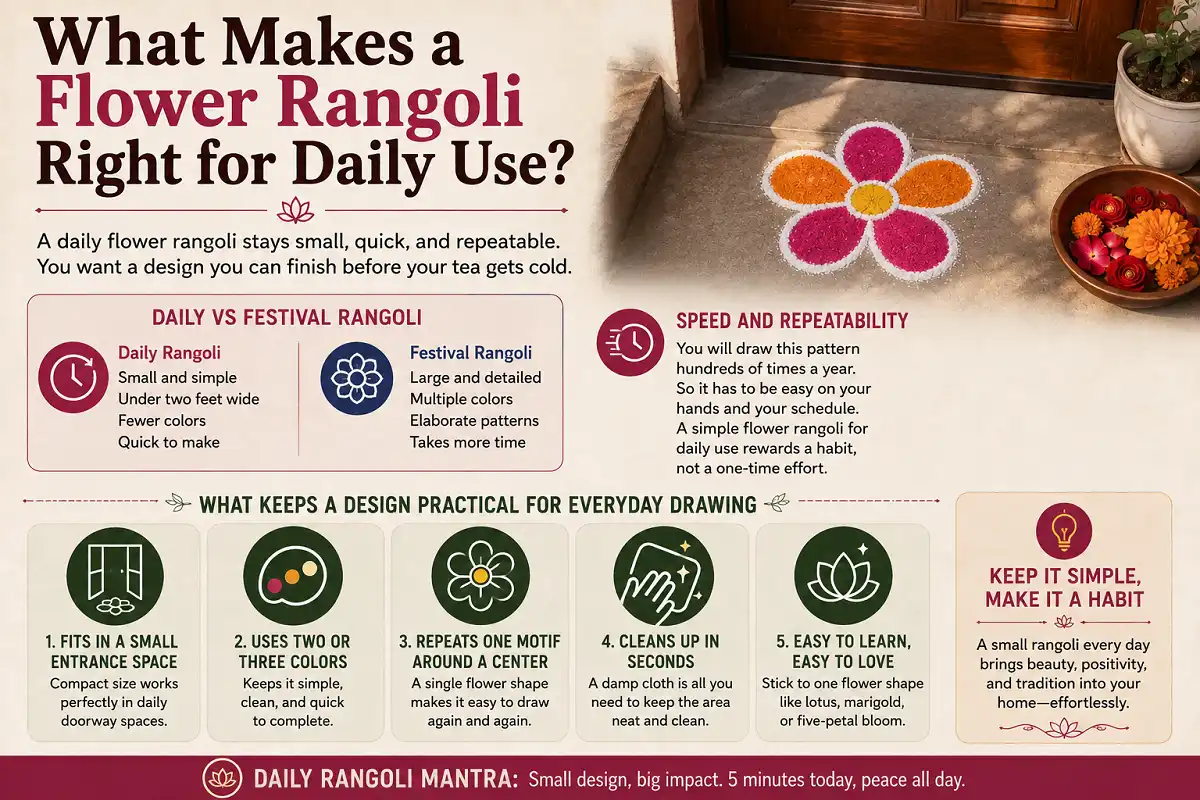
A daily flower rangoli stays small, quick, and repeatable. That is the whole point. You want a design you can finish before your tea gets cold.
Daily designs differ from festival ones. Festival rangoli goes big and detailed. A simple flower rangoli for daily use stays under two feet wide. It uses fewer colors and a shape you already know by heart.
Speed and repeatability matter most for everyday drawing. You will draw this pattern hundreds of times a year. So it has to be easy on your hands and your schedule. A simple flower rangoli for daily use rewards a habit, not a one-time effort. That mindset shapes every choice below, from the motif to the color count.
Here is what keeps a design practical for everyday drawing:
- It fits in a small entrance space.
- It uses two or three colors, no more.
- It repeats one motif around a center.
- It cleans up in seconds with a damp cloth.
I keep my daily patterns to a single flower shape. A lotus, a marigold, or a five-petal bloom. Once your hand learns the shape, speed follows.
The 25 Easy Flower Designs
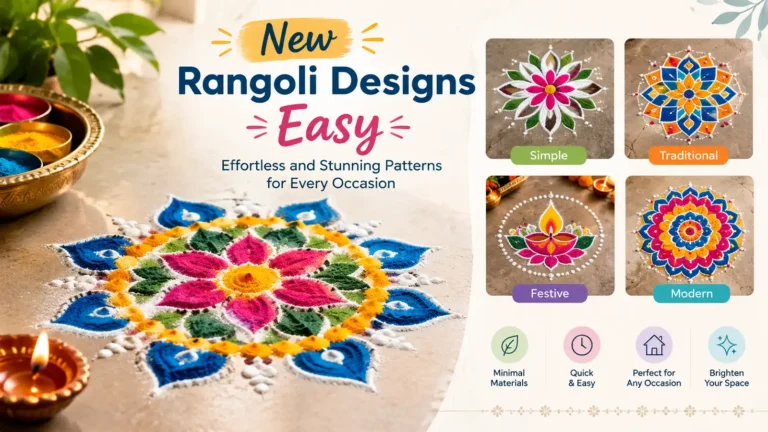
Below are 25 patterns I rotate through. Each one is beginner-friendly. Pick a few, practice them, and they become muscle memory.
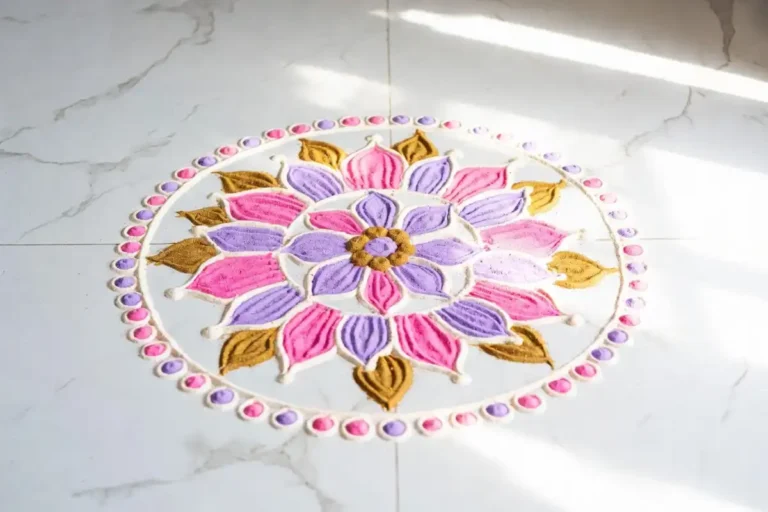
Single-Flower Center Designs (1–7)
These start with one flower in the middle. Simple, clean, fast.
Border and Corner Flower Designs (8–14)
These sit at edges or corners. Good when you want to frame a doorway.
Dotted-Grid Flower Designs (15–20)
These use a dot grid as a guide. Dots make symmetry easy for beginners.
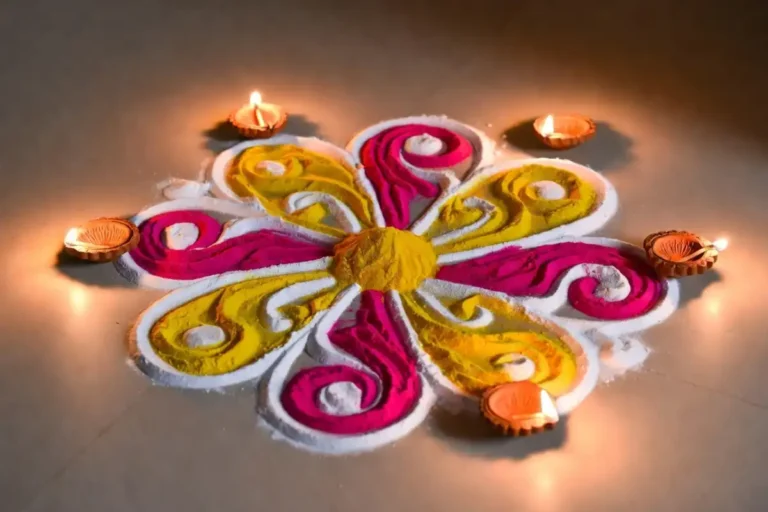
Free-Hand Quick Designs (21–25)
No dots, no grid. Just draw. These are my fastest morning patterns.
I suggest starting with the single-flower group. Those seven teach you petal shape and spacing. After that, the rest come naturally. Every design here fits the goal of a simple flower rangoli for daily use, since each stays small, quick, and easy to repeat.
What Materials Do You Need for a Simple Flower Rangoli for Daily Use?
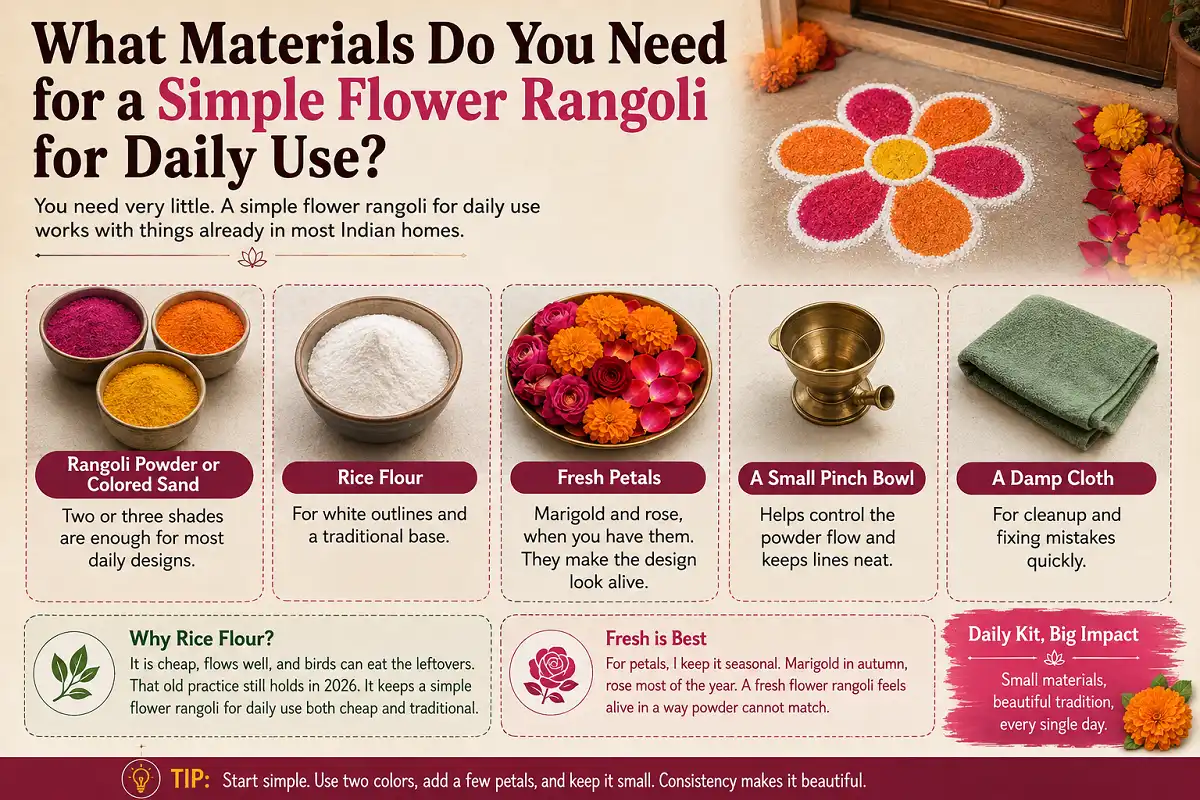
You need very little. A simple flower rangoli for daily use works with things already in most Indian homes.
Here is my daily kit:
- Rangoli powder or colored sand. Two or three shades.
- Rice flour. For white outlines and a traditional base.
- Fresh petals. Marigold and rose, when you have them.
- A small pinch bowl. To control the powder flow.
- A damp cloth. For cleanup and fixing mistakes.
Rice flour is my base for a reason. It is cheap, it flows well, and birds can eat the leftovers. That old practice still holds in 2026. If you want a deeper look at rice-based patterns, my walkthrough on rangoli with rice flour pairs well with daily work. It shows why the flour base keeps a simple flower rangoli for daily use both cheap and traditional.
For petals, I keep it seasonal. Marigold in autumn, rose most of the year. A fresh flower rangoli feels alive in a way powder cannot match.
How Do You Make a Simple Flower Rangoli for Daily Use Step by Step?
Start with a clean floor and a center dot, then build petals outward. That order keeps everything even. Here is the method I use every morning.
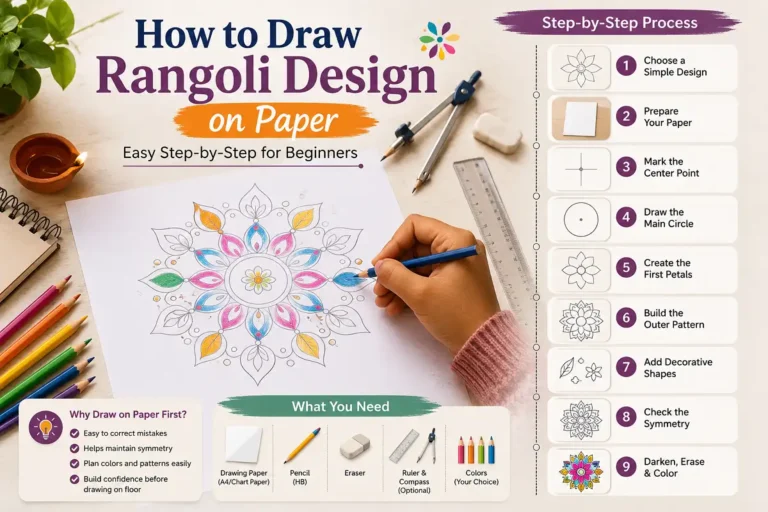
Clean the spot. Wipe the floor. A smooth surface holds powder better.
Mark the center. Place one dot where the flower sits.
Draw the base circle. A light ring sets your flower size.
Add petals. Work around the circle, keeping petals even.
Fill color. Pinch powder and fill each petal.
Add a border. A thin outer line frames the whole design.
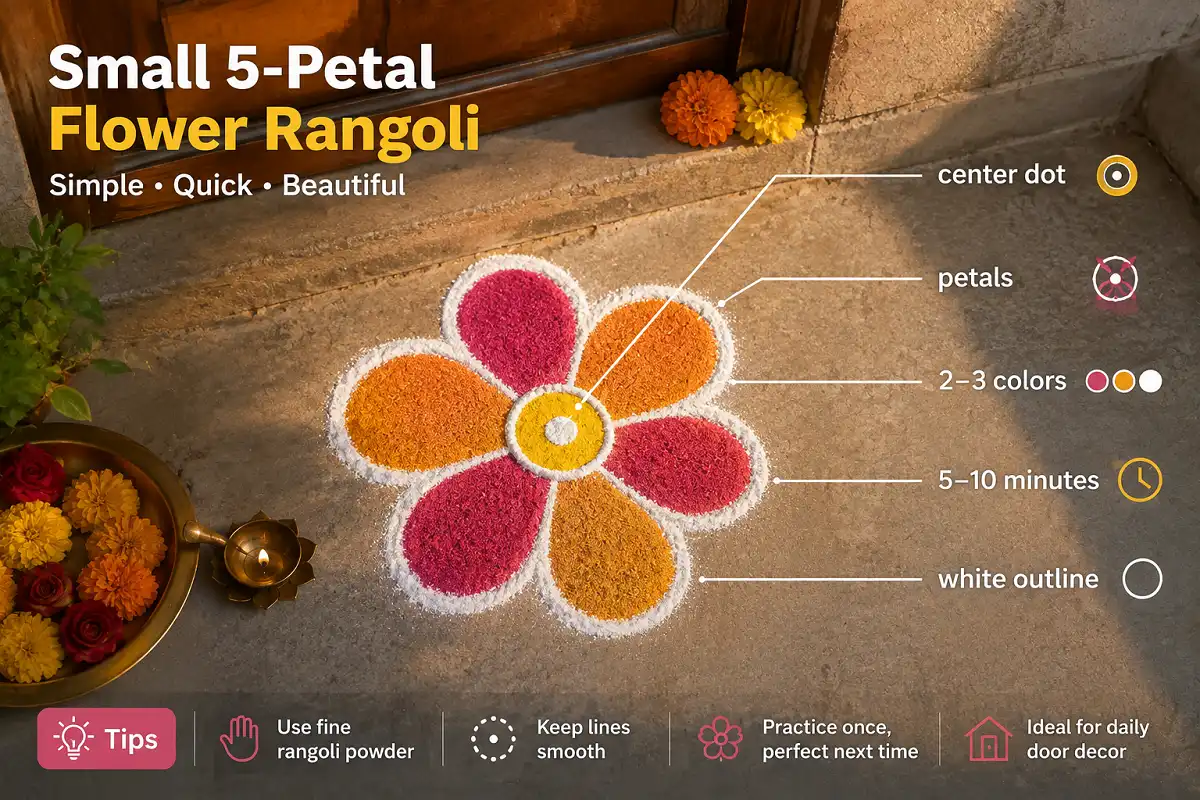
The full flow takes me about eight minutes. New hands may take fifteen. Speed builds fast with daily practice.
One tip that changed my results: fill petals from the outer edge inward. It keeps lines crisp and stops smudging. This small habit makes a simple flower rangoli for daily use look far neater.
How Do You Keep a Daily Rangoli Quick and Neat?
Keep the design small and stick to one motif you have practiced. Speed comes from repetition, not from rushing. A rushed rangoli looks rushed.
These habits keep mine clean:
- Practice one shape until it is automatic. Then rotate a few.
- Use a pinch bowl for steady flow. It stops powder blobs.
- Draw the outline first, color second. Structure before fill.
- Keep a damp cloth close. Fix small errors instantly.
A simple flower rangoli for daily use gets neater with each morning you draw it. Do not judge your first week. By the second week, your petals will space themselves. If you want more floral ideas to rotate in, browse other floral rangoli patterns and add your favorites to the routine.
A simple flower rangoli for daily use should feel calming, not stressful. If a pattern frustrates you, it is too complex for daily work. Drop it and pick an easier one. For very tight doorways, rangoli for small spaces works better than large blooms. A neat, small design beats a big, rushed one every time.
Which Colors Work Best for Everyday Flower Rangoli?
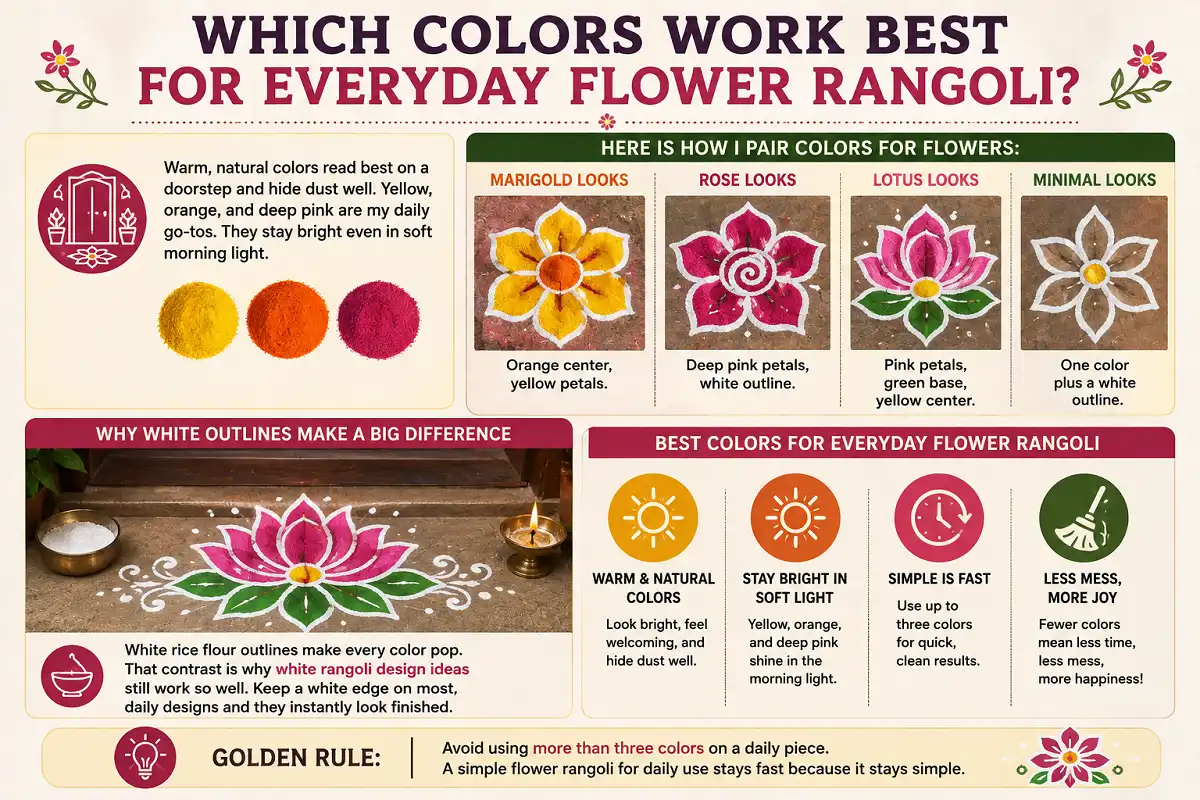
Warm, natural colors read best on a doorstep and hide dust well. Yellow, orange, and deep pink are my daily go-tos. They stay bright even in soft morning light.
Here is how I pair colors for flowers:
White rice flour outlines make every color pop. That contrast is why white rangoli design ideas still work so well. Keep a white edge on most daily designs and they instantly look finished.
Avoid using more than three colors on a daily piece. More colors mean more time and more mess. A simple flower rangoli for daily use stays fast because it stays simple.
Fresh Flowers or Powder for Daily Rangoli?
Powder suits fast daily work, while fresh flowers suit slower, special mornings. Both have a place. I switch based on time and season.
Powder wins on speed. You store it, you scoop it, you draw. It sits for a day and wipes away clean. For a true everyday habit, powder is practical.
Fresh flowers win on beauty. Marigold heads, rose petals, and jasmine give texture and scent. A petal-based flower rangoli suits festival mornings or when guests visit. It takes longer but feels special.
There is a middle path too. You can outline a simple flower rangoli for daily use in powder, then drop a few fresh petals in the center. This gives you speed and a touch of freshness at once. I use this trick on ordinary days when I still want a little extra beauty at the door.
My routine mixes both. Powder on busy days. Petals on Sundays and small occasions. This keeps a simple flower rangoli for daily use fresh without adding daily effort.
Common Placement Ideas for Daily Flower Rangoli
Place your rangoli where it greets people, usually the main door or a tulsi base. Placement shapes the whole feel. Here is where mine go.
- Main entrance. The classic spot. First thing guests see.
- Tulsi plant base. A small circular flower around the pot.
- Pooja room floor. A tidy spiritual bloom near the altar.
- Balcony corner. A quick corner design for open air.
Keep entrance designs within your doorway width. An apartment threshold needs a smaller pattern than a village courtyard. Match the size to the space and it always looks right.
Direction matters a little too. Many people face the flower toward the door, so it greets anyone walking in. A simple flower rangoli for daily use at the tulsi base is often circular, meant to be seen from every side. Pick the orientation that suits the spot, then keep it consistent day to day.
Simple Flower Rangoli for Daily Use in Small Spaces
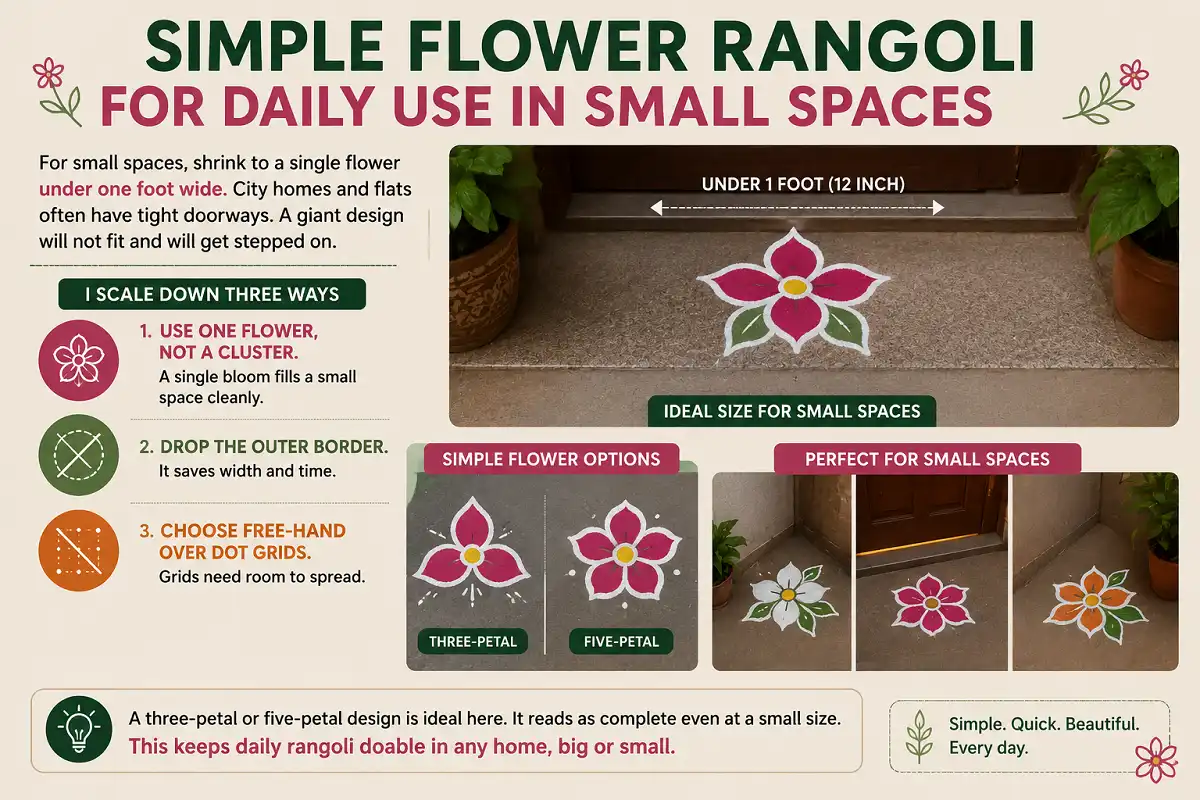
For small spaces, shrink to a single flower under one foot wide. City homes and flats often have tight doorways. A giant design will not fit and will get stepped on.
I scale down three ways for compact spots:
- Use one flower, not a cluster. A single bloom fills a small space cleanly.
- Drop the outer border. It saves width and time.
- Choose free-hand over dot grids. Grids need room to spread.
A three-petal or five-petal design is ideal here. It reads as complete even at a small size. This keeps daily rangoli doable in any home, big or small.
Seasonal Flower Choices Through the Year
Match your flowers to the season for the freshest look and easy supply. Local blooms cost less and last longer. Here is my rough calendar.
- Autumn and Diwali season: marigold, always in supply.
- Winter: chrysanthemum and rose.
- Spring: jasmine and small local blooms.
- Summer: hardy roses and powder, since fresh petals wilt fast.
Rangoli is tied to Indian festivals and daily worship across regions. The tradition is old and living. You can read more about the cultural background of rangoli as a folk art form on Wikipedia.
When petals are scarce, I switch fully to powder. A simple flower rangoli for daily use never depends on one material. That flexibility is what makes it a daily habit and not a chore.
Final Words
A simple flower rangoli for daily use is a small habit with a big return. It welcomes people, marks your day, and takes only minutes. Start with one flower shape from the single-flower group. Practice it for a week until your hand knows it. Then rotate through the 25 designs as you like. Keep it small, keep it warm, and keep it daily. That is the whole secret.
FAQs
How long does a daily flower rangoli take?
About five to ten minutes once you know the shape. Beginners may need fifteen. The single-flower designs are the fastest to learn.
Do I need special skills to start?
No. Start with a three-petal or five-petal flower. Practice one shape for a week. Daily repetition builds the skill quickly.
Can I make a flower rangoli without dots?
Yes. Free-hand designs like the swirl flower or single lotus outline need no dots at all. They are the quickest daily patterns.
What is the cheapest way to do daily rangoli?
Rice flour. It is low cost, easy to find, and traditional. Add a pinch of color powder for accents and your daily kit stays affordable.
How do I stop my rangoli from smudging?
Fill petals from the outer edge inward and keep your powder flow slow with a pinch bowl. A clean, dry floor also helps lines stay sharp.