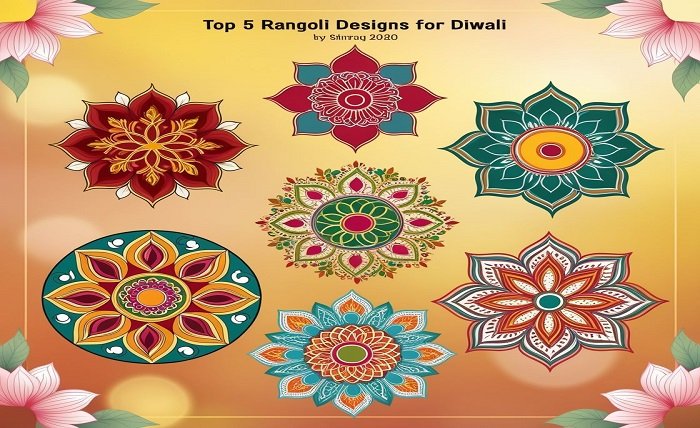
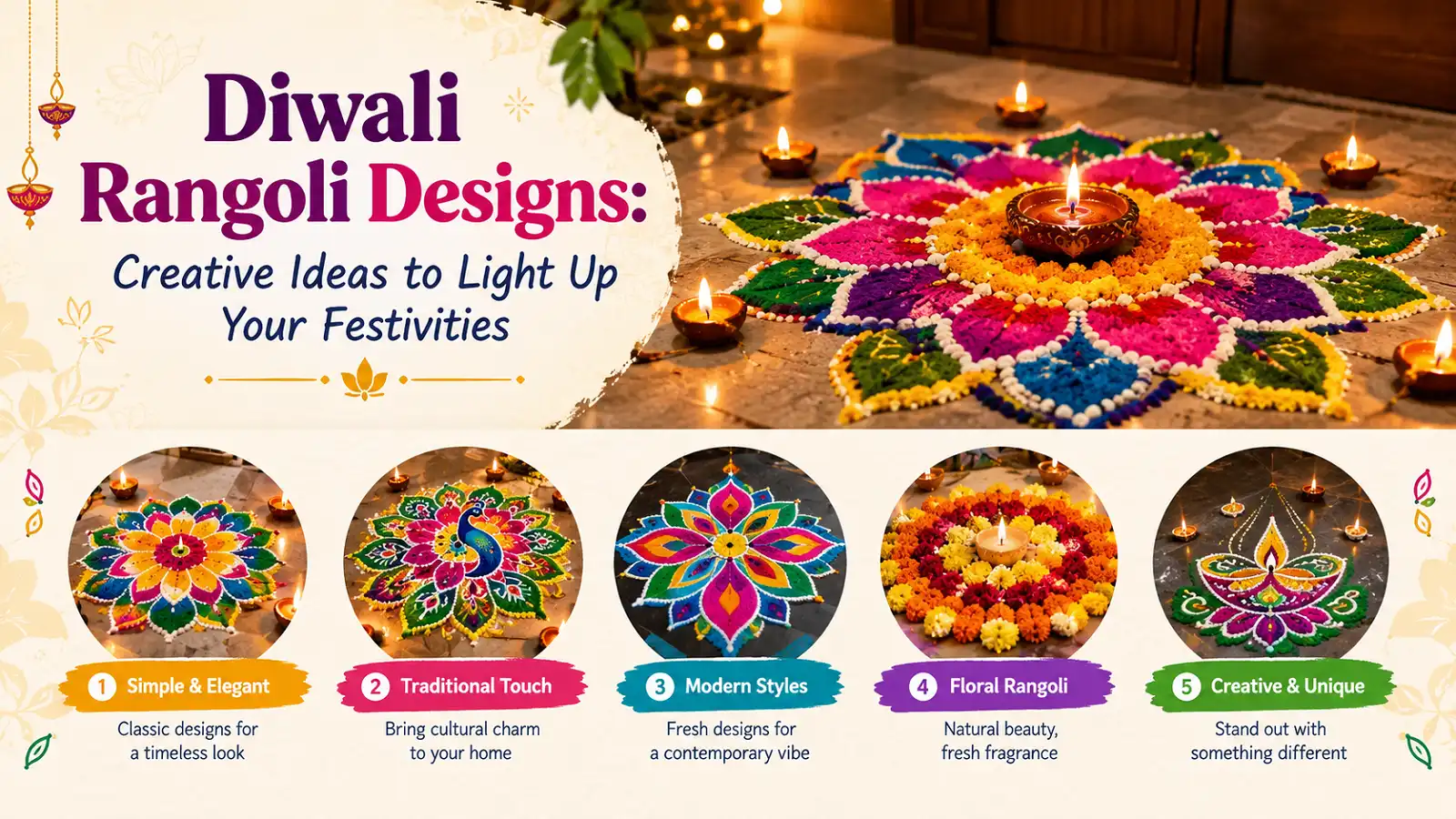
Diwali Rangoli Designs: Creative Ideas to Light Up Your Festivities
Diwali is a time when homes come alive with warm lights, fresh flowers, colorful decorations, and the joyful presence of family and friends.
Among all these decorations, Diwali rangoli designs have a special charm. A beautiful rangoli at the entrance can instantly make a home feel more welcoming while adding a traditional touch to the celebration.
You do not need to be an experienced artist to create something beautiful. A simple flower pattern, a few diyas, or a symmetrical geometric design can look stunning when the colors are chosen carefully. The best part is that you can make your rangoli match your space, time, and personal style.
Whether you prefer a traditional lotus, a colorful floral pattern, a diya-inspired design, or a modern geometric look, there are plenty of creative possibilities to explore.
Why Rangoli Is Special During Diwali
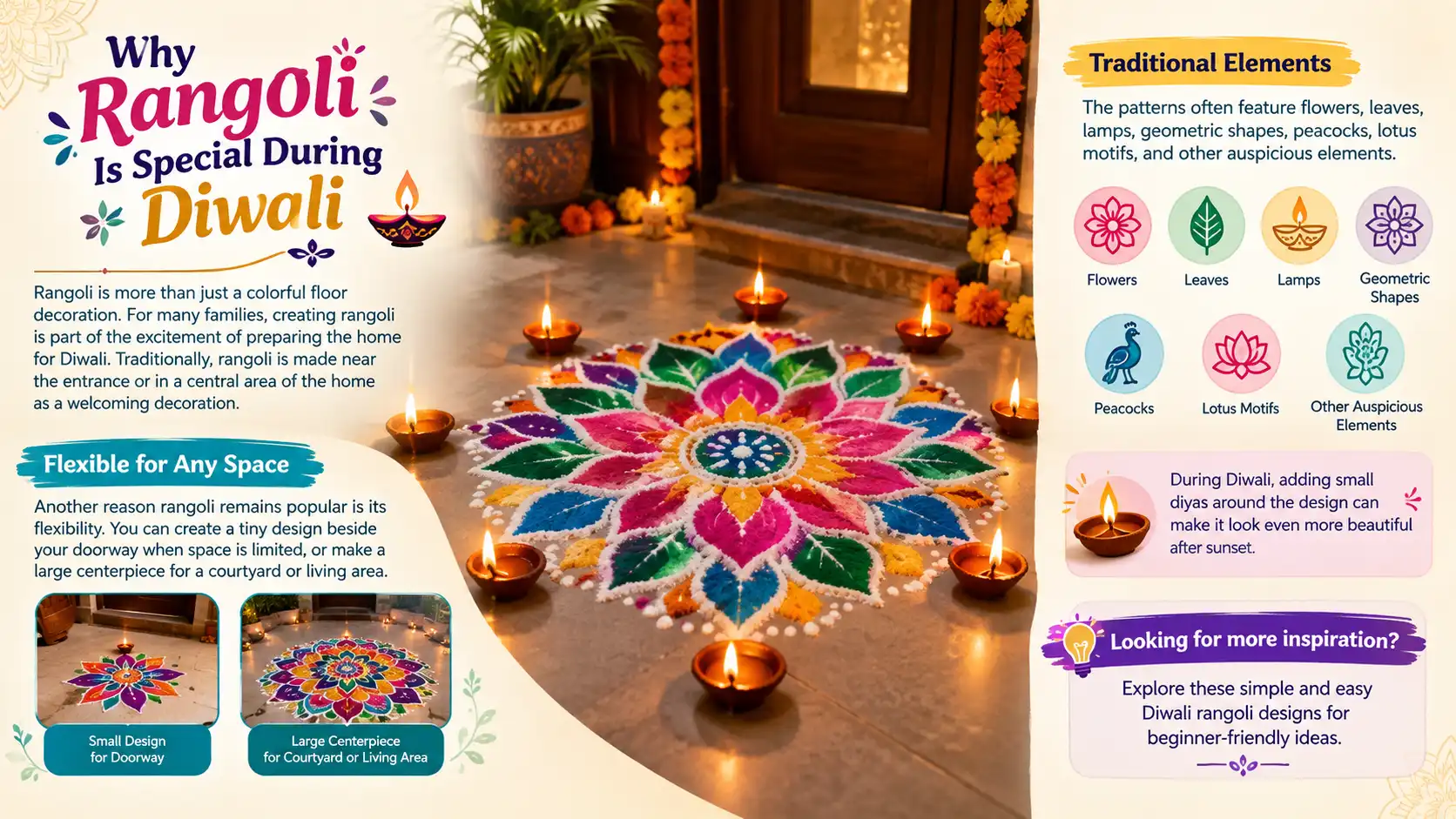
Rangoli is more than just a colorful floor decoration. For many families, creating rangoli is part of the excitement of preparing the home for Diwali. Traditionally, rangoli is made near the entrance or in a central area of the home as a welcoming decoration.
The patterns often feature flowers, leaves, lamps, geometric shapes, peacocks, lotus motifs, and other auspicious elements. During Diwali, adding small diyas around the design can make it look even more beautiful after sunset.
Rangoli is flexible enough for both small spaces and large areas. You can create a tiny design beside your doorway or make a large centerpiece for a courtyard or living area.
If you are looking for more inspiration before starting, explore these simple and easy Diwali rangoli designs for beginner-friendly ideas.
Creative Diwali Rangoli Designs to Try
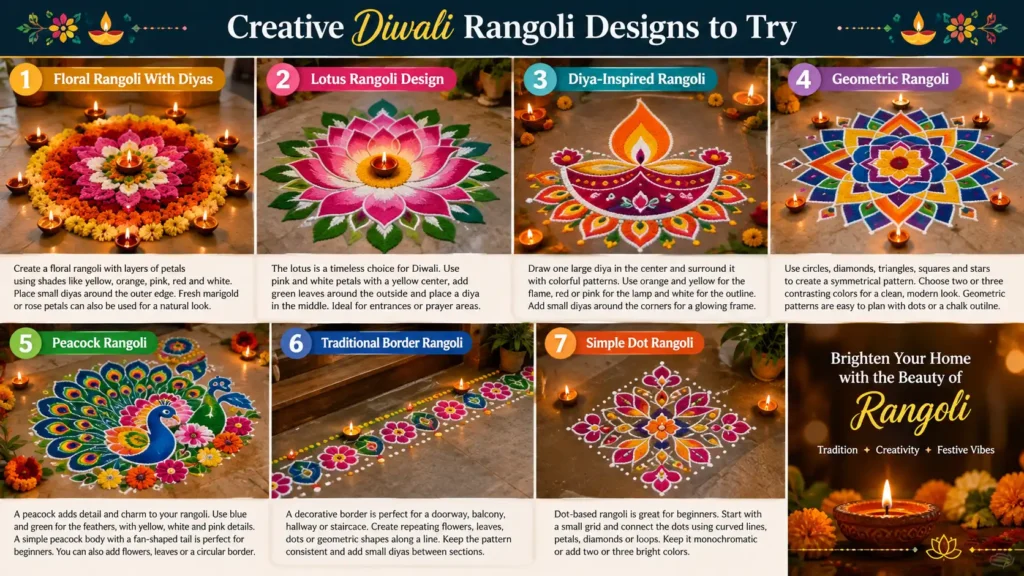
1. Floral Rangoli With Diyas
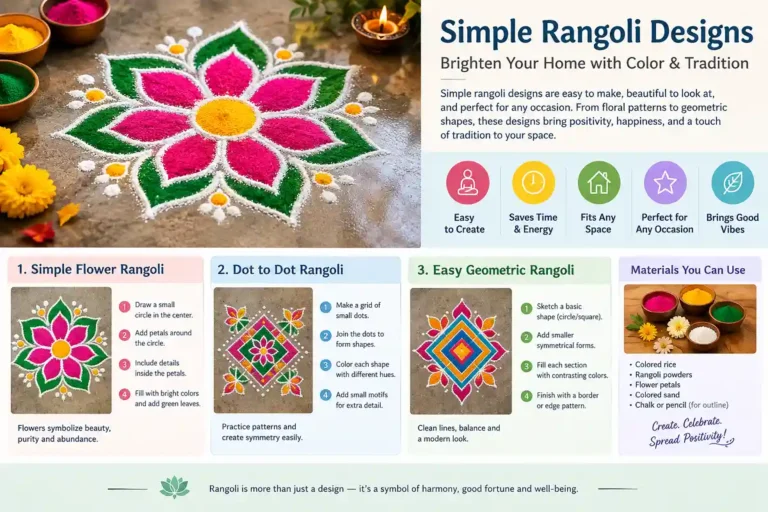
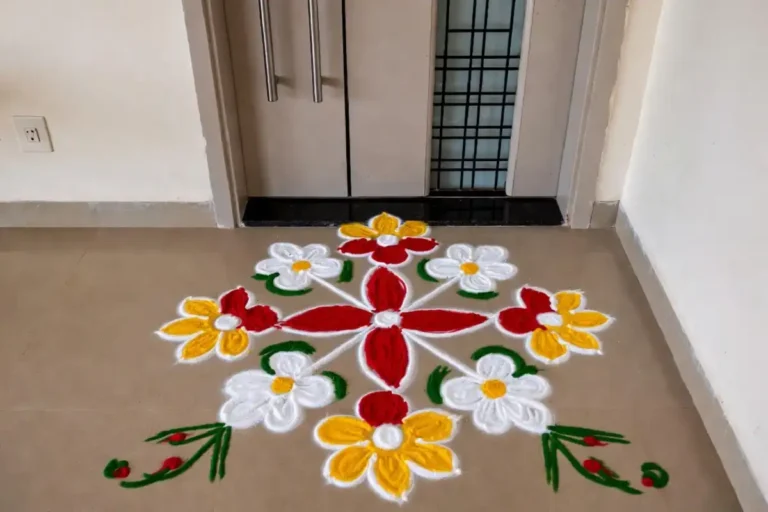
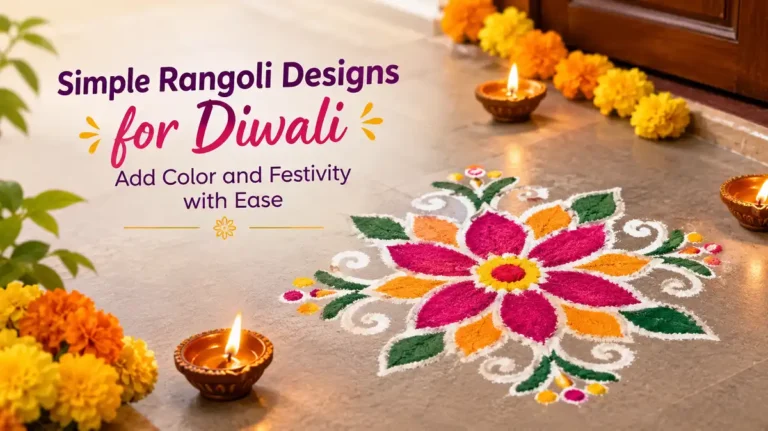
A floral rangoli is one of the easiest ways to create a festive look. Start with a small circle in the center and build layers of petals around it.
You can use shades such as yellow, orange, pink, red, and white to create a lively combination.
Place small diyas around the outer edge once the design is complete. The combination of colorful petals and warm lamp light creates a beautiful Diwali atmosphere.
For a more natural approach, fresh marigold or rose petals can also be used instead of colored powder.
2. Lotus Rangoli Design
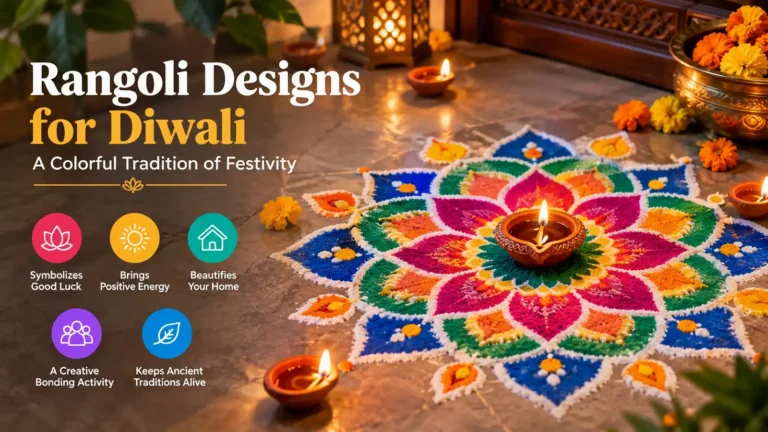
The lotus is a timeless choice for Diwali. Its layered petals naturally create a balanced and elegant pattern, making it suitable for both beginners and experienced artists.
Try using pink and white petals with a yellow center. You can then add green leaves around the outside and place a diya in the middle.
A lotus rangoli works particularly well near the entrance or in front of a prayer area because the symmetrical shape gives the space a calm and traditional appearance.
3. Diya-Inspired Rangoli
Since Diwali is the festival of lights, a diya-themed rangoli is an especially fitting choice. Draw one large diya in the center and surround it with colorful patterns.
You can use orange and yellow for the flame, red or pink for the lamp, and white powder for the outline.
Add small diyas around the corners to create a glowing frame. Even a simple central lamp surrounded by petals can create a strong festive focal point.
4. Geometric Rangoli
If you prefer a clean and modern appearance, try a geometric design. Circles, diamonds, triangles, squares, and stars can be arranged around a central point to create a symmetrical pattern.
Use two or three contrasting colors rather than filling every section with a different shade. This keeps the design neat and gives it a more contemporary feel.
Geometric patterns are also useful when you want a design that can be planned with dots or a simple chalk outline.
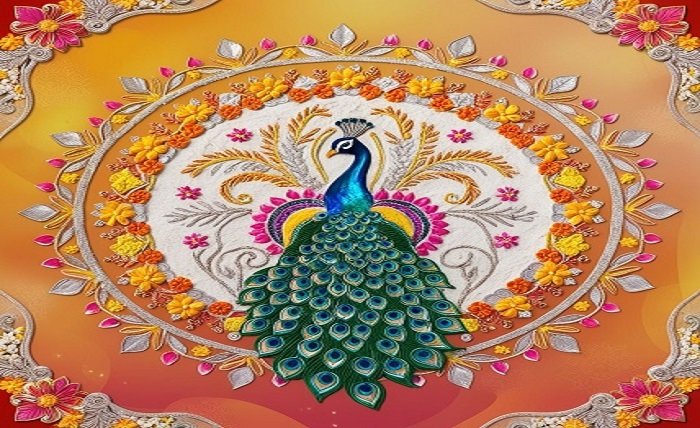
5. Peacock Rangoli
A peacock can turn an ordinary rangoli into a more detailed and eye-catching decoration. Use blue and green for the feathers, then add yellow, white, and pink details for contrast.
If you are a beginner, you do not need to draw a highly detailed bird. A simple peacock body with a fan-shaped tail can be enough.
You can also combine the peacock with flowers, leaves, or a circular border to create a complete composition.
6. Traditional Border Rangoli
Not every rangoli needs to cover a large area. A decorative border can be perfect for a narrow doorway, balcony, hallway, or staircase.
Create repeating flowers, leaves, dots, or geometric shapes along a straight line. Keep the pattern consistent and add small diyas between sections.
This approach is especially useful when you want to decorate several areas of your home without spending hours creating one large design.
7. Simple Dot Rangoli
Dot-based rangoli is a practical option for beginners because the dots provide a guide for creating symmetry.
Start with a small grid and connect the dots using curved lines, petals, diamonds, or loops.
You can keep the design monochromatic with white powder or add two or three bright colors after completing the outline.
If you enjoy experimenting with different patterns, our collection of beautiful rangoli designs has more ideas to explore.
How to Choose the Right Rangoli for Your Home
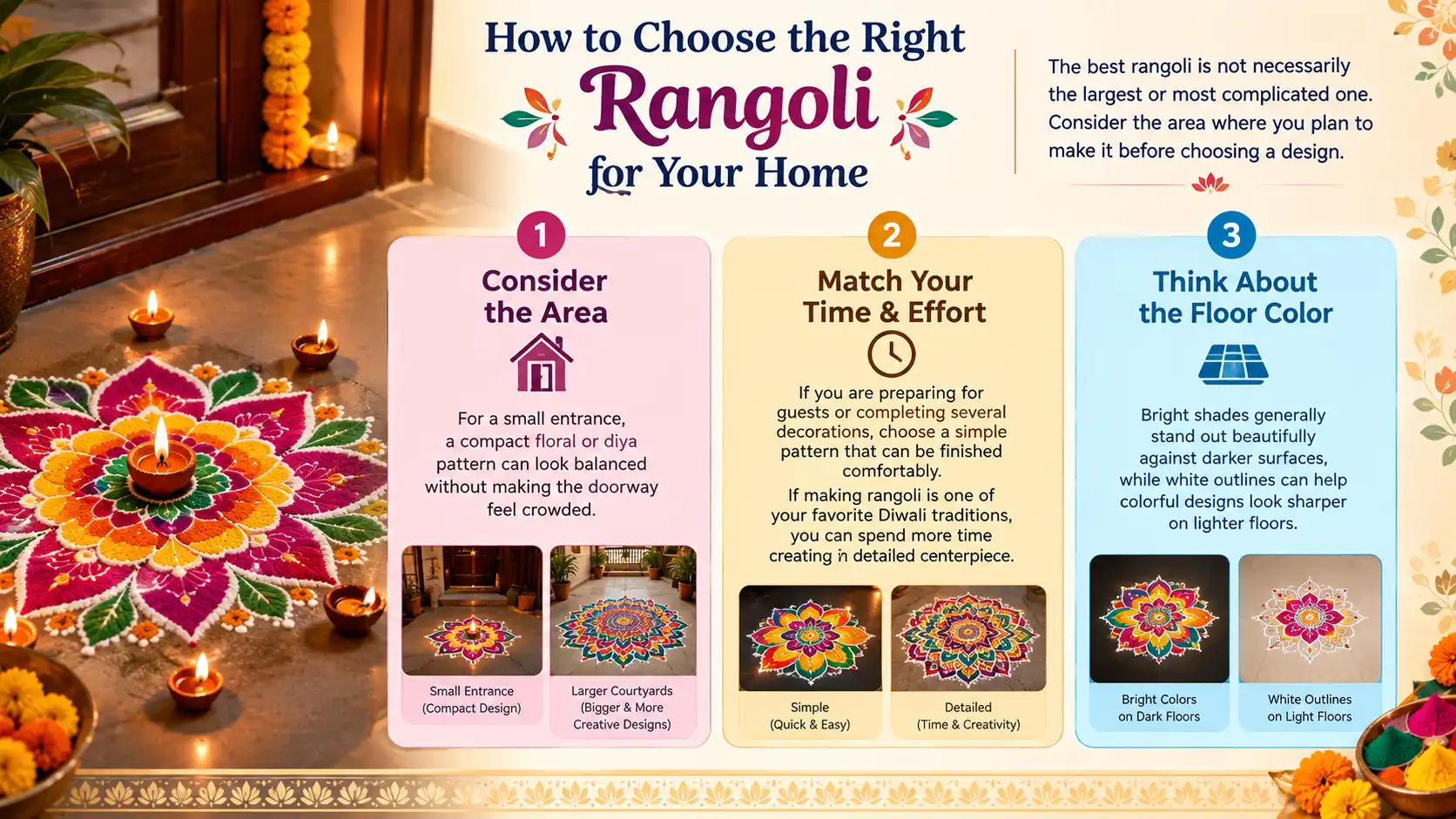
The best rangoli is not necessarily the largest or most complicated one. Consider the area where you plan to make it before choosing a design.
Consider the Area
For a small entrance, a compact floral or diya pattern can look balanced without making the doorway feel crowded.
Larger courtyards give you more freedom to experiment with mandalas, peacocks, layered flowers, and geometric compositions.
Think About Your Time
If you are preparing for guests or completing several decorations, choose a simple pattern that can be finished comfortably.
If making rangoli is one of your favorite Diwali traditions, you can spend more time creating a detailed centerpiece.
Match the Floor Color
Bright shades generally stand out beautifully against darker surfaces, while white outlines can help colorful designs look sharper on lighter floors.
Easy Color Combinations for Diwali Rangoli
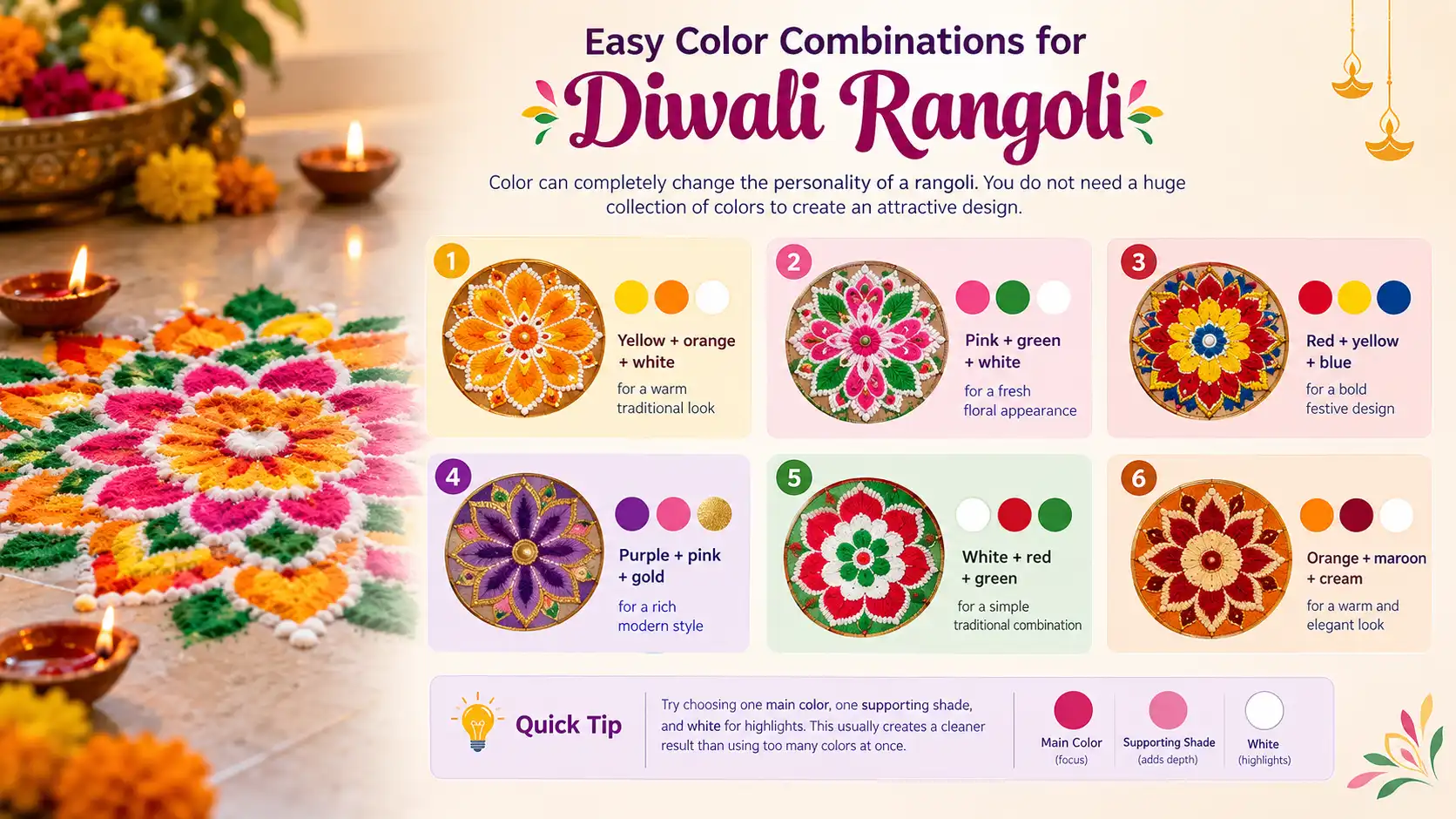
Color can completely change the personality of a rangoli. You do not need a huge collection of colors to create an attractive design.
Try choosing one main color, one supporting shade, and white for highlights. This usually creates a cleaner result than using too many colors at once.
Simple Tips to Make Your Diwali Rangoli Look Better
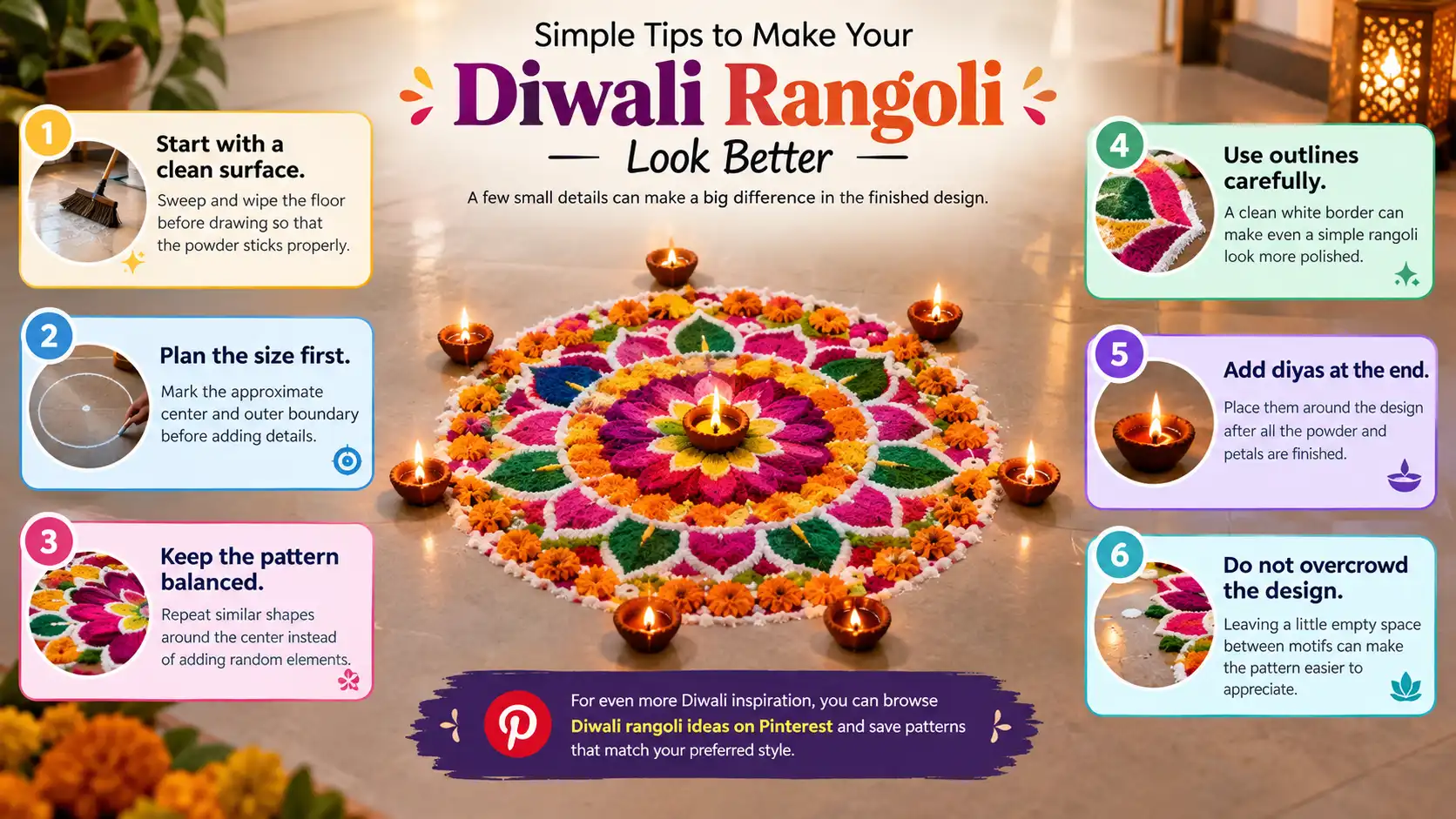
Start with a clean surface. Sweep and wipe the floor before drawing so that the powder sticks properly.
Plan the size first. Mark the approximate center and outer boundary before adding details.
Keep the pattern balanced. Repeat similar shapes around the center instead of adding random elements.
Use outlines carefully. A clean white border can make even a simple rangoli look more polished.
Add diyas at the end. Place them around the design after all the powder and petals are finished.
Do not overcrowd the design. Leaving a little empty space between motifs can make the overall pattern easier to appreciate.
For even more Diwali inspiration, you can browse Diwali rangoli ideas on Pinterest and save patterns that match your preferred style.
Make Your Rangoli More Personal
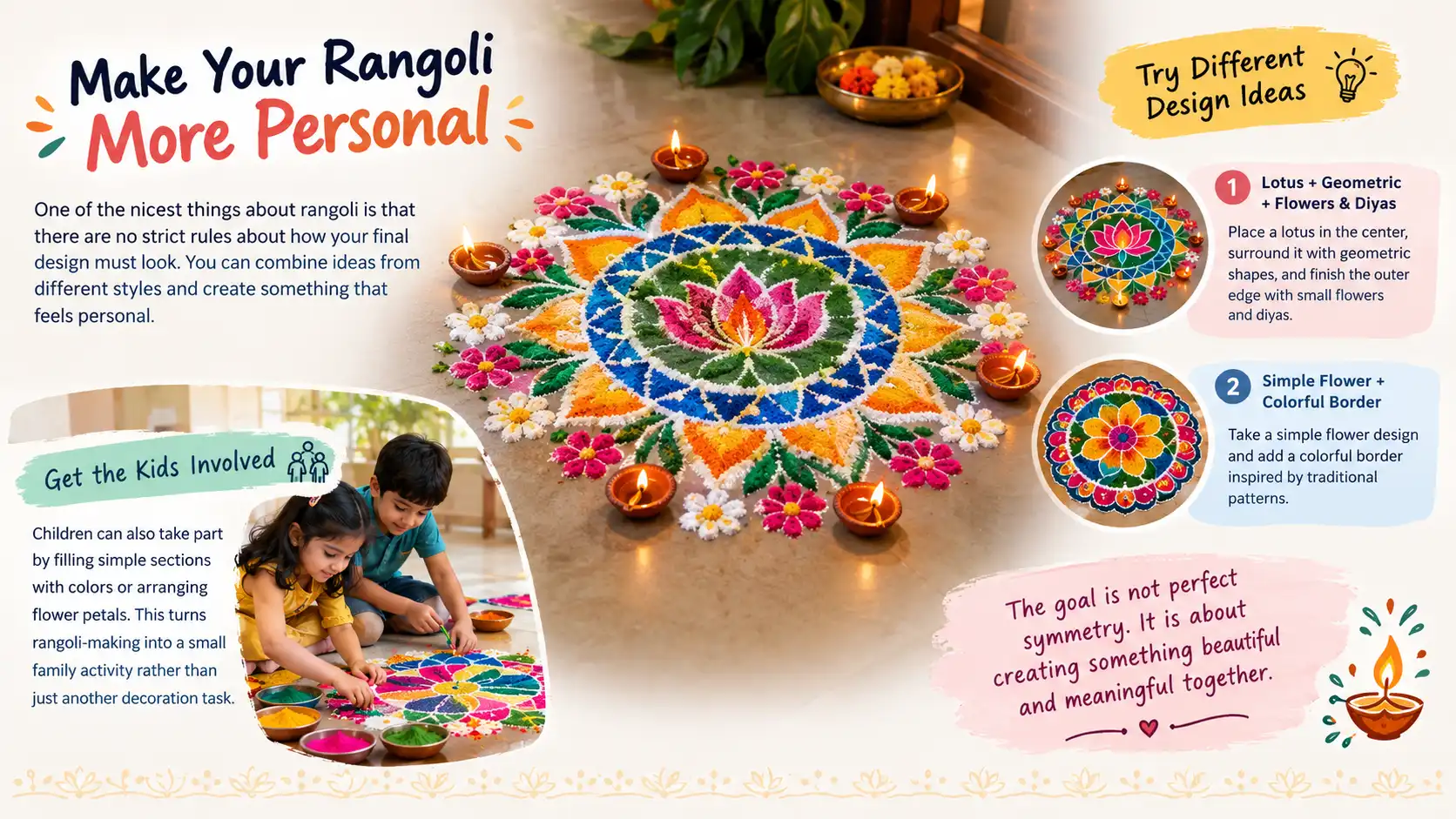
One of the nicest things about rangoli is that there are no strict rules about how your final design must look. You can combine ideas from different styles and create something that feels personal.
For example, you could place a lotus in the center, surround it with geometric shapes, and finish the outer edge with small flowers and diyas. Another option is to take a simple flower design and add a colorful border inspired by traditional patterns.
Children can also take part by filling simple sections with colors or arranging flower petals. This turns rangoli-making into a small family activity rather than just another decoration task.
The goal is not perfect symmetry. It is about creating something beautiful and meaningful together.
The beauty of Diwali rangoli designs comes from the combination of color, creativity, tradition, and personal expression. You do not need a complicated pattern or professional skills to make your home feel festive.
Start with a design that matches your space and experience. Try a flower, lotus, diya, geometric pattern, or simple dot design, then add your own colors and decorative touches.
A few diyas and fresh flower petals can make the finished rangoli glow beautifully in the evening.
Most importantly, enjoy the process. ✨FAQs
Which Diwali rangoli design is best for beginners?
Simple floral, diya, dot-based, and geometric rangoli designs are excellent choices for beginners. They use basic shapes and can be completed without advanced drawing skills.
What colors are best for Diwali rangoli?
Bright festive colors such as yellow, orange, red, pink, green, blue, and white work beautifully. Choose two or three main colors and use white for outlines and small details.
Can I make a Diwali rangoli without rangoli powder?
Yes. You can create beautiful designs using flower petals, rice, colored grains, or other suitable natural materials. Flower-petal rangoli is especially attractive for Diwali.
How can I make a small rangoli look beautiful?
Focus on clean lines, balanced shapes, and a limited color palette. A small central flower or diya surrounded by a neat border can look more attractive than an overcrowded design.
Where should I place a Diwali rangoli?
The entrance, doorstep, courtyard, balcony, or prayer area are common choices. Select a flat, clean space where the design can remain undisturbed and can be enjoyed by your family and guests.