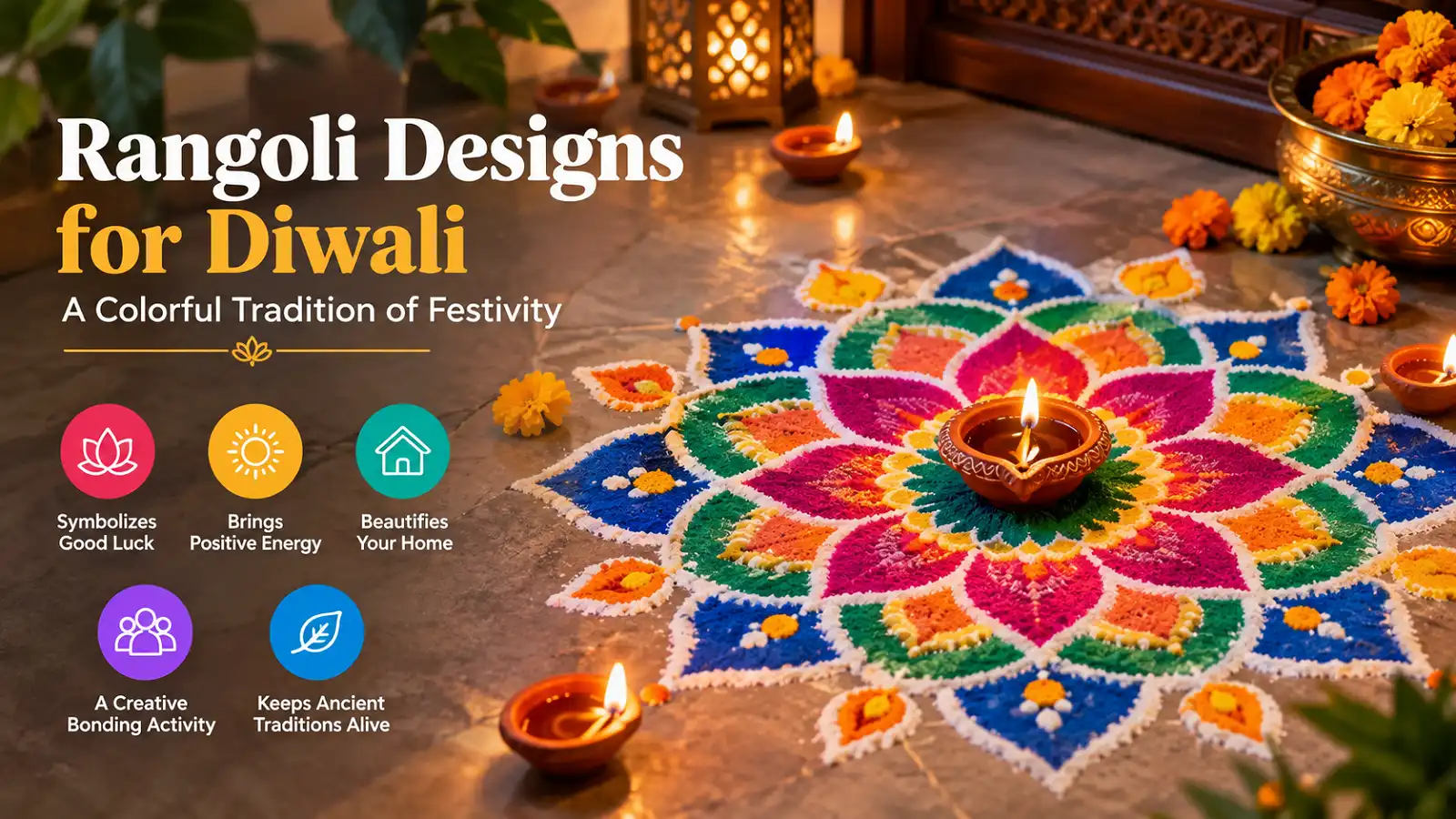
Rangoli Designs for Diwali: A Colorful Tradition of Festivity
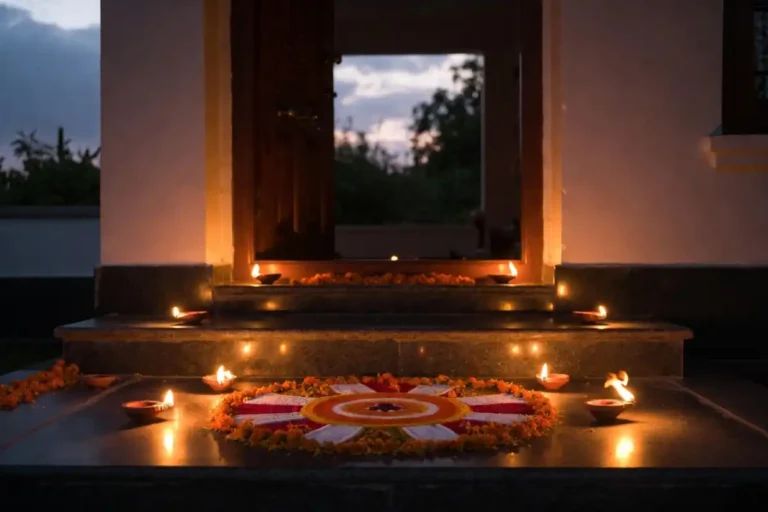
One of the most colorful traditions that decorates homes is the art of rangoli designs for Diwali , which is a complex form of decoration that involves creating beautiful patterns and designs on the floor using colored powders, rice, flower petals, and other natural materials.
The festival of lights, or Diwali, is one of the most widely observed holidays in India and the world. In this blog post, we will explore various rangoli designs for Diwali, their significance, how to create them, and more.
Comprehending Rangoli: A Form of Cultural Art
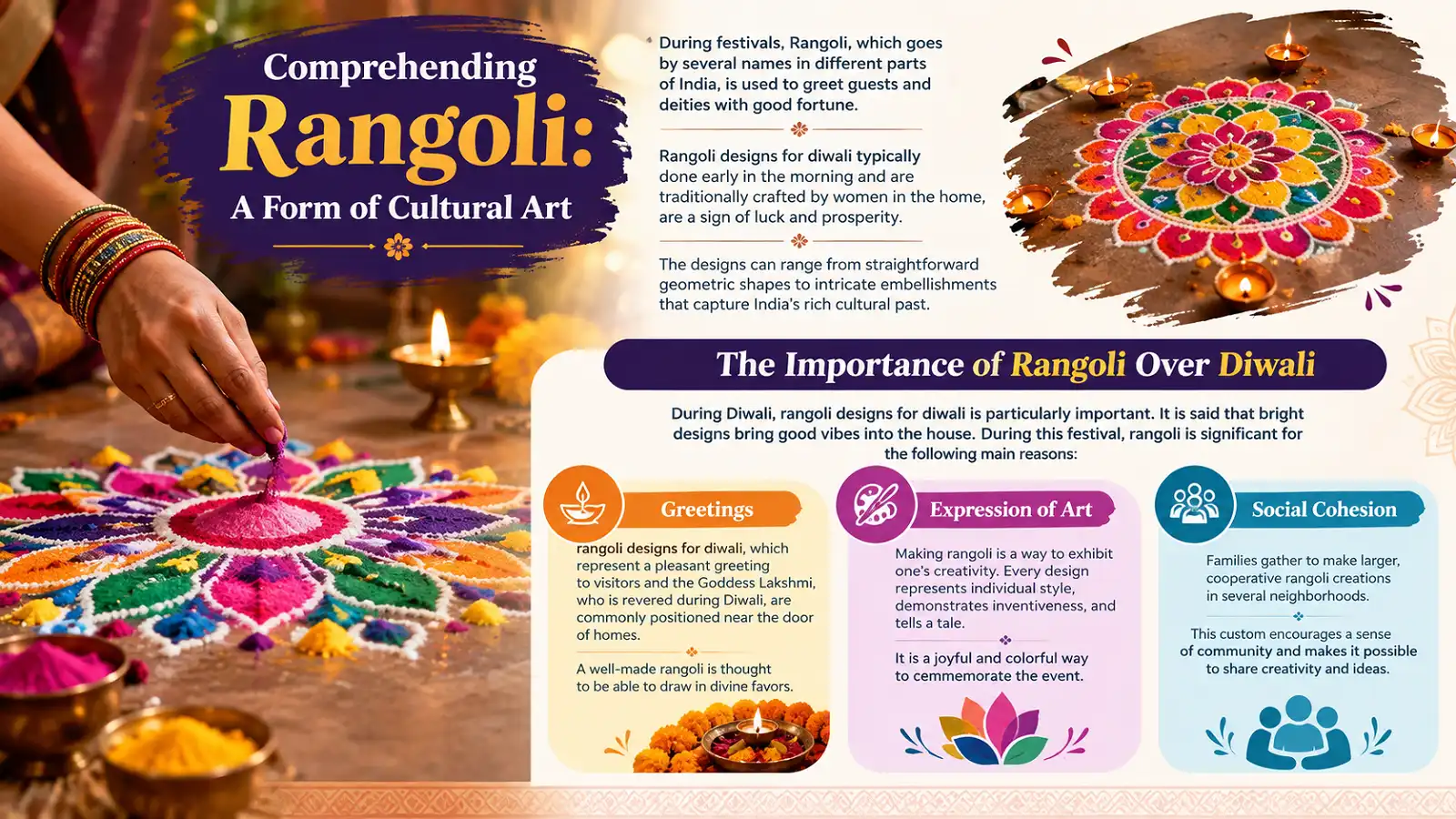
During festivals, Rangoli, which goes by several names in different parts of India, is used to greet guests and deities with good fortune.
Rangoli designs for Diwali are typically done early in the morning and are traditionally crafted by women in the home. They are a sign of luck and prosperity.
The designs can range from straightforward geometric shapes to intricate embellishments that capture India’s rich cultural past.
The Importance of Rangoli Over Diwali
During Diwali, rangoli designs for Diwali are particularly important. It is said that bright designs bring good vibes into the house. During this festival, rangoli is significant for the following main reasons:
Greetings
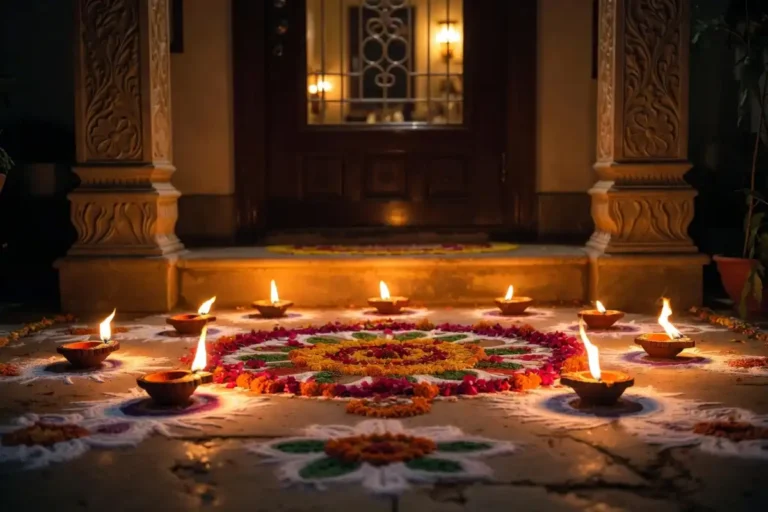
Rangoli designs for Diwali, which represent a pleasant greeting to visitors and the Goddess Lakshmi, who is revered during Diwali, are commonly positioned near the door of homes.
A well-made rangoli is thought to be able to draw in divine favors.
Expression of Art
Making rangoli is a way to exhibit one’s creativity. Every design represents individual style, demonstrates inventiveness, and tells a tale.
It is a joyful and colorful way to commemorate the event.
Social Cohesion
Families gather to make larger, cooperative rangoli creations in several neighborhoods.
This custom encourages a sense of community and makes it possible to share creativity and ideas.
Well-liked Diwali Rangoli Designs
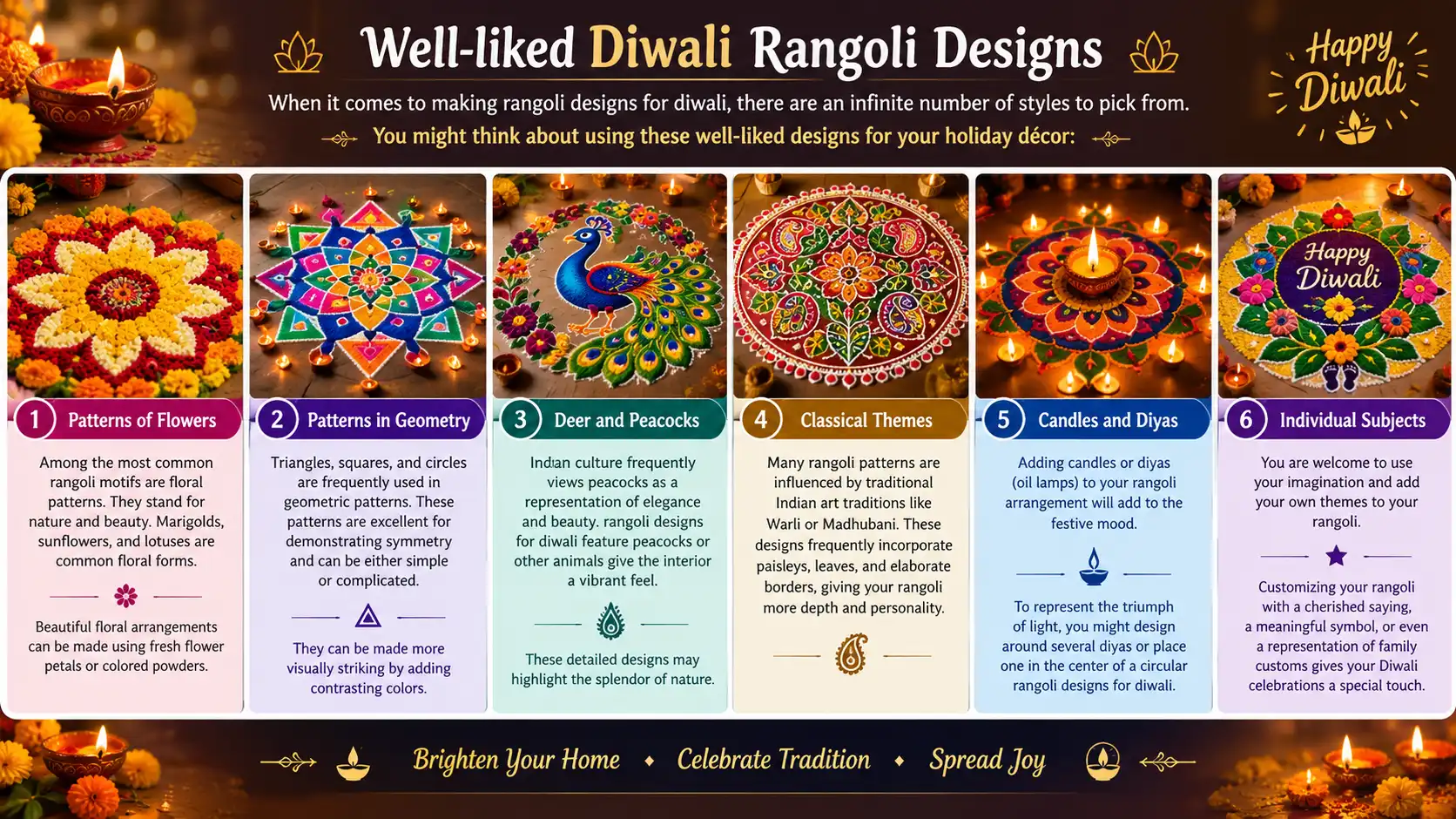
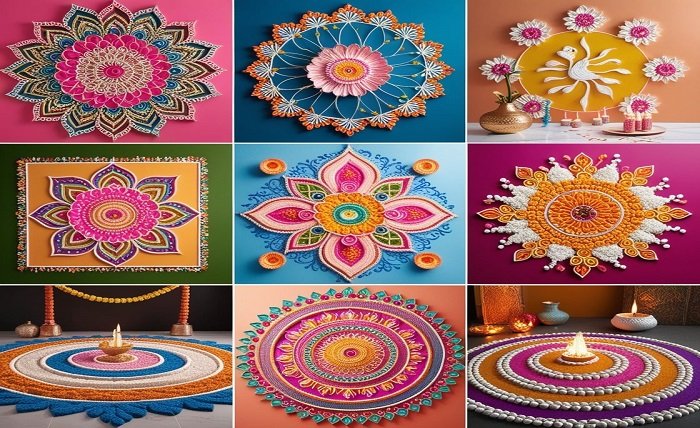
When it comes to making rangoli designs for Diwali , there are an infinite number of styles to pick from.
You might think about using these well-liked designs for your holiday décor:
Patterns of Flowers
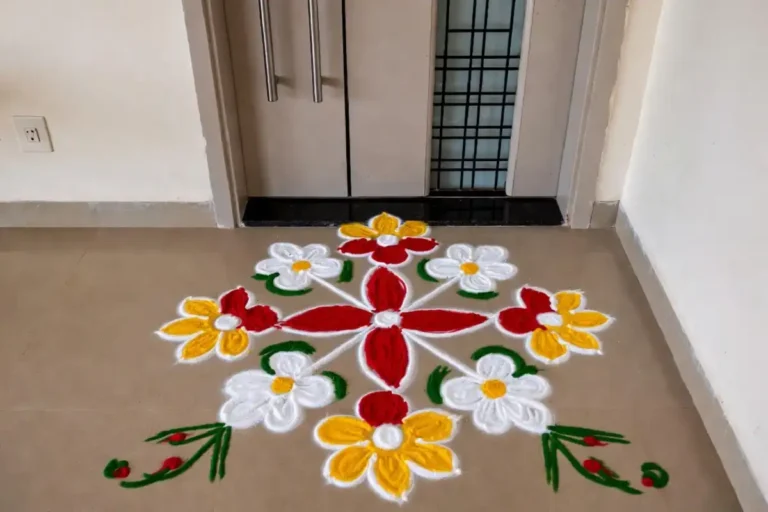
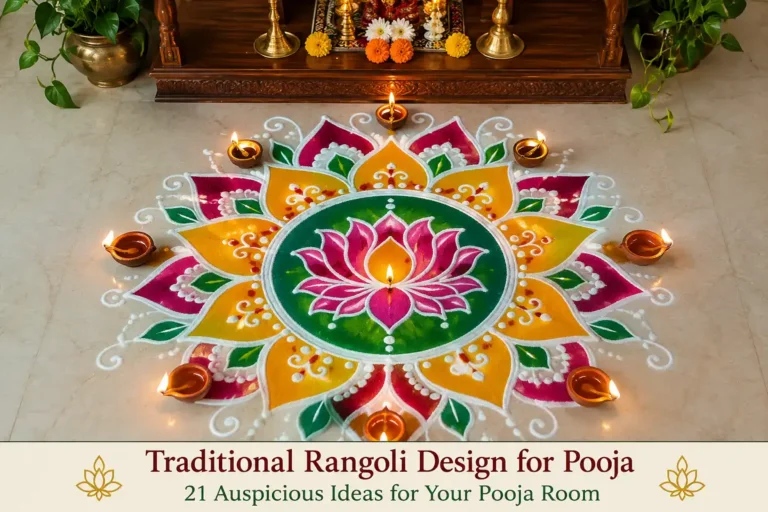
Among the most common rangoli motifs are floral patterns. They stand for nature and beauty. Marigolds, sunflowers, and lotuses are common floral forms.
Beautiful floral arrangements can be made using fresh flower petals or colored powders.
Patterns in Geometry
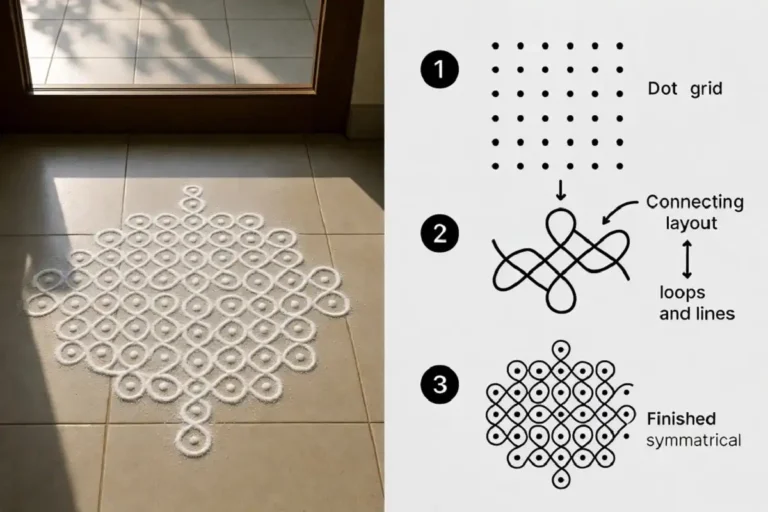
Triangles, squares, and circles are frequently used in geometric patterns. These patterns are excellent for demonstrating symmetry and can be either simple or complicated.
They can be made more visually striking by adding contrasting colors.
Deer and Peacocks
Indian culture frequently views peacocks as a representation of elegance and beauty. Rangoli designs for Diwali featuring peacocks or other animals give the interior a vibrant feel.
These detailed designs may highlight the splendor of nature.
Classical Themes
Many rangoli patterns are influenced by traditional Indian art traditions like Warli or Madhubani.
These designs frequently incorporate paisleys, leaves, and elaborate borders, giving your rangoli more depth and personality.
Candles and Diyas
Adding candles or diyas (oil lamps) to your rangoli arrangement will add to the festive mood.
To represent the triumph of light, you might design around several diyas or place one in the center of a circular rangoli design.
Individual Subjects
You are welcome to use your imagination and add your own themes to your rangoli.
Customizing your rangoli with a cherished saying, a meaningful symbol, or even a representation of family customs gives your Diwali celebrations a special touch.
How to Make Gorgeous Rangoli Patterns
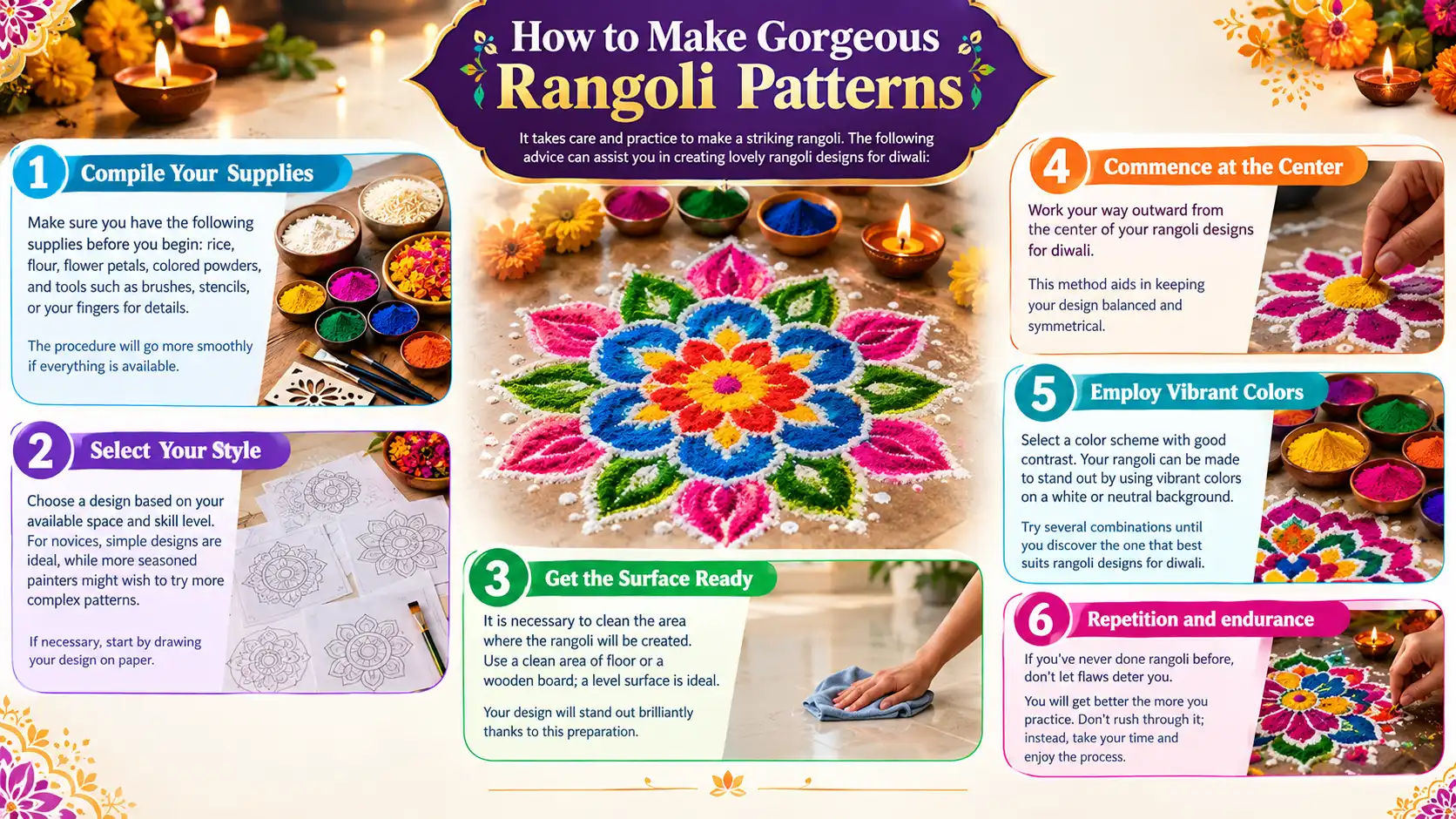
It takes care and practice to make a striking rangoli. The following advice can assist you in creating lovely rangoli designs for Diwali:
Compile Your Supplies
Make sure you have the following supplies before you begin: rice, flour, flower petals, colored powders, and tools such as brushes, stencils, or your fingers for details.
The procedure will go more smoothly if everything is available.
Select Your Style
Choose a design based on your available space and skill level. For novices, simple designs are ideal, while more seasoned painters might wish to try more complex patterns.
If necessary, start by drawing your design on paper.
Get the Surface Ready
It is necessary to clean the area where the rangoli will be created. Use a clean area of floor or a wooden board; a level surface is ideal.
Your design will stand out brilliantly thanks to this preparation.
Commence at the Center
Work your way outward from the center of your rangoli designs for Diwali.
This method aids in keeping your design balanced and symmetrical.
Employ Vibrant Colors
Select a color scheme with good contrast. Your rangoli can be made to stand out by using vibrant colors on a white or neutral background.
Try several combinations until you discover the one that best suits rangoli designs for Diwali.
Repetition and Endurance
If you’ve never done rangoli before, don’t let flaws deter you.
You will get better the more you practice. Don’t rush through it; instead, take your time and enjoy the process.
Rangoli Options That Are Eco-Friendly
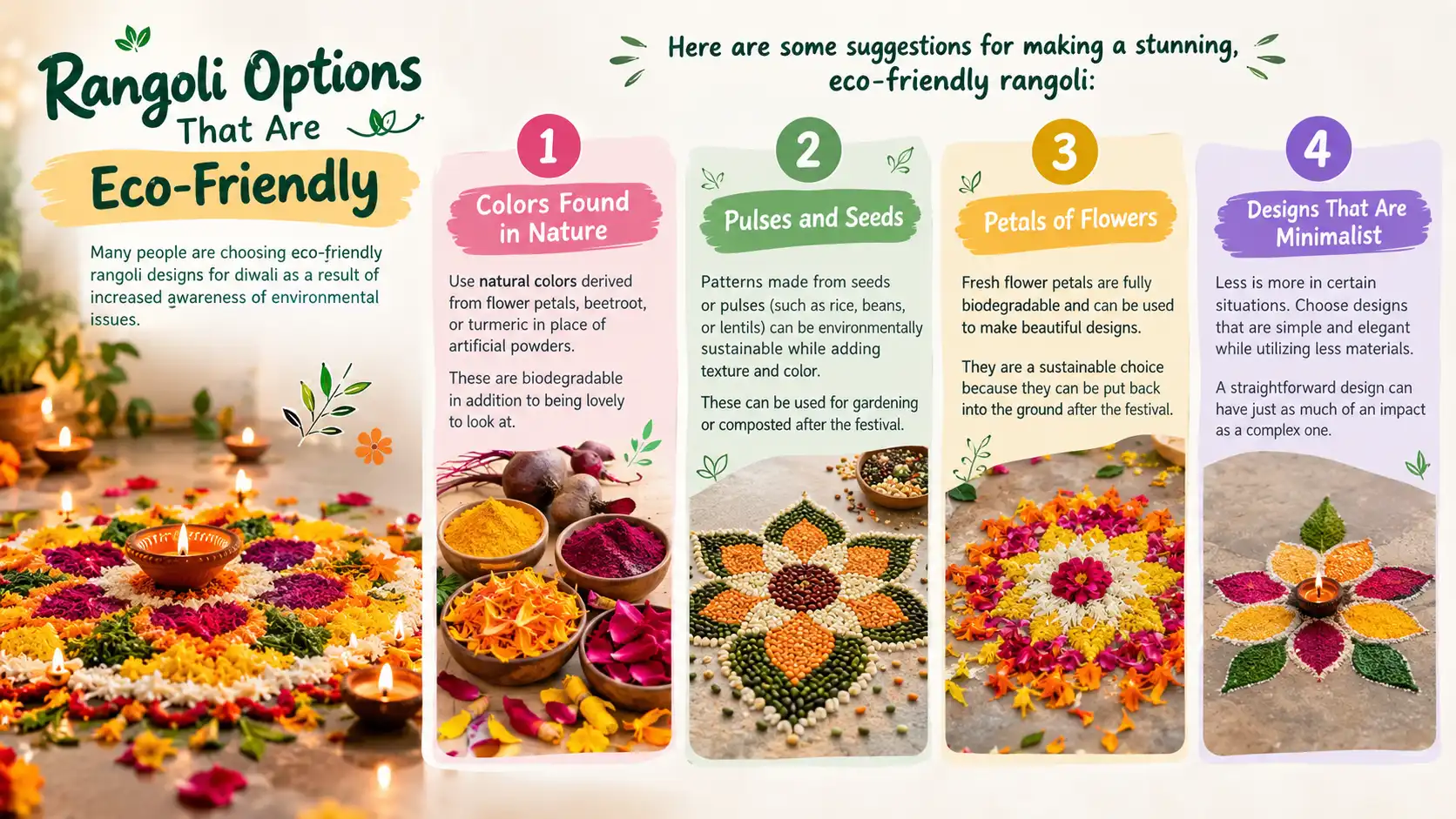
Many people are choosing eco-friendly rangoli designs for Diwali as a result of increased awareness of environmental issues.
Here are some suggestions for making a stunning, eco-friendly rangoli:
Colors Found in Nature
Use natural colors derived from flower petals, beetroot, or turmeric in place of artificial powders.
These are biodegradable in addition to being lovely to look at.
Pulses and Seeds
Patterns made from seeds or pulses, such as rice, beans, or lentils, can be environmentally sustainable while adding texture and color.
These can be used for gardening or composted after the festival.
Petals of Flowers
Fresh flower petals are fully biodegradable and can be used to make beautiful designs.
They are a sustainable choice because they can be put back into the ground after the festival.
Designs That Are Minimalist
Less is more in certain situations. Choose designs that are simple and elegant while utilizing less materials.
A straightforward design can have just as much of an impact as a complex one.
Eco-friendly tip: Natural colors, flower petals, seeds, and pulses can help create beautiful Rangoli designs while reducing the use of artificial materials.
Rangoli Contests: Displaying Your Ability
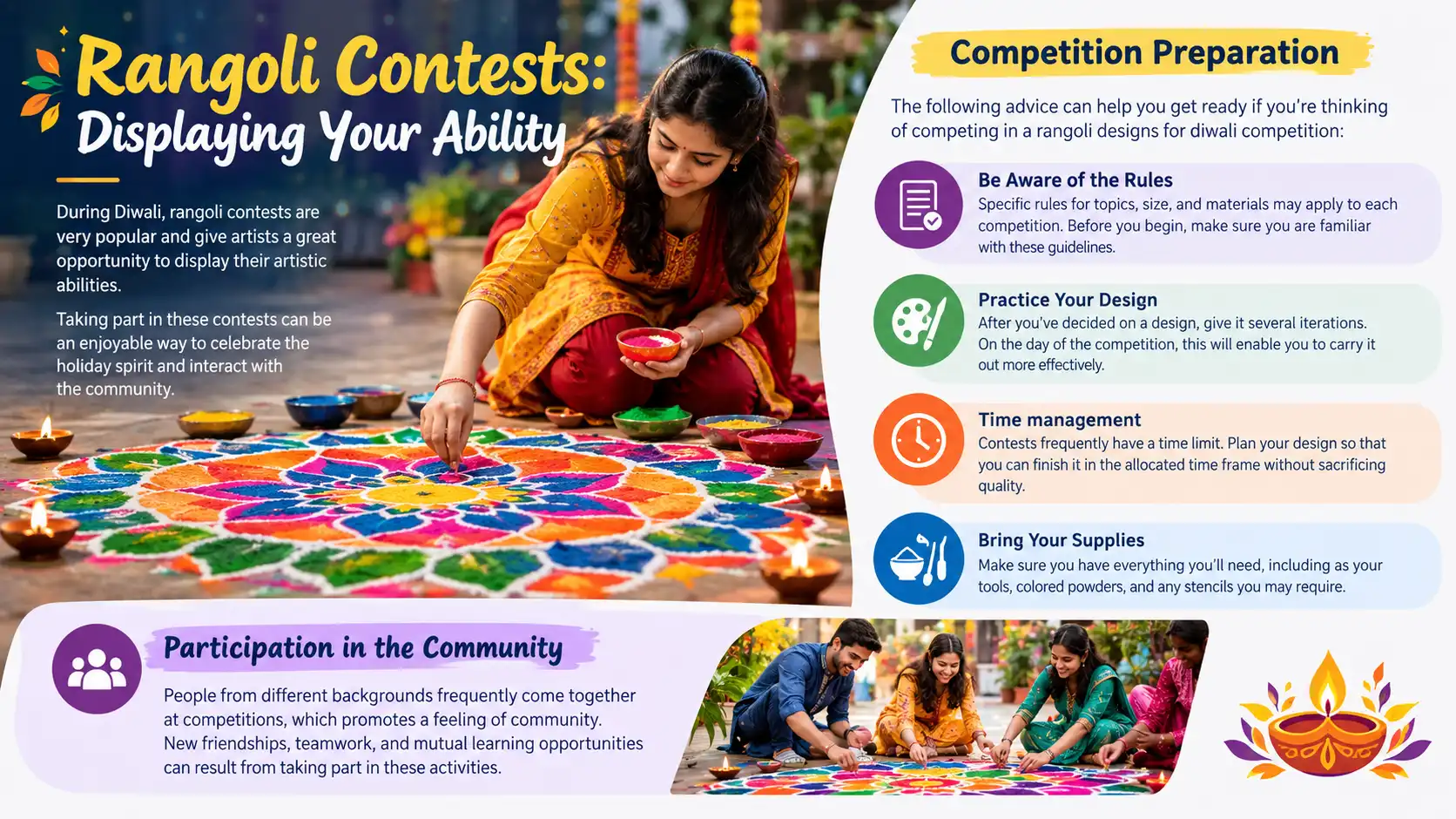
During Diwali, rangoli contests are very popular and give artists a great opportunity to display their artistic abilities.
Taking part in these contests can be an enjoyable way to celebrate the holiday spirit and interact with the community.
Competition Preparation
The following advice can help you get ready if you’re thinking of competing in a rangoli designs for Diwali competition:
Specific rules for topics, size, and materials may apply to each competition. Before you begin, make sure you are familiar with these guidelines.
After you’ve decided on a design, give it several iterations. On the day of the competition, this will enable you to carry it out more effectively.
Contests frequently have a time limit. Plan your design so that you can finish it in the allocated time frame without sacrificing quality.
Make sure you have everything you’ll need, including your tools, colored powders, and any stencils you may require.
Participation in the Community
People from different backgrounds frequently come together at competitions, which promotes a feeling of community. New friendships, teamwork, and mutual learning opportunities can result from taking part in these activities.
Rangoli designs for Diwali are a colorful and essential component of the festival, enabling people and families to show their individuality while respecting customs.
As you participate in this exquisite art form, keep in mind that the process is just as significant as the finished item.
Every rangoli conveys a message of happiness, hope, and wealth, regardless of whether you choose elaborate or straightforward patterns. Accept this custom and use this festive season to express your uniqueness!
Celebrate Diwali with creativity, color, and tradition. ✨FAQs
What are the best Rangoli Designs for Diwali?
The best Rangoli Designs for Diwali include floral patterns, diya designs, lotus motifs, geometric mandalas, peacock patterns, and traditional designs made with vibrant colors.
Why is Rangoli important during Diwali?
Rangoli is an important Diwali tradition that is believed to welcome prosperity, happiness, and positive energy into the home. It also adds a festive and colorful touch to the entrance.
What colors are commonly used in Diwali Rangoli designs?
Bright colors such as red, yellow, orange, pink, green, blue, and purple are commonly used. White is often added to outline patterns and create a clean, traditional look.
How can beginners make a simple Diwali Rangoli?
Beginners can start with a small flower, diya, or circular pattern. Marking a few simple dots first can make it easier to create balanced shapes and symmetrical designs.
Where should I place a Rangoli during Diwali?
A Rangoli is commonly placed at the main entrance, doorway, balcony, or in front of the puja area. Choose a clean, flat space where the design can be clearly seen and enjoyed.