Rangoli Designs with Dots: A Creative Tradition of Beauty and Joy
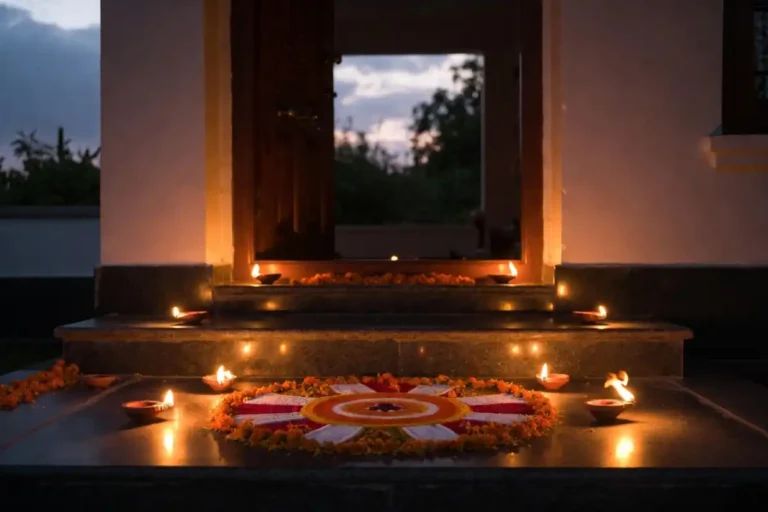
An important role in the subcontinent’s cultural and religious customs is played by the traditional Indian art form of Rangoli. Rangoli designs with dots are made at temples, courtyards, and doorsteps during festivals and auspicious events, mostly using colourful powders, flowers, and occasionally coloured rice or sand.
The use of dots as the basis for elaborate and exquisite designs is among Rangoli’s most remarkable features.
These dot-based Rangoli designs give their makers a way to meditate while enhancing the beauty and festive atmosphere of any area. This blog post will cover a number of topics related to rangoli designs with dots, including how to make beautiful patterns step-by-step.
Rangoli Designs’ Importance in Indian Culture
In India, Rangoli has great cultural significance as a symbol of happiness, prosperity, and the acceptance of good energy. Although the art form is frequently created for festivals like Diwali, Onam, Pongal, and Navratri, it is also performed on a daily basis for events like house-warming ceremonies and birthdays.
Rangoli designs with dots rely heavily on the dots to guide the pattern development, providing a simple yet imaginative method to generate intricate designs approachable by anybody with a little effort.
What are Designs for Dotted Rangoli?
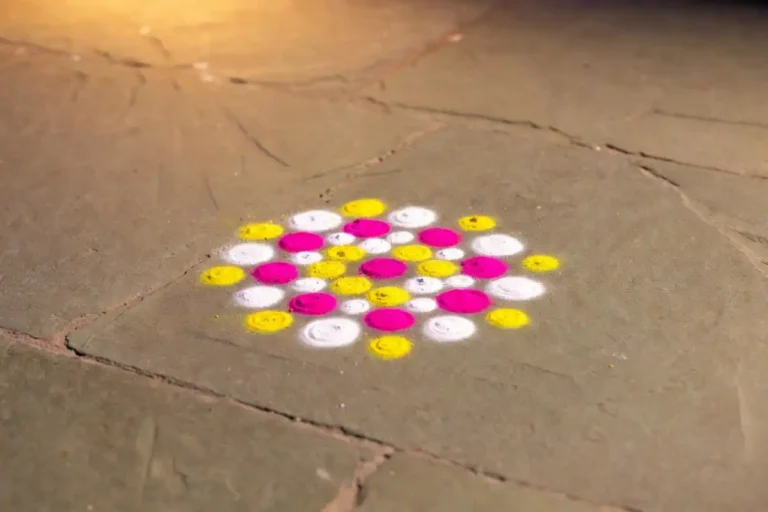
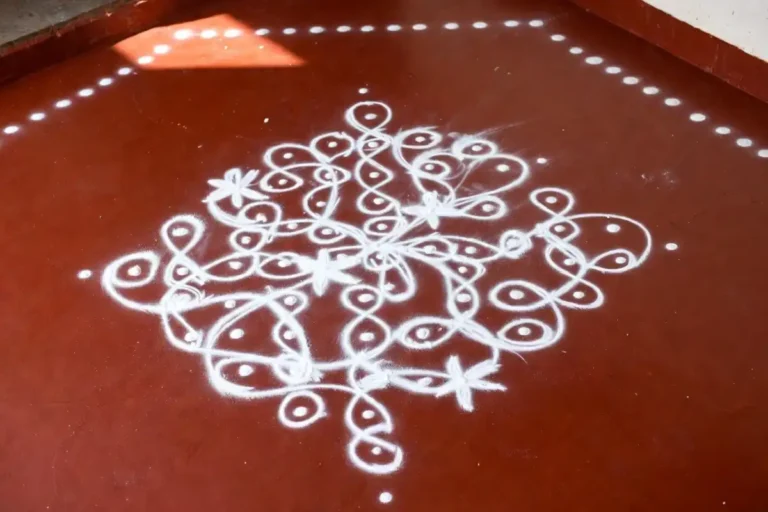
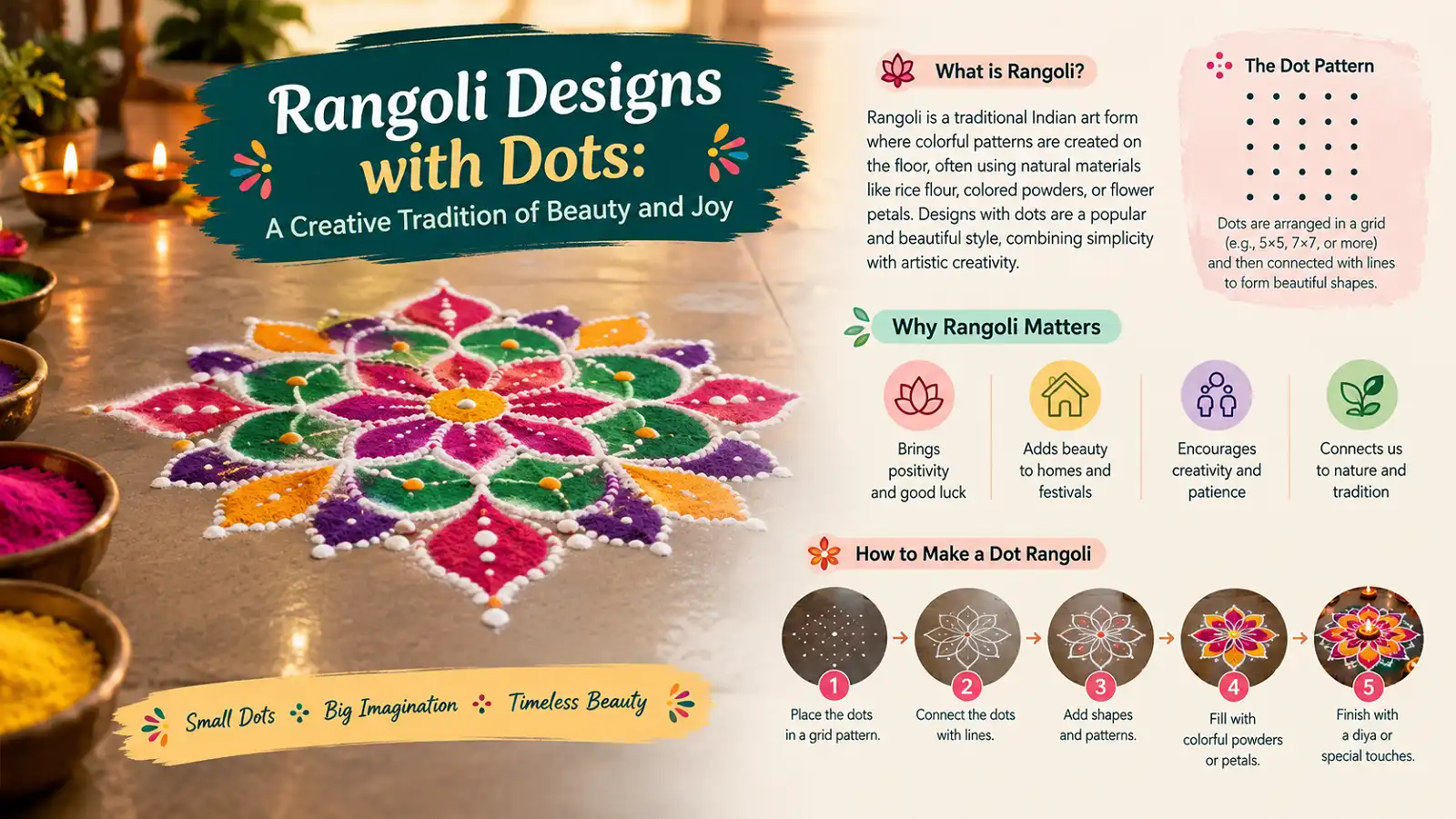
Dotted Rangoli patterns start with a grid of dots that are regularly spaced and organised in different forms, such as triangles, circles, or squares.
Around these dots, which serve as the framework, the design elements are arranged. Rangoli designs with dots simplicity is its beauty; even novices may make complex, symmetrical patterns by utilising dots as a guide.
Though more recent versions may include other colours or even textures, the dots are often filled in with colours like red, yellow, green, and white.
Popular Patterns for Rangoli Dots
Basic Dot Patterns
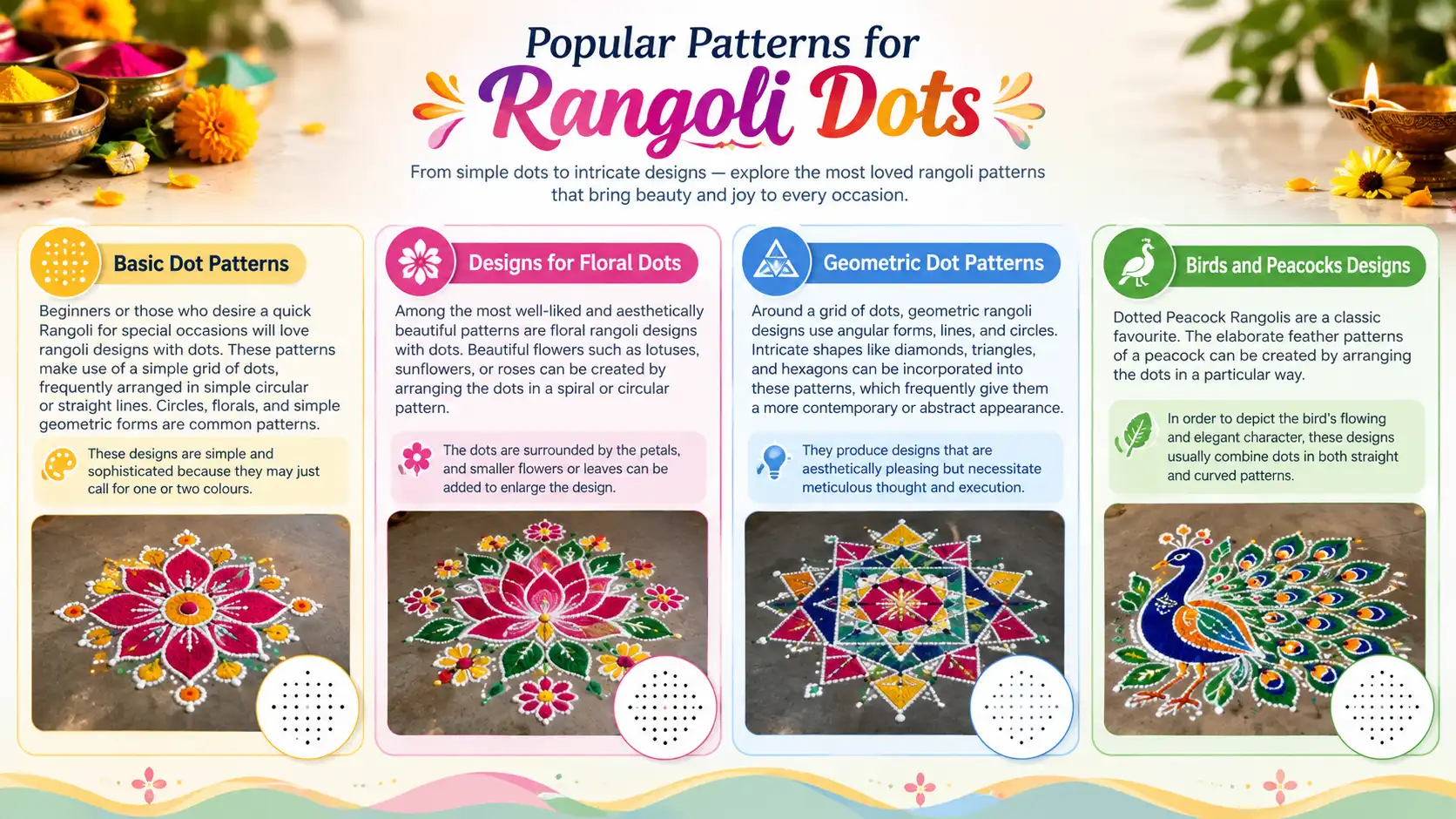
Beginners or those who desire a quick Rangoli for special occasions will love rangoli designs with dots. These patterns make use of a simple grid of dots, frequently arranged in simple circular or straight lines.
Circles, florals, and simple geometric forms are common patterns. These designs are simple and sophisticated because they may just call for one or two colours.
Designs for Floral Dots
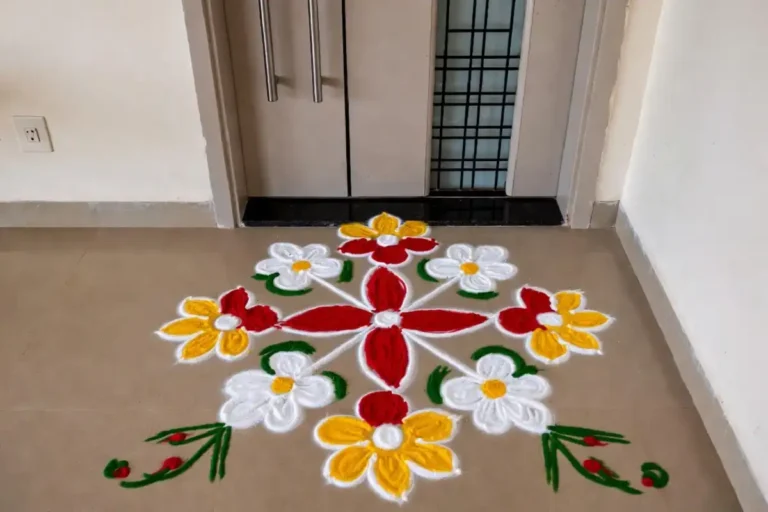
Among the most well-liked and aesthetically beautiful patterns are floral rangoli designs with dots. Beautiful flowers such as lotuses, sunflowers, or roses can be created by arranging the dots in a spiral or circular pattern.
The dots are surrounded by the petals, and smaller flowers or leaves can be added to enlarge the design.
Patterns of Geometric Dots
Around a grid of dots, geometric rangoli designs use angular forms, lines, and circles.
Intricate shapes like diamonds, triangles, and hexagons can be incorporated into these patterns, which frequently give them a more contemporary or abstract appearance.
They produce designs that are aesthetically pleasing but necessitate meticulous thought and execution.
Birds and Peacocks Designs
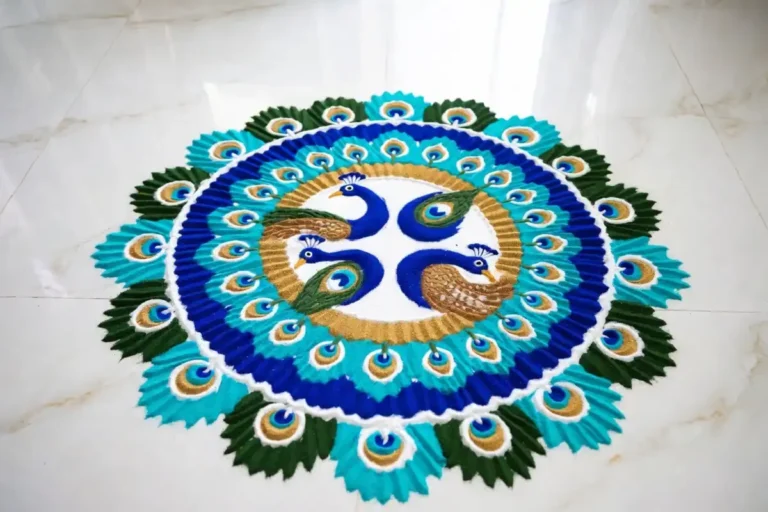
Dotted Peacock Rangolis are a classic favourite. The elaborate feather patterns of a peacock can be created by arranging the dots in a particular way.
These designs usually combine dots in both straight and curved patterns to depict the bird’s flowing and elegant character.
How to Use Dots to Create Rangoli Designs: A Comprehensive Guide
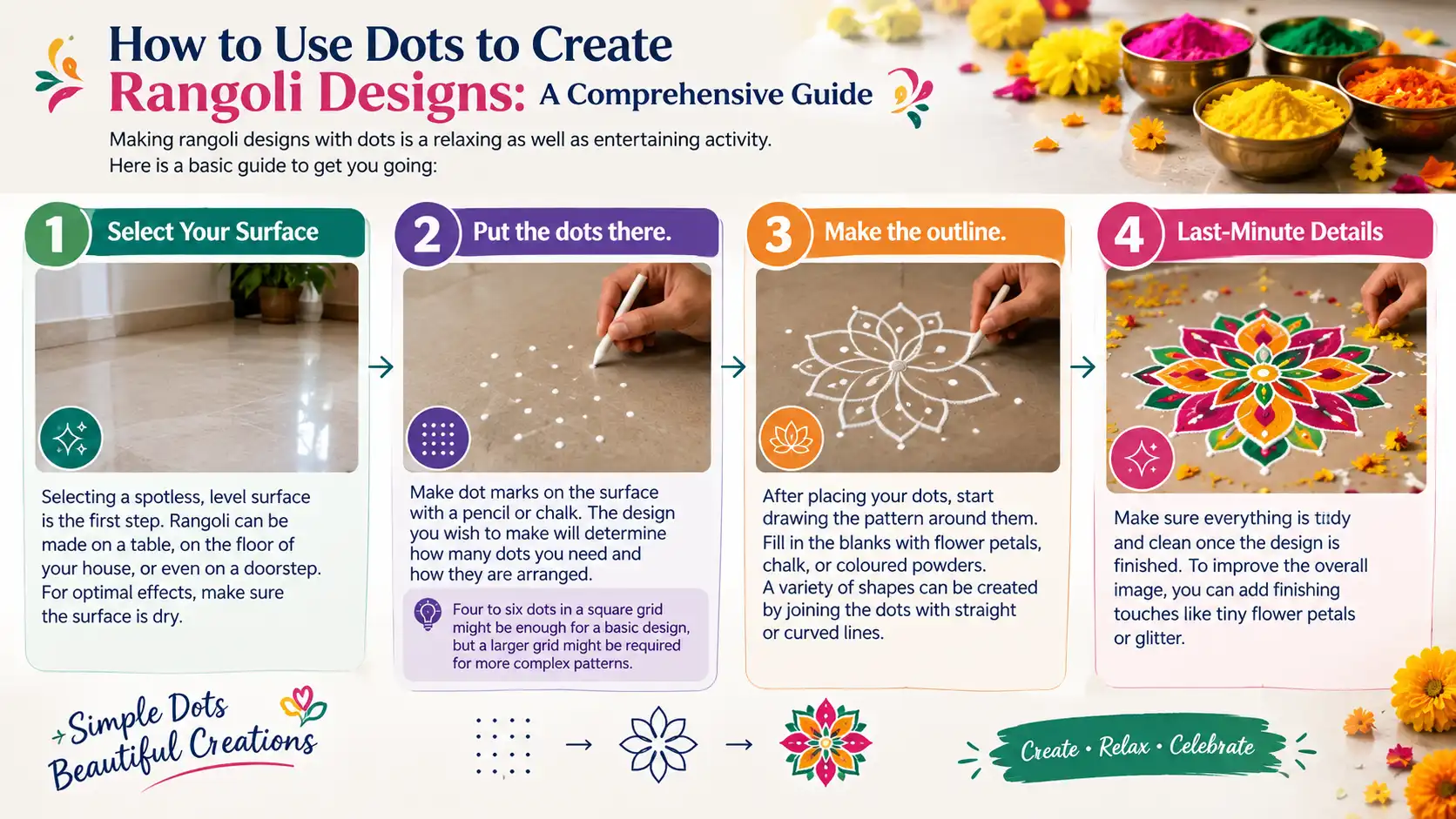
Making rangoli designs with dots is a relaxing as well as entertaining activity. Here is a basic guide to get you going:
Select Your Surface
Selecting a spotless, level surface is the first step.
Rangoli can be made on a table, on the floor of your house, or even on a doorstep. For optimal effects, make sure the surface is dry.
Put the Dots There
Make dot marks on the surface with a pencil or chalk. The design you wish to make will determine how many dots you need and how they are arranged.
Helpful Tip: Four to six dots in a square grid might be enough for a basic design, but a larger grid might be required for more complex patterns.
Make the Outline
After placing your dots, start drawing the pattern around them. Fill in the blanks with flower petals, chalk, or coloured powders.
A variety of shapes can be created by joining the dots with straight or curved lines.
Last-Minute Details
Make sure everything is tidy and clean once the design is finished. To improve the overall image, you can add finishing touches like tiny flower petals or glitter.
The Equipment Needed for Dotted Rangoli
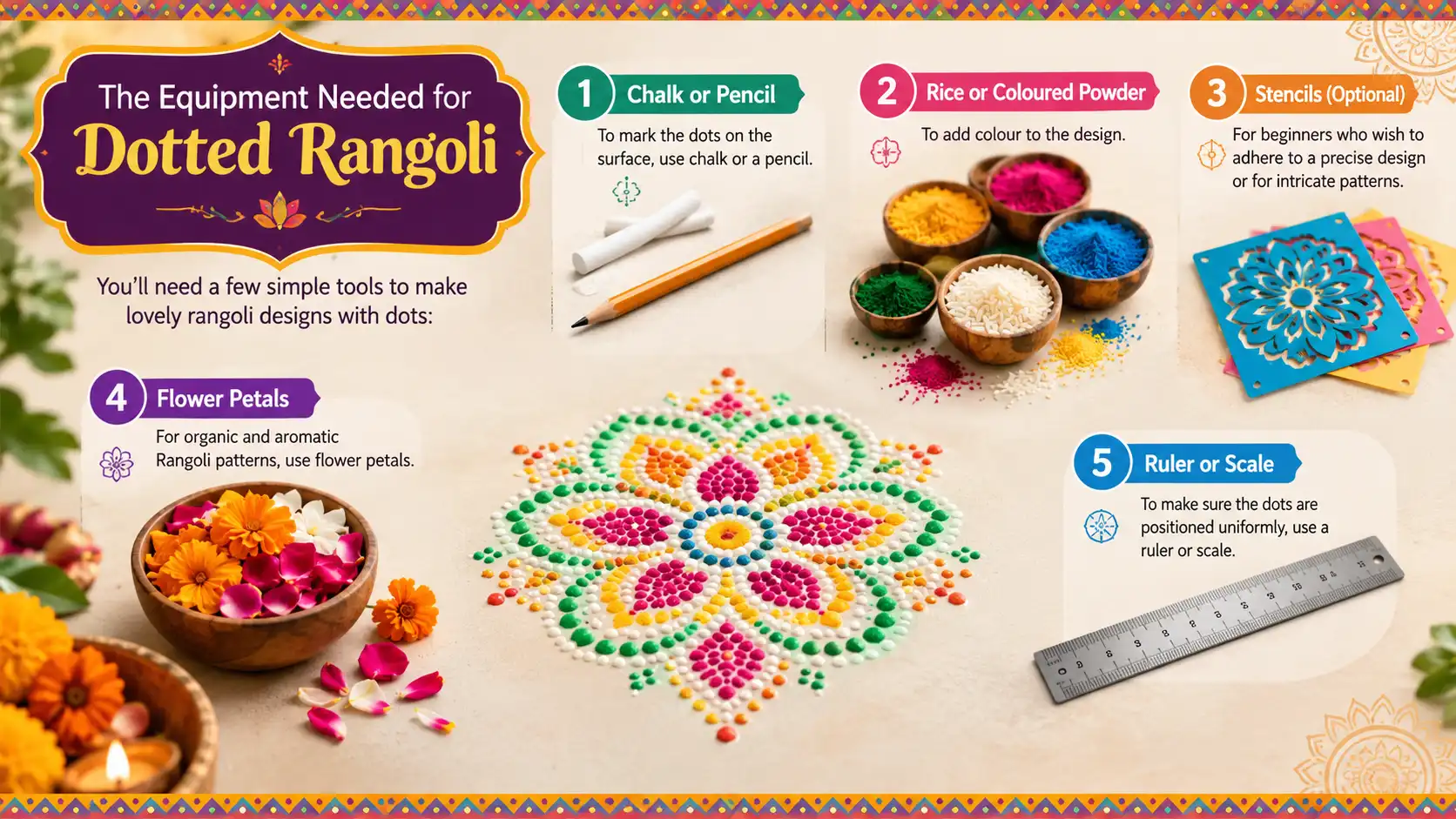
You’ll need a few simple tools to make lovely rangoli designs with dots:
Chalk or Pencil
To mark the dots on the surface and create a basic framework for your Rangoli design.
Rice or Coloured Powder
To add colour and bring the finished Rangoli design to life.
Stencils
Optional stencils can help beginners follow a precise design or create intricate patterns.
Flower Petals
For organic, colourful, and aromatic Rangoli patterns.
Ruler or Scale
To make sure the dots are positioned uniformly and geometric lines remain balanced.
How to Make Dotted Rangoli Perfect
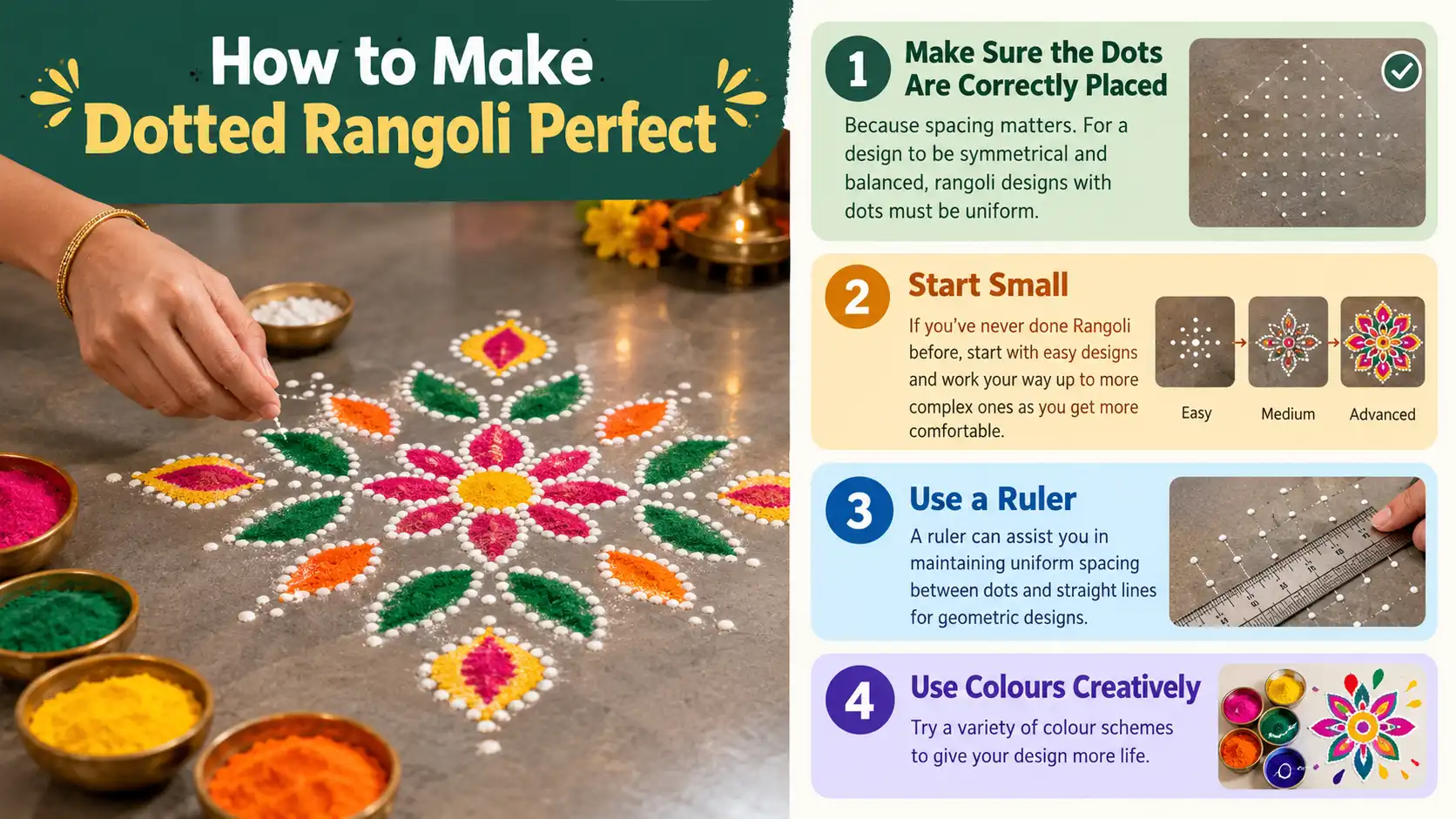
Make sure the dots are correctly placed because spacing matters. For a design to be symmetrical and balanced, rangoli designs with dots must be uniform.
If you’ve never done Rangoli before, start with easy designs and work your way up to more complex ones as you get more comfortable.
A ruler can assist you in maintaining uniform spacing between dots and straight lines for geometric designs.
Try a variety of colour schemes to give your design more life.
Rangoli’s Function at Festivals and Other Special Events
Rangoli is used to honour and praise deities on festivals and other significant events; it is more than just an art form.
Rangoli, for example, is thought to bring wealth and good fortune into the house during Diwali. Rangoli is also utilised to commemorate fresh starts and signal the start of the harvest season in other festivals like Onam and Pongal.
Rangoli designs with dots represents the relationship between the holy and the material world.
Sustainability and Rangoli: Using Sustainable Materials
Eco-friendly materials have become more popular for Rangoli in recent years.
People are using natural items like flower petals, rice flour, and coloured powders created from turmeric or spices in place of artificial colours that can be harmful to the environment.
Eco-Friendly Choice: Natural materials give the art form an organic touch while also making the rangoli designs with dots more sustainable.
Conclusion: The Pleasure of Using Dots to Create Rangoli
Rangoli designs with dots are a lovely way to honour heritage, creativity, and the spirit of community.
These designs provide countless options for decoration and expression, regardless of your level of experience as an artist.
They are ideal for festivals, special events, or just enlivening your house because they add colour, happiness, and a festive vibe.
Gather your supplies, make your dots, and let your imagination run wild!Frequently Asked Questions About Rangoli Designs With Dots
What is a dotted Rangoli design?
A dotted Rangoli design starts with a regularly spaced grid of dots that acts as a framework for creating symmetrical floral, geometric, circular, or other decorative patterns.
What materials are commonly used for dotted Rangoli?
Common materials include chalk or pencils for marking dots, coloured rice or powder for decoration, flower petals, optional stencils, and a ruler for maintaining uniform spacing.
Are dotted Rangoli designs suitable for beginners?
Yes. Simple dot grids are particularly suitable for beginners because the dots provide a visual guide for creating balanced and symmetrical patterns.
Which festivals commonly feature Rangoli?
Rangoli is commonly associated with festivals and auspicious occasions such as Diwali, Onam, Pongal, and Navratri, as well as house-warming ceremonies and birthdays.
Can Rangoli be made with eco-friendly materials?
Yes. Natural materials such as flower petals, rice flour, turmeric, spices, and other naturally coloured powders can be used to create more sustainable Rangoli designs.