Geometric Design: Patterns, Meaning, and Creative Ideas
Geometric design is one of the oldest and most universal forms of visual expression. From ancient temple floors to modern smartphone interfaces, structured patterns built from mathematical shapes appear across every culture and era.
The appeal is not accidental. This approach offers order, balance, and a kind of visual logic that the human eye finds satisfying.
Whether you are creating rangoli art, designing a logo, decorating a home, or exploring craft for the first time, understanding how this creative system works gives your creative work a stronger foundation.
What Is Geometric Design?
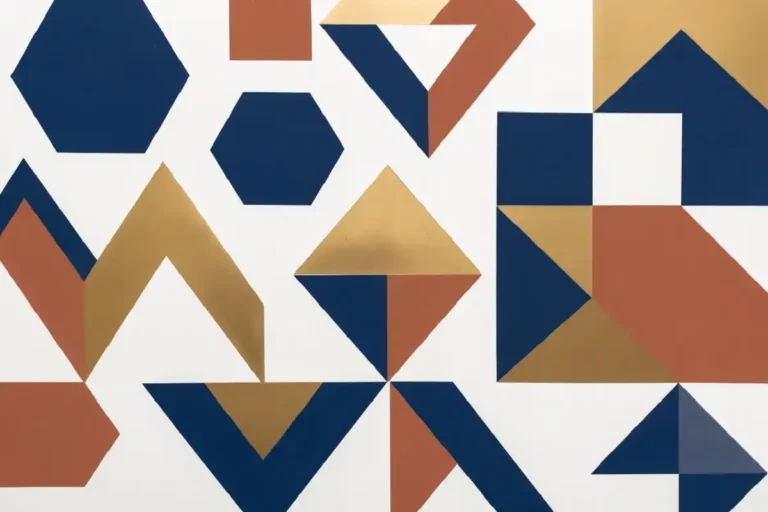
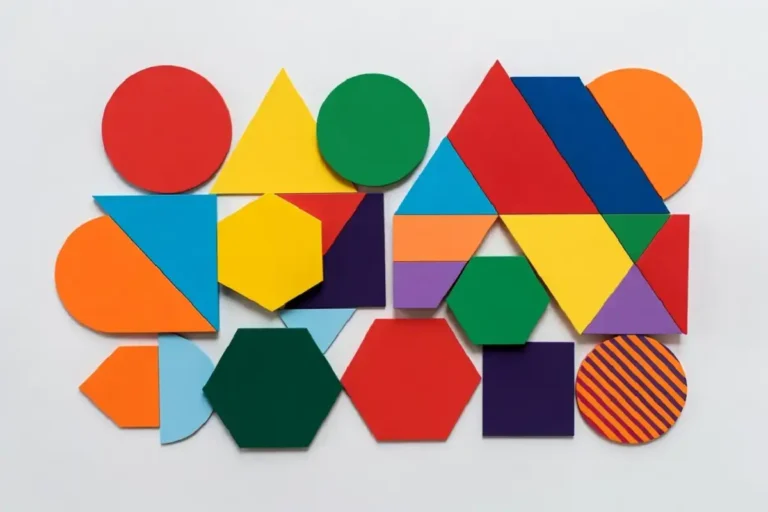
This creative discipline is any visual composition built primarily from mathematical shapes such as circles, triangles, squares, hexagons, and polygons.
These shapes are arranged using principles of symmetry, repetition, and proportion to produce patterns that feel ordered and intentional.
The Core Principles Behind Geometric Design
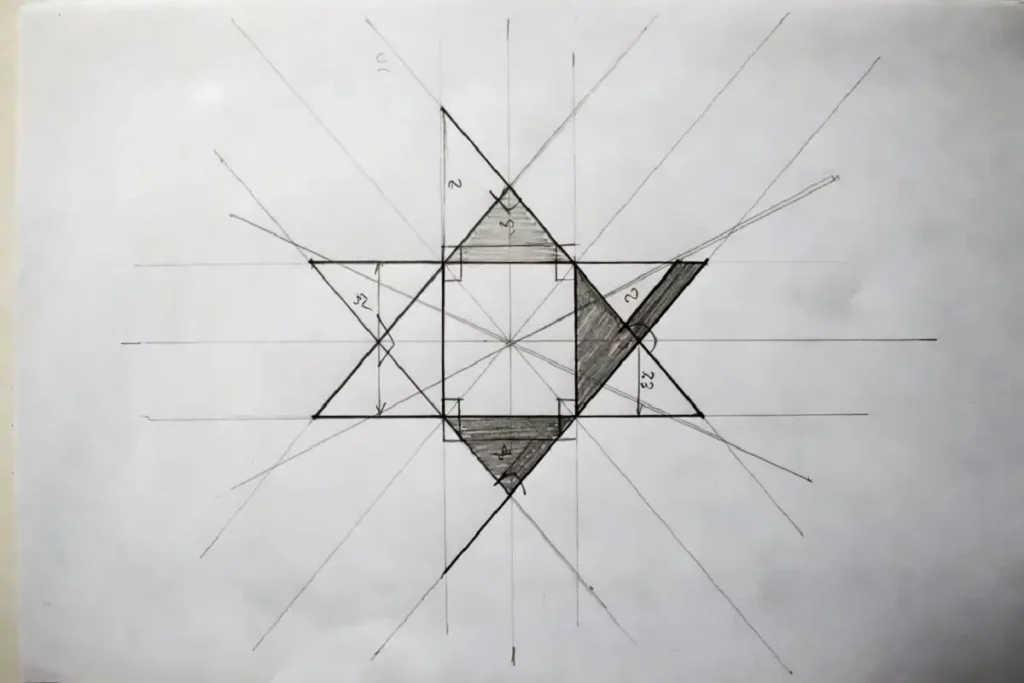
Three principles underpin nearly every successful pattern in this tradition:
- Symmetry — Patterns that mirror themselves across one or more axes feel balanced and harmonious to the viewer
- Repetition — Repeating a shape or motif across a surface creates rhythm and visual unity
- Proportion — Consistent sizing relationships between shapes give a design coherence and structure
These principles apply whether you are working with a compass and paper, a digital design tool, or colored powder on a floor. The underlying logic is the same across all media.
The History and Cultural Roots of Geometric Design
This art tradition has deep roots across multiple civilizations, each developing distinct approaches to pattern-making using the same foundational shapes.
Islamic Geometric Tradition
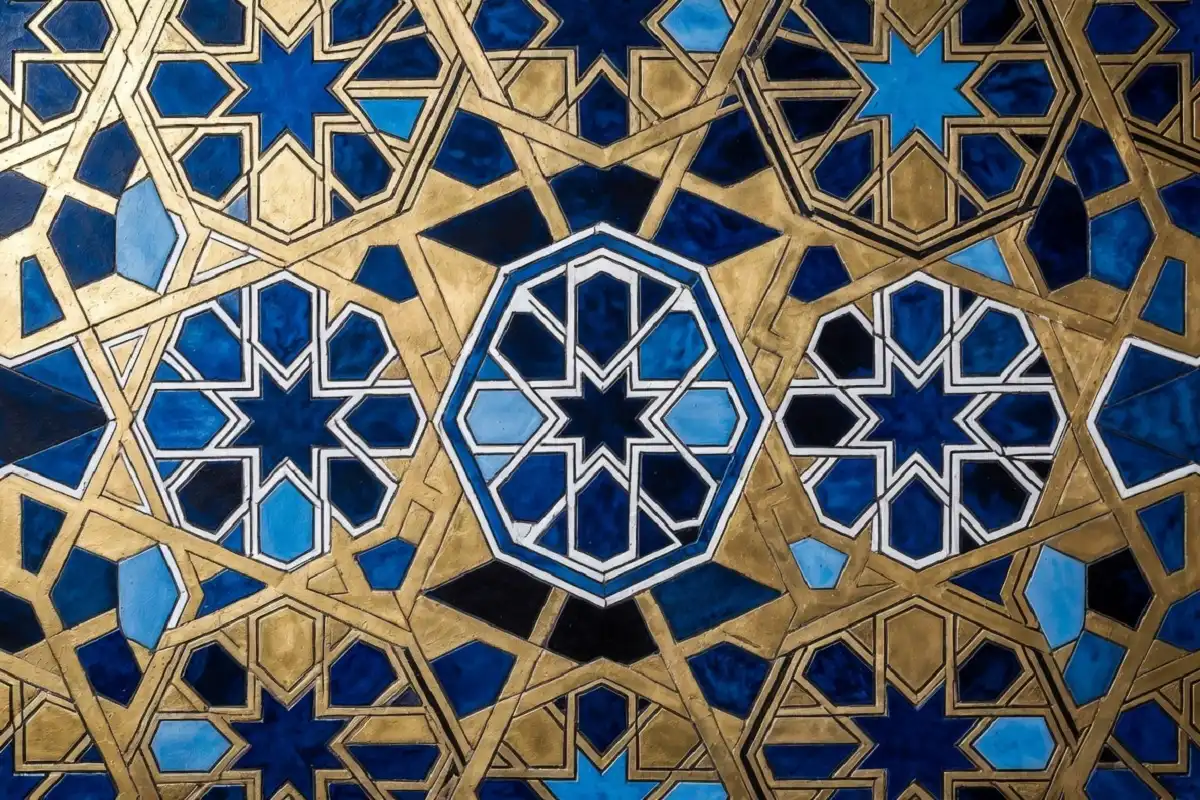
Islamic art produced some of the most sophisticated patterning systems in history. Mosques, madrasas, and palaces in the Middle East, Central Asia, and North Africa feature tile panels, carved plaster, and wooden screens covered in interlocking geometric patterns, constructed using only a compass and straightedge, producing infinitely repeating star polygons, hexagonal grids, and radiating octagons. The tradition remains one of the most referenced sources of inspiration for contemporary pattern designers worldwide.
Indian Rangoli and Kolam
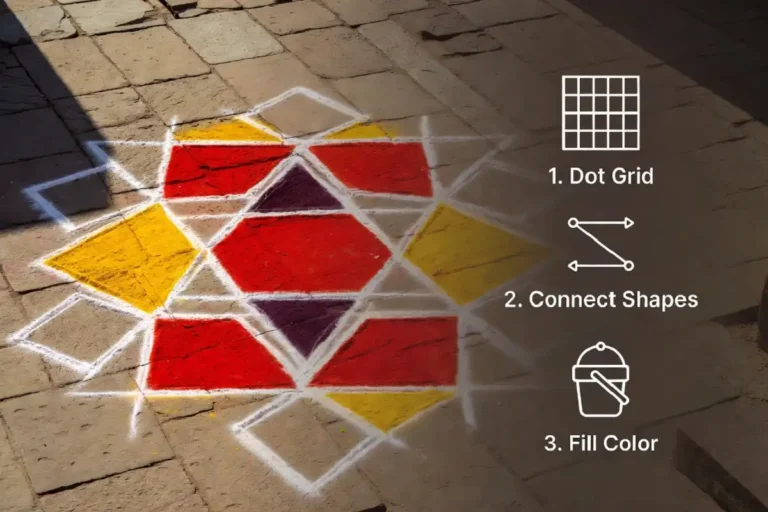
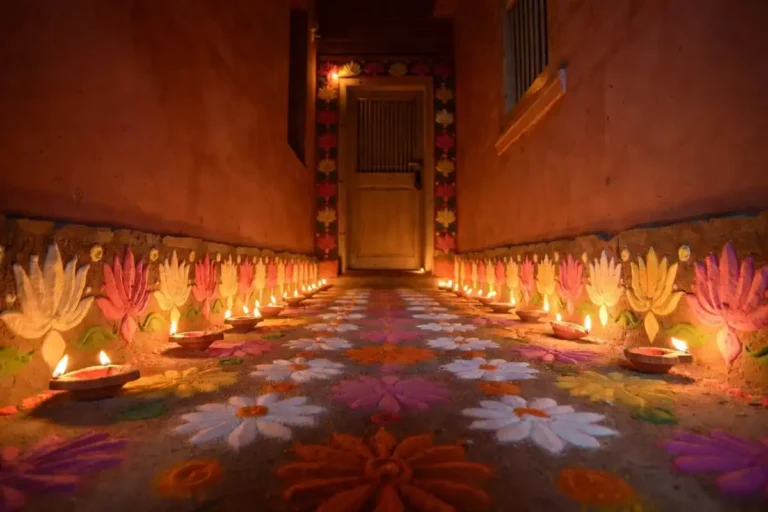
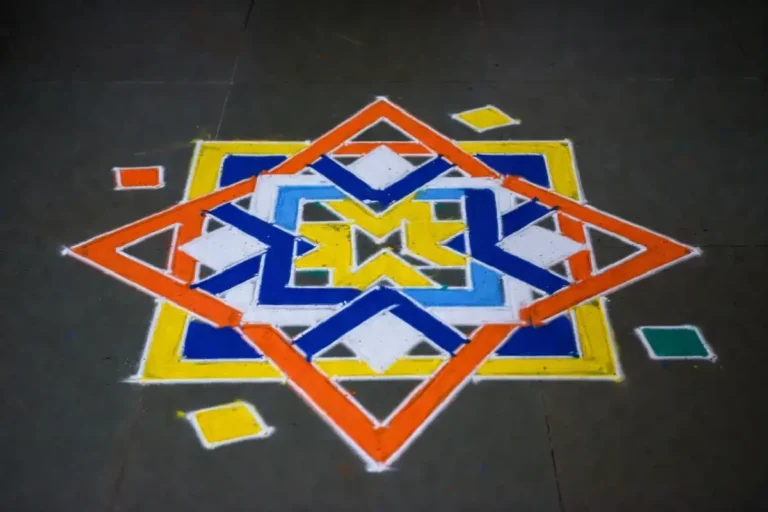
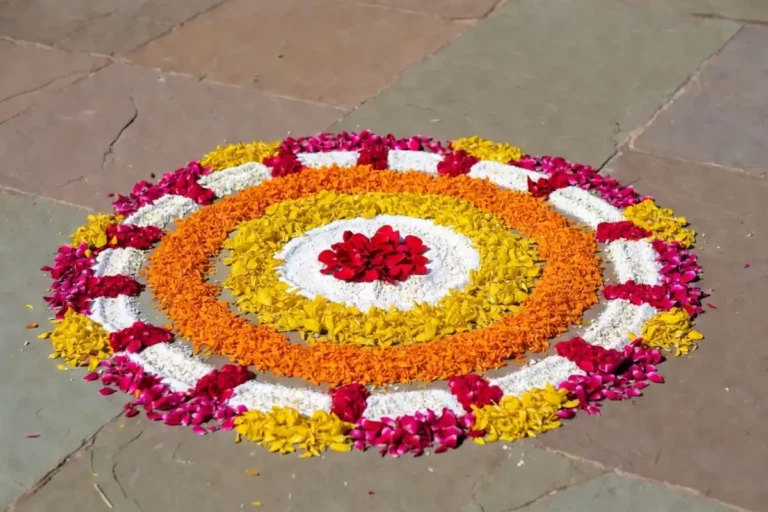
In India, structured patterning is integral to floor art traditions. Kolam from South India and rangoli from across the country both use dot grids as a construction framework, connecting points with lines and curves to produce intricate geometric patterns that carry both decorative and symbolic value. For more, explore unique rangoli design ideas for every occasion, ranging from angular diamond compositions to circular mandala-style layouts.
Celtic and Norse Patterns
Celtic knotwork uses continuous interlaced lines built on geometric grids to create patterns with no visible start or end point. The underlying construction is entirely geometric, with the organic-looking result emerging from precise angular repetition. Norse decorative art follows similar grid-based principles in its border and shield patterns.
Ancient Greek and Roman Tessellation
Greek and Roman mosaic artists developed tessellation techniques that covered floors and walls with interlocking geometric tiles. Key, fret, and meander borders, along with complex central medallions, demonstrate early mastery of pattern-making at architectural scale.
Types of Geometric Design Patterns
Understanding the main pattern types helps when choosing an approach for your own work.
Tessellations
A tessellation is a pattern where shapes fit together without gaps or overlaps. Squares, equilateral triangles, and regular hexagons are the only regular polygons that tessellate on their own. Combinations of shapes such as octagons and squares, or triangles and hexagons, create semi-regular tessellations with more visual complexity.
Radial Patterns
Radial patterns extend outward from a central point, like the spokes of a wheel or the petals of a flower. Mandalas, rangoli circles, and rose window designs in Gothic architecture all use radial geometry. These patterns feel balanced from every viewing angle and work well as focal points in decorative compositions.
Grid-Based Patterns
Grid patterns organize shapes along horizontal, vertical, or diagonal axes. Checkerboards, diamond grids, and brick-bond layouts all derive from geometric grids. In rangoli practice, the dot grid method provides a reliable structure for building grid-based patterns from scratch.
The guide on aesthetic rangoli designs for every occasion demonstrates how grid-based geometry and radial symmetry combine in traditional Indian floor art to produce compositions that range from minimal to highly ornate.
Fractal-Inspired Patterns
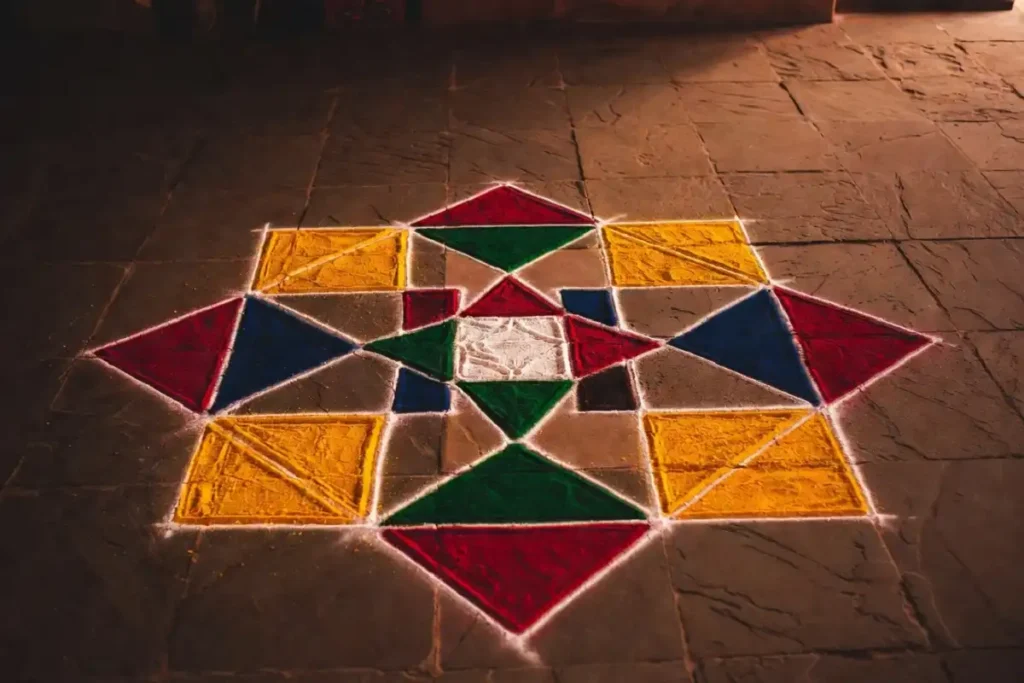
Fractal geometry describes patterns that repeat at different scales, where a small detail mirrors the structure of the whole. Traditional patterning from many cultures shows fractal-like properties even before the mathematics was formalized. Sierpinski triangle-style nested triangles, star polygons inside star polygons, and self-similar tile arrangements all reflect this principle.
How to Create Your Own Geometric Design
Creating this type of pattern does not require advanced mathematical knowledge. A few basic tools and a clear approach are enough to get strong results.
Tools for Getting Started
For physical work, a compass, ruler, set square, and protractor are the core instruments. Graph paper simplifies grid construction. For digital work, vector design software like Adobe Illustrator or free tools such as Inkscape offer precision drawing with easy symmetry controls.
A Step-by-Step Starting Method
Choose a base shape or grid: square grid, triangular grid, or circular construction.
Establish a central point or axis of symmetry.
Build the primary motif using your base shapes.
Repeat or rotate the motif to fill the space.
Refine line weights, add color, and adjust spacing for visual balance.
Starting simple produces the best early results. A single repeated triangle on a dot grid can create a striking pattern with very little complexity in the underlying construction. For those who want accessible starting points, the creative design rangoli ideas resource offers step-by-step examples that apply geometric construction methods to floor art in a beginner-friendly way.
Choosing Colors for Your Pattern Work
Color choice affects how pattern structure reads. High contrast between adjacent shapes emphasizes the geometry. Tonal variations within a single color family produce a more subtle, textured result. Traditional Islamic geometric work often uses a restrained palette to keep the structural complexity of the pattern legible.
Geometric Design in Modern Applications
Structured pattern work remains central to contemporary visual communication across many fields.
Graphic Design and Branding
Logos built from geometric forms reproduce cleanly at any scale and communicate precision and reliability. Many of the world’s most recognized brand marks are built on simple geometric construction.
Interior Design
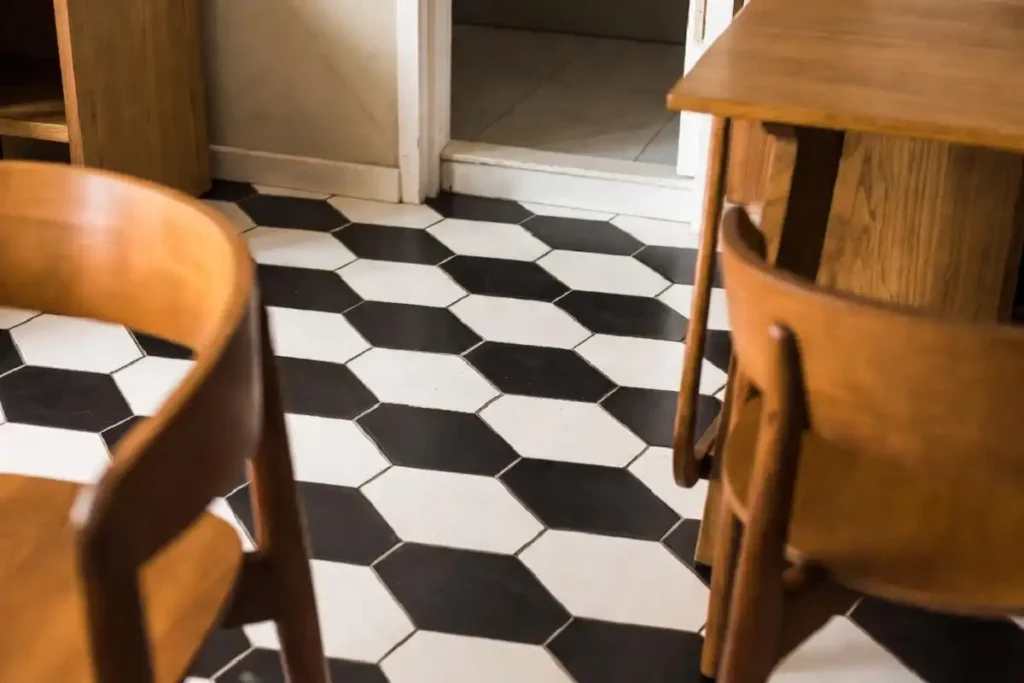
Patterned wallpapers, tiles, and textiles bring structure and energy to rooms. Hexagonal tile floors, herringbone woodwork, and chevron textiles are all expressions of patterned design at an interior scale.
Digital Interfaces
Grids and geometric layouts organize content in ways that guide the user’s eye naturally. The underlying geometry of interface design is one of the reasons well-designed apps feel easy and intuitive to use.
Conclusion
Geometric design connects mathematics, culture, and creativity in a way few other art forms can. Its principles are simple enough for beginners but deep enough to sustain a lifetime of exploration.
Whether you are recreating a traditional rangoli pattern, designing a modern logo, or tiling a floor, the same foundational logic of symmetry, repetition, and proportion applies.
Start with the shapes you find most appealing, learn one pattern type at a time, and let the structure of geometry guide your creative work toward compositions that are both precise and genuinely beautiful.
FAQs
What is geometric design?
This is visual composition built from mathematical shapes including circles, squares, triangles, and polygons, arranged using symmetry, repetition, and proportion to create patterns that feel ordered, structured, and visually balanced.
Where is geometric design used?
This style of patterning appears across art, architecture, textiles, floor decoration, graphic design, branding, and digital interfaces. It is one of the most widely applied design approaches across both traditional craft and modern professional design fields.
What makes a geometric design pattern effective?
An effective pattern in this tradition uses consistent proportions, clear symmetry, and intentional color contrast to make the underlying structure readable. Patterns that feel both ordered and slightly complex hold the viewer’s attention longest.
How is geometric design used in rangoli?
Rangoli applies this approach by starting with a dot grid and connecting points using triangles, squares, diamonds, and curved arcs to build symmetrical floor compositions. The geometry provides the structure; color fills bring the pattern to life.
Can beginners create geometric design patterns?
Yes, beginners can produce strong results by starting with a simple grid, choosing one or two shapes, and repeating them with consistent spacing. The structure of geometry makes it forgiving for beginners because the rules of the pattern guide each step.
What is the difference between geometric design and organic design?
This style uses precise mathematical shapes with defined edges and angles. Organic design uses irregular, flowing forms modeled on natural objects like leaves, waves, and flowers. Most decorative traditions combine both types for visual richness.