Aesthetic Rangoli Designs for Every Occasion
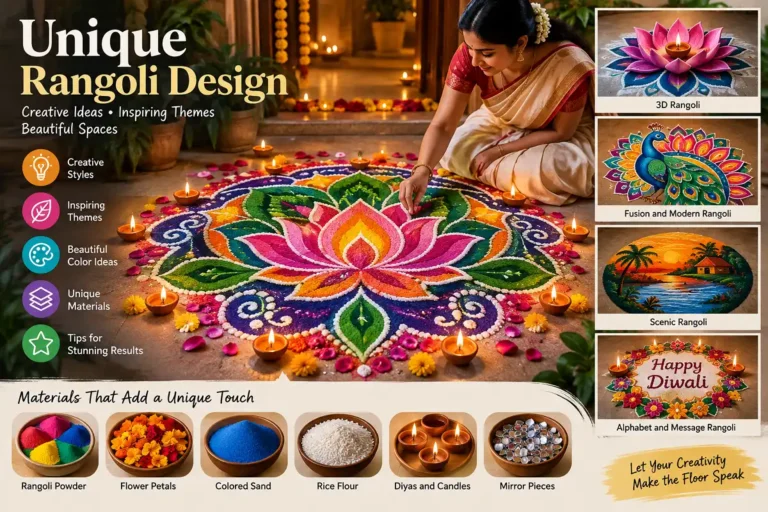
Aesthetic rangoli design is one of the most beautiful ways to decorate your home. Made with colored powders, flowers, or rice, rangoli adds warmth and color to any space.
Whether you are preparing for a festival, a wedding, or simply want to brighten your entrance, the right design makes a big difference.
This art form has been part of Indian culture for centuries. Today, it blends tradition with modern creativity, giving you endless choices for patterns, colors, and styles.
What Makes a Rangoli Design Truly Aesthetic
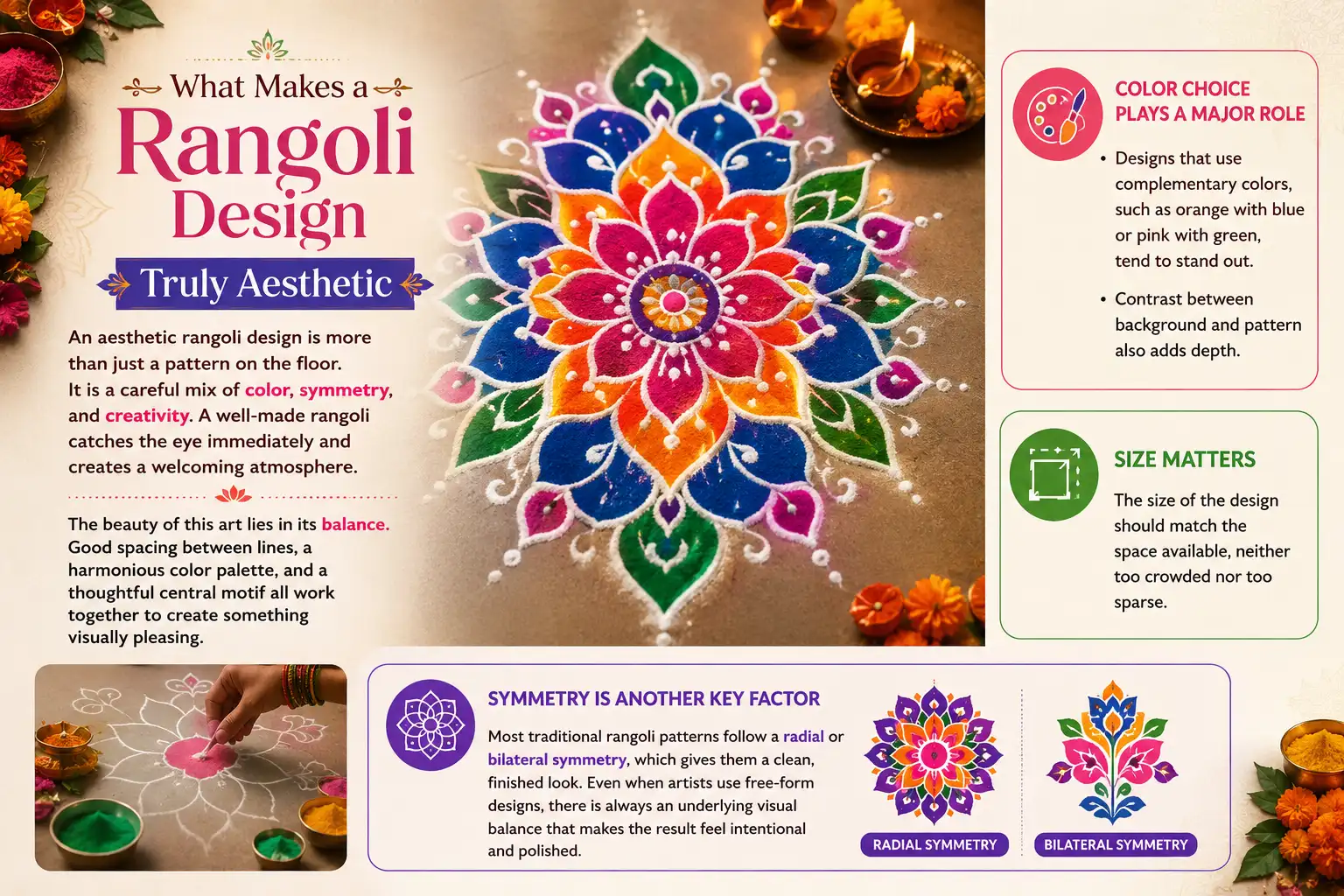
An aesthetic rangoli design is more than just a pattern on the floor. It is a careful mix of color, symmetry, and creativity.
A well-made rangoli catches the eye immediately and creates a welcoming atmosphere. The beauty of this art lies in its balance. Good spacing between lines, a harmonious color palette, and a thoughtful central motif all work together to create something visually pleasing.
Color choice plays a major role. Designs that use complementary colors, such as orange with blue or pink with green, tend to stand out. Contrast between background and pattern also adds depth. The size of the design should match the space available, neither too crowded nor too sparse.
Symmetry is another key factor. Most traditional rangoli patterns follow a radial or bilateral symmetry, which gives them a clean, finished look. Even when artists use free-form designs, there is always an underlying visual balance that makes the result feel intentional and polished.
Popular Types of Aesthetic Rangoli Designs
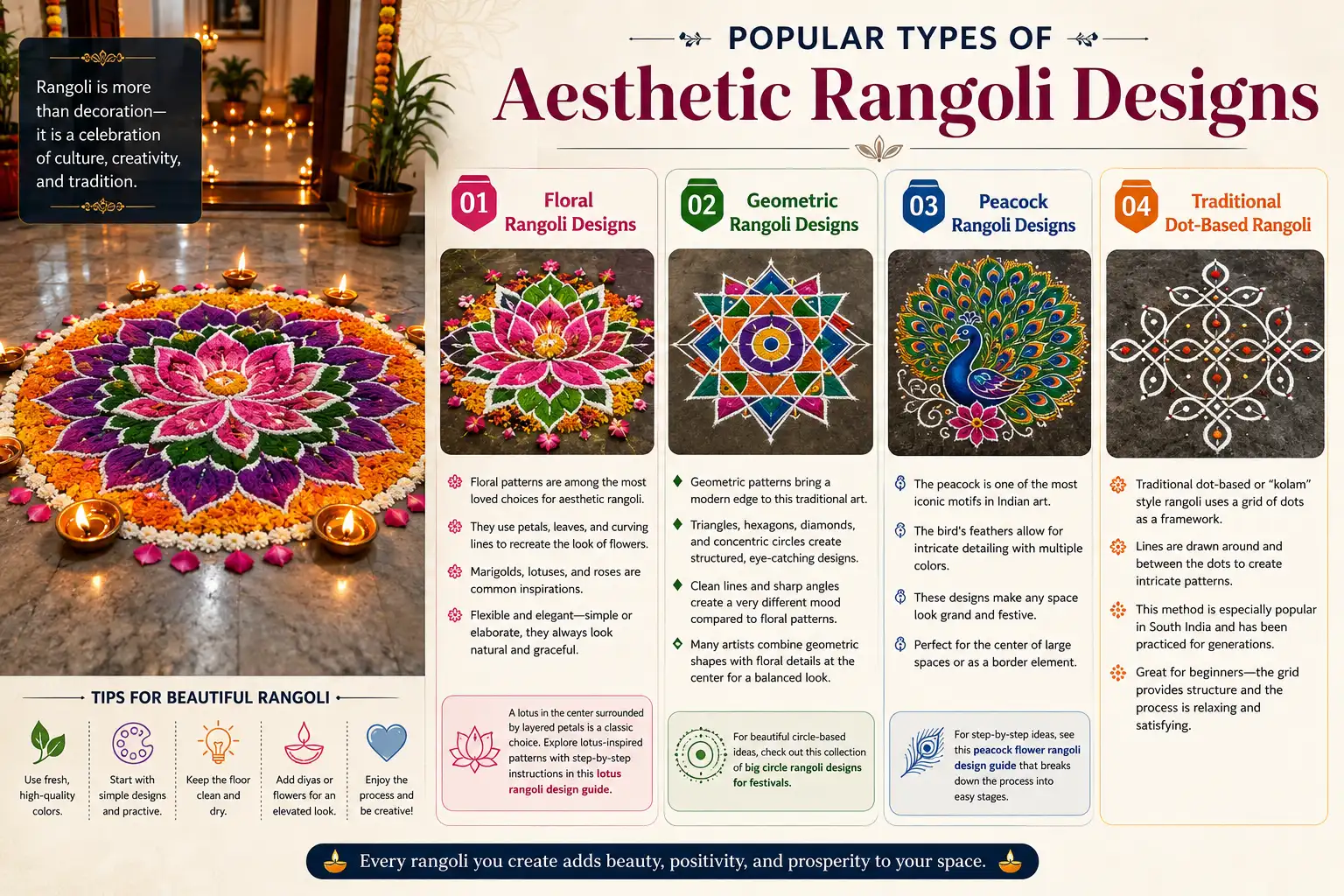
Floral Rangoli Designs
Floral patterns are among the most loved choices for aesthetic rangoli. They use petals, leaves, and curving lines to recreate the look of flowers. Marigolds, lotuses, and roses are common inspirations.
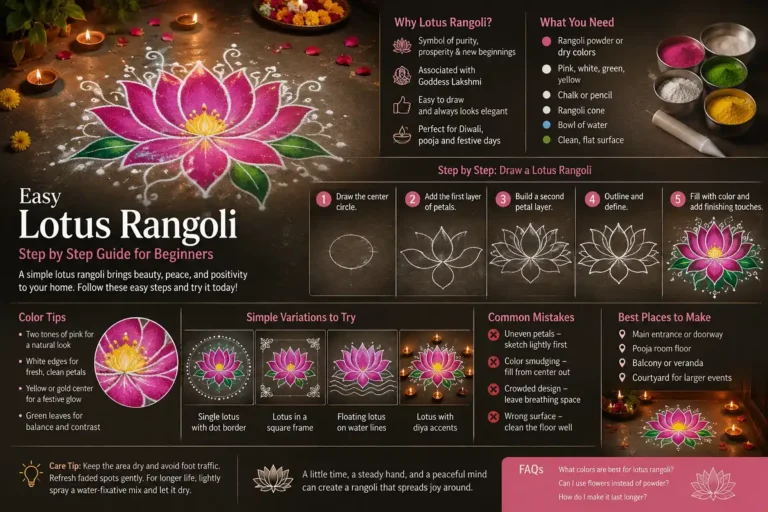
A lotus in the center surrounded by layered petals is a classic choice. If you want to explore lotus-inspired patterns in detail, this lotus rangoli design guide with step-by-step instructions is a helpful resource.
Floral rangoli designs are also flexible. You can keep them simple with two or three colors, or make them elaborate with gradients and fine detailing. Either way, they carry a natural, organic elegance.
Geometric Rangoli Designs
Geometric patterns bring a modern edge to this traditional art form. Triangles, hexagons, diamonds, and concentric circles create structured, eye-catching designs, especially popular for contemporary homes and office spaces.
The appeal lies in precision. Clean lines and sharp angles create a very different mood compared to floral patterns. Many artists now combine geometric shapes with floral details at the center for a balanced, layered look. For beautiful circle-based ideas, this collection of big circle rangoli designs for festivals offers great inspiration.
Peacock Rangoli Designs
The peacock is one of the most iconic motifs in Indian art, and it translates beautifully into rangoli. The bird’s feathers allow for intricate detailing with multiple colors. A peacock design immediately makes any space look grand and festive.
These designs work well at the center of a large floor space or as a border element. For step-by-step ideas, you might enjoy this peacock flower rangoli design guide that breaks down the process into easy stages.
Traditional Dot-Based Rangoli
Traditional dot-based or “kolam” style rangoli uses a grid of dots as a framework. Lines are drawn around and between the dots to create intricate patterns. This method is especially popular in South India and has been practiced for generations.
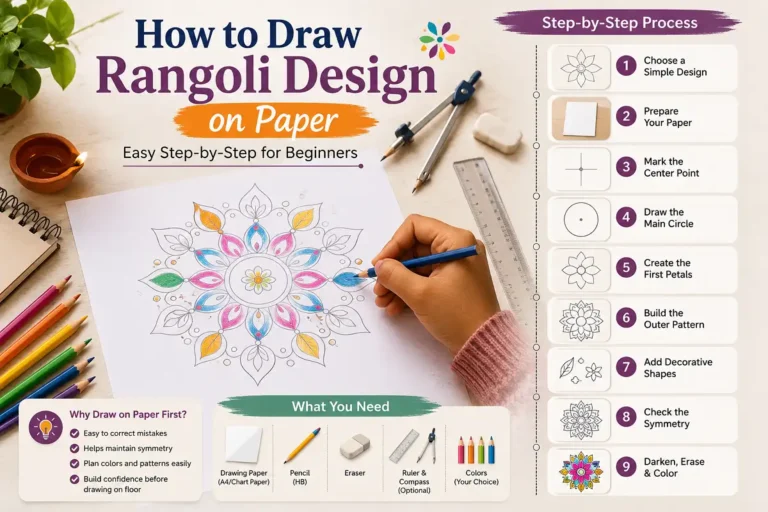
The dot method is great for beginners because the grid provides structure. Once you place the dots, the pattern flows naturally. It is also a meditative process that many people find relaxing and satisfying.
Aesthetic Rangoli for Festivals
🪔Diwali Rangoli Ideas
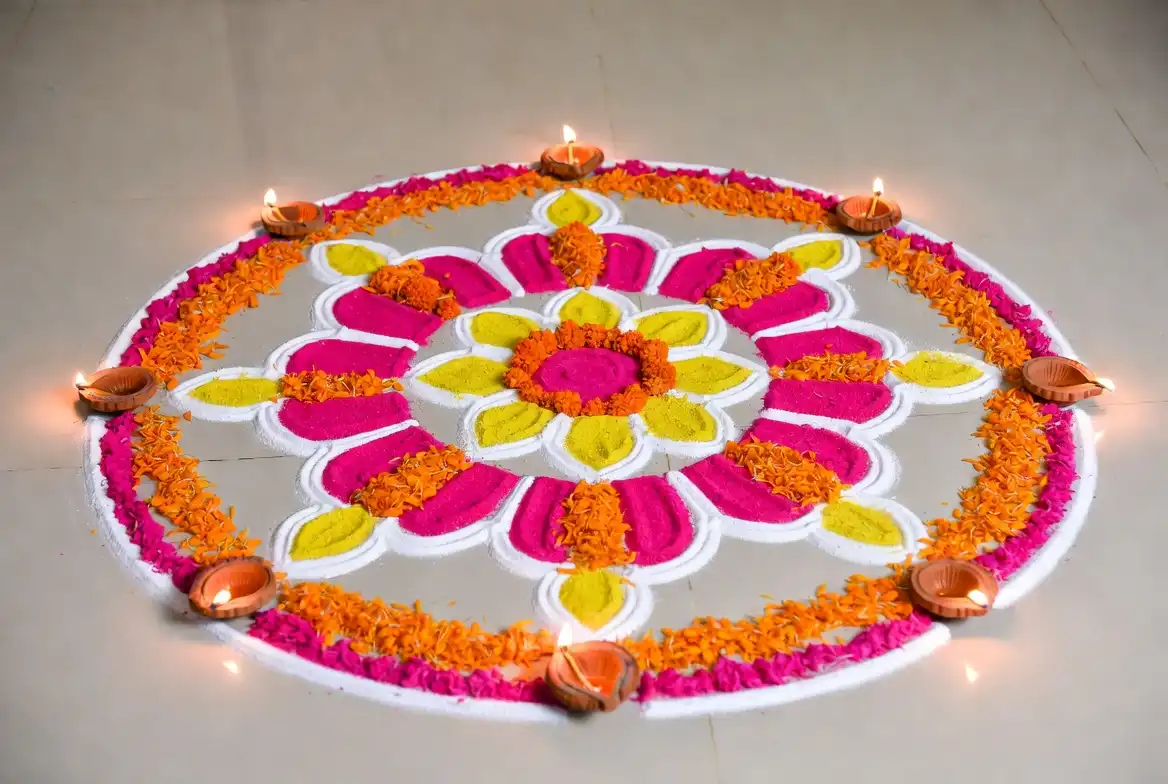
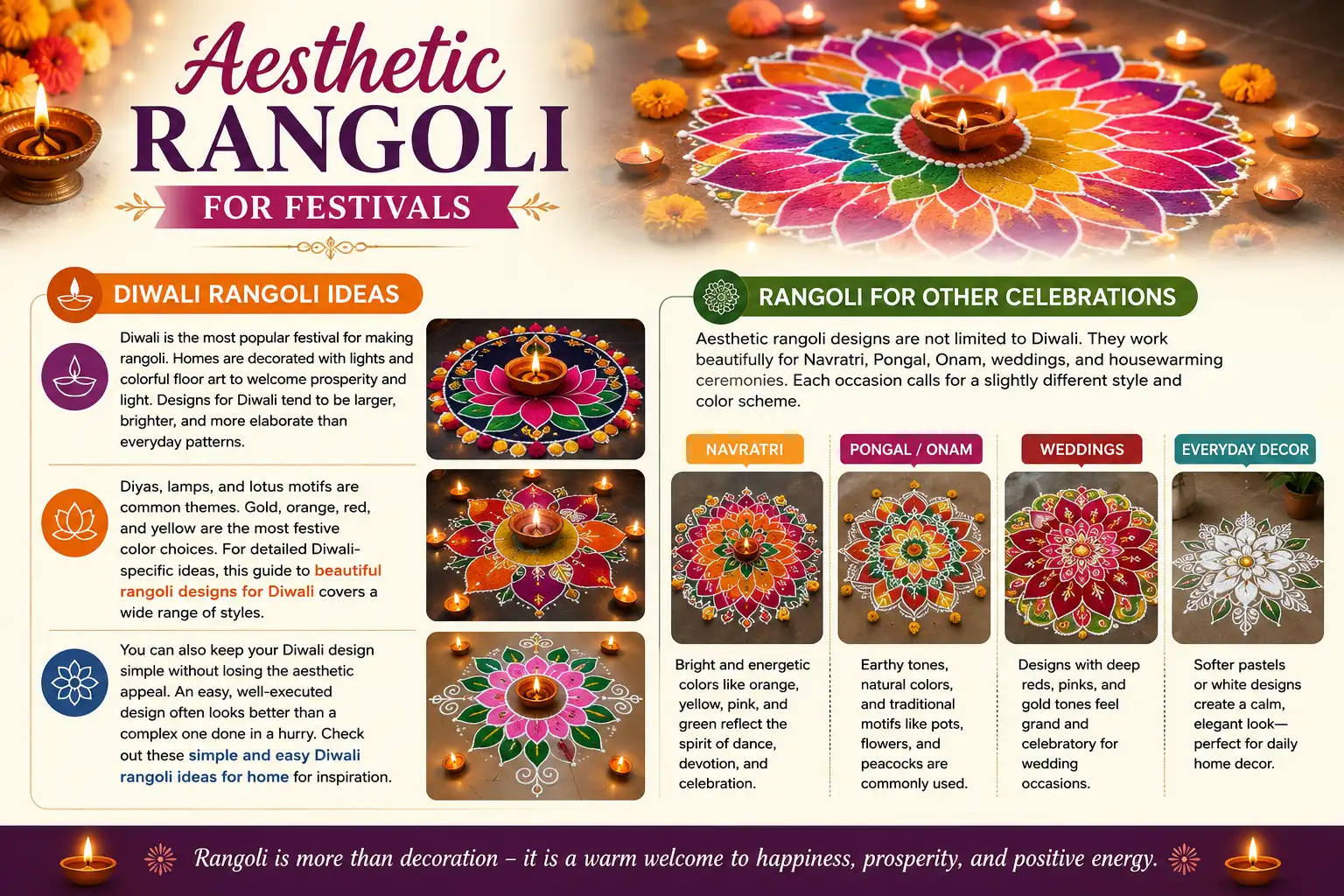
Diwali is the most popular festival for making rangoli. Homes are decorated with lights and colorful floor art to welcome prosperity and light. Designs for Diwali tend to be larger, brighter, and more elaborate than everyday patterns.
Diyas, lamps, and lotus motifs are common themes. Gold, orange, red, and yellow are the most festive color choices. For detailed ideas, this guide to beautiful rangoli designs for Diwali covers a wide range of styles.
You can also keep your Diwali design simple without losing the aesthetic appeal. An easy, well-executed design often looks better than a complex one done in a hurry. Check out these simple and easy Diwali rangoli ideas for home.
🎉Rangoli for Other Celebrations
Aesthetic rangoli designs are not limited to Diwali. They work beautifully for Navratri, Pongal, Onam, weddings, and housewarming ceremonies. Each occasion calls for a slightly different style and color scheme.
For weddings, designs with deep reds, pinks, and gold tones feel celebratory. For Navratri, bright and energetic colors like orange and yellow are fitting. For everyday home decor, softer pastels or white designs create a calm, elegant look.
Color Palettes That Elevate Rangoli Aesthetics
Color is where rangoli truly comes alive. Choosing the right palette transforms a basic pattern into a work of art. Here are some combinations that work particularly well:
According to the Victoria and Albert Museum’s textile and decorative arts collection, color in Indian folk art carries deep symbolic meaning. Understanding these associations can add another layer of thoughtfulness to your design choices.
Tips for Creating an Aesthetic Rangoli at Home
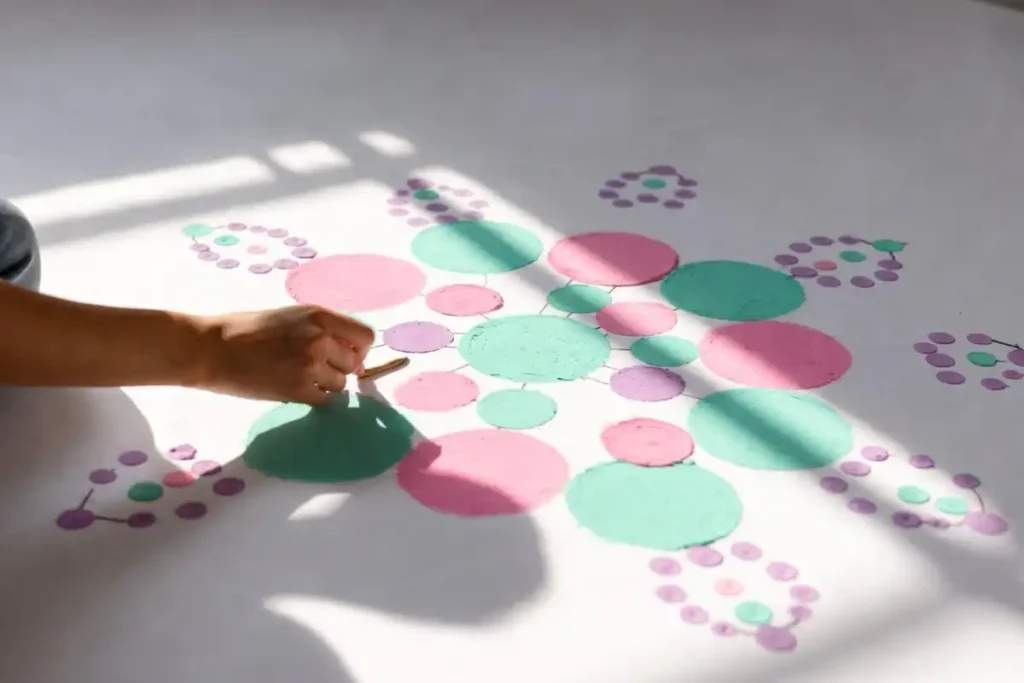
Creating a beautiful rangoli at home does not require professional skills. With a little patience and the right approach, anyone can make a stunning design. Here are some practical tips:
- Start with a clear central motif before adding outer layers
- Use a compass or plate to draw circles accurately
- Outline the full pattern in white before filling in colors
- Work from the center outward to avoid smudging
- Use a cone or squeeze bottle for fine details
- Seal the design with a light hairspray mist if you want it to last longer
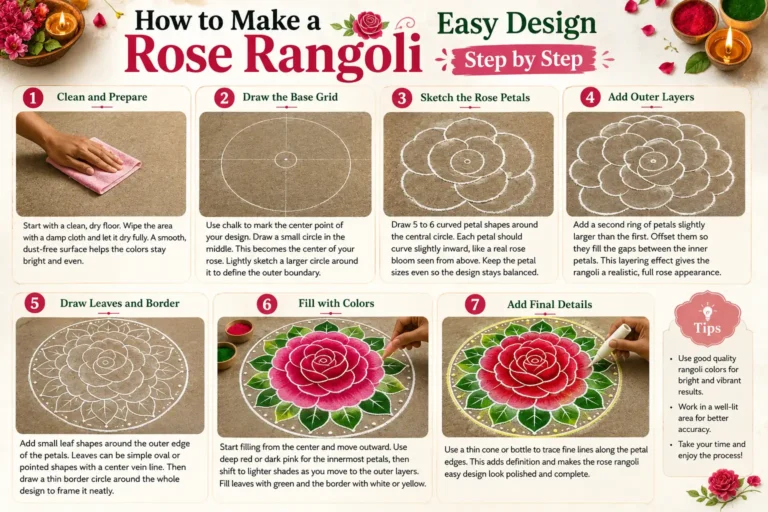
For those just starting out, this guide to easy rangoli design ideas for beginners with steps walks you through the basics in a clear and practical way.
Choosing the Right Materials
The materials you use affect both the look and longevity of your aesthetic rangoli design. Here is a quick breakdown of common options:
- Dry colored powder: Most traditional and vibrant; best for indoor use on dry floors
- Flower petals: Natural and fragrant; works well for weddings and short events
- Rice flour: Traditional choice in South India; creates clean, white outlines
- Sand or salt: Textural and easy to control; good for outdoor surfaces
- Acrylic colors: Longer-lasting and water-resistant; popular for semi-permanent designs
Each material has its own character. Flower petal rangoli, for example, has a softness and natural beauty that powder cannot fully replicate. Mixed-media designs that combine petals with colored powder are increasingly popular for their rich, layered look.
Conclusion
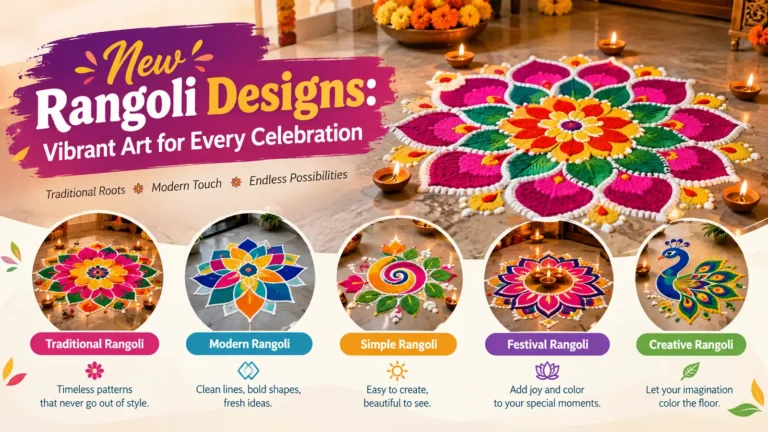
Aesthetic rangoli design is a timeless art that brings color, culture, and creativity into everyday spaces. Whether you prefer intricate floral patterns, bold geometric shapes, or classic dot-based kolam, there is a style for every occasion and skill level.
The key is to focus on harmony between color, pattern, and space. With a little practice and the right inspiration, you can create beautiful rangoli that makes any home feel more alive.
Explore different styles, experiment with materials, and let your creativity guide you toward designs that feel truly your own.
FAQs
What is an aesthetic rangoli design?
An aesthetic rangoli design is a visually pleasing floor art pattern that balances color, symmetry, and creativity. It can be floral, geometric, or traditional in style, and is made using colored powders, petals, or other materials to decorate homes and event spaces.
Which rangoli design is best for beginners?
Simple dot-based or single-motif floral designs are the easiest starting point for beginners. Using a grid of dots as a guide helps maintain symmetry without requiring advanced drawing skills. Starting with small designs and building up complexity over time works best.
How do I make my rangoli look more aesthetic?
Focus on color harmony, clean outlines, and balanced spacing. Using a limited palette of two to four coordinated colors gives a more polished look than using too many shades at once. Neat edges and a clear focal point at the center also elevate the overall appearance.
What colors work best for aesthetic rangoli?
Warm colors like red, orange, and yellow are traditional festival favorites. For a modern aesthetic, cool tones like blue, teal, and white work beautifully. Pastel combinations are ideal for weddings and softer decor themes.
Can rangoli designs be used for everyday home decor?
Yes, rangoli works well for everyday decor when made in smaller sizes and softer colors. White or pastel designs near the entrance look elegant without being overwhelming. Stencils make it easy to repeat a design regularly with consistent results.