Easy Lotus Rangoli: Simple Designs Anyone Can Make at Home
The lotus is one of the most loved shapes in Indian floor art. It looks graceful, feels peaceful, and carries a sense of purity that fits almost any festival or family event. The good news is that an easy lotus rangoli does not need years of practice. With a simple outline, a few colors, and a calm approach, you can draw a flower that brightens your entrance. This guide walks you through beginner steps, color choices, and small ideas that make your design stand out at home.
Why the Lotus Is a Popular Rangoli Choice
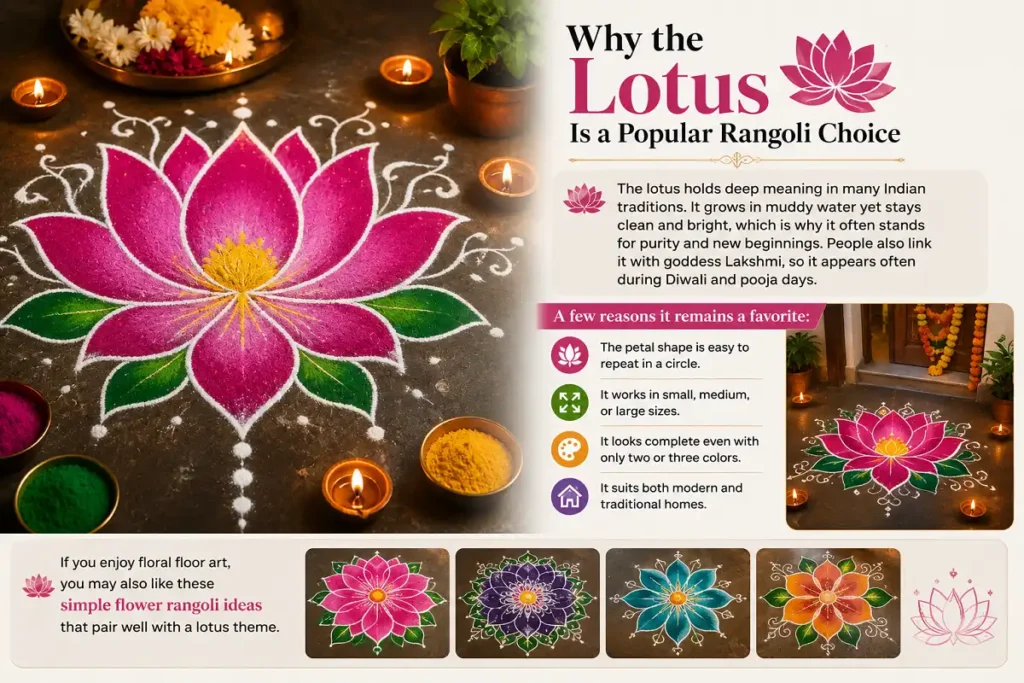
The lotus holds deep meaning in many Indian traditions. It grows in muddy water yet stays clean and bright, which is why it often stands for purity and new beginnings. People also link it with goddess Lakshmi, so it appears often during Diwali and pooja days.
A few reasons it remains a favorite:
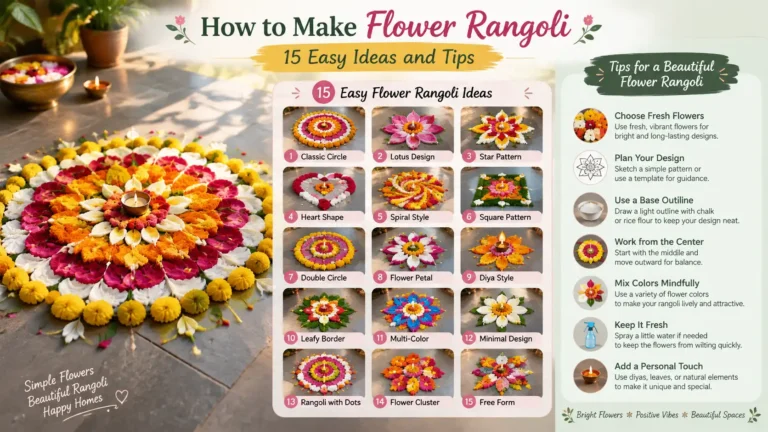
If you enjoy floral floor art, you may also like these simple flower rangoli ideas that pair well with a lotus theme.
What You Need Before You Start
Gathering your supplies first keeps the process smooth. You do not need expensive tools to make a clean lotus rangoli.
Basic items to keep ready:
Pick a flat, clean spot near your door or pooja area. A smooth surface helps your lines stay sharp and your colors stay even.
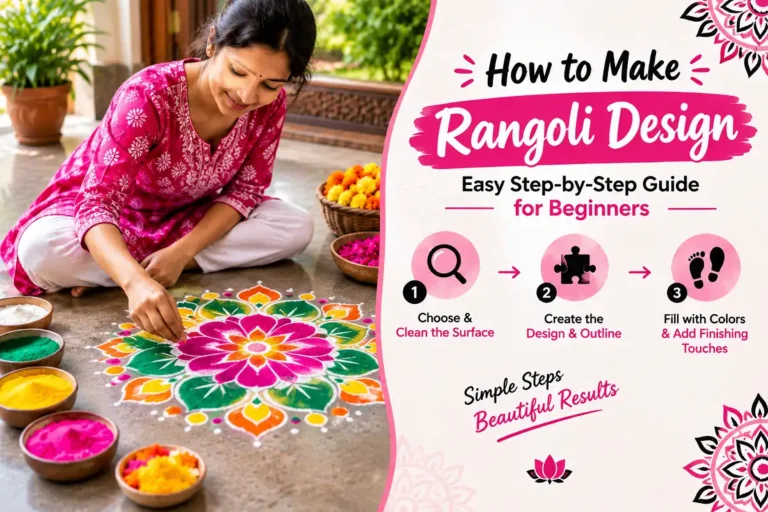
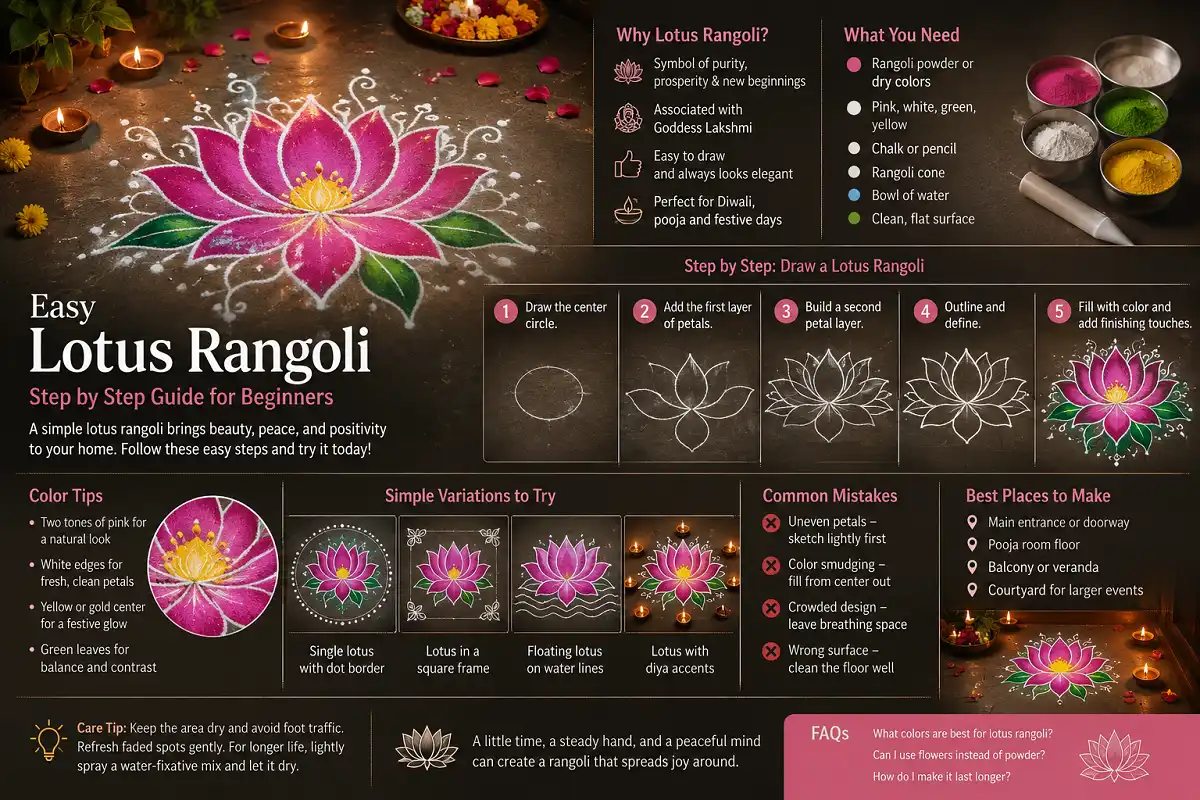
Easy Lotus Rangoli: Step by Step for Beginners
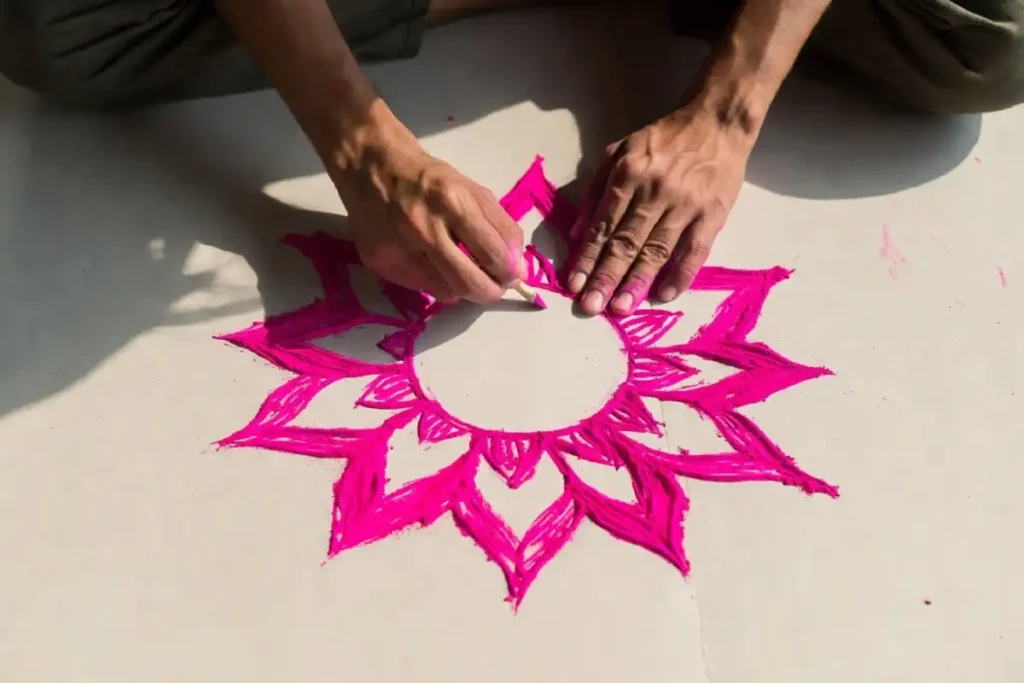
This section breaks the design into small parts so you never feel stuck. Take your time with each stage.
Draw the Center Circle
Start with a small circle in the middle. This circle becomes the heart of the flower. Keep it light so you can adjust it later if needed.
Add the First Layer of Petals
Around the circle, draw four to six curved petals. Each petal looks like a soft leaf shape with a pointed tip. Space them evenly so the flower stays balanced.
Build a Second Petal Layer
Add another ring of petals behind the first layer. Place these new petals between the gaps of the inner ones. This overlap gives your lotus a full, layered look without extra effort.
Outline and Define
Go over your outline with a steady hand to make the shape clear. Clean edges make even a simple lotus rangoli look polished. Fix any uneven petals at this stage.
Fill With Color
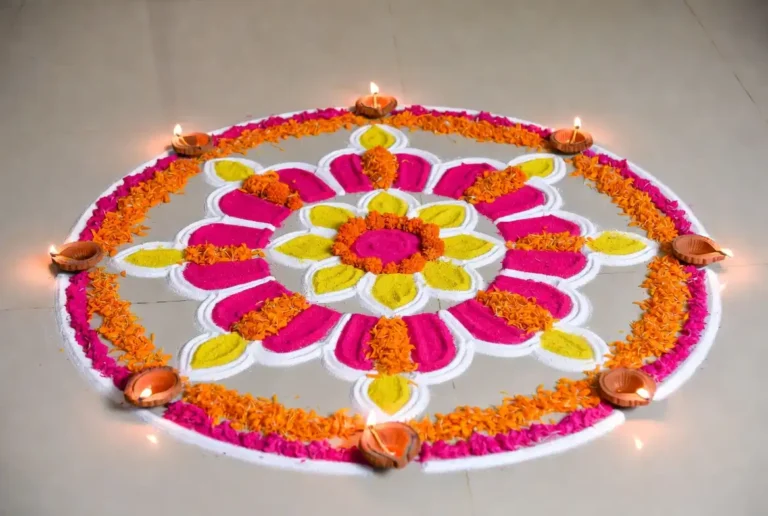
Now bring the flower to life:
- Use pink or rose for the petals
- Add white at the petal base for a soft fade
- Fill the center with yellow
- Place green dots or small leaves around the outer ring
Work from the inside out so your hand does not smudge fresh color.
Color Tips That Make a Difference
Color choice changes the whole mood of your design. A lotus does not need many shades to look rich.
Helpful pointers:
If you prefer calm and meaningful patterns, these spiritual rangoli ideas for beginners blend nicely with lotus shapes during prayer and quiet days.
Simple Lotus Rangoli Variations to Try
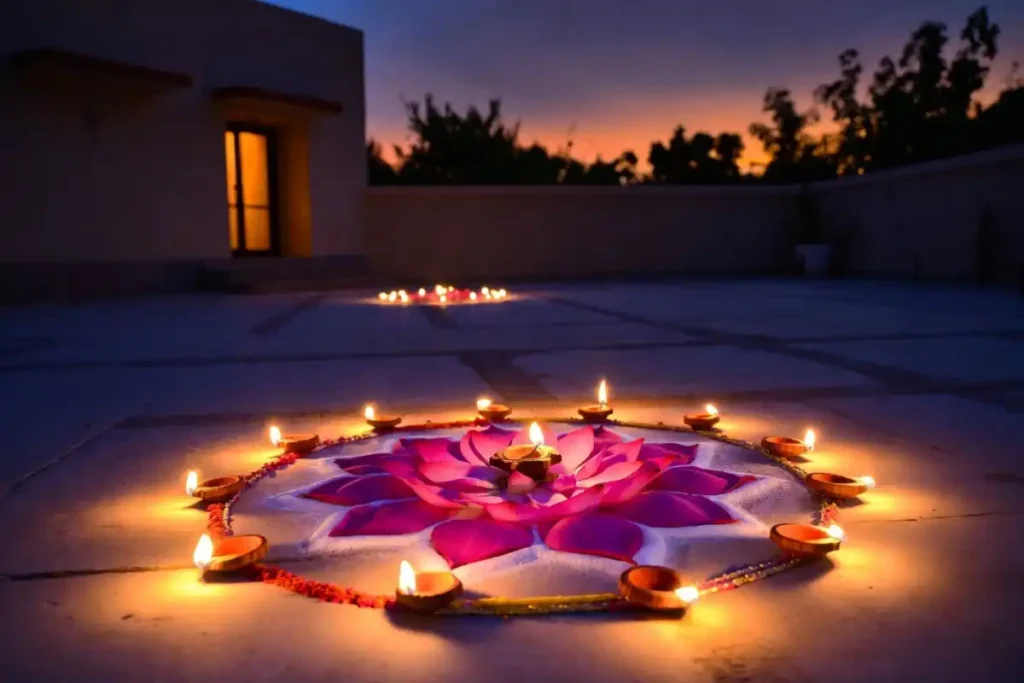
Once you feel comfortable with the basic flower, you can stretch your skills with small twists. Each idea keeps the design beginner friendly.
Single Lotus With Dot Border
Draw one lotus in the center and surround it with a ring of evenly spaced dots. Connect the dots with light curved lines for a neat frame.
Lotus in a Square Frame
Place your flower inside a square outline. Add small corner motifs like leaves or buds. This works well for entrances and looks tidy.
Floating Lotus on Water Lines
Add a few wavy lines under the flower to show water. A small leaf beside the lotus completes this calm, natural scene.
Lotus With Diya Accents
Pair your flower with small diya shapes for festival nights. Lit lamps placed near the design make it glow beautifully. For lamp-themed pairings, you can explore more easy Diwali rangoli ideas at home.
Common Mistakes and How to Avoid Them
Small habits can save you from frustration. Beginners often rush, and the design suffers.
Watch out for these:
Uneven petals: Sketch lightly first, then darken the final shape.
Color smudging: Always fill from the center outward.
Crowded design: Leave breathing space between petals and borders.
Wrong surface: A rough or dusty floor breaks your lines, so clean it first.
A calm pace gives a far better result than a quick, careless one.
Where to Place Your Lotus Rangoli
Placement adds to the charm of your art. The right spot draws the eye and welcomes guests.
Good locations include:
The lotus is a symbol with a long cultural history. You can read more about the meaning of the lotus flower and its place across traditions, which adds depth to your creative choices.
Caring for Your Design
A dry rangoli can last for a day or two if the area stays calm. To keep it neat:
If you want a longer-lasting version, fix the powder with a light spray of water mixed with a touch of fixative, then let it dry fully.
Conclusion
An easy lotus rangoli proves that beautiful floor art does not have to be complicated. With a simple center circle, a few layered petals, and soft colors, you can create a flower that feels fresh, calm, and festive. Beginners can start small and grow their confidence with each try, while the lotus shape stays forgiving and graceful throughout. Add your own touch with dot borders, diya accents, or water lines to keep things interesting. Most of all, enjoy the slow, peaceful process of drawing. A clean lotus near your door welcomes guests and brings a quiet warmth to any celebration at home.
FAQs
Is lotus rangoli good for beginners?
Yes, lotus rangoli is a great choice for beginners because the petal shape repeats in a simple pattern. You only need a center circle and a few curved petals to build a full flower, which makes the design forgiving and easy to learn.
How many colors do I need for a lotus rangoli?
You need only three or four colors for a clean lotus rangoli. Pink, white, yellow, and green cover the petals, center, and leaves, and these shades work well together for a fresh, balanced look.
How long does it take to make an easy lotus rangoli?
A simple lotus design takes around fifteen to thirty minutes for most beginners. Larger or more detailed versions take longer, but a small flower near your door can be finished quickly with a little practice.
Can I make a lotus rangoli without rangoli powder?
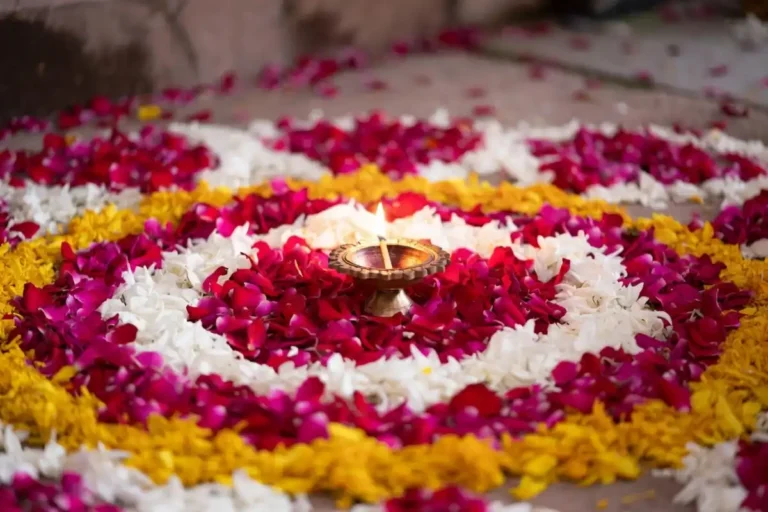
Yes, you can use flower petals, colored rice, chalk, or even flower stencils. These options give a similar look and are helpful when you want a quick or eco-friendly design.
Which festivals suit a lotus rangoli?
The lotus suits Diwali, Lakshmi pooja, Onam, and many spring and harvest festivals. Its link with purity and prosperity makes it a natural fit for prayer days and celebrations at home.