Rangoli Kolam Designs: A Deep Dive into the Art, Culture, and Creativity
Rangoli, also known as Kolam, is a stunning and elaborate type of ancient Indian art in which colourful patterns are made on the floor, typically at the entryway to temples or residences.
These patterns have profound cultural importance, particularly in Hindu ceremonies, in addition to improving a space’s visual appeal. Usually, rice flour, coloured powders, flower petals, and even sand are used to create Rangoli Kolam designs. These floral or geometric designs are thought to bring wealth into the house and are representations of serenity, beauty, and auspiciousness.
Rangoli Kolams have been made for thousands of years, and while they are especially well-liked in southern India, the custom has expanded throughout the nation and beyond. We will go into the intriguing realm of Rangoli Kolam designs in this blog article, discussing their origins, meaning, styles, and production methods.
Recognising the Rangoli Kolam Designs’ Tradition
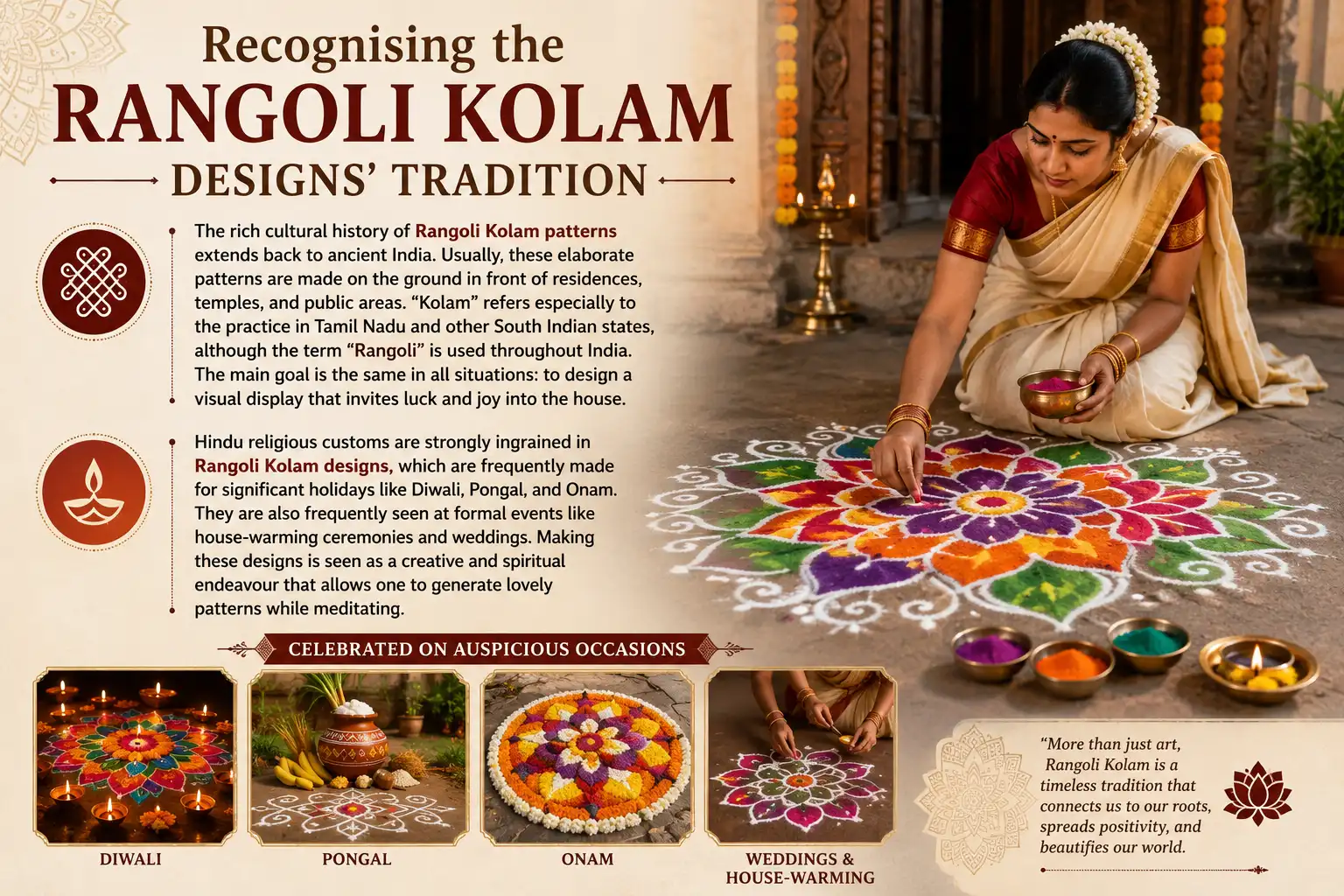
The rich cultural history of Rangoli Kolam patterns extends back to ancient India. Usually, these elaborate patterns are made on the ground in front of residences, temples, and public areas. “Kolam” refers especially to the practice in Tamil Nadu and other South Indian states, although the term “Rangoli” is used throughout India. The main goal is the same in all situations: to design a visual display that invites luck and joy into the house.
Hindu religious customs are strongly ingrained in Rangoli Kolam designs, which are frequently made for significant holidays like Diwali, Pongal, and Onam. They are also frequently seen at formal events like house-warming ceremonies and weddings. Making these designs is seen as a creative and spiritual endeavour that allows one to generate lovely patterns while meditating.
Rangoli Kolam Designs’ Symbolism
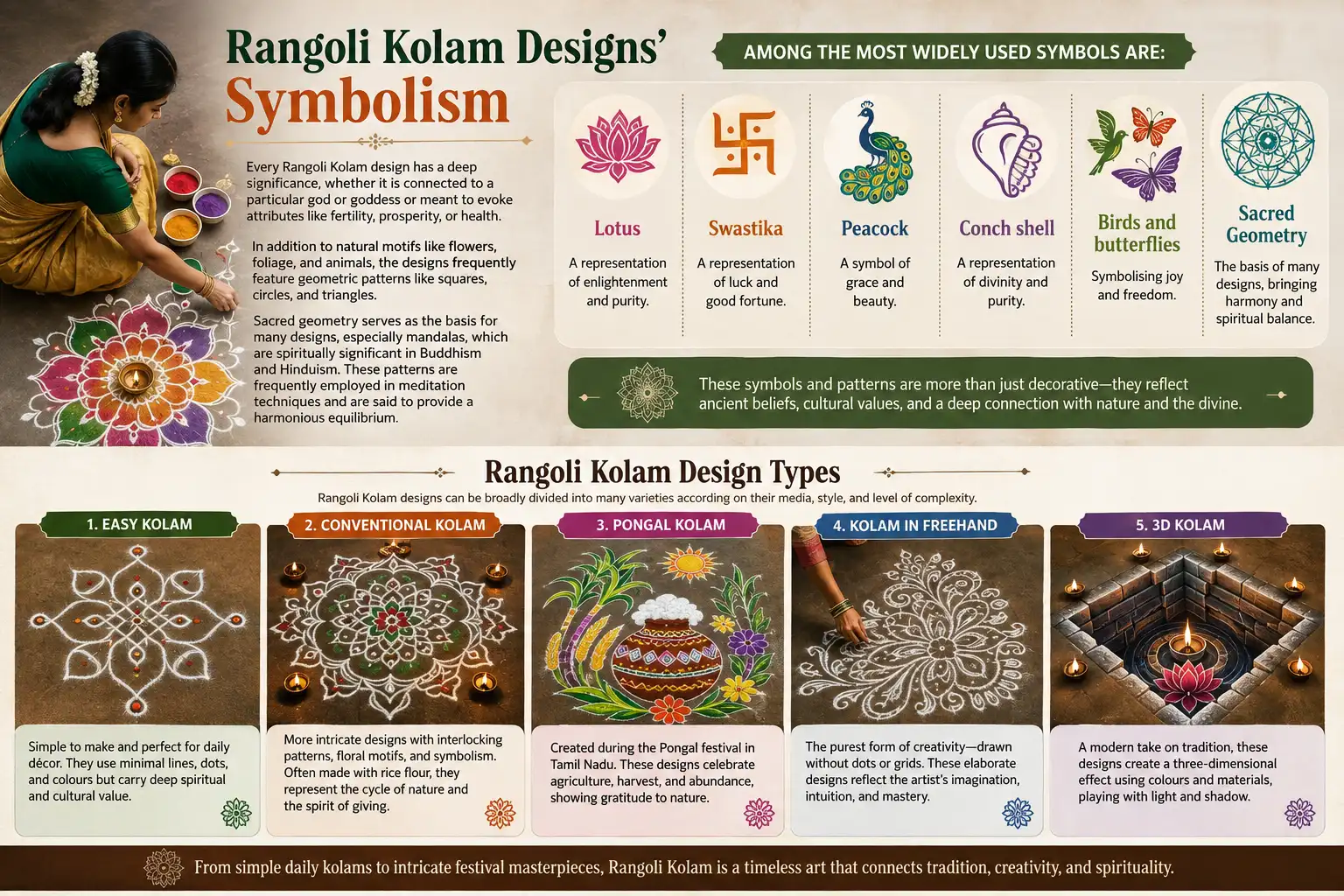
Every Rangoli Kolam design has a deep significance, whether it is connected to a particular god or goddess or meant to evoke attributes like fertility, prosperity, or health. In addition to natural motifs like flowers, foliage, and animals, the designs frequently feature geometric patterns like squares, circles, and triangles.
Among the Most Widely Used Symbols Are:
Sacred geometry serves as the basis for many designs, especially mandalas, which are spiritually significant in Buddhism and Hinduism. These patterns are frequently employed in meditation techniques and are said to provide a harmonious equilibrium.
Rangoli Kolam Design Types
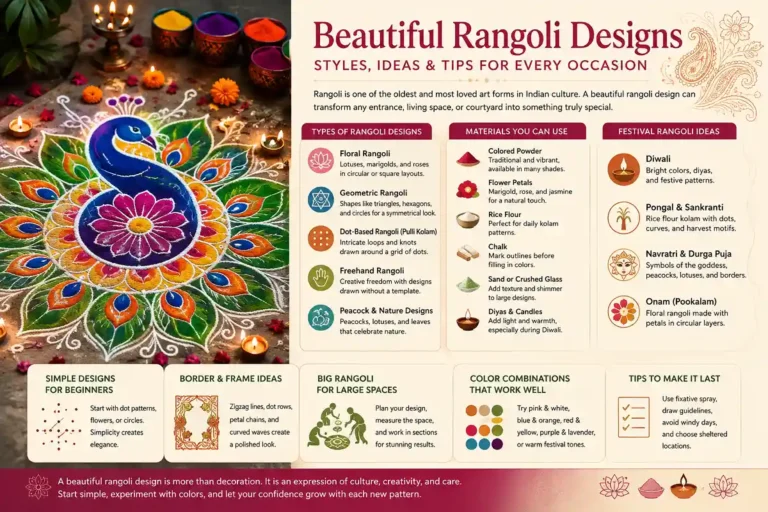
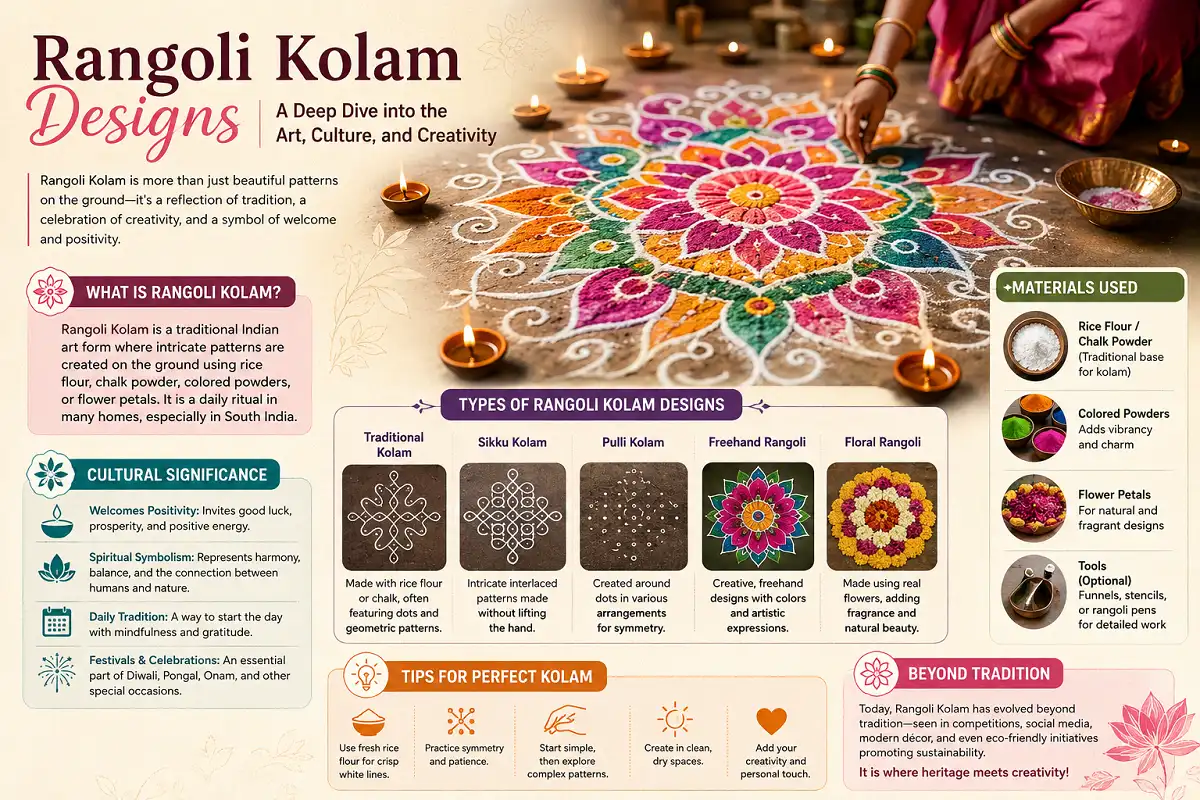
Rangoli Kolam designs can be broadly divided into many varieties according on their media, style, and level of complexity. Some of the most common varieties of Rangoli Kolams that you may come across are as follows:
Commonly used for everyday décor and simple to construct. Distinguished by simple geometric designs and sparse use of colour — typically rows of dots with the design emerging from between them. Despite their simplicity, they carry the same spiritual and cultural value as more complex designs.
More complex traditional designs may use interlocking geometric shapes, floral motifs, and symbolic meanings, calling for greater patience and skill. Traditional Kolams are sometimes made with rice flour so that ants and other little animals can eat them, signifying the cycle of nature and a spirit of giving.
A particular kind of Rangoli Kolam created during Tamil Nadu’s Pongal celebration. These designs stand for agriculture, harvest, and wealth, often featuring images of rice, cereals, and other agricultural goods as an expression of appreciation for nature’s abundance.
The pinnacle of creativity, where the design is created without any grid system or pre-existing dots. These Kolams can be very complex, letting the artist build their own designs based on mathematics, nature, or personal creativity, with beauty in their spontaneity and expression.
A contemporary take on the classic art form, made to look three-dimensional. Coloured powders and other materials create the illusion of depth and texture, demanding greater skill as the artist plans how the design will interplay with light and shadow.
Festivals and Events That Are Popular for Rangoli Kolam Designs
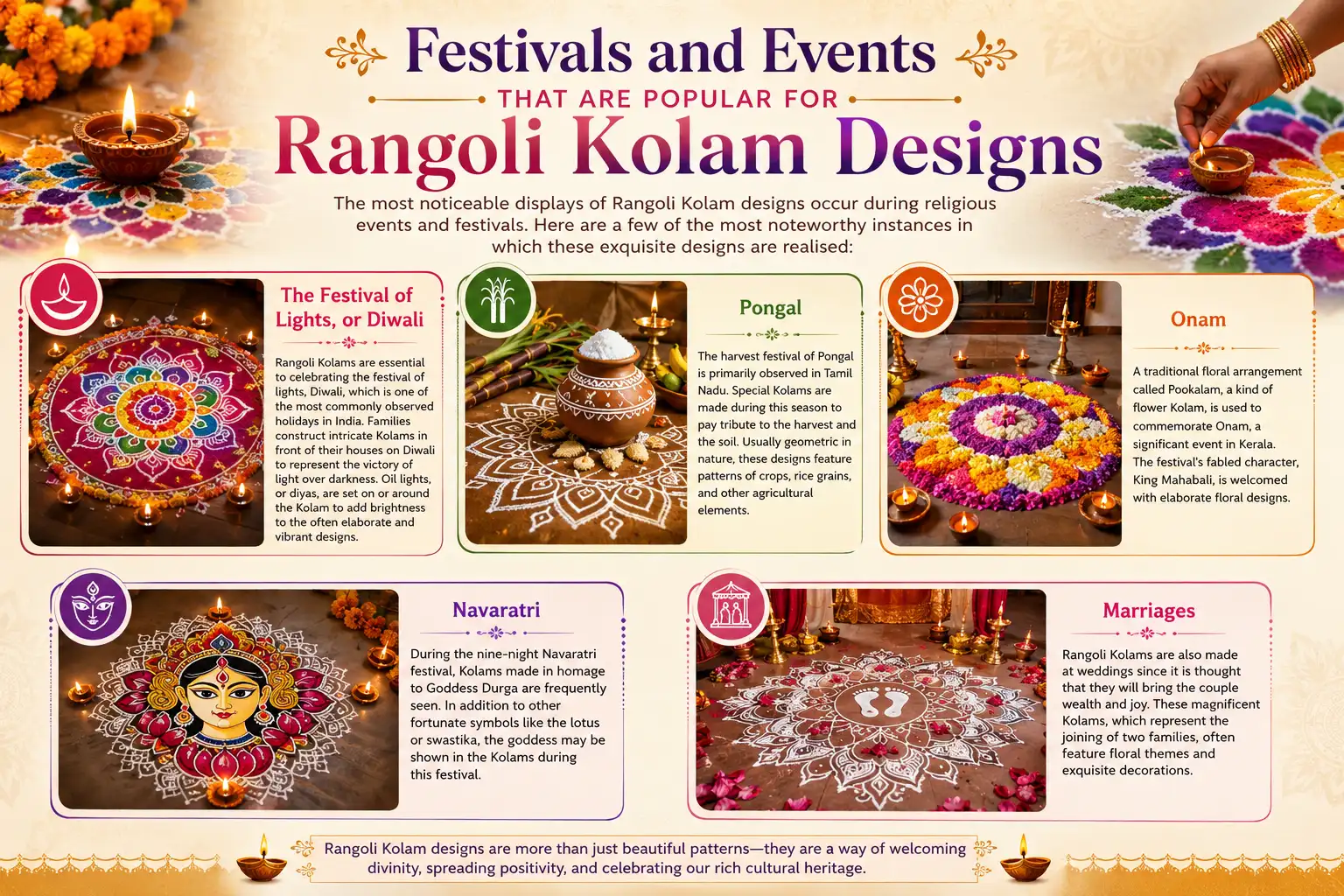
The most noticeable displays of Rangoli Kolam designs occur during religious events and festivals. Here are a few of the most noteworthy instances in which these exquisite designs are realised:
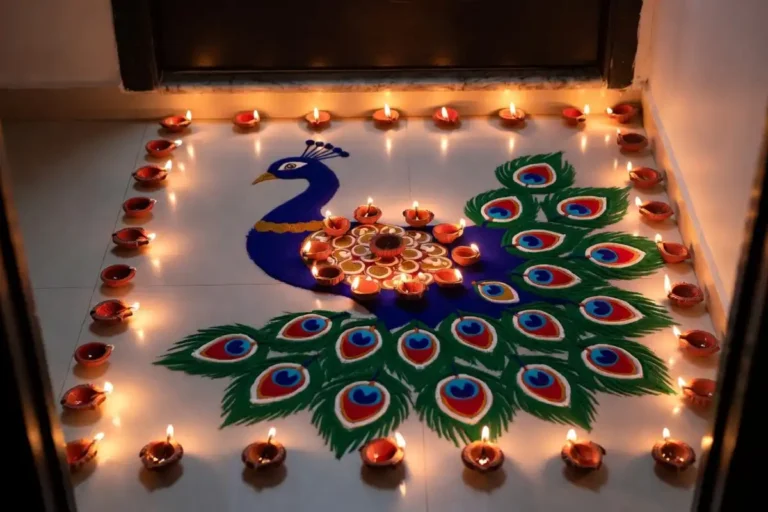
Rangoli Kolams are essential to celebrating Diwali, one of the most commonly observed holidays in India. Families construct intricate Kolams in front of their houses to represent the victory of light over darkness. Oil lamps, or diyas, are set on or around the Kolam to add brightness to the vibrant designs.
The harvest festival of Pongal is primarily observed in Tamil Nadu. Special Kolams are made during this season to pay tribute to the harvest and the soil, usually geometric in nature, featuring patterns of crops, rice grains, and other agricultural elements.
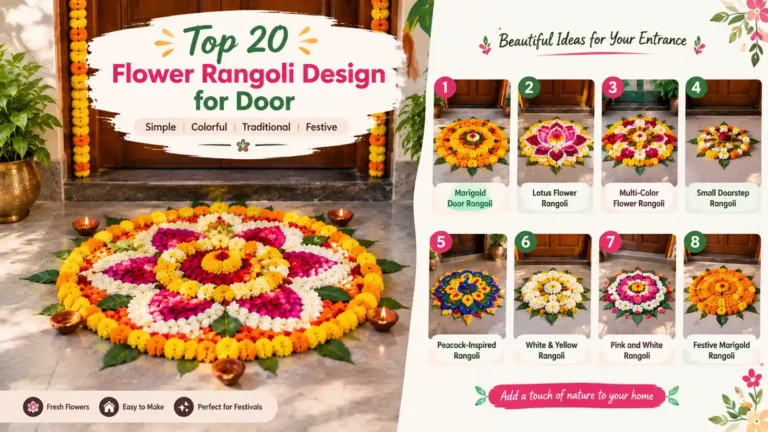
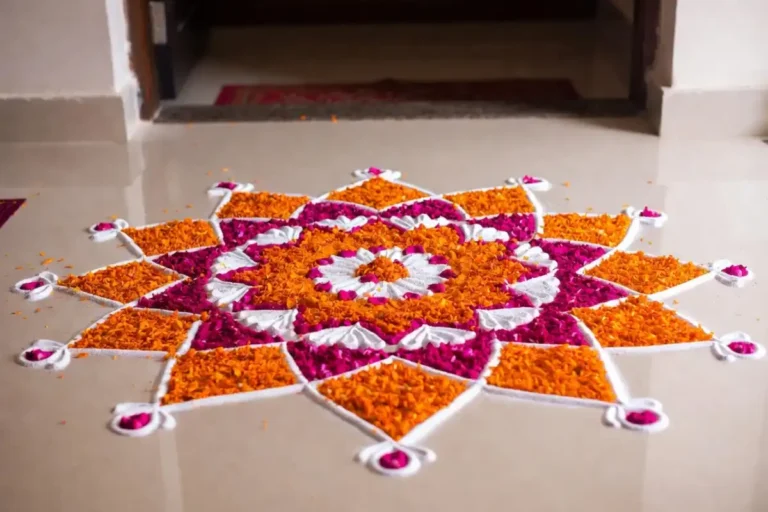
A traditional floral arrangement called Pookalam, a kind of flower Kolam, is used to commemorate Onam, a significant event in Kerala. The festival’s fabled character, King Mahabali, is welcomed with elaborate floral designs.
During the nine-night Navaratri festival, Kolams made in homage to Goddess Durga are frequently seen. In addition to other fortunate symbols like the lotus or swastika, the goddess may be shown in the Kolams during this festival.
Rangoli Kolams are also made at weddings since it is thought that they will bring the couple wealth and joy. These magnificent Kolams, representing the joining of two families, frequently feature floral themes and exquisite decorations.
Advice for Getting the Hang of Rangoli Kolam Designs
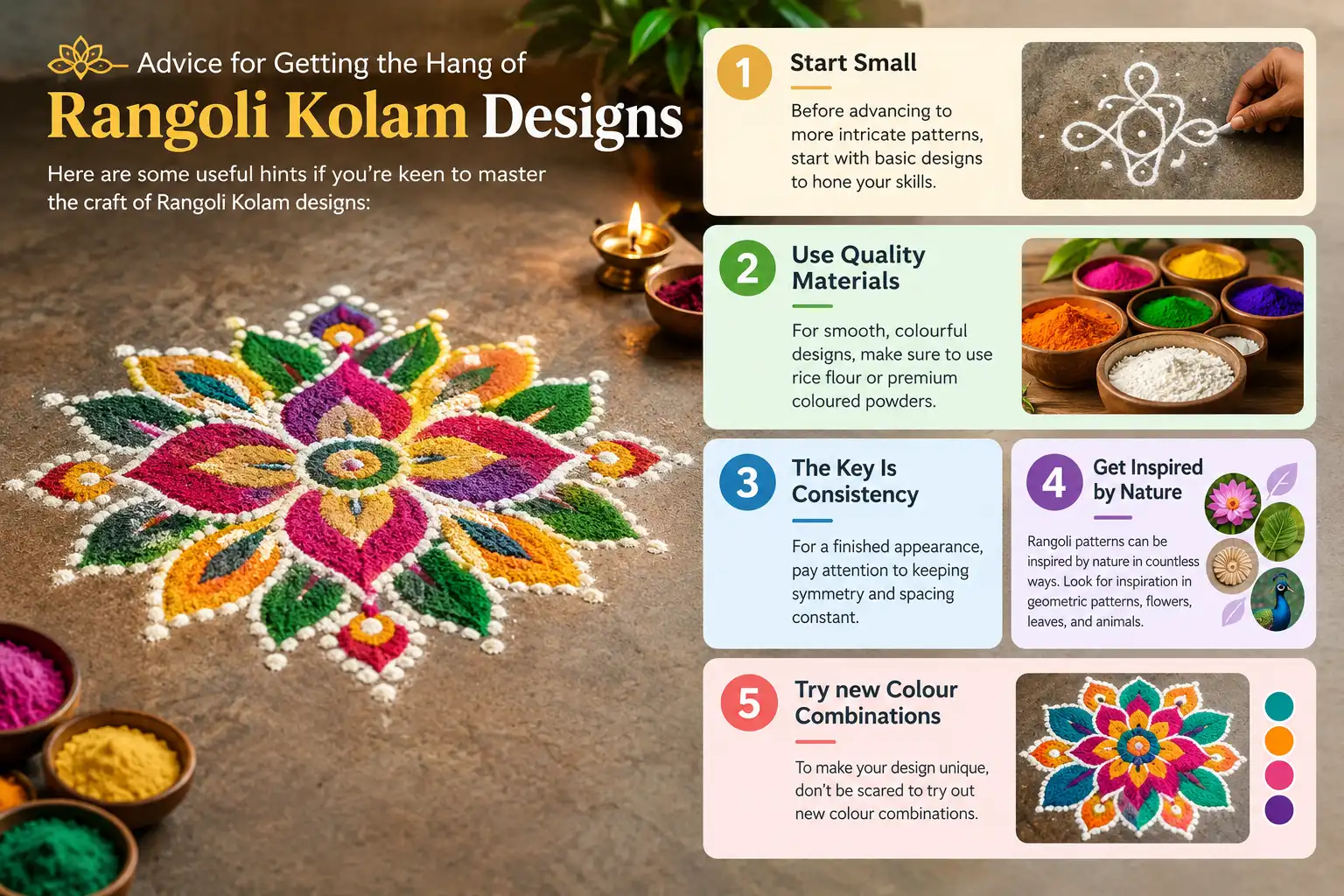
Here are some useful hints if you’re keen to master the craft of Rangoli Kolam designs:
-
Start Small
Before advancing to more intricate patterns, start with basic designs to hone your skills.
-
Use Quality Materials
For smooth, colourful designs, make sure to use rice flour or premium coloured powders.
-
The Key Is Consistency
For a finished appearance, pay attention to keeping symmetry and spacing constant.
-
Get Inspired by Nature
Rangoli patterns can be inspired by nature in countless ways. Look for inspiration in geometric patterns, flowers, leaves, and animals.
-
Try New Colour Combinations
To make your design unique, don’t be scared to try out new colour combinations.
Final Thoughts
Not only can Rangoli Kolam designs be used as decoration, but they can also be used to express creativity, connect with one’s cultural background, and infuse positivity into one’s house. Regardless of their complexity, these designs are an essential component of Indian customs and celebrations because they have profound spiritual and cultural significance.
Learning to make these lovely designs is a way to participate in an age-old art form and support a vibrant cultural practice that is still going strong. The art of Rangoli Kolam patterns may be mastered by anyone with effort and time, adding beauty and joy to their surroundings.
FAQs
What distinguishes Rangoli from Kolam?
While Kolam particularly refers to the traditional designs of Tamil Nadu and other South Indian regions, Rangoli is the general name used throughout India for decorative floor art.
Is it possible to make Rangoli Kolam indoors?
It is possible to make Rangoli Kolams both indoors and outdoors. A lot of people decide to make Kolams in their homes, particularly for festivals and other special events.
What kinds of materials are commonly utilised to create Rangoli Kolam designs?
Traditionally, rice flour, coloured powders, flower petals, and occasionally sand are used to create Rangoli Kolam designs. Other materials, such as chalk and crushed coloured stones, are also utilised in recent times.
Are there any particular rules to follow when creating a Rangoli Kolam?
While symmetry, balance, and harmony are crucial for a visually beautiful Rangoli, there are no hard and fast rules. It’s standard practice to begin with basic geometric patterns and work your way up to more intricate designs.
What is the lifespan of a Rangoli Kolam design?
The materials used and the weather have an impact on how long a Rangoli Kolam design takes. Rice flour and natural ingredients are usually used to make Kolams that last a day or two before being washed away or eaten by insects like ants.