Aesthetic Rangoli Ideas for Every Home and Festival
Rangoli is one of the oldest and most loved art forms in South Asian tradition. It brings color, warmth, and a sense of welcome to any space. Whether you are decorating for a festival or simply want to add beauty to your home, aesthetic rangoli ideas can inspire you to create something truly special. This guide covers a wide range of styles, from soft floral patterns to bold geometric shapes, so you can find the look that suits you best.
What Makes a Rangoli Design Truly Aesthetic
An aesthetic rangoli is one that feels balanced, intentional, and pleasing to the eye. It does not have to be complicated. What matters most is harmony between color, shape, and space. A few qualities that define aesthetic rangoli ideas include:
- Balanced symmetry or pleasing asymmetry
- Thoughtful color combinations such as pastels, jewel tones, or monochromatic schemes
- Clean lines and smooth curves
- A central focal point surrounded by complementary elements
Even a simple design can look stunning when these principles are applied carefully.
Floral Aesthetic Rangoli Ideas
Flowers are the heart of traditional rangoli art. They bring softness and life to the floor, making them a natural choice for both festivals and everyday use.
Lotus and Petal Circular Designs
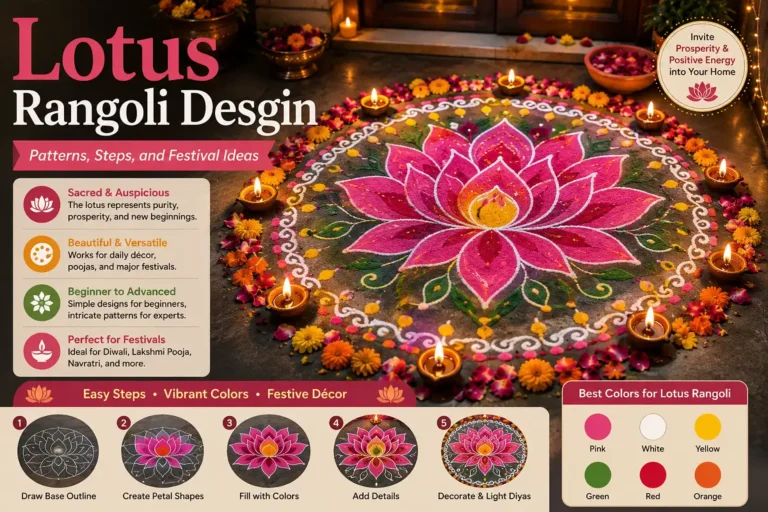
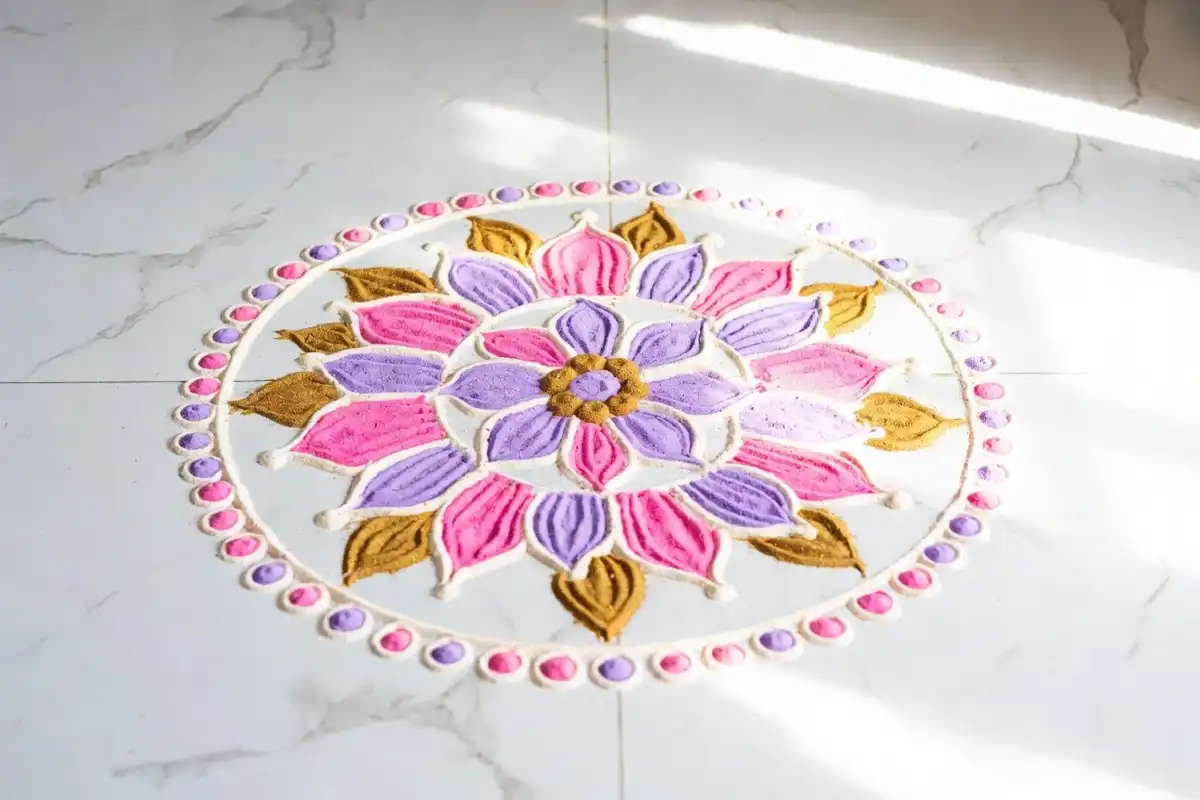
The lotus is a beloved motif in rangoli art. A circular design with layered lotus petals radiating outward from a central dot creates a meditative, elegant look. Use soft pink, white, and gold colors for a delicate effect.
Marigold Vine Border Rangoli
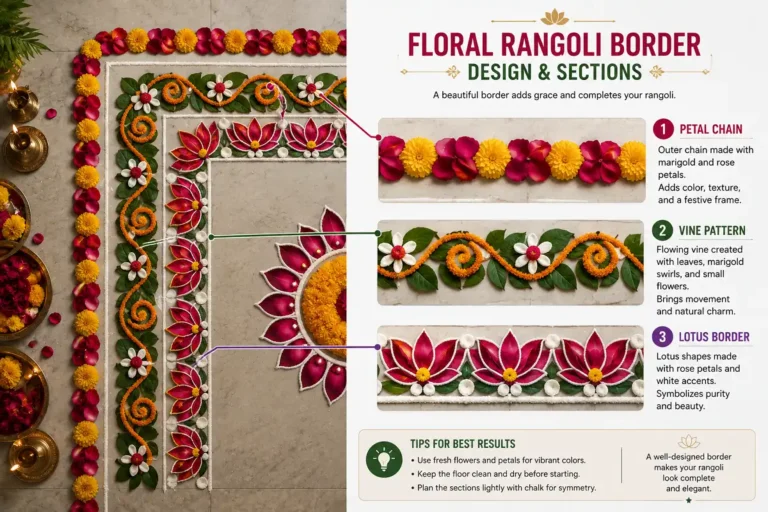
A vine of marigold flowers along a doorstep or entryway is both aesthetic and welcoming. This style works beautifully with yellow, orange, and green hues. You can keep the fill simple and let the petal outlines do the work.
Rose and Leaf Motif Designs
Rose-inspired rangoli with detailed leaf borders give a romantic feel. These are ideal for weddings, housewarmings, and festive gatherings. Shading petals with a gradient of two similar colors adds depth and dimension.
If you are just starting out, try these simple step-by-step designs for beginners to build your confidence with floral patterns before moving on to complex styles.
Geometric and Minimalist Aesthetic Rangoli
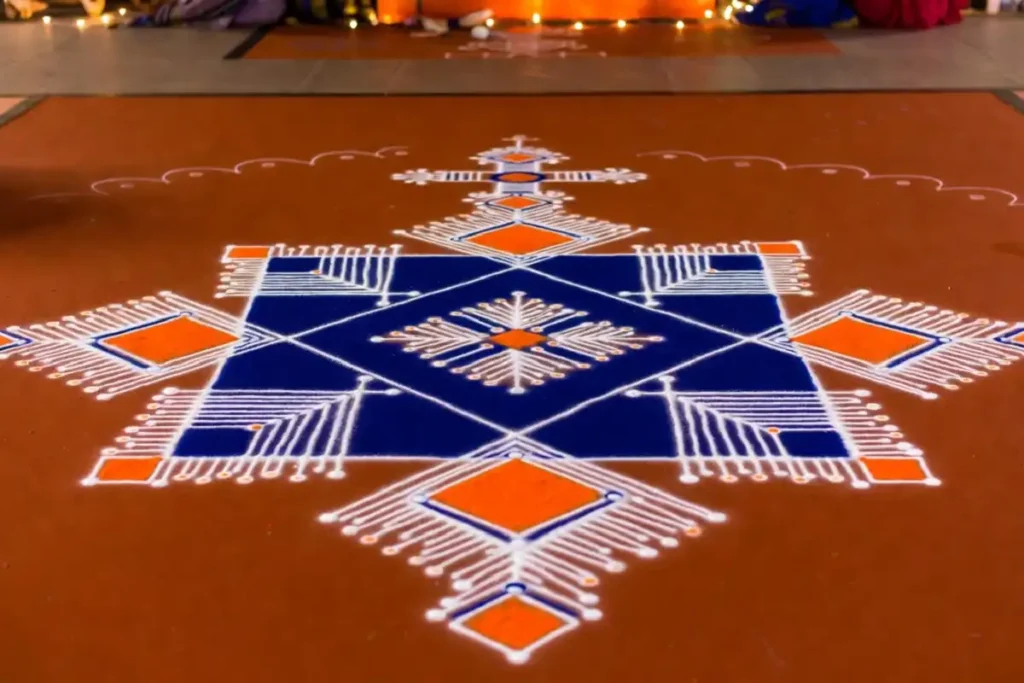
Modern aesthetics often lean toward clean lines and structured patterns. Geometric rangoli designs are perfect for those who love a polished, contemporary look.
Grid-Based Dot Rangoli
Dot-based rangoli, also known as kolam, uses a grid of dots as the foundation. Lines and curves are drawn around the dots to create intricate patterns. The results can look remarkably complex even when the method is straightforward. Explore small rangoli designs with dots for daily inspiration that work well in compact spaces.
Hexagonal and Star Patterns
Hexagonal shapes and six-pointed star patterns bring structure and order. These work especially well in monochromatic or dual-tone color schemes. Navy blue with white, or deep red with gold, creates a striking visual impact.
Minimalist Line Art Rangoli
A single curved motif, such as a half-open flower or a flowing wave design, can be surprisingly powerful. Less color and more open space let the form speak for itself. This approach suits modern home decor and smaller floor areas.
For more inspiration with structured shapes, browse this collection of beautiful geometric drawing patterns for rangoli.
Festival-Themed Aesthetic Rangoli Ideas
Certain festivals call for specific themes and symbols in rangoli art. Matching the design to the occasion makes the decoration feel complete and intentional.
🪔Diwali
Diwali rangoli traditionally features diyas placed along the edges of the design. Warm colors like saffron, deep red, and golden yellow work beautifully here. Concentric circular patterns with diya motifs at each outer ring create a festive and glowing effect.
🌺Onam
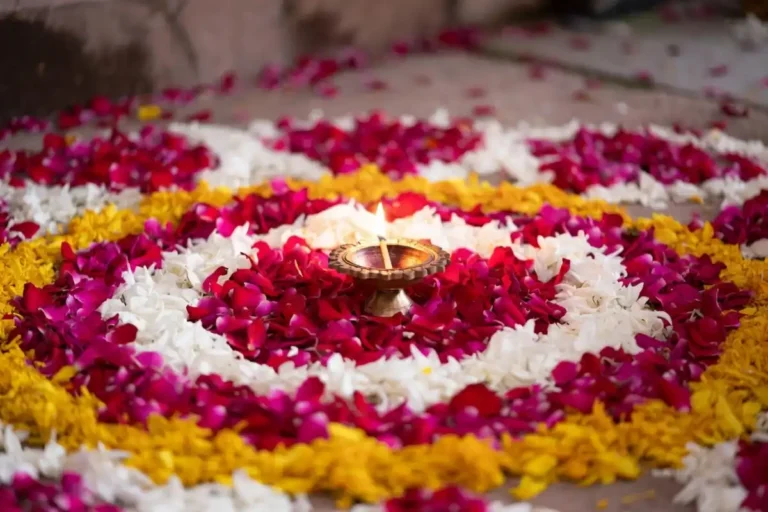
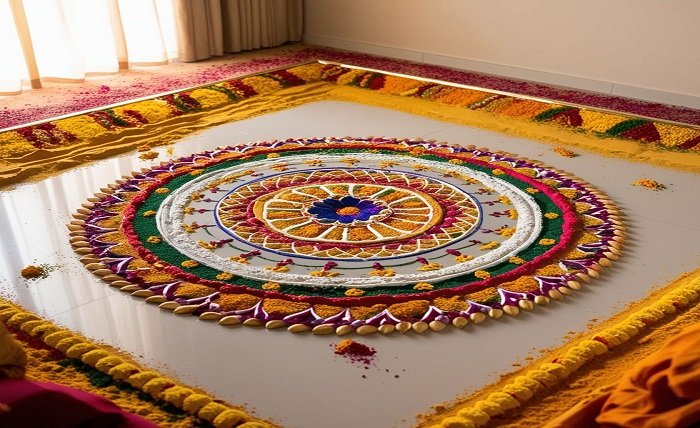
Pookalam is a floral rangoli tradition from Kerala, created entirely from fresh flower petals. The designs are typically circular and layered, with each ring featuring a different flower or color. This tradition produces some of the most naturally aesthetic rangoli ideas you can find.
🎨Navratri
Navratri spans nine nights, each associated with a specific color. A rangoli that uses the featured color of the day as the dominant tone is both thematic and visually striking. Bright fuchsia, royal blue, and bright green each create a different mood.
Using Natural Materials for Aesthetic Rangoli
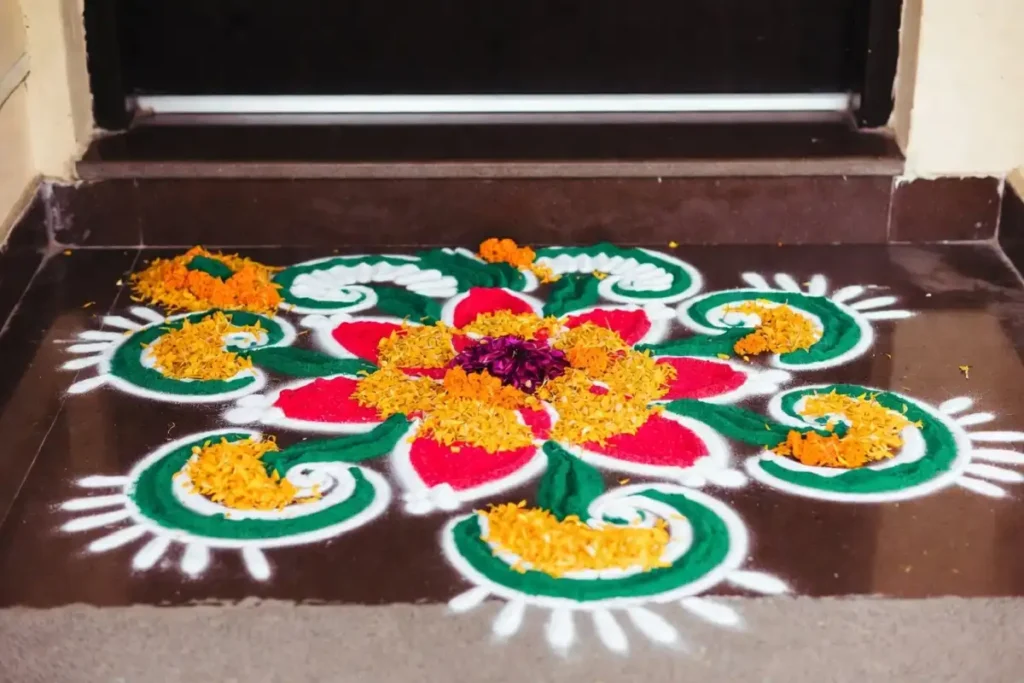
The material you choose shapes the texture and finish of your design. Each medium has its own character.
Colored Powder and Chalk
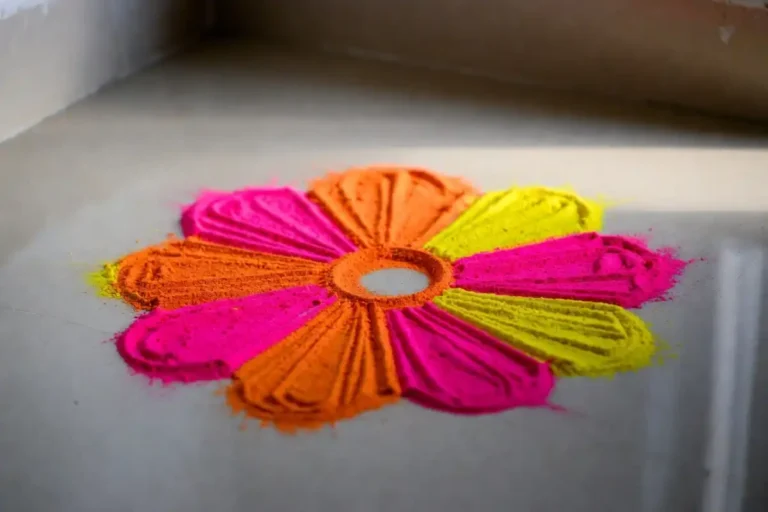
Dry colored powder (gulal or rangoli powder) is the most common choice. It allows fine detail and smooth gradients. Chalk gives a matte, soft look that photographs beautifully.
Flower Petals and Rice
Fresh flower petals create a fragrant, three-dimensional effect. Rose petals, marigolds, and jasmine are popular choices. Colored rice is another eco-friendly alternative that holds shape well.
Sand and Salt Rangoli
Colored sand or white salt can be used to create intricate designs with a textured finish. Salt rangoli is a popular choice in coastal regions and is easy to clean up after the celebration.
Color Pairing Tips for Aesthetic Rangoli
Color is where many designs succeed or fall flat. A few reliable combinations to consider:
Always consider the floor color beneath your design. White and marble floors make pastel designs pop. Dark stone or tile floors work better with bright, saturated colors.
Aesthetic Rangoli for Small Spaces
You do not need a large hallway or courtyard to make a beautiful rangoli. Compact designs can be just as impactful.
A single flower bloom about 30 to 40 centimeters wide works well at a doorstep. A small mandala centered in front of a puja room door creates a sense of ritual and intention. For apartment dwellers, a decorative mat with a drawn or sticker rangoli is a practical option that still captures the spirit of the tradition.
The Smithsonian Center for Folklife and Cultural Heritage recognizes floor art traditions like rangoli as important living cultural expressions, underscoring why even small, thoughtful designs hold meaning beyond decoration.
Conclusion
Aesthetic rangoli ideas offer a meaningful way to bring color, culture, and creativity into any space. Whether you prefer soft floral patterns, bold geometric shapes, or natural petal designs, there is a style for every skill level and occasion.
Focus on balance, thoughtful color choices, and clean execution, and your rangoli will feel both personal and beautiful.
Take time to explore different materials and motifs, and let each design reflect the mood and meaning of the moment you are creating it for.
FAQs
What are aesthetic rangoli ideas suitable for beginners?
Simple floral circles, single lotus motifs, and dot-grid patterns are ideal starting points for beginners. These designs use basic shapes that are easy to replicate without special tools. Starting with chalk outlines before filling in color also helps new artists stay within their intended shape.
Which colors work best for an aesthetic rangoli?
Pastel tones like blush pink, lavender, and mint work well for an airy, modern look, while jewel tones such as deep blue, emerald, and gold suit traditional festival settings. The best choice depends on the occasion, the floor surface, and personal preference.
How long does it take to make an aesthetic rangoli design?
A small, simple design can be completed in 20 to 30 minutes. A medium circular pattern with multiple colors typically takes one to two hours. Large, elaborate festival designs with petal work or fine detailing may take several hours or even a full day.
Can I make aesthetic rangoli designs without rangoli powder?
Yes, you can use materials like flower petals, colored rice, sand, chalk, or even acrylic paint on paper placed on the floor. Each material gives a different texture and look, and some are easier to clean up after the occasion.
What is the difference between rangoli and kolam?
Rangoli is a broad term for floor art using colored powder, petals, or other materials, practiced widely across India. Kolam is a specific tradition from South India, particularly Tamil Nadu, that uses white rice flour and follows dot-grid geometry as its base structure. Both share the goal of creating beautiful, welcoming floor patterns.