Beautiful Rangoli Design: Ideas, Tips, and Inspiration for Every Occasion
Rangoli is one of the oldest and most loved art forms in Indian culture. A beautiful rangoli design can transform any entrance, living space, or courtyard into something truly special.
Whether you are preparing for a festival, a wedding, or simply want to add color to your daily routine, rangoli offers endless creative possibilities. This guide covers different styles, techniques, and ideas to help you find the perfect pattern, no matter your skill level or the occasion you are celebrating.
Why Rangoli Remains a Timeless Tradition
Rangoli has been part of Indian households for centuries. It is created at doorsteps and courtyards to welcome guests, honor deities, and celebrate good fortune.
The art form varies widely across regions. In Tamil Nadu it is called kolam, in Gujarat it is sathiya, and in Maharashtra it goes by the name rangoli. Despite the regional differences, the spirit behind each beautiful rangoli design remains the same: to invite positivity and beauty into the home.
Today, rangoli has expanded beyond tradition. People use it at birthday celebrations, baby showers, office events, and even as wall art. Its adaptability is a big reason why it continues to thrive.
Rangoli Through Generations
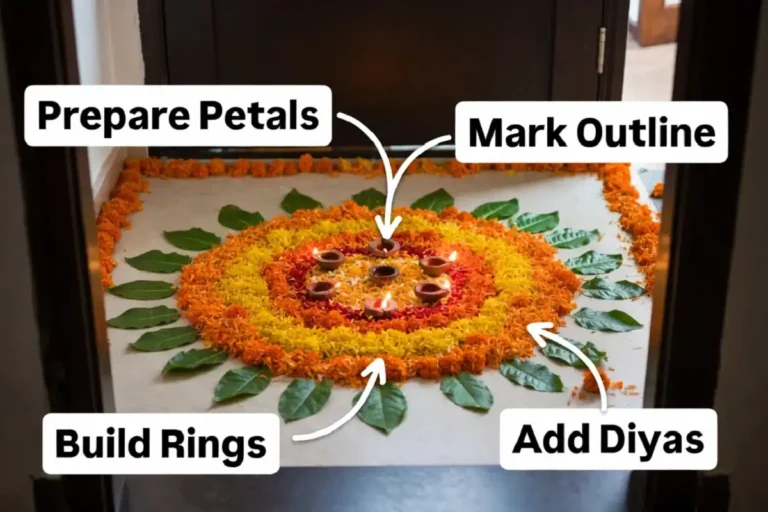
From traditional doorstep patterns to modern decorative art, rangoli continues to bring color, culture, and creativity into everyday spaces.
Types of Beautiful Rangoli Designs
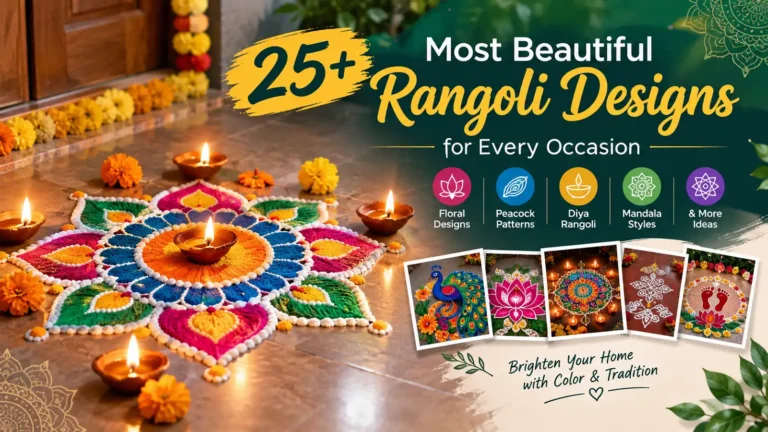
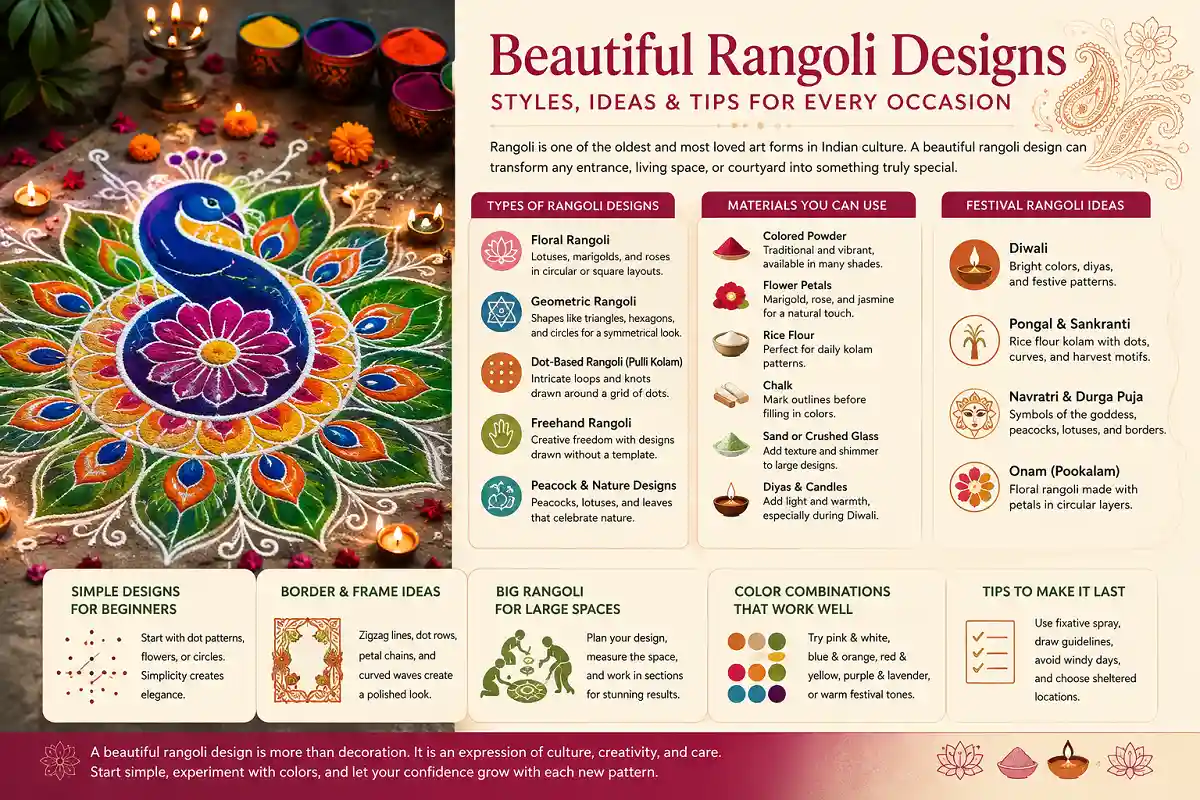
There is no single approach to making rangoli. Designs range from simple freehand patterns to complex, multi-layered compositions. Here are the main types you can explore:
Floral Rangoli
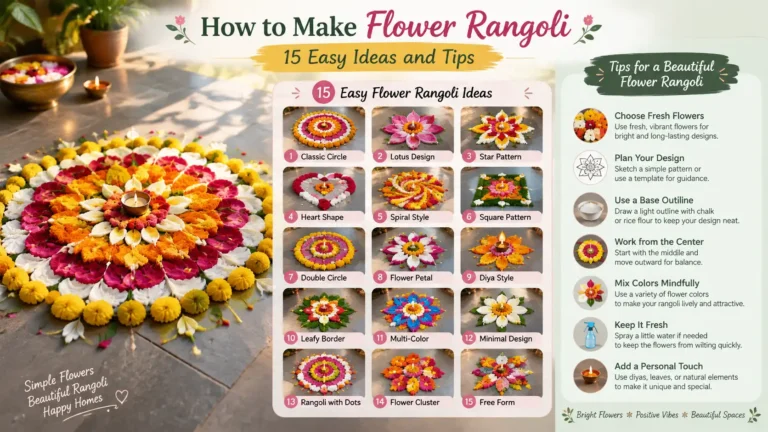
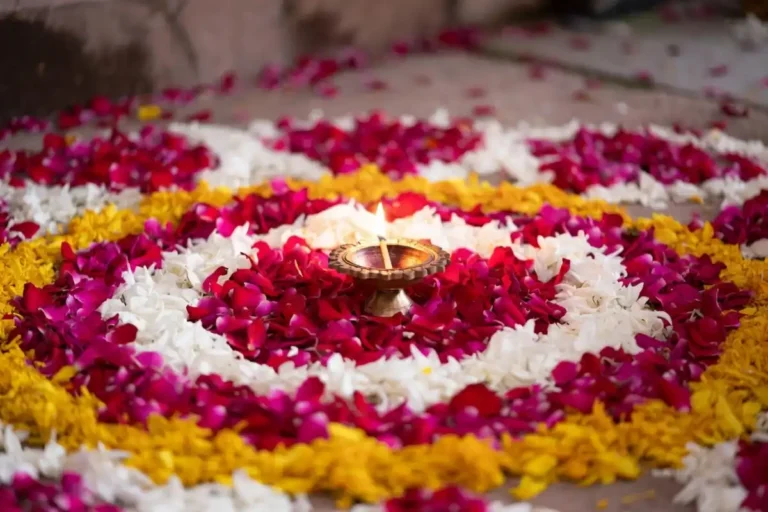
Floral patterns are among the most popular choices. Using flower petals, colored powder, or both, these designs often feature lotuses, marigolds, and roses arranged in circular or square formations. If you enjoy working with natural materials, check out these stunning peacock flower rangoli ideas that blend blooms with bird motifs beautifully.
Geometric Rangoli
Geometric designs use shapes like triangles, hexagons, and interlocking circles to create a structured, symmetrical look. These are especially striking when created in contrasting colors. For clean, sharp compositions, square beautiful rangoli designs offer a great starting point with 20 ideas to get you inspired.
Dot-Based Rangoli (Pulli Kolam)
This traditional South Indian style uses a grid of dots as the base structure. Lines are drawn around the dots to create intricate knots and loops. It is a precise and meditative style that looks impressive once complete.
Freehand Rangoli
Freehand rangoli allows complete creative freedom. Artists draw directly without a template, using intuition and experience to guide their lines and colors.
Peacock and Nature-Inspired Designs
Animals and birds, especially peacocks, are iconic in Indian art. A peacock rangoli adds elegance and life to any space. You can find a wide range of peacock beautiful rangoli design ideas to suit both beginners and experienced artists.
Materials You Can Use
The material you choose shapes the final look of your rangoli. Here are the most commonly used options:
- Colored powder (rangoli powder): The most traditional material. Available in many vibrant shades at local markets.
- Flower petals: Marigold, rose, and jasmine petals add a natural, fragrant touch.
- Rice flour: A classic choice for daily kolam patterns, especially in South India.
- Chalk: Useful for marking outlines before filling in colors.
- Sand or crushed glass: These add texture and shimmer to larger festival designs.
- Diyas and candles: Often placed inside or around the rangoli for a glowing effect, especially during Diwali.
According to India’s Ministry of Culture, rangoli is recognized as an important intangible cultural heritage, reflecting the creative traditions passed down through generations.
Peacock and Nature-Inspired Designs
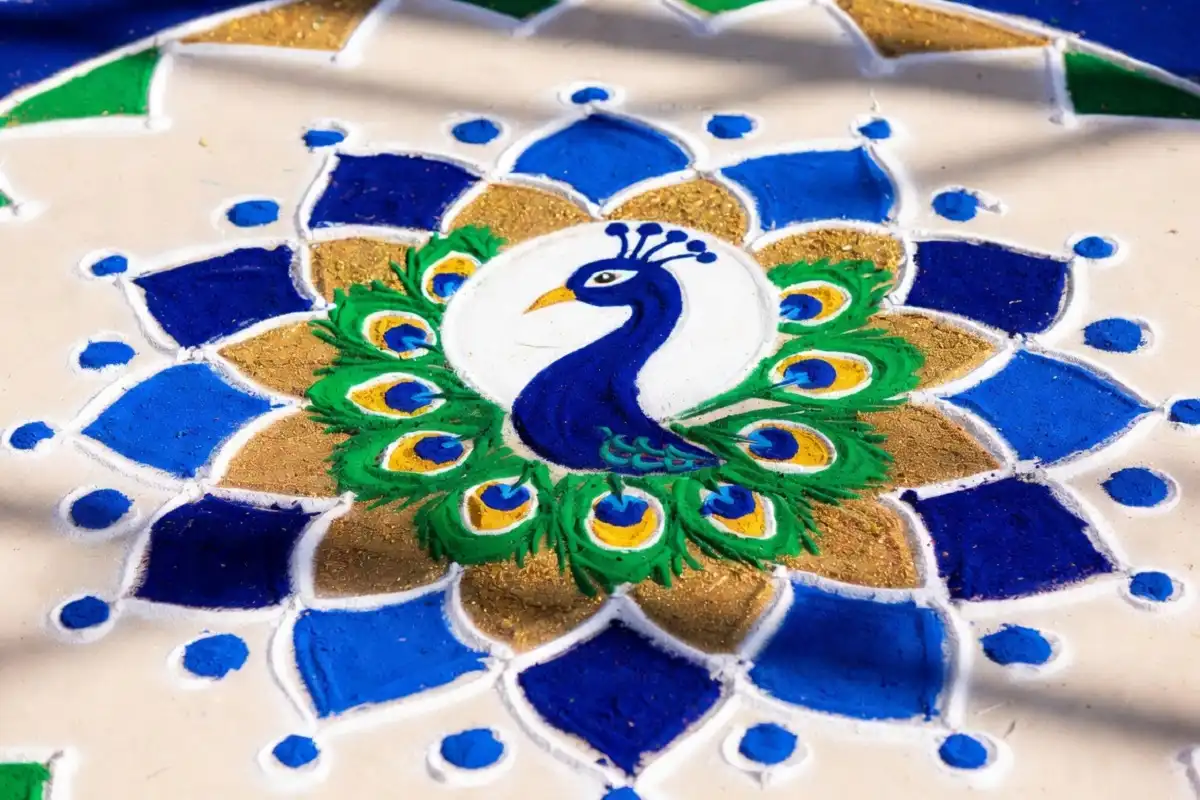
Nature has always been central to Indian art. Peacocks, lotuses, and mango leaves (paisley) appear in countless traditional rangoli patterns. A peacock rangoli, in particular, captures movement and life through the sweep of its tail feathers.
To create a peacock-inspired pattern, start with a central oval body and fan out curved lines to suggest the feathers. Fill each feather with a “eye” shape in contrasting colors. Surrounding the peacock with petal borders or geometric frames adds depth and makes the overall design more striking.
Make the Peacock the Focal Point
Keep the central peacock clear and balanced, then use flowers, dots, and borders to frame the main motif without making the design feel crowded.
Simple Designs for Beginners
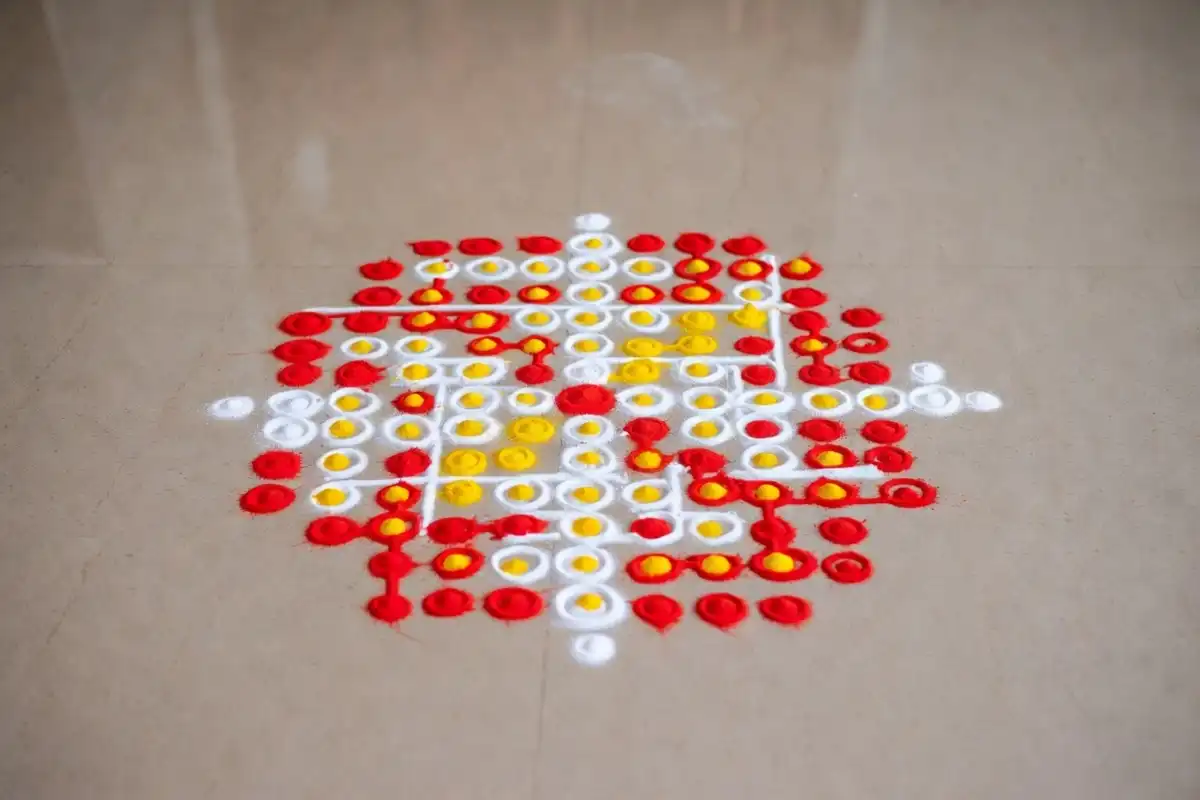
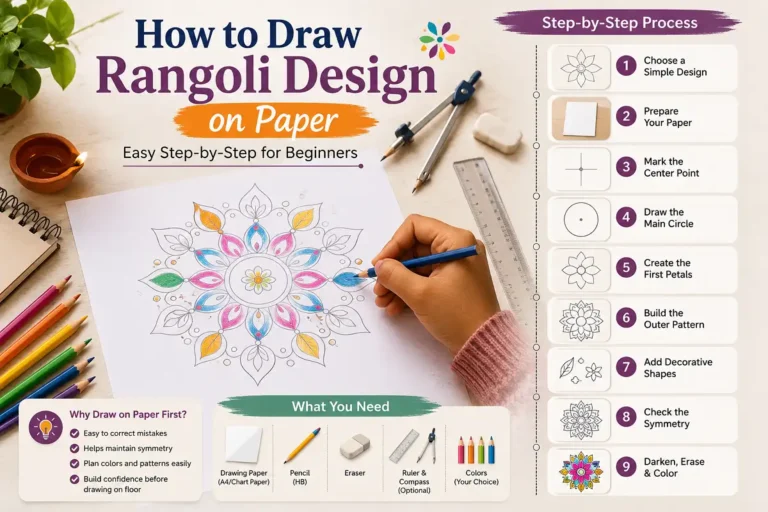
Not every beautiful rangoli design needs to be complex. Beginners can start with small dot patterns, five-petal flowers, or basic concentric circles. Simplicity, when done with clean lines and good color choices, looks just as elegant as an intricate composition.
If you are new to rangoli, start with a simple rangoli design guide that offers 20 easy patterns you can practice at home. Once you feel comfortable, gradually add more layers, colors, and detail to your work.
Festival Rangoli Ideas
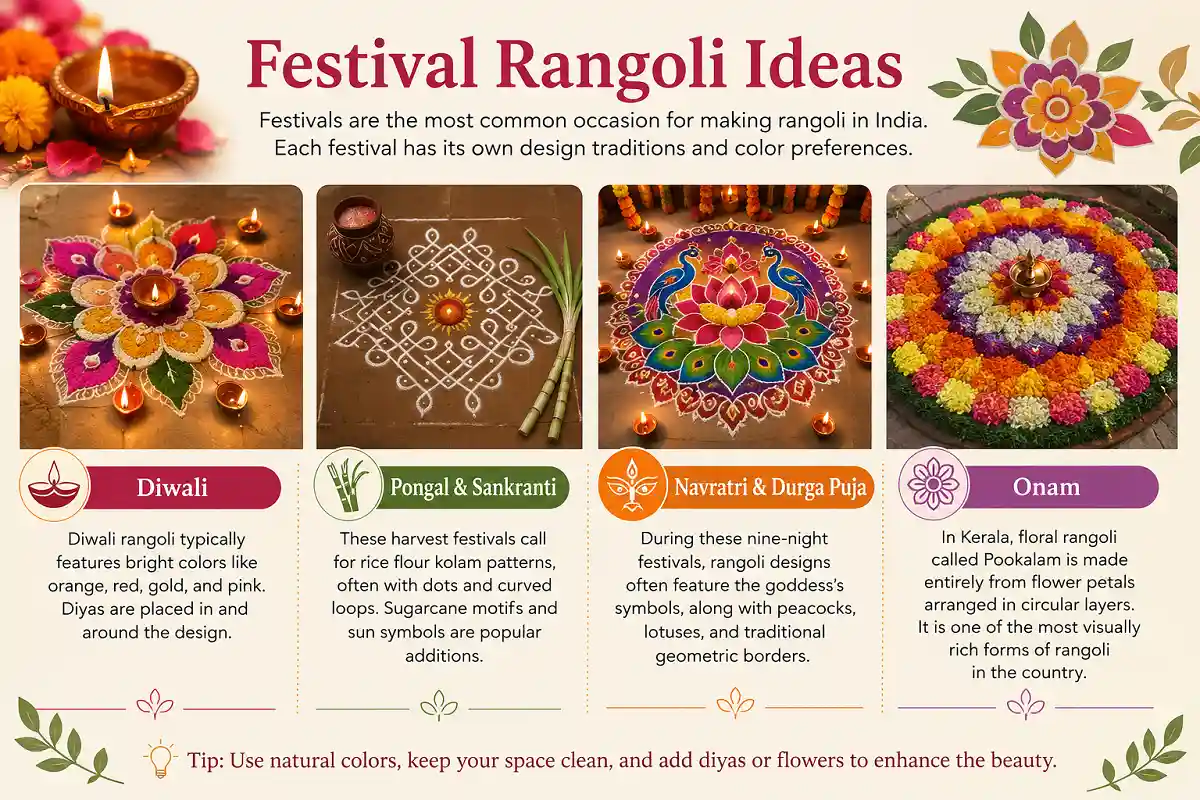
Festivals are the most common occasion for making rangoli in India. Each festival has its own design traditions and color preferences.
Diwali
Diwali rangoli typically features bright colors like orange, red, gold, and pink. Diyas are placed in and around the design. For ideas tailored to this festival, explore these beautiful Diwali rangoli designs for 2025 that will brighten any home entrance.
Pongal and Sankranti
These harvest festivals call for rice flour kolam patterns, often with dots and curved loops. Sugarcane motifs and sun symbols are popular additions.
Navratri and Durga Puja
During these nine-night festivals, rangoli designs often feature the goddess’s symbols, along with peacocks, lotuses, and traditional geometric borders.
Onam
In Kerala, floral rangoli called Pookalam is made entirely from flower petals arranged in circular layers. It is one of the most visually rich forms of rangoli in the country.
Border and Frame Ideas
A well-designed border can elevate any rangoli from ordinary to extraordinary. Borders create a finished, polished look and help define the overall shape of the design. Zigzag lines, dot rows, petal chains, and curved waves are all common border styles.
You can find detailed inspiration in this collection of rangoli border design ideas for every festival that covers different styles suited to different occasions.
Big Beautiful Rangoli Designs for Large Spaces
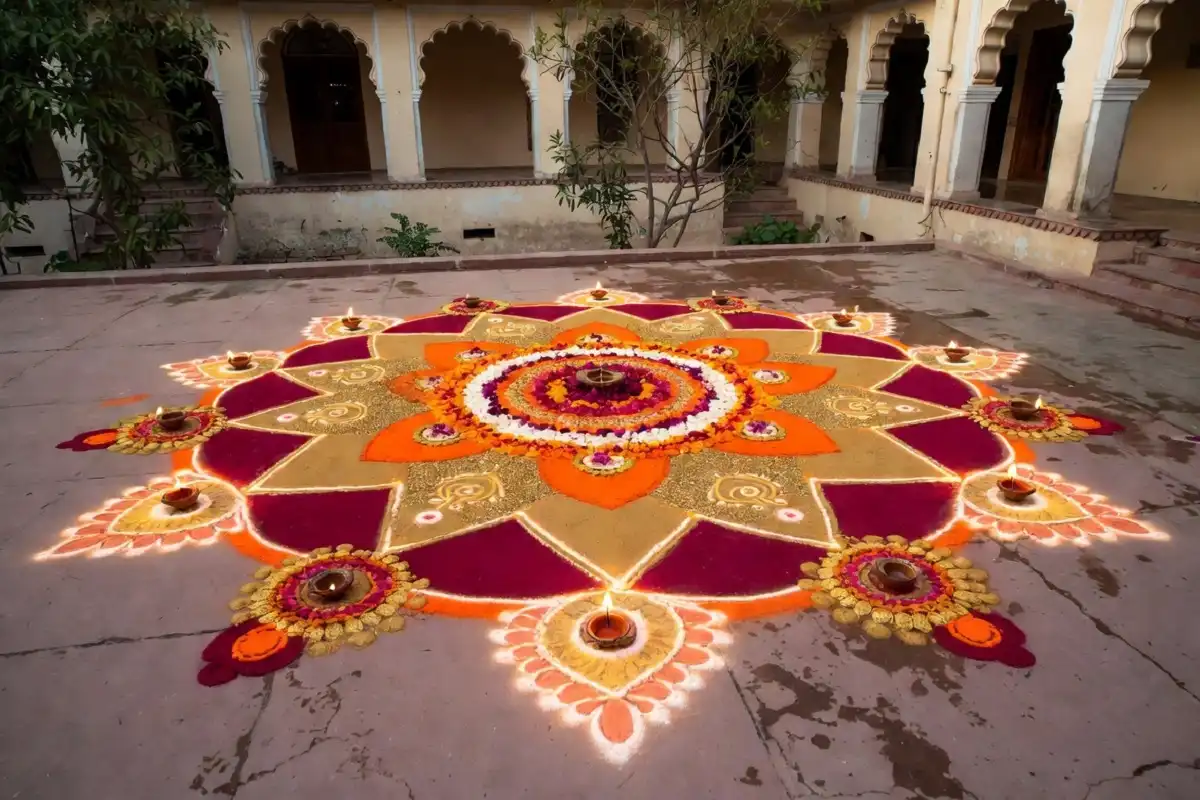
If you have a wide courtyard, temple hall, or event space, a large-scale rangoli can make a dramatic statement. Big beautiful rangoli designs often involve multiple people working together, with different sections being filled simultaneously.
The key to a successful large design is planning. Sketch your pattern on paper first, measure out the space, and assign colors to sections before you begin. For more ideas on how to scale up your work, explore big rangoli design ideas for every occasion to find patterns that work well at a larger size.
Color Combinations That Work Well
Color is arguably the most important element in any beautiful rangoli design. Some combinations that consistently work well include:
- Pink and white with golden accents
- Deep blue and turquoise with orange outlines
- Red, yellow, and green in a traditional tricolor arrangement
- Purple and lavender with white petal borders
- Warm tones such as coral, peach, and saffron for harvest festivals
According to Britannica’s overview of Indian folk arts, color in traditional Indian art often carries symbolic meaning. Red represents prosperity, white suggests purity, and yellow is associated with learning and auspiciousness.
Tips for Making Your Rangoli Last Longer
A rangoli created outdoors can fade quickly due to foot traffic and weather. To extend its life:
- Apply a light coat of hairspray or fixative over the finished design.
- Use chalk to draw guidelines rather than pressing hard on the surface.
- Avoid creating rangoli on windy days if you are using loose powder.
- Choose a sheltered spot near the entrance rather than directly on the path.
Protecting the finished design from wind, moisture, and heavy foot traffic can help preserve its clean details for longer.
Rangoli Designs That Celebrate Culture and Creativity
A beautiful rangoli design is more than just decoration. It is an expression of culture, creativity, and care. Whether you are making a small daily kolam or an elaborate festival centerpiece, every design you create carries its own meaning and beauty.
Start simple, experiment with colors, and let your confidence grow with each new pattern.
Let Every Pattern Tell a Story
From a simple dot pattern to a large festival centerpiece, every rangoli can become a personal expression of creativity and tradition.
FAQ Section
What is a beautiful rangoli design made of?
A beautiful rangoli design can be made from colored powder, flower petals, rice flour, sand, or even colored rice. The material depends on the occasion, the region, and the artist’s preference.
How long does it take to make a beautiful rangoli design?
The time depends on the size and complexity of the design. A simple five-petals pattern may take 15 to 20 minutes, while an elaborate festival rangoli with detailed borders and motifs can take several hours.
Can beginners make a beautiful rangoli design?
Yes, beginners can absolutely make a lovely rangoli. Starting with dot-based patterns or simple flower shapes builds the foundational skills needed for more complex designs over time.
What is the best occasion to make rangoli?
Rangoli is appropriate for almost any celebratory occasion. Diwali, Pongal, Navratri, Onam, weddings, and housewarmings are among the most common times when people create rangoli.
Do I need special tools to make rangoli?
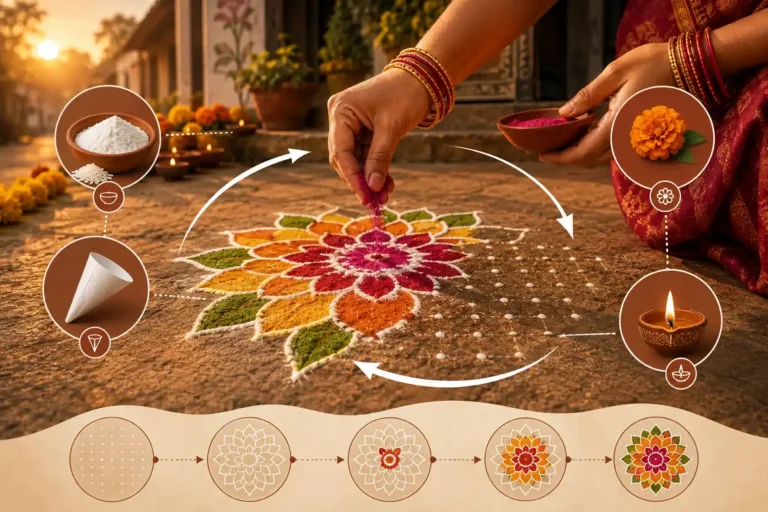
Basic rangoli can be made with just your fingers and some colored powder. However, a cone-shaped applicator bottle, a compass, and a ruler can help you achieve cleaner lines and more precise shapes.
How do I keep my rangoli from smudging?
Work from the center outward so your hands do not drag across finished sections. Use a cone or squeeze bottle to apply powder with precision, and avoid areas with strong air drafts.