Rangoli Simple Design: 20 Easy Ideas to Try in 2026
There’s something magical about a beautifully drawn rangoli. A simple pattern can turn an ordinary floor into a colorful and welcoming part of a celebration.
This guide brings together easy rangoli simple design ideas for festivals, everyday decoration, and special occasions. Beginners can start with dots, flowers, basic shapes, and uncomplicated motifs before moving toward more detailed patterns.
What Is a Rangoli Simple Design?
A rangoli simple design is an easy decorative floor pattern made using materials such as colored powder, flowers, rice flour, or chalk. These designs are commonly created near entrances and other important areas of the home.
Rangoli has a long history across different regions of India, with styles and materials varying from place to place.
Why Simple Rangolis Are Loved
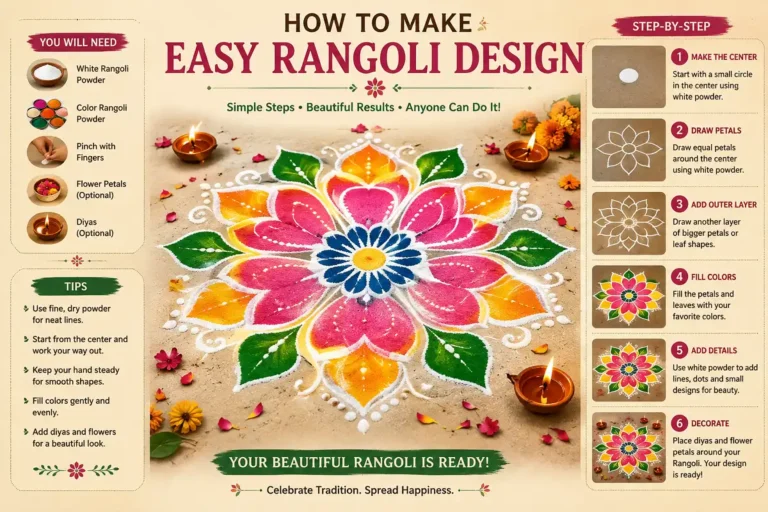
Materials You Need for a Rangoli Simple Design
You don’t need a large collection of specialist tools to create a simple rangoli. A few basic materials are usually enough.
Essential Supplies
- Colored rangoli powders such as red, yellow, green, blue, and white
- Fresh petals such as marigold, rose, or jasmine
- Rice flour or chalk for outlines
- A small funnel or cone for controlled application
- Diyas, candles, or fairy lights for decoration
Optional Tools
- Stencil templates
- Toothpicks or thin sticks for details
- A soft cloth for cleaning the edges
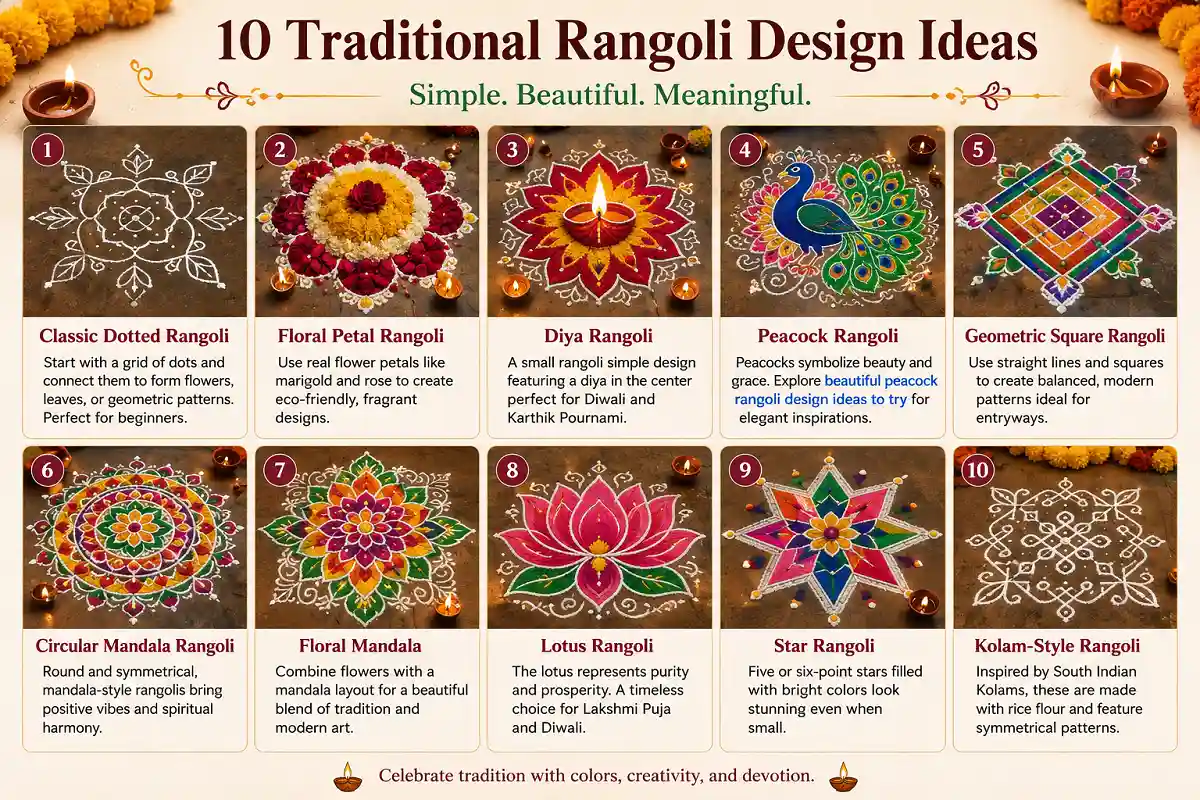
Top 20 Rangoli Simple Design Ideas
These ideas range from traditional dot patterns to floral, festival, and modern minimalist rangolis.
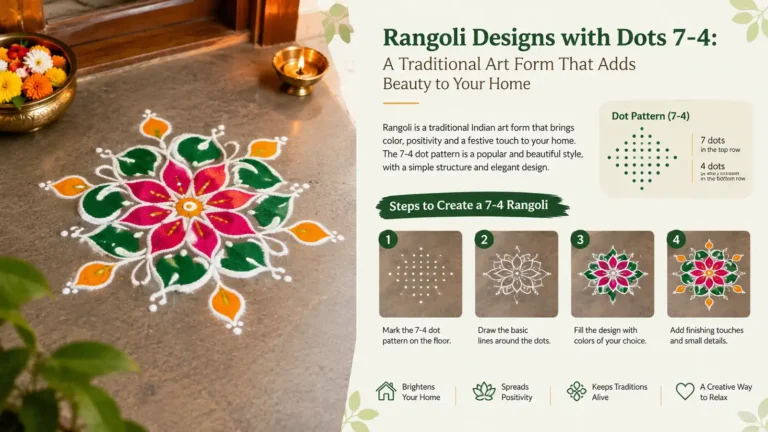
Classic Dotted Rangoli
Create an evenly spaced dot grid and connect the dots to form flowers, leaves, loops, or geometric shapes. It is one of the easiest ways for beginners to practice symmetry.
Floral Petal Rangoli
Arrange marigold, rose, jasmine, or other colorful petals into a simple pattern for an eco-friendly and naturally fragrant design.
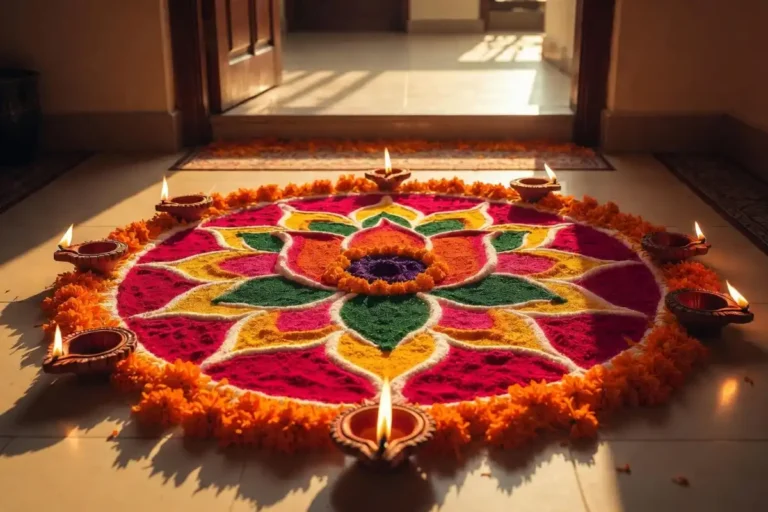
Diya Rangoli
Use a diya as the central motif and surround it with simple petals, curves, dots, or colored sections for a festive Diwali look.
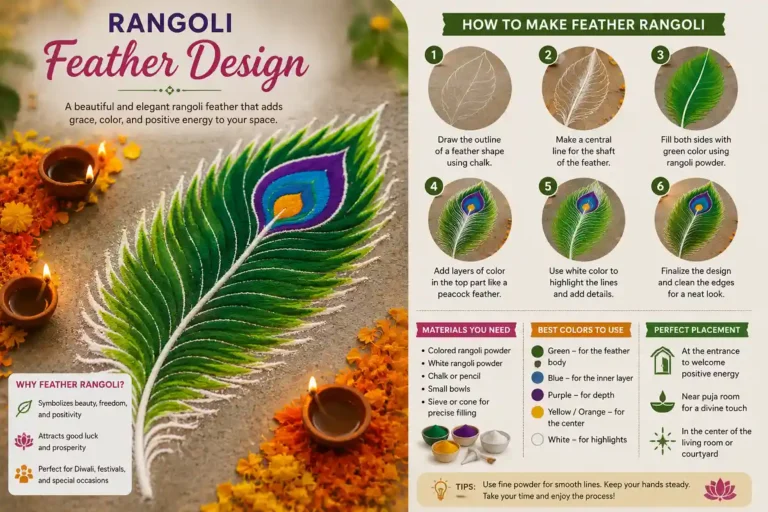
Peacock Rangoli
A simple peacock silhouette with a colorful feather pattern adds a graceful traditional element without requiring an overly complicated layout.
Geometric Square Rangoli
Combine squares, straight lines, triangles, and contrasting colors for a clean design that works especially well near entrances.
Circular Mandala Rangoli
Start from a central circle and repeat petals or shapes around it to build a balanced mandala-style rangoli.
Floral Mandala
Mix the symmetry of a mandala with flowers or floral motifs for a design that feels both traditional and decorative.
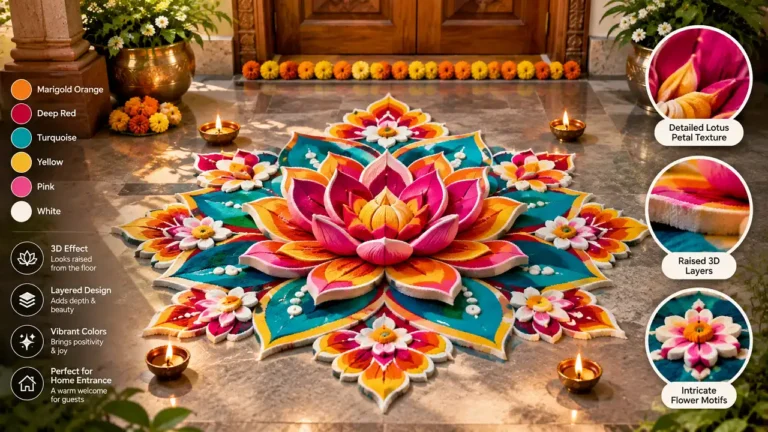
Lotus Rangoli
Use a lotus as the main motif and surround it with simple borders, leaves, or diyas for festivals and pooja decorations.
Star Rangoli
A five- or six-point star filled with contrasting shades can produce an eye-catching rangoli even in a compact space.
Kolam-Style Rangoli
Use white rice flour and a symmetrical dot pattern inspired by South Indian kolam designs for a traditional everyday look.
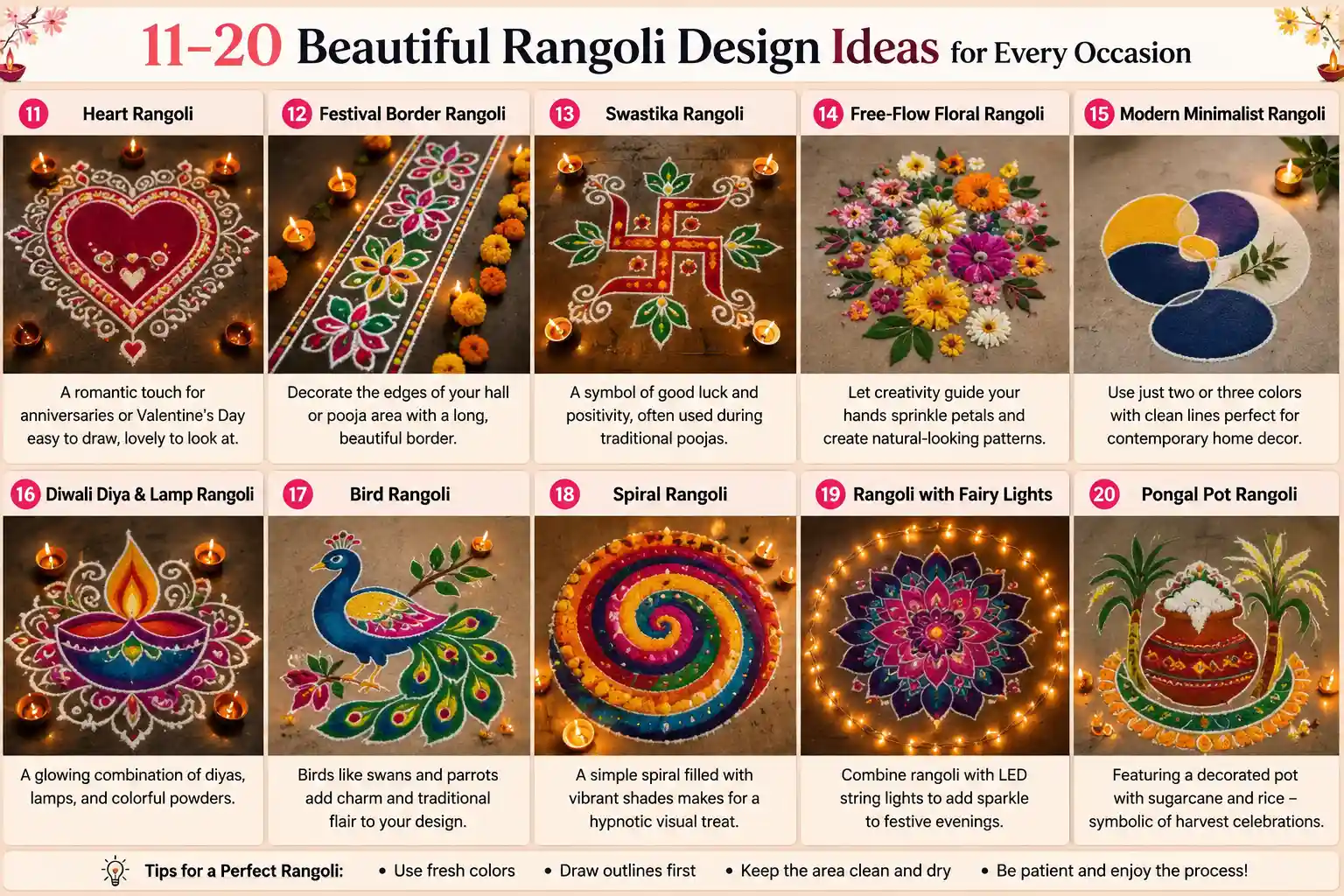
Heart Rangoli
Outline a heart and decorate it with flowers, dots, curved borders, or diyas for anniversaries and other personal celebrations.
Festival Border Rangoli
Create a narrow repeating floral or geometric pattern along the edge of a hall, doorway, or pooja space.
Swastika Rangoli
The traditional auspicious symbol can be surrounded with decorative leaves, dots, flowers, or diyas for pooja occasions.
Free-Flow Floral Rangoli
Arrange different flower petals organically rather than following a strict geometric grid for a softer, natural appearance.
Modern Minimalist Rangoli
Keep the pattern clean and contemporary by using only two or three shades with plenty of open space.
Diwali Diya & Lamp Rangoli
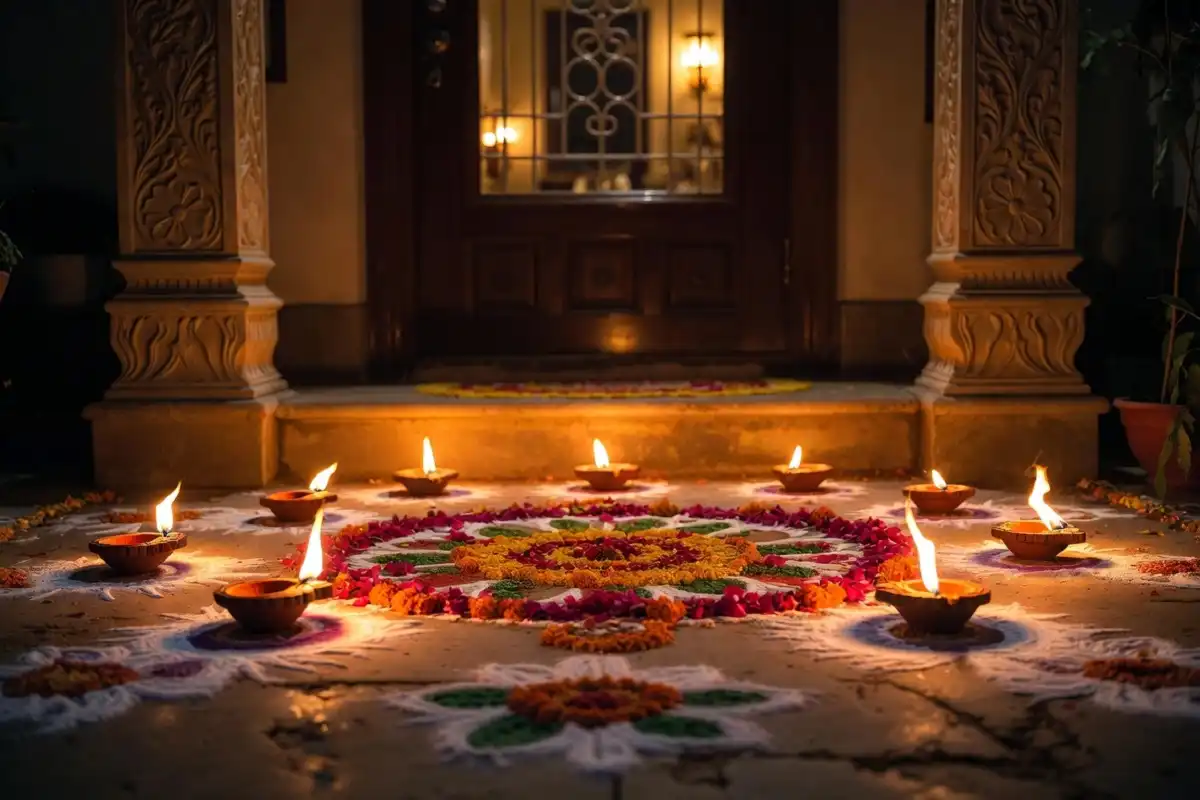
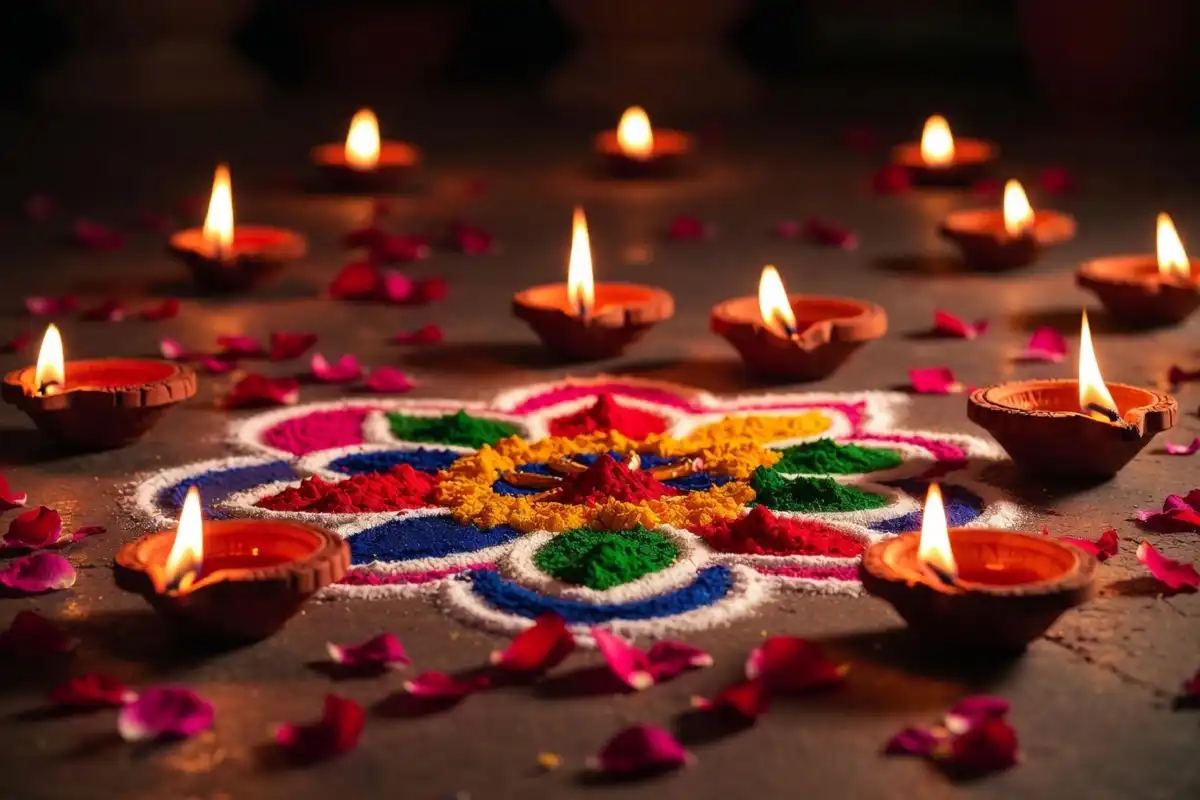
Combine rangoli powder with glowing diyas or lamps to create an especially striking decoration for Diwali evening.
Bird Rangoli
Simple swan, parrot, or other bird motifs can add a traditional and playful element to the pattern.
Spiral Rangoli
Build a spiral from the center outward and fill each section with contrasting colors for a bold visual effect.
Rangoli with Fairy Lights
Place LED string lights around a simple central design to add sparkle during evening celebrations.
Pongal Pot Rangoli
Create a decorated Pongal pot surrounded by rice, sugarcane, leaves, and festive colors to represent the harvest celebration.
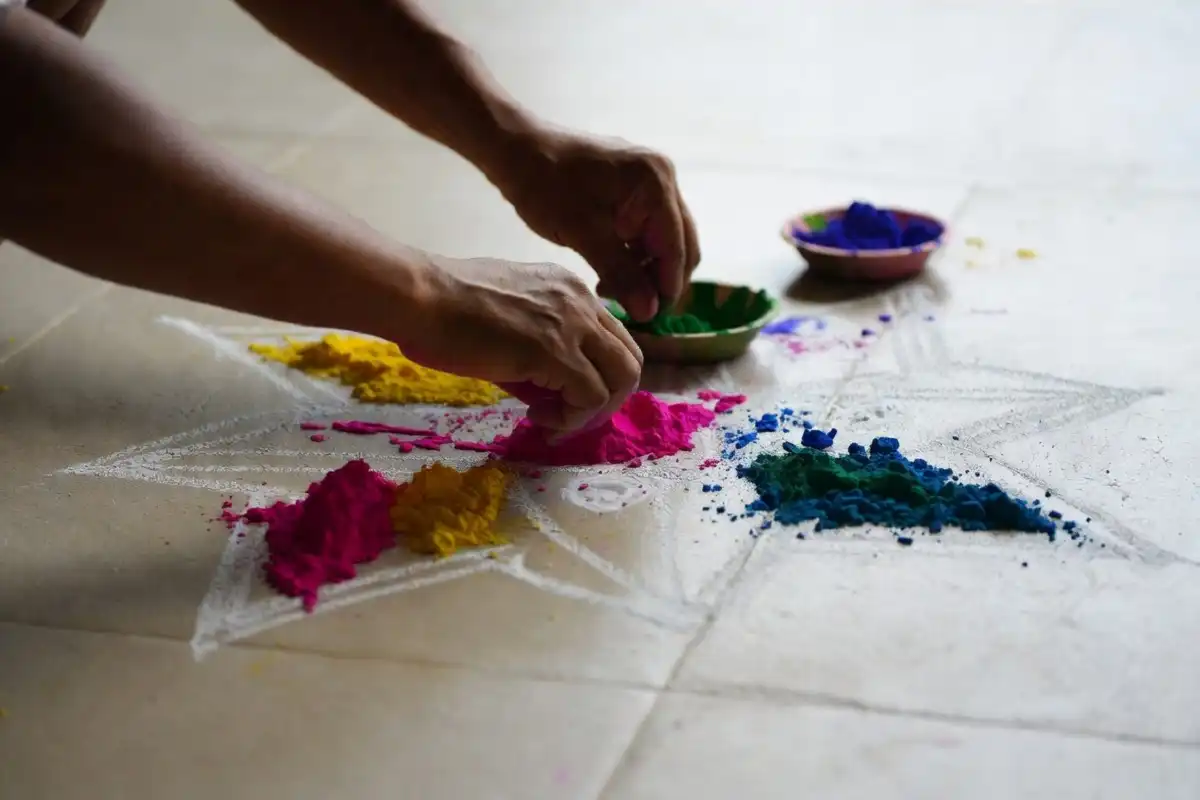
Step-by-Step Guide to Make a Rangoli Simple Design
A straightforward process can make your first rangoli much easier to control.
Tips for a Perfect Rangoli Simple Design
Simple designs often look best when the lines are clean and the colors are carefully controlled.
Best Occasions for Rangoli Simple Design
Simple rangoli patterns are versatile enough to use for both major festivals and smaller personal celebrations.
Traditional Festivals
- Diwali — light, color, and festive decoration
- Pongal & Onam — harvest celebrations
- Navratri & Durga Puja — devotional decor
- Holi — bright multi-color patterns
Personal Celebrations
- Birthdays
- Weddings and engagements
- Housewarming ceremonies
- Anniversaries
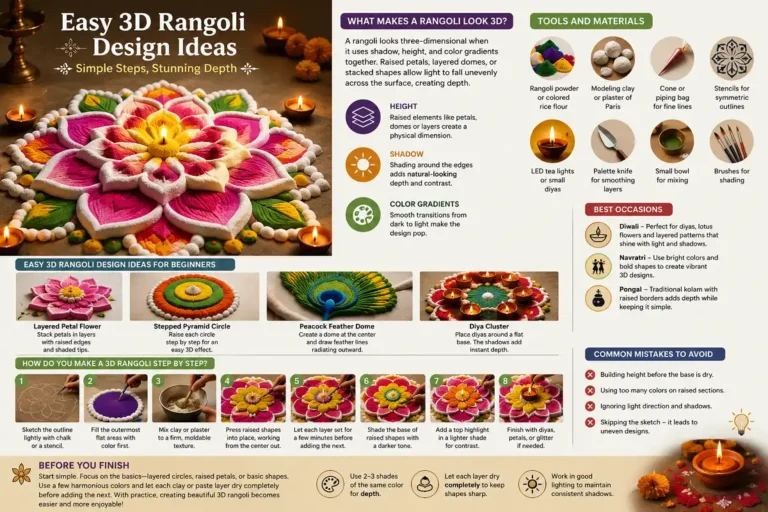
Common Mistakes to Avoid
Even a very simple pattern can lose its clean appearance when the base or color choices are poorly planned.
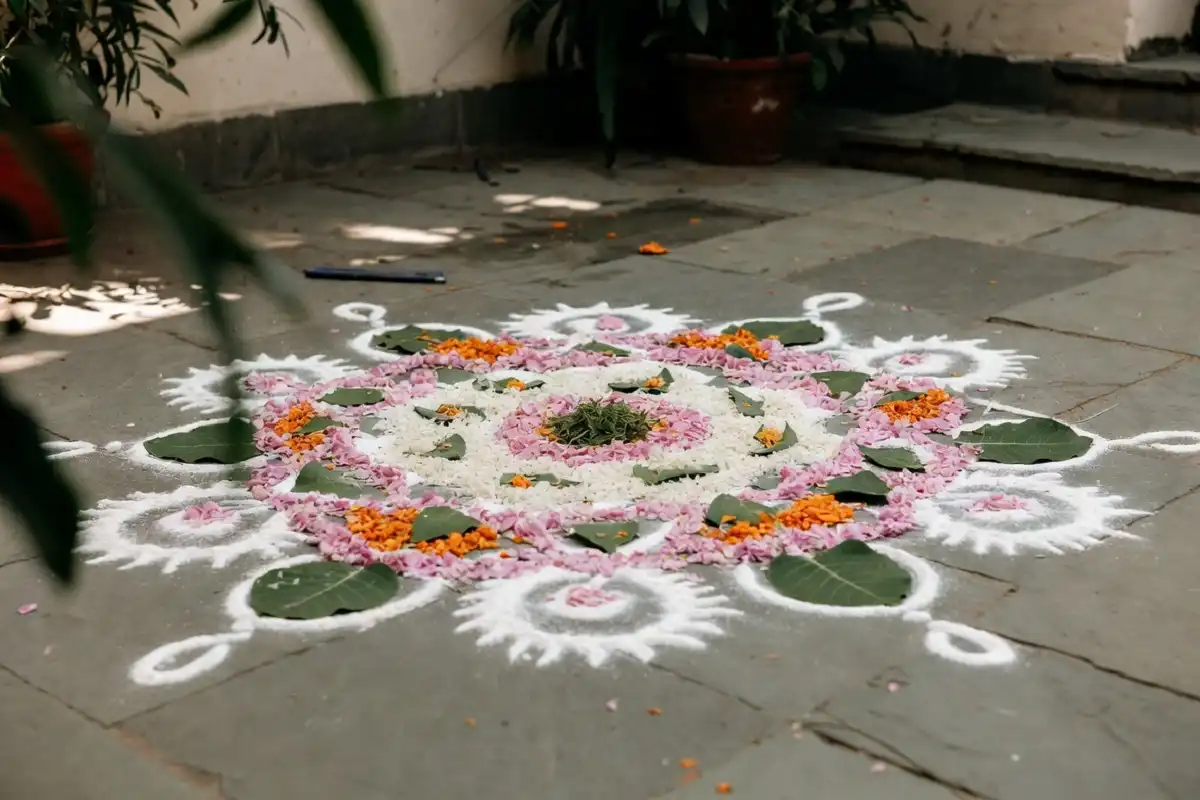
Eco-Friendly Rangoli Ideas
You can also create attractive rangoli patterns using natural or biodegradable materials.
Conclusion
A simple rangoli can bring color, tradition, and personality to a home without requiring advanced artistic skills. Floral patterns, dotted designs, geometric layouts , diyas, and festival motifs all work well when the pattern is kept balanced and neat.
Begin with an easy layout, experiment with colors and natural materials, and gradually try more detailed patterns as your confidence grows.
FAQ Section
What is the easiest rangoli simple design for beginners?
Dotted designs and simple flower patterns are among the easiest choices. Start with a small dot grid or basic floral outline and keep the pattern symmetrical.
What materials are used in a rangoli simple design?
Common options include colored rangoli powder, rice flour, chalk, flower petals, diyas, leaves, and other easy-to-arrange decorative materials.
How long does it take to make a rangoli simple design?
A small beginner pattern can often be completed in around 15–30 minutes. Larger or more detailed designs may take considerably longer.
Can I make a rangoli simple design without colors?
Yes. White rice flour or chalk can be used on its own, while flowers, leaves, or diyas can provide extra decoration without colored powder.
What occasions are suitable for simple rangoli?
Simple rangolis work well for Diwali, Pongal, housewarming ceremonies, weddings, poojas, anniversaries, and many other celebrations.
How can I help my rangoli last longer?
Choose a dry location protected from wind, water, and heavy foot traffic. A sheltered indoor or covered entrance area is usually best.