Lotus Flower Rangoli Patterns: A Complete Guide to Petals, Layouts, and Color
Lotus flower rangoli patterns turn any doorway into a calm, festive welcome. I have drawn them for years, and they stay my favorite floral motif. This guide covers petals, layouts, colors, and mistakes to avoid, so you can draw one with confidence today.
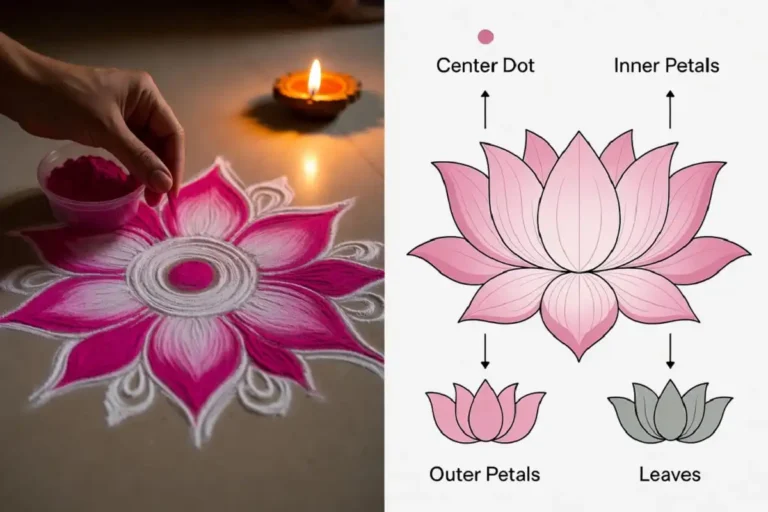
Lotus flower rangoli patterns are floral floor designs built around a central lotus bloom with layered, curved petals. You start with a small round center, add petal rings outward, then fill with color. They suit Diwali, Pongal, and daily worship spaces alike.
What Are Lotus Flower Rangoli Patterns?
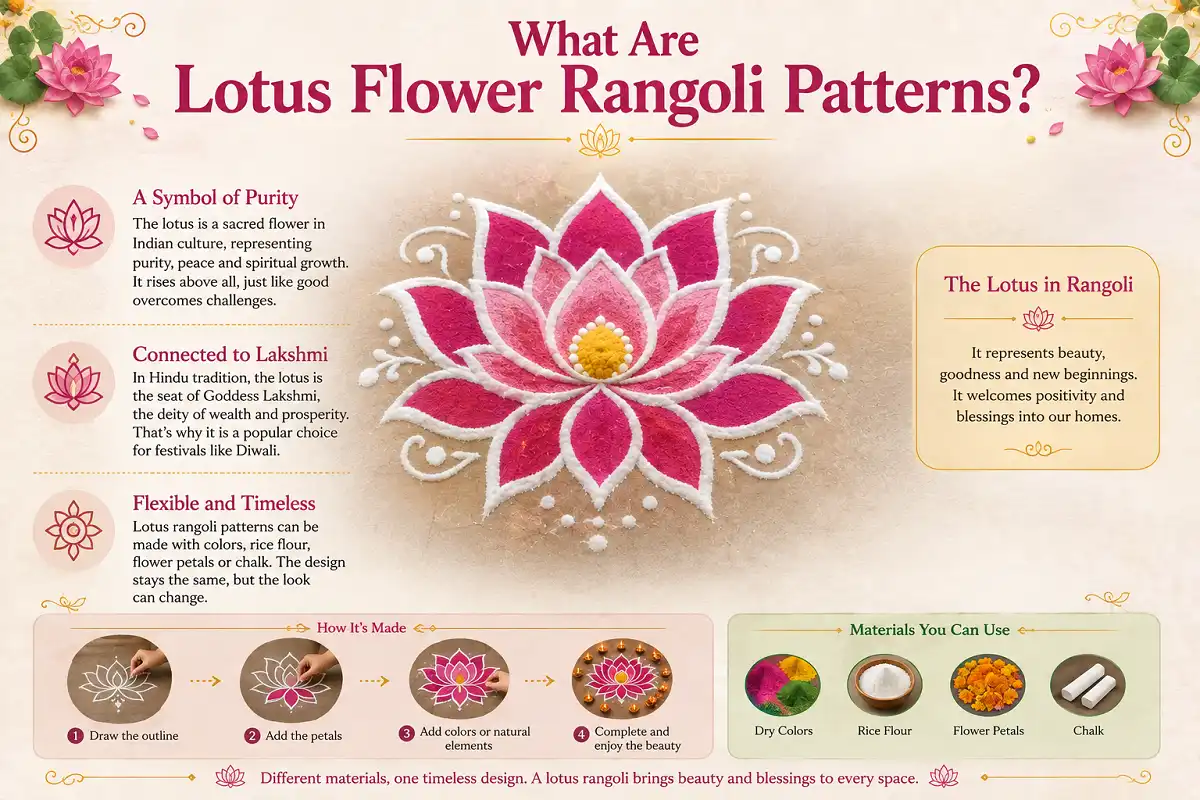
Lotus flower rangoli patterns are floor art designs shaped around the lotus, a flower tied to purity in Indian culture. The lotus sits at the center. Petals fan out in rings around it. Some designs stop at one ring. Others stack three or four rings for a fuller bloom.
The lotus carries meaning. In Hindu tradition, it links to Lakshmi, the goddess of wealth. This is why you see lotus rangoli so often during Diwali. The design feels sacred and welcoming at the same time.
You can draw these with dry colors, rice flour, flower petals, or chalk. The shape stays the same. Only the material changes. That flexibility is why beginners and experts both love this motif.
Why the Lotus Motif Works So Well in Rangoli
The lotus works because its shape is naturally symmetrical. Symmetry is the backbone of every good rangoli. When petals repeat around a center, the eye reads it as balanced and complete. You do not need perfect skill. The repeating shape hides small errors.
The lotus also scales. A tiny four-petal lotus fits a corner shelf. A large sixteen-petal lotus can fill a whole entrance floor. Few motifs stretch that far. For more floral ideas beyond the lotus, my collection of simple flower rangoli ideas shows how petals can shape other blooms too.
Curved petals are forgiving. Straight lines expose shaky hands. Curves absorb them. This is why I steer nervous beginners toward the lotus first.
Types of Lotus Flower Rangoli Patterns
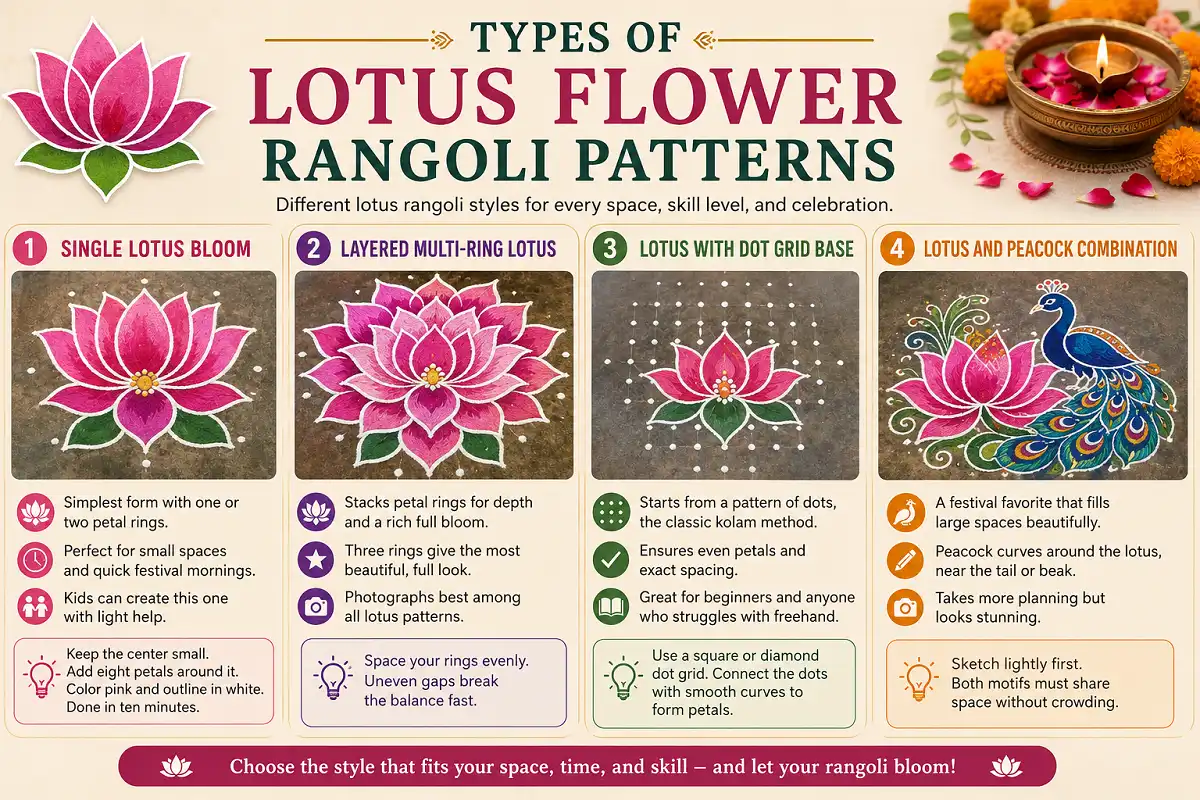
Lotus flower rangoli patterns come in several clear types. Each fits a different space and skill level. Here is how I sort them.
The simplest form — one flower with one or two petal rings. Keep the center small, add eight petals, color them pink, and outline in white. Works for small spaces and quick festival mornings, done in about ten minutes.
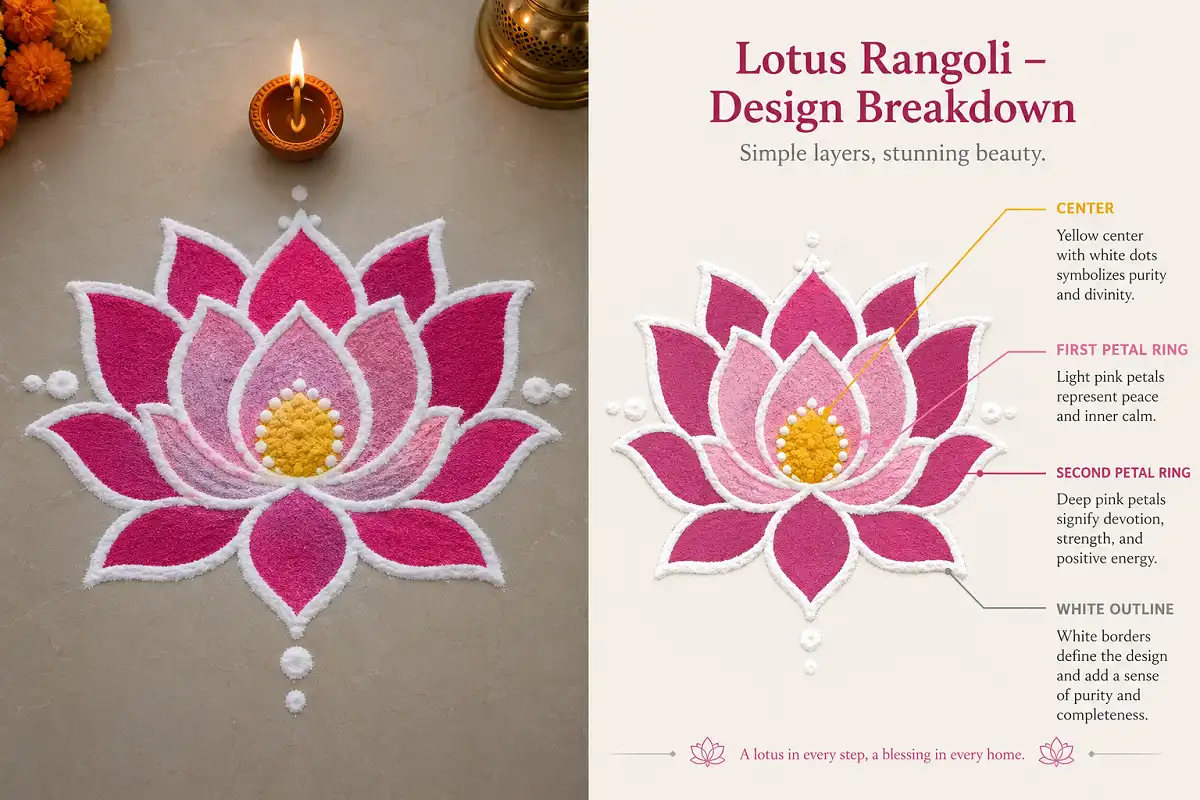
Stacks petal rings for depth. Draw one ring, then a second slightly larger ring behind it, offset so petals peek through the gaps. Space rings evenly — this style photographs best thanks to the natural shadow and depth.
Starts from a pattern of dots, the classic kolam method. Place a square or diamond of dots, then connect curves around them. Suits anyone who struggles with freehand curves and keeps spacing exact.
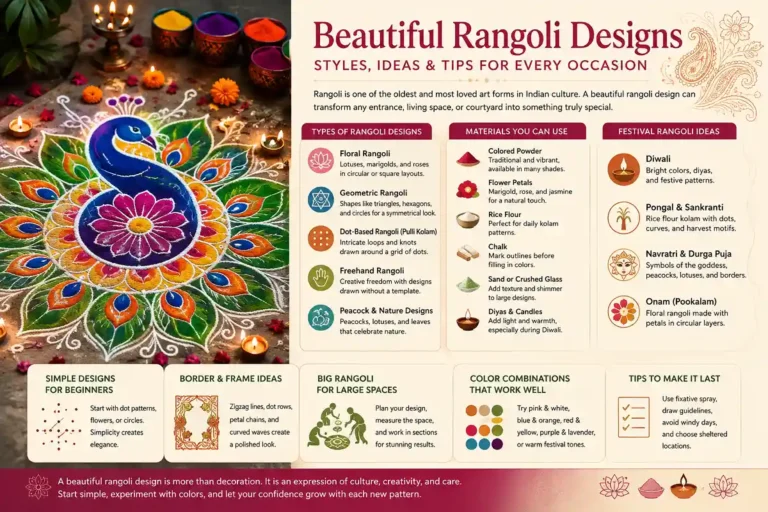
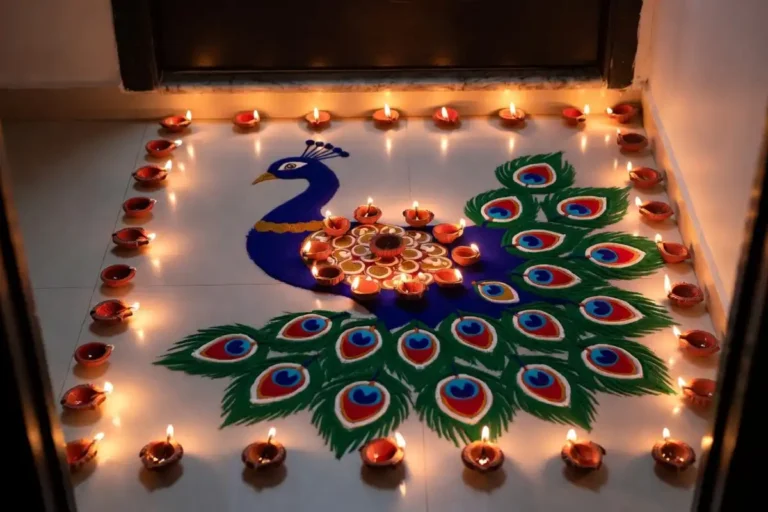
A festival favorite. The peacock’s body curves around the lotus, with the flower near the tail or beak. Fills large floors beautifully, but needs more planning so the two motifs share space without crowding.
How to Draw Lotus Flower Rangoli Patterns Step by Step
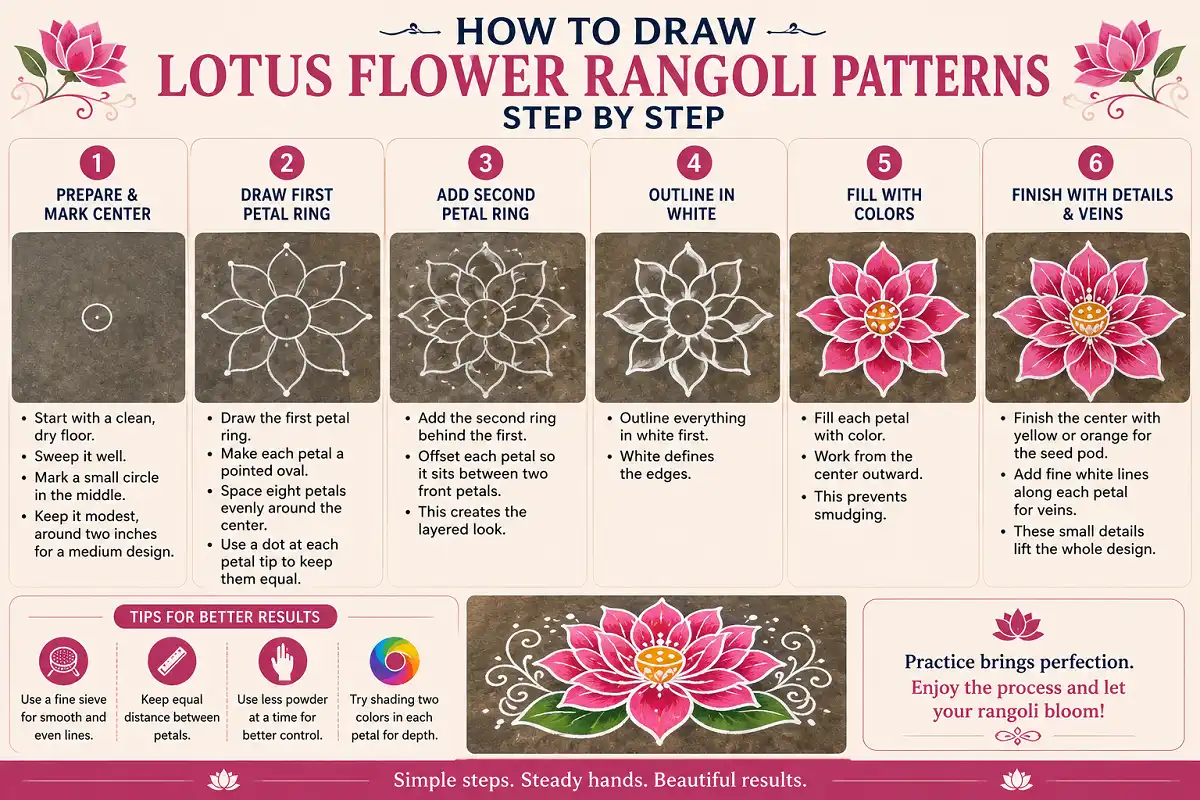
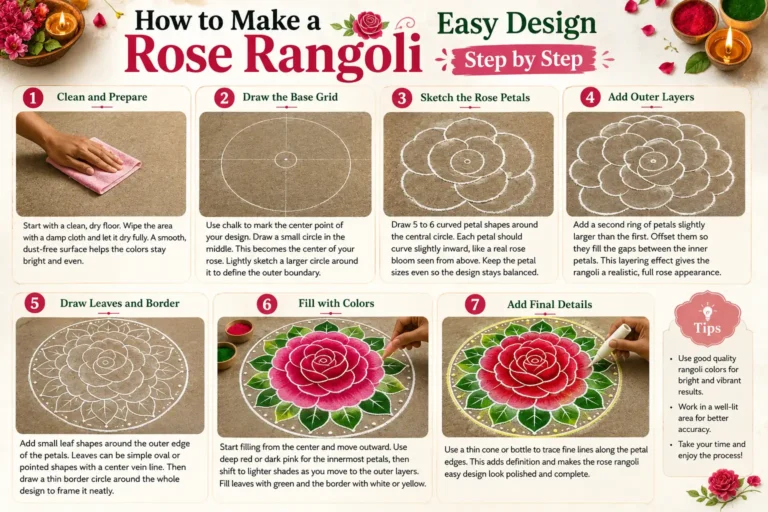
Drawing lotus flower rangoli patterns follows a simple order: center first, petals next, color last. Here is the exact sequence I teach.
-
Prepare the Floor
Start with a clean, dry floor. Sweep it well. Dust ruins crisp lines.
-
Mark the Center
Mark a small circle in the middle. This is your lotus center. Keep it modest, around two inches for a medium design.
-
Draw the First Petal Ring
Make each petal a pointed oval. Space eight petals evenly around the center. Use a dot at each petal tip to keep them equal.
-
Add the Second Ring
Add the second ring behind the first. Offset each petal so it sits between two front petals. This creates the layered look.
-
Outline and Fill With Color
Outline everything in white first. White defines the edges. Then fill each petal with color, working from the center outward so you do not smudge finished areas.
-
Finish the Center and Add Veins
Finish the center with yellow or orange for the seed pod. Add fine white lines along each petal for veins. These small details lift the whole design.
For a fuller walkthrough on building floral shapes from scratch, my floral rangoli guide for beginners covers petal control and color blending.
Best Colors for Lotus Rangoli
The best colors for lotus rangoli are pink, white, and green, the flower’s natural palette. Pink for petals reads as instantly recognizable. White outlines make petals pop. Green leaves and stems ground the design.
Add gold or orange at the center for a festive lift. During Diwali, deep magenta petals with gold centers look rich under diya light. For daily designs, softer pinks feel calm.
Contrast matters more than variety. Two strong colors with clean white outlines beat six muddy shades. I keep my palette tight and let the shape carry the design.
Depth tip: color placement also builds depth in lotus flower rangoli patterns. Use a darker pink at the petal base and a lighter pink at the tip. This gradient makes each petal look rounded, not flat. Blend the two shades while the powder is fresh, using a light finger sweep from base to tip.
Lotus Flower Rangoli Patterns for Different Festivals
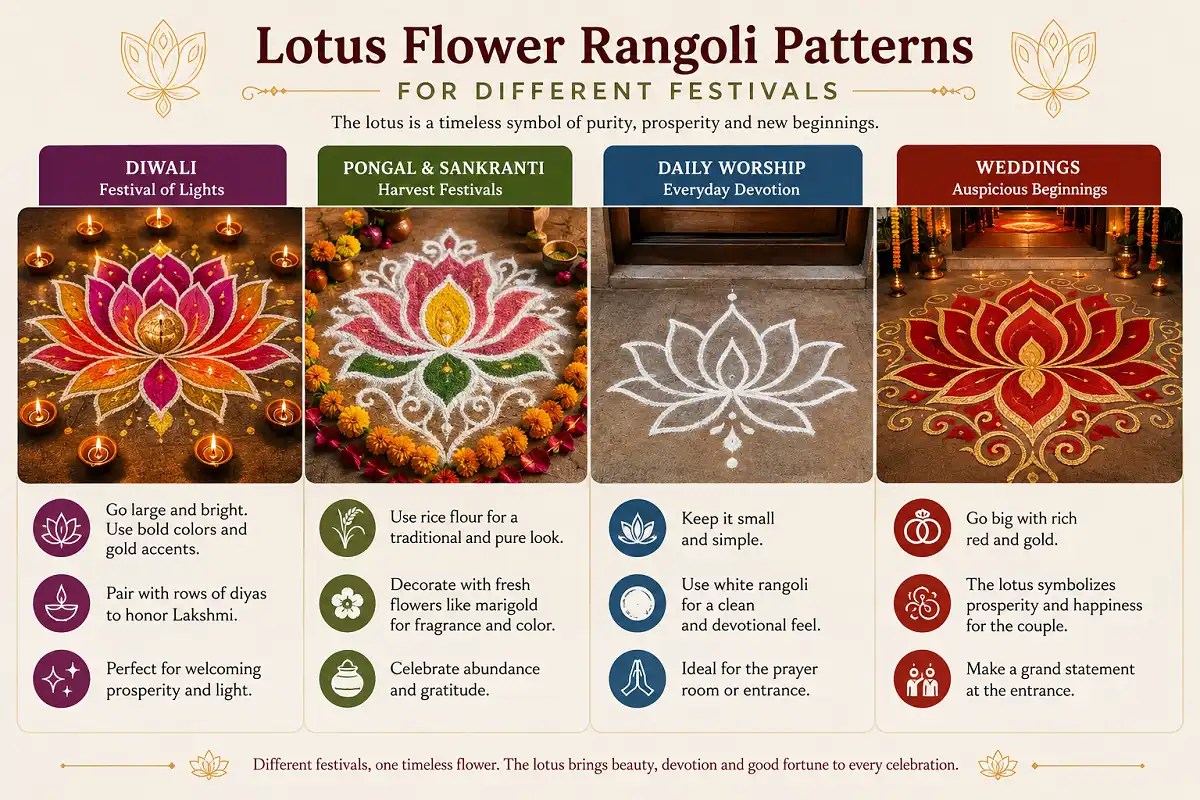
Lotus flower rangoli patterns shift slightly by festival. The core shape holds, but color and scale change to fit the occasion.
Go large and bright. A layered lotus with gold centers pairs with rows of diyas. The lotus honors Lakshmi, which makes it especially fitting for the festival of lights.
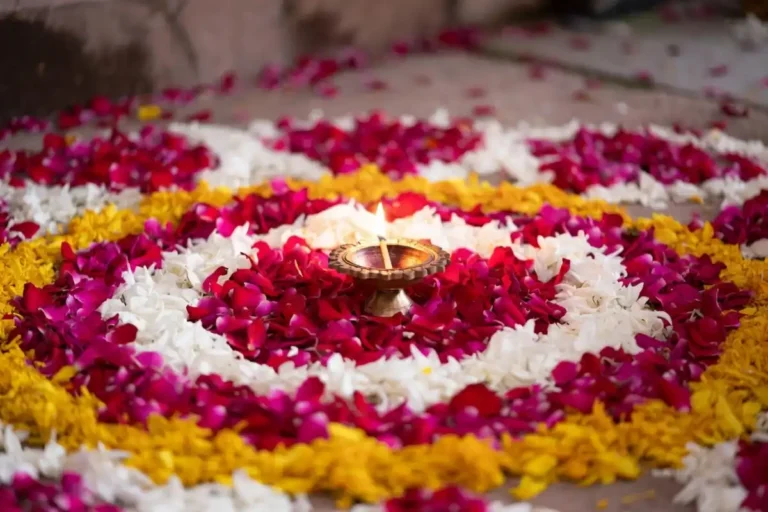
Add rice flour and fresh petals. A lotus drawn in rice flour feels traditional and pure. Real marigold petals around the edge add texture and scent.
Keep it small and white. A simple white lotus at the prayer room door needs no color. It reads as clean and devotional.
Call for a big, bold lotus in red and gold. The flower signals prosperity for the couple. Scale it up to fill the entrance.
Materials You Can Use for Lotus Rangoli
You can make lotus flower rangoli patterns from many materials. Each gives a different finish. Pick based on your event and the look you want.
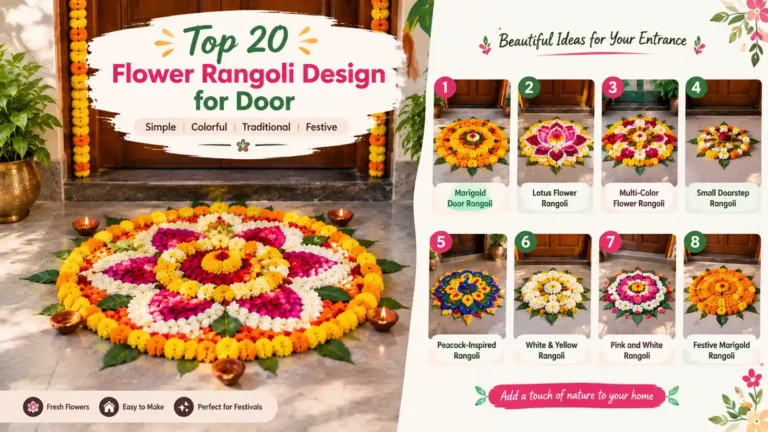
Flower rangoli lasts one day but looks unmatched. My rangoli ideas using real flowers show how to layer petals for depth. Beginners often start with chalk to learn the shape before moving to loose powder.
Common Mistakes to Avoid
-
Uneven Petal Spacing
The most common mistake. When petals crowd on one side, the whole bloom looks lopsided. Fix this with dot markers at each petal tip before you draw.
-
Starting Too Large
Beginners draw a huge outer ring, then run out of room for detail. Start small and grow outward instead.
-
Overcoloring
Too many shades muddy the petals and kill the lotus look. Stick to two or three colors with clean white lines.
-
Skipping the Outline
A frequent slip. Without a white outline, colors bleed into each other. Always outline first, then fill.
-
Rushing the Center
The center anchors the whole flower. Give it a clean, small, round shape, and everything around it falls into place.
Tips to Make Your Lotus Rangoli Stand Out
-
Focus on Clean Lines and Contrast
Sharp white outlines against strong petal color read well from a distance and in photos.
-
Add Fine Vein Lines
A single white line down each petal center takes seconds and transforms a flat shape into a realistic one.
-
Frame With a Simple Border
A ring of small dots or a thin curved line contains the design, makes it feel finished, and hides uneven edges.
-
Light It Well
Place diyas or small candles around a festival lotus. The flicker brings the petals alive at night and holds attention far longer than a flat, unlit design.
Choosing the Right Size and Placement
The right size for lotus flower rangoli patterns depends on your space and your time. Match the design to the spot, and it always looks intentional.
A medium lotus of twelve to eighteen inches works best. It fills the space without spilling past the frame. Center it so the two door edges frame it evenly.
Keep the lotus under eight inches. A tiny single bloom in white suits a devotional corner and reads as neat and respectful.
Go big — three feet or more, with four petal rings and a peacock or border. Sketch the outer edge with chalk first so your proportions stay right.
Placement also shapes how lotus flower rangoli patterns read. A lotus at the exact center of a square floor feels formal and balanced. A lotus offset to one corner, with a trailing vine, feels modern and relaxed. Both work. Pick the mood you want.
Think about viewing angle too. If people approach from one side, orient the lotus so its front petals face them. A design that looks right from the doorway beats one that only works from above.
FAQs
How long does a lotus rangoli take to make?
A simple single lotus takes about ten to fifteen minutes. A layered, multi-ring design takes thirty to forty-five minutes. Fresh flower versions take longer because you place petals one at a time.
Can beginners make lotus rangoli patterns?
Yes. The lotus is one of the best motifs for beginners. Its curved, repeating petals forgive small mistakes, and a dot grid keeps spacing even. Start with a single bloom before trying layers.
What is the meaning of the lotus in rangoli?
The lotus represents purity, beauty, and prosperity in Indian culture. It links closely to Lakshmi, the goddess of wealth, which is why lotus rangoli appears so often during Diwali and other auspicious occasions. You can read more about the flower on its Wikipedia page about the sacred lotus.
Which material is best for a lotus rangoli?
Dry rangoli powder is best for smooth, blended petals. Rice flour suits traditional white designs. Fresh flower petals give the richest, most textured look but last only a day.
Final Words
Lotus flower rangoli patterns reward you fast. The shape is forgiving, the meaning is rich, and the result always looks festive. Start with a small single bloom and a dot grid. Keep your colors tight and your outlines clean.
Once the basic petal ring feels natural, add rings, mix materials, and scale up for festivals. Practice the single bloom a few times before a big event, so the shape flows without hesitation on the day.
The lotus is where I send every new rangoli artist, and it will serve you well too. Draw one this week, and you will see how quickly it becomes second nature.