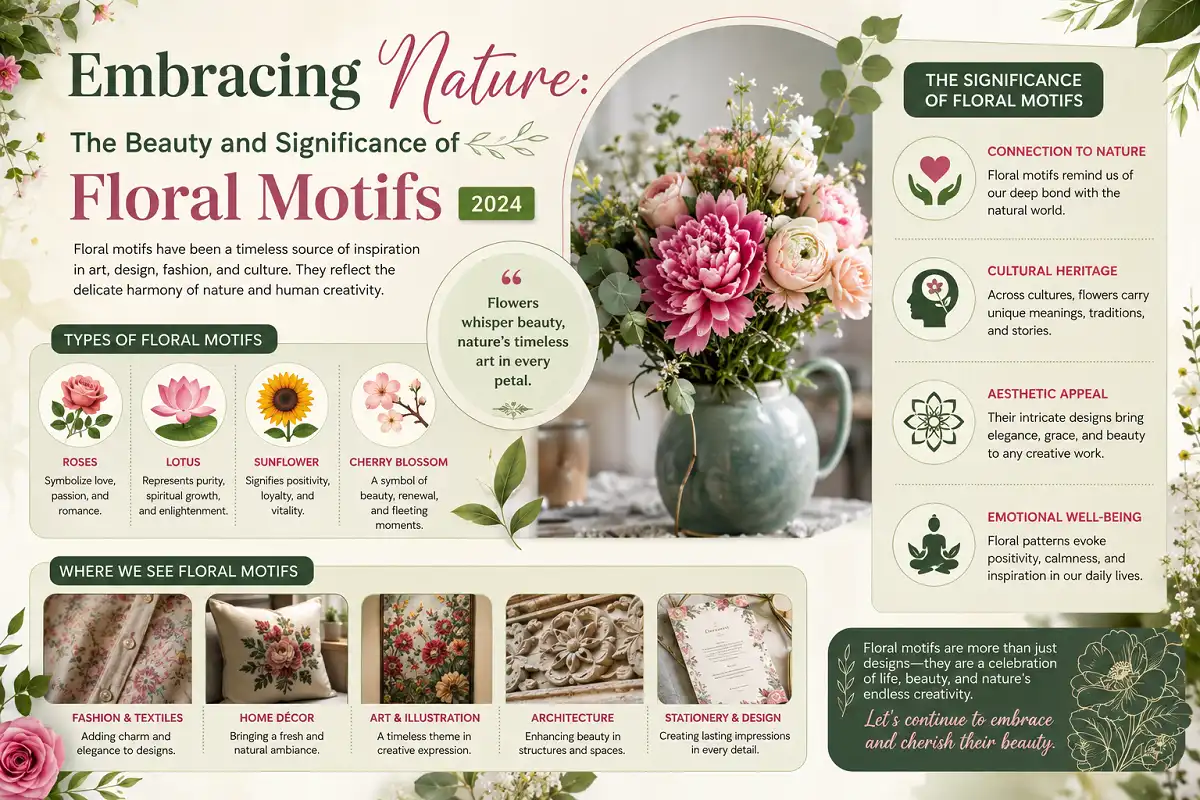
Embracing Nature: The Beauty and Significance of Floral Motifs 2024
For generations, floral motifs have enthralled painters, designers, and fans, incorporating the beauty of nature into a variety of artistic mediums.
These subtle patterns infuse our surrounds with vitality, color, and beauty, as seen in everything from medieval tapestries to modern clothing.
This blog article will discuss the cultural significance, rich history, and contemporary uses of floral themes, as well as offer advice on how to apply them to your own life.
The Floral Inspirations of Ancient Civilizations
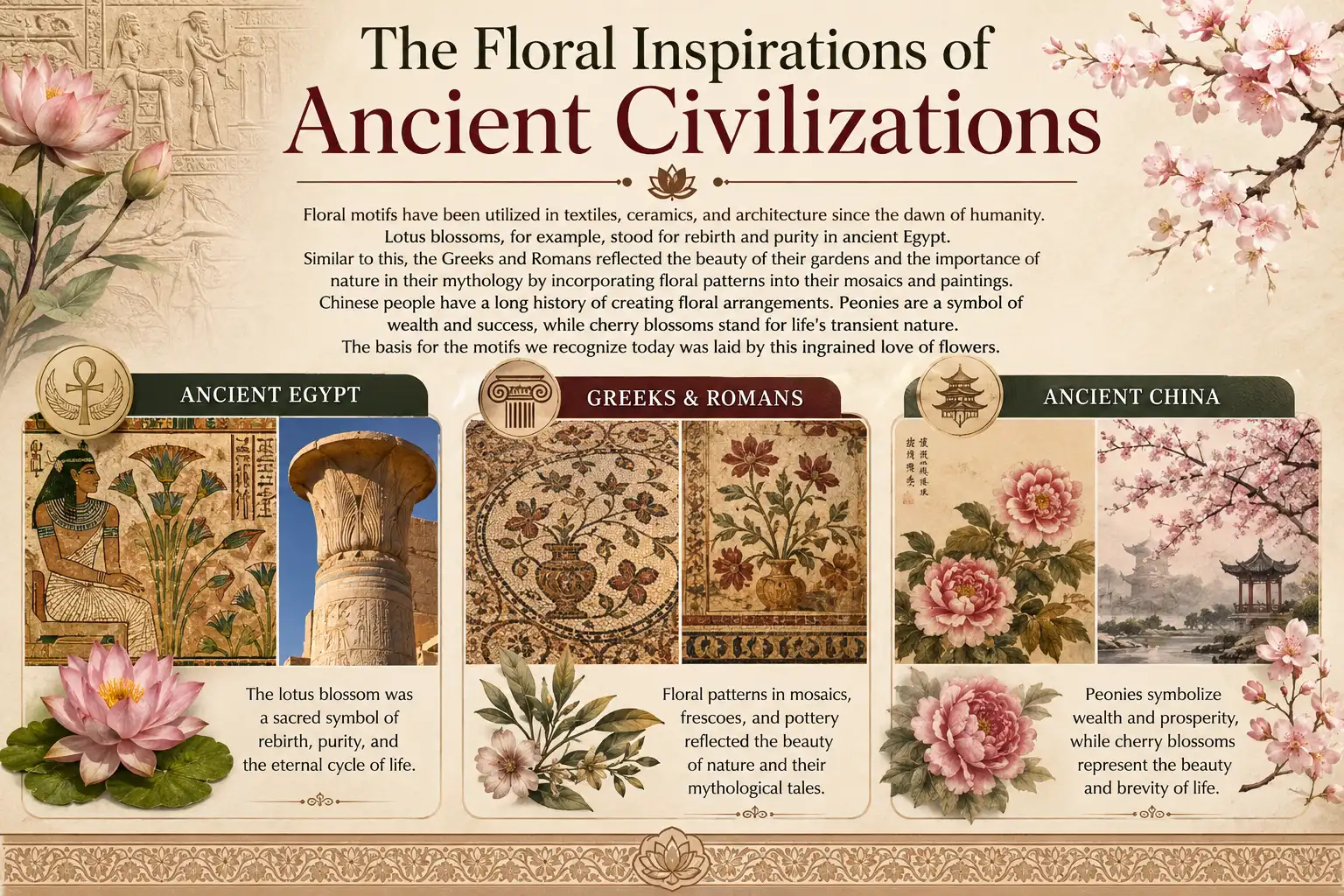
Floral motifs have been utilized in textiles, ceramics, and architecture since the dawn of humanity. Lotus blossoms, for example, stood for rebirth and purity in ancient Egypt.
Similar to this, the Greeks and Romans reflected the beauty of their gardens and the importance of nature in their mythology by incorporating floral patterns into their mosaics and paintings.
Chinese people have a long history of creating floral arrangements. Peonies are a symbol of wealth and success, while cherry blossoms stand for life’s transient nature. The basis for the motifs we recognize today was laid by this ingrained love of flowers.
The Renaissance: A Golden Age of Design and Art
One important turning point in the development of floral motifs was the Renaissance. Artists that incorporated flowers into their paintings, such as Van Gogh and Botticelli, emphasized the beauty of flowers. During this time, floral designs gained popularity in textiles, wallpaper, and ceramics as people’s fascination with nature grew.
Designs with tulips, roses, and other flowers grew to represent elegance and extravagance, frequently decorating the clothing of the affluent. Around this time, the “still life” genre began to take shape, with floral arrangements serving as the main themes and displaying the minute details and brilliant hues of flowers.
Floral Motif’s Cultural Importance
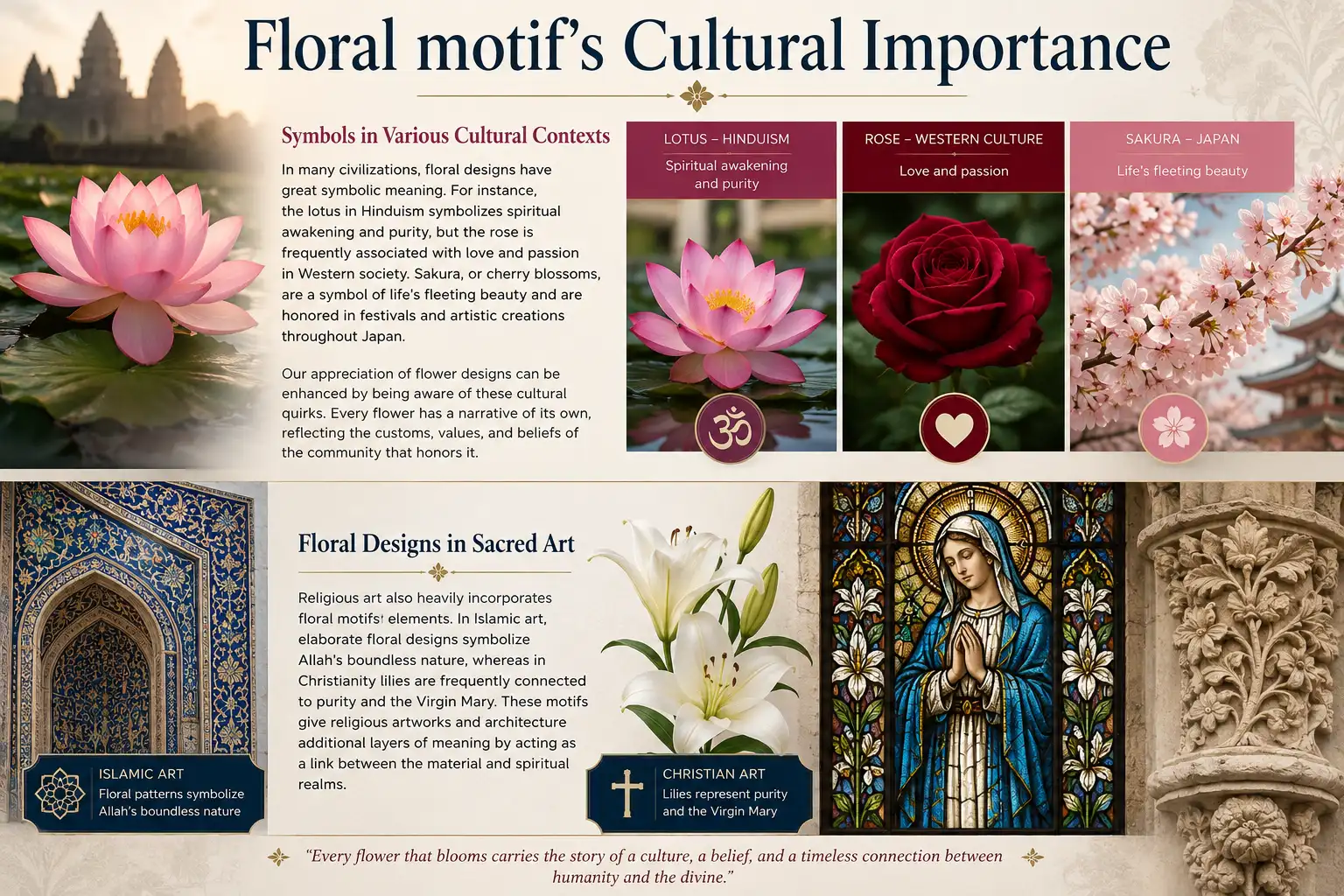
Symbols in Various Cultural Contexts
In many civilizations, floral designs have great symbolic meaning. Being aware of these cultural quirks can enhance our appreciation of flower designs. Every flower has a narrative of its own, reflecting the customs, values, and beliefs of the community that honors it.
Floral Designs in Sacred Art
Religious art also heavily incorporates floral motifs elements. In Islamic art, elaborate floral designs symbolize Allah’s boundless nature, whereas in Christianity lilies are frequently connected to purity and the Virgin Mary. These motifs give religious artworks and architecture additional levels of meaning by acting as a link between the material and spiritual realms.
Floral Motif Applications in Modern Times
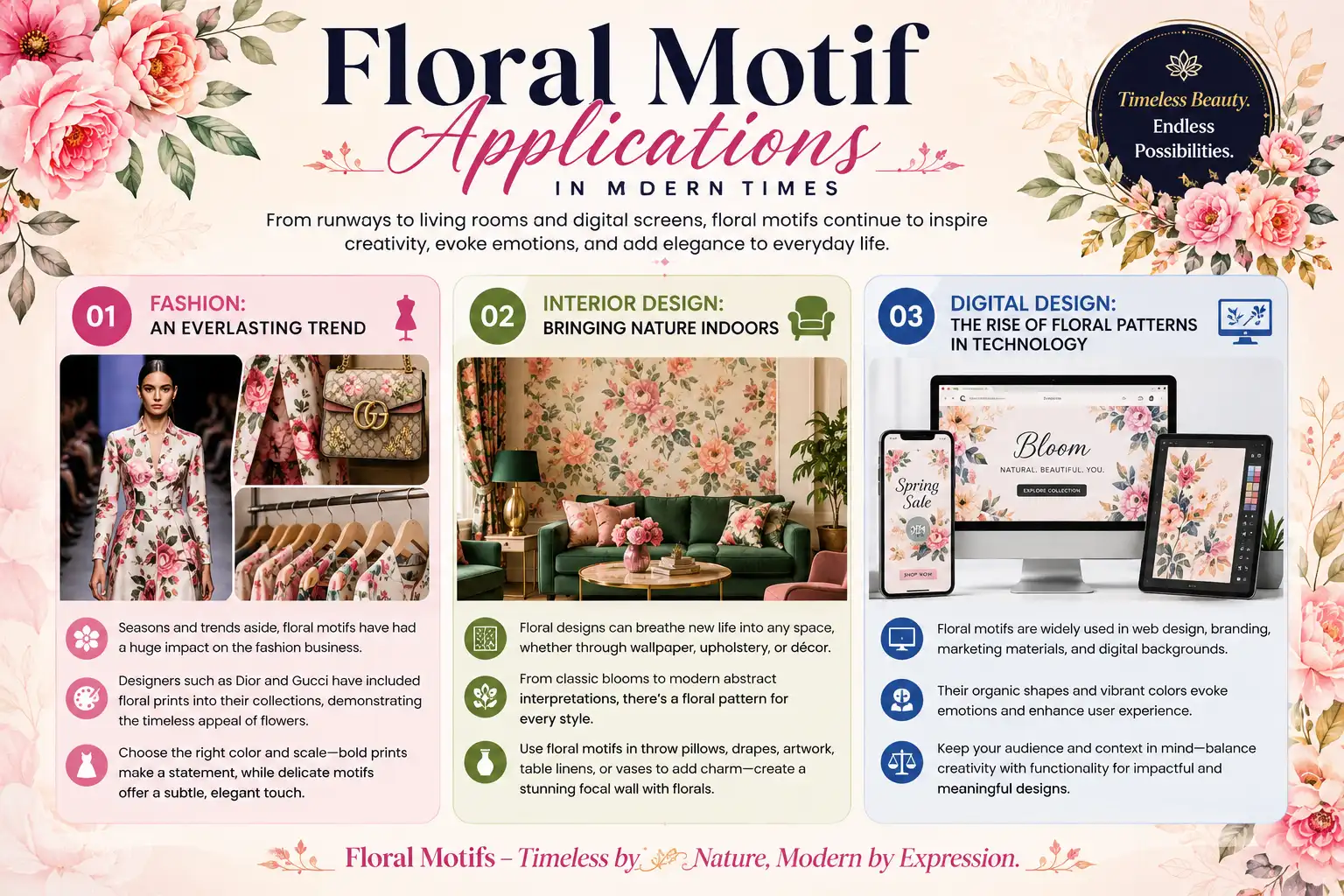
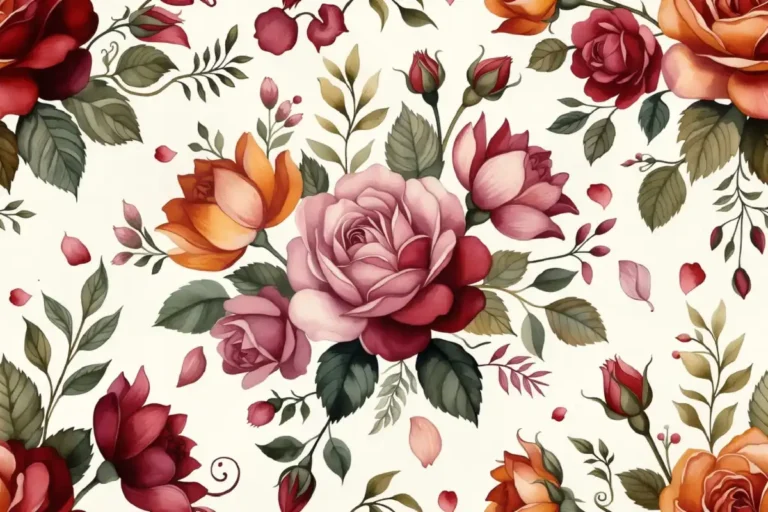
Seasons and trends aside, floral themes have had a huge impact on the fashion business. Designers such as Dior and Gucci have included floral prints into their collections, demonstrating the timeless appeal of flowers, from dressy gowns to relaxed t-shirts. Consider the pattern’s color and scale: smaller, delicate designs offer a subtle approach, while larger, bold prints make a statement. Combining floral motifs with solid hues gives a balanced, confident look.
Floral designs are one of the best ways to bring the outdoors into your house, breathing new life into any space as upholstery or wallpaper. There is a floral pattern to fit every style, whether modern and abstract or classic blooms. Try them in throw pillows, drapes, or artwork — little accents like table linens or vases add subtle charm, while an exquisite focal wall makes a bigger statement.
Floral motifs have found a new home in web development and graphic design in today’s digital environment, used for visually appealing branding, marketing collateral, and backgrounds. Flowers’ organic forms and vivid colors can arouse feelings and improve user experience. It’s important to keep the audience and context in mind — professionals may prefer a somber, minimalist design, while younger audiences respond to a playful floral arrangement.
How to Pick the Appropriate Floral Motives
-
Taking Your Individual Style Into Account
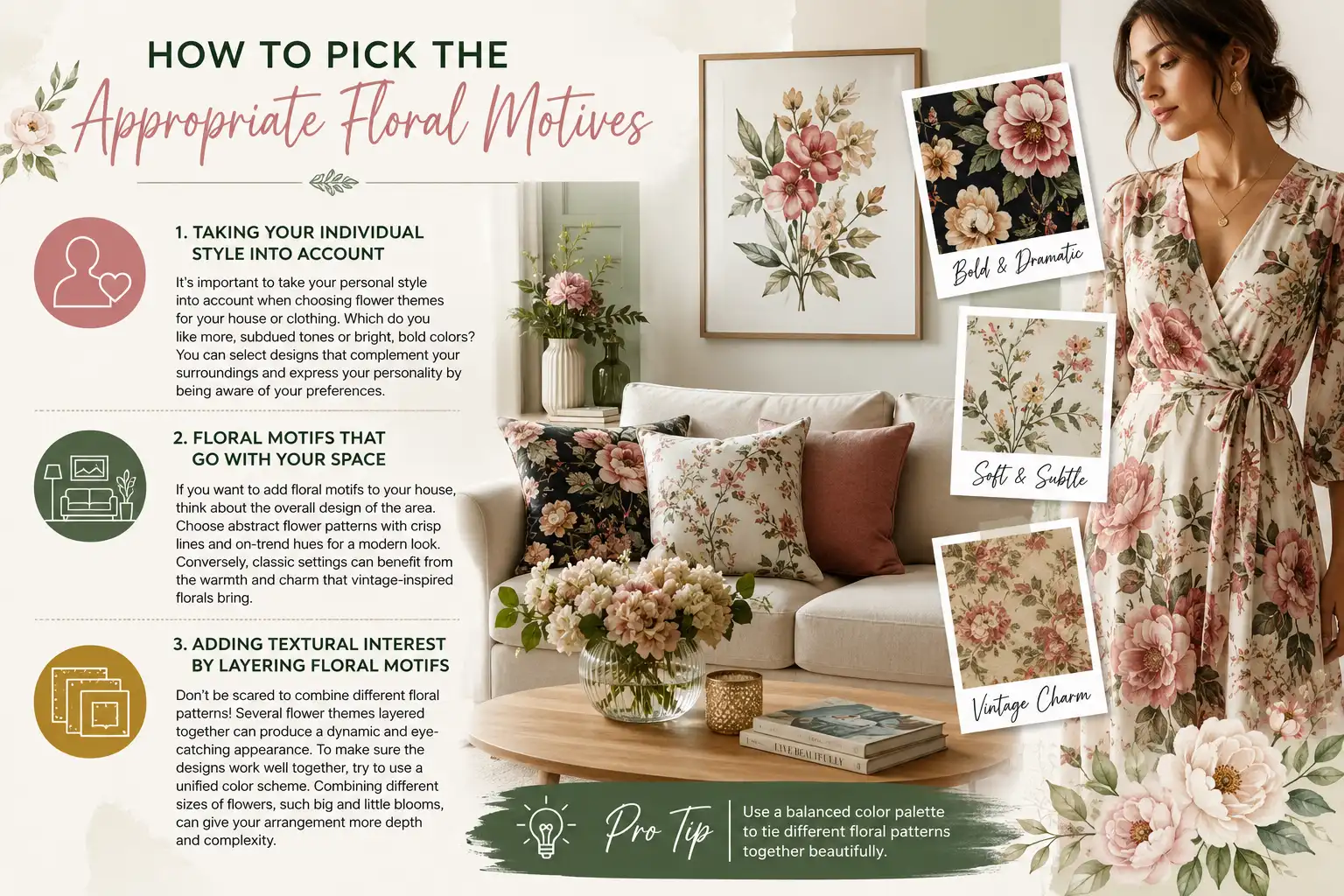
It’s important to take your personal style into account when choosing flower themes for your house or clothing. Which do you like more, subdued tones or bright, strong colors? Being aware of your preferences helps you select designs that complement your surroundings and express your personality.
-
Floral Motifs That Go With Your Space
If you want to add floral motifs to your house, think about the overall design of the area. Choose abstract flower patterns with crisp lines and on-trend hues for a modern look. Conversely, classic settings can benefit from the warmth and charm that vintage-inspired florals bring.
-
Adding Textural Interest by Layering Floral Motifs
Don’t be scared to combine different floral patterns! Several flower themes layered together can produce a dynamic and eye-catching appearance. To make sure the designs work well together, try to use a unified color scheme. Combining different sizes of flowers, such as big and little blooms, can give your arrangement more depth and complexity.
Summary
Across countries and times, floral motifs designs have an everlasting appeal that connects nature and art. These patterns never cease to enthrall and inspire, thanks to their historical origins and contemporary uses in fashion, interior design, and digital media.
The beauty and symbolism of floral themes provide a means to express uniqueness and establish a connection with nature, whether you decide to incorporate them into your own style or decorate your home.
FAQs
What do floral themes mean?
Decorative patterns with floral and botanical components are called floral motifs. They are frequently used as symbols of beauty, nature, and diverse cultural connotations, and can be found in textiles, artwork, home décor, and fashion.
How can I accessorize my clothes with flowery patterns?
You can wear dresses, shirts, and accessories, among other articles of apparel, to add floral designs to your outfit. A well-balanced and fashionable appearance can be achieved by combining flower prints with solid hues or other patterns.
Are floral patterns appropriate for every type of home décor?
Indeed! You can modify floral themes to fit a variety of interior design motifs. You can discover floral designs that go well with the general theme of your area, whether it be vintage or modern.
What should I take into account when selecting floral designs for my house?
Think about the color scheme in your room, your own taste, and the way the floral patterns will work with the other decor pieces. Another way to create visual interest is by layering several floral motifs.
Is it possible to integrate floral motifs in digital design?
Of course! In web development, branding, and graphic design, floral motifs are prevalent. They are a flexible option for digital applications since they can arouse emotions and improve visual attractiveness.
Read more about: Toonstream