Quick Rangoli Ideas for Beginners to Try at Home
Rangoli is one of the most loved art forms in Indian culture. It brings color, joy, and a welcoming energy to any home. But many people feel nervous about where to start. The good news is that you do not need to be an expert to make something beautiful. Quick rangoli ideas for beginners focus on simple shapes, easy tools, and designs that look great without taking hours. Whether it is for a festival, a weekend activity, or daily home decor, this guide will help you begin with confidence and creativity.
Why Rangoli Is Perfect for Beginners
Rangoli does not ask for perfection. It is a personal, expressive art form that welcomes everyone, regardless of skill level. When you start simple, you build both your technique and your confidence at the same time.
Quick rangoli ideas for beginners work best because they remove the pressure of getting everything perfect on the first try. A few reasons why beginners love rangoli:
- You only need basic materials like chalk, colored powder, or flower petals
- Most beginner designs take under 30 minutes to complete
- Mistakes can be fixed easily by smoothing the powder or starting a section over
- It is a calming, meditative activity with a beautiful result
The key is to choose designs that match your current skill level. Once you feel comfortable, you can slowly add more details or try larger patterns.
Essential Tools and Materials to Get Started
Before you dive into quick rangoli ideas for beginners, gather a few simple supplies. You do not need to buy anything expensive to create a lovely rangoli.
Basic materials:
- Colored rangoli powder or chalk powder
- A white chalk pencil or chalk line for drawing the outline
- A small plate or flat bowl for holding powder
- A squeeze bottle or cone for detailed lines
- Dried flower petals as a natural, eco-friendly option
If you prefer a mess-free start, you can use rangoli stencils. These pre-cut shapes let you fill in color without drawing any outlines yourself. They are a great way to build confidence before moving to freehand work.
Quick Rangoli Ideas for Beginners to Try Right Now
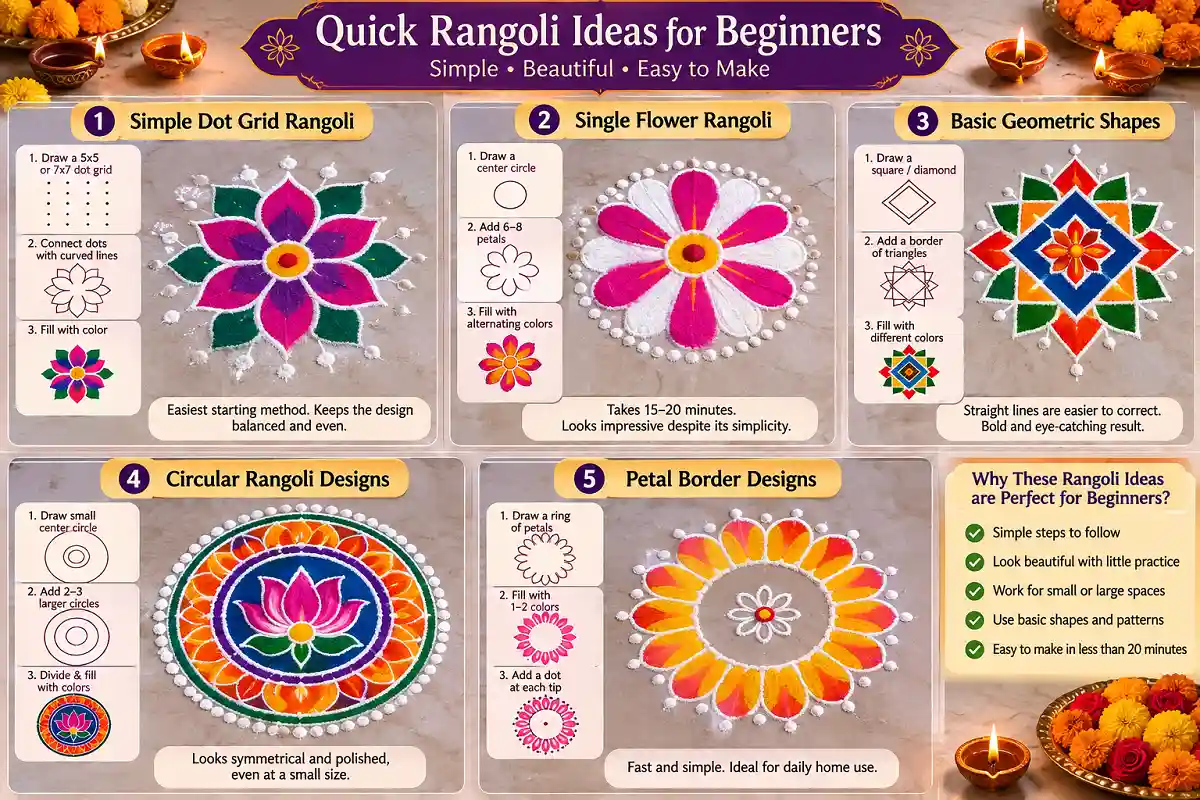
The designs below are some of the best quick rangoli ideas for beginners you can try today. Each one uses simple shapes, takes very little time, and produces a result you will be proud to display at home.
Simple Dot Grid Rangoli
The dot grid method is one of the easiest starting points among all quick rangoli ideas for beginners. You place a grid of dots on the floor and then connect them with curved or straight lines to form patterns. This approach gives you a ready-made guide so your design stays balanced and even.
Start with a 5×5 or 7×7 dot grid. Draw curved petals connecting each dot to the next. Fill each petal with one solid color. This method is common in South Indian kolam art. You can explore more about this tradition through beautiful simple traditional kolam designs that use the same dot-based technique.
Single Flower Rangoli
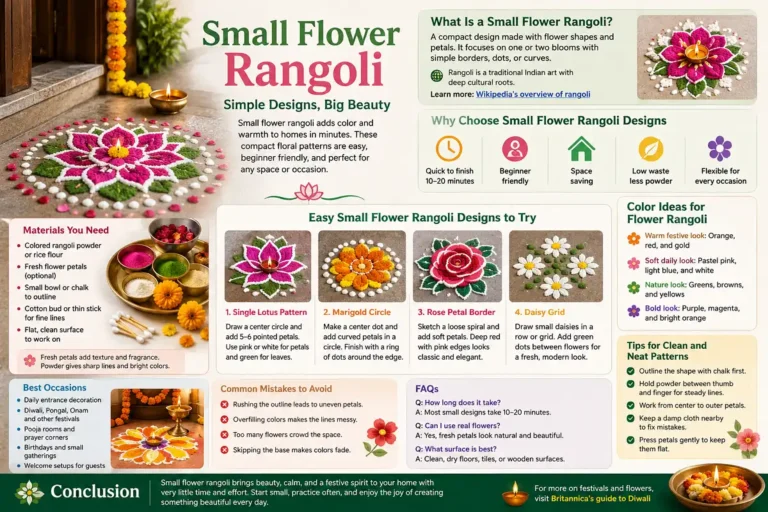
A single large flower is one of the most popular quick rangoli ideas for beginners. Draw a small circle in the center, then add six to eight petals around it. Fill the petals with alternating colors like pink and white, or yellow and orange. Add a border of small dots around the outer edge for a finished look.
This design takes about 15 to 20 minutes and looks impressive despite its simplicity. For more flower-based inspiration, take a look at these small flower rangoli designs with colors that work well for beginners.
Basic Geometric Shapes
Squares, triangles, and hexagons are wonderful starting shapes for anyone new to rangoli. Draw a simple square or diamond in the center, then add a border of triangles around it. Fill each section with a different bright color to create a bold, eye-catching result.
Geometric patterns are among the most forgiving quick rangoli ideas for beginners because straight lines and angles are easier to correct than freehand curves. If you want to explore more structured patterns, easy geometric rangoli designs offer many clear examples you can follow step by step.
Circular Rangoli Designs
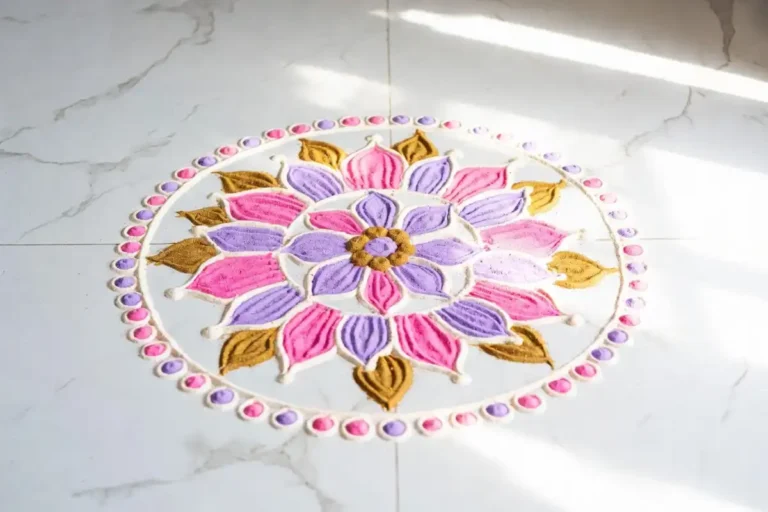
Circles are naturally pleasing to the eye and work well in any space. Begin by drawing one small circle at the center. Add two or three larger circles around it like rings. Then divide the circles into sections and fill them with colors. A simple four-petal lotus can be placed at the center to add a focal point.
Circular designs are among the most rewarding quick rangoli ideas for beginners because they look symmetrical and polished even at a small size.
Petal Border Designs
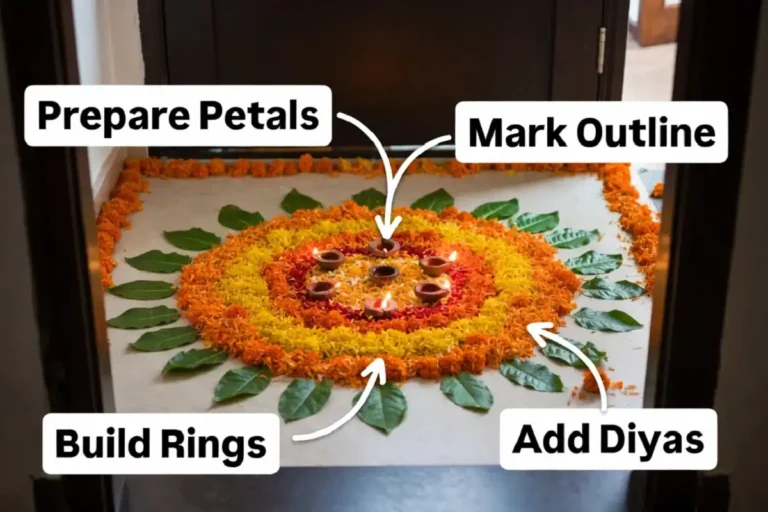
A petal border rangoli is a design made entirely of a ring of petals. Draw a row of curved petals in a circle. Fill them with one or two colors. Add a dot at the tip of each petal. This style is one of the fastest quick rangoli ideas for beginners and takes less than 20 minutes, making it ideal for daily home use. Using real flower petals like marigold or rose makes this design even more vibrant and completely eco-friendly.
Color Tips for Quick Rangoli Ideas for Beginners
Choosing the right colors is an important part of any set of quick rangoli ideas for beginners. You do not need to use many colors. Two or three colors used well will always look better than six colors used randomly.
Simple color rules for beginners:
- Use contrasting colors side by side, such as yellow next to purple, or red next to white
- Keep the outline or border in white or black to make other colors pop
- Use one dominant color and two accent colors for a balanced look
- Bright colors like orange, pink, and yellow are easiest to see on dark floors
- Soft pastels work beautifully on light-colored or white floors
Natural color powders made from flowers or vegetables are gentle on the floor and safe for children and pets.
How to Keep Your Rangoli Looking Clean and Sharp
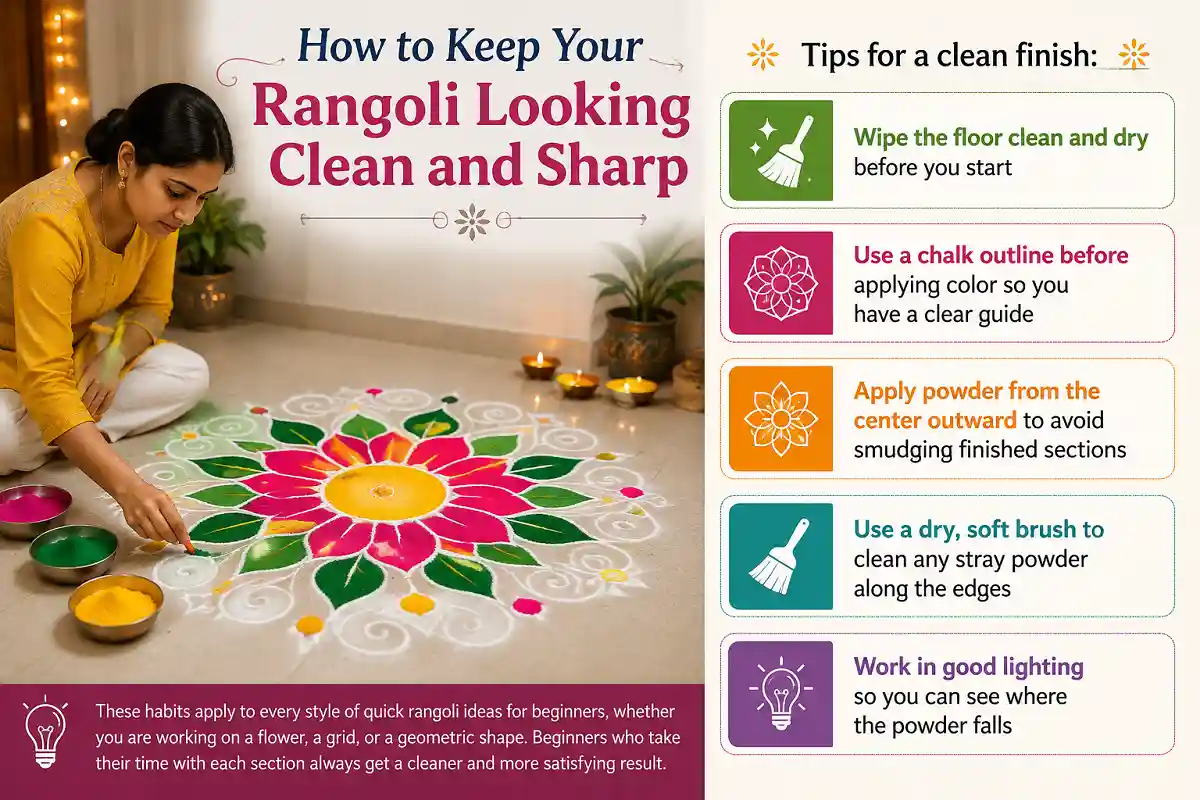
Neatness is easier to achieve when you prepare your surface and work slowly. A few small habits make a noticeable difference in the final result.
Tips for a clean finish:
- Wipe the floor clean and dry before you start
- Use a chalk outline before applying color so you have a clear guide
- Apply powder from the center outward to avoid smudging finished sections
- Use a dry, soft brush to clean any stray powder along the edges
- Work in good lighting so you can see where the powder falls
These habits apply to every style of quick rangoli ideas for beginners, whether you are working on a flower, a grid, or a geometric shape. Beginners who take their time with each section always get a cleaner and more satisfying result.
When and Where to Make Rangoli at Home
Rangoli fits beautifully into many everyday moments, not just big festivals. Here are some natural occasions to bring this art into your home.
Good times and places for rangoli:
- At the entrance or doorway to welcome guests
- Near a prayer corner or pooja space at home
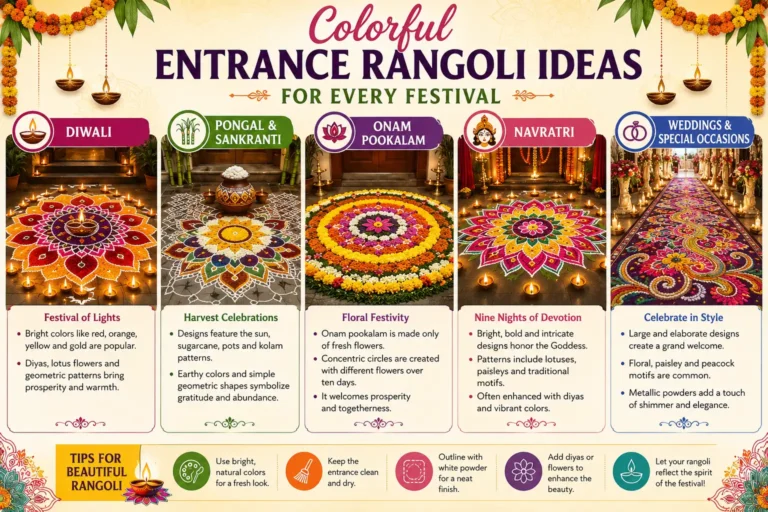
- On festival mornings like Diwali, Onam, or Pongal
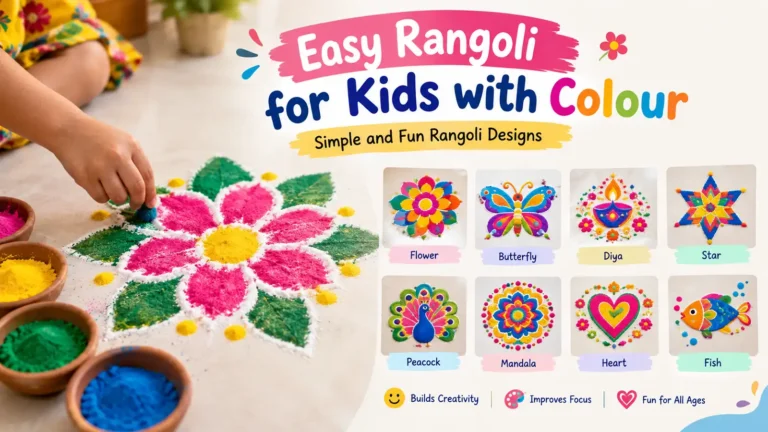
- During weekend creative time with children
- As part of a birthday or housewarming decoration
According to Dassault Systemes’ cultural heritage research, traditional art forms like rangoli support creativity, fine motor development, and mindfulness. Starting with quick rangoli ideas for beginners allows you to access all of these benefits right away, without needing advanced skill.
For a detailed look at how color and geometry combine in traditional designs, Smithsonian Magazine’s coverage of Indian folk art provides a good cultural foundation that helps deepen your appreciation of the craft.
Common Mistakes Beginners Make (and How to Fix Them)
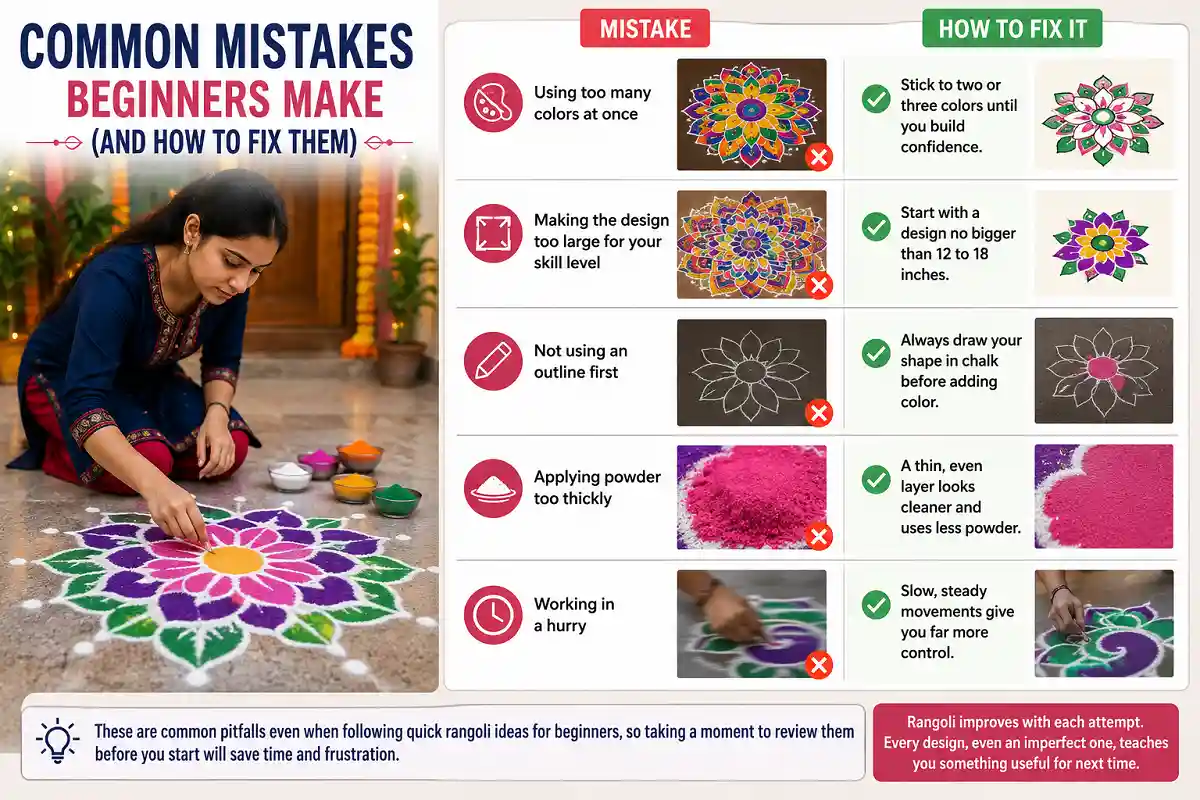
Every beginner makes a few small errors. Knowing what to watch for helps you avoid them.
Common mistakes and easy fixes:
- Using too many colors at once: Stick to two or three colors until you build confidence
- Making the design too large for your skill level: Start with a design no bigger than 12 to 18 inches
- Not using an outline first: Always draw your shape in chalk before adding color
- Applying powder too thickly: A thin, even layer looks cleaner and uses less powder
- Working in a hurry: Slow, steady movements give you far more control
These are common pitfalls even when following quick rangoli ideas for beginners, so taking a moment to review them before you start will save time and frustration. Rangoli improves with each attempt. Every design, even an imperfect one, teaches you something useful for next time.
Conclusion
Quick rangoli ideas for beginners are all about starting simple and enjoying the process. A single flower, a circle pattern, or a small dot-grid design is enough to create something truly beautiful. You do not need expensive tools or years of practice. All you need is a little time, some colored powder, and the willingness to try. As you practice, your lines will get steadier and your designs will grow. Start with one small design today, and you may find that rangoli becomes one of your favorite creative rituals at home.
FAQ Section
What is the easiest rangoli design for a complete beginner?
A single-flower design with six petals around a central circle is the easiest starting point among all quick rangoli ideas for beginners. It requires no complex tools, takes about 15 minutes, and looks attractive with just two or three colors.
Can I make rangoli without special powder?
Yes. You can use chalk, crushed colored chalk, dried flower petals, rice flour, or even colored sand. Many beginners start with what they already have at home before buying dedicated rangoli powder.
How do I make rangoli lines look straight and neat?
Using a ruler or a flat piece of cardboard as a guide helps keep straight lines clean. For curves, practice drawing the shape in chalk a few times before applying color.
How long does a beginner rangoli take to make?
Most simple beginner designs take between 15 and 30 minutes. Larger or more detailed designs may take an hour, but starting small keeps the process enjoyable and manageable.
Is rangoli only for festivals?
No. Rangoli can be made any day as a form of creative expression or home decoration. Many families in South India make a small kolam or rangoli at their doorstep every morning as a daily ritual.
What size should a beginner rangoli be?
A size of 12 to 18 inches across is ideal for beginners. It is large enough to show detail and color but small enough to manage comfortably without the design feeling overwhelming.