Ornamental Floral Designs: Ideas, Tips and Patterns
Ornamental floral designs have been part of home decoration and cultural celebrations for generations. These patterns use flowers, petals, and floral shapes to create artwork that feels warm, welcoming, and deeply rooted in tradition. Whether drawn on floors for a festival or used as a decorative motif on walls and fabrics, ornamental floral art brings natural beauty into everyday spaces. This guide walks you through the key elements of ornamental floral design, how to get started, and the best ways to use these patterns for any occasion at home.
What Is Ornamental Floral Design?
Ornamental floral design refers to decorative artwork that uses flower shapes, petal patterns, and plant-inspired motifs as its core elements. It is used across cultures in a wide range of art forms, including rangoli, embroidery, tile work, pottery, and wall painting.
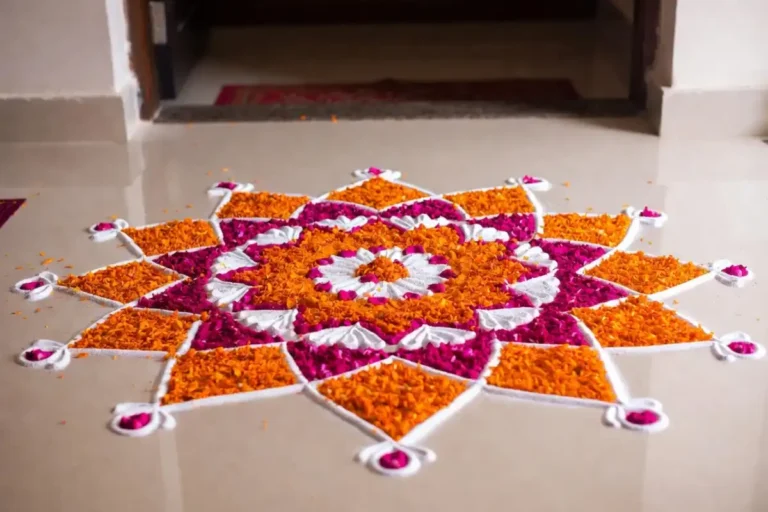
In Indian tradition, ornamental floral patterns are most commonly seen in rangoli. These designs are created on floors using colored powders, flower petals, or chalk. The floral shapes used can range from simple five-petal blooms to complex layered lotus forms.
What makes these designs “ornamental” is the level of detail and intention behind each element. Every petal curve, color gradient, and leaf shape is placed with care to create something that is both beautiful and meaningful.
Why Ornamental Floral Patterns Are So Widely Loved
Ornamental floral designs continue to hold a strong place in art and decoration because they connect people to something natural and timeless. A few reasons they remain popular:
- They work across many settings, from doorsteps to large hall floors
- They can be made simple or highly detailed depending on skill level
- Floral shapes carry universal appeal and cultural significance
- They adapt well to different color schemes and seasonal themes
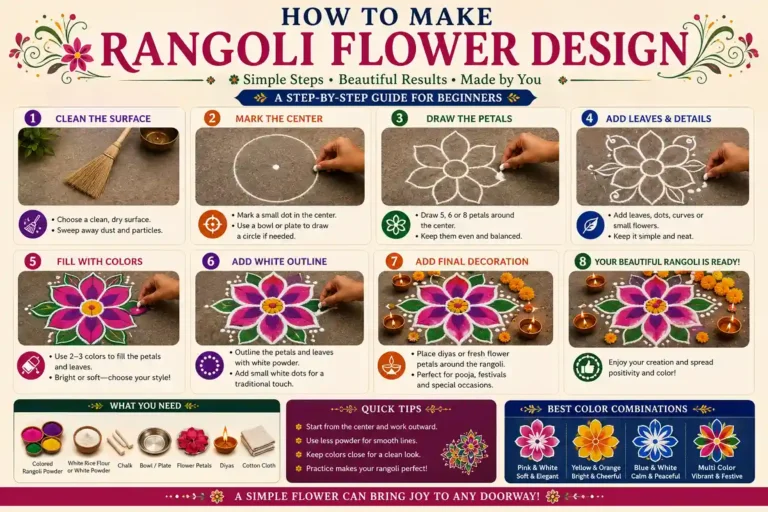
If you are new to creating these designs, it helps to start with structured guides. This beginner-friendly rangoli step guide can help you understand how to build your first pattern from scratch.
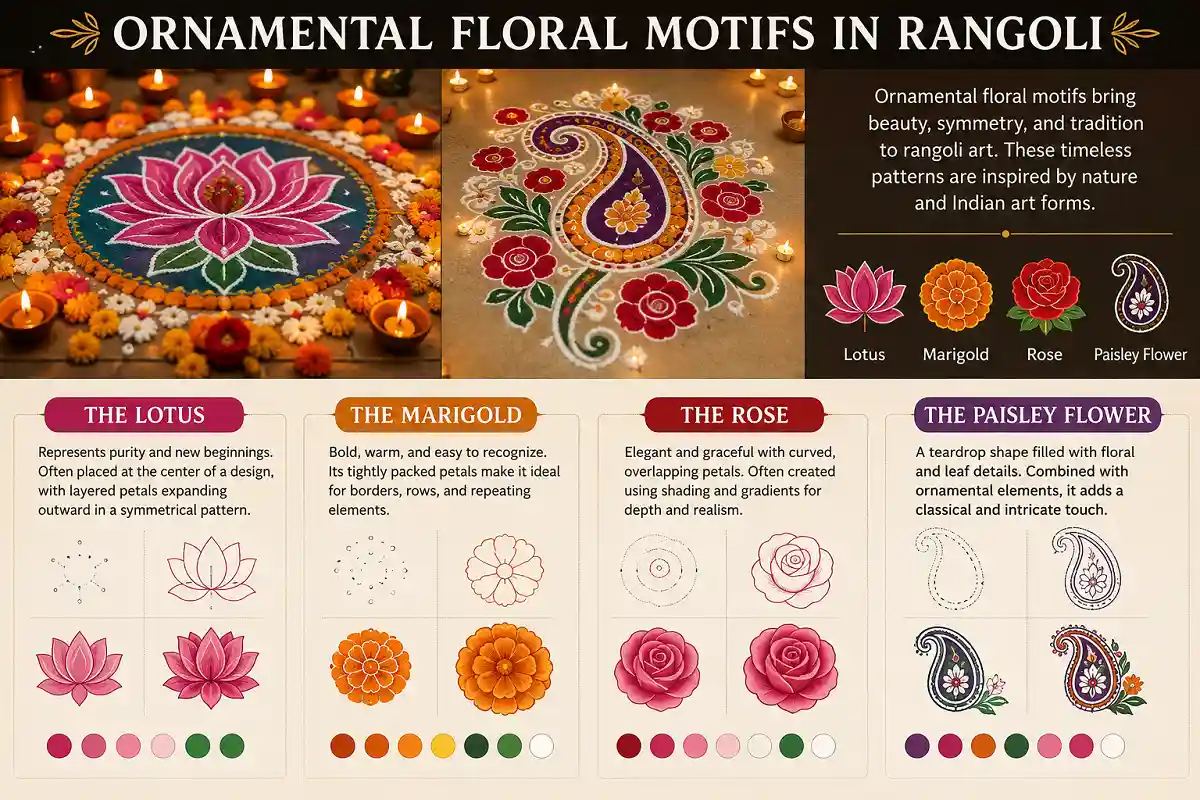
Popular Ornamental Floral Motifs Used in Rangoli
The Lotus
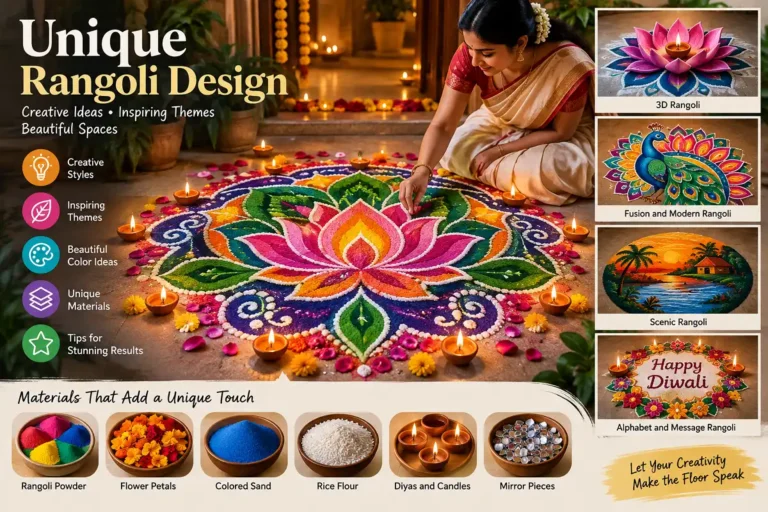
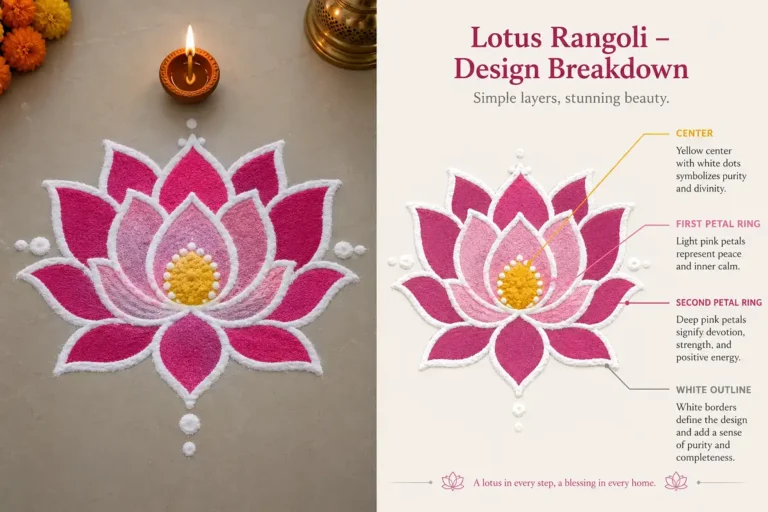
The lotus is one of the most used ornamental floral motifs in Indian art. It represents purity and new beginnings. In rangoli, the lotus is often drawn at the center of a design, with its layered petals expanding outward in a symmetrical pattern. The lotus rangoli design is especially popular during festivals like Diwali and Navratri.
The Marigold
The marigold shape is bold, warm, and easy to recognize. Its tightly packed petals make it a natural fit for ornamental floral work. Marigold motifs are often placed in rows or as repeat border elements around a central design.
The Rose
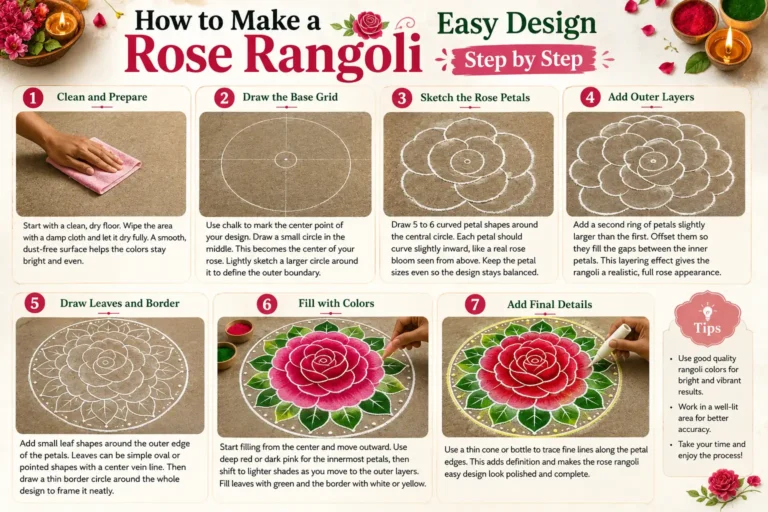
The rose adds a sense of elegance to floral rangoli. Its curved, overlapping petals give artists room to play with shading and color depth. Rose-inspired ornamental designs often use gradients of red, pink, and white powder to mimic real petals.
The Paisley Flower
While paisley is technically a teardrop shape, it is always accompanied by floral fills and leaf details. Combined with ornamental floral elements, paisley motifs add a classical and intricate touch to any rangoli design.
How to Choose the Right Color Palette
Color is one of the most important parts of ornamental floral design. The right palette can make a simple floral pattern look rich and layered.
Warm palettes use red, orange, yellow, and pink. These are popular for festivals and celebrations because they feel joyful and energetic.
Cool palettes combine white, blue, purple, and green. These work well for everyday decor and morning rangoli, giving a calm and clean feel.
Contrasting palettes pair opposite colors like yellow and purple or orange and blue. These make the floral shapes stand out sharply against the background.
For ornamental floral rangoli, it is best to choose one dominant color for the main petals and use two or three supporting shades for outlines, fills, and shadows.
Tools and Materials for Ornamental Floral Rangoli
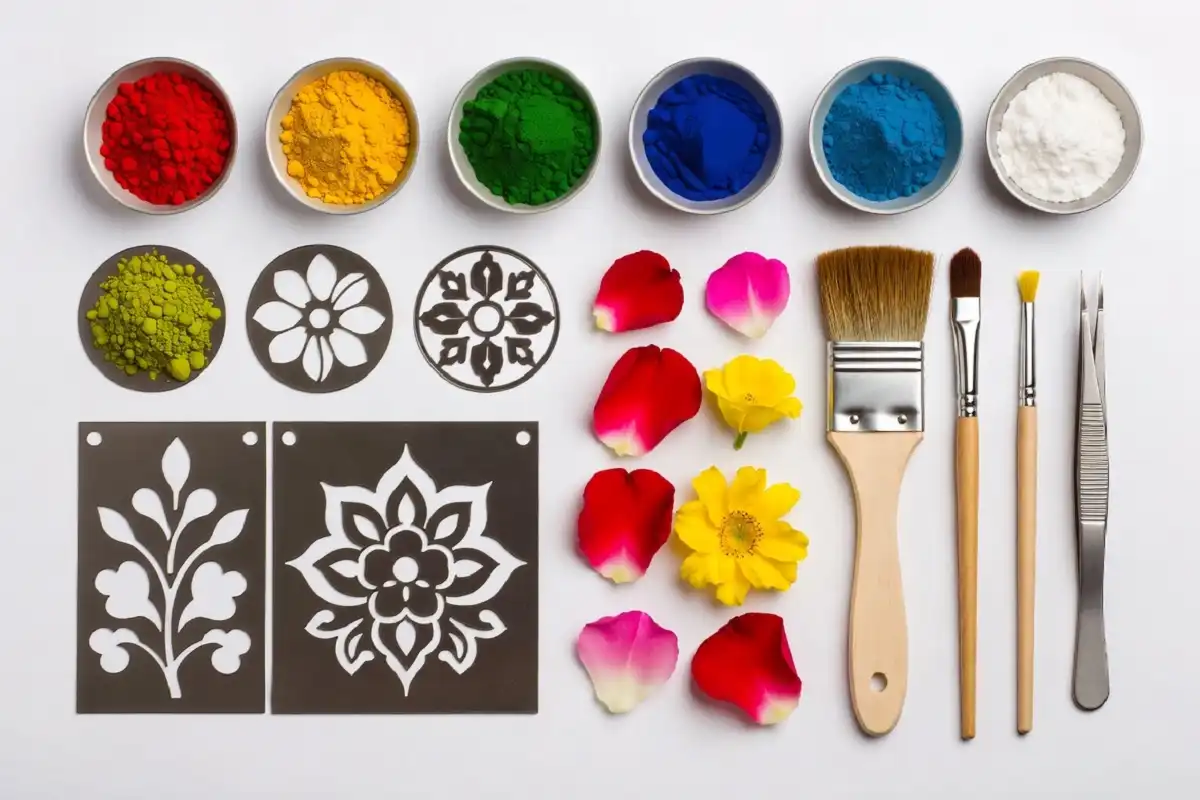
You do not need many supplies to create ornamental floral designs. Here is what most artists use:
- Colored rangoli powder in a range of shades
- White chalk or rice flour for outlines and base sketching
- A fine-tipped cone or squeeze bottle for detailed petal work
- Fresh flower petals for natural texture and fragrance
- A flat surface such as a swept and lightly moistened floor section
Some artists also use stencils to maintain symmetry in their ornamental floral patterns, especially when working with complex multi-petal motifs.
Step-by-Step: Creating a Simple Ornamental Floral Pattern
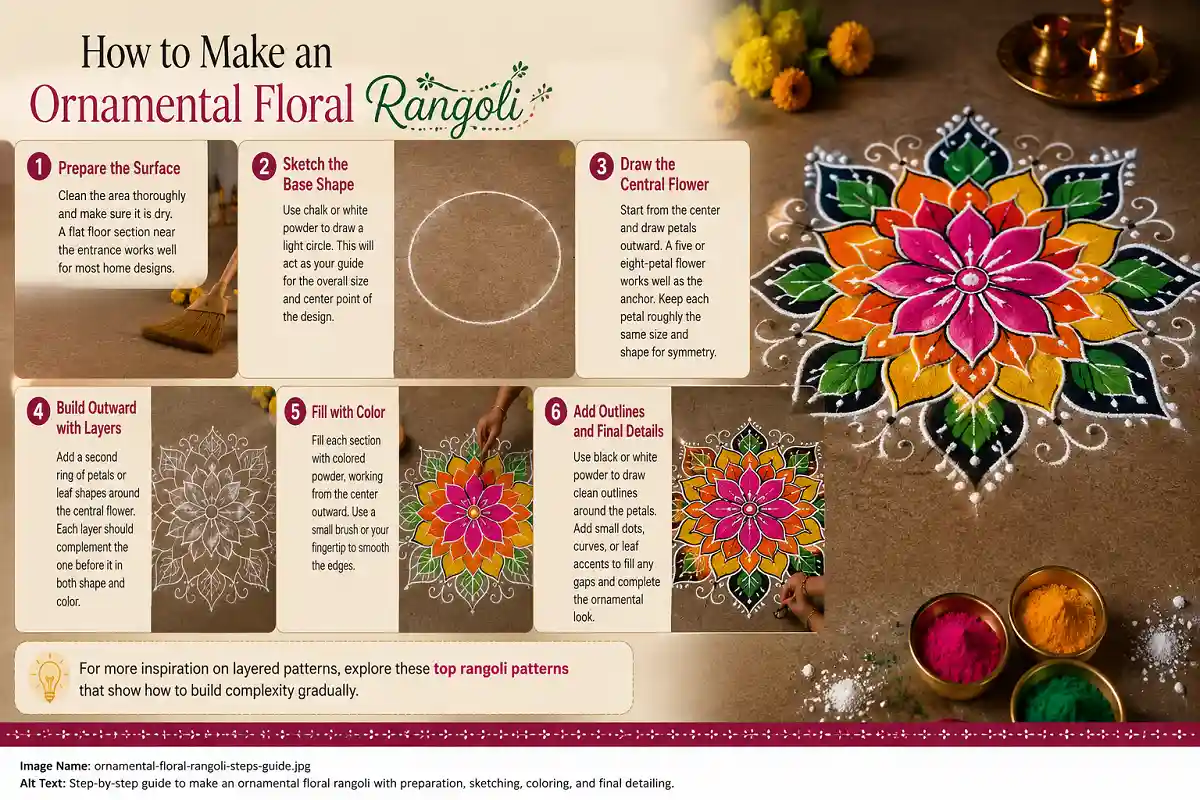
Prepare the Surface
Clean the area thoroughly and make sure it is dry. A flat floor section near the entrance works well for most home designs.
Sketch the Base Shape
Use chalk or white powder to draw a light circle. This will act as your guide for the overall size and center point of the ornamental floral design.
Draw the Central Flower
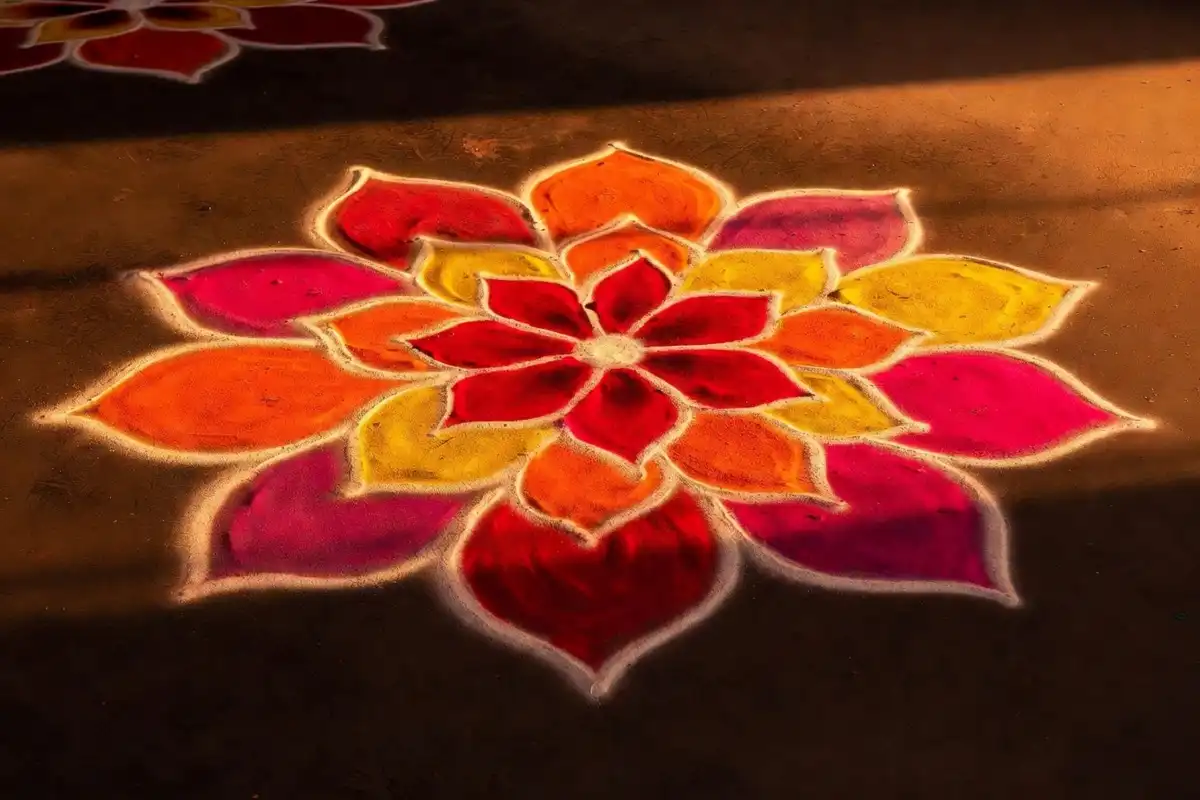
Start from the center and draw petals outward. A five or eight-petal flower works well as the anchor. Keep each petal roughly the same size and shape for symmetry.
Build Outward with Layers
Add a second ring of petals or leaf shapes around the central flower. Each layer should complement the one before it in both shape and color.
Fill with Color
Fill each section with colored powder, working from the center outward. Use a small brush or your fingertip to smooth the edges.
Add Outlines and Final Details
Use black or white powder to draw clean outlines around the petals. Add small dots, curves, or leaf accents to fill any gaps and complete the ornamental look.
For more inspiration on layered patterns, explore these top rangoli patterns that show how to build complexity gradually.
Ornamental Floral Designs for Different Occasions
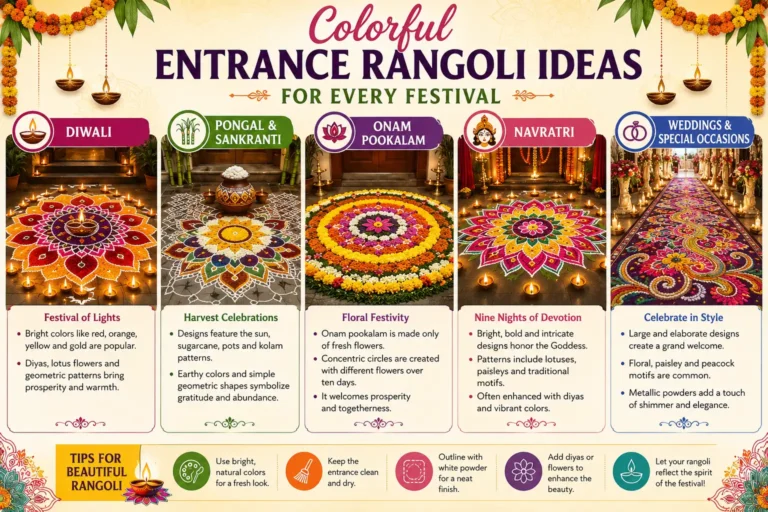
For Diwali
Deep reds, golds, and oranges work best for Diwali ornamental floral designs. Add small diyas or lamp shapes at the outer edges of the flower pattern to enhance the festive feel.
For Weddings
Bridal ornamental floral rangoli often uses pink, white, and deep magenta. Lotus and rose shapes are the most common choices, placed at the entrance to welcome guests.
For Everyday Home Decor
Simpler ornamental floral patterns in white or a single accent color are ideal for daily use. These take less time to create and can be refreshed each morning as part of a home ritual. You can find easy daily ideas in this collection of easy white rangoli designs for home decor.
Tips to Improve Your Ornamental Floral Technique
A few practical habits can make a noticeable difference in the quality of your designs:
- Practice individual petal shapes on paper before working on the floor
- Always define the center point before drawing outward
- Use a ruler or compass for perfectly symmetrical circles
- Work in natural or even lighting so you can see color differences clearly
- Study traditional textile patterns and embroidery for new floral motif ideas
The Smithsonian’s collection of decorative arts offers a wide visual reference of floral ornamental motifs from multiple cultures, which can spark creative ideas for your own rangoli work.
Conclusion
Ornamental floral design is a creative tradition that connects art, culture, and home decoration in a meaningful way. Whether you are preparing for a festival, a wedding, or simply want to bring beauty into your daily space, floral motifs offer endless possibilities. Start simple, pay attention to symmetry and color, and build your skills one layer at a time. With patience and practice, even a small ornamental floral pattern at your doorstep can transform the entire feel of your home and make every occasion feel more special.
FAQs
What is the meaning of ornamental floral design?
Ornamental floral design refers to decorative artwork that uses stylized flower shapes, petal arrangements, and plant-inspired motifs to create visually rich patterns. These designs are used across many art forms, from rangoli to fabric printing, and carry cultural and symbolic meaning in many traditions.
Which flowers are most commonly used in ornamental floral rangoli?
The lotus, marigold, and rose are the three most common flower shapes used in ornamental floral rangoli. Each brings a distinct look: the lotus offers layered symmetry, the marigold adds boldness, and the rose introduces elegant curves and color depth.
Can beginners make ornamental floral designs?
Yes, beginners can absolutely create ornamental floral designs. Starting with a simple five-petal flower using chalk outlines and two or three colors is a great first step. Over time, you can increase detail and add more layers to your patterns.
How long does a rangoli ornamental floral design last?
A dry powder ornamental floral design typically lasts one to two days on an indoor floor if the area is undisturbed. Designs made with fresh flower petals last about a day. Adding a light spray of water or a clear adhesive base can help preserve them slightly longer.
What colors work best for ornamental floral patterns?
Warm shades like red, orange, yellow, and pink are the most popular for festivals. For everyday use, white and green combinations feel clean and calm. The best results usually come from using one main color with two to three supporting shades for depth and contrast.