Rangoli Ki Design: Beautiful Ideas for Every Occasion
Rangoli ki design is one of the oldest and most loved art forms in Indian culture. It brings color, joy, and tradition into any home. Whether you are preparing for a big festival or simply decorating your entrance, rangoli adds a warm and welcoming touch.
From simple dot patterns to intricate floral arrangements, there is a design for every skill level. This guide covers everything you need to know about creating beautiful rangoli, with ideas that suit beginners and experienced artists alike.
What Is Rangoli and Why Does It Matter?
Rangoli is a traditional Indian art form created on floors using colored powders, flower petals, rice, or chalk. The word “rangoli” comes from Sanskrit and means “rows of colors.” Families across India make rangoli during festivals, weddings, and religious ceremonies to welcome guests and invite prosperity into the home.
Every region in India has its own style. In Maharashtra, it is called “rangoli.” In Tamil Nadu, it is known as “kolam.” In Rajasthan, the art is called “mandana.” Despite different names, the spirit remains the same: to create something beautiful and meaningful.
Rangoli ki design is not just decoration. It carries cultural significance, spiritual meaning, and a sense of community that brings families together during celebrations.
Types of Rangoli Ki Design
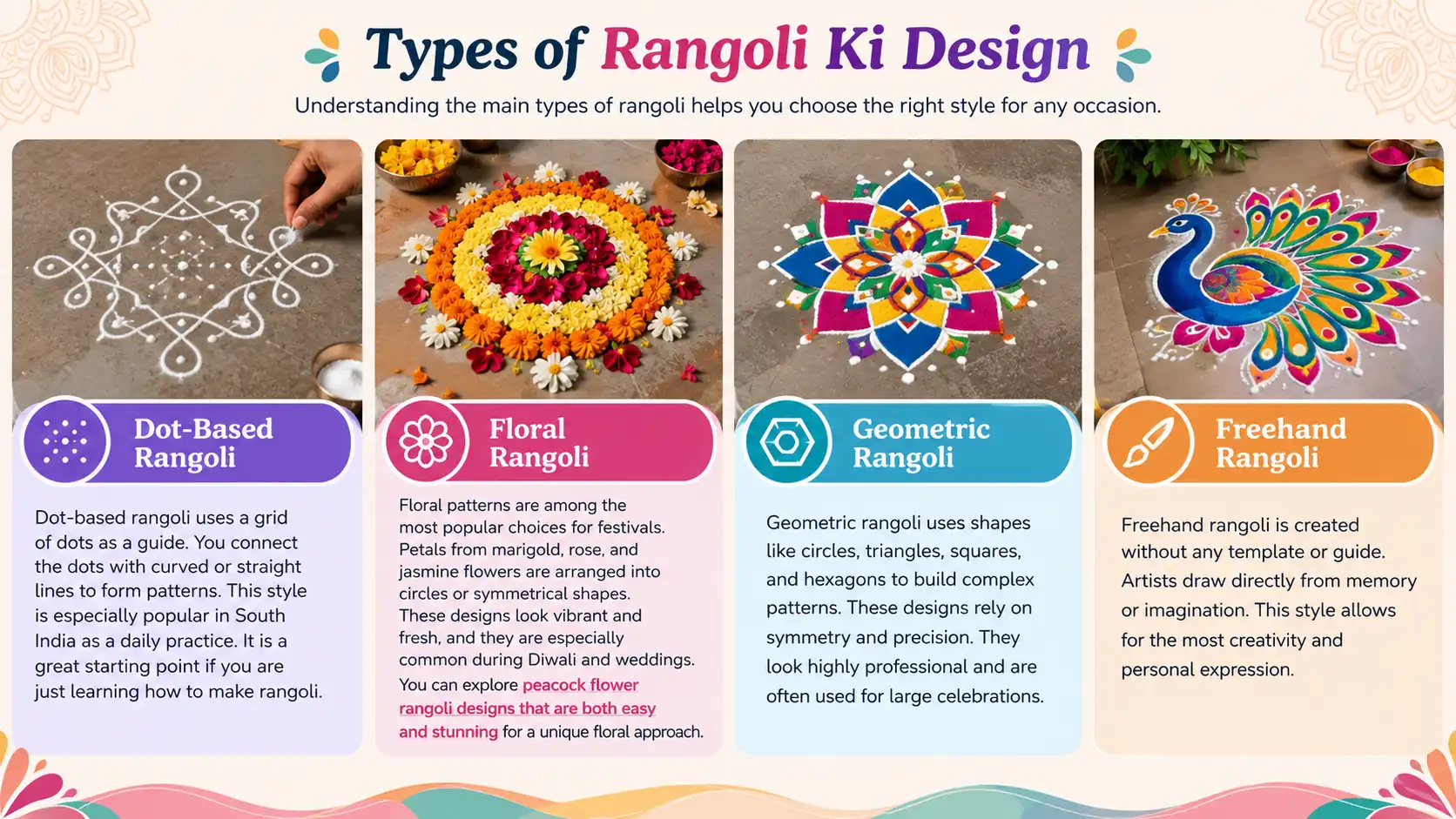
Understanding the main types of rangoli helps you choose the right style for any occasion.
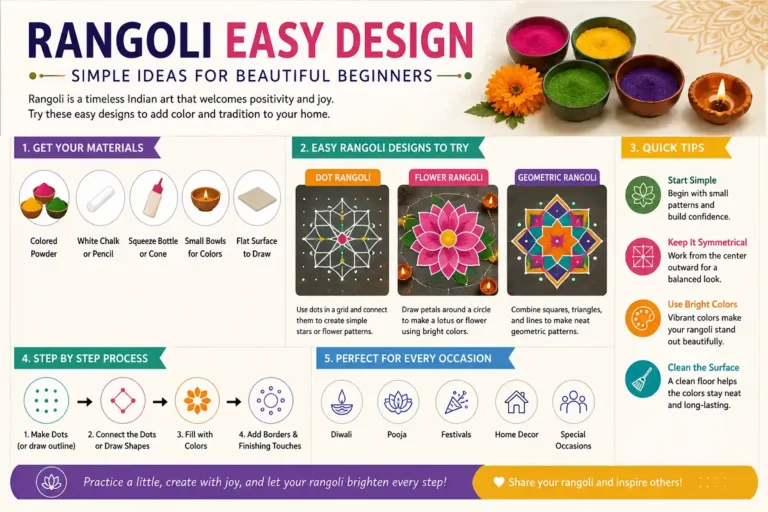
Dot-Based Rangoli
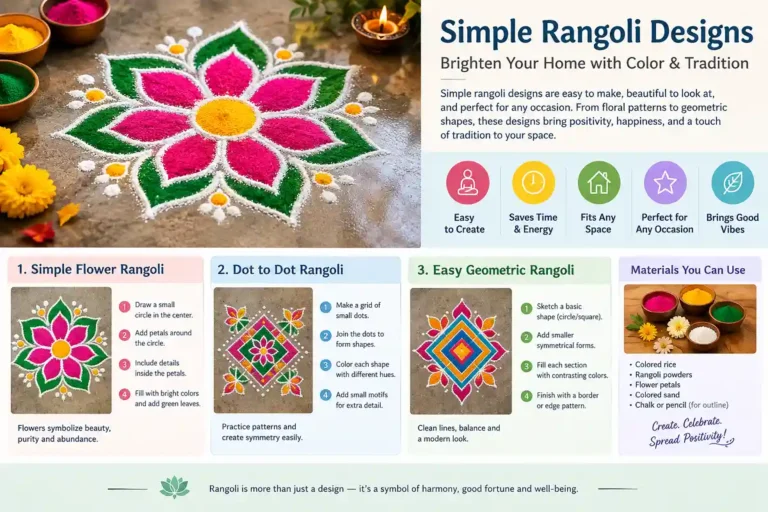
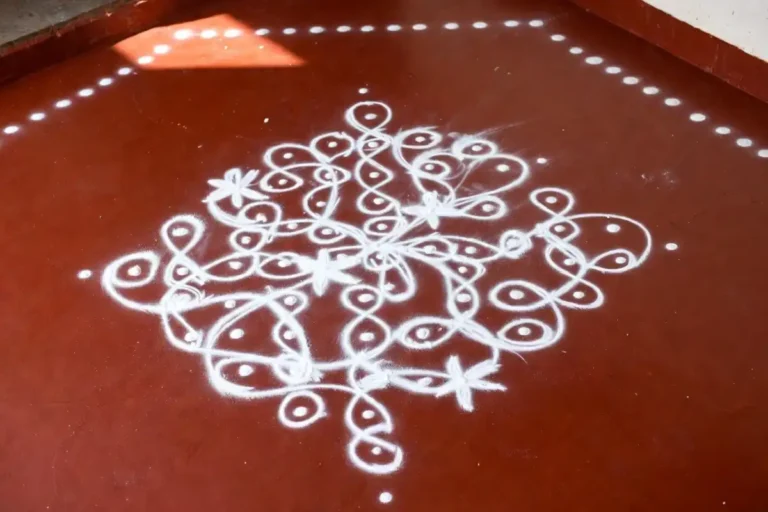
Dot-based rangoli uses a grid of dots as a guide. You connect the dots with curved or straight lines to form patterns. This style is especially popular in South India as a daily practice and is a great starting point for beginners.
Floral Rangoli
Floral patterns use marigold, rose, and jasmine petals arranged into circles or symmetrical shapes. They are vibrant, fresh, and especially common during Diwali and weddings.
Explore peacock flower rangoli designs →Geometric Rangoli
Geometric rangoli uses circles, triangles, squares, and hexagons to build complex patterns. These designs rely on symmetry and precision and work especially well for large celebrations.
Freehand Rangoli
Freehand rangoli is created without a template or guide. Artists draw directly from memory or imagination, allowing the most creativity and personal expression.
Rangoli Ki Design for Festivals
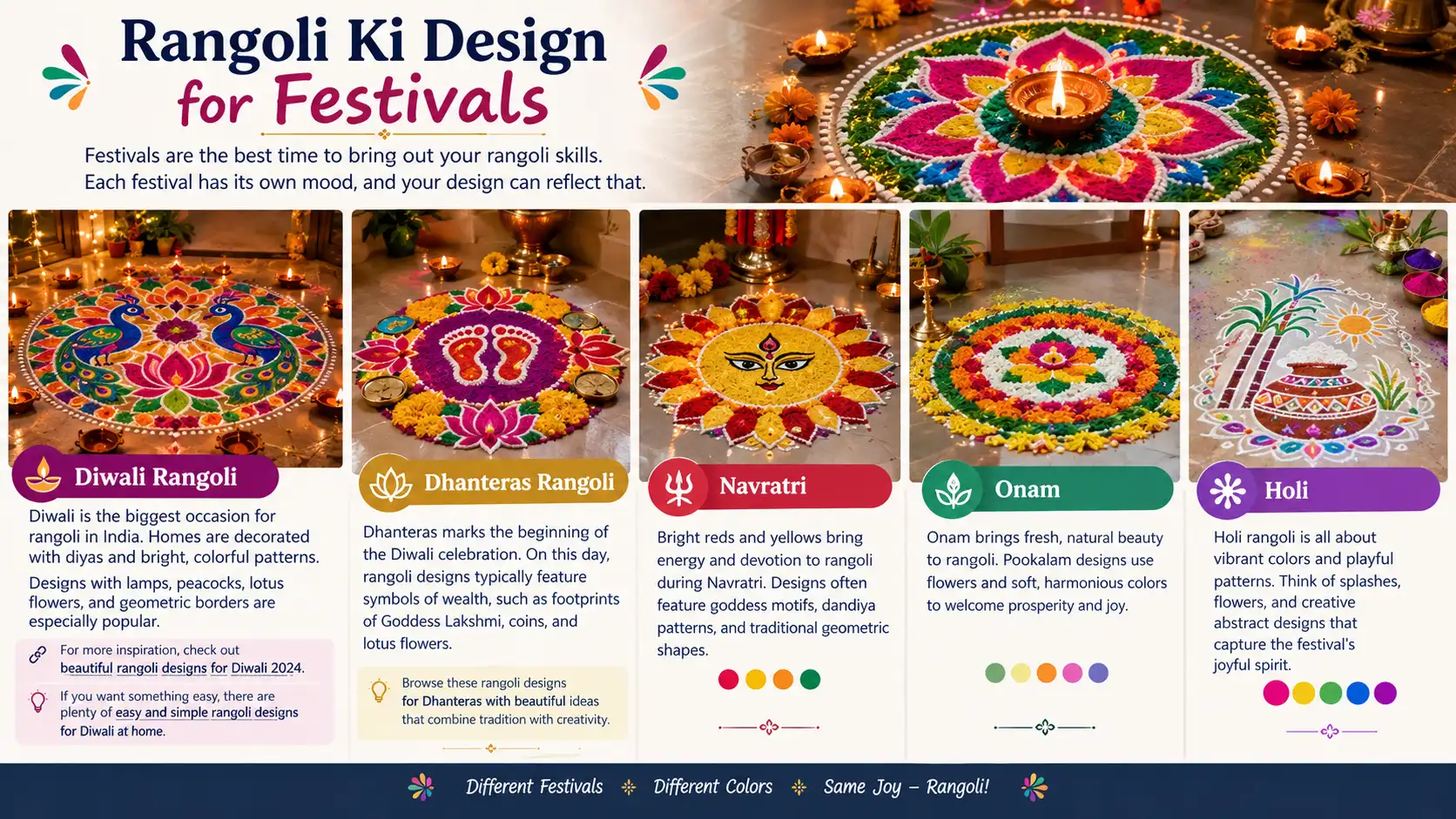
Festivals are the best time to bring out your rangoli skills. Each festival has its own mood, and your design can reflect that.
Festival IdeasDiwali Rangoli
Diwali is the biggest occasion for rangoli in India. Homes are decorated with diyas and bright, colorful patterns. Designs with lamps, peacocks, lotus flowers, and geometric borders are especially popular.
See beautiful rangoli designs for Diwali →
Try easy and simple Diwali rangoli designs →
Dhanteras Rangoli
Dhanteras marks the beginning of the Diwali celebration. Rangoli designs typically feature symbols of wealth, such as footprints of Goddess Lakshmi, coins, and lotus flowers.
Browse rangoli designs for Dhanteras →
Other Festival Occasions
Rangoli is also made during Navratri, Onam, Pongal, and Holi. Each festival brings a different color palette and theme. Bright reds and yellows for Navratri, white and pastels for Pongal, and vibrant multicolors for Holi all give rangoli a distinct character depending on the time of year.
Rangoli Ki Design Tips for Beginners
Starting rangoli for the first time can feel overwhelming. These practical tips make the process easier and more enjoyable.
Start with a pencil sketch
Lightly draw your design on the floor before filling in with colors.
Use a stencil
Stencils help maintain symmetry and are widely available in craft stores.
Choose 3 to 5 colors
A limited, harmonious palette keeps the design clean instead of messy.
Work from the center outward
This keeps your design balanced and helps prevent accidental smudging.
Use dry colors
Dry rangoli powders are easier to control than wet materials for beginners.
Follow easy rangoli design ideas for beginners with steps →
Popular Rangoli Patterns and Motifs
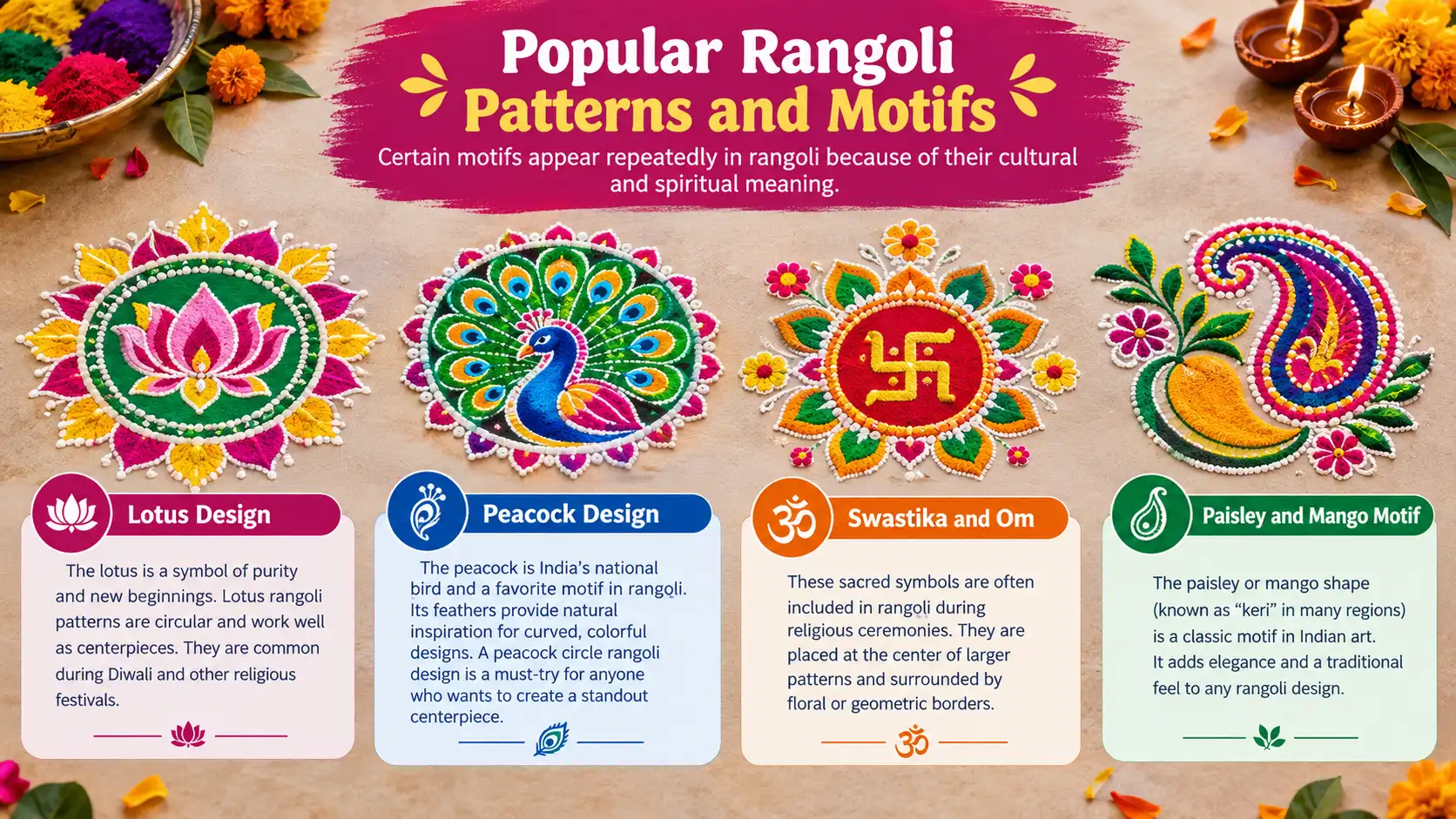
Certain motifs appear repeatedly in rangoli because of their cultural and spiritual meaning.
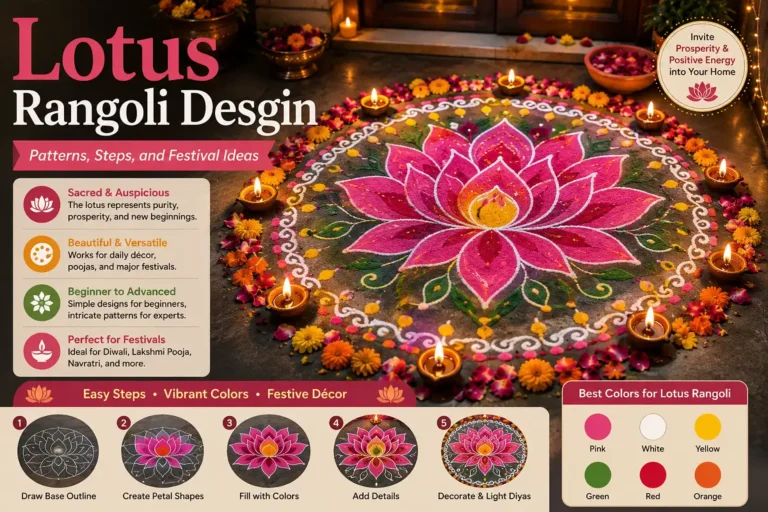
Lotus Design
The lotus is a symbol of purity and new beginnings. Lotus rangoli patterns are circular and work well as centerpieces.
Learn the lotus rangoli pattern step by step →Peacock Design
The peacock is India’s national bird and a favorite rangoli motif. Its feathers inspire naturally curved, colorful designs.
Try a peacock circle rangoli design →Swastika and Om
These sacred symbols are often included during religious ceremonies and placed at the center of larger patterns.
Paisley and Mango Motif
The paisley or mango shape, known as “keri” in many regions, adds elegance and a traditional feel to rangoli.
Big and Circle Rangoli Ki Design Ideas
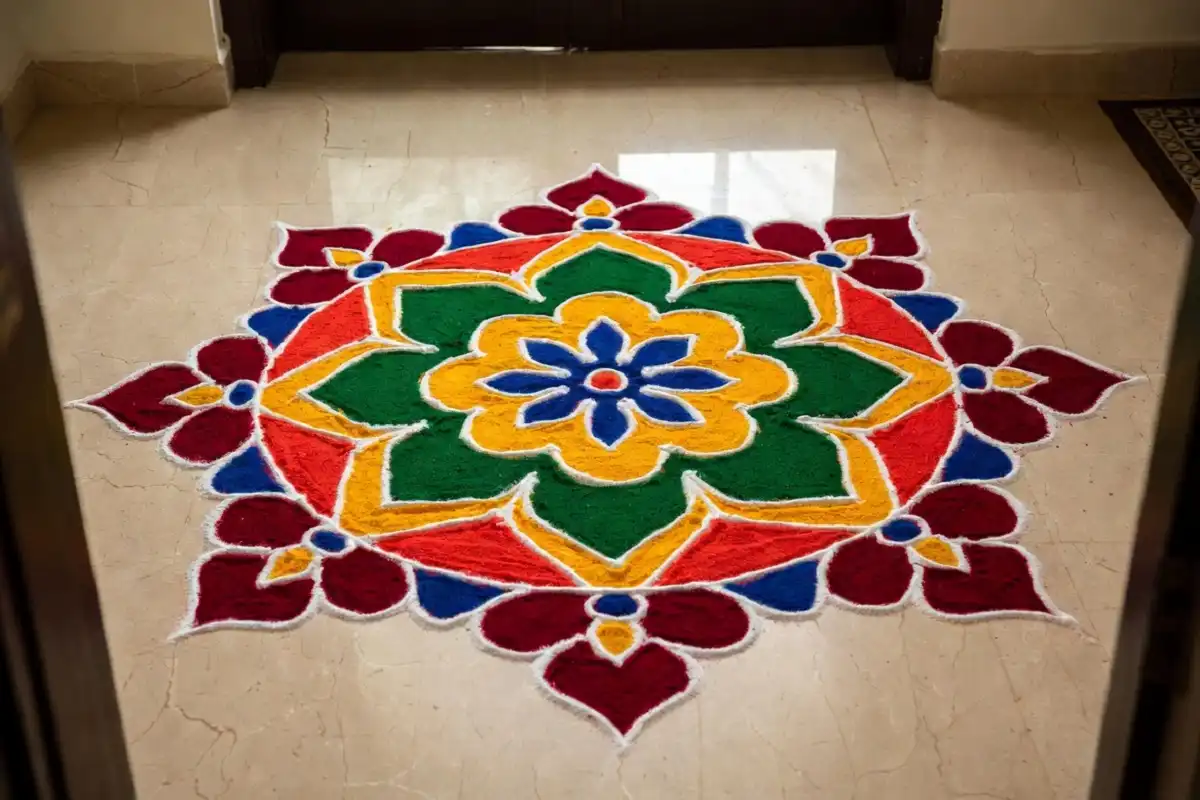
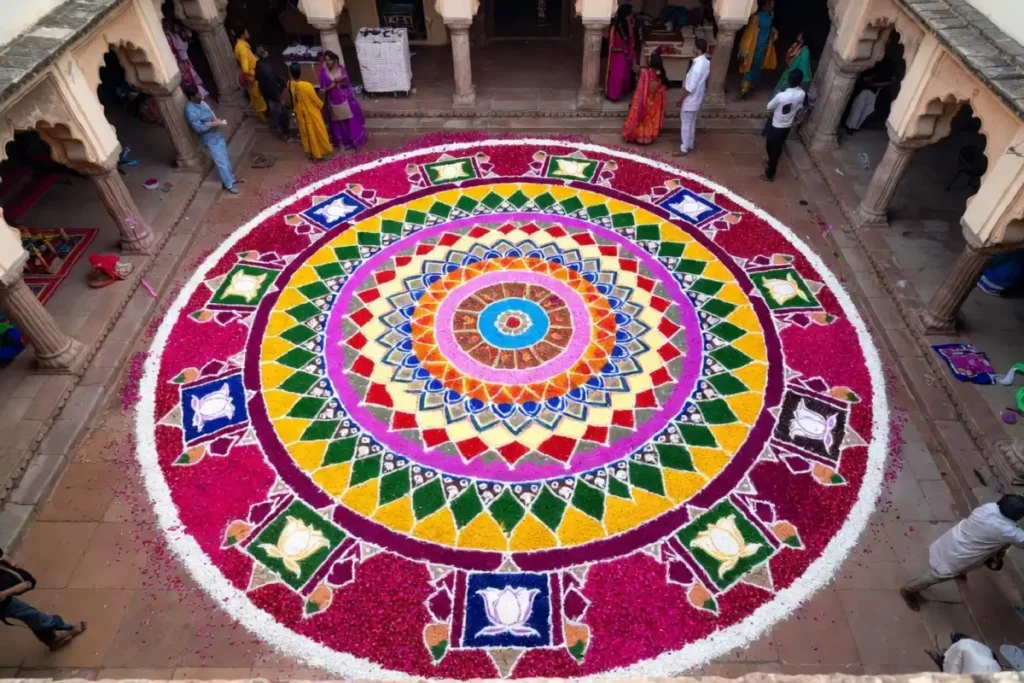
Large rangoli designs are made for weddings, big festivals, and community events. They require planning, coordination, and sometimes a team effort. A big circle design creates a strong visual impact and can be customized with any motif at the center.
Explore big circle rangoli design ideas for festivals and big rangoli design ideas for every occasion.
Large designs often use multiple rings moving outward from the center, each filled with a different pattern or color. Common themes include peacocks around the outer ring, a lotus at the center, and geometric borders in between.
Rangoli Materials and Tools
The material you choose affects the look, durability, and difficulty of your rangoli.
Colored Powder
The most common material. Available in many colors and easy to use.
Flower Petals
Used for natural, aromatic designs. Best for fresh, same-day decorations.
Rice Flour
Traditional and eco-friendly, often used for daily kolam in South India.
Sand
Creates a textured look and is ideal for detailed, fine-line work.
Chalk
Easy to remove and useful for practice and temporary outdoor designs.
Many artists combine materials, such as using colored powder for the base and flower petals to outline or fill certain areas.
See beautiful rangoli designs for festivals →
How to Preserve Your Rangoli
Rangoli is meant to be temporary, but you can extend its life with a few simple steps.
Keep foot traffic away by placing a small barrier or sign.
Lightly spray a fixative or hairspray to hold powder in place.
Avoid making rangoli near fans or open windows if using dry powder.
Photograph it immediately after completion while colors are at their brightest.
For context on traditional art preservation, the Smithsonian Center for Folklife and Cultural Heritage offers resources on living cultural heritage.
Digital and Modern Rangoli
Technology has added a new dimension to this ancient art. Digital rangoli apps let you design patterns on a screen before making them on the floor. These tools are useful for planning color combinations and checking symmetry before committing to the actual design.
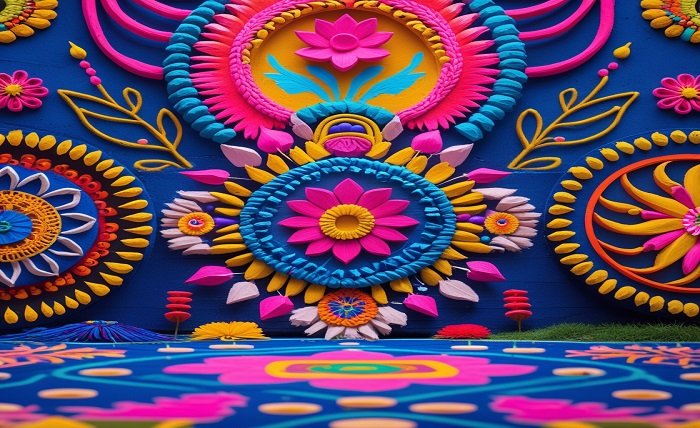
Modern rangoli also incorporates LED lights, 3D effects, and mirror work to create more dramatic results. These contemporary styles have become popular at events and competitions across India and around the world.
FAQs
What is rangoli ki design?
Rangoli ki design refers to decorative floor art made using colored powders, flower petals, or rice flour to create patterns for festivals, ceremonies, and home decoration in Indian culture.
Which rangoli design is easiest for beginners?
Dot-based and simple geometric patterns are the easiest for beginners because they use a structured grid that guides the overall shape and keeps the design symmetrical.
What materials are used in rangoli ki design?
Common materials include colored rangoli powder, flower petals, rice flour, chalk, and colored sand.
How long does rangoli last?
Dry powder rangoli typically lasts one to two days if kept in a sheltered area away from wind and foot traffic. Flower petal rangoli lasts only a few hours, while chalk-based designs can last several days.
Can I make rangoli without experience?
Yes. Using a stencil, starting with simple shapes, and following step-by-step guides makes rangoli accessible to complete beginners.
Is rangoli only made during Diwali?
No. Rangoli is made during many occasions including Navratri, Onam, Pongal, Dussehra, weddings, housewarmings, and as a daily practice in some South Indian homes.
Rangoli ki design is a living tradition that connects art, culture, and celebration.
Whether you choose a small, simple pattern or a grand, multicolored design, rangoli brings life and meaning to any space. Start with the basics, practice often, and let your creativity grow with each new design.