Simple Rangoli Design for Diwali: Easy Ideas to Brighten Your Home
Diwali is the festival of lights, and no celebration feels complete without a simple rangoli design for Diwali at the doorstep. A beautiful rangoli does not need to be complicated to look stunning. Whether you are decorating for the first time or have been making rangoli for years, there are patterns that suit every skill level. With the right colors, a steady hand, and a little creativity, you can create something truly festive and welcoming for this joyful occasion.
Why Rangoli Is an Important Part of Diwali
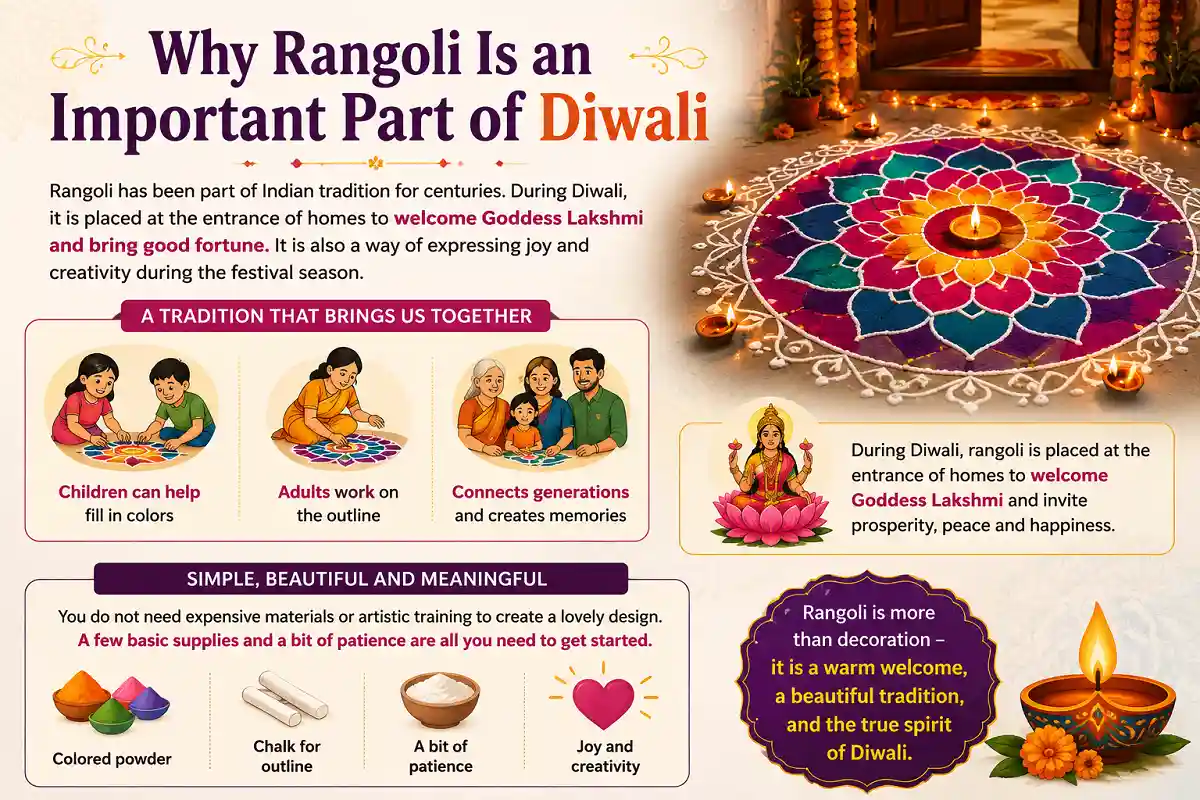
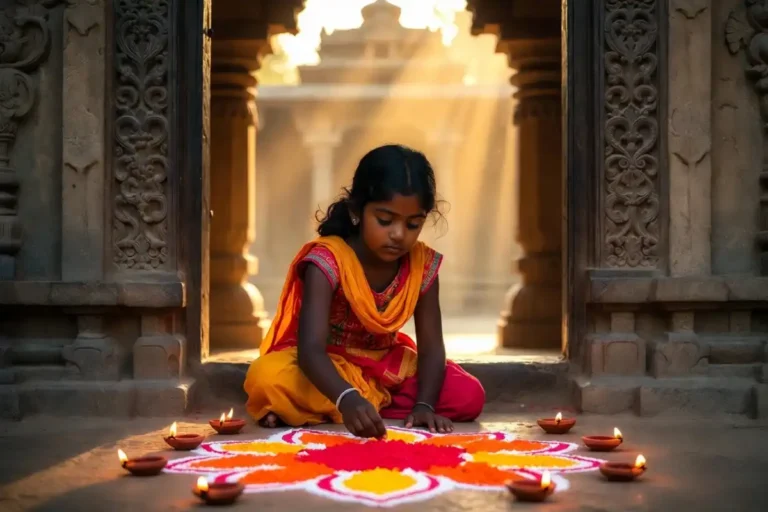
Rangoli has been part of Indian tradition for centuries. During Diwali, it is placed at the entrance of homes to welcome Goddess Lakshmi and bring good fortune. It is also a way of expressing joy and creativity during the festival season.
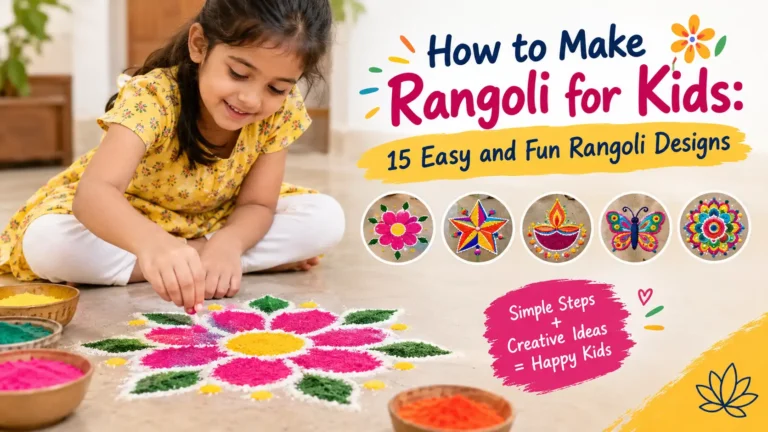
The beauty of a simple rangoli design for Diwali is that it brings everyone together. Children can help fill in colors while adults work on the outline. It is a tradition that connects generations and adds a personal, handcrafted touch to your home.
You do not need expensive materials or artistic training to create a lovely design. A few packets of colored powder, some chalk for drawing the outline, and a bit of patience are all you need to get started.
Choosing the Right Materials
Before you begin making a simple rangoli design for Diwali, gather your supplies. Using the right materials makes the process smoother and the result more vibrant.
- Rangoli powder or colored sand for dry designs
- Chalk or a pencil to sketch the outline on the floor
- Flower petals such as marigold or rose for a natural look
- Diyas (oil lamps) to place around the finished design
- A cone or squeeze bottle for more precise powder application
If you prefer an eco-friendly approach, dried flower petals, rice flour, and turmeric are traditional and biodegradable alternatives to synthetic powder.
Simple Materials, Beautiful Results
Simple Rangoli Patterns Perfect for Beginners
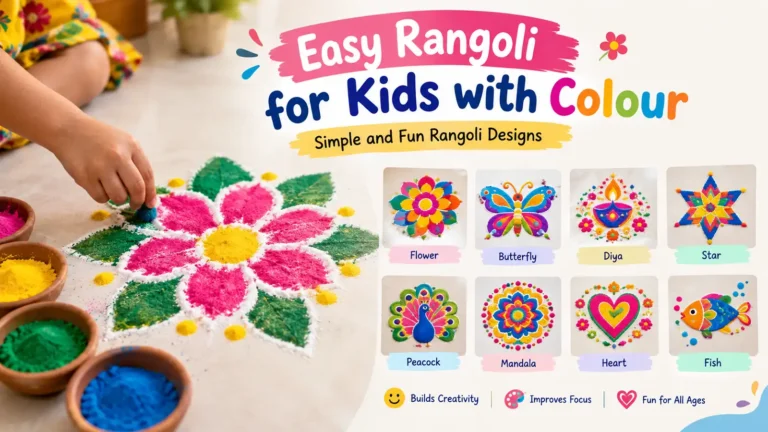
Floral Rangoli Design
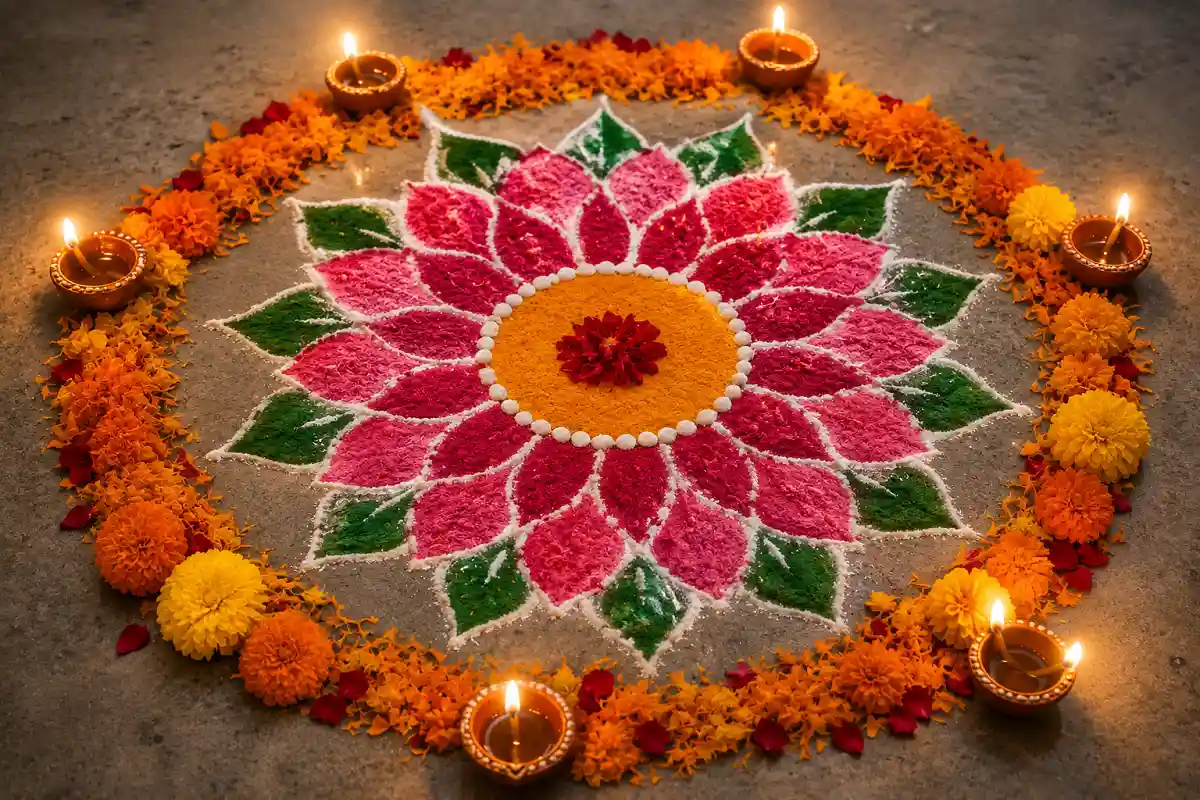
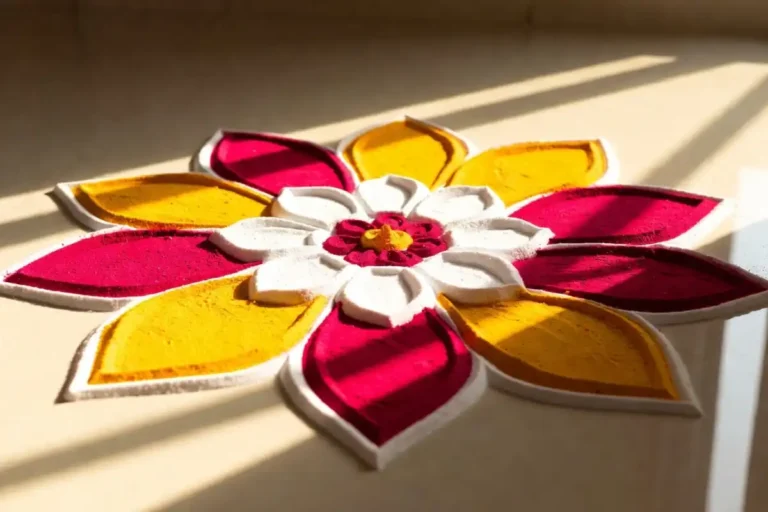
A floral pattern is one of the most popular choices when creating a simple rangoli design for Diwali because it looks beautiful without requiring advanced skills. Start by drawing a circle in the center and then draw petals around it, like a sunflower. Repeat the petal pattern in two or three layers, increasing in size as you move outward.
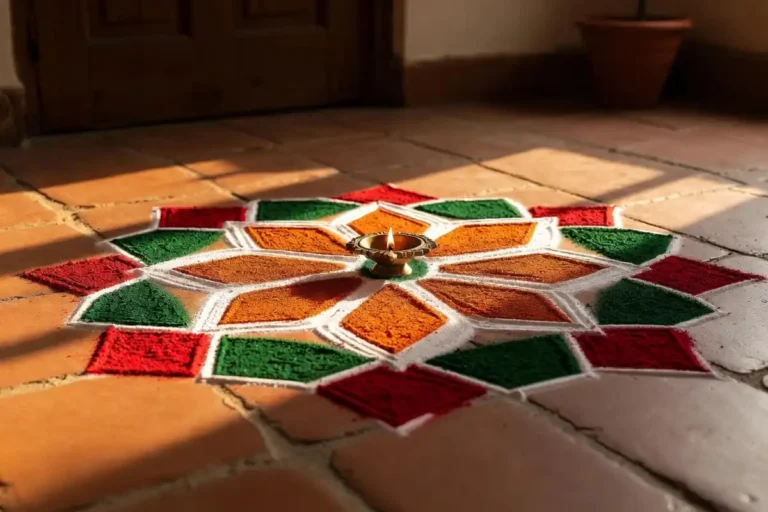
Fill the inner circle with yellow or orange powder. Use pink or red for the petals and add green at the tips for a natural feel. Place marigold petals along the outer ring to give it a fresh, festive finish.
For more inspiration on patterns that work for any occasion, explore this collection of easy ideas to try for beginners.
Star and Circle Combination
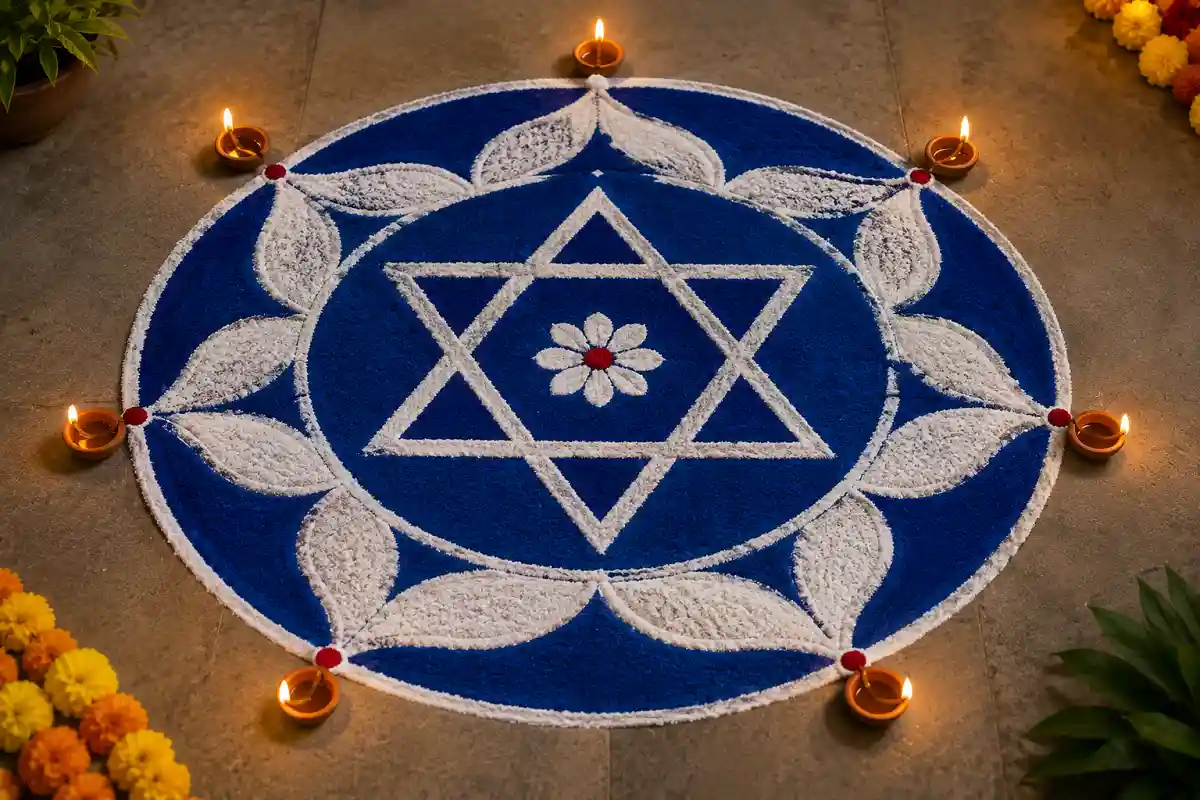
Draw a large circle first, then add a six-pointed star inside it. Connect the points of the star to the circle with curved lines. This creates a frame that is easy to fill with alternating colors. Use contrasting shades like blue and white or red and gold to make the design stand out.
This style works especially well at wide entrances or in the center of a courtyard where there is more floor space to work with.
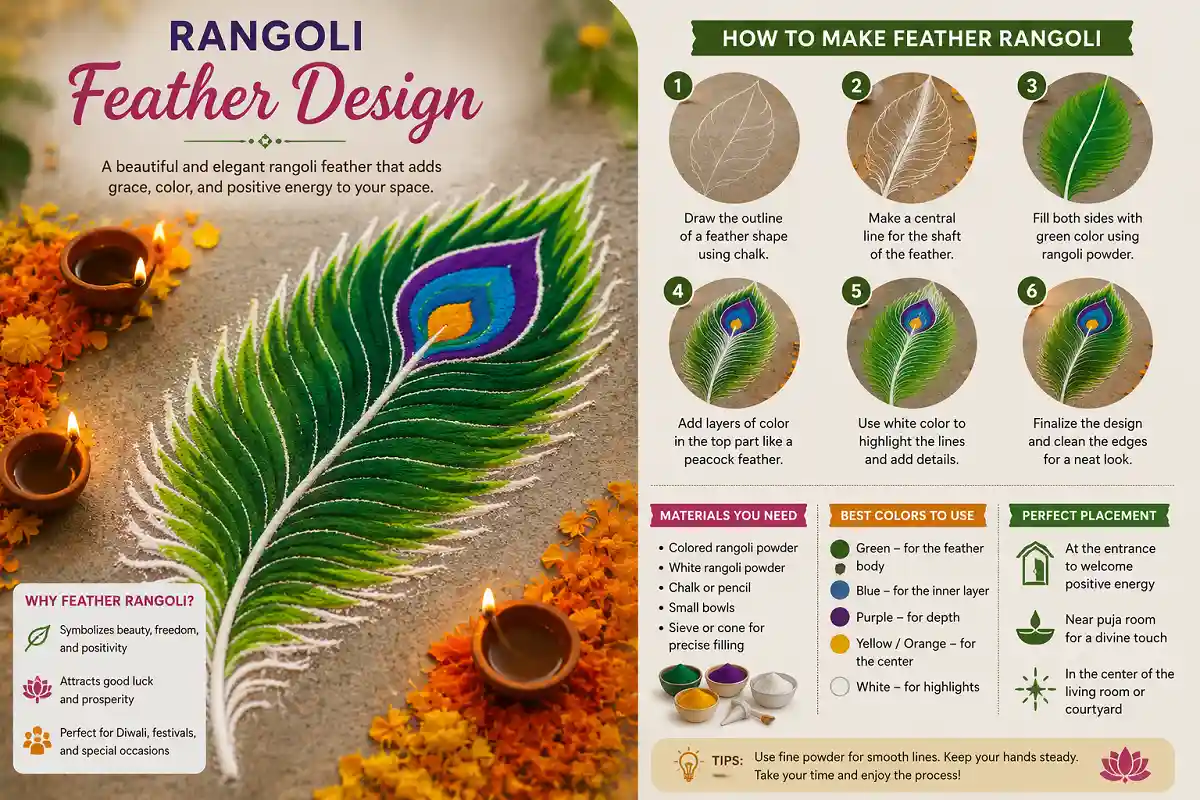
Peacock-Inspired Rangoli
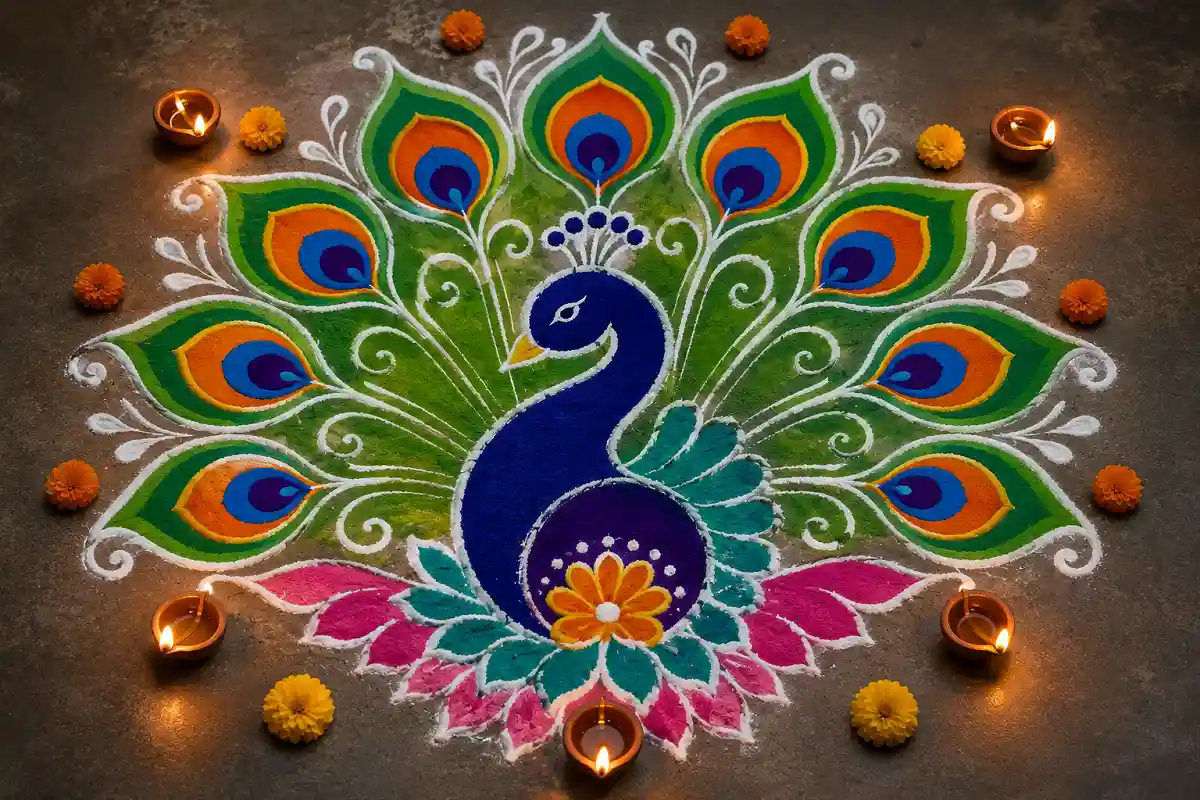
A peacock motif is a classic choice when making a simple rangoli design for Diwali. Draw the body of the peacock in the center and spread feather shapes outward in a fan pattern. Each feather can be filled with a different color, making the design look rich and detailed even when the individual shapes are simple.
If you want to explore more detailed peacock motifs, this guide on peacock flower rangoli designs offers easy and stunning ideas to follow.
Keep the Main Motif Clear
For peacock designs, keep the central body and feather shapes simple. A limited color palette can make the design look polished without adding unnecessary complexity.
How to Make a Simple Rangoli Using Dots
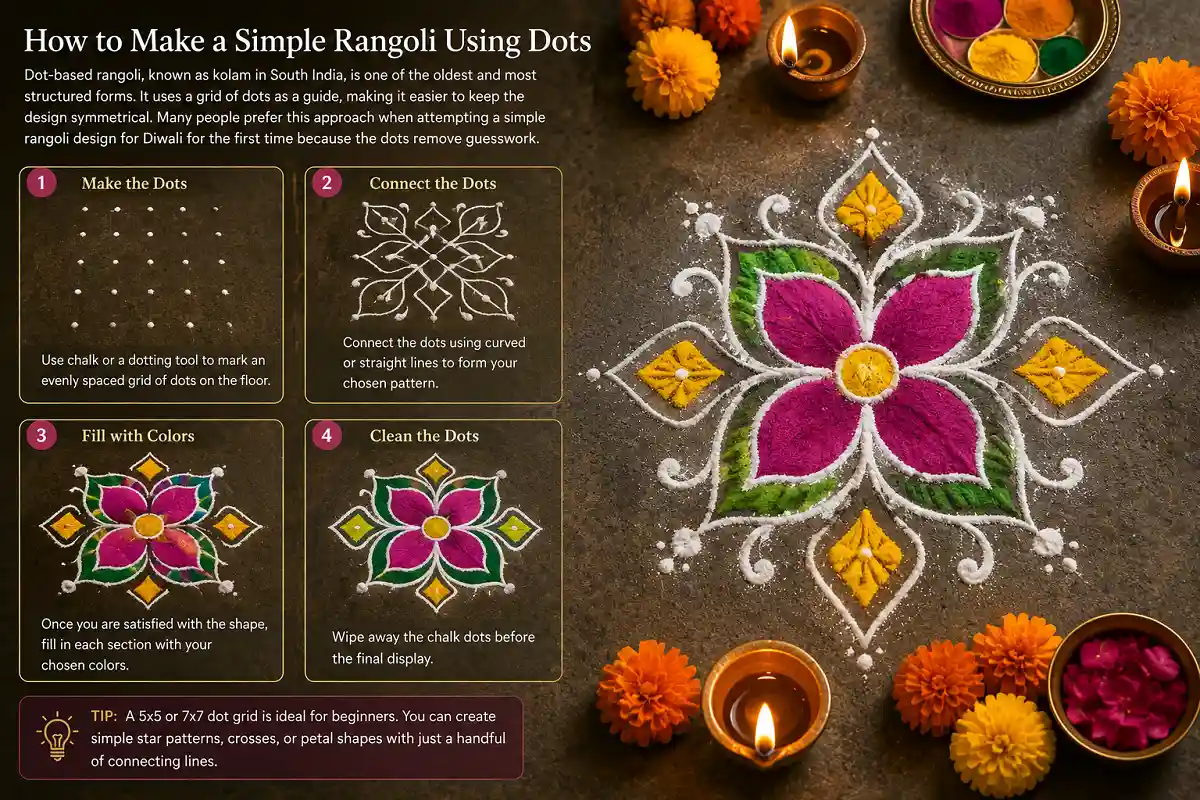
Dot-based rangoli, known as kolam in South India, is one of the oldest and most structured forms. It uses a grid of dots as a guide, making it easier to keep the design symmetrical. Many people prefer this approach when attempting a simple rangoli design for Diwali for the first time because the dots remove guesswork.
Here is a basic process to follow:
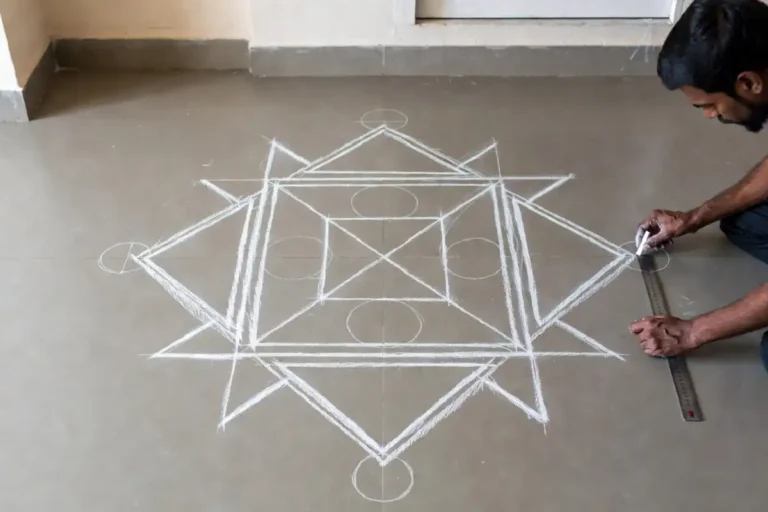
- Use chalk or a dotting tool to mark an evenly spaced grid of dots on the floor.
- Connect the dots using curved or straight lines to form your chosen pattern.
- Once you are satisfied with the shape, fill in each section with your chosen colors.
- Wipe away the chalk dots before the final display.
A 5×5 or 7×7 dot grid is ideal for beginners. You can create simple star patterns, crosses, or petal shapes with just a handful of connecting lines.
Geometric Patterns for Beginners
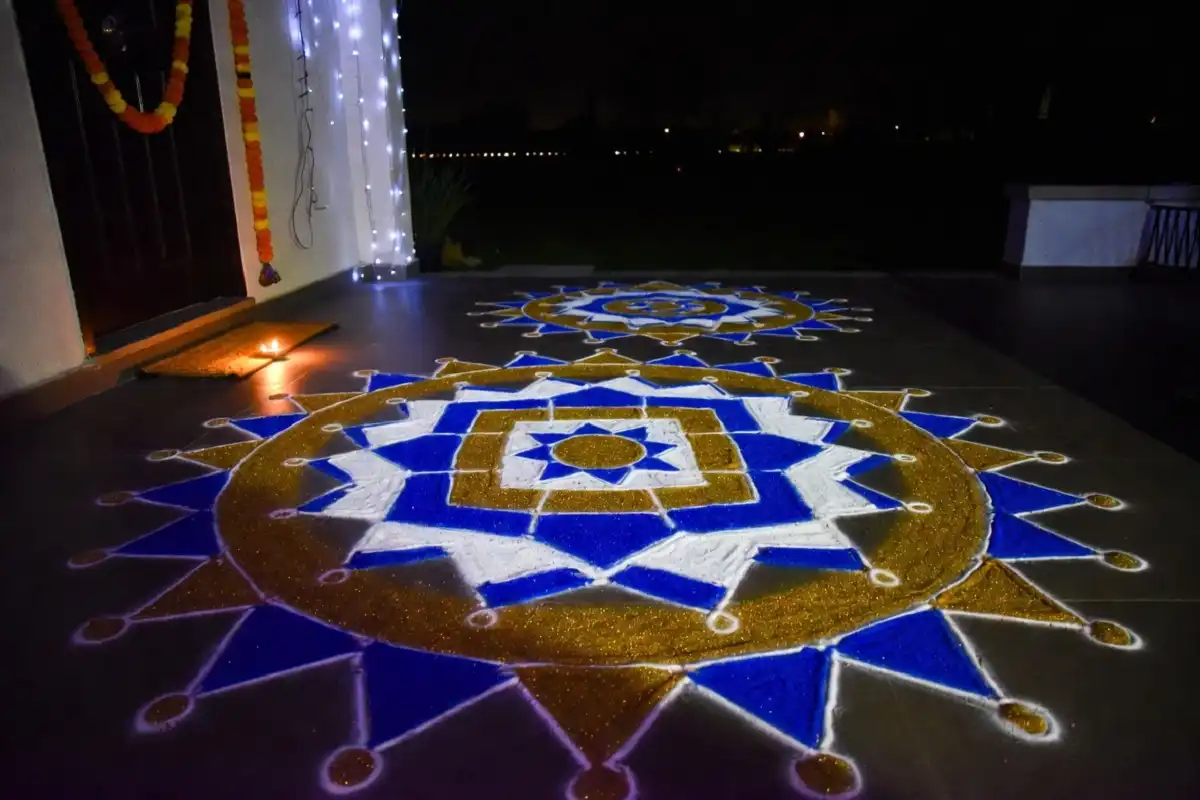
Geometric designs are ideal for those who prefer clean, precise lines. Squares, triangles, hexagons, and diamonds can all be combined to create a visually striking simple rangoli design for Diwali without any prior artistic experience.
One popular option is the concentric square design. Draw a small square in the center, then draw larger squares around it at equal intervals. Add diagonal lines from the corners of each square to create a layered, three-dimensional effect.
For a wider variety of structured designs, browsing through square rangoli design ideas can give you a strong starting point for your own pattern.
Adding Color to Your Diwali Rangoli
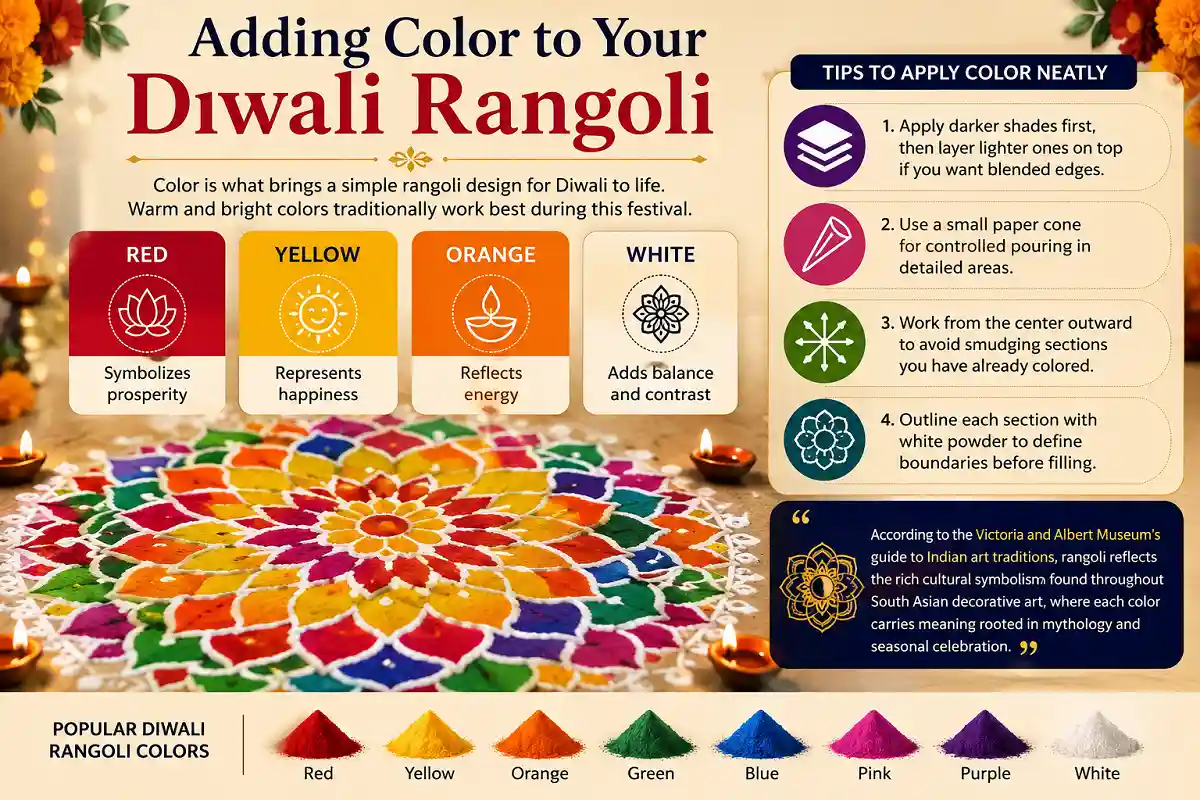
Color is what brings a simple rangoli design for Diwali to life. Warm and bright colors traditionally work best during this festival. Red symbolizes prosperity, yellow represents happiness, orange reflects energy, and white adds balance and contrast.
A few tips to apply color neatly:
- Apply darker shades first, then layer lighter ones on top if you want blended edges.
- Use a small paper cone for controlled pouring in detailed areas.
- Work from the center outward to avoid smudging sections you have already colored.
- Outline each section with white powder to define boundaries before filling.
According to the Victoria and Albert Museum’s guide to Indian art traditions, rangoli reflects the rich cultural symbolism found throughout South Asian decorative art, where each color carries meaning rooted in mythology and seasonal celebration.
Rangoli Border Ideas to Frame Your Design
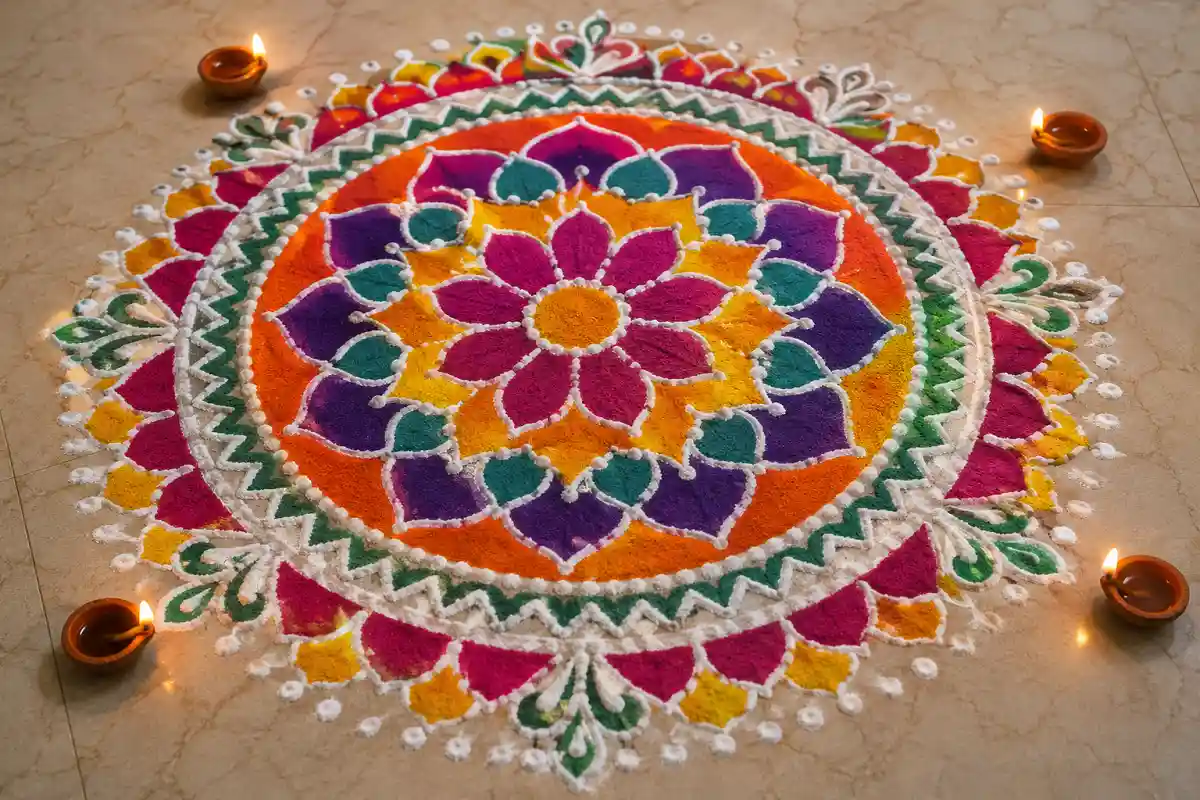
A well-designed border can transform even the most simple rangoli design for Diwali into something that looks professionally done. Borders add structure and a polished, finished quality to the overall pattern.
Common border styles include:
- Petal borders using alternating curved shapes in two contrasting colors
- Dotted lines using white powder for a clean, simple edge
- Zigzag patterns that create a decorative frame around the main design
- Leaf or vine motifs drawn freehand along the outer edge
You can explore a wide range of framing styles in this roundup of rangoli border design ideas for every festival.
Tips for Placing Diyas Around Your Rangoli
Diyas are small clay lamps that are central to Diwali. Placing them around or within your simple rangoli design for Diwali adds warmth and glow that no colored powder alone can replicate.
A few placement ideas:
- Set diyas at each corner of your rangoli for a symmetrical look.
- Place them along the outer border at equal intervals to create a framed glow effect.
- Use tealight candles inside small flower cups placed within the design for a modern touch.
- Arrange diyas in a spiral pattern leading from the entrance to the main design.
For larger designs that incorporate lamp arrangements as part of the overall pattern, this collection of big rangoli design ideas offers creative inspiration for this year’s celebration.
Making Your Rangoli Last Longer
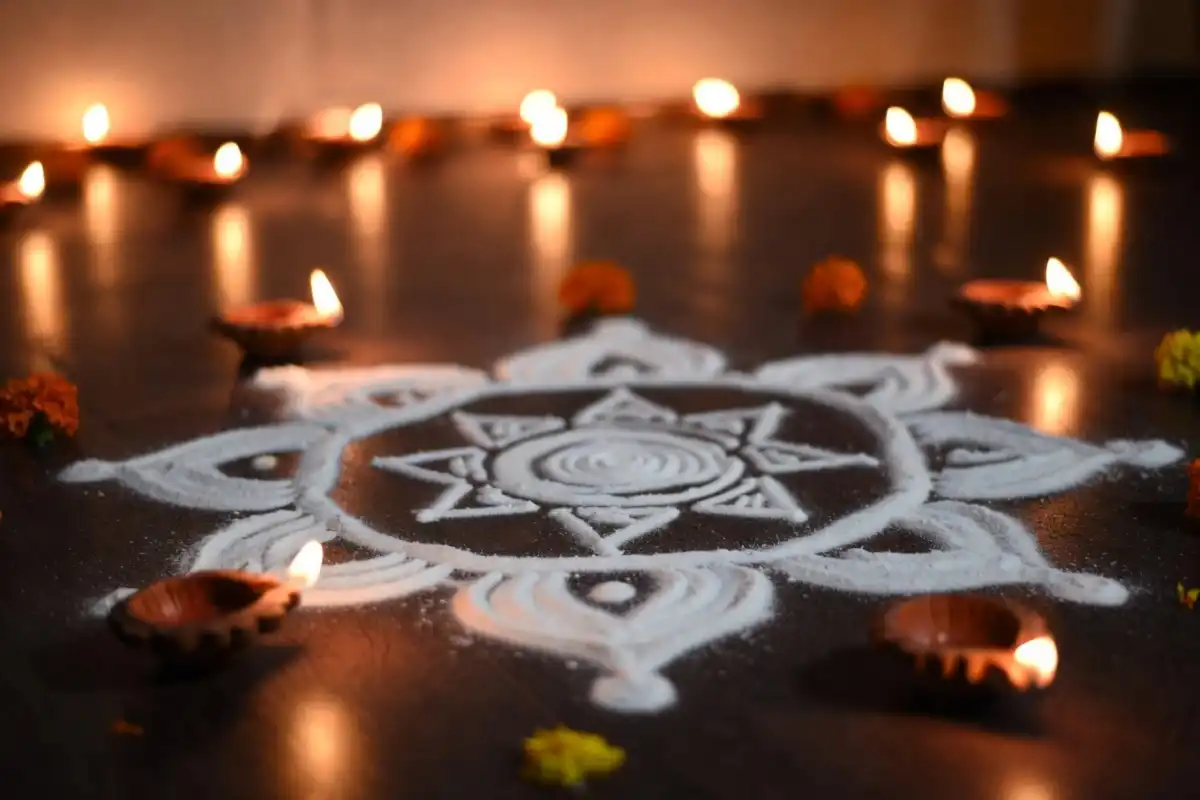
One common concern when completing a simple rangoli design for Diwali is how to keep it intact near a busy entrance. A few simple steps can help preserve your design throughout the day and evening.
- Place your rangoli slightly away from foot traffic to reduce disturbance.
- After the design is complete, lightly spray it with hairspray or a clear fixative to hold the powder in place.
- If using flowers, lay them gently on top of the powder without pressing down.
- Create the rangoli in the morning so it is freshest when guests arrive in the evening.
According to Smithsonian Magazine’s coverage of South Asian festivals, Diwali is one of the most widely celebrated festivals in the world, observed by hundreds of millions of people across multiple countries and cultures. Creating rangoli as part of this tradition is a way to connect with something much larger than any individual celebration.
Rangoli Ideas for Different Home Spaces
A simple rangoli design for Diwali can be adapted to fit any space, regardless of how large or small your home is.
A round design no larger than two feet in diameter works well near the front door.
Use flower petals instead of powder to avoid mess, and place diyas along the railing.
Stencils make it easy to create a clean design on indoor tiles without too much mess.
Place small dot patterns or petal trails on each step for a festive welcome.
For ideas that scale well in open outdoor spaces or for community events, this collection of big circle rangoli design ideas for festivals can help you plan larger projects confidently.
How to Use Stencils for a Cleaner Finish
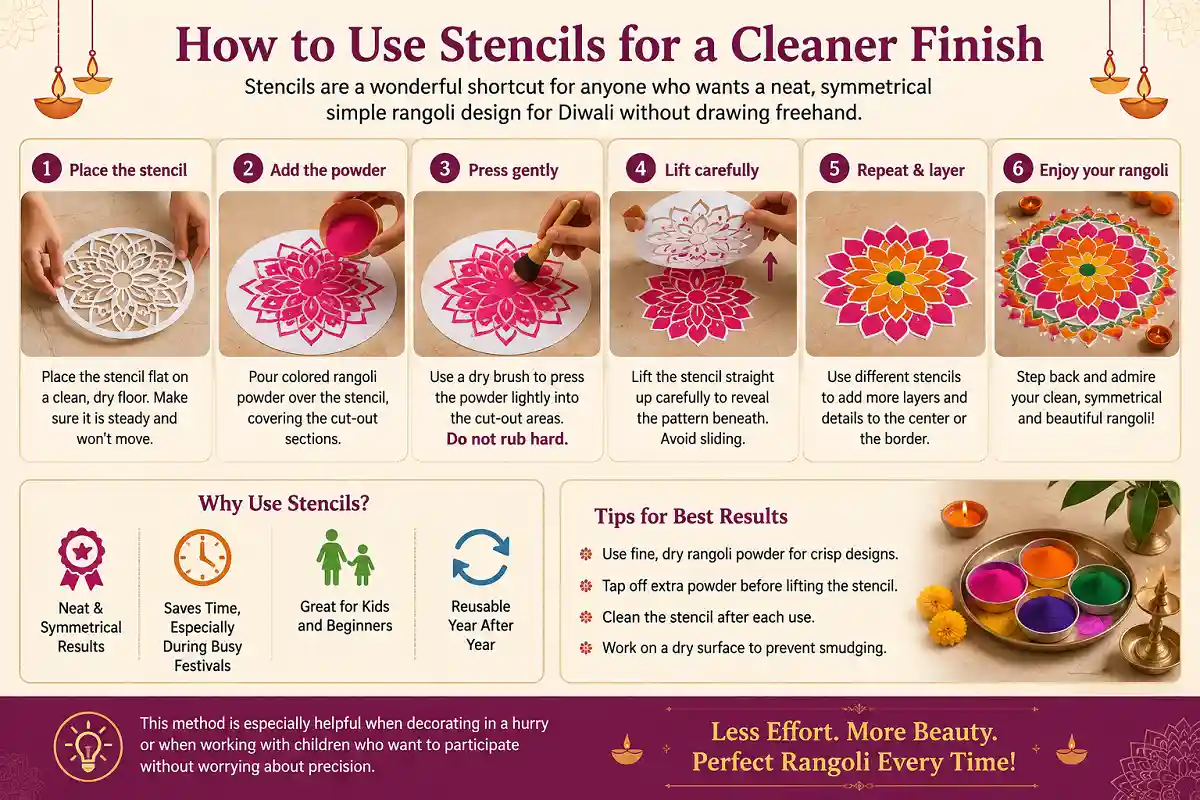
Stencils are a wonderful shortcut for anyone who wants a neat, symmetrical simple rangoli design for Diwali without drawing freehand. They are available in most craft and festival supply stores and can be reused year after year.
Place the stencil flat on a clean, dry floor and pour colored powder over it. Press lightly with a dry brush to push powder into the cut-out sections. Carefully lift the stencil straight up to reveal the pattern beneath. You can layer multiple stencils to add detail to the center or border of the design.
This method is especially helpful when decorating in a hurry or when working with children who want to participate without worrying about precision.
Rangoli Designs Inspired by Diwali 2025 Trends
Each year, new color combinations and pattern styles gain popularity during the festival season. For Diwali 2025, earthy tones mixed with bright jewel colors have been a notable trend. Deep burgundy paired with gold, or teal with silver, gives even the most simple rangoli design for Diwali a contemporary and sophisticated look.
To stay inspired and see what other creators are making this season, browsing through beautiful rangoli design ideas for Diwali 2025 can help you find a style that feels fresh and personal.
Conclusion
A simple rangoli design for Diwali is one of the most meaningful ways to welcome the festival into your home. It does not need to be elaborate to leave a lasting impression. With basic materials, a little practice, and a design that suits your space and skill level, you can create something that reflects both your creativity and your festive spirit.
Keep It Simple. Make It Beautiful.
A thoughtful combination of color, symmetry, flowers, and diyas can turn even a beginner-friendly rangoli into a beautiful Diwali welcome.
FAQ
What is the easiest simple rangoli design for Diwali for beginners?
A single-layer floral design using a central circle with petals is the easiest starting point. It requires only a few colors and can be completed within twenty to thirty minutes, making it ideal for those trying rangoli for the first time.
Can I make a simple rangoli design for Diwali without powder?
Yes, you can use flower petals, colored rice, sand, or even paper cutouts as alternatives to powder. These options are especially useful indoors or in homes with young children, as they are easier to clean up afterward.
How long does it take to make a simple Diwali rangoli?
A basic design of about two feet in size typically takes between twenty minutes and one hour, depending on complexity. Simpler geometric or floral patterns take less time, while dot-based designs may take longer due to the precision involved.
What colors are best for a Diwali rangoli?
Warm tones such as red, orange, yellow, and gold are the most traditional for Diwali. These shades reflect the festive spirit of the season and look especially striking when contrasted with white outlines or green accents.
Is it necessary to use diyas with rangoli?
Diyas are not required, but they add significant visual impact, particularly in the evening. Even a small number of oil lamps placed around the edges of a rangoli can dramatically enhance its appearance when lit at dusk.