Peacock Circle Rangoli Design: A Timeless Art for Every Occasion
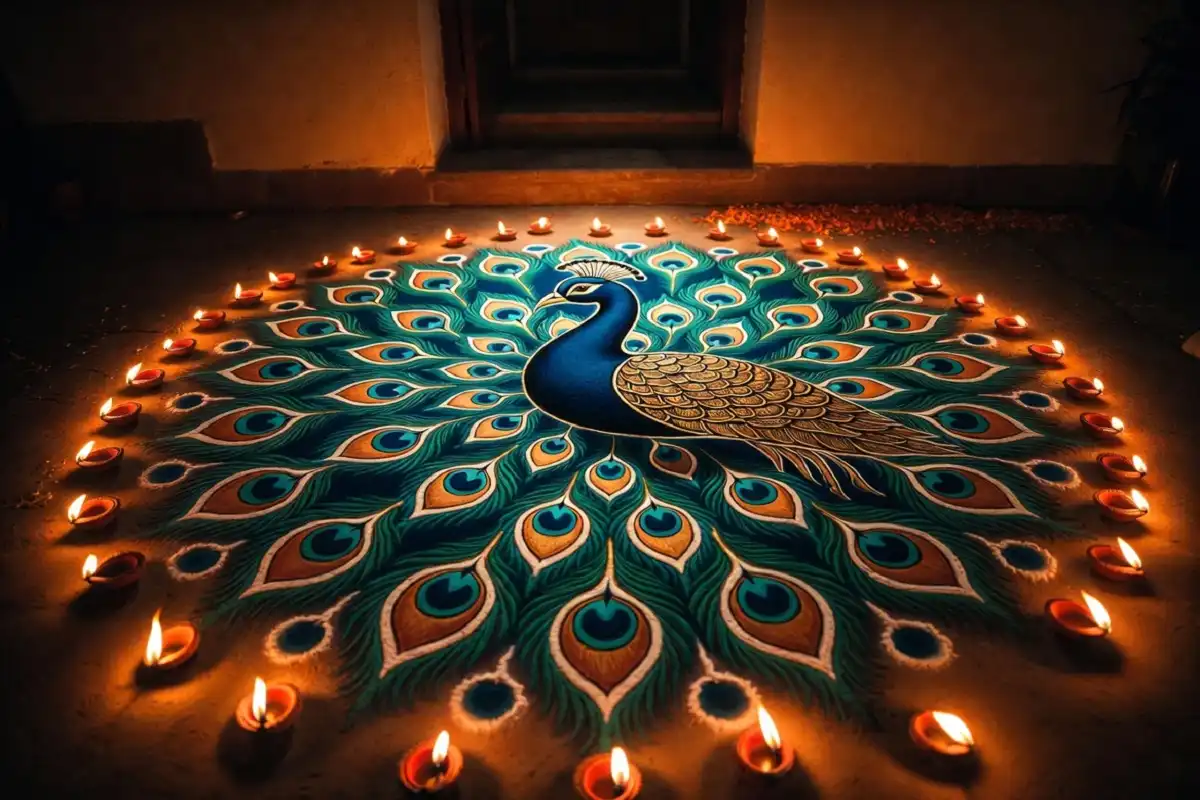
The peacock circle rangoli design is one of the most loved patterns in Indian rangoli art. It combines the elegance of the national bird with the satisfying geometry of a circular layout.
Whether you are preparing for Diwali, Navratri, a wedding, or a simple puja at home, this design brings color, grace, and tradition to your doorstep. It works beautifully for beginners and experienced artists alike, making it a popular choice across all regions of India.
Why the Peacock Is So Special in Rangoli Art
The peacock holds deep cultural meaning in Indian tradition. It is the national bird of India and appears in temple art, textiles, and folk paintings for centuries. In rangoli, the peacock represents beauty, good luck, and prosperity. Its flowing feathers, round eyes, and dramatic tail make it a perfect subject for intricate designs.
When you place a peacock at the center or border of a peacock circle rangoli design, the result is both visually striking and full of symbolism. Many families draw this pattern during festivals because it is believed to invite positive energy into the home.
Types of Peacock Circle Rangoli Designs
Single Peacock Center Design
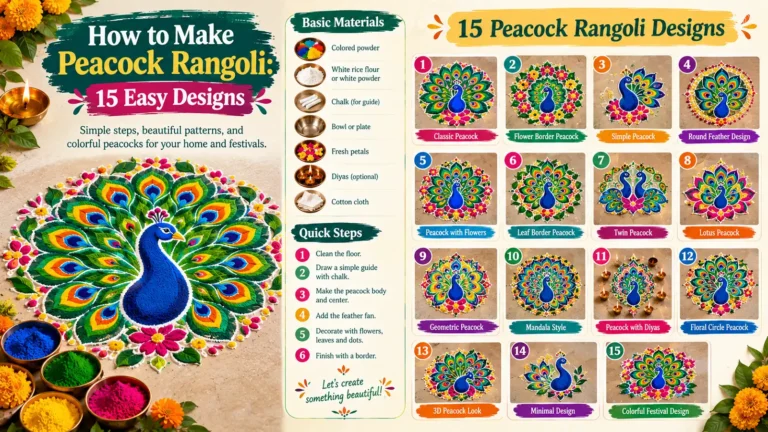
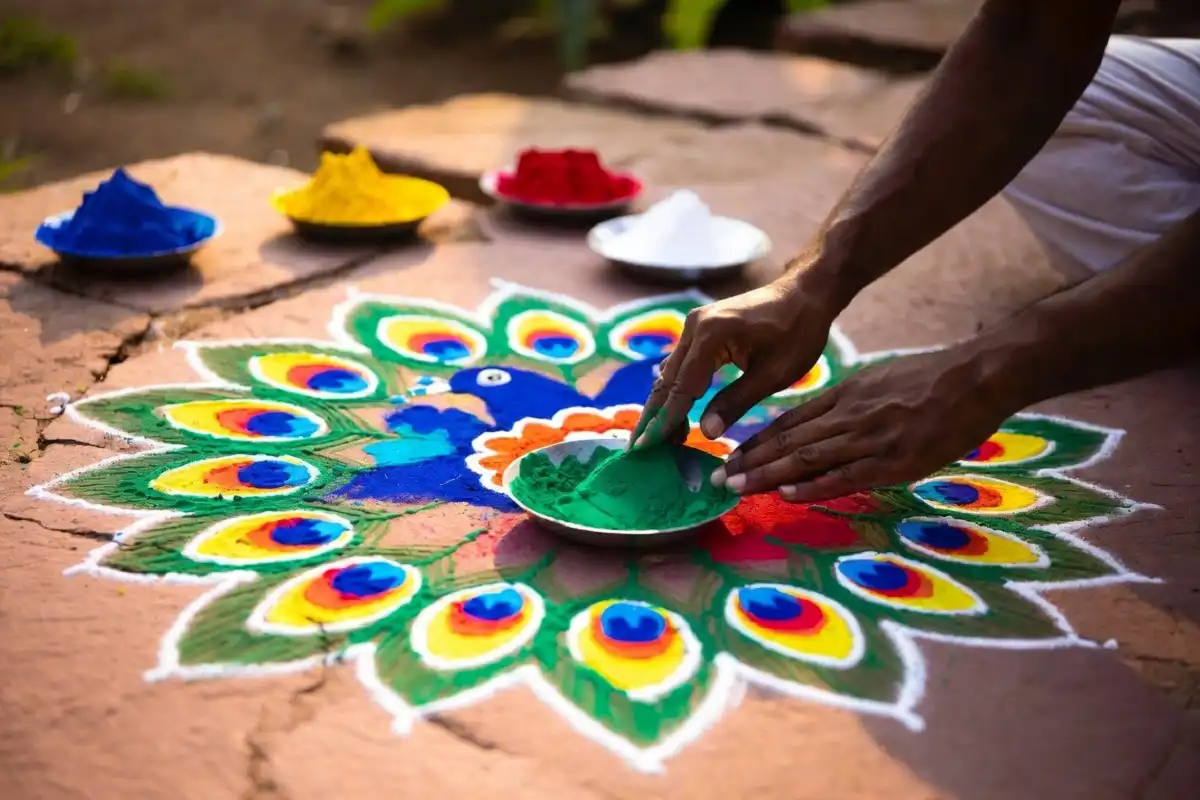
This is the most classic version of the peacock circle rangoli design. One large peacock sits at the center of the circle, surrounded by petal borders, dots, and floral rings. The tail feathers spread outward, filling the circular space naturally. This design looks impressive even in a medium size.
Multiple Peacocks Around the Circle
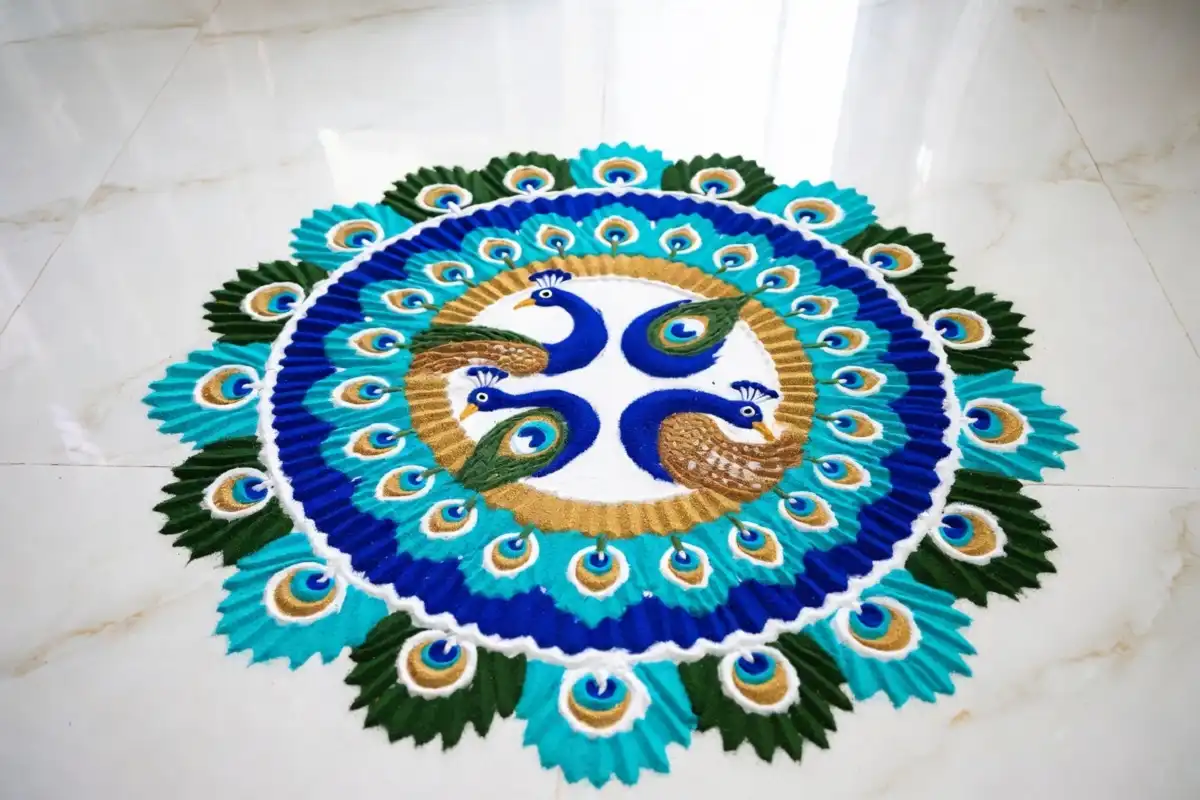
In this pattern, four or more peacocks are placed symmetrically around the edge of a large circle. Their heads face inward or outward, and the bodies follow the curve of the circle. The repetition creates a mandala-like effect that is deeply satisfying to look at.
Peacock Feather Only Circle
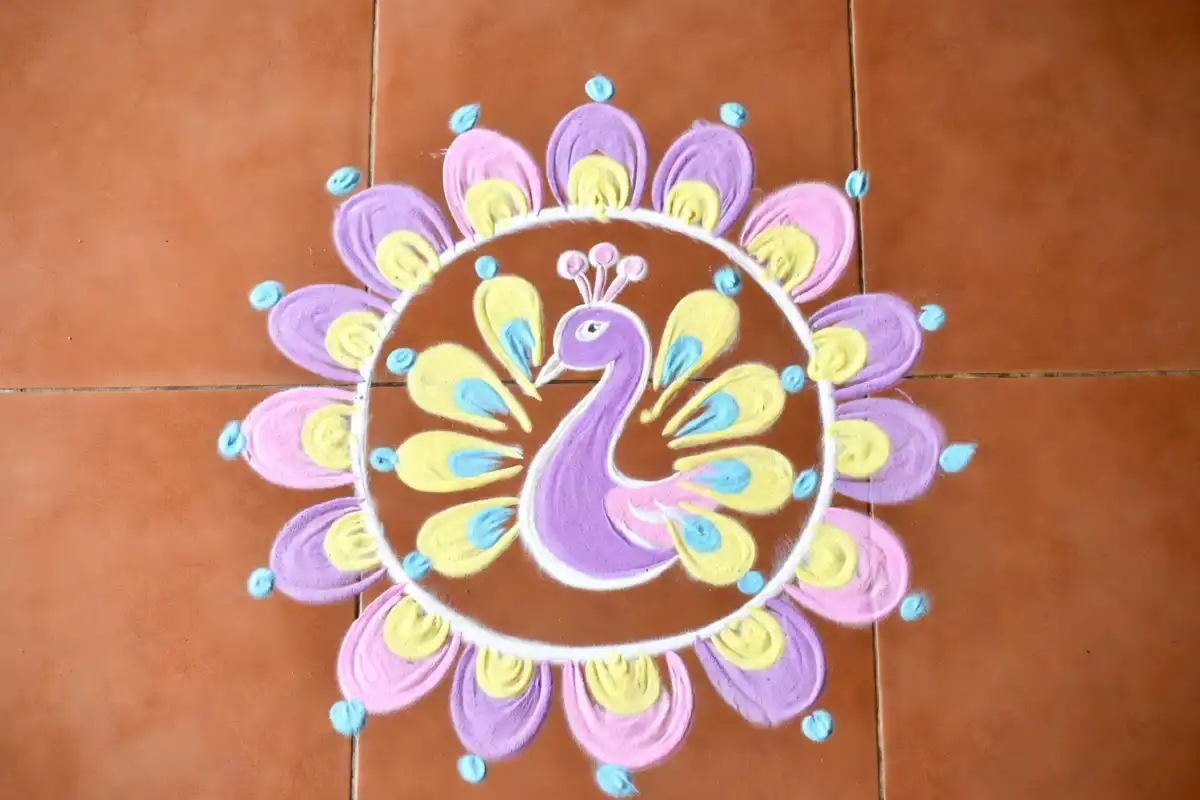
Instead of drawing the full bird, this peacock circle rangoli design focuses on individual peacock feathers arranged in a radial pattern. Each feather starts from the center and fans outward, creating a stunning starburst. This version is easier to draw and still carries the peacock theme clearly.
Peacock and Flower Combination
Peacocks and flowers are a natural pairing in Indian art. In this design, peacock heads and lotus or marigold flowers alternate around a central circle. The result is lush and festive. You can explore more ideas in this collection of peacock flower rangoli designs that blend both elements beautifully.
Colors That Make Peacock Rangoli Come Alive
Choosing the right colors is what separates a good rangoli from a great one. The peacock naturally suggests a rich palette:
Natural powder colors are traditional and safe for outdoor use. Flower petals in yellow, orange, and white are a lovely organic alternative for puja areas or wedding entrance decorations.
Step-by-Step Guide to Drawing a Peacock Circle Rangoli Design
Draw the Base Circle
Start with a central dot and use a compass or a round plate to mark the outer edge of your circle. Then add two or three inner rings at equal intervals. These rings become your guiding framework for the peacock circle rangoli design.
Divide the Circle into Sections
Lightly mark dividing lines from the center outward, like slices of a pie. For a design with four peacocks, divide into four equal sections. For six peacocks, divide into six sections. Keep these lines light since they are only guides.
Sketch the Peacock Shapes
In each section, lightly sketch a peacock body. Start with the oval body, then add the curved neck and small head. Draw the tail feathers fanning outward along the edge of the circle. Do not worry about perfection at this stage.
Add Details and Feather Eyes
Once the basic shapes are in place, add feather details. Draw the eye pattern on each feather using small concentric ovals. Add wing lines, beak detail, and a small crest on the head.
Outline and Fill with Color
Outline all shapes firmly with white or black powder. Then fill each section with your chosen colors. Work from the center outward to avoid smudging what you have already colored.
Add Border Patterns
Once the peacocks are colored, add a decorative border around the outer circle. Simple petal patterns, dots, or geometric triangles work well. This frames the peacock circle rangoli design and makes it look complete.
Peacock Circle Rangoli Design for Specific Festivals
Diwali
Diwali is the most popular occasion for rangoli in India. A peacock circle rangoli design near the entrance or in the puja room creates a festive and welcoming atmosphere. Use warm colors like gold, orange, and red alongside the traditional peacock blues and greens.
Explore Diwali rangoli design photos →Navratri and Puja Occasions
During Navratri, rangoli is drawn fresh every day. A peacock design is particularly meaningful because of its connection to Goddess Saraswati and divine beauty. Simpler versions with fewer colors work well for daily drawing.
Weddings and Housewarming Ceremonies
A peacock circle rangoli design is a popular choice for wedding entrances and griha pravesh ceremonies. Larger sizes work best here. Use flower petals alongside powder colors for a fragrant, vibrant look that photographs beautifully.
Dhanteras
The evening before Diwali, many households draw fresh rangoli as part of Dhanteras rituals. A peacock circle pattern in gold and white is considered auspicious.
See Dhanteras rangoli ideas →Tips for Beginners
Drawing a peacock circle rangoli design for the first time can feel intimidating. These practical tips will help you get started with confidence:
Practice the peacock shape on paper before drawing on the floor.
Use pre-made stencils for the circular base if freehand is difficult.
Start with a smaller design, around 1 to 2 feet in diameter.
Work slowly and use a thin funnel or cone for powder control.
Keep a damp cloth nearby to gently wipe small mistakes.
Use chalk outlines that can be erased before committing to powder.
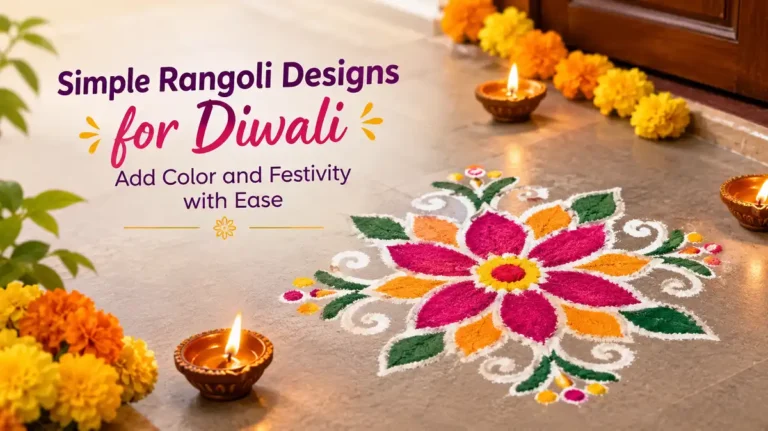
For those working in smaller spaces or trying rangoli for the first time, these simple and easy rangoli designs for Diwali at home are a great starting point.
Common Mistakes to Avoid
Even experienced artists make small errors. Watch out for these common issues:
Uneven spacing between peacocks in the circle.
Colors bleeding into each other before drying.
Feather eyes that are too large and throw off proportions.
Neglecting the border, which ties the whole design together.
Using too many bright colors that compete rather than complement.
A good way to check proportion is to step back every few minutes and look at the full design from a distance. What looks right up close can appear unbalanced from further away.
The Cultural Significance of Peacock Rangoli
Rangoli is more than decoration. It is a living tradition passed down through generations, from grandmothers to granddaughters, from one household to the next. The peacock motif carries layers of meaning in Hindu culture. It appears in stories of Lord Krishna, in imagery of Goddess Lakshmi, and in classical dance costumes.
Drawing a peacock circle rangoli design is a way of participating in this long tradition. It connects the artist to something larger than a single festival or occasion. Many artists find the process itself meditative, a moment of focus and creativity in the middle of a busy festive season.
For those who want to see how rangoli fits into a wider landscape of festival art, this collection of most beautiful rangoli designs for festivals offers wonderful visual inspiration.
Conclusion
The peacock circle rangoli design is a true classic that never goes out of style. It is rich in symbolism, beautiful in appearance, and deeply rooted in Indian artistic tradition.
Whether you are drawing it for Diwali, a family ceremony, or simply to brighten your home, this pattern carries meaning with every stroke.
FAQs
What is a peacock circle rangoli design?
 What is a peacock circle rangoli design?
A peacock circle rangoli design is a traditional Indian floor art pattern that features peacock figures arranged within or around a circular framework. The peacocks are drawn using colored powder, flower petals, or chalk, and the pattern typically includes detailed feather work, floral borders, and geometric rings.
Is a peacock circle rangoli design difficult for beginners?
It is manageable for beginners when started on a small scale. Using a stencil for the circular base and practicing the peacock shape on paper first makes the process much easier. Simpler versions using only the feather motif rather than a full bird are also a great entry point.
Which colors are best for a peacock circle rangoli design?
The most effective colors are blue, turquoise, green, gold, and white. These mirror the natural colors of the peacock and create a visually rich result. You can add orange or red in the border areas for contrast and warmth.
How long does a peacock circle rangoli design last?
A rangoli made with dry powder on an indoor floor typically lasts one to three days if it is not disturbed. Outdoor rangoli may fade faster due to wind or foot traffic. Some artists seal designs with water spray or use adhesive colors for longer-lasting results.
Can I use flower petals for a peacock circle rangoli design?
Yes, flower petals work beautifully. Yellow marigold petals, white jasmine, and red rose petals can substitute for or complement powder colors. Petal rangoli is especially popular at weddings and puja ceremonies for its natural fragrance.
What size should a peacock circle rangoli design be?
For home use, a diameter of 2 to 3 feet works well. For festival events or wedding entrances, designs of 4 to 6 feet are more impactful. Adjust the number of peacocks and the level of detail based on the available space.