Rangoli Design for Diwali Photos: Beautiful Ideas to Try
Diwali is one of the most visually rich festivals in the world, and rangoli sits at the heart of its beauty. Every year, homes across India and beyond are filled with colorful patterns that welcome guests and bring positive energy. Capturing the right rangoli design for Diwali photos has become just as important as making the design itself.
Whether you want to share your art on social media or preserve the memory, choosing a photogenic and meaningful pattern makes all the difference. This guide covers everything you need to create and photograph stunning Diwali rangoli this festive season.
Why Rangoli Matters During Diwali
Rangoli is more than decoration. It is a tradition passed down through generations, meant to welcome Goddess Lakshmi into the home and bring luck and prosperity. During Diwali, rangoli is placed at the entrance, in the prayer room, and sometimes across the entire living area.
The beauty of a rangoli design for Diwali photos lies in its variety. Each region in India has its own style, color palette, and technique. From freehand flower patterns in Maharashtra to geometric kolam designs in Tamil Nadu, the choices are endless.
When you add diyas, flowers, and bright colors to your design, the result is naturally photogenic. That is why so many people search for the best rangoli design for Diwali photos before the festival begins, looking for fresh inspiration to make their home look special.
For a broader look at what makes a design truly stand out during the festival season, explore these most beautiful rangoli designs for festivals for a wide range of styles.
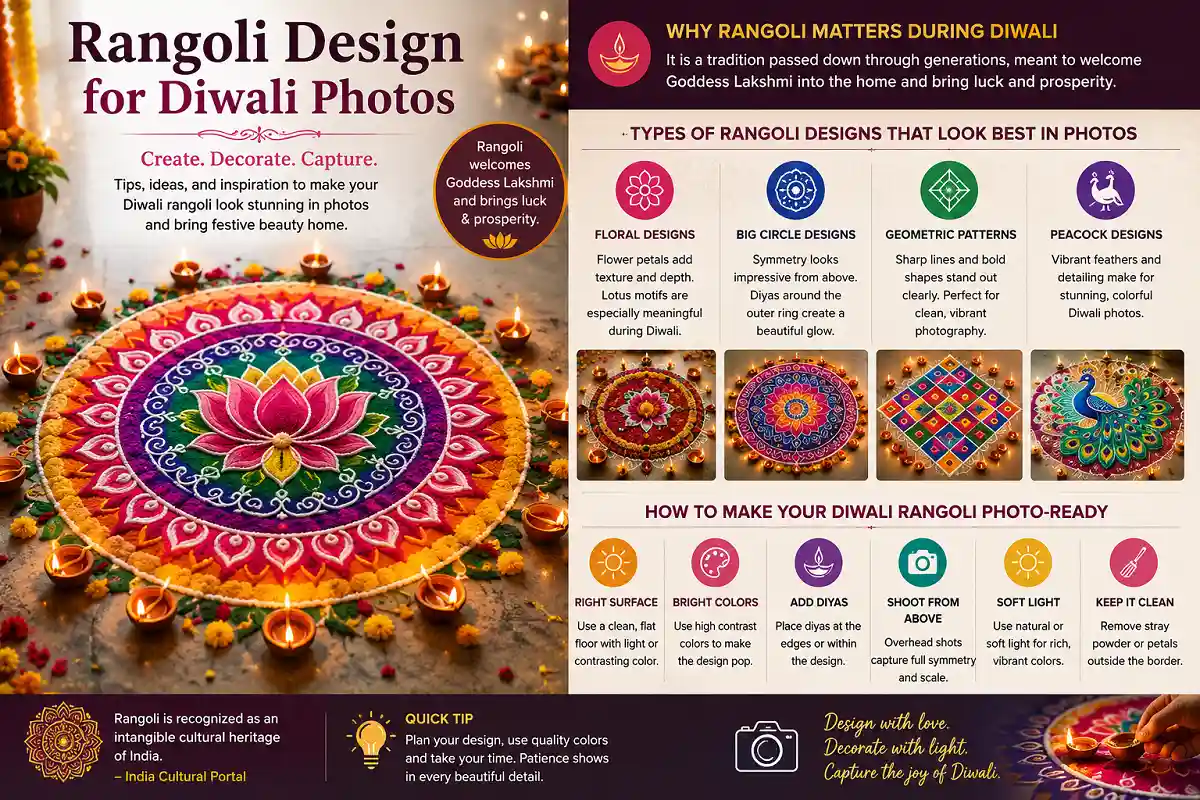
Types of Rangoli Designs That Look Best in Photos
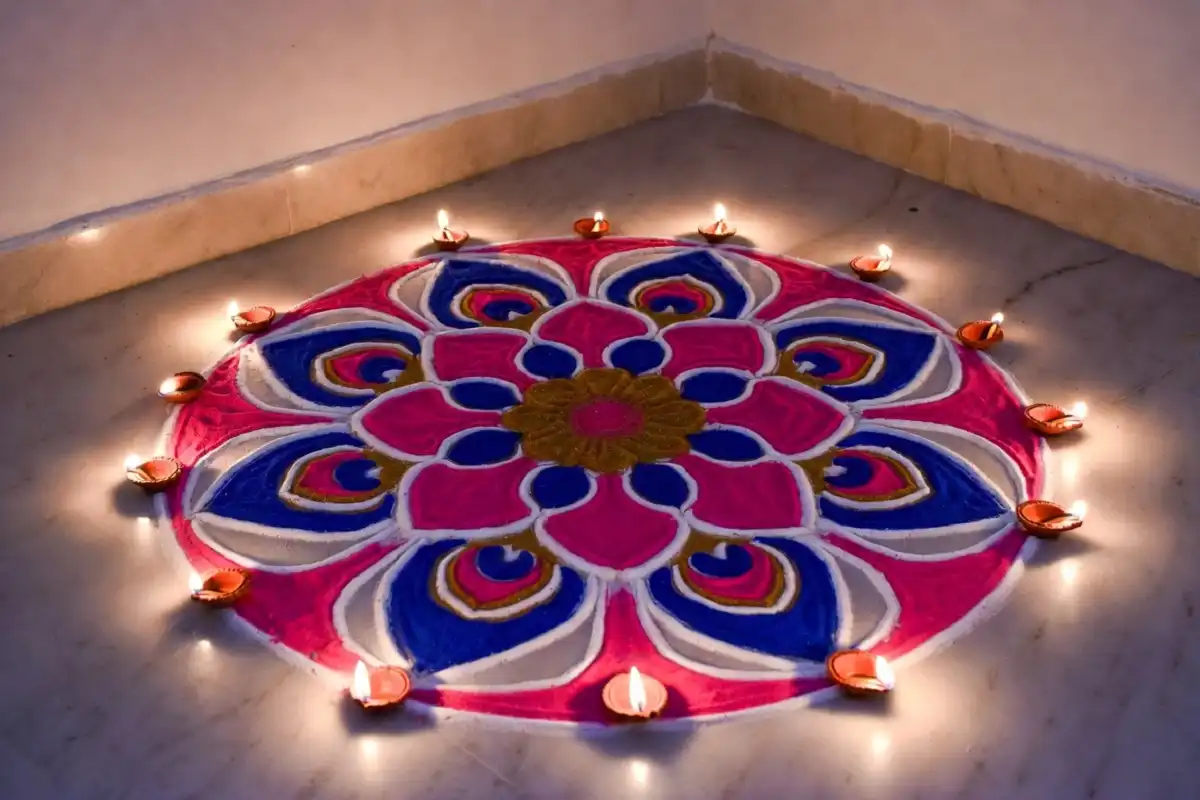
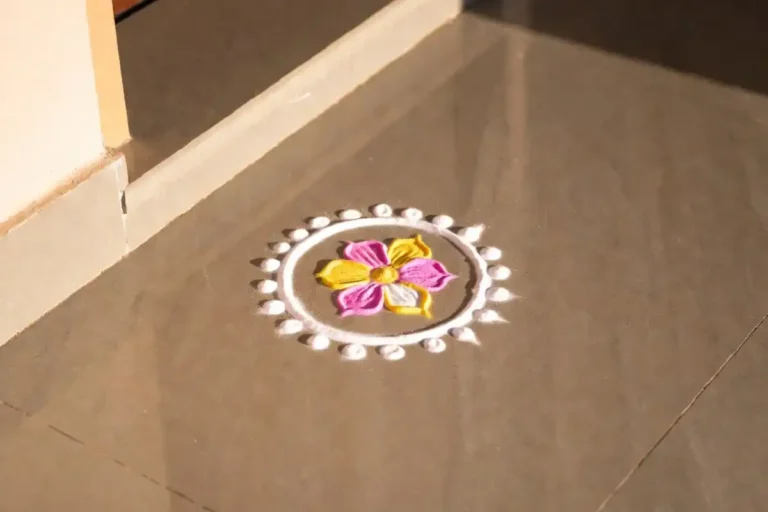
A balanced circular composition creates a strong focal point for overhead Diwali photography.
Not every pattern photographs equally well. Some designs pop with color and symmetry, while others lose their detail in pictures. Here are the types that make the most striking rangoli design for Diwali photos.
Floral Rangoli Designs
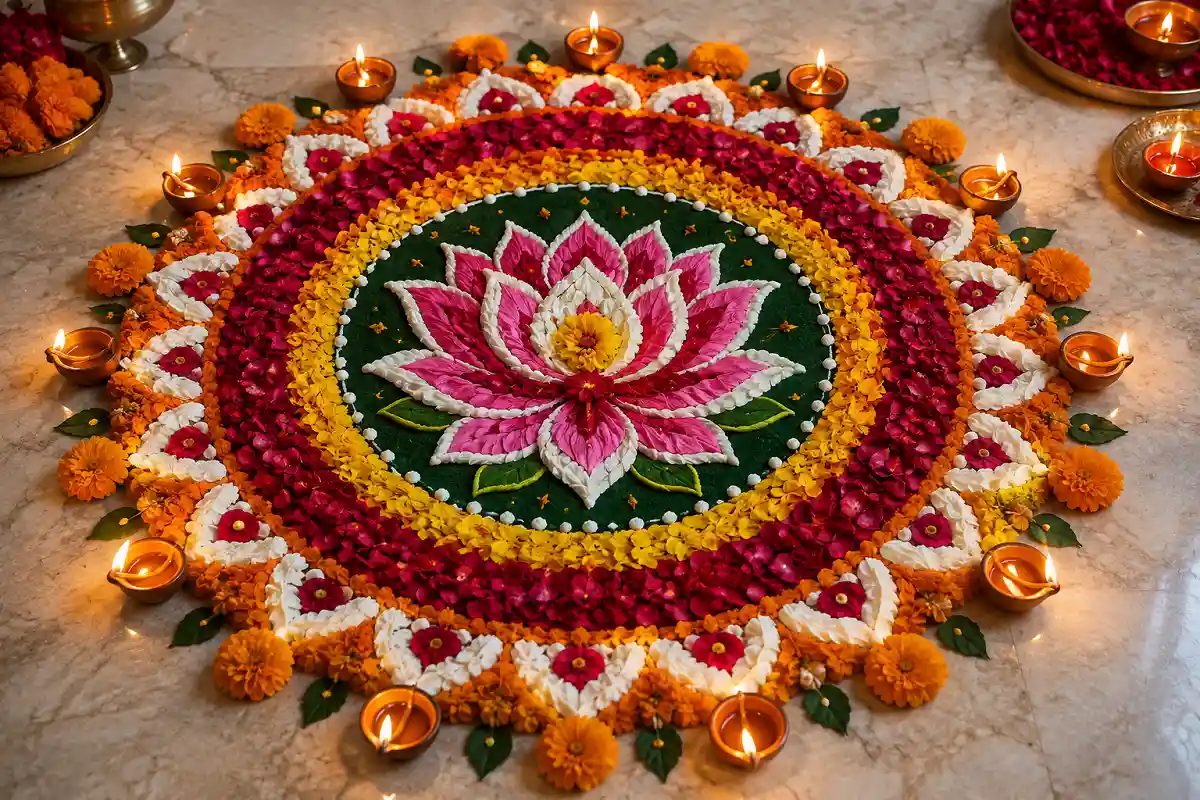
Floral patterns are among the most popular choices for a rangoli design for Diwali photos. Using real flower petals alongside dry color powder adds depth and texture that photographs beautifully. Marigold petals in yellow and orange combined with rose petals in red or pink create a warm, festive palette.
Lotus motifs are especially meaningful during Diwali as the lotus is associated with Goddess Lakshmi. A large lotus at the center, surrounded by petal layers in different colors, makes for a stunning photo.
Big Circle Rangoli Designs
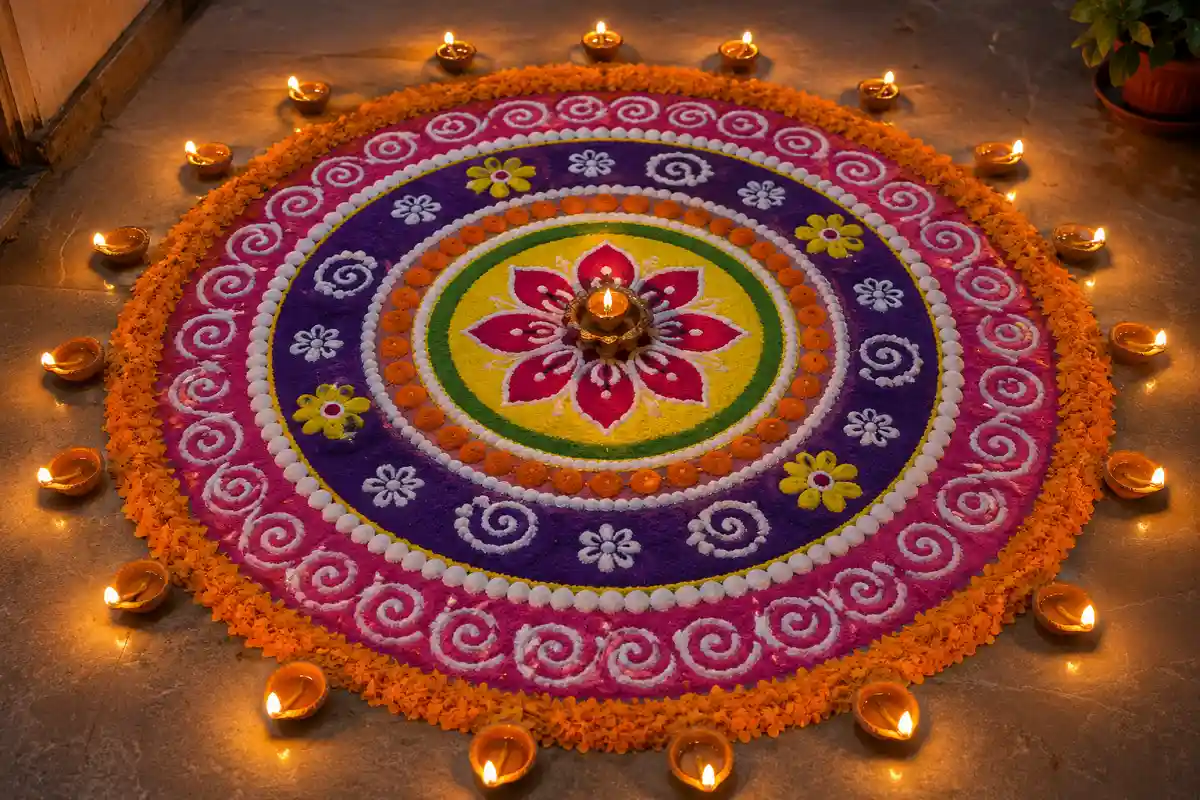
Large circular designs are highly photogenic because of their symmetry. When photographed from directly above, they look perfectly balanced and impressive. For anyone seeking a showstopper rangoli design for Diwali photos, big circle rangoli design ideas for festivals offers a great collection of patterns to adapt.
Circular designs work especially well with multiple color rings and a contrasting centerpiece. Adding small diyas around the outer ring makes the design glow beautifully in low-light Diwali photography.
Geometric Rangoli Patterns
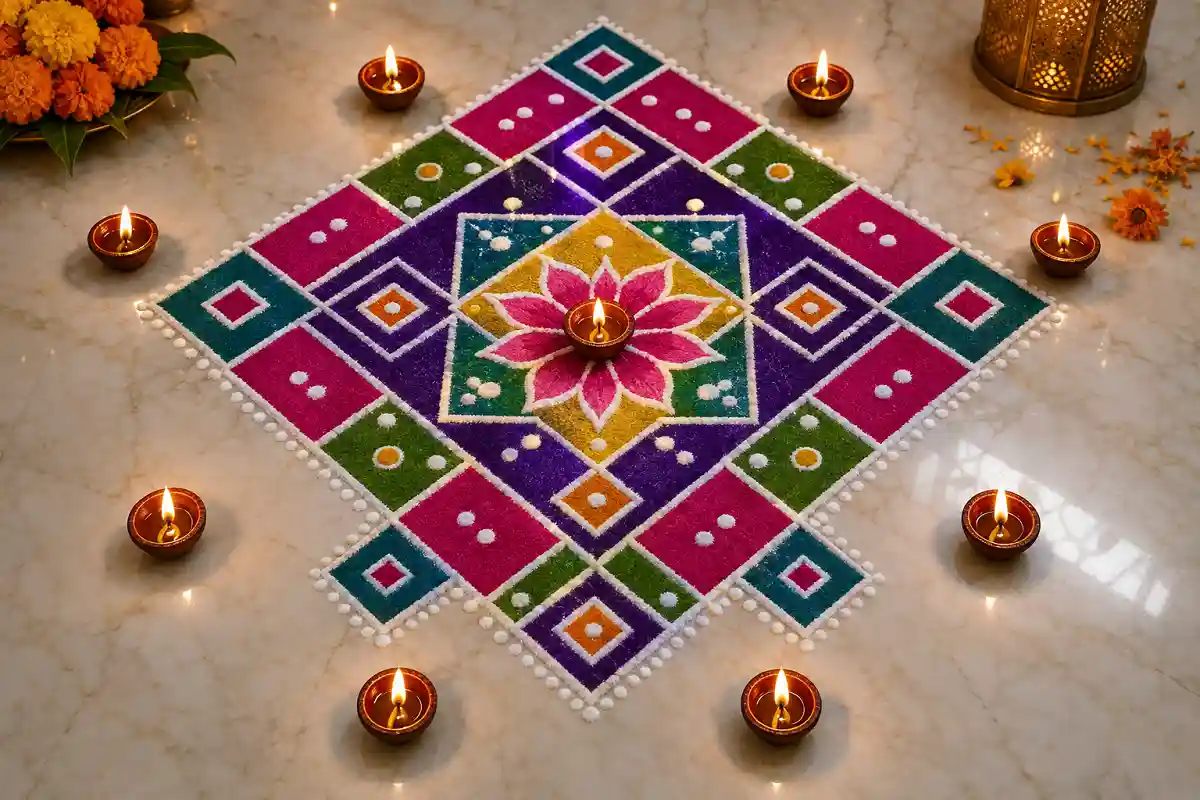
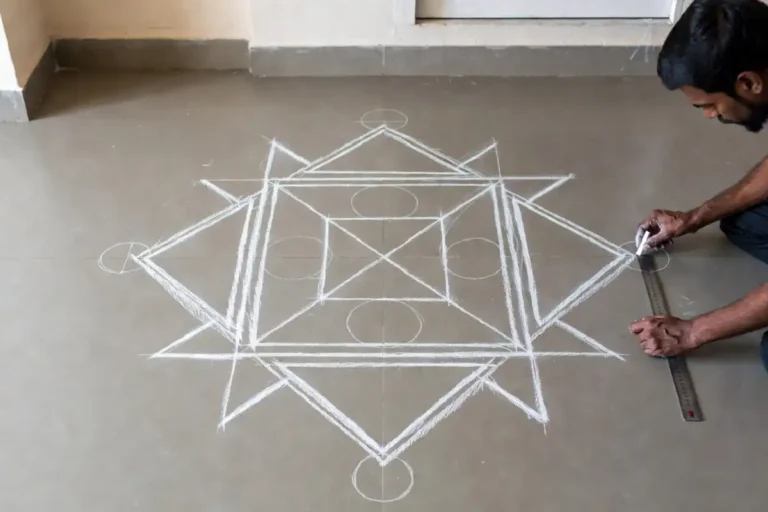
Geometric designs with squares, diamonds, and triangles create bold visual impact in photos. These are particularly suited for neat, clean photography on light-colored floors. The sharp lines and color contrast make every detail stand out, making geometry a strong foundation for a rangoli design for Diwali photos.
If you want a structured, tidy look, square rangoli design ideas offer a variety of options that are both elegant and easy to photograph.
Peacock Rangoli Designs
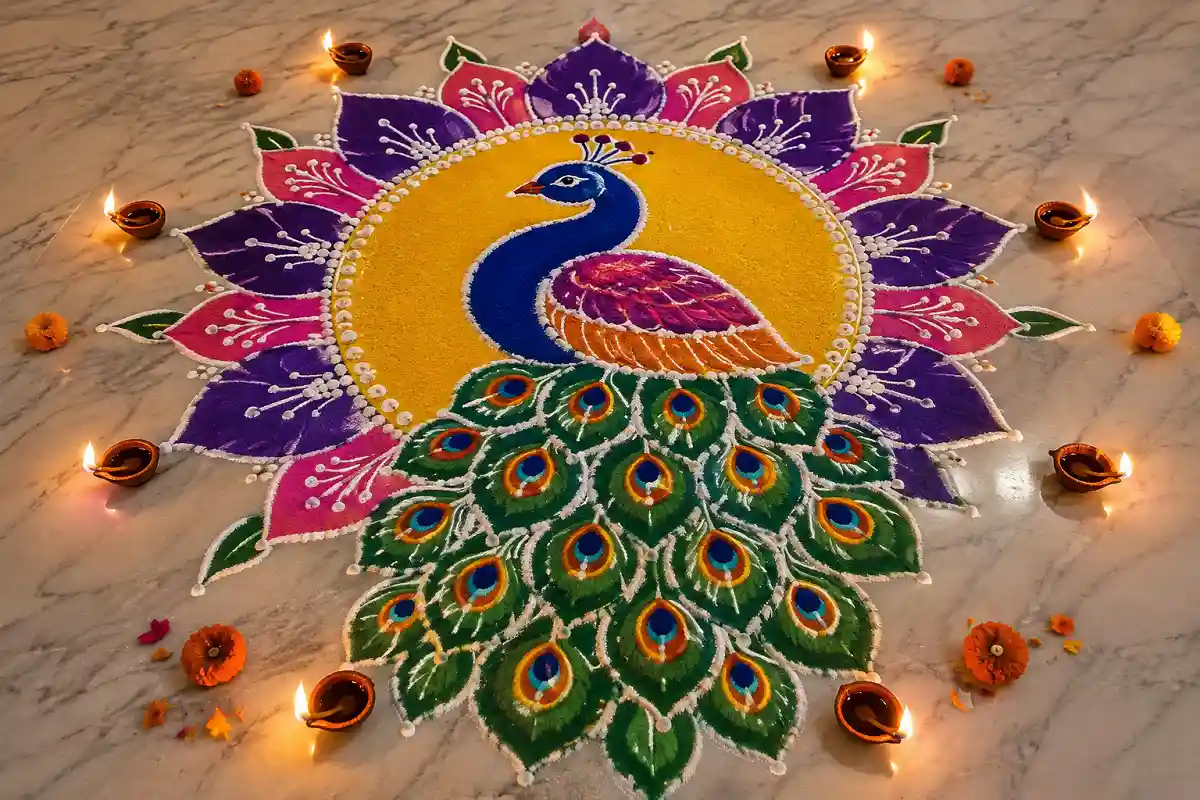
The peacock is one of the most beloved motifs in Indian art. Its vibrant feathers naturally lend themselves to a wide palette of colors. A peacock-themed design with detailed feather work in blue, green, and gold looks exceptional as a rangoli design for Diwali photos.
For those who want to try this style, the peacock flower rangoli design guide walks you through the steps with easy-to-follow instructions.
How to Make Your Diwali Rangoli Photo-Ready
Getting a beautiful rangoli is only part of the work. Making it look stunning as a rangoli design for Diwali photos requires a little extra thought and preparation.
Choose the right surface
A clean, flat floor with a light or contrasting color helps your design stand out. White marble, smooth tiles, or freshly swept stone work well.
Use bright, contrasting colors
Avoid placing similar shades next to each other. High contrast between sections makes the design more dynamic in photos.
Add diyas at the edges
Small clay diyas placed around or within the design add warmth and a festive glow, especially in evening shots.
Photograph from above
The most effective angle for any rangoli design for Diwali photos is directly overhead. This captures full symmetry and scale without distortion.
Use natural or soft artificial light
Harsh direct sunlight can wash out colors. Early morning light or soft indoor lighting brings out the depth of each shade.
Keep the area clean
Before photographing, remove stray powder or petals from outside the design’s border. A clean surrounding makes the rangoli look more polished and intentional.
According to the India Cultural Portal, rangoli is recognized as an intangible cultural heritage of India, making it a tradition worth preserving through photography.
Easy Rangoli Ideas for Beginners
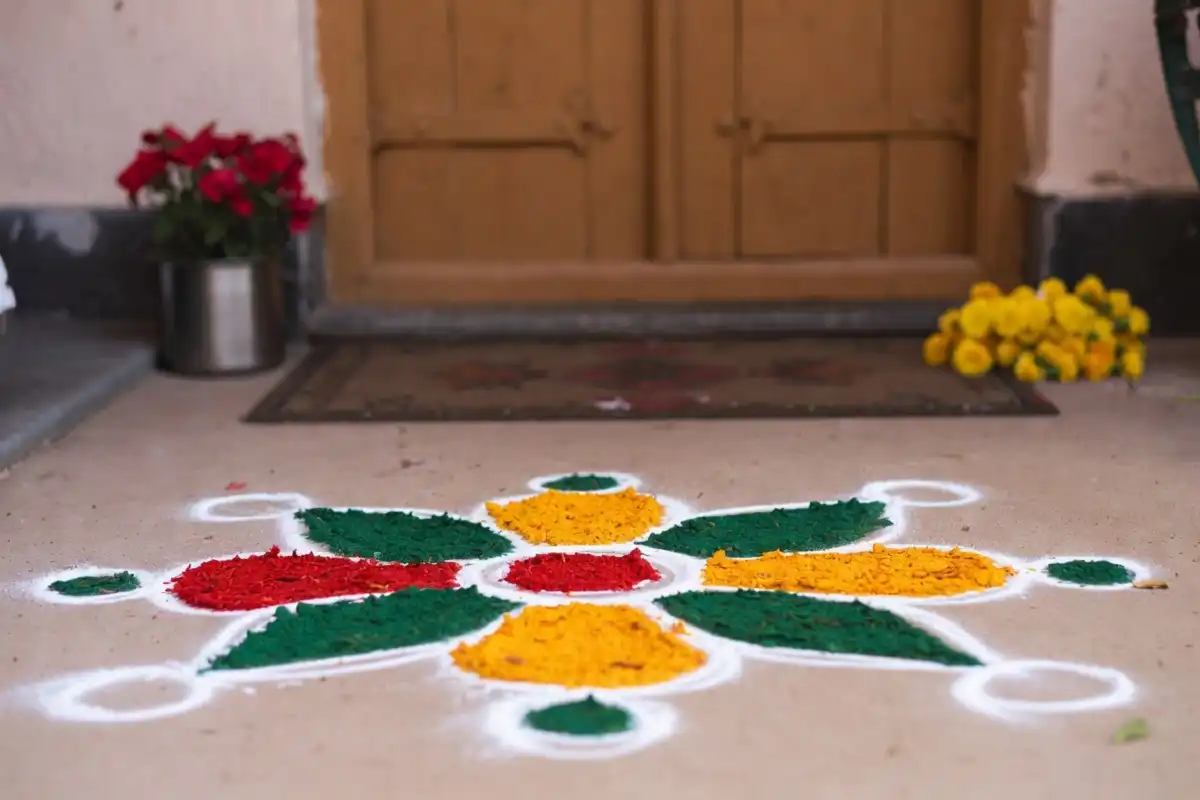
Not everyone has experience with intricate patterns. Simple designs can look just as beautiful in a rangoli design for Diwali photos when done with care and attention.
Dot-Grid Rangoli
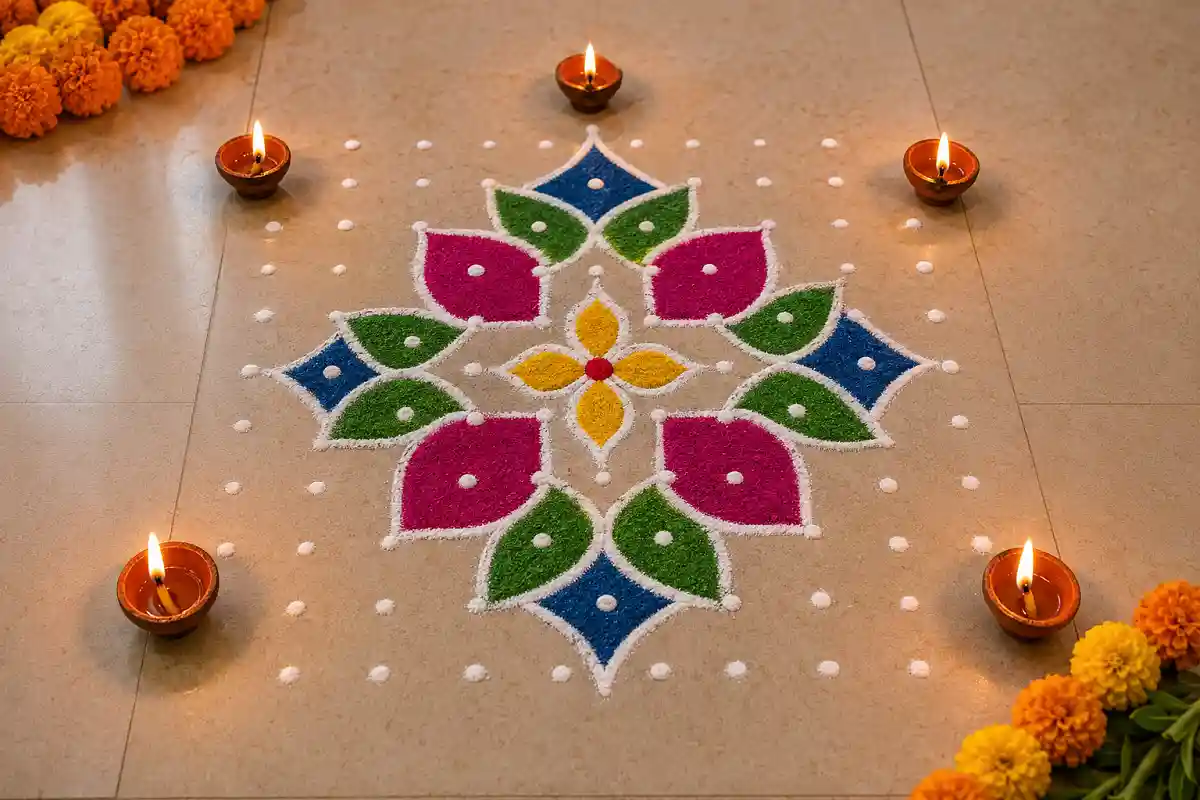
Dot-grid patterns use evenly spaced dots to guide the design. This technique keeps lines straight and symmetry intact, making it easier for beginners to create complex-looking results. For a collection of beginner-friendly ideas, easy simple rangoli design for Diwali at home is a helpful starting point with step-by-step references.
Rangoli with Flower Petals Only
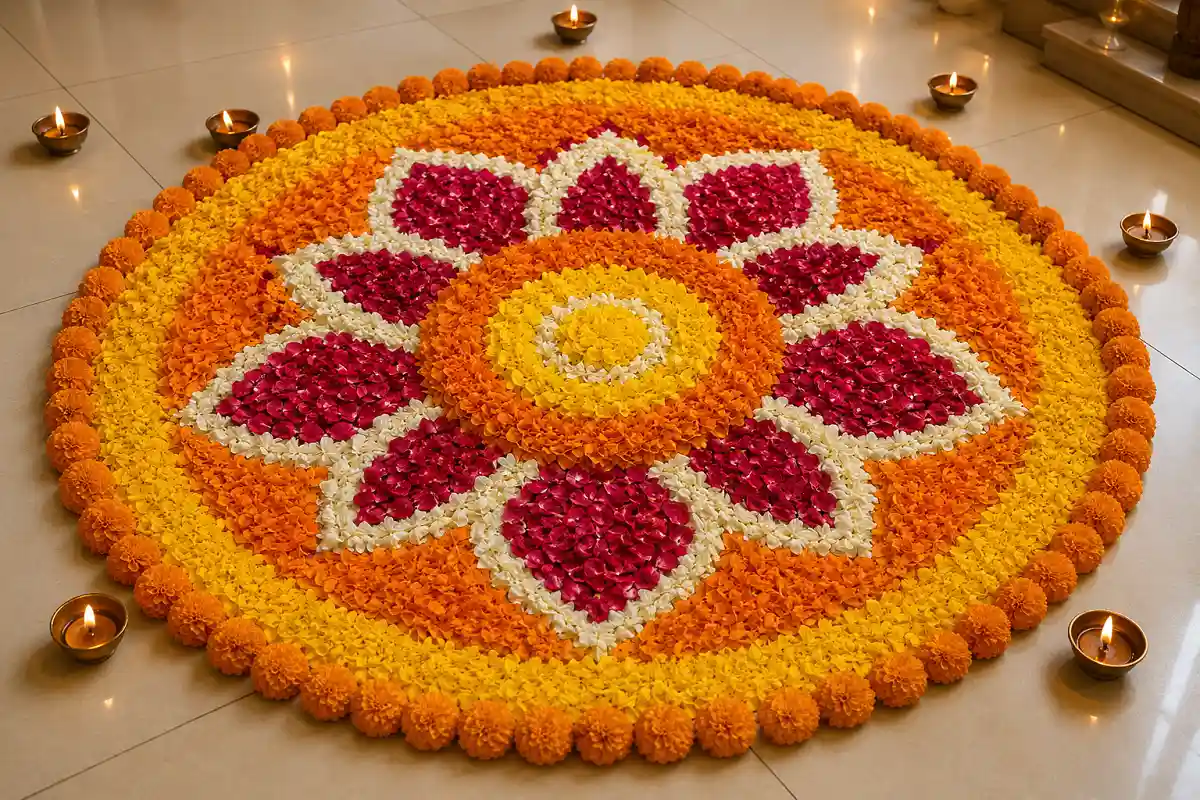
If you are not confident with dry powder, you can create a full design using only fresh flower petals. Arrange marigolds, roses, and jasmine into your chosen shape and fill in sections with petals of different colors. This type of rangoli design for Diwali photos looks beautiful in pictures due to its natural texture and warmth.
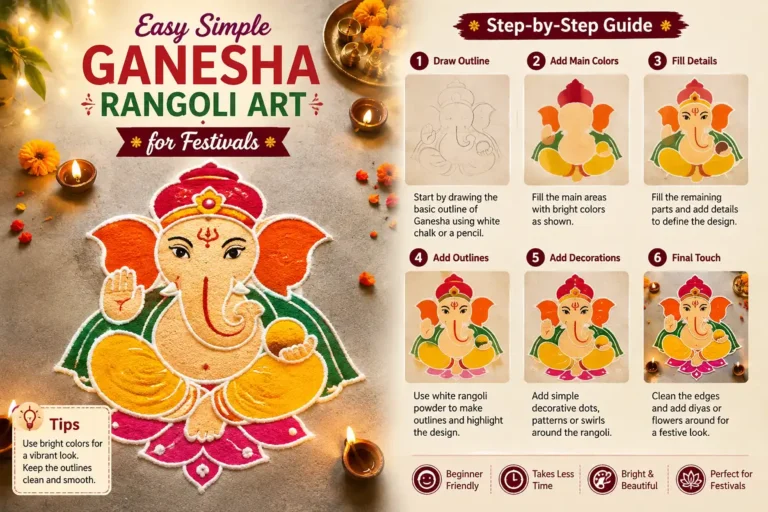
For more simple pattern ideas that work well without advanced skill, simple rangoli designs with easy ideas offers practical and accessible inspiration.
Rangoli Border Ideas That Elevate Your Design
A well-chosen border can transform an ordinary rangoli design for Diwali photos into a picture-worthy piece of art. The border frames the design and gives it a finished, intentional look.
Continuous petal or leaf patterns
Geometric zigzag or diamond chains
Dot-based repeating motifs
Floral vine borders with color contrast
Common border styles include:
- Continuous petal or leaf patterns
- Geometric zigzag or diamond chains
- Dot-based repeating motifs
- Floral vine borders with color contrast
For detailed border inspiration, rangoli border design ideas for every festival covers a wide range of styles that suit both traditional and contemporary designs.
Big Rangoli Designs for a Grand Diwali Look
If you have enough floor space, going large is always a strong choice for Diwali. A big-scale rangoli design for Diwali photos not only fills the space beautifully but also creates a more dramatic photo opportunity.
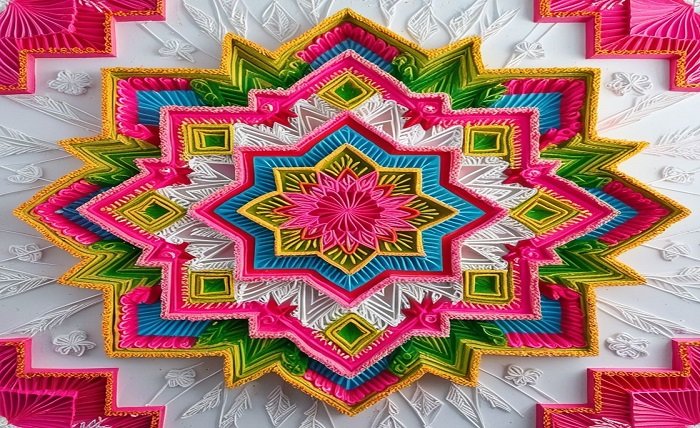
Large designs work best when they follow a central theme. Whether it is a peacock surrounded by floral borders, a mandala-style circle with layered rings, or a scene with multiple motifs connected by vines and geometric patterns, the key is to maintain visual unity throughout.
For ideas that go beyond a single pattern, big rangoli design ideas for every occasion showcases larger compositions perfect for the main entrance or living area.
According to Britannica’s overview of Diwali , the festival is celebrated across multiple days in various ways across South Asia and the South Asian diaspora, with rangoli being a consistent element of home celebration.
Planning Your Rangoli for Dhanteras and Diwali Together
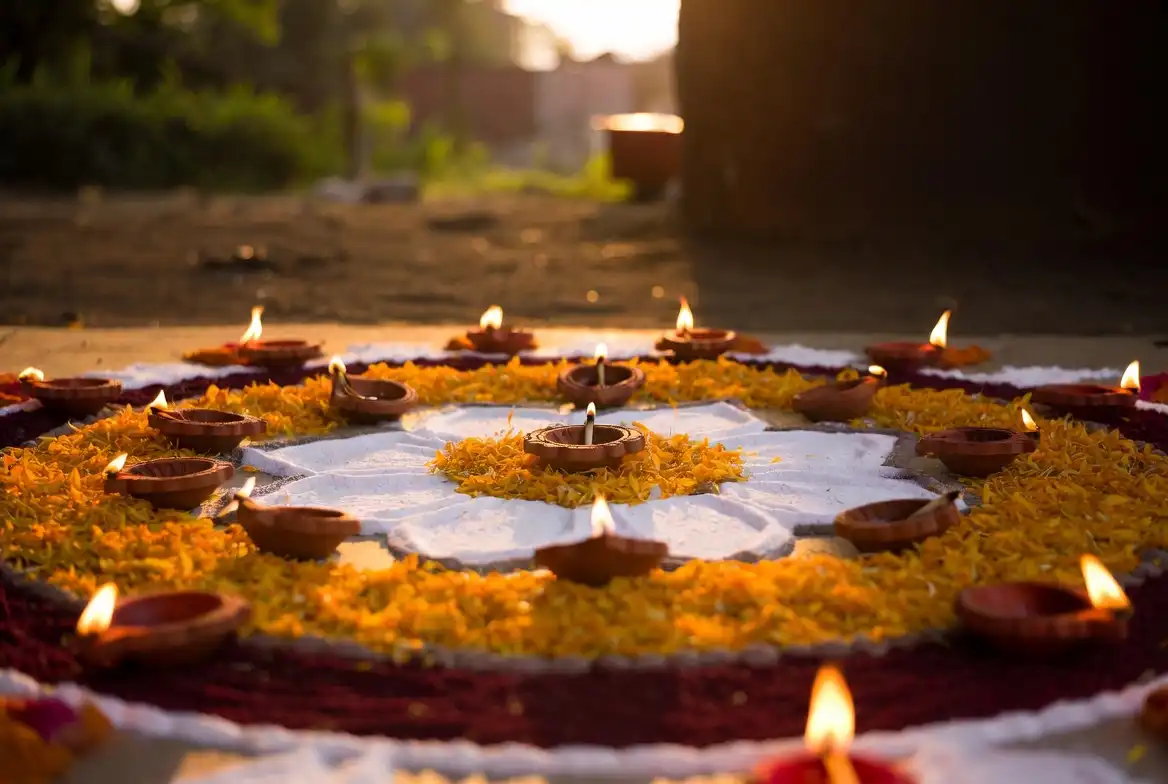
Diwali festivities begin with Dhanteras, two days before the main event. Many families create rangoli for both occasions, starting with a simpler design on Dhanteras and scaling up for the main night.
If you are planning designs for both days, rangoli design for Dhanteras offers curated ideas suited to the first day of the celebration. You can also explore a full set of Diwali-specific inspirations at rangoli design for Diwali 2025 , which covers fresh takes on a rangoli design for Diwali photos that balance tradition with modern aesthetics.
Start with a simple and welcoming design.
Plan colors, flowers, diyas, and the photo setup.
Create the larger centerpiece and photograph it beautifully.
Capture the Beauty of Your Diwali Rangoli
A beautiful rangoli is more than just a festive decoration it reflects creativity, tradition, and the joyful spirit of Diwali. Whether you choose a grand peacock design, an elegant geometric pattern, a colorful floral mandala, or a simple flower rangoli, each design can make your celebration feel more special.
Taking beautiful Diwali rangoli photos is also a wonderful way to preserve these festive memories. Use natural daylight or the warm glow of diyas, try overhead and angled shots, and keep the surrounding area neat so the rangoli remains the main focus.
Pay attention to the colors, symmetry, borders, flowers, and decorative details when taking your photos. With a little creativity and careful composition, your rangoli can look just as beautiful in photographs as it does in person.
FAQs
What is the best rangoli design for Diwali photos? +
Floral and circular designs tend to photograph the best due to their symmetry and color variety. A rangoli design for Diwali photos with high contrast colors and a clear center focal point looks especially striking when captured from above.
How do I keep my rangoli from smudging before I photograph it? +
Work carefully from the center outward and avoid stepping over completed sections. Once the design is finished, photograph it before anyone walks nearby. Lightly misting the surface with water before laying powder can also help the color adhere better.
Can beginners make a rangoli that looks good in photos? +
Yes. Simple dot-based patterns or petal-only designs can look just as good in photos as complex ones. Starting with a small, well-executed rangoli design for Diwali photos is always better than attempting a large one that feels rushed.
What colors work best for rangoli in photos? +
High-contrast combinations like white with red, yellow with blue, or orange with green stand out clearly in photos. Avoid colors that are too similar in tone, as they can blend together and lose definition.
How long does it take to make a Diwali rangoli? +
A simple design can take 20 to 40 minutes, while a large, detailed composition can take two to four hours. Planning the design in advance and preparing all your colors before starting helps the process go smoothly.
Is it necessary to use traditional powder for Diwali rangoli? +
No. Many people use flower petals, colored rice, sand, or chalk as alternatives to dry powder. Each material has a different look and texture in photos, so the choice depends on your style and available materials.