Geometric Rangoli for Modern Homes: 25 Fresh Design Ideas
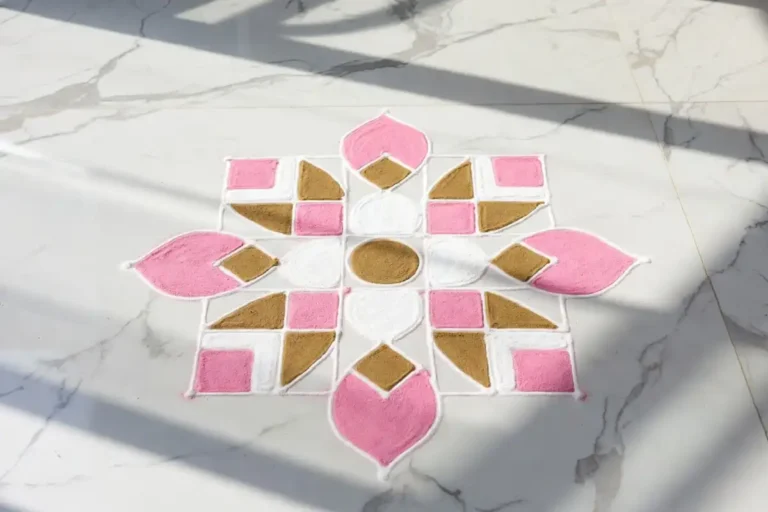
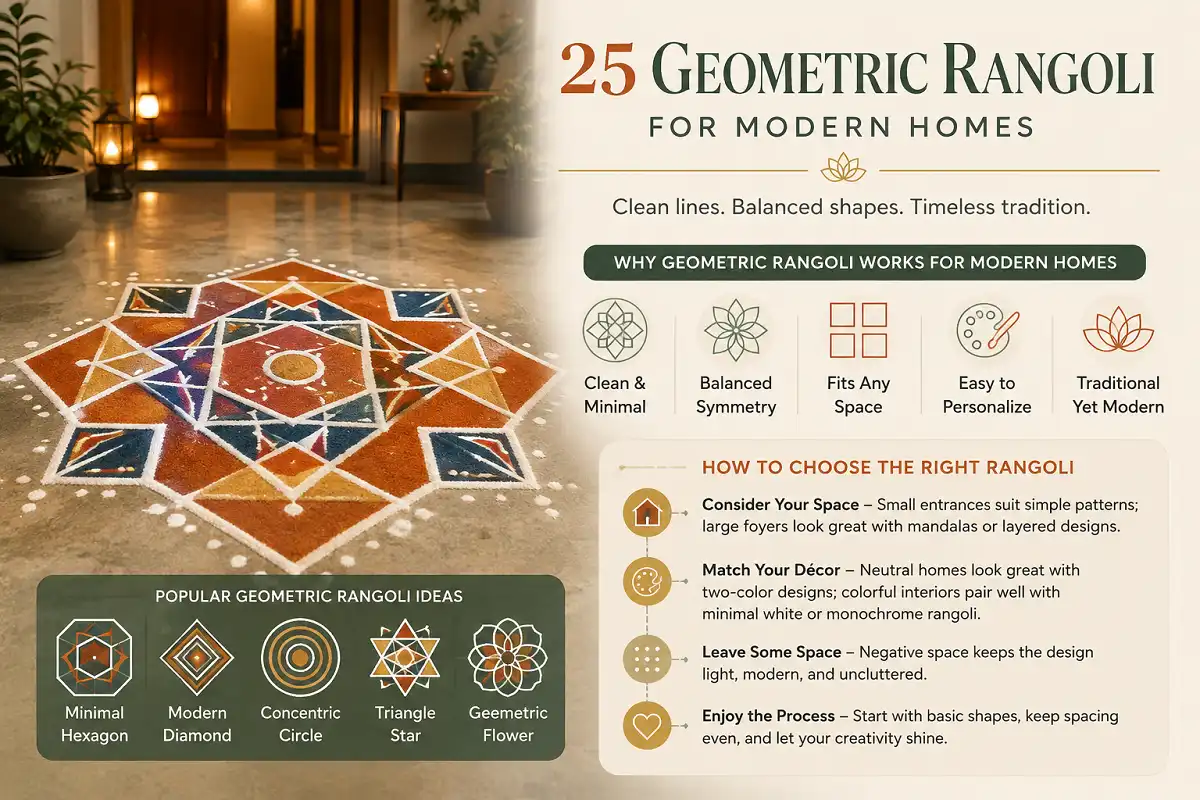
Geometric Rangoli for Modern Homes is a way to bring traditional Indian floor art into a contemporary living space. Instead of using overly detailed patterns, Geometric Rangoli for Modern Homes designs focus on clean lines, balanced shapes, symmetry and simple color combinations. Triangles, squares, diamonds, circles and hexagons can be arranged in ways to create a stylish and eye-catching Rangoli.
One of the things about Geometric Rangoli for Modern Homes is its flexibility. You can create a design beside your main door, a neat pattern in a foyer, or a larger centerpiece for festivals and family gatherings. Using two or three colors and leaving some floor space visible can give Geometric Rangoli for Modern Homes a clean, uncluttered appearance that works especially well with modern interiors.
Whether you prefer a hexagon, layered diamonds, a geometric mandala or a bold black-and-white pattern, there are plenty of ways to make Geometric Rangoli for Modern Homes feel fresh and personal. The 25 ideas below can help you find a design that matches your home, available space and decorating style.
How to Choose the Right Geometric Rangoli for Your Home
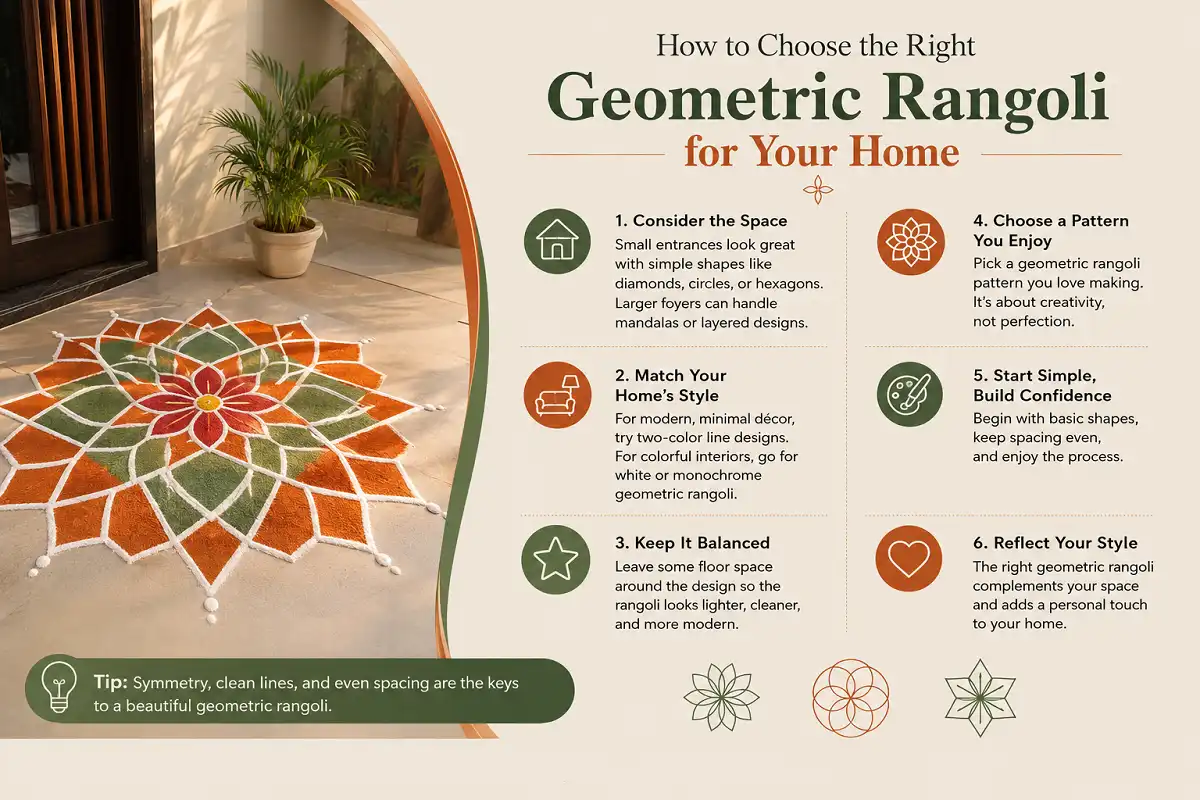
Consider Your Space
Start by looking at the space where you want to place the rangoli. If the entrance is small, a simple diamond, circle or hexagon pattern may look better. If the foyer is larger, then you can try a mandala or layered design.
Match Your Home Style
Think about your home’s style as well. If your décor is simple and neutral, a two-color geometric rangoli with lines can look beautiful. If the room already has plenty of color, a minimal white or monochrome geometric rangoli may be a choice.
Keep It Balanced
Leaving some floor space can also make the geometric rangoli feel lighter and more modern. Choose shapes, colors and spacing that complement the surrounding space instead of making the floor feel crowded.
Make It Personal
Importantly, choose a geometric rangoli pattern you will enjoy making. Geometric rangoli is not about getting every line perfectly right. Start with shapes, keep your spacing even and let your own creativity guide the final design.
The right geometric rangoli for homes should complement your space while still reflecting your personal style.
Minimal Hexagon Rangoli
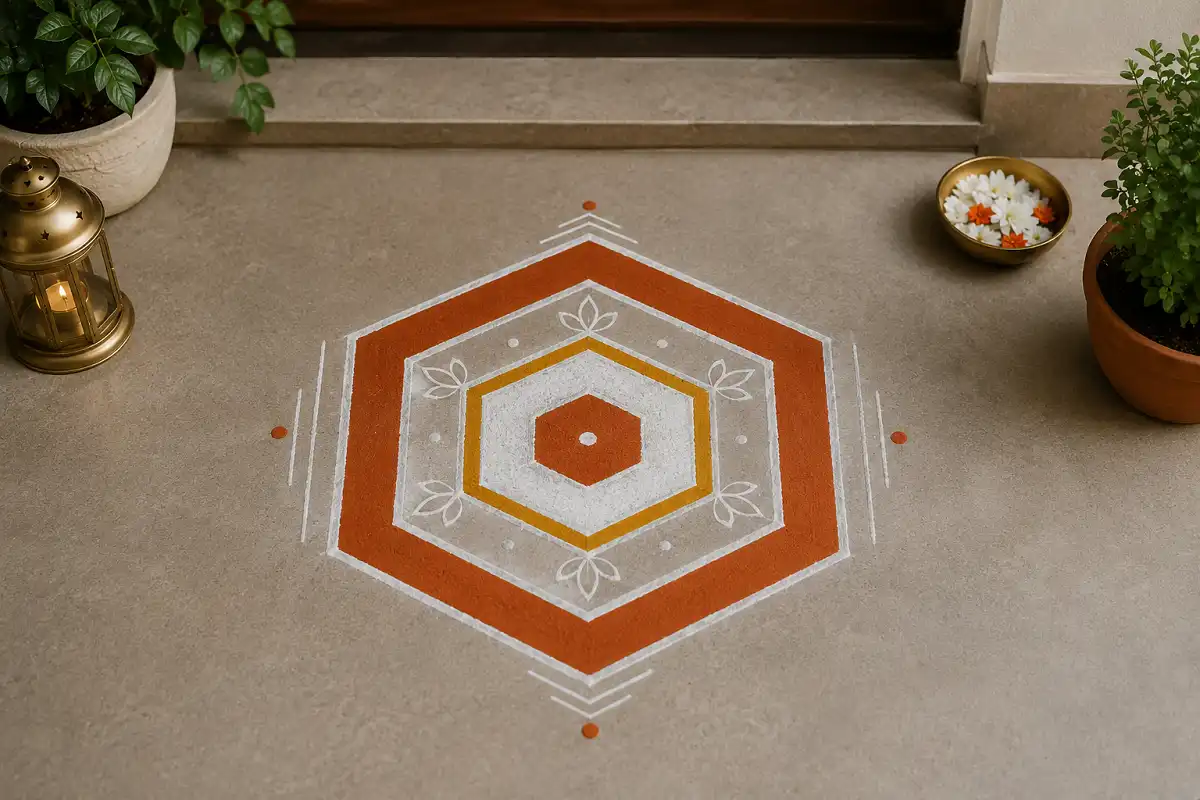
Minimal Hexagon Rangoli is a choice for modern homes because it mixes clean geometry with a simple and balanced layout. Start with one hexagon in the center and add a smaller hexagon, dots or thin lines inside it.
Keep the color palette limited to two or three shades, such as white, terracotta, gold or soft blue. Leaving some of the floor around the shapes creates a beautiful negative-space effect.
This design works well at apartment entrances, living areas and modern foyers. Minimal Hexagon Rangoli’s structured shape makes it look polished without requiring many details, making it suitable for both beginners and experienced Rangoli artists.
Modern Diamond Rangoli
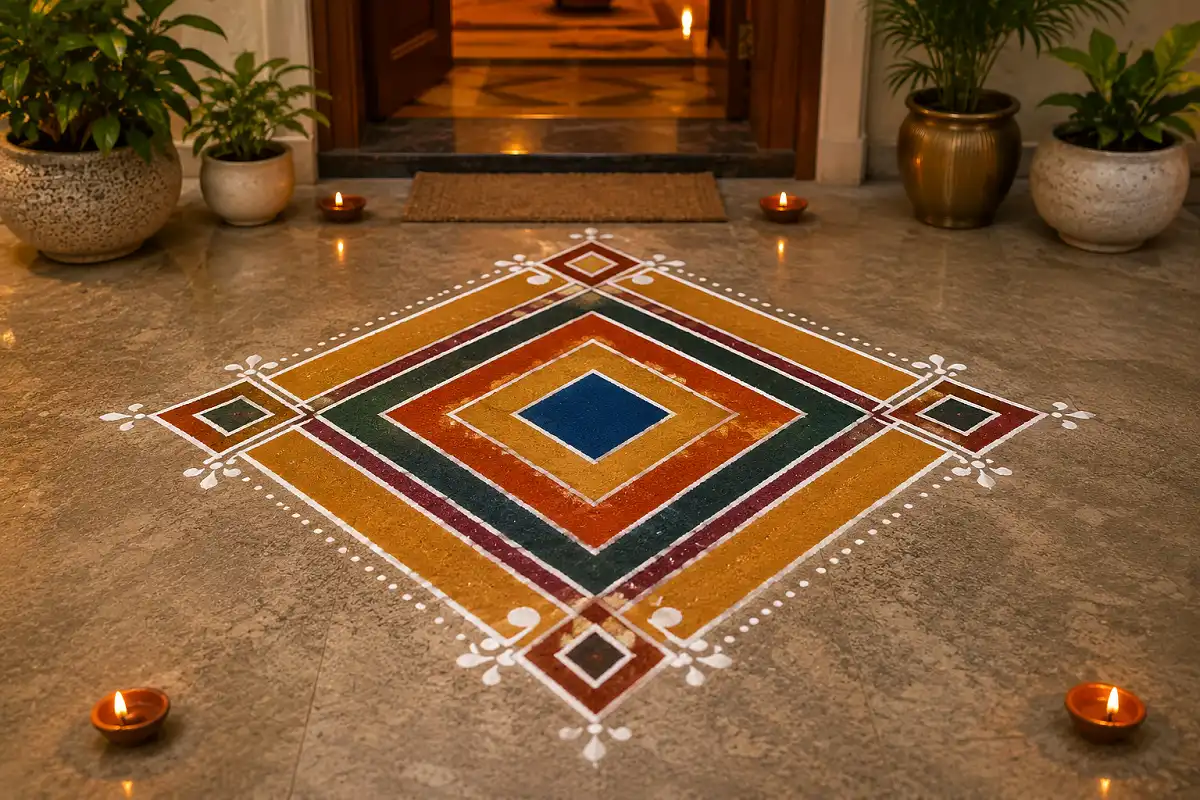
Modern Diamond Rangoli uses layered diamond shapes to make an elegant and symmetrical pattern. Start with a diamond at the center and then draw larger diamonds around it, keeping the same distance between each layer.
Modern Diamond Rangoli can be filled with color while leaving parts as plain white outlines. Terracotta, mustard, deep blue, gold and pastel shades can all give this design a modern look.
Because the pattern relies on lines and repetition, it fits well in modern interiors. This pattern works perfectly for a doorway or for a festive decoration in an open living space or entrance area.
Concentric Circle Rangoli
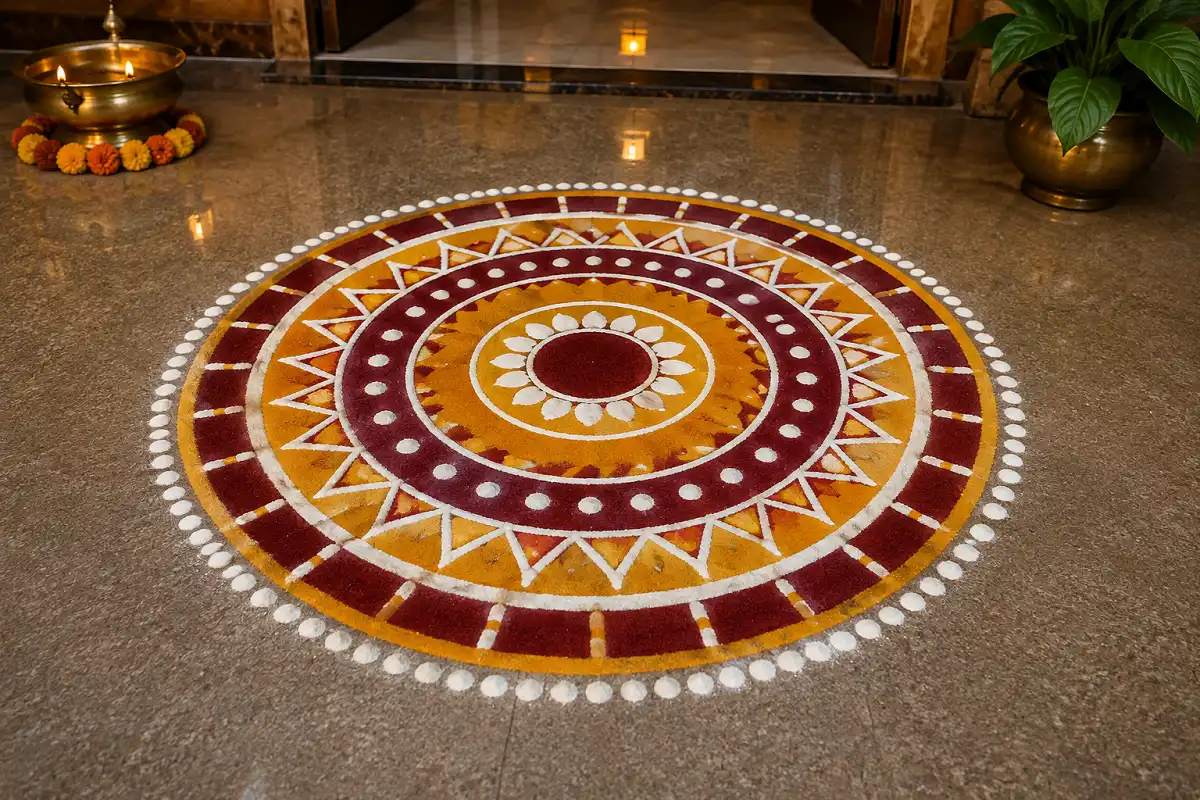
A Concentric Circle Rangoli creates a balanced focal point by placing several circles around one central point. Start with a circle and gradually add larger rings while keeping the distance between them consistent.
For an attractive appearance, divide one or two rings into equal sections and add small triangles, squares or dots. Using two or three colors keeps the design clean and modern.
This Rangoli is ideal for living rooms, foyers and home entrances where you want an attractive centerpiece. The circular structure also makes it easy to adjust the size according to the floor space.
Triangle Star Rangoli
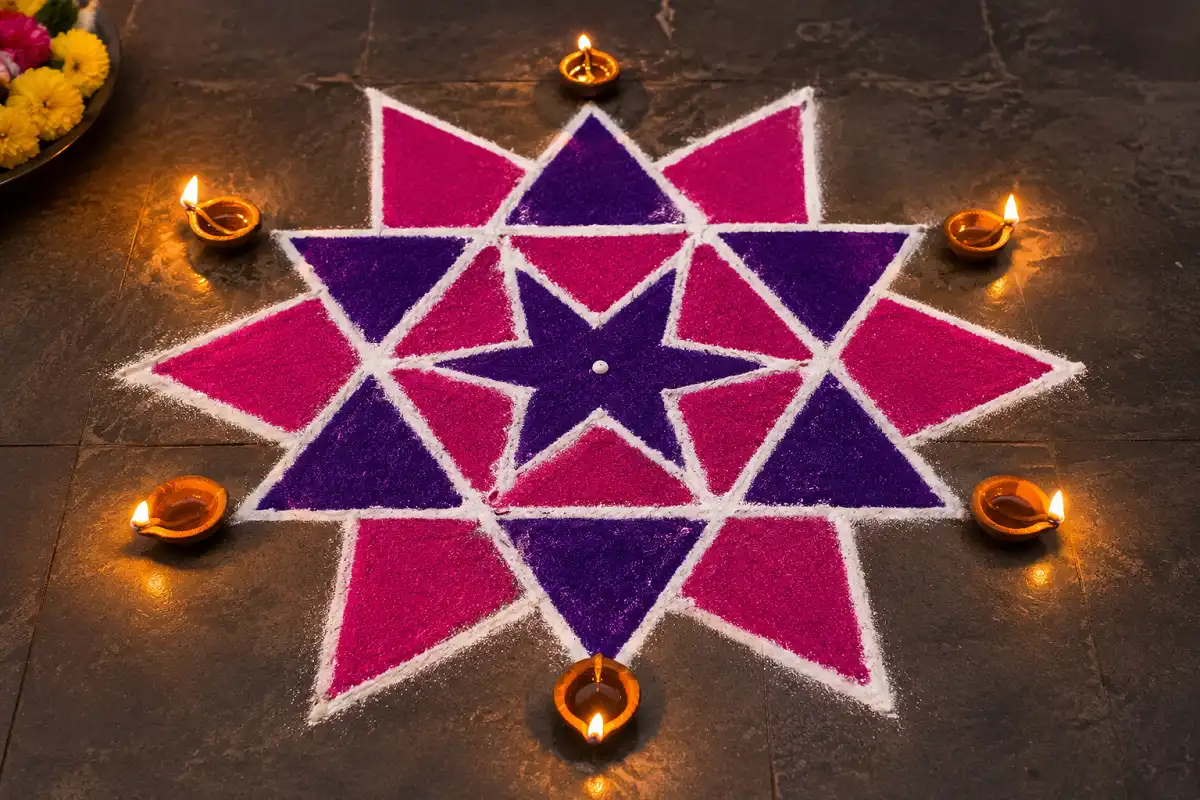
The Triangle Star Rangoli is made by repeating triangles to form a bright star shape. Begin at a point and place four, six or eight triangles around that central point, spaced evenly.
Use alternating colors to set apart the parts of the Triangle Star Rangoli, but keep the color set simple. A white line around each triangle will make the edges of the Triangle Star Rangoli look crisper and clearer.
The Triangle Star Rangoli can be easily changed for any occasion. Make a version for everyday decoration or produce a larger bright version for Diwali and other celebrations. The strong symmetry of the Triangle Star Rangoli gives homes a stylish and lively decorative touch.
Geometric Flower Rangoli
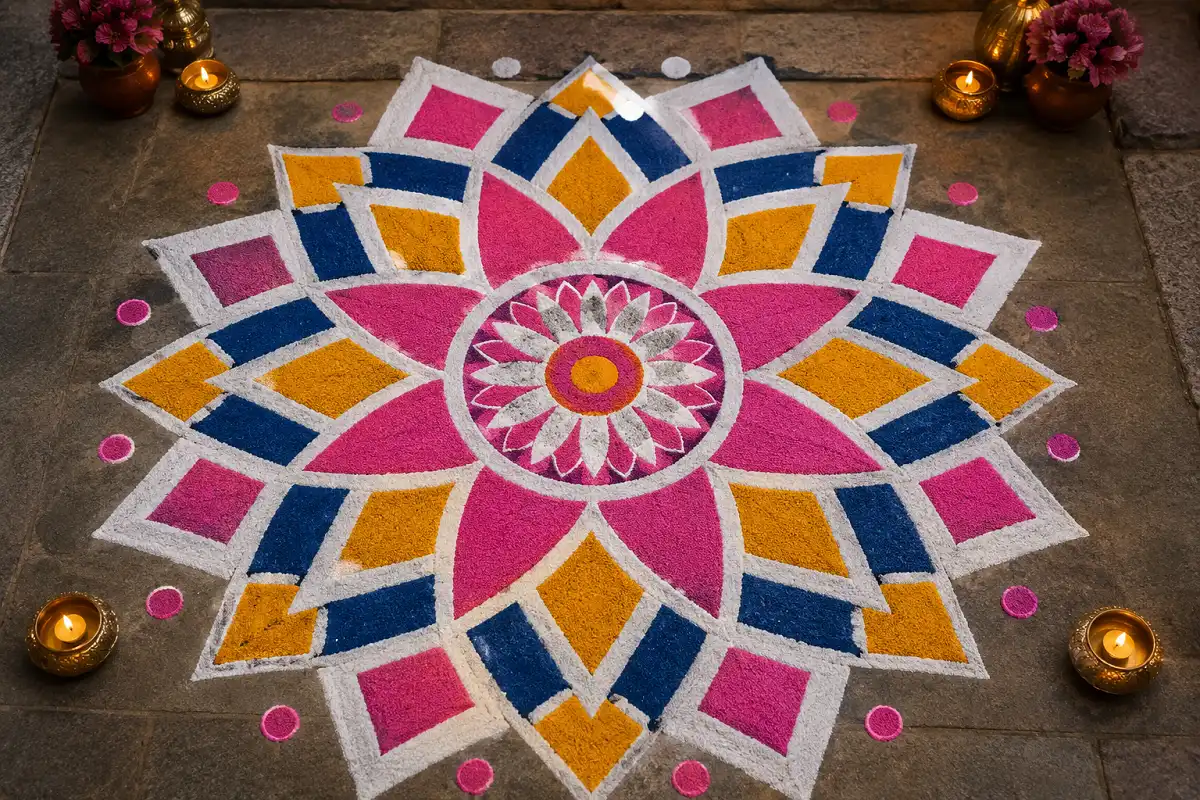
A Geometric Flower Rangoli takes the flower pattern and gives it a modern twist. Instead of using soft curved petals, make the flower using triangles, diamonds, squares or other sharp shapes.
Start with a circle in the middle and place matching geometric petals around it in a balanced way. Add another layer of shapes to make the design bigger and more detailed while making sure the symmetry stays clear.
Pink and white, blue and gold or terracotta and cream can make beautiful color choices. This style looks amazing for entrances because it keeps the classic beauty of floral Rangoli while adding clean lines and modern shapes.
White Geometric Rangoli
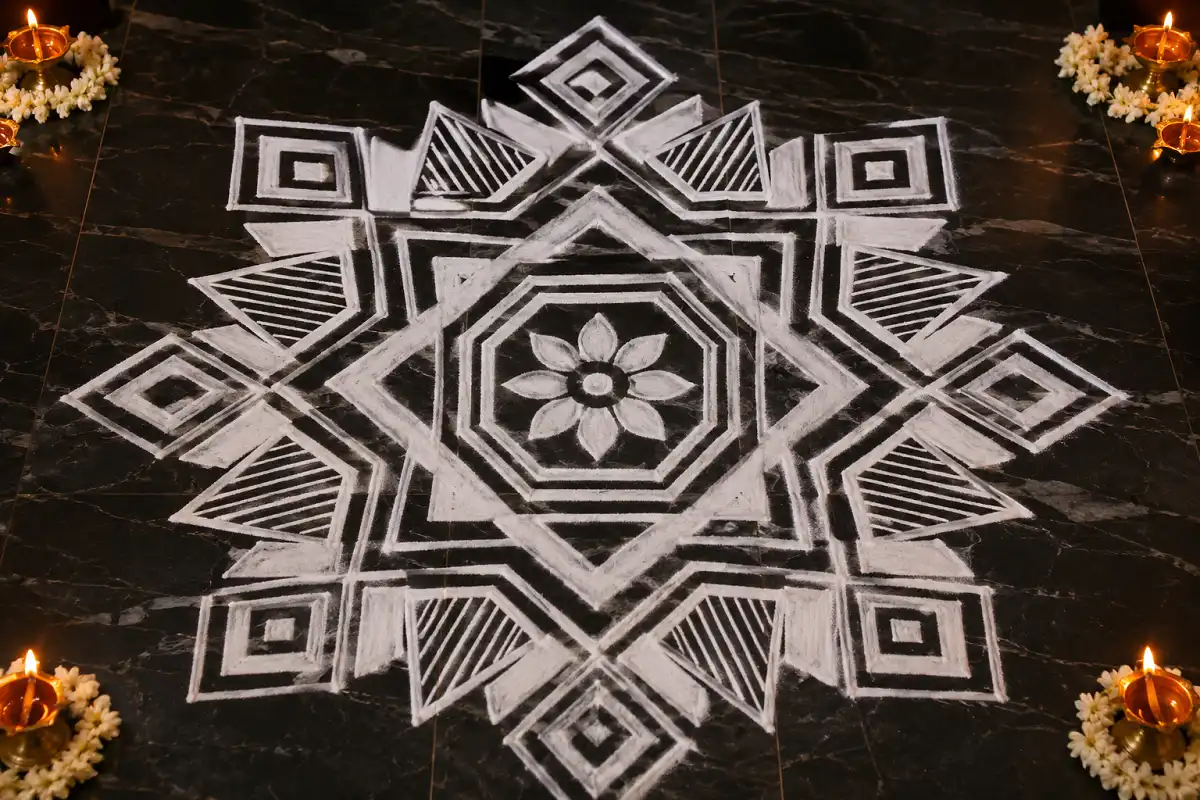
A Black and White Geometric Rangoli is perfect for homeowners who like a strong and simple look. The clear difference between the two colors makes even basic shapes stand out.
Use squares, triangles, diamonds or hexagons. Place them in a balanced way around a center point. You can switch between white areas or use one color mostly for edges.
This style looks very nice with rooms and floors made of marble and is easy to manage as home decoration. Because the appeal is in the contrast and neat shapes, there is no need for many colors or complicated parts. The end result is classy, up-to-date and easy to remember.
Hexagon and Diamond Fusion
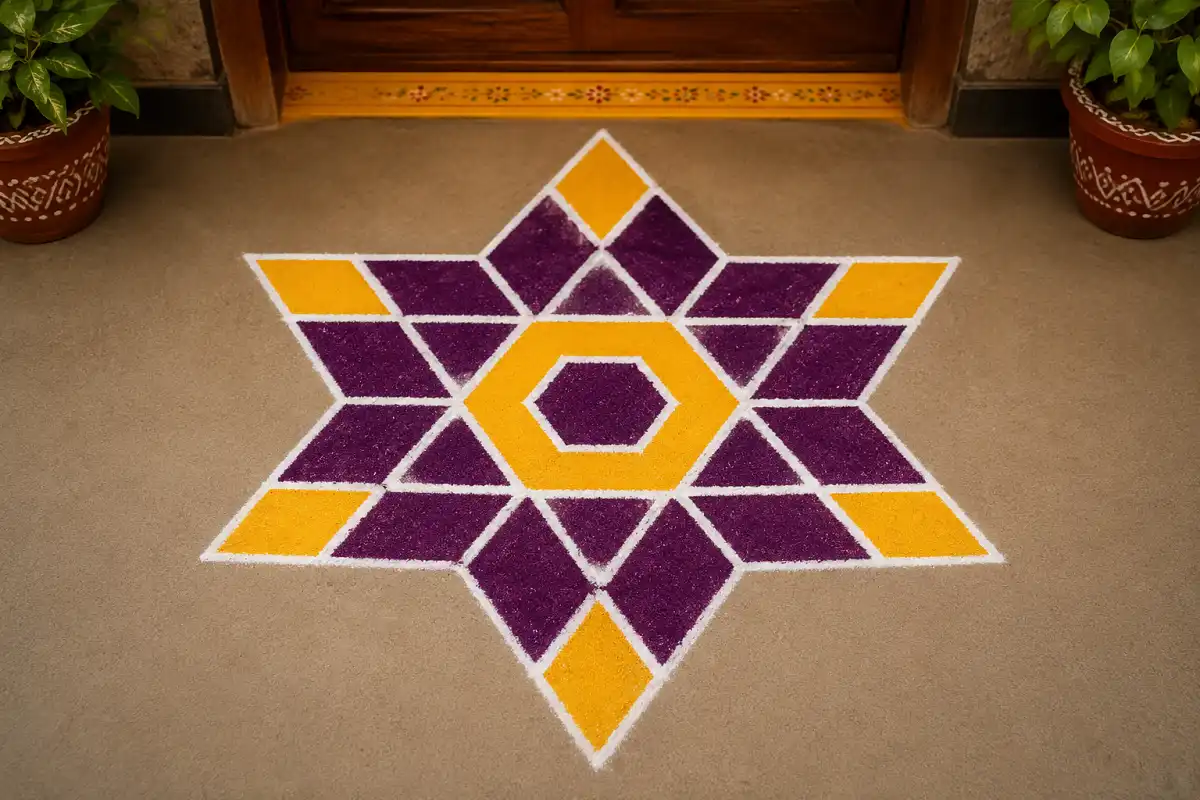
Hexagon and Diamond Fusion Rangoli is a design that brings together two shapes to form a neat and eye-catching pattern. Start with a hexagon, then add diamond shapes around its sides or corners. If you have space, keep repeating the pattern outward to expand the design.
Use one color, an accent shade and white outlines to clearly separate each geometric section. This helps the shapes stand out and keeps the look clean. The six-sided hexagons paired with diamond shapes give the Rangoli a modern feel while still keeping a traditional vibe.
The overall effect is not too busy, making it perfect for home entrances, festival decorations and modern foyers. It’s a Rangoli that feels rooted in tradition but looks fresh and current.
Minimal Square Rangoli
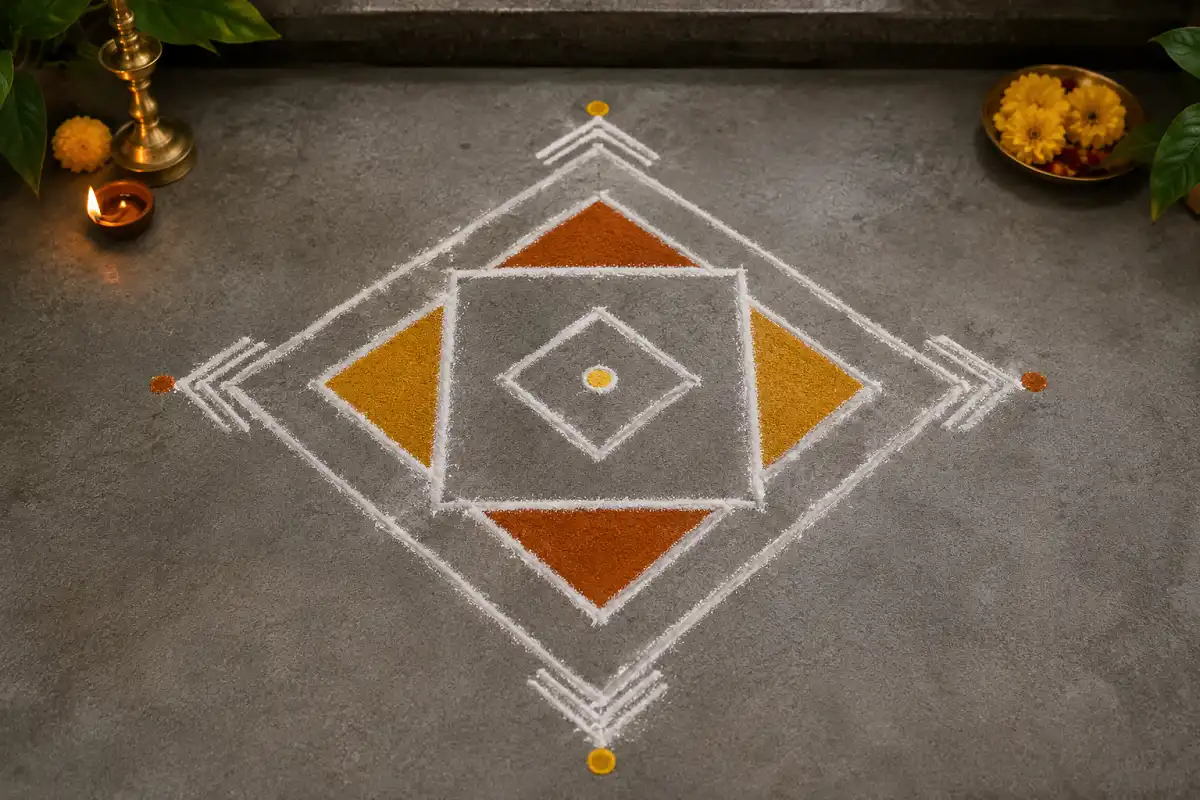
A Minimal Square Rangoli shows how a simple geometric shape can create a floor design. Start with a square in the center and draw one or two larger squares around it.
Minimal Square Rangoli can have some squares rotated slightly to create diamond-like layers and add movement. Instead of filling every section with color, highlight only a few areas and leave the remaining space open.
White combined with terracotta, mustard, gold or another warm accent color can look beautiful. Minimal Square Rangoli is especially useful for modern homes because it creates a polished appearance without making the floor feel crowded.
Negative Space Geometric Rangoli
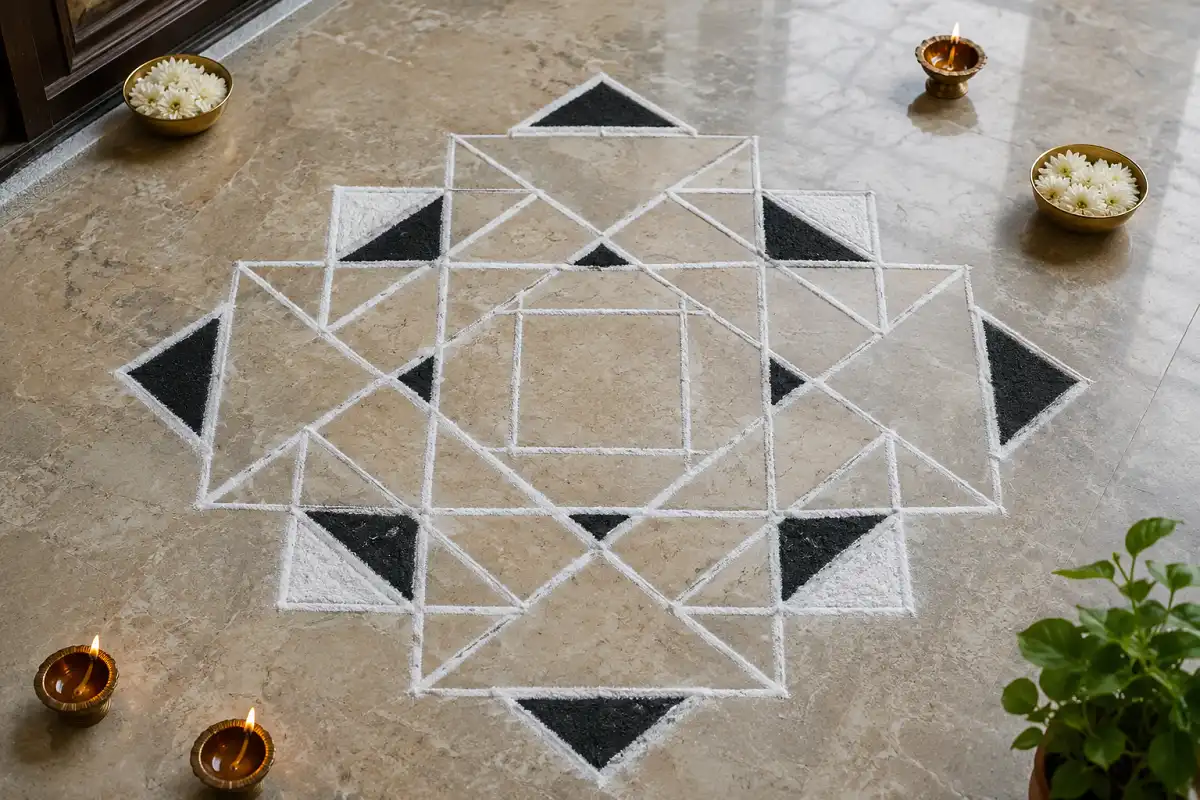
A Negative Space Geometric Rangoli focuses on both the design and the empty floor around it. Instead of covering the surface with powder, create triangles, diamonds, squares or hexagons using clean outlines.
Leave sections of the natural floor visible. This open space becomes a part of the composition and gives the Rangoli a light, uncluttered appearance.
The style is especially suitable for apartments and homes with attractive marble, tile or wooden floors. A limited color palette works best because it allows the geometry and empty space to remain the focus. The result feels elegant, contemporary and easy to maintain.
Geometric Mandala Rangoli
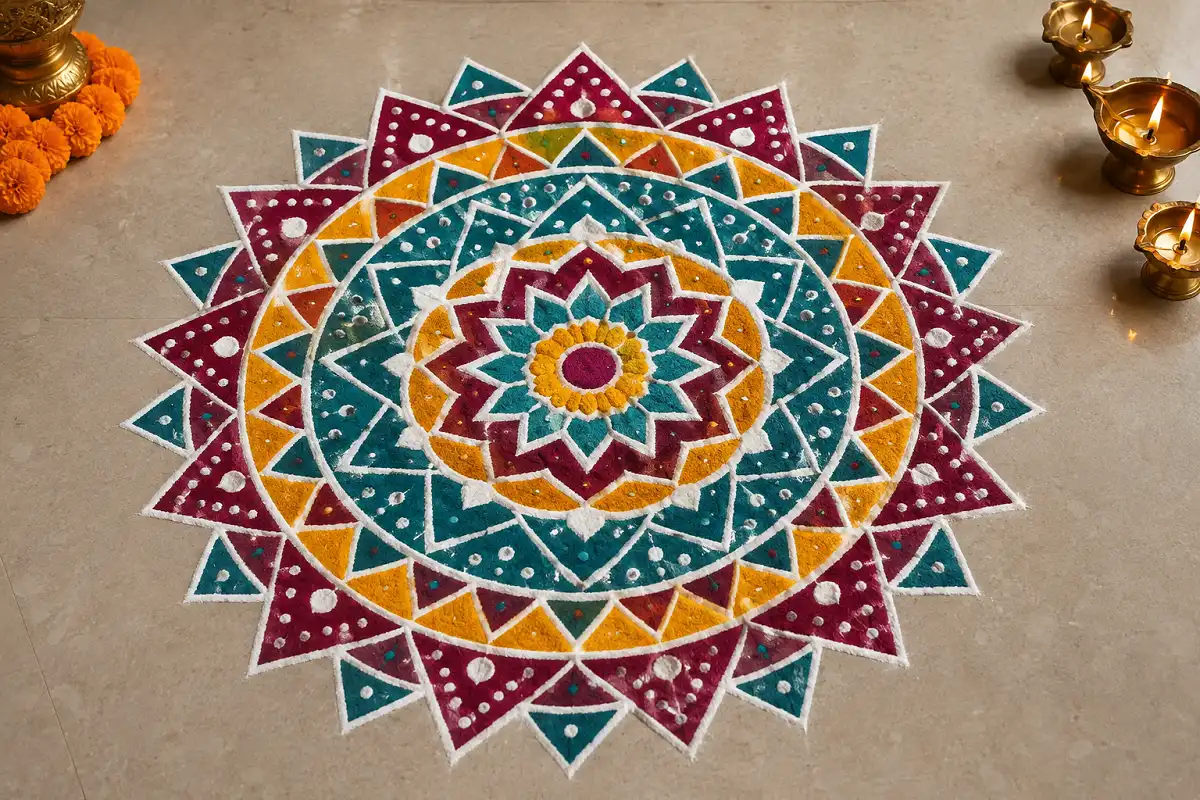
A Geometric Mandala Rangoli blends the shape of an old mandala with new geometric shapes. Start with a small center circle or hexagon, then slowly build outward in even layers.
Each layer can feature repeating triangles, diamonds, dots or straight lines. The key part is to repeat these shapes around the center so the whole pattern feels balanced.
Use two or three colors for a simple look or add a third accent color for celebratory moments. Geometric Mandala Rangoli becomes a focal point for a living room, doorway or party, mixing old symmetry with new geometric style.
Interlocking Shapes Rangoli
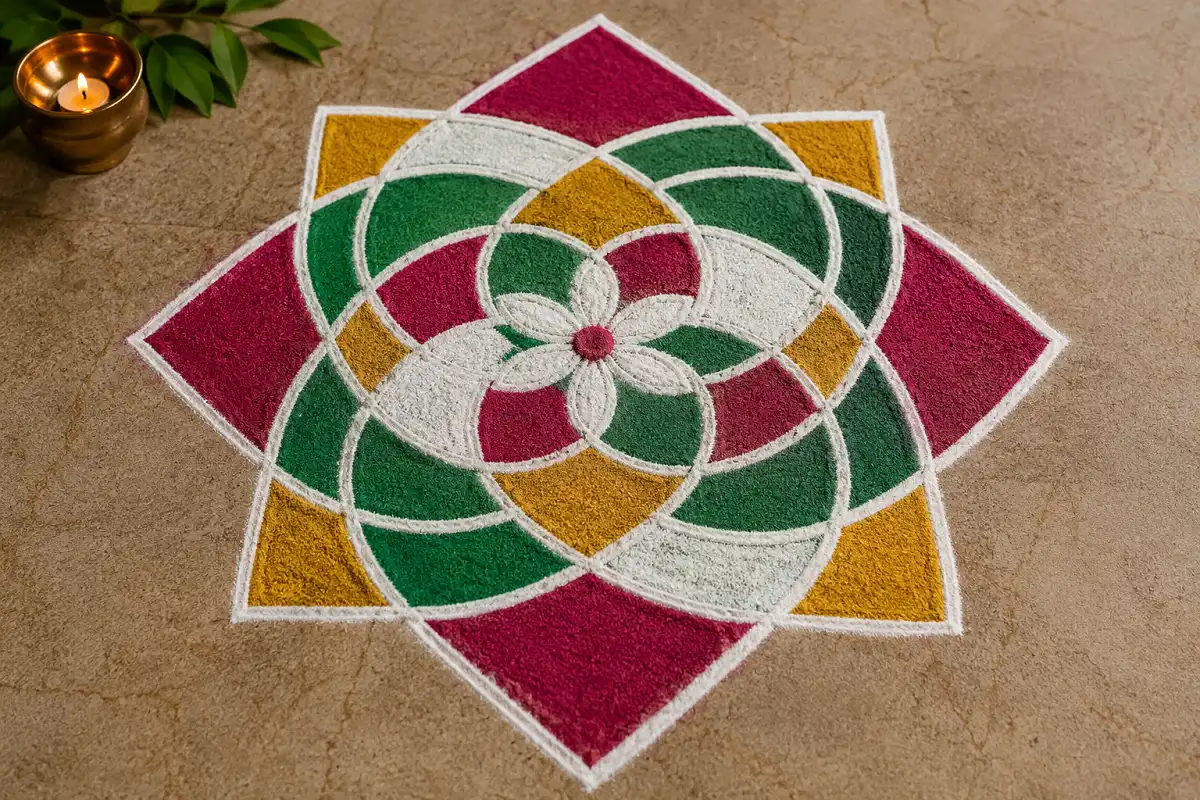
An Interlocking Shapes Rangoli creates interest by joining geometric shapes so they look like they overlap or weave together. Squares, circles, diamonds and triangles can all be mixed.
Start with one shape and repeat similar shapes around it. Using alternating colors can help the overlapping parts stand out while simple outlines can give a minimalist look.
This design is very appealing for homes because it feels both creative and organized. The repeated shapes can also create an effect that makes the Interlocking Shapes Rangoli look more intricate than it really is. It is a choice for homeowners who love contemporary patterns.
Modern Grid Rangoli
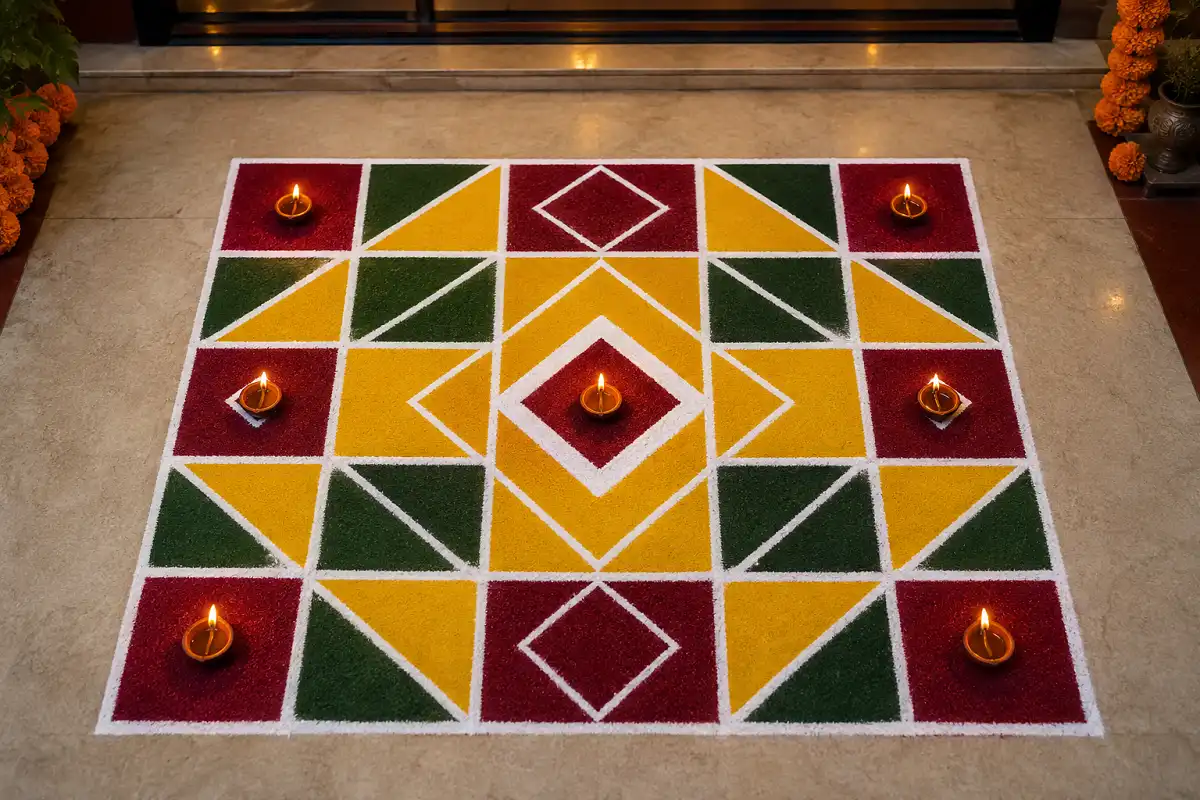
A Modern Grid Rangoli is made using lines that are spaced equally in both directions. Begin with a square or a rectangle. Choose some parts to fill with color.
You can add diamonds by joining corners or put triangles inside each square. Using two or three colors makes the design look neat and stylish.
This style works well for rectangular doors, hallways and modern houses. The straight lines go well with buildings and furniture. You can also put a diya in the middle or inside some parts to bring in a traditional festival feel without making the design look old-fashioned.
Four Triangle Rangoli
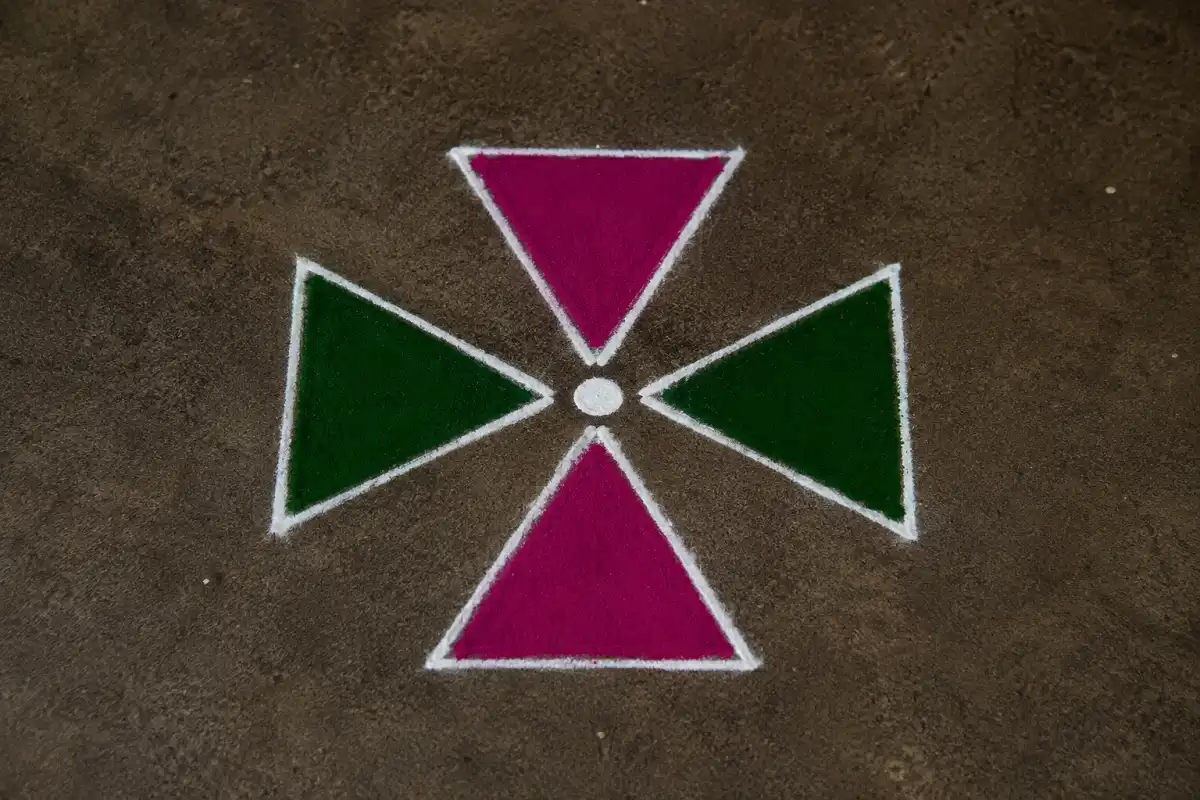
Four-Triangle Rangoli is a geometric design that beginners can easily try. Start with a dot or small circle and arrange four equal triangles around it.
Each triangle can point in a direction, creating a star-like or pinwheel-inspired appearance. Leave gaps between the shapes to keep the pattern clean and open.
Fill alternating triangles with two contrasting colors. Outline the design with white powder. Because the pattern uses four main shapes, it can be completed quickly. Its strong symmetry makes it an excellent choice for doorways, apartments and modern home entrances.
Layered Diamond Mandala
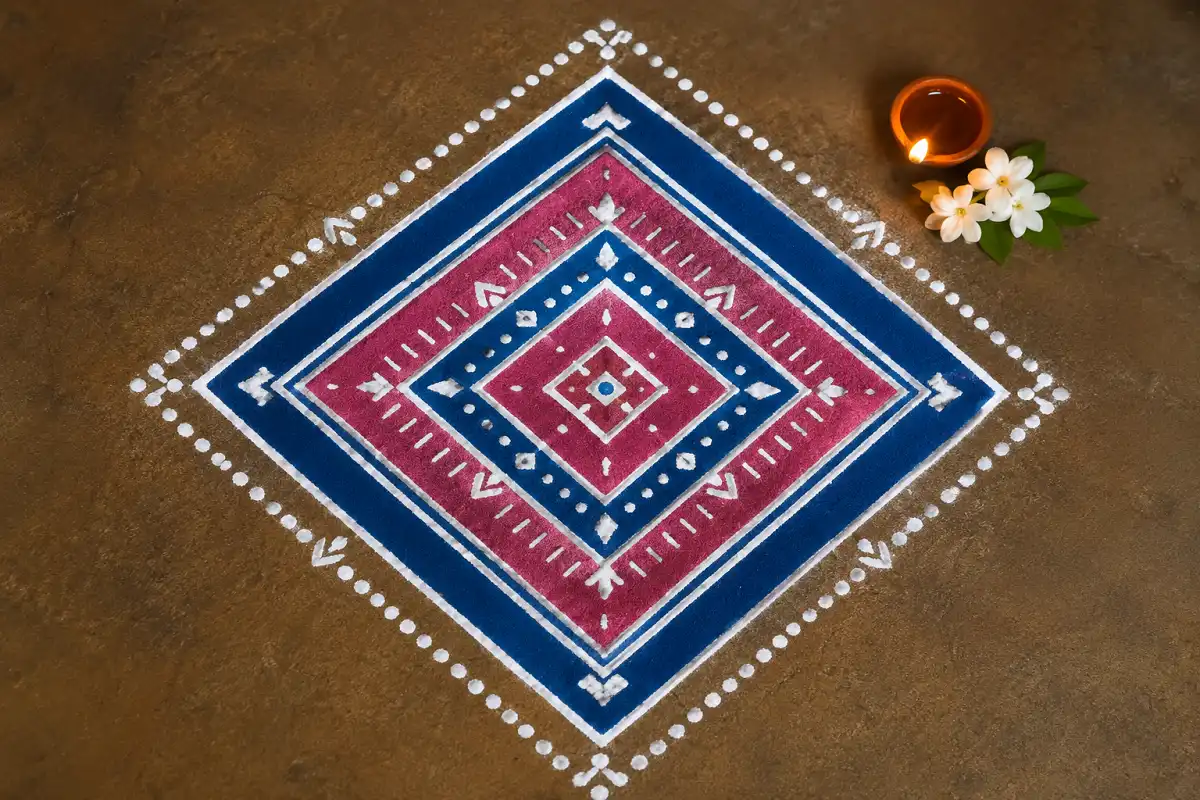
Layered Diamond Mandala makes a beautiful look by repeating diamond shapes around a center. Start with a diamond and then draw bigger diamonds around it step by step.
Keep the distance between each Layered Diamond Mandala layer the same to keep the pattern tidy. You can place dots, triangles or short lines between the layers for extra detail while keeping the design simple.
Pick a set of colors so the geometry of the Layered Diamond Mandala stays the focus. White outlines with one or two colors can give a classy look. This Rangoli can be made small for everyday use or bigger for festivals and special gatherings.
Geometric Spiral Rangoli
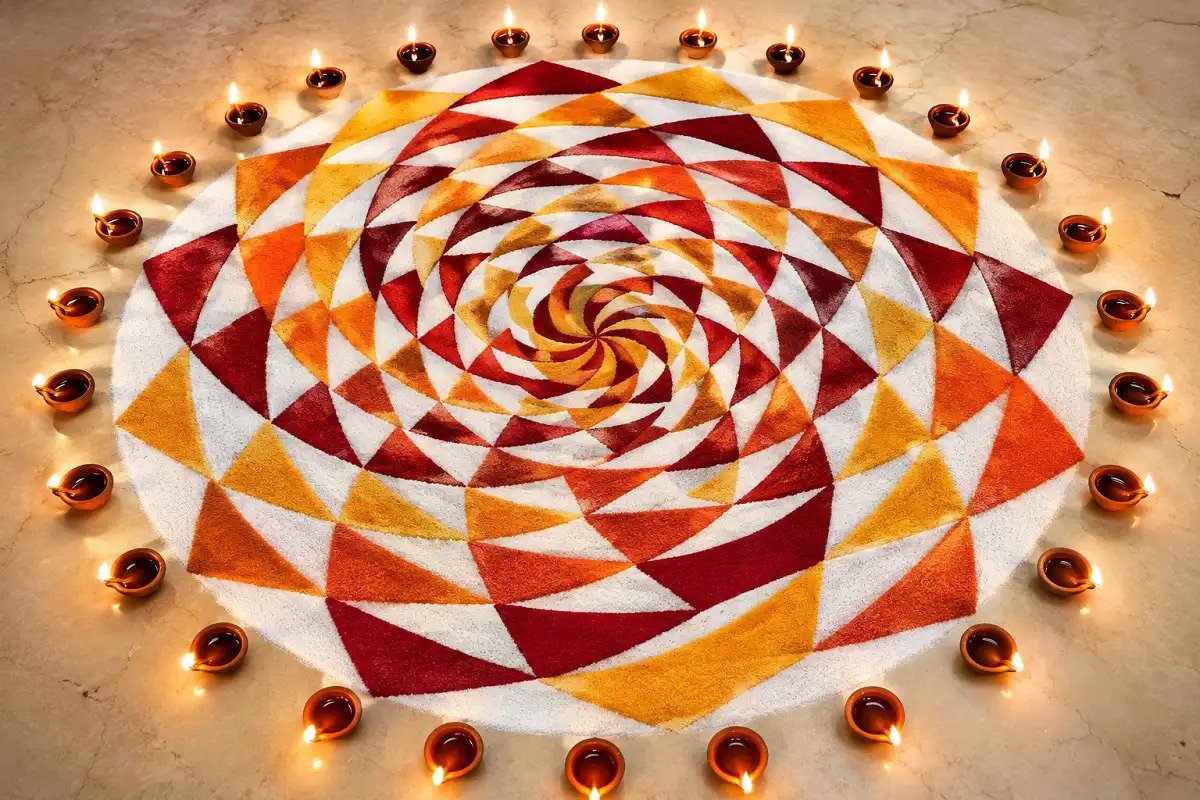
A Geometric Spiral Rangoli draws movement by arranging lines and angular shapes in a rotating pattern. Start at the center and slowly build the design outward.
Squares, triangles and diamonds can be joined to create the effect. Keep the spacing consistent so the pattern looks smooth and intentional instead of random.
Alternating colors can highlight the direction of the spiral while a monochrome design offers a minimalist look. This pattern works well as a modern statement piece because it mixes symmetry, movement and geometric structure in one eye-catching design. Contemporary geometric Rangoli references also use these forms as a modern variation.
Pastel Geometric Rangoli
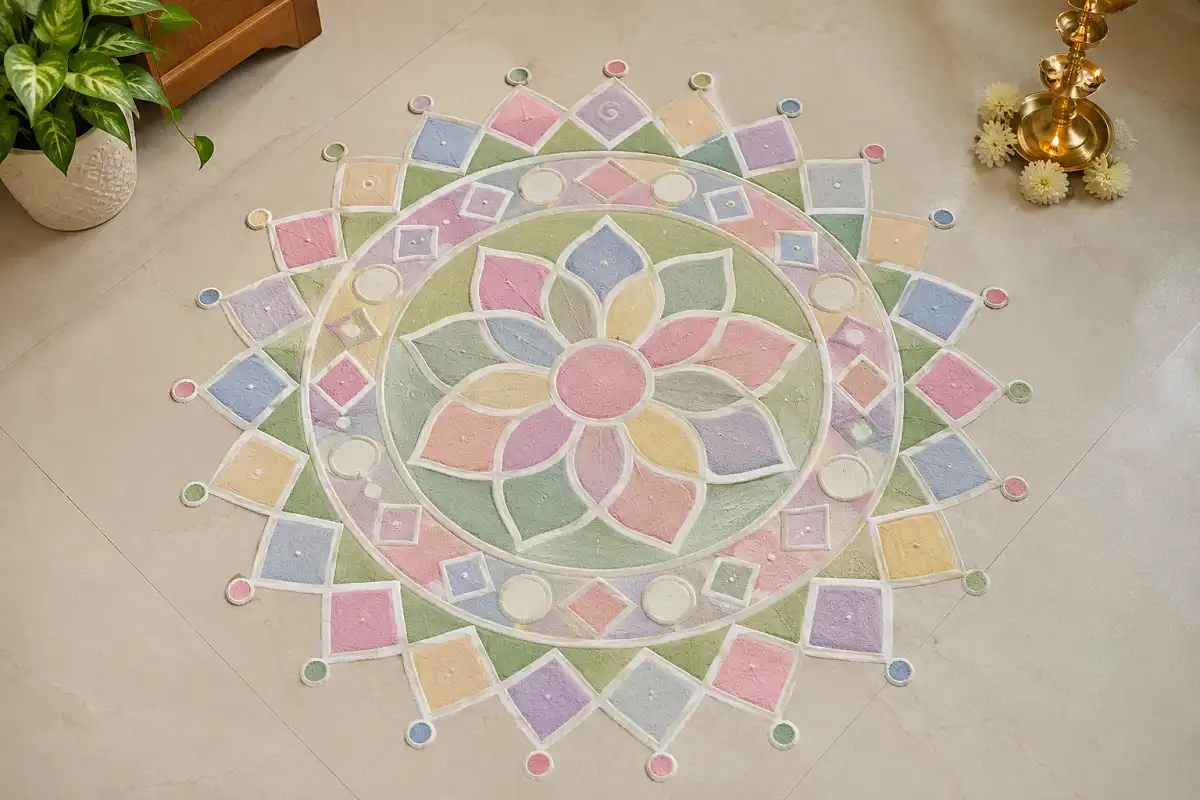
Pastel Geometric Rangoli adds an elegant look to traditional floor art. Instead of using bright festival colors, choose shades like blush pink, sage green, soft blue, lavender, cream or muted yellow.
Create the design using shapes like circles, triangles, diamonds or hexagons. White outlines can be added to separate the shapes and make the pattern clearer.
This style is perfect for interiors that have neutral colors and simple decorations. Make sure there is plenty of space around the pattern to keep the contemporary feel. The end result is subtle, stylish and decorative without taking over the surrounding home design.
Linear Border Rangoli
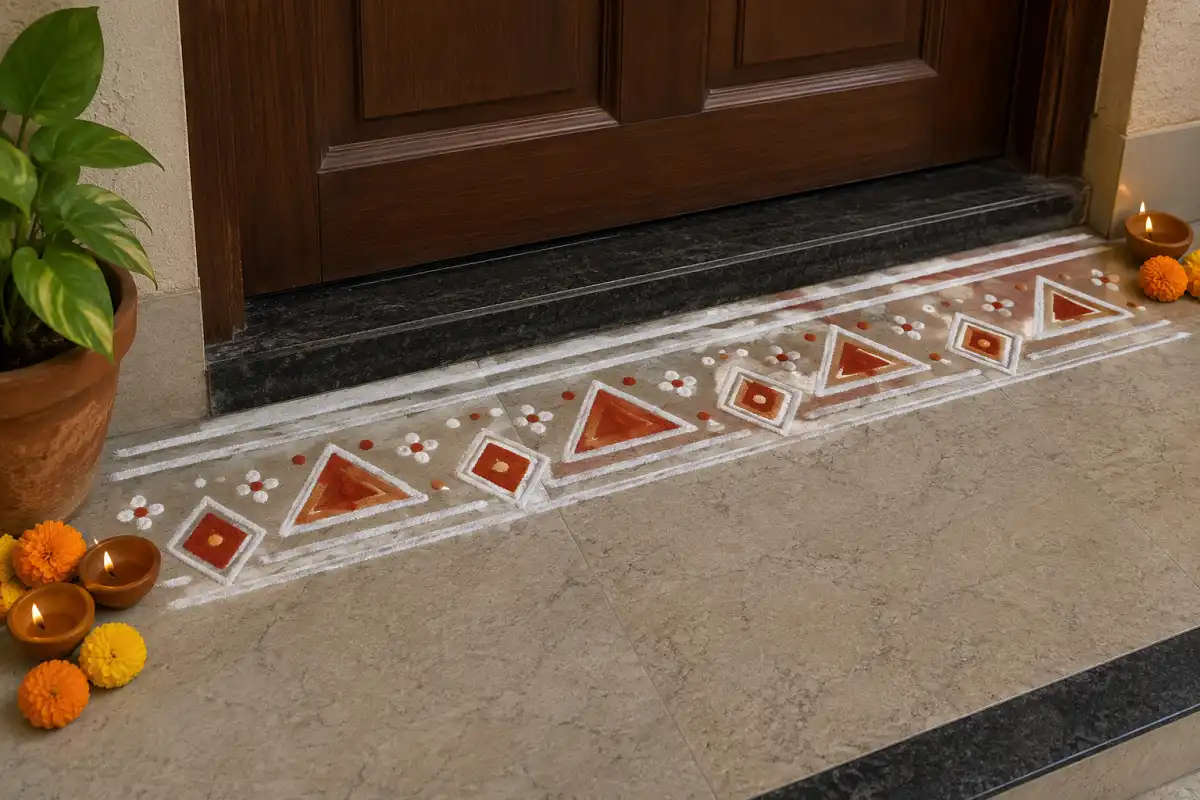
A Linear Border Rangoli is created for doorways, hallways and small areas. Rather than making a round design, use straight lines as the main shape.
Place triangles, squares, diamonds or tiny dots between the lines. Making sure the shapes are spaced the same distance apart will make the border look neat and tidy.
This style works well for homes where there isn’t much floor space. You can choose one color with white lines around it or switch between two colors that go well together. The straight lines also match buildings, so this style is an easy way to decorate an entrance without making a big pattern on the floor.
Modern Sunburst Rangoli
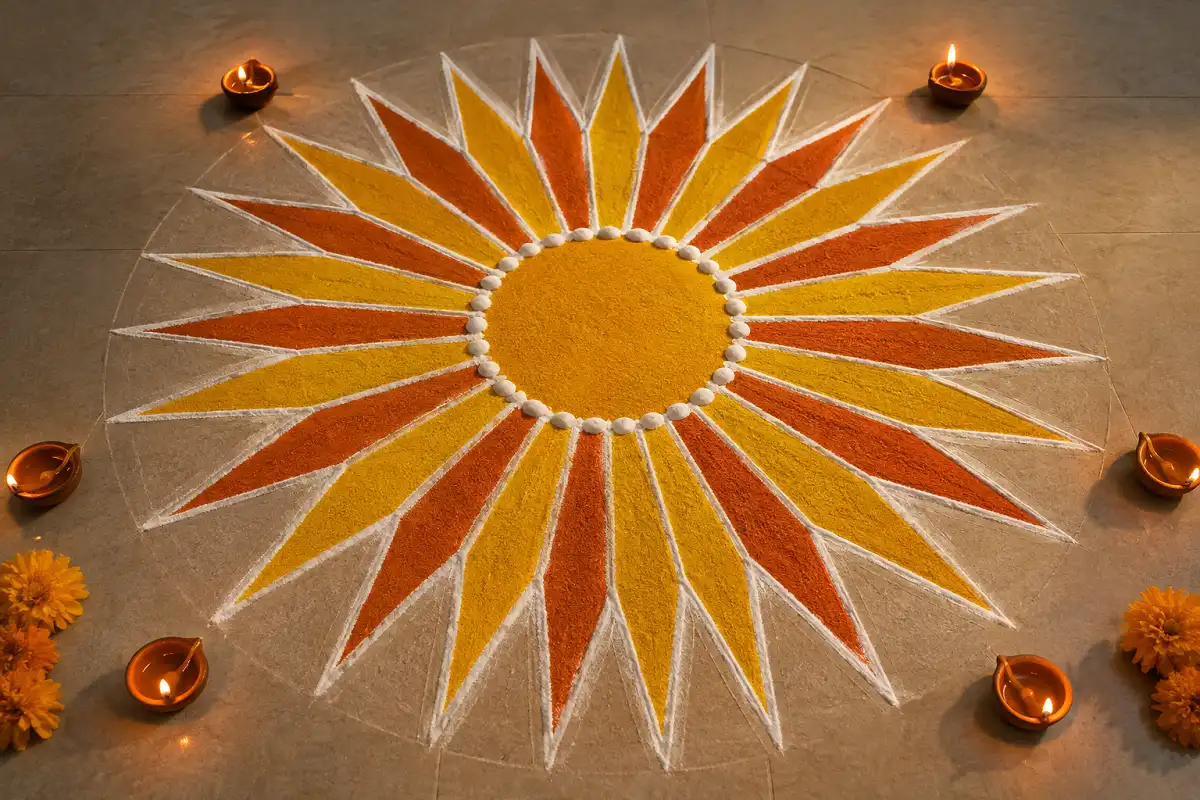
A Modern Sunburst Rangoli is made by putting triangles or straight lines around a circular center. Begin with a circle and split the area around it into equal parts.
Make pointed shapes that go outward to look like sunlight. You can switch between filled parts and empty parts to make a contrast while keeping the look easy on the eyes.
Yellow, gold, white, orange or terracotta can give a traditional look. For a modern home, you can also try neutral or soft colors. The balanced rays make a strong center, which makes this design perfect for entrances and special places.
Geometric Lotus Rangoli
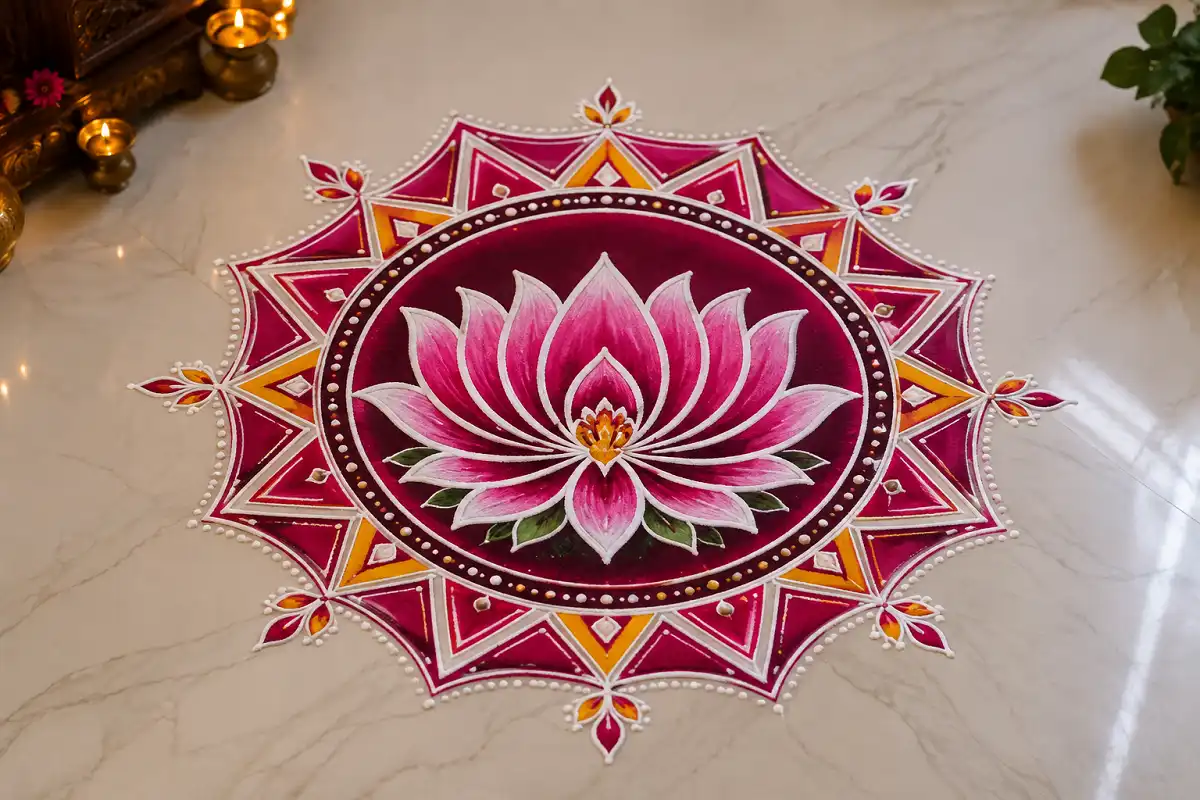
The Geometric Lotus Rangoli blends a lotus pattern with today’s geometric shapes. Instead of soft curved petals, make sharp petals with diamonds, triangles or other angular outlines.
Place the petals evenly around a center circle. Add a geometric border around them. Extra layers can make the Geometric Lotus Rangoli look bigger and more detailed.
Pink and white give a soft look while red, orange and gold add a festive touch. The Geometric Lotus Rangoli fits well near a pooja room or home entrance because it keeps the lotus meaning while offering a fresh geometric twist.
Fusion designs that mix traditional motifs with modern triangles are also a popular contemporary style.
Honeycomb Hexagon Rangoli
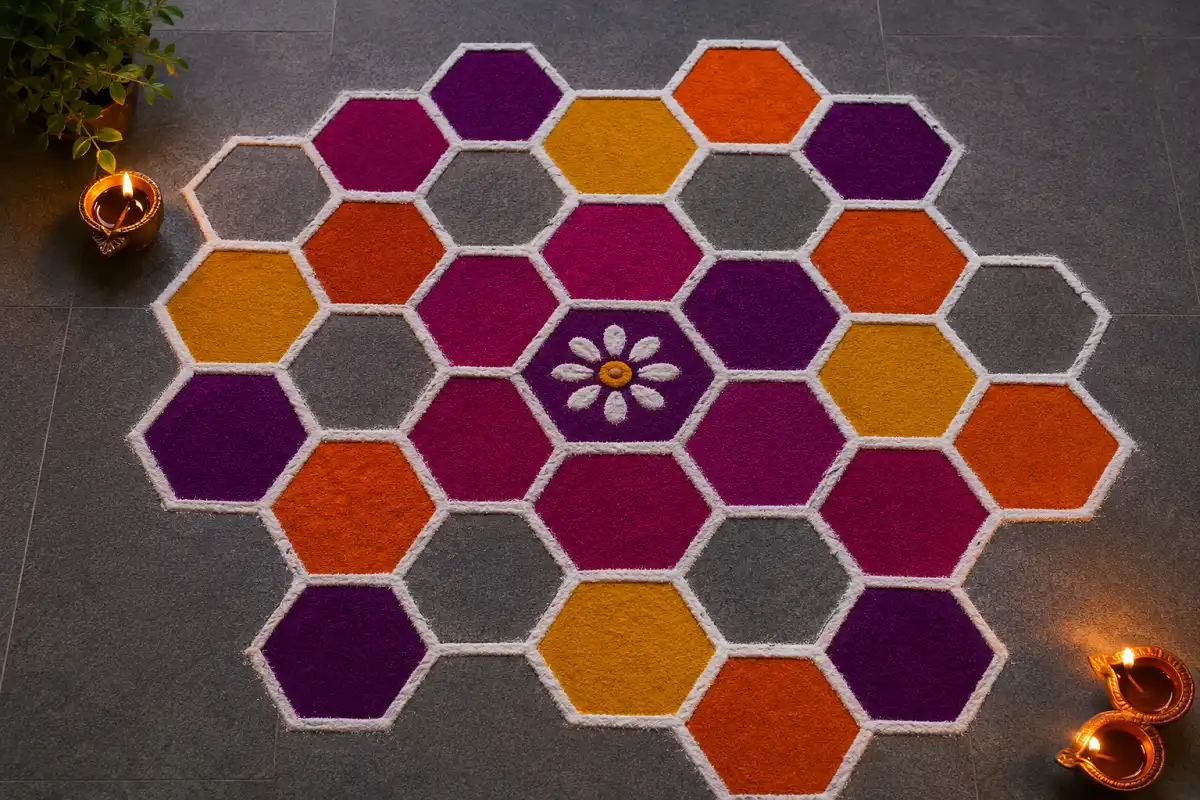
A Honeycomb Hexagon Rangoli uses repeated hexagons to create a design inspired by a honeycomb. Begin with one hexagon and slowly add matching hexagons around it.
You can fill hexagons with color and leave the others blank. This gives a negative-space effect and makes the repeated pattern stand out more clearly.
Use two or three shades for a striking look or stick to one color with white outlines for a minimalist style. The honeycomb pattern is visually impressive because of its repetition. It remains easy to understand.
This design works well for entrances, balconies and modern festive decorations. Hexagons are also considered a geometric shape in minimalist Rangoli design.
Circle and Triangle Fusion Rangoli
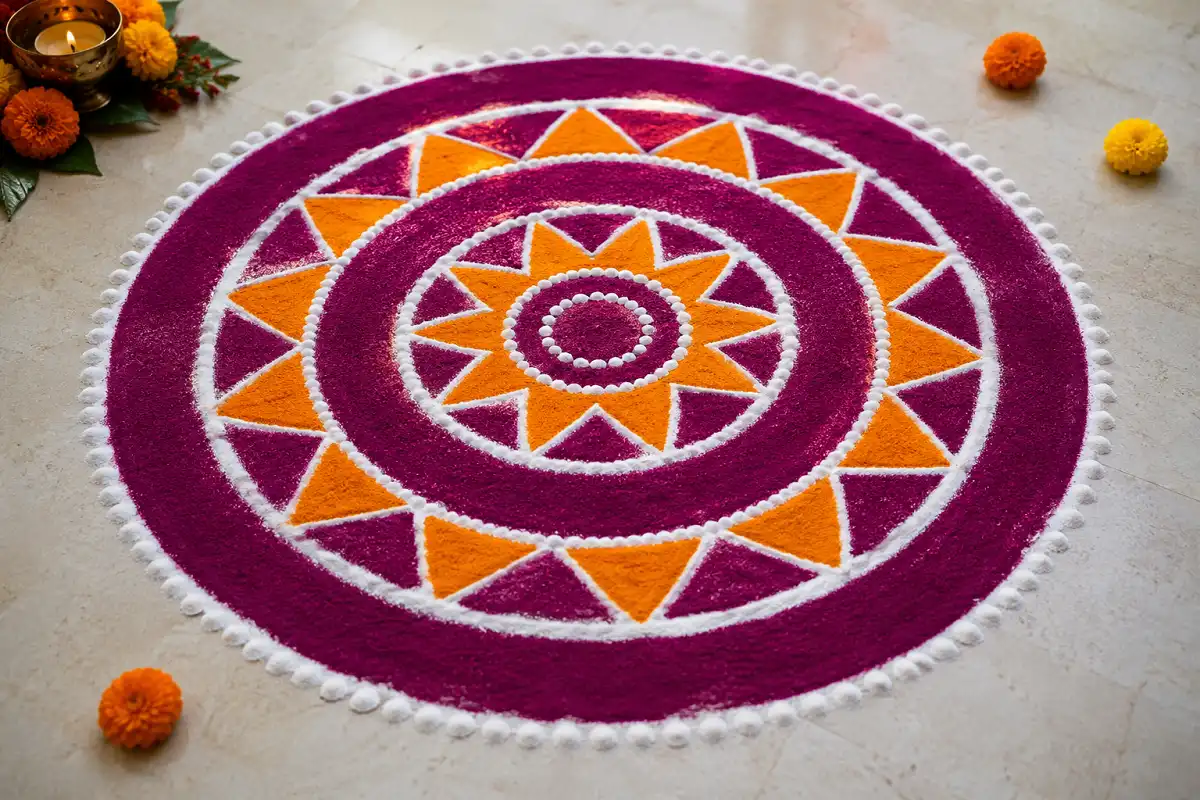
A Circle and Triangle Fusion Rangoli blends curves with bold geometric angles. Start by drawing two or three circles. Then place triangles evenly between the rings.
The triangles can face inward or outward based on the look you want. Keep the design balanced and symmetrical. Use one color for the circles and a different color for the triangles.
This mix of shapes creates a contrast between soft curves and sharp angles. It works well in homes because it feels structured but not too strict. You can make the design small for a doorway or grow the rings outward to make a big centerpiece for festivals.
Monochrome Line Rangoli
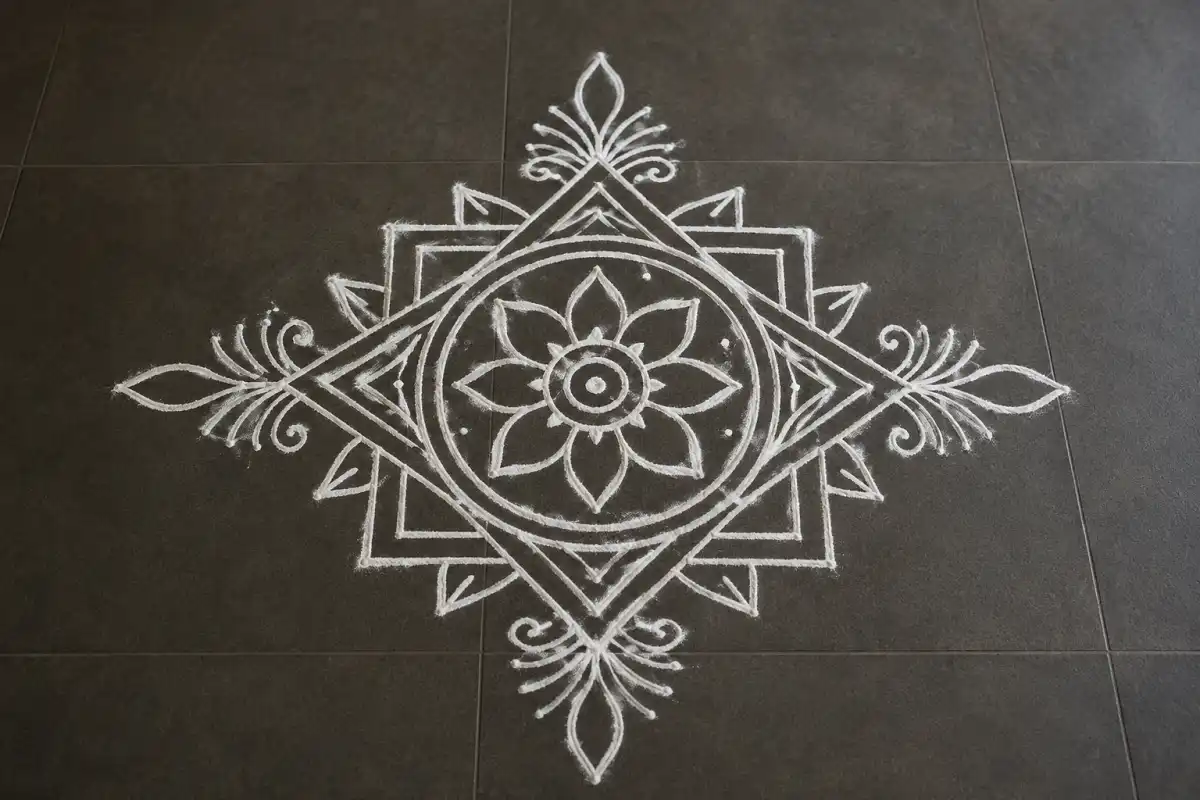
A Monochrome Line Rangoli uses one color to make an elegant design with outlines and precise geometric lines. White powder on a dark floor is a classic choice.
Build the design with squares, diamonds, circles, triangles or intersecting lines. Because Monochrome Line Rangoli uses one color, accurate spacing and symmetry become very important.
Monochrome Line Rangoli design should stay visible so that the design does not feel heavy. Monochrome Line Rangoli style is ideal for homes, offices and modern entrances. It gives a clean look without using many colors, making it one of the simplest ways to create contemporary geometric floor art.
3D Cube Geometric Rangoli
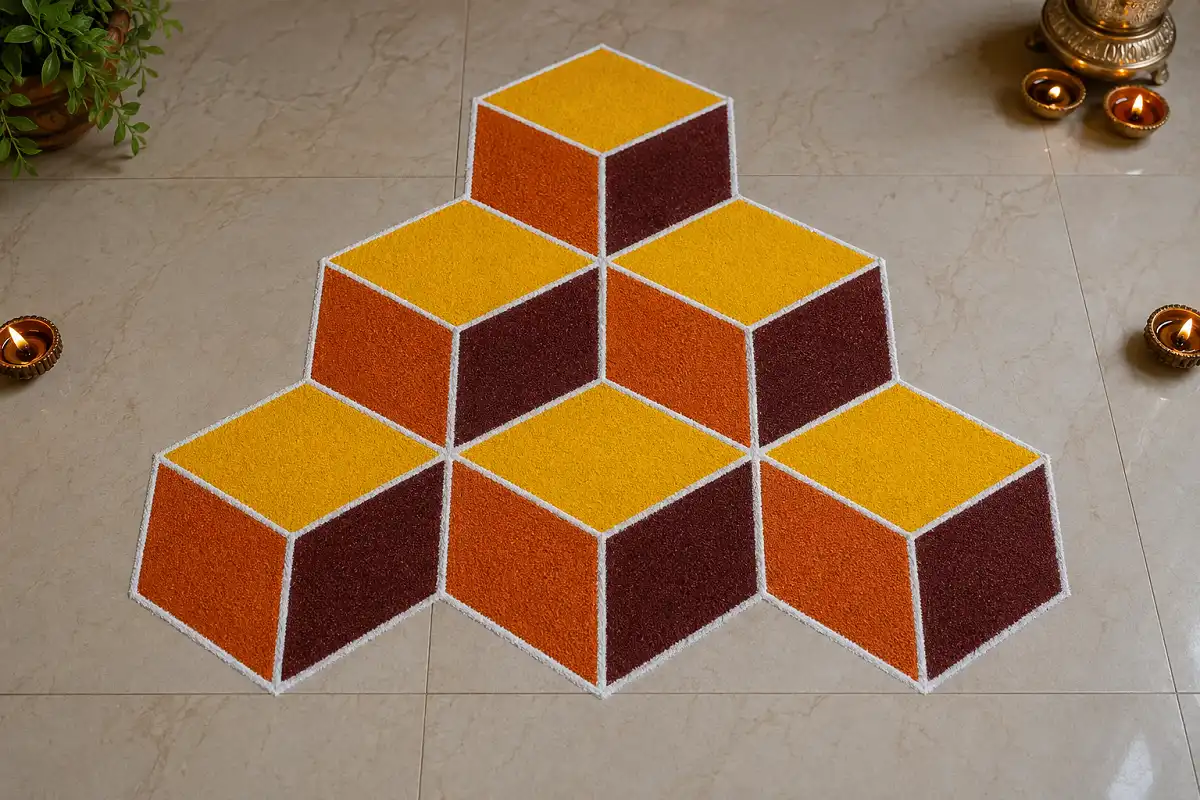
A 3D Cube Geometric Rangoli uses connected diamond shapes and careful shading to make flat floor designs look like three-dimensional cubes. The design stays flat. The use of color and angles tricks the eye into seeing depth.
Use light, medium and dark shades of the same color to show the different sides of each cube. The lines must be straight and even because the 3D effect depends on precise geometry.
This pattern can be repeated across a floor space or used as a single central design. It is a choice for someone who wants a unique and striking look while staying true to geometric Rangoli style.
Modern Diya Geometric Rangoli
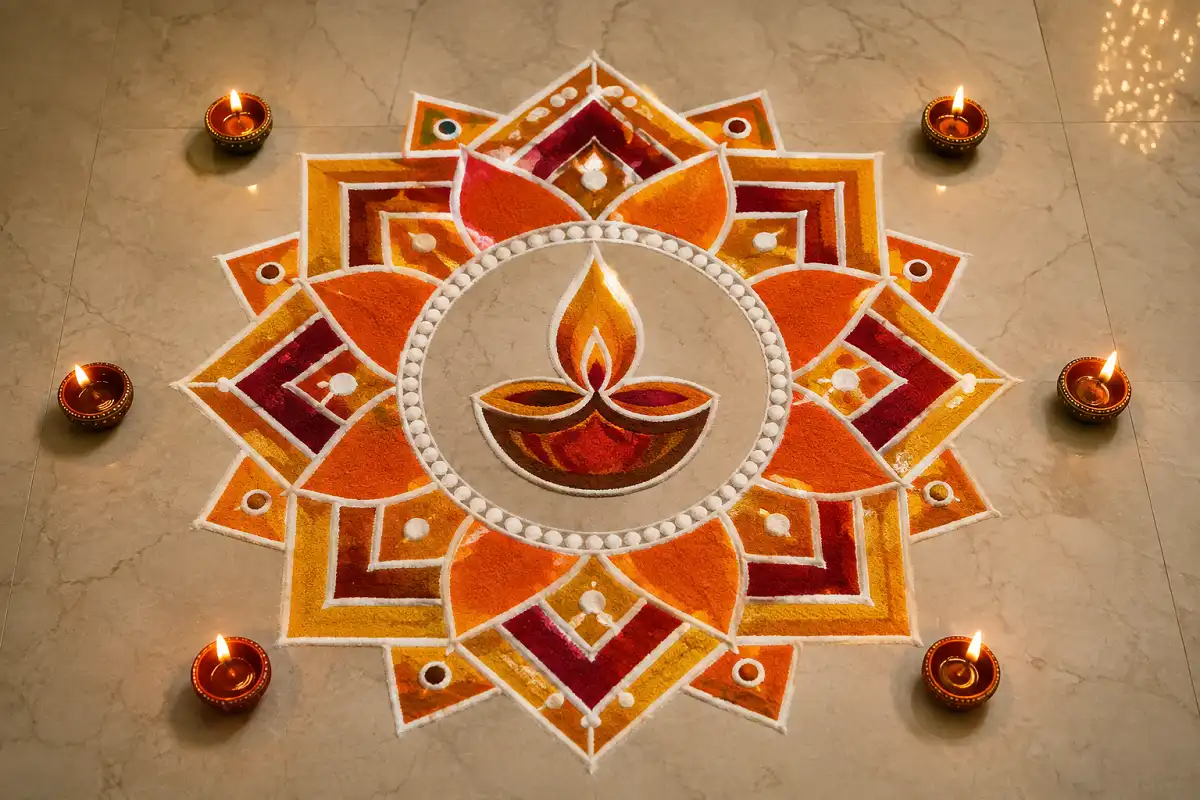
A Modern Diya Geometric Rangoli brings together a diya and a clean geometric design. Place a diya or diya-shaped symbol in the middle and add triangles, squares, diamonds or hexagons around it.
Make one or two layers around the center and keep the whole look tidy. Warm colors like gold, orange, red and white look amazing for events.
This style is perfect for Diwali, worship events and front doors. It gives you the feel of a Rangoli but with a modern touch that fits well in today’s homes.
Abstract Geometric Rangoli
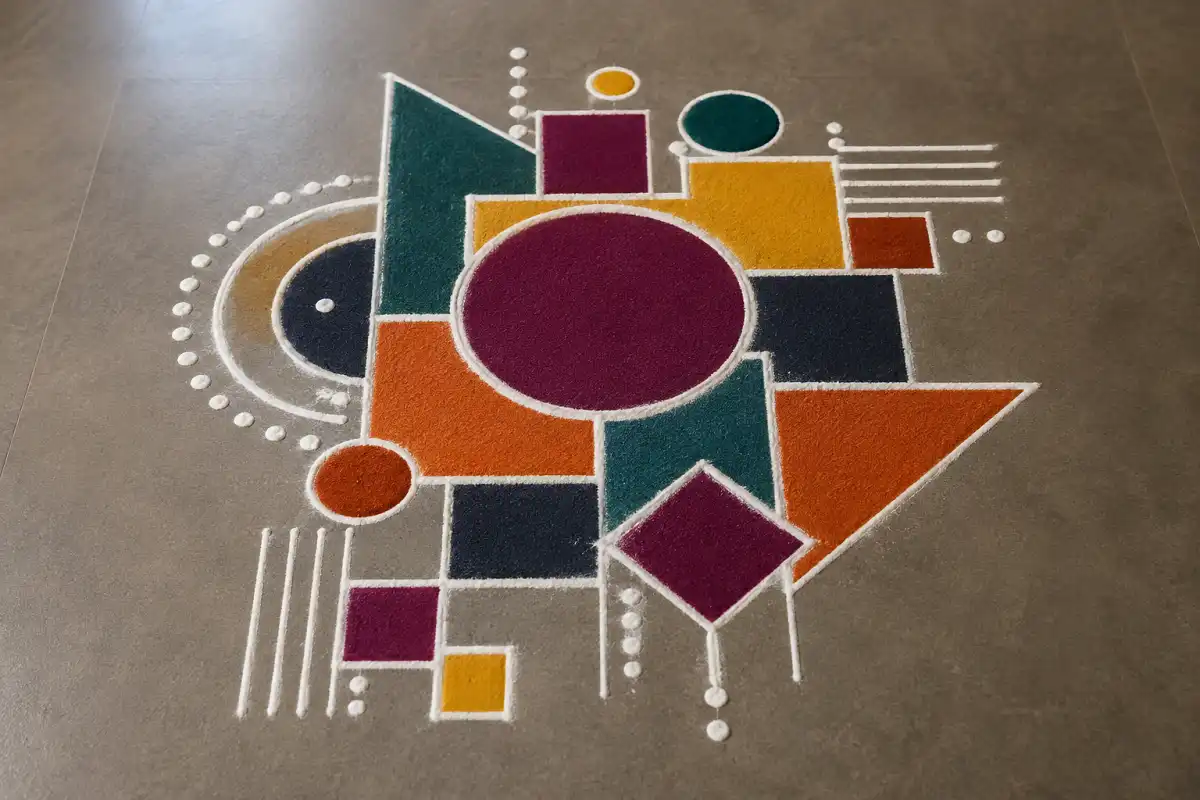
An Abstract Geometric Rangoli gives you the freedom to mix shapes in a creative and less traditional arrangement. Use circles, triangles, squares, diamonds, straight lines and blocks of color.
Unlike a symmetrical Rangoli, an Abstract Geometric Rangoli can be slightly asymmetrical while still keeping visual balance through repeated shapes and colors. Start with one focal point and build smaller elements around that main focal point.
A limited color palette will keep an Abstract Geometric Rangoli from looking crowded. This style is ideal for homeowners who want something contemporary. An Abstract Geometric Rangoli can also be customized to match the colors of the surrounding furniture, walls or festive decorations.
Modern geometric references commonly include combinations of squares, diamonds, circles, triangles and dots.
Simple Tips to Make a Geometric Rangoli Look Modern
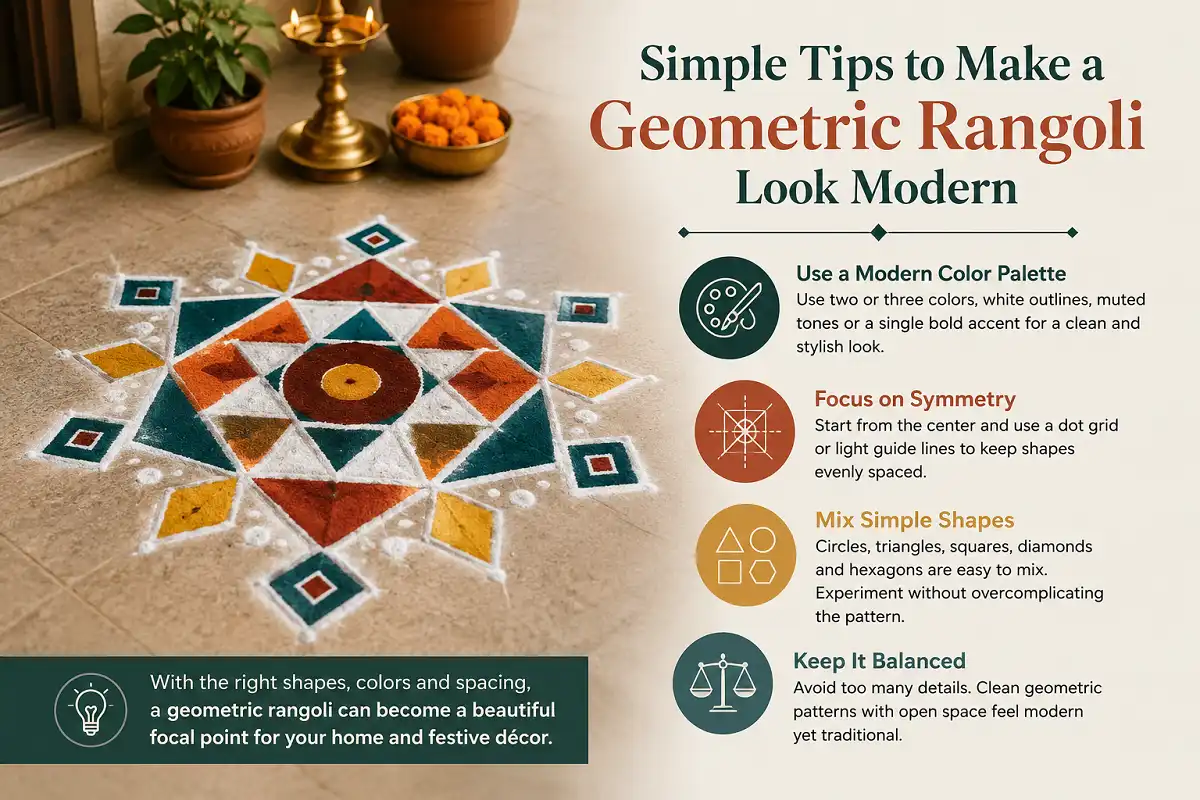
Keep the Palette Simple
Using two or three colors instead of filling every section with bright hues gives the design a cleaner, more stylish look.
Use Contrast
White outlines, muted tones or a single bold accent color can help keep the overall feel fresh.
Build From the Center
Start by marking the center and then use a dot grid or light guide lines to keep shapes evenly spaced.
Leave Some Open Space
A clean geometric pattern with open space feels modern while still keeping that traditional charm of Rangoli.
With the shapes, colors and spacing, a geometric Rangoli can become a beautiful focal point for your entrance, living area or festive décor.
A few simple tweaks can make a traditional geometric Rangoli look more modern. I find that using two or three colors instead of filling every section with bright hues gives the design a cleaner, more stylish look. White outlines, muted tones or a single bold accent color can also help keep the overall feel fresh.
Symmetry also makes a difference. I like to start by marking the center and then use a dot grid or light guide lines to keep shapes evenly spaced. Circles, triangles, squares, diamonds and hexagons are easy to mix, so experimenting with these shapes does not make the pattern too complicated.
Keep the design balanced and avoid adding too many details. I think a clean geometric pattern with open space feels modern but still keeps that traditional charm of Rangoli.
Bringing Geometric Rangoli into Your Home
Geometric Rangoli for Modern Homes is a simple way to bring a traditional touch into a contemporary space without making it feel too busy. Clean shapes, open spaces, and a few carefully chosen colors can make a Rangoli look both festive and modern. If you enjoy experimenting with different styles, you can also explore Rangoli designs for inspiration.
I like keeping things simple with a small diamond or hexagon near the entrance, or trying a larger geometric mandala when there is more space. You do not have to follow one fixed pattern. Mix different shapes, change the colors, or leave some areas empty to make the design work naturally with your home décor.
If you are new to Rangoli, start with a design that feels comfortable and easy to draw. A simple square, diamond, triangle, or circle can be a great starting point. With a little patience and creativity, even a basic pattern can make your entrance feel warm, welcoming, and ready for any celebration.
For more traditional background and information about Rangoli as an Indian floor-art tradition, you can also read the Rangoli article on Wikipedia.
Explore More Rangoli Ideas
Looking for more patterns, color combinations and visual inspiration? Follow Rangoli Designs on Pinterest for more ideas to explore.
FAQs
Find quick answers to common questions about geometric Rangoli designs for modern homes.
 What is a geometric Rangoli?
A geometric Rangoli is a floor design made using simple shapes such as circles, triangles, squares, diamonds, and hexagons. These shapes are arranged in a balanced or repeating pattern to create a neat and attractive design. Geometric patterns can be simple enough for beginners or more detailed for experienced artists.
Is geometric Rangoli suitable for modern homes?
Yes, geometric Rangoli works especially well in modern homes. Clean lines, simple shapes, open spaces, and a limited number of colors can create a stylish look without making the entrance feel crowded. You can choose a small design for an apartment doorway or a larger pattern for a spacious foyer.
Which geometric shapes are easiest for beginners?
Circles, squares, triangles, and diamonds are some of the easiest shapes to start with. You can begin with one shape in the center and gradually add similar shapes around it. Starting with a simple symmetrical pattern can also make it easier to keep the design balanced.
How many colors should I use in a modern geometric Rangoli?
Two or three colors are usually enough for a modern geometric Rangoli. White combined with one or two shades such as terracotta, gold, pink, blue, or green can create a clean appearance. Using fewer colors also helps the geometric shapes stand out more clearly.
How can I make my geometric Rangoli look more symmetrical?
Start by marking a clear center point and build the design outward from there. You can divide the pattern into four, six, or eight equal sections and repeat the same shapes in each section. Keeping the spacing and angles consistent will make the finished Rangoli look much more balanced.