White Rangoli Design: Elegant Patterns for Every Occasion
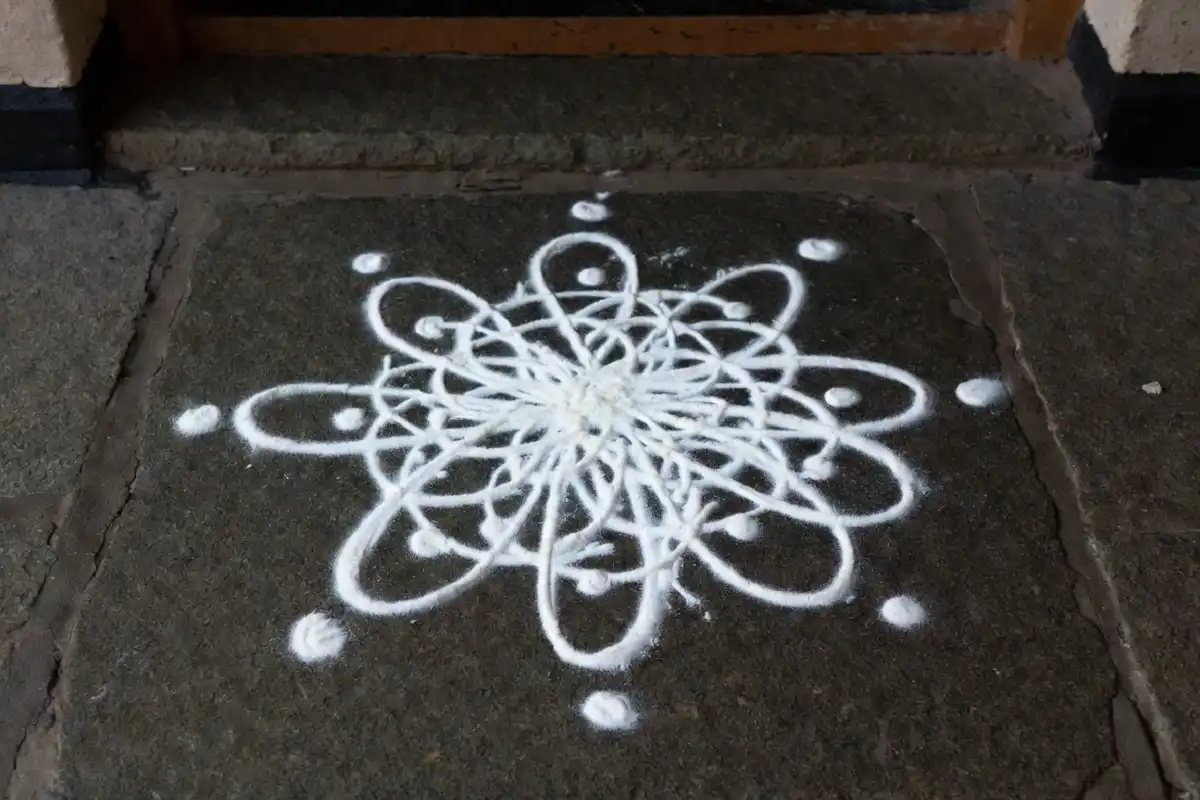
White rangoli design holds a special place in Indian art and tradition. Unlike colorful festival rangoli, white designs bring a quiet elegance that works beautifully for everyday decoration, religious occasions, and special celebrations.
Made with rice flour, chalk, or white powder, these patterns can range from simple daily kolam to intricate designs for weddings and festivals. This guide covers the best ideas, techniques, materials, and tips to help you create stunning white rangoli at home.
The Meaning Behind White Rangoli Design
White has deep cultural significance in Indian tradition. It represents purity, clarity, and new beginnings. In many South Indian homes, a fresh white kolam drawn at the doorstep each morning is considered an act of devotion and an invitation for positive energy to enter the home.
White rangoli is also eco-friendly. Rice flour, the most traditional material, feeds ants and small insects rather than harming them. This connects the art form to a philosophy of living in harmony with nature.
The simplicity of white also makes the pattern itself stand out. Without the distraction of multiple colors, the lines, curves, and symmetry become the main focus.
Types of White Rangoli Design
Rice Flour Kolam
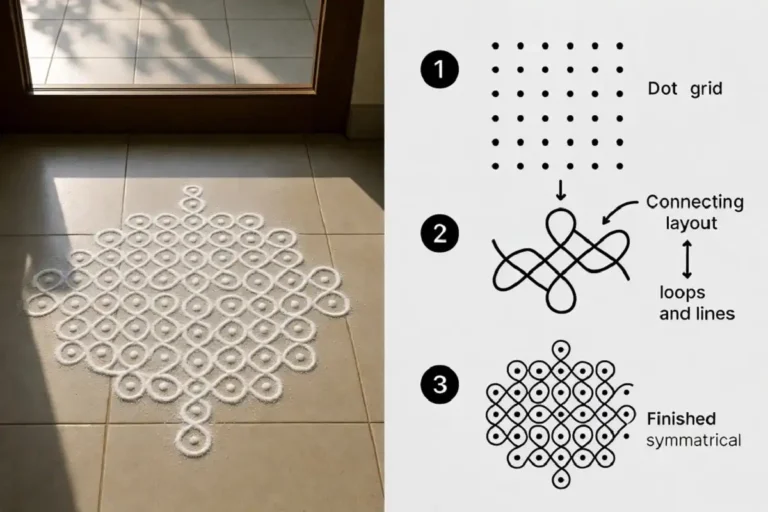
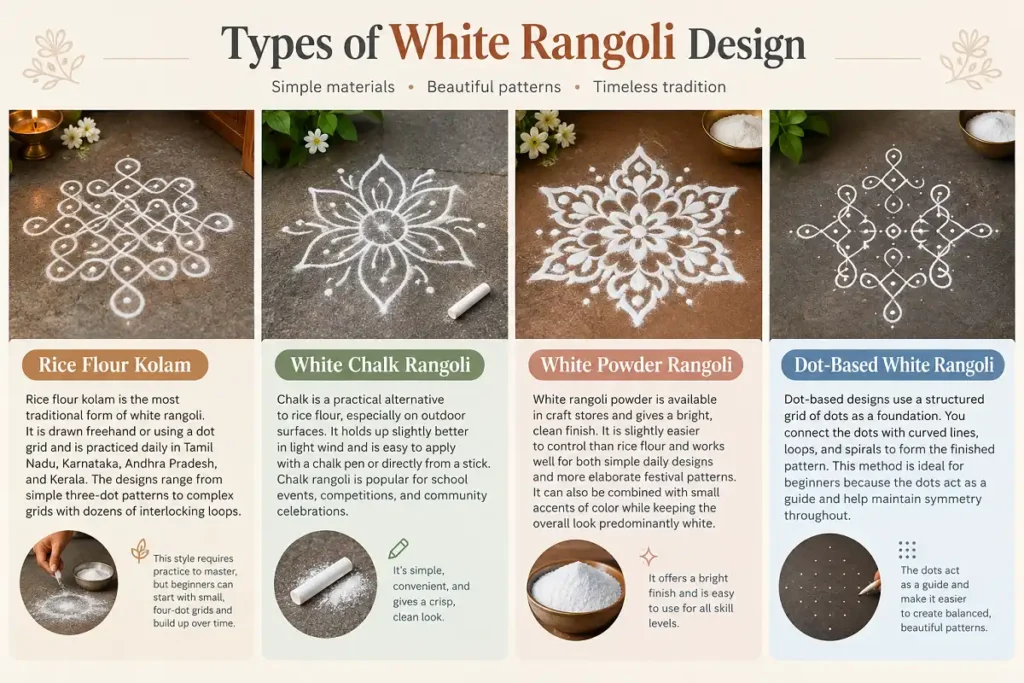
Rice flour kolam is the most traditional form of white rangoli. It is drawn freehand or using a dot grid and is practiced daily in Tamil Nadu, Karnataka, Andhra Pradesh, and Kerala. The designs range from simple three-dot patterns to complex grids with dozens of interlocking loops.
This style requires practice to master, but beginners can start with small four-dot grids and build up over time. The flour flows naturally through the fingers, and with a steady hand, even simple patterns look graceful.
Type 02White Chalk Rangoli
Chalk is a practical alternative to rice flour, especially on outdoor surfaces. It holds up slightly better in light wind and is easy to apply with a chalk pen or directly from a stick. Chalk rangoli is popular for school events, competitions, and community celebrations.
Type 03White Powder Rangoli
White rangoli powder is available in craft stores and gives a bright, clean finish. It is slightly easier to control than rice flour and works well for both simple daily designs and elaborate festival patterns.
You can combine white powder with small accents of color while keeping the overall design predominantly white.
Dot-Based White Rangoli
Dot-based designs use a structured grid of dots as a foundation. You connect the dots with curved lines, loops, and spirals to form the finished pattern.
This method is ideal for beginners because the dots act as a guide and help maintain symmetry throughout the design.
White Rangoli Design for Festivals
Diwali
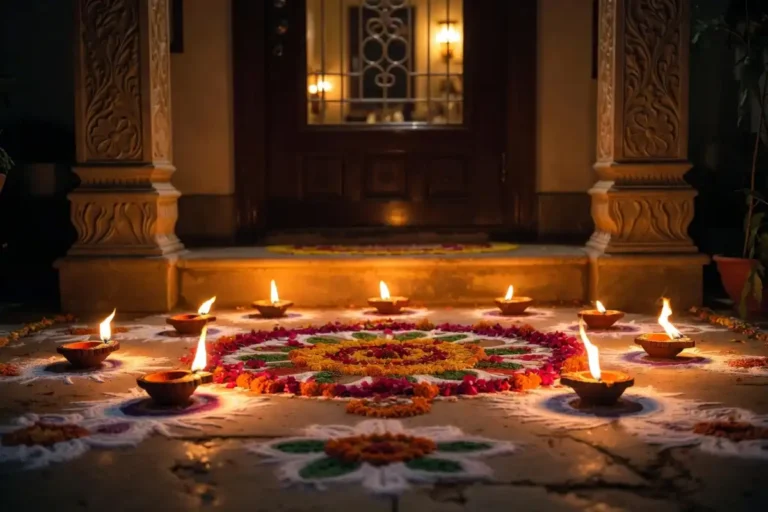
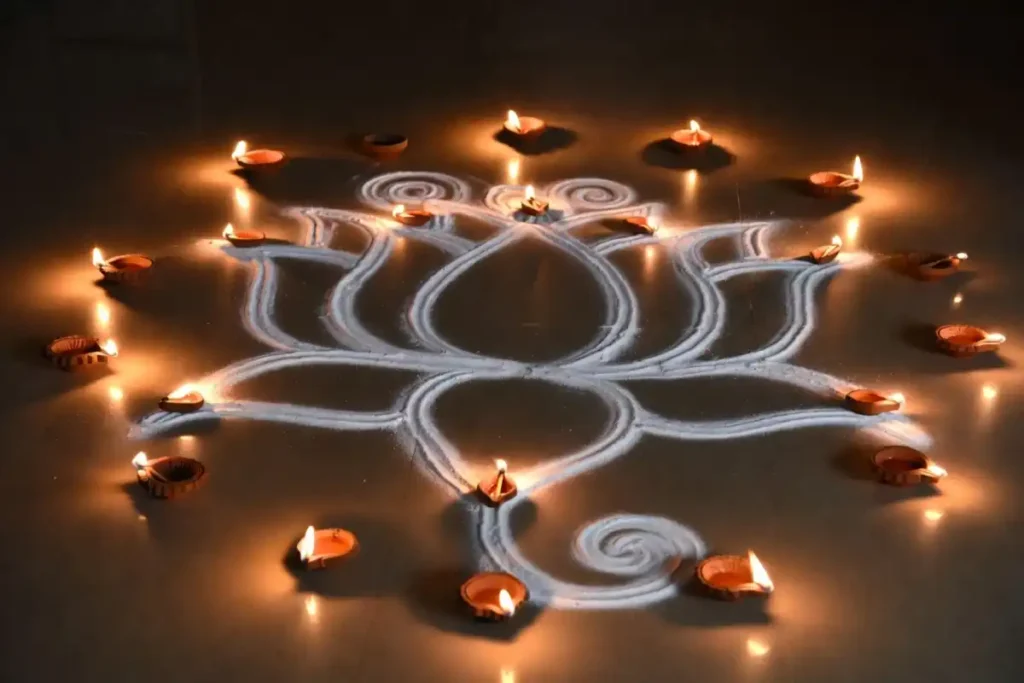
White rangoli is a striking choice for Diwali because it contrasts beautifully with the warm glow of diyas placed around or within the pattern.
A white lotus or geometric design surrounded by lit oil lamps creates a deeply traditional and visually powerful effect.
Navratri and Pooja Occasions
White rangoli is particularly fitting for religious ceremonies and pooja settings. The clean, uncluttered look creates a sense of reverence.
Designs featuring the lotus, Om symbol, or concentric circles are common choices for pooja rooms and prayer spaces.
Weddings and Housewarmings
In South Indian weddings, elaborate white kolam patterns can cover the floor of the mandap or entrance hall. These designs often feature peacocks, elephants, creepers, and geometric borders.
A fresh white rangoli at the threshold of a new home during a housewarming is also a widespread tradition across India.
How to Make White Rangoli Design: Tips for Beginners
Getting started with white rangoli is simpler than it looks. These steps will help you build confidence from the beginning.
Start With a Small Dot Grid
Begin with a 3×3 or 5×5 grid of dots to create a clear framework for your design.
Use a Squeeze Bottle or Cone
A small paper cone or plastic squeeze bottle gives you more control than applying powder directly with your fingers.
Practice on Paper First
Sketch your design on paper before drawing it on the floor so you can become comfortable with the pattern.
Keep Lines Smooth and Steady
Move your hand at a consistent pace to create clean and even lines throughout the design.
Work From the Center Outward
Start from the center and gradually move toward the outside to reduce the chance of smudging completed sections.
Popular White Rangoli Patterns and Motifs
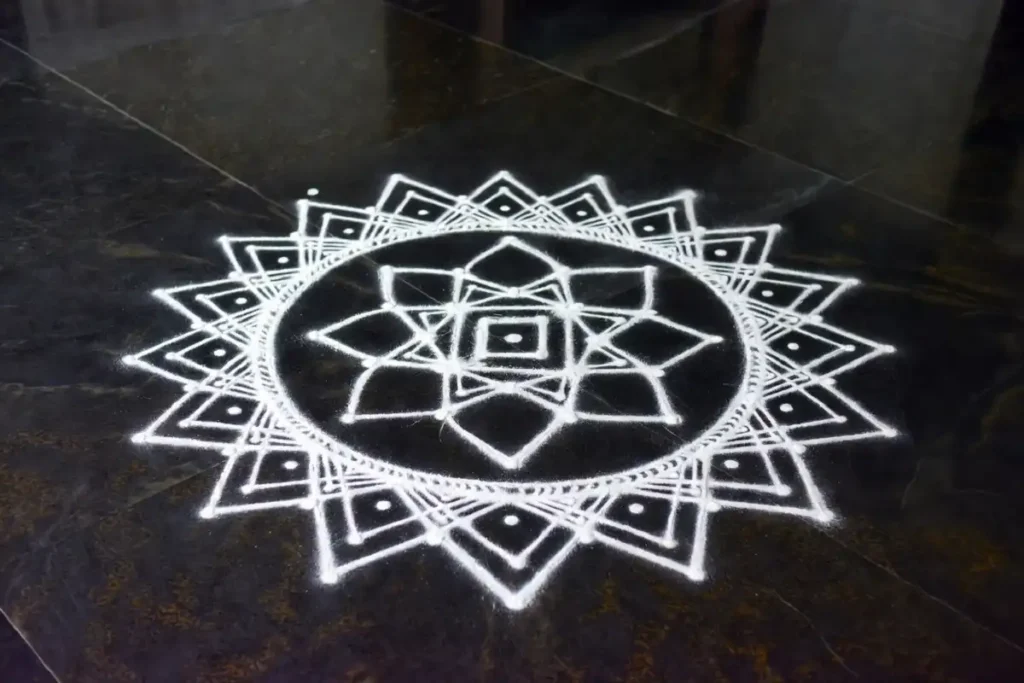
Lotus Pattern
The lotus is one of the most common motifs in white rangoli. Its radiating petals create a naturally symmetrical and elegant design.
Peacock Pattern
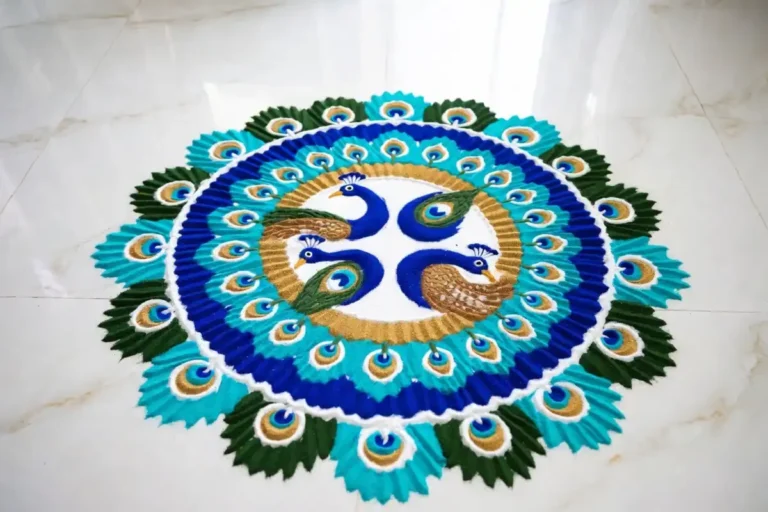
Flowing tail feathers and curved lines make the peacock an intricate motif that works beautifully for weddings and religious events.
Geometric Patterns
Triangles, hexagons, and concentric circles rely on precision and symmetry, making them especially striking in white.
Creeper and Vine Borders
Flowing curved lines can create beautiful borders around a central motif and are commonly used in South Indian kolam and wedding decorations.
Choosing the Right Material for White Rangoli
The material you use affects the texture, durability, and ease of your design.
Rice Flour
Traditional, eco-friendly, and widely available. Best for daily kolam and indoor use.
White Chalk Powder
Bright and practical for outdoor floors and rough surfaces. Easy to sweep away afterward.
Marble Powder
Provides a smooth, fine finish and works well for detailed patterns where precision matters.
White Sand
Creates a textured, matte effect that works well for decorative and contemporary designs.
Combining White With Color
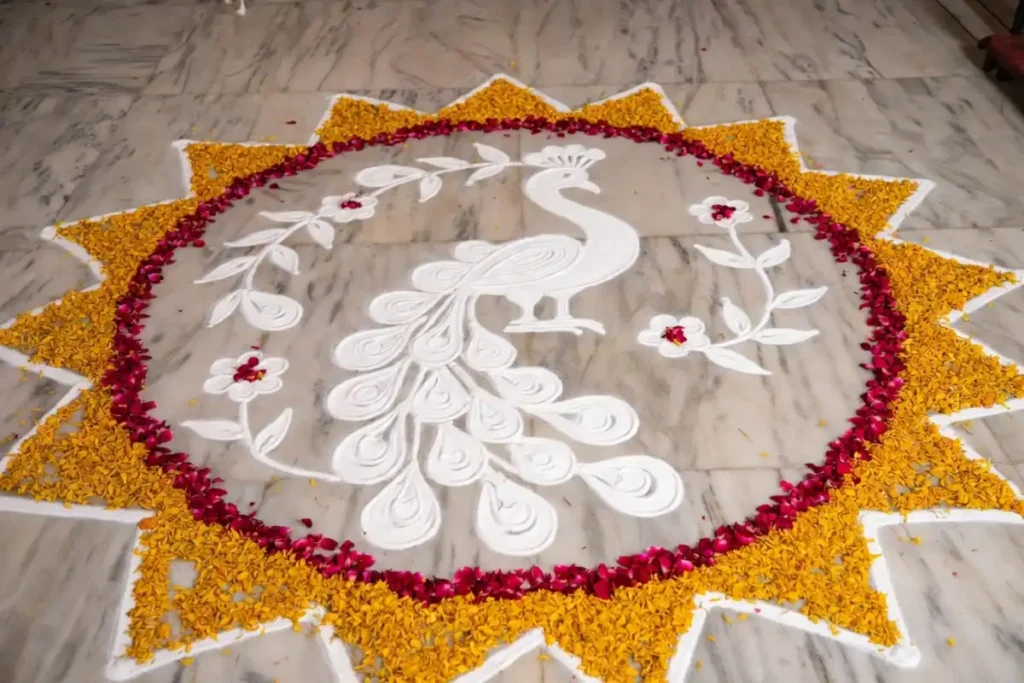
White rangoli does not have to stand alone. Many artists use white as the primary base and add small touches of color to highlight key areas of the design.
White + Yellow
Bright and warm for festive settings.
White + Red
Traditional and visually striking.
White + Green
Fresh and inspired by nature.
White + Pink
Soft and elegant for celebrations.
You can also place colorful flower petals around the edges of a white powder design to add natural vibrancy. Marigolds and rose petals work particularly well.
Caring for Your White Rangoli
Draw in a sheltered area to protect the design from wind.
Avoid making designs where foot traffic is heavy.
Apply a light mist of water over chalk designs to help them set slightly outdoors.
Photograph the design right after completion for the best light and sharpness.
White rangoli design is a timeless tradition that combines art, devotion, and daily practice into something genuinely beautiful.
Its simplicity is its greatest strength. With just rice flour or white powder, you can create patterns ranging from a quick morning kolam to an elaborate wedding centerpiece.
Whether you are just starting out or looking to refine your technique, white rangoli rewards patience and practice.
Start simple, practice regularly, and let every line become part of your own creative tradition.FAQs About White Rangoli Design
What is white rangoli design?
White rangoli design is a form of traditional Indian floor art created using white materials such as rice flour, chalk, or white powder.
What is the best material for white rangoli?
Rice flour is the most traditional and eco-friendly choice, while white chalk powder works well on outdoor surfaces. White marble powder is useful for detailed designs.
Is white rangoli suitable for Diwali?
Yes. White rangoli looks especially striking during Diwali when surrounded by the warm glow of diyas.
How do beginners start with white rangoli?
Beginners can start with a small dot grid, use a paper cone for better control, and practice simple patterns before moving to larger designs.
Can white rangoli be made every day?
Yes. In many South Indian homes, a fresh white kolam is drawn at the doorstep each morning as a daily devotional practice.
How is white rangoli different from colorful rangoli?
White rangoli focuses primarily on form, line quality, and symmetry rather than color. It has a quieter and more meditative character.