Traditional Girl Rangoli Design: 20 Beautiful Ideas to Try
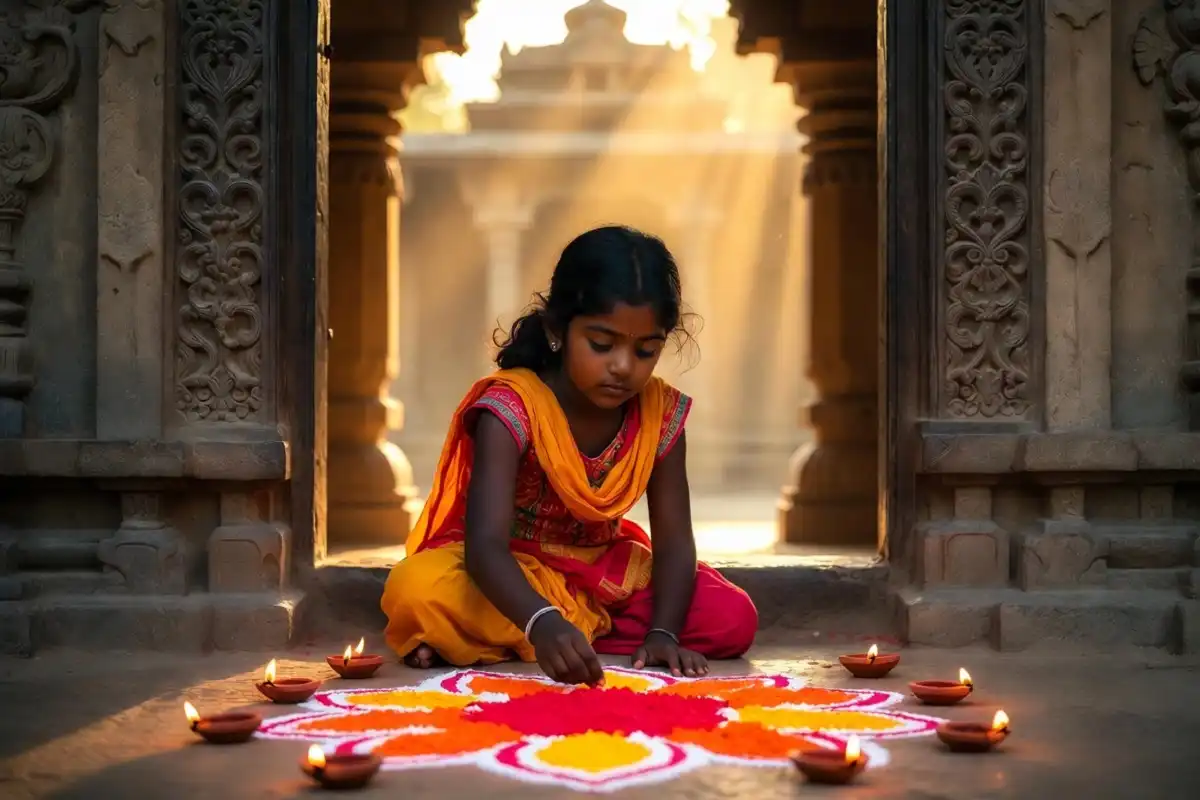
Every girl who has grown up in an Indian household knows the magic of bending down at the doorstep, fingers dusted with color, crafting a rangoli that makes the whole home come alive. The traditional girl rangoli design is more than a floor decoration it’s a ritual, a language, and an art form passed down through generations.
Whether you’re a curious beginner or someone revisiting this ancient craft, this guide walks you through 20 stunning traditional rangoli design ideas that are deeply rooted in culture and easy enough to bring to life. From geometric patterns and floral motifs to peacock-inspired artistry, there’s something here for every skill level and every celebration.
What Is a Traditional Girl Rangoli Design?
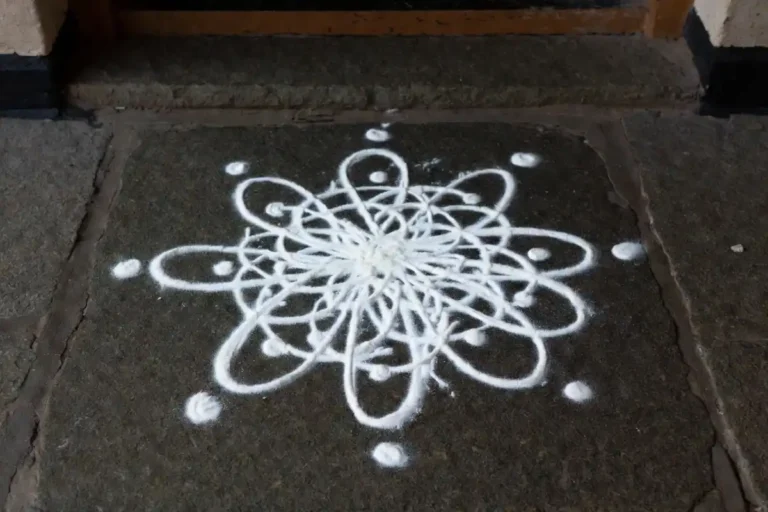
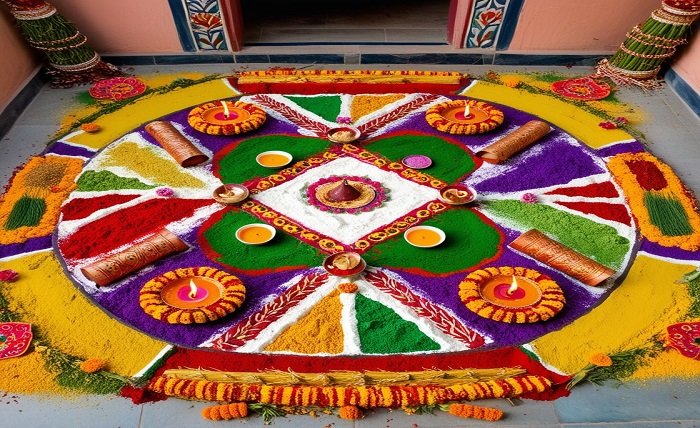
A traditional girl rangoli design refers to the decorative floor patterns made using colored powders, flower petals, chalk, or rice flour typically created by women and girls during Indian festivals, weddings, and auspicious occasions. The word rangoli comes from the Sanskrit words rang (color) and aavalli (row of colors).
Historically, rangoli was considered a feminine art form in India, with women and girls creating intricate patterns to welcome deities, attract positive energy, and celebrate important milestones. These designs vary by region they’re called kolam in Tamil Nadu, alpona in Bengal, muggu in Andhra Pradesh, and mandana in Rajasthan.
According to Wikipedia’s entry on Rangoli, this art form is one of the oldest continuous art traditions in India, dating back over 5,000 years. The designs often carry deep symbolic meaning lotus flowers represent purity, peacocks symbolize grace, and geometric patterns reflect cosmic harmony.
Why Traditional Rangoli Designs Are Still Relevant Today
In the age of digital art and modern décor, traditional girl rangoli designs have not lost their charm — they’ve evolved. Here’s why they’re still loved:
Cultural Identity
Rangoli keeps Indian traditions alive across generations.
Mindfulness
The act of creating rangoli is meditative and stress-relieving.
Festive Energy
Nothing sets a celebratory mood like a vibrant rangoli at the entrance.
Community Bonding
Girls and women often create rangoli together, strengthening social ties.
Creativity Outlet
It encourages artistic expression without expensive materials.
For quick patterns that beginners can learn, check out these easy rangoli design ideas to start your journey with confidence.
20 Traditional Girl Rangoli Design Ideas
Classic Lotus Flower Rangoli
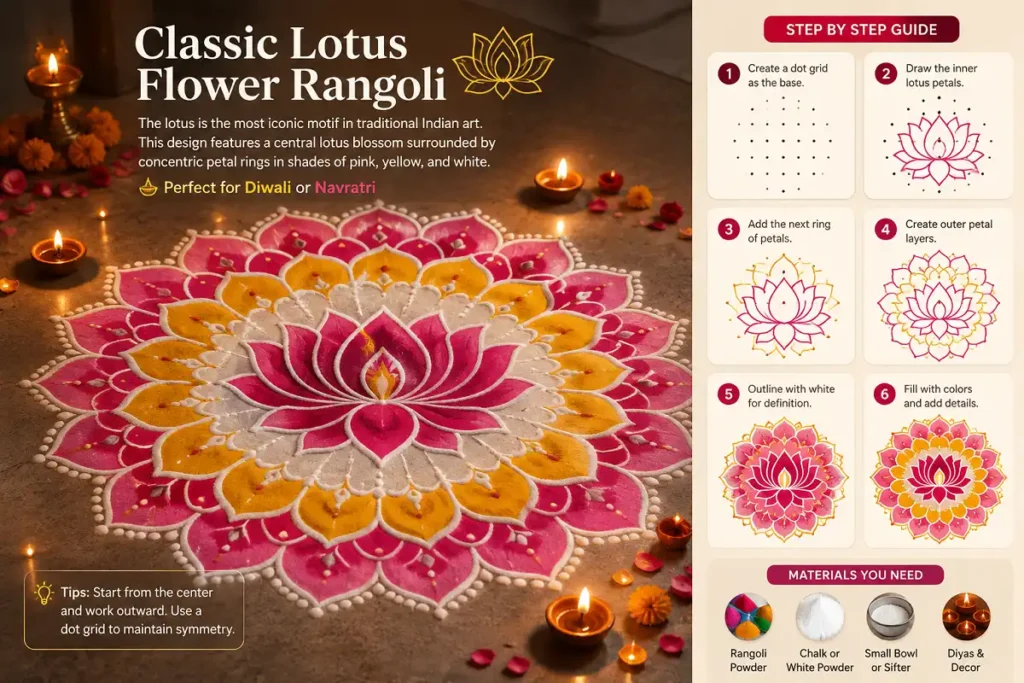
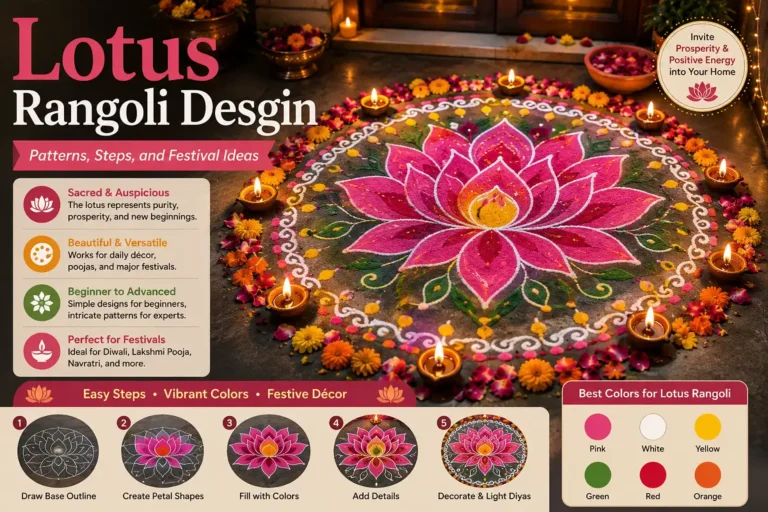
The lotus is the most iconic motif in traditional Indian art. This design features a central lotus blossom surrounded by concentric petal rings in shades of pink, yellow, and white. It’s deeply spiritual and perfect for Diwali or Navratri.
Peacock Rangoli Design for Girls
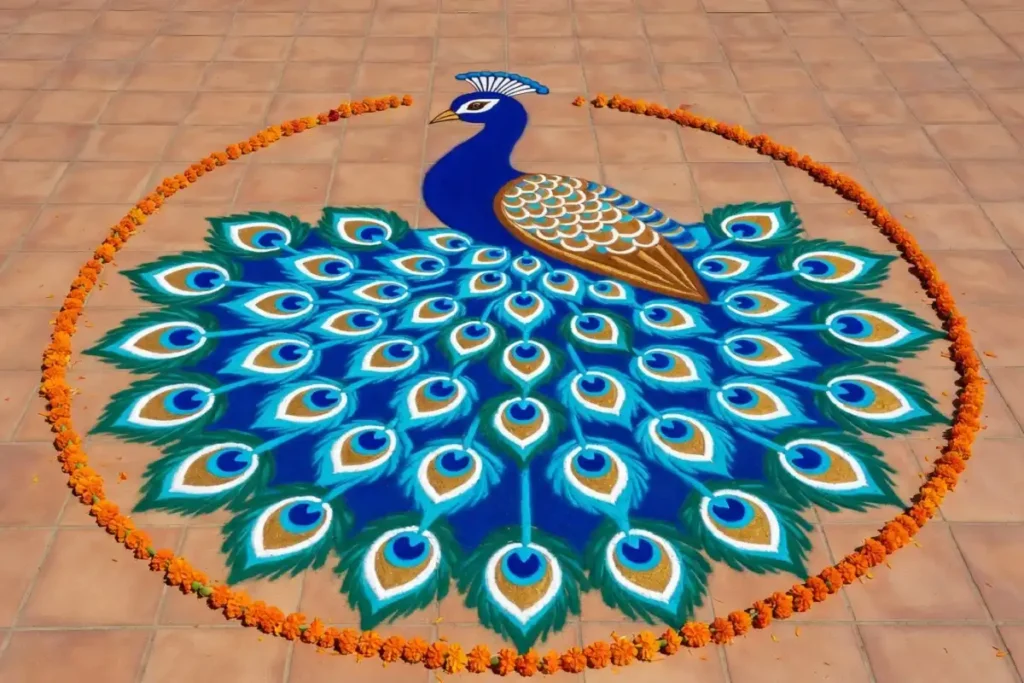
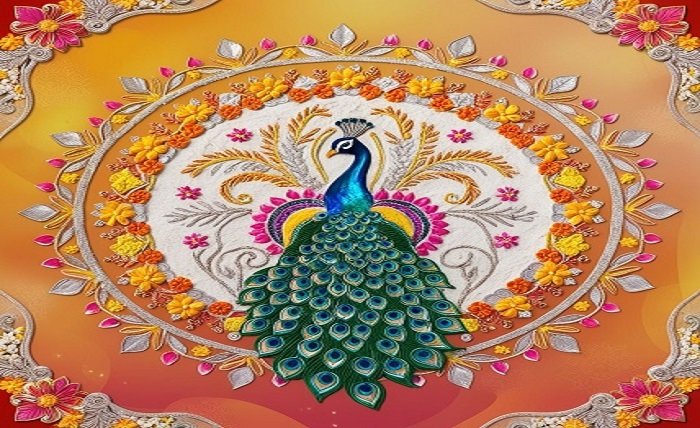
The peacock is India’s national bird and a timeless subject in folk art. A traditional girl peacock rangoli design showcases a majestic bird with a fanned tail made of colorful feathers — each one a teardrop of color.
Geometric Star Pattern Rangoli
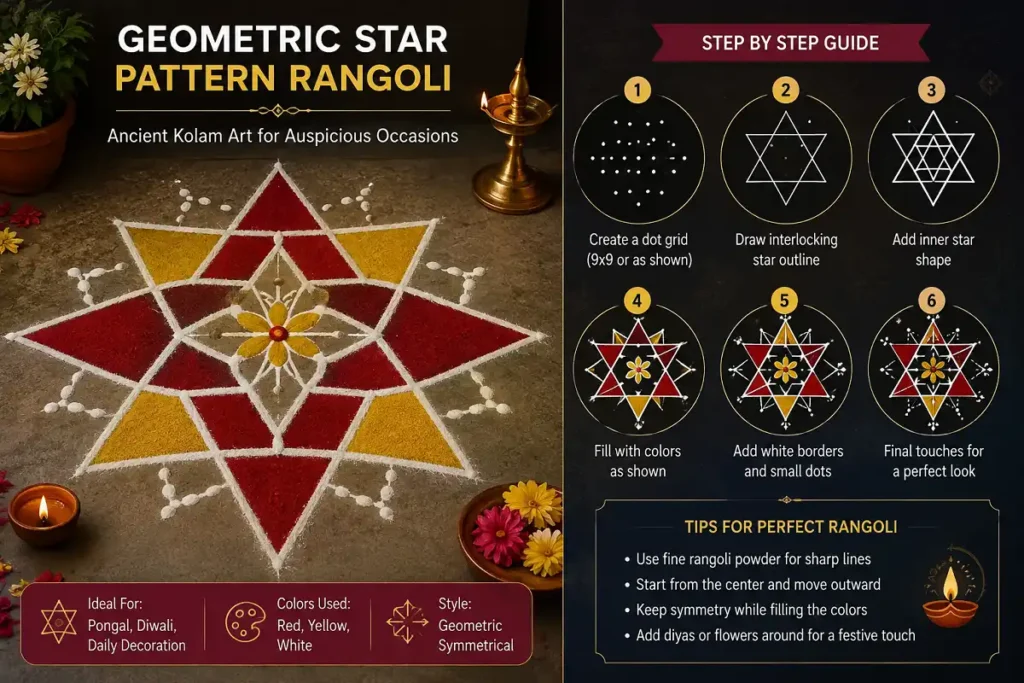
Inspired by ancient kolam traditions, this design features interlocking stars built from a dot grid. It’s highly symmetrical and uses bold contrast colors like red, yellow, and white.
Diya (Oil Lamp) Rangoli
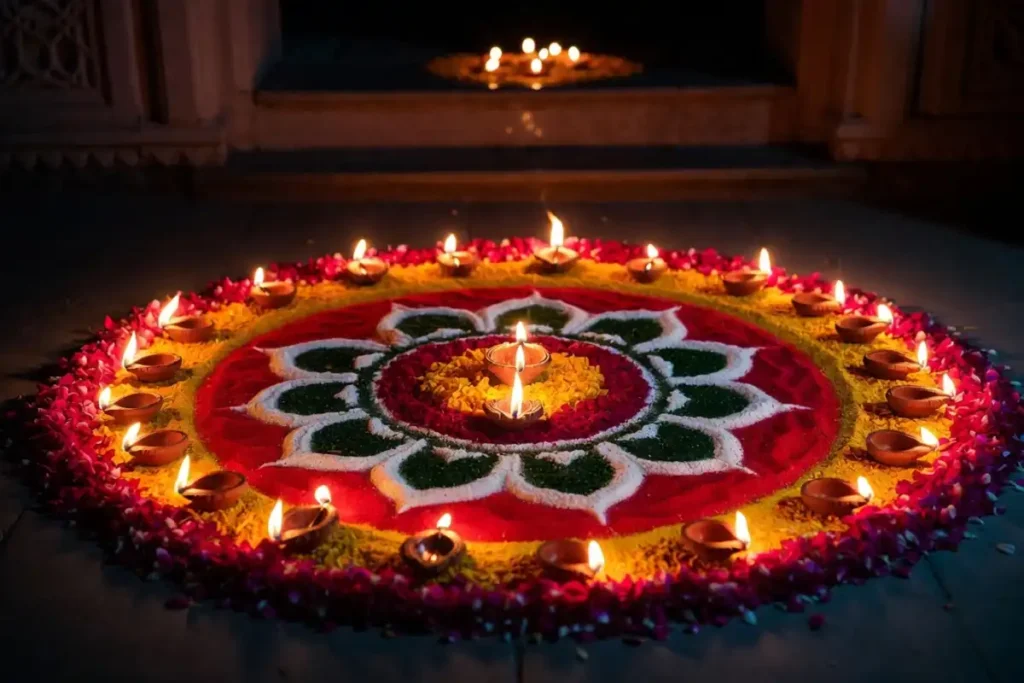
A traditional girl rangoli design for Diwali often features diyas — small clay oil lamps — arranged in circular or flower-shaped patterns. This design is both festive and deeply symbolic.
For more Diwali-specific inspiration, browse these Diwali rangoli design ideas that range from simple to stunning.
Flower Petal Rangoli (Phool Rangoli)
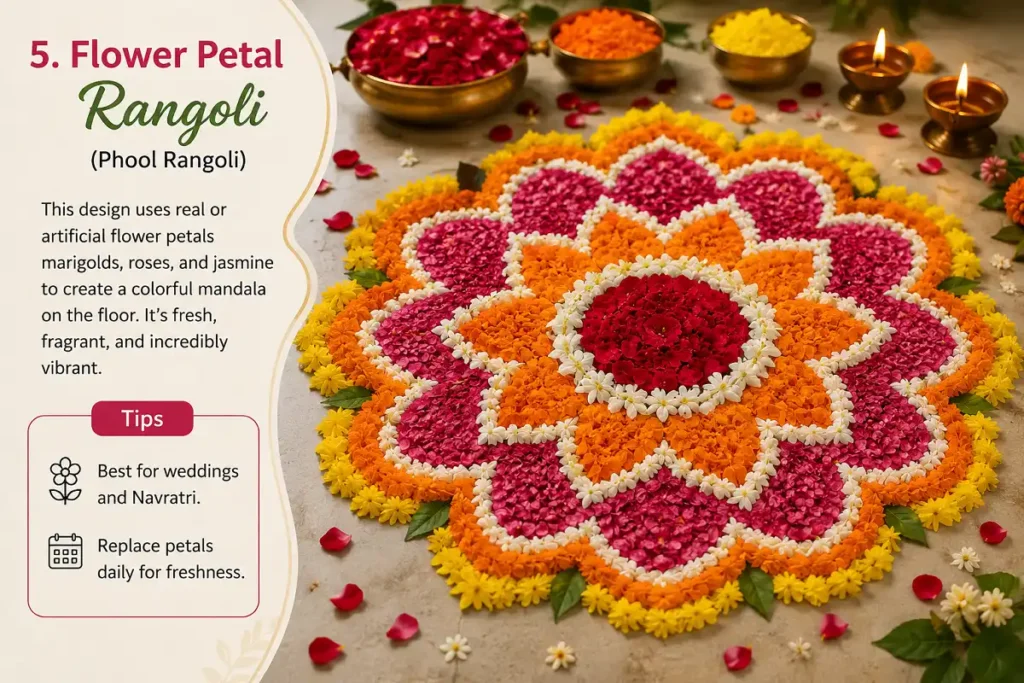
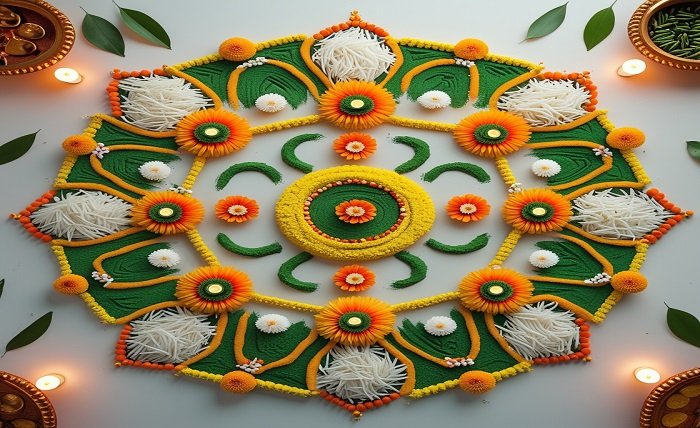
This design uses real or artificial flower petals — marigolds, roses, and jasmine — to create a colorful mandala on the floor. It’s fresh, fragrant, and incredibly vibrant.
Swastika & Om Symbol Rangoli
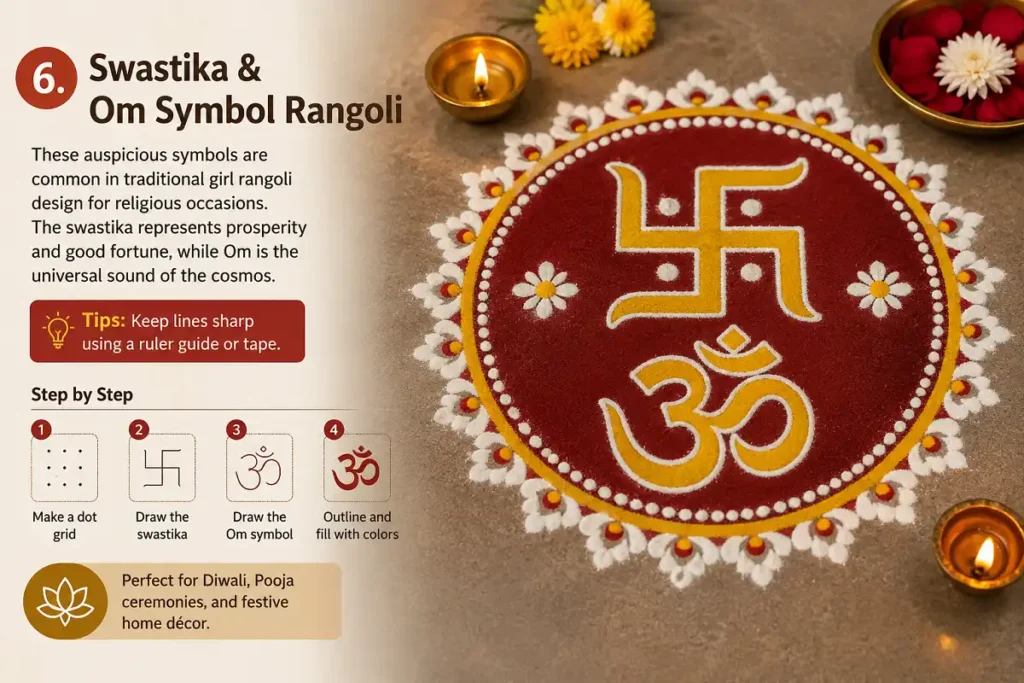
These auspicious symbols are common in traditional girl rangoli design for religious occasions. The swastika represents prosperity and good fortune, while Om is the universal sound of the cosmos.
Simple Dot Grid Kolam
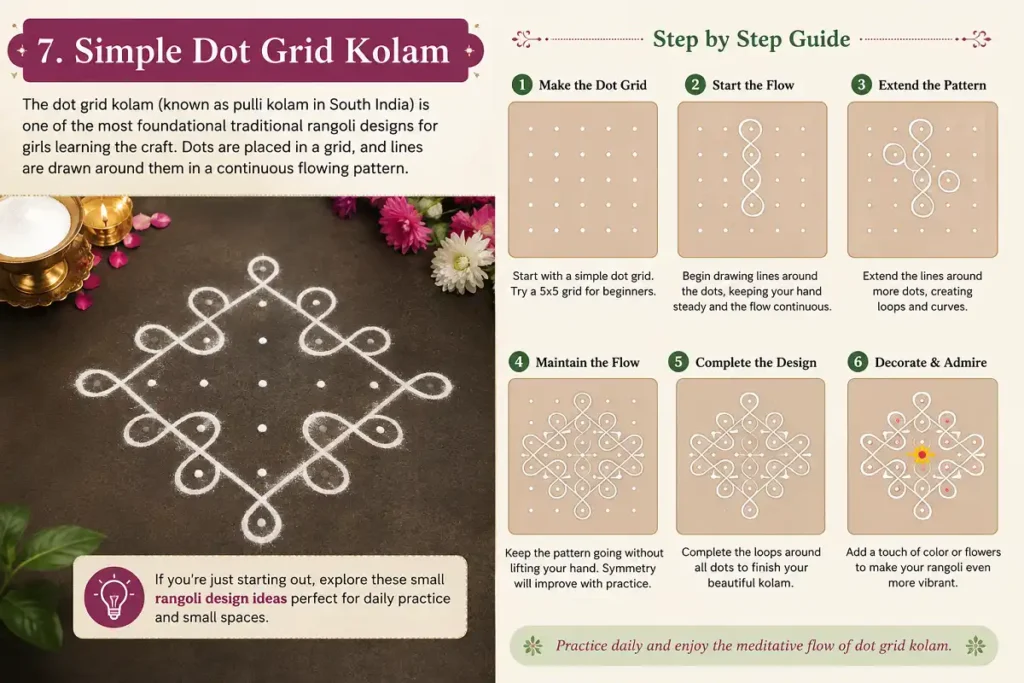
The dot grid kolam (known as pulli kolam in South India) is one of the most foundational traditional rangoli designs for girls learning the craft. Dots are placed in a grid, and lines are drawn around them in a continuous flowing pattern.
If you’re just starting out, explore these small rangoli design ideas — perfect for daily practice and small spaces.
Radha-Krishna Inspired Rangoli
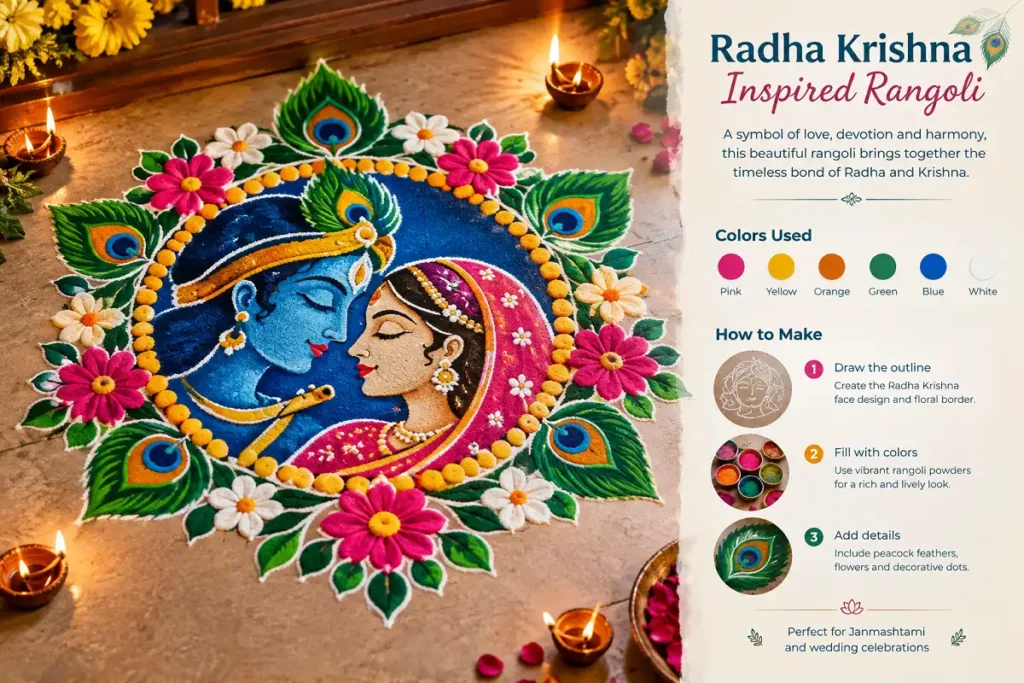
This romantic design features the silhouettes or faces of Radha and Krishna, surrounded by floral borders and peacock feathers. Popular during Janmashtami and wedding ceremonies.
Butterfly Garden Rangoli
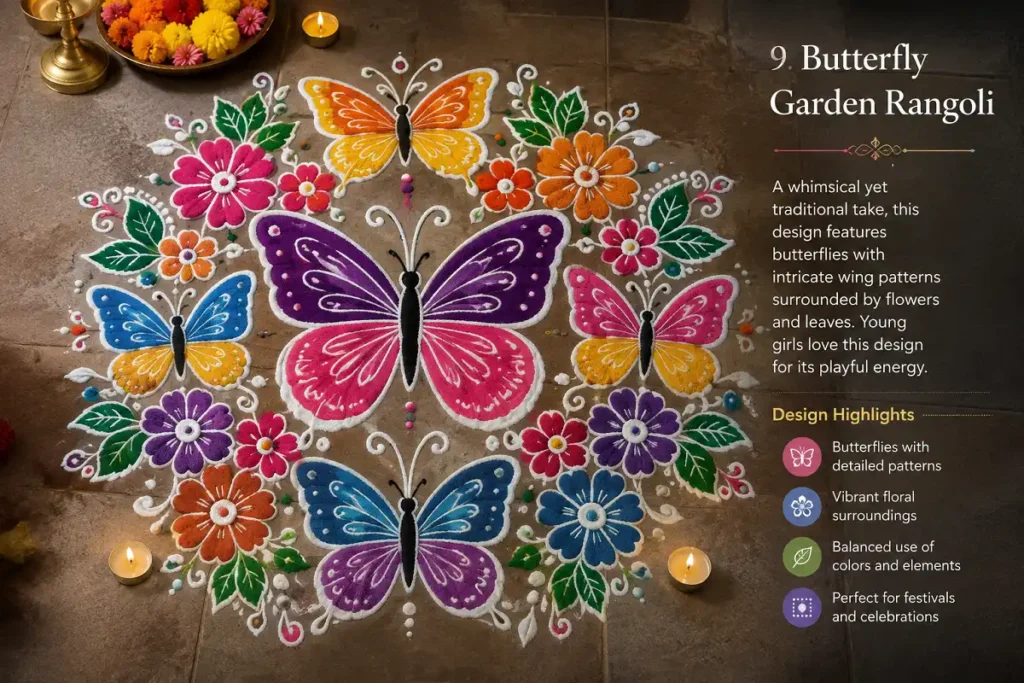
A whimsical yet traditional take, this design features butterflies with intricate wing patterns surrounded by flowers and leaves. Young girls love this design for its playful energy.
Traditional Border Rangoli with Floral Motifs
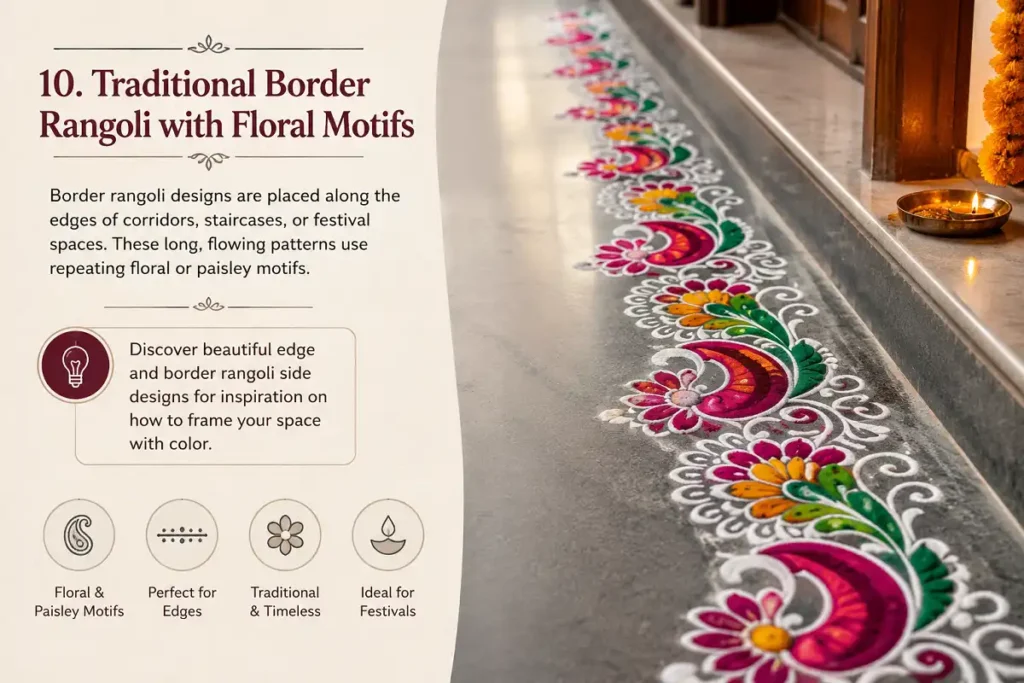
Border rangoli designs are placed along the edges of corridors, staircases, or festival spaces. These long, flowing patterns use repeating floral or paisley motifs.
Discover beautiful edge and border rangoli side designs for inspiration on how to frame your space with color.
Mango (Paisley) Motif Rangoli
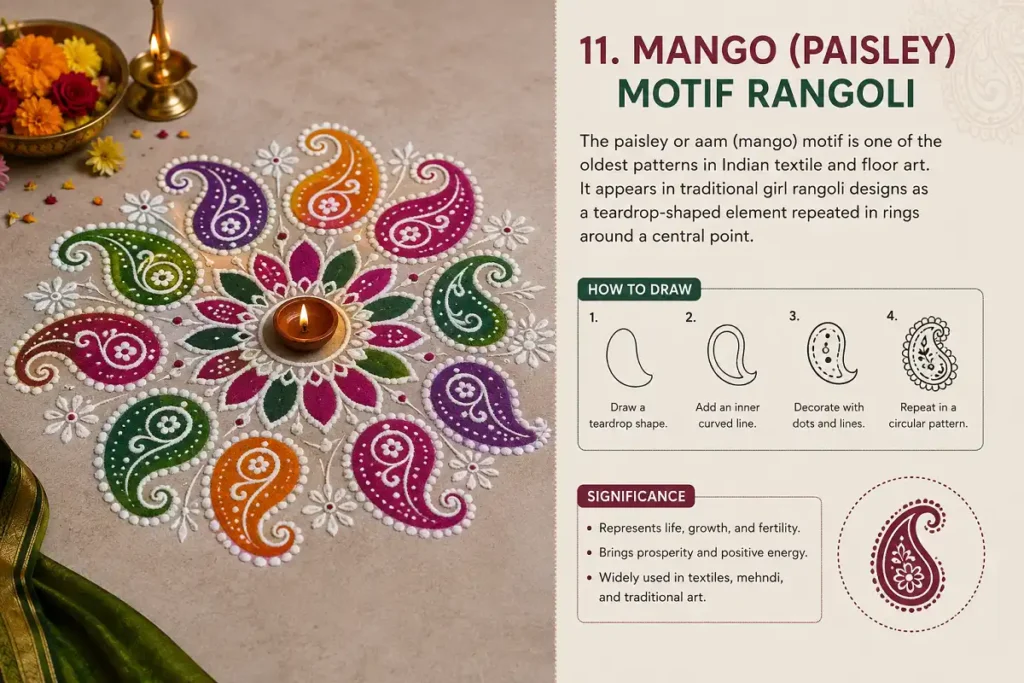
The paisley — or aam (mango) motif — is one of the oldest patterns in Indian textile and floor art. It appears in traditional girl rangoli designs as a teardrop-shaped element repeated in rings around a central point.
Goddess Lakshmi Footprint Rangoli
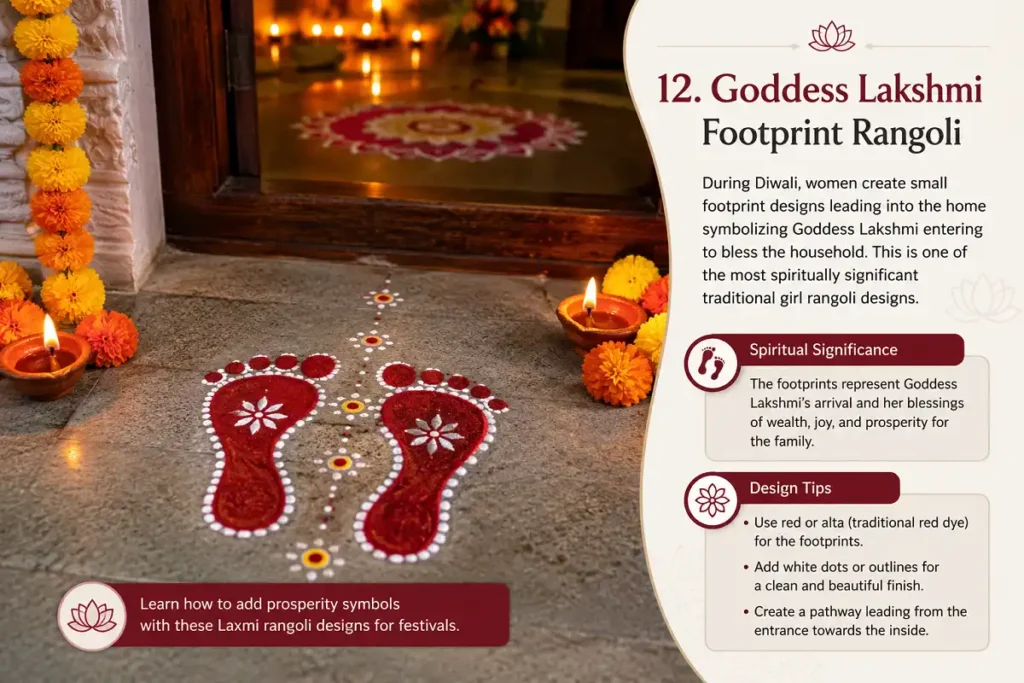
During Diwali, women create small footprint designs leading into the home — symbolizing Goddess Lakshmi entering to bless the household. This is one of the most spiritually significant traditional girl rangoli designs.
Learn how to add prosperity symbols with these Laxmi rangoli designs for festivals.
Village Scene Rangoli
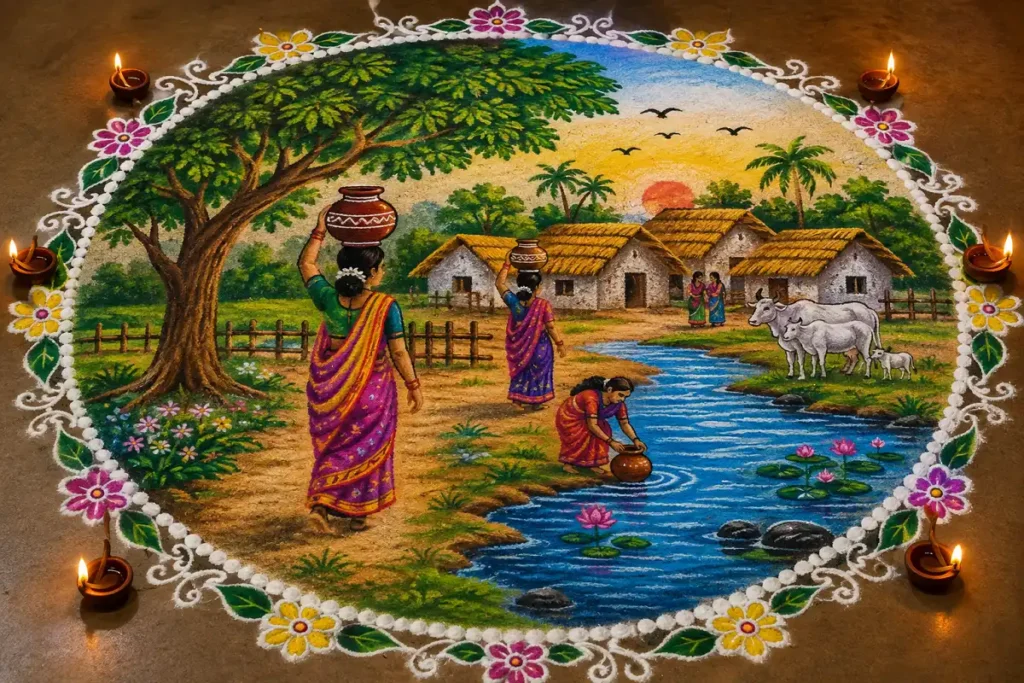
A narrative rangoli depicting a traditional Indian village — huts, trees, women carrying pots, cows, and rivers — tells a story through color. This type is more advanced but incredibly rewarding.
Sun and Moon Rangoli
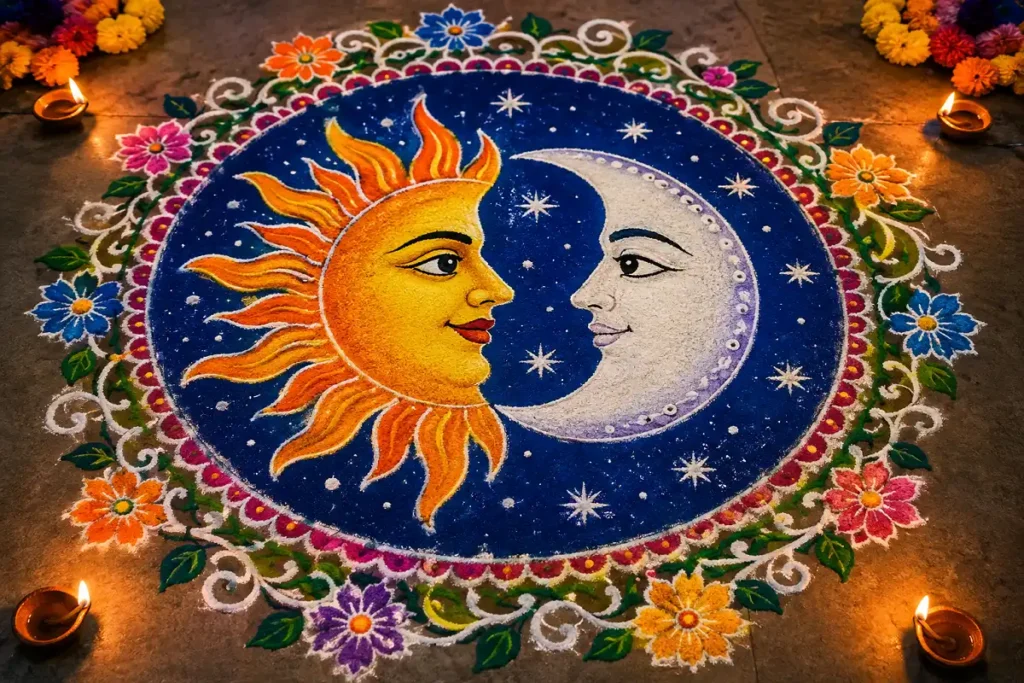
A celestial design featuring the sun and moon surrounded by stars and floral borders. Often done in yellow, orange, white, and blue, this design is popular during harvest festivals like Makar Sankranti.
Freehand Floral Mandala
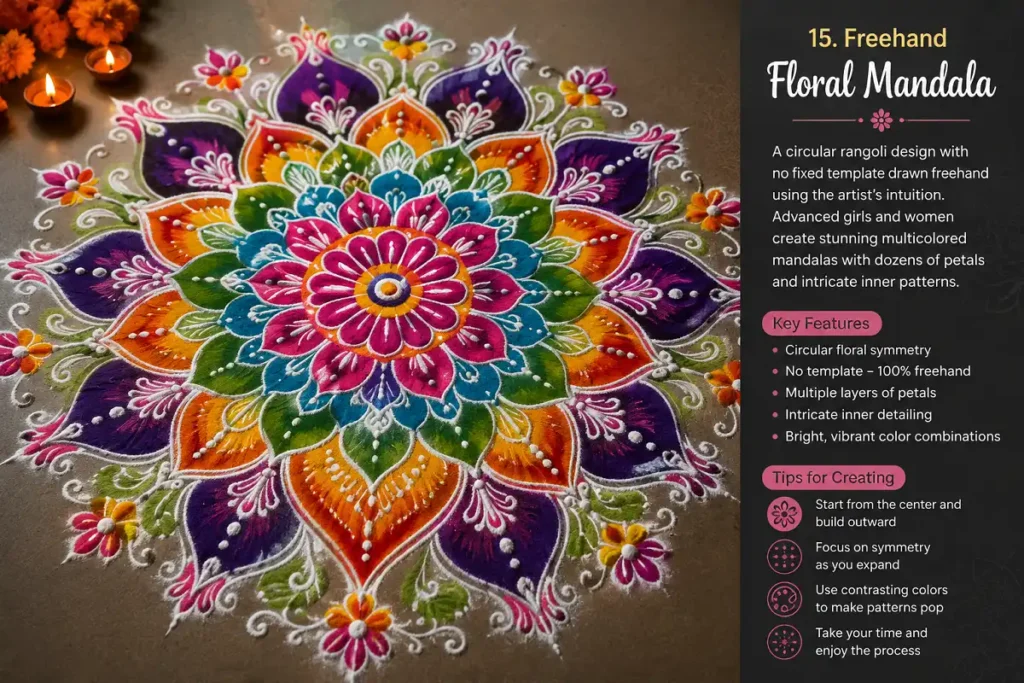
A circular rangoli design with no fixed template — drawn freehand using the artist’s intuition. Advanced girls and women create stunning multicolored mandalas with dozens of petals and intricate inner patterns.
Elephant Rangoli
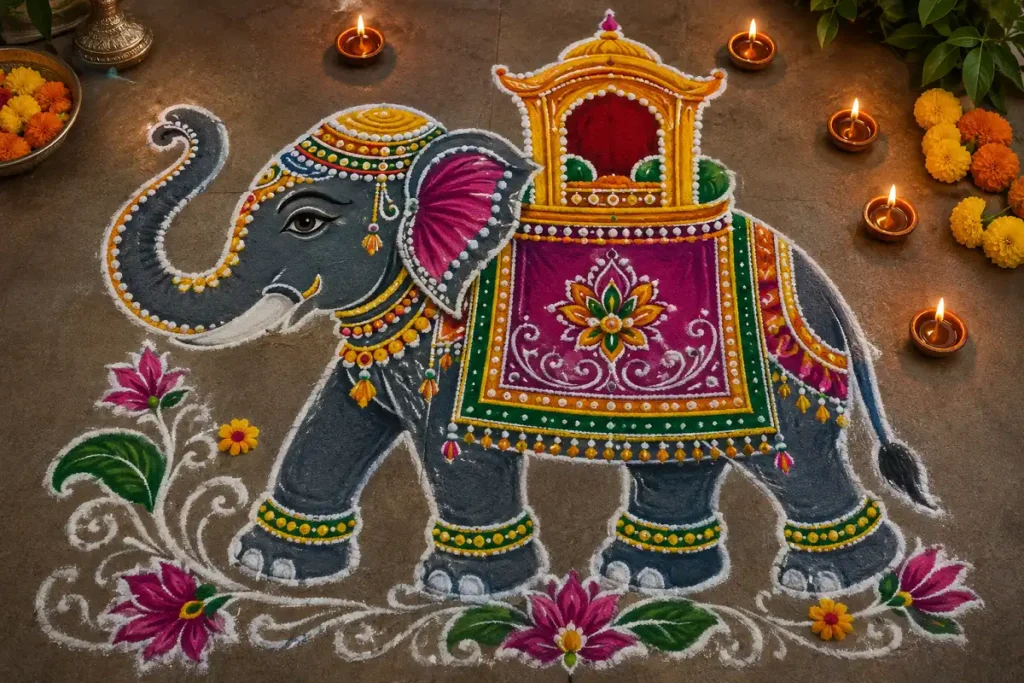
The elephant is a symbol of wisdom and good luck in Indian culture. A traditional girl elephant rangoli design features a decorated elephant with a howdah (seat) and floral accents.
Navratri Garba-Inspired Rangoli
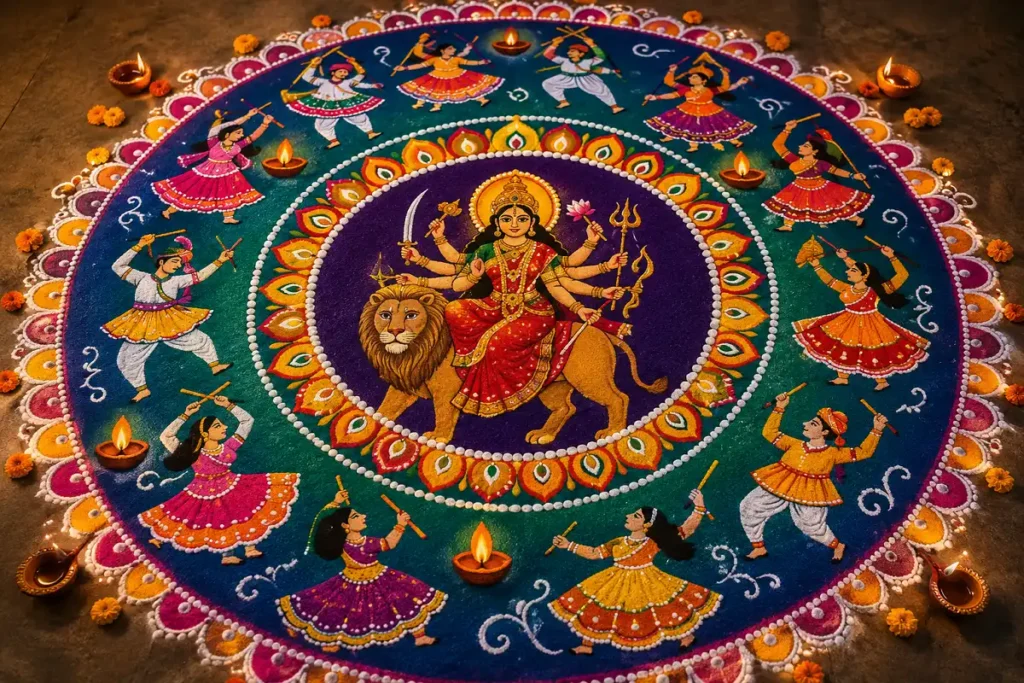
During Navratri, rangoli designs take on vibrant energy — featuring circular garba patterns with dancing figures, lamps, and the goddess Durga’s attributes.
Traditional Wedding Rangoli
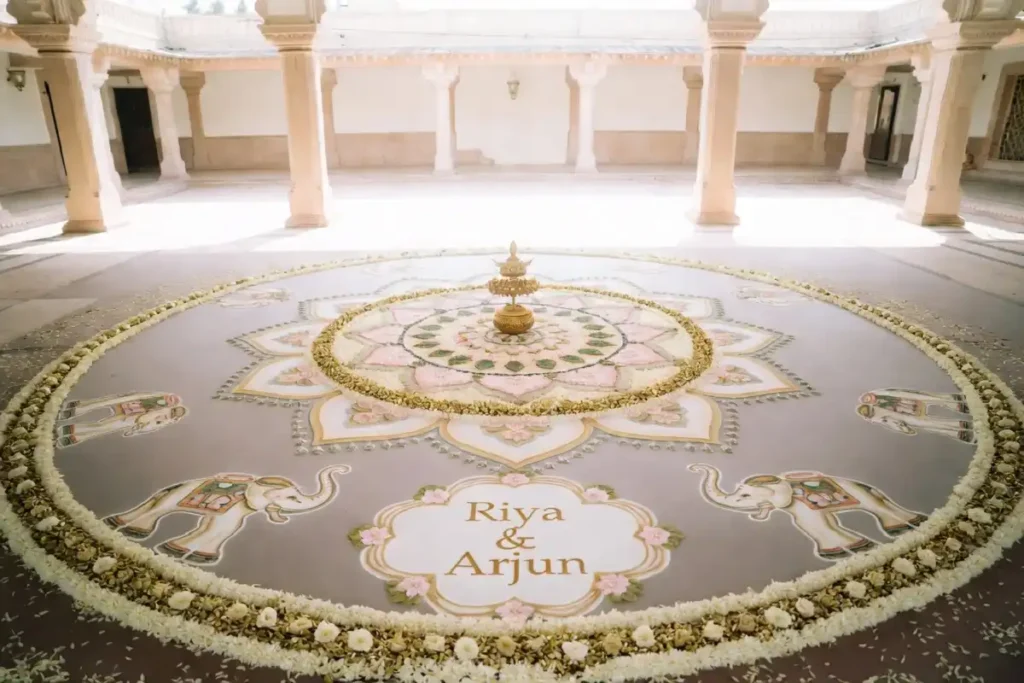
Wedding rangoli designs for girls include the bride and groom’s names, auspicious symbols like the kalash, lotus, and swans, surrounded by flower garlands. These are large, elaborate, and colorful.
New Year Festive Rangoli
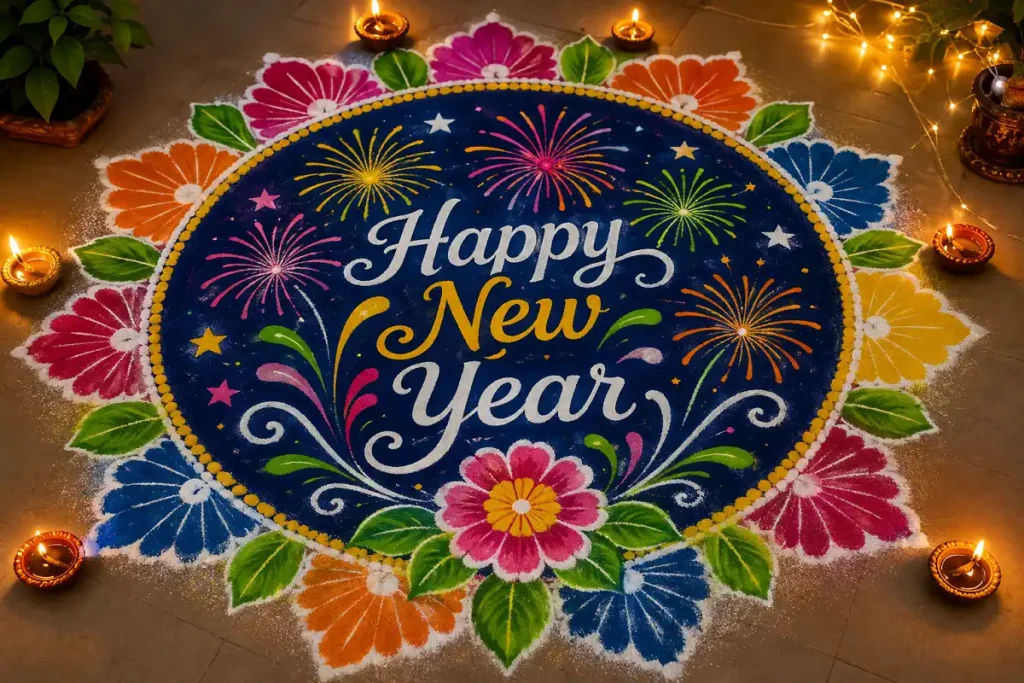
Welcoming the New Year with a bright, hopeful rangoli is a growing tradition. Designs include “Happy New Year” written in decorative fonts, surrounded by stars, fireworks, and flowers.
For fresh New Year design ideas, explore New Year rangoli designs for beginners that are easy to execute.
Rainbow Color Splash Rangoli
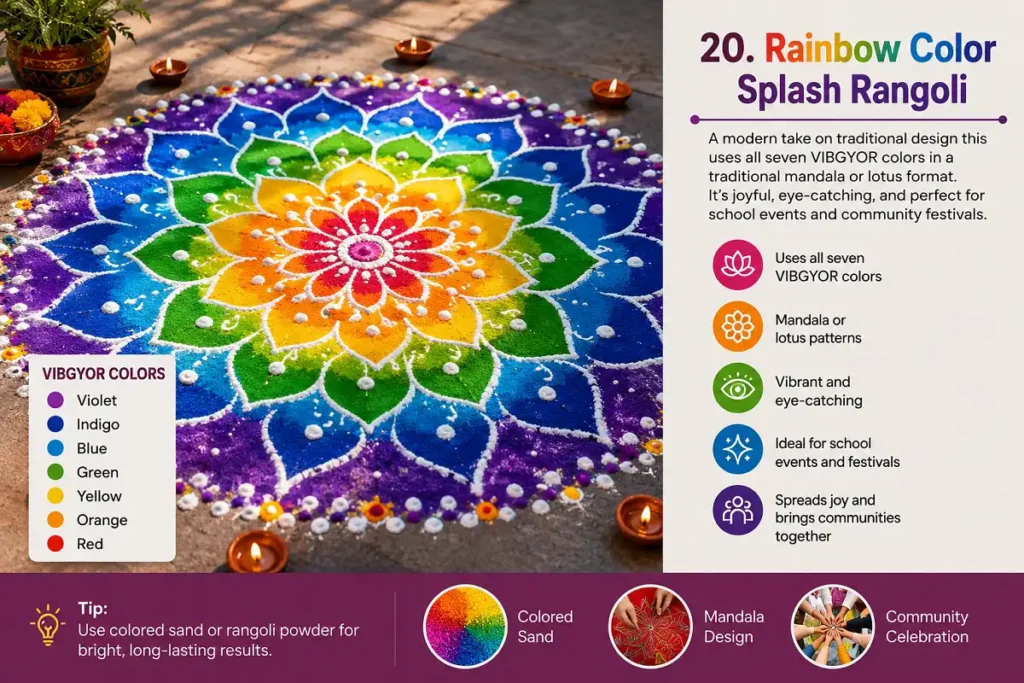
A modern take on traditional design — this uses all seven VIBGYOR colors in a traditional mandala or lotus format. It’s joyful, eye-catching, and perfect for school events and community festivals.
Materials Needed for Traditional Girl Rangoli Design
Here’s what you’ll need to get started:
According to Britannica’s overview of Indian folk art, traditional floor art forms like rangoli are important carriers of cultural memory and aesthetic tradition, making them worthy of preservation and practice.
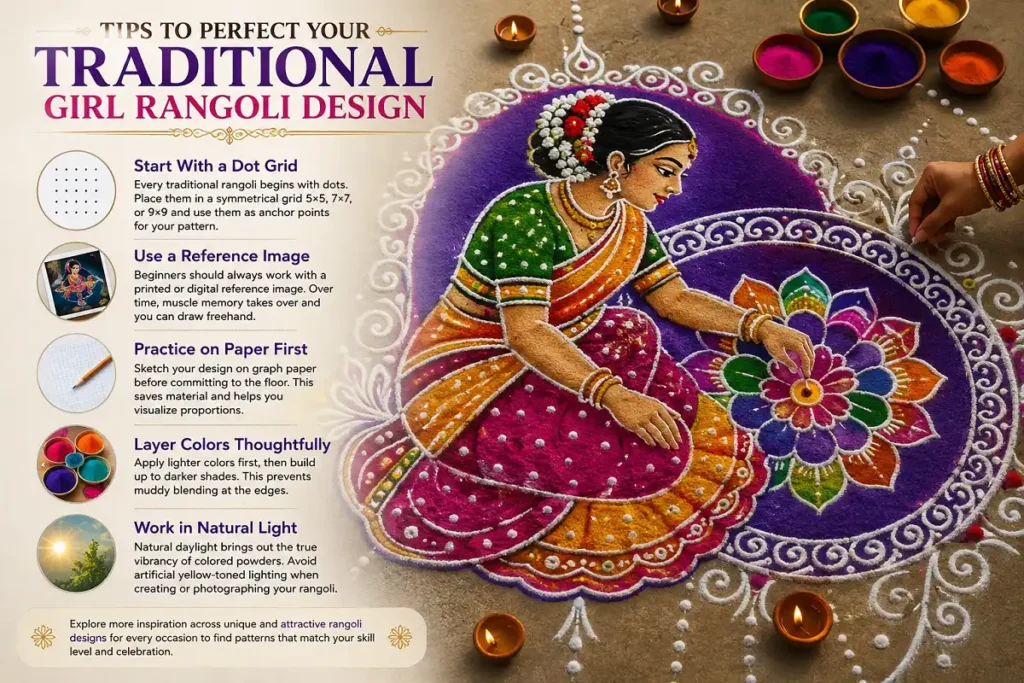
Tips to Perfect Your Traditional Girl Rangoli Design
Start With a Dot Grid
Every traditional rangoli begins with dots. Place them in a symmetrical grid — 5×5, 7×7, or 9×9 — and use them as anchor points for your pattern.
Use a Reference Image
Beginners should always work with a printed or digital reference image. Over time, muscle memory takes over and you can draw freehand.
Practice on Paper First
Sketch your design on graph paper before committing to the floor. This saves material and helps you visualize proportions.
Layer Colors Thoughtfully
Apply lighter colors first, then build up to darker shades. This prevents muddy blending at the edges.
Work in Natural Light
Natural daylight brings out the true vibrancy of colored powders. Avoid artificial yellow-toned lighting when creating or photographing your rangoli.
Explore more inspiration across unique and attractive rangoli designs for every occasion to find patterns that match your skill level and celebration.
How to Make Traditional Girl Rangoli Design Last Longer
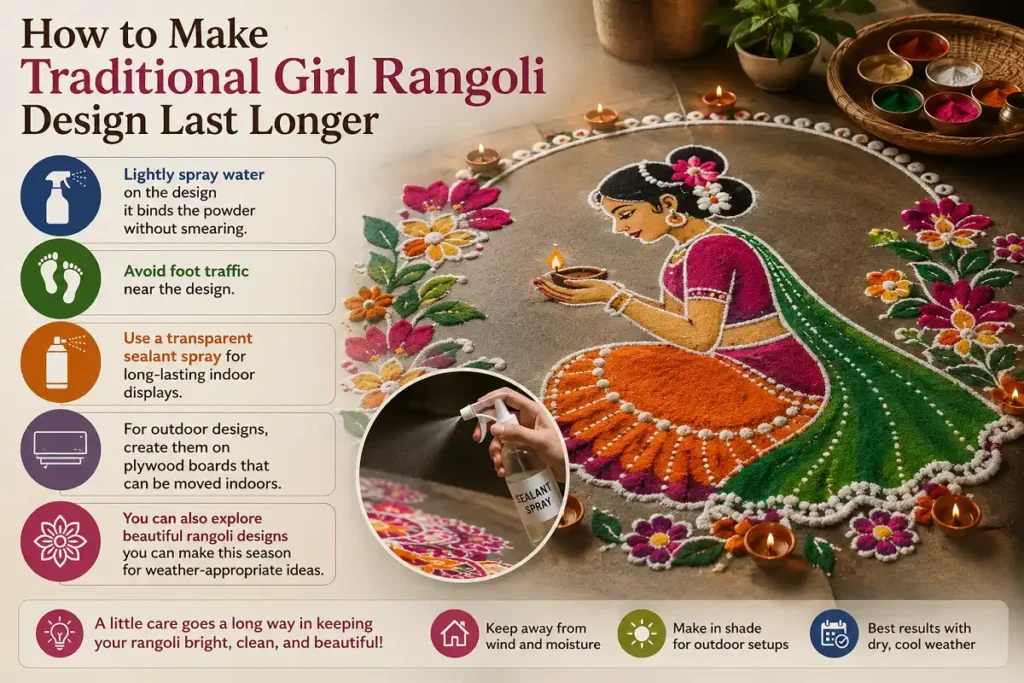
- Lightly spray water on the design — it binds the powder without smearing.
- Avoid foot traffic near the design.
- Use a transparent sealant spray for long-lasting indoor displays.
- For outdoor designs, create them on plywood boards that can be moved indoors.
You can also explore beautiful rangoli designs you can make this season for weather-appropriate ideas.
Traditional Girl Rangoli Design for Specific Festivals
| Festival | Recommended Design |
|---|---|
| Diwali | Diya, Lakshmi Footprint, Lotus |
| Navratri | Garba Circle, Goddess Durga |
| Pongal / Makar Sankranti | Kolam, Sun and Moon |
| Janmashtami | Radha-Krishna, Flute Motif |
| Weddings | Floral Mandala, Elephant, Name Rangoli |
| New Year | Rainbow Mandala, Star Burst |
According to the Government of India’s cultural portal,rangoli is recognized as an integral part of India’s intangible cultural heritage and is practiced across all 28 states in diverse forms.
Frequently Asked Questions (FAQs)
What is a traditional girl rangoli design?
A traditional girl rangoli design is a decorative floor art pattern made using colored powders, flower petals, or rice flour by women and girls during Indian festivals and celebrations. It has been practiced for thousands of years and varies in style across Indian regions.
Which rangoli design is easiest for beginners?
The simplest traditional girl rangoli design for beginners is the dot-grid kolam — a pattern built on a symmetrical grid of dots connected by flowing lines. Other easy options include petal-only designs and simple lotus flowers.
What colors are used in traditional rangoli?
Traditional rangoli uses bright, vibrant colors — red, yellow, orange, green, blue, white, and pink. Each color carries symbolic meaning: red for auspiciousness, yellow for prosperity, white for purity, and green for nature.
How long does a rangoli take to make?
Depending on complexity, a simple traditional girl rangoli design can take 15–30 minutes, while large, intricate festival designs may take 2–4 hours. Beginners should budget extra time for practice.
Can rangoli be made without colored powder?
Yes! Flower petals, seeds, lentils, colored rice, chalk, and even fabric can be used. Flower petal rangoli is especially popular at weddings and special occasions.
How do I preserve a rangoli design?
Lightly mist it with water to bind the powder, keep foot traffic away, and if indoors, apply a light coat of acrylic spray sealant for a longer-lasting display.
Conclusion
The traditional girl rangoli design is one of India’s most beautiful and enduring art forms — a living tradition that connects women and girls across generations, communities, and celebrations. From the intricate kolam patterns of South India to the vibrant Diwali mandalas of the North, these designs carry centuries of meaning within each stroke of color.
Whether you’re making your first ever rangoli or refining your craft for a big festival, the key is to enjoy the process. Let your creativity guide you, embrace imperfections as part of the art, and share the experience with others.
Ready to start? Browse through simple unique rangoli designs to brighten your space and pick the one that calls to you. Grab your colors, find your center dot, and let the tradition begin!