Easy Rangoli Design: 30 Simple Ideas That Look Absolutely Stunning
Rangoli is one of the most joyful ways to welcome festivals, guests, and good fortune into your home — and you don’t need to be an artist to create one.
Whether you’re a complete beginner or simply looking for fresh inspiration, an easy rangoli design can transform your doorstep in minutes. Simple patterns can be colorful, traditional, festive, and beautiful without requiring advanced artistic skills.
From simple dot-based patterns to vibrant floral motifs, there are plenty of styles to choose from. With the right materials, a little planning, and a few beginner-friendly techniques, you can create a rangoli that looks polished and welcoming.
What Is Rangoli and Why Does It Matter?
Rangoli is a traditional Indian folk art created on floors with colored powders, flowers, rice, sand, and other natural materials. It has been practiced for generations and is closely associated with welcome, good fortune, prosperity, and celebration.
Welcome
Rangoli creates a warm and beautiful welcome at the entrance of the home.
Tradition
Different regions of India have their own distinctive floor-art traditions and patterns.
Celebration
Rangoli is especially popular during Diwali, Pongal, Navratri, New Year celebrations, and other special occasions.
Why Choose an Easy Rangoli Design?
Not everyone has hours to spend creating an elaborate pattern, and nobody needs years of practice before making something beautiful. Easy rangoli designs are popular because they make the tradition accessible to everyone.
If you want a beautiful entrance without a stressful process, simple patterns are an excellent place to begin.
Easy Rangoli Design Ideas for Beginners
These beginner-friendly approaches cover some of the most useful patterns and styles to try at home.
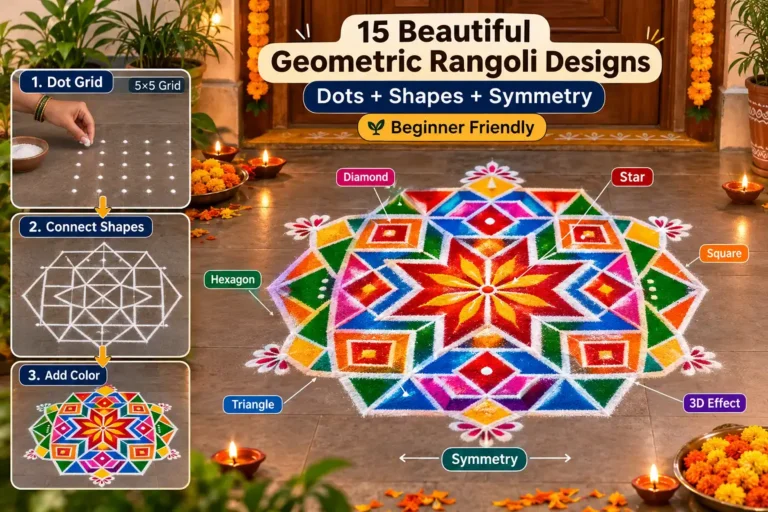
Simple Dot Rangoli
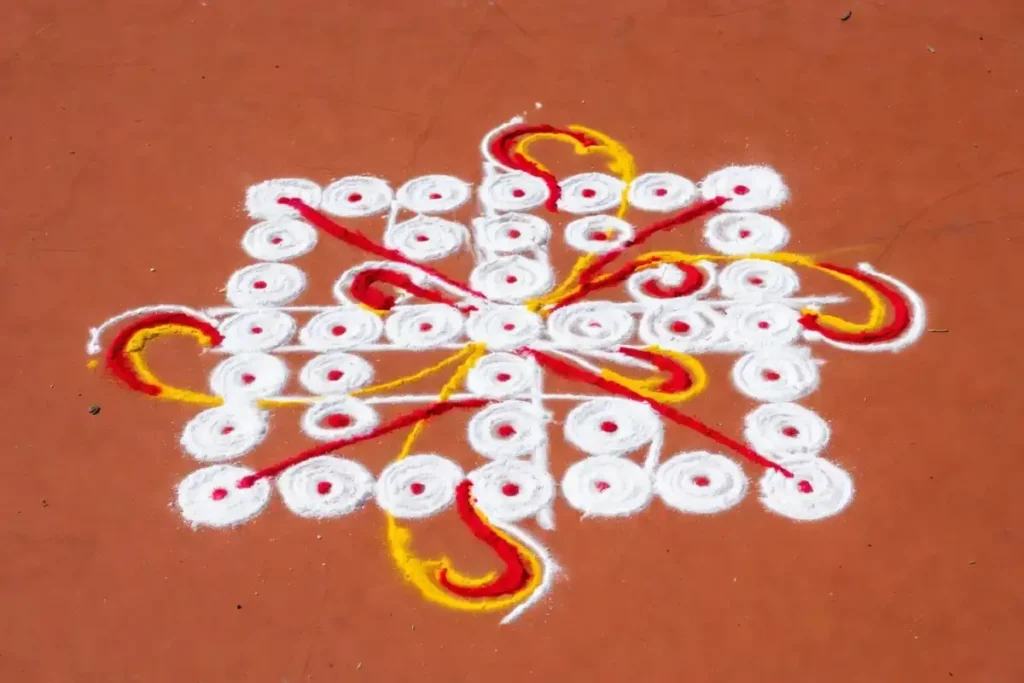
Dot rangoli, also called Kolam in South India, is one of the most beginner-friendly styles. A grid of dots provides a framework, which you then connect with curved or straight lines to create symmetrical patterns.
- Draw a 5×5 or 7×7 dot grid using chalk.
- Connect the dots using freehand curved lines.
- Fill the pattern with two or three contrasting colors.
- Add a floral center for a finishing touch.
The dot framework makes this style particularly forgiving because small imperfections naturally blend into the overall pattern.
Floral Easy Rangoli Design
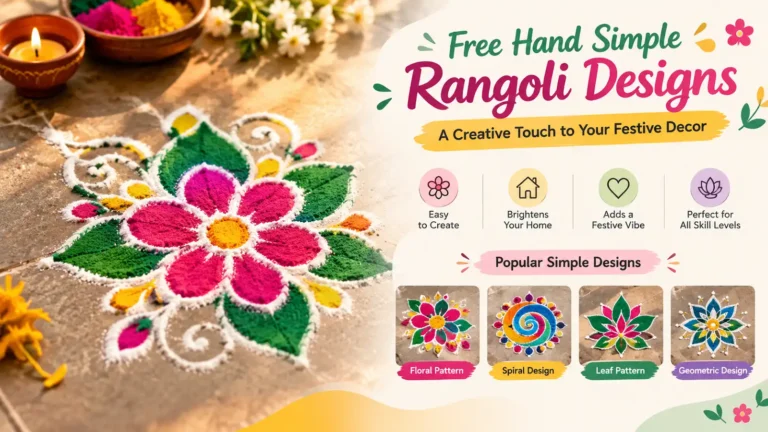
Flowers are at the heart of many traditional rangoli patterns. A simple floral arrangement is colorful, welcoming, and easy to customize.
- Begin with a central circle using a bowl or plate as a guide.
- Draw six to eight petals around the center.
- Choose bright shades such as yellow, pink, orange, and red.
- Outline the petals with white powder for extra definition.
Geometric Easy Rangoli Patterns
Squares, triangles, hexagons, and interlocking shapes can create a sophisticated appearance while remaining surprisingly easy to reproduce.
- Straight lines are generally easier to control than curves.
- A ruler or tape can help guide the basic structure.
- Symmetry makes mistakes easier to identify and correct.
- Bold blocks of color can make a simple layout look impressive.
Border and Side Easy Rangoli Designs
Border rangoli works beautifully along doorways, staircases, corridors, and walls. These patterns can be created quickly and provide an elegant frame around your space.
- Repeat leaf or petal motifs.
- Alternate two colors in a wave pattern.
- Combine dots and dashes for a traditional appearance.
Diwali Easy Rangoli Design
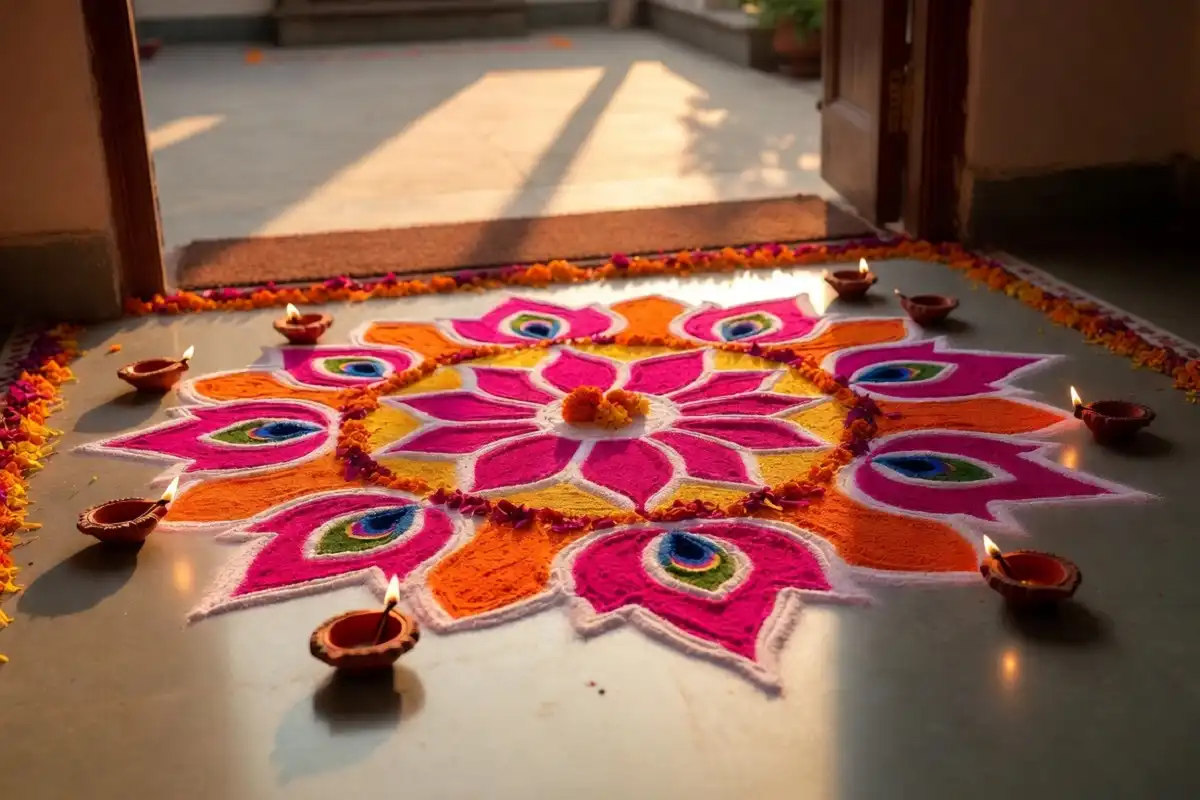
Diwali is the perfect occasion for rich and luminous rangoli. Diyas, lotus flowers, and peacocks are classic motifs that can easily be simplified for beginners.
- Draw a simple diya and fill it with orange and yellow.
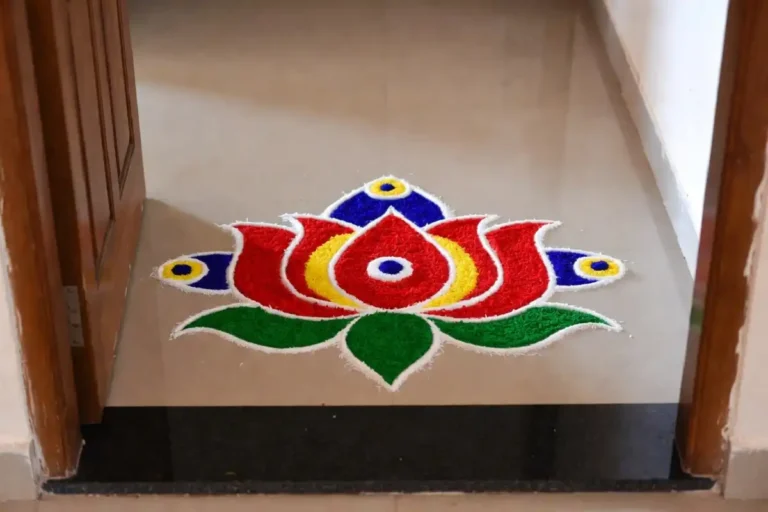
- Create a lotus using overlapping layers of petals.
- Draw a basic peacock silhouette and use bold color blocks.
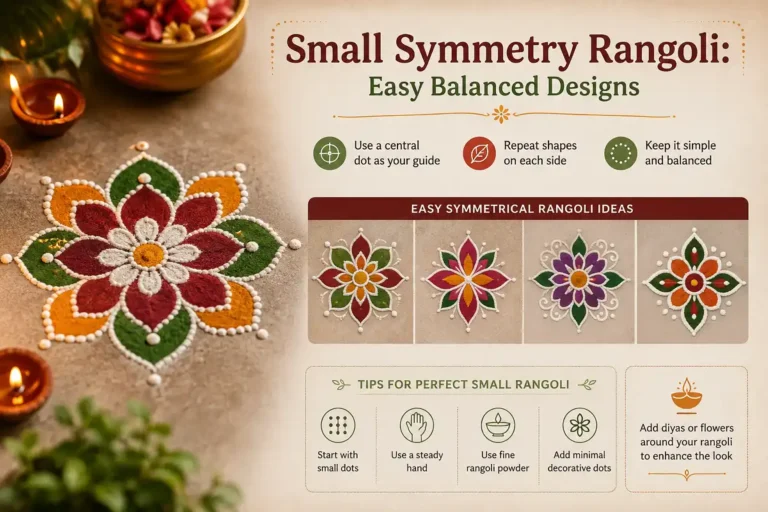
Small Easy Rangoli Design
Limited space does not mean you have to skip rangoli. A compact design can look just as festive near a doorway, puja corner, balcony, or apartment entrance.
- Keep the design around 12–18 inches in diameter.
- Use no more than three or four colors.
- Choose one central motif such as a flower, star, or mandala.
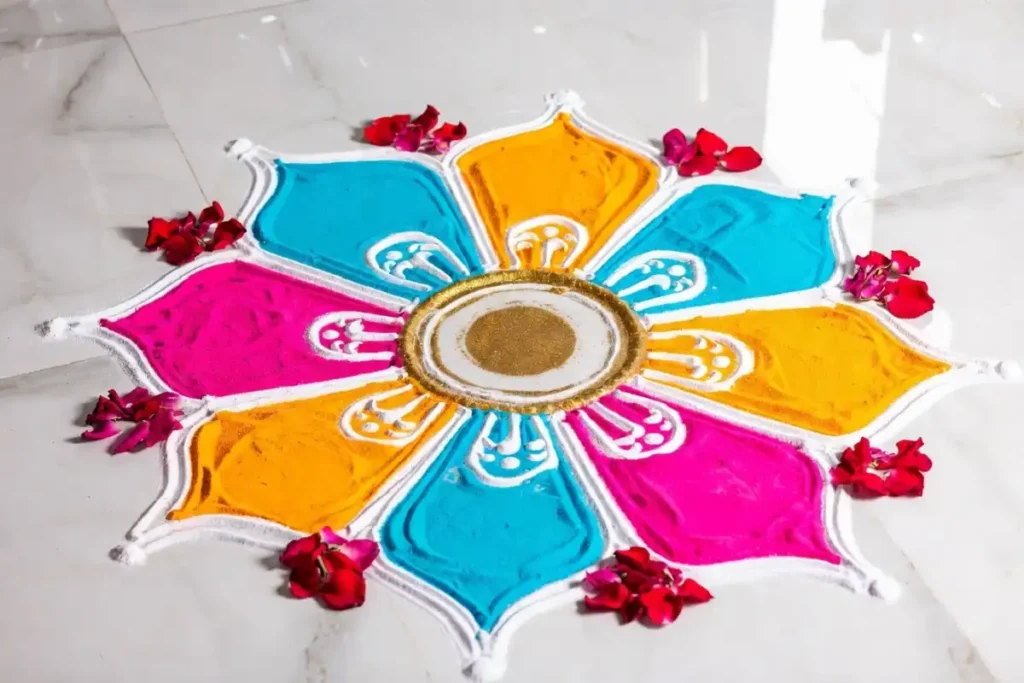
Five-Petal Flower Rangoli
Create a simple five-petal flower around a central dot. Use contrasting shades for the petals and finish with small dots around the outside.
Circle and Dot Rangoli
Begin with a circle and decorate it using evenly spaced dots, small petals, and repeated curves. This is a particularly useful pattern for practicing symmetry.
Simple Star Rangoli
Draw a five- or six-pointed star and surround it with dots, petals, or small geometric shapes. A limited color palette keeps the pattern clean.
Leaf Motif Rangoli
Repeating leaf shapes around a circular center create a natural and elegant rangoli. Green paired with yellow, orange, or white works especially well.
Simple Mandala Rangoli
Build the design outward from a central circle using repeated rings of dots, petals, and simple geometric shapes. Each layer can use a different color.
Diya and Flower Rangoli
Combine a basic flower with small diya motifs around the outer edge. This is especially attractive during Diwali and evening celebrations.
Petal Border Rangoli
Create a repeating chain of petals around the entrance. Alternate two or three colors to make the border stand out.
Simple Peacock Rangoli
A simplified peacock silhouette can be created using a few large curved sections and colorful feather shapes. Blue, green, yellow, and white make a lively combination.
Geometric Flower Rangoli
Combine simple triangles, diamonds, or squares with a floral center. The structured outer shapes make the design look more detailed without requiring complicated drawing.
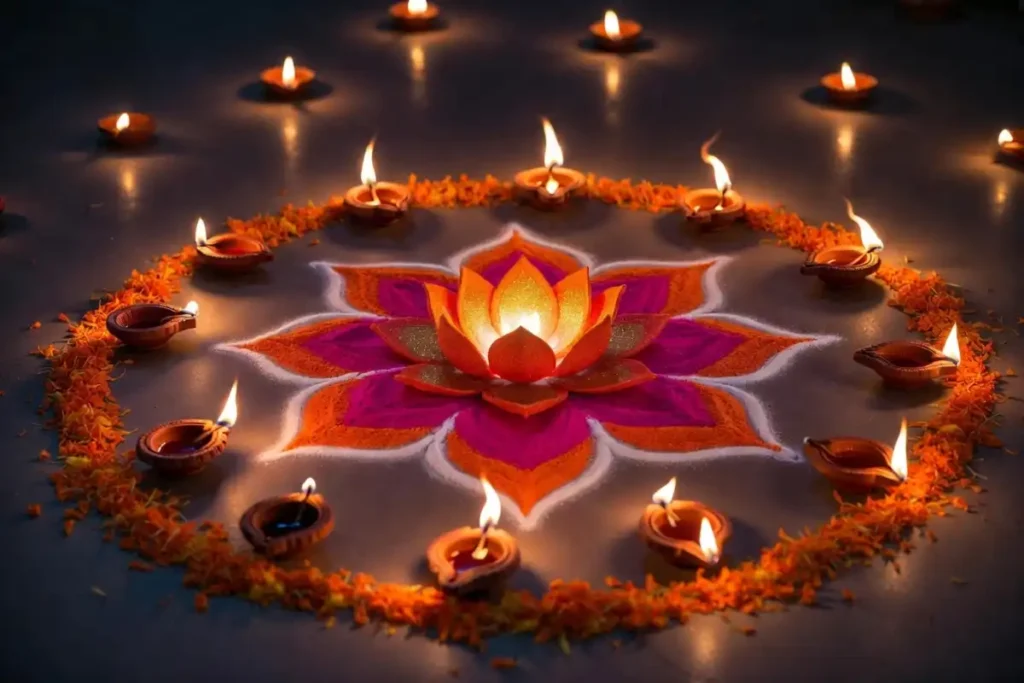
Rainbow Rangoli
Arrange concentric circles or petals in bright rainbow colors. Keep the shapes simple so that the colors remain the main visual attraction.
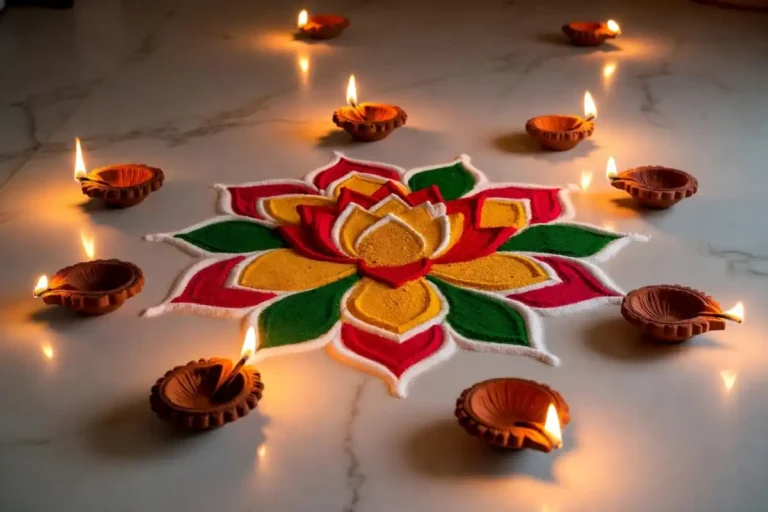
Lotus Rangoli
Draw a central circle and surround it with simple lotus petals. Red, pink, yellow, and white create a traditional and welcoming combination.
Swirl Rangoli
Use loose curves and simple spirals radiating outward from the center. This style is quick, forgiving, and ideal when you want a freehand design.
Dot-and-Flower Combination
Combine a simple dot grid with a flower in the center. The dots provide structure while the floral motif adds softness and color.
Minimal Festive Rangoli
When time is limited, choose one flower, a few leaves, a central circle, and a ring of dots. A minimal design can still look beautiful when the colors and spacing are carefully balanced.
Best Materials for Easy Rangoli Designs
The right materials make the process smoother and help you achieve cleaner colors and edges.
Pro Tip: Lightly outline your design with chalk before filling it with color. The outline acts as a blueprint and helps prevent avoidable mistakes.
Step-by-Step: How to Make an Easy Rangoli Design
Follow this beginner-friendly process for almost any simple rangoli pattern.
Clean the Surface
Sweep the floor and slightly dampen it if needed. A clean surface helps the powder adhere and keeps the colors brighter.
Sketch the Outline
Use chalk or a rangoli stencil to establish the basic shape before adding any colored powder.
Start From the Center
Work outward from the middle so that your hands are less likely to disturb completed sections.
Apply Color in Sections
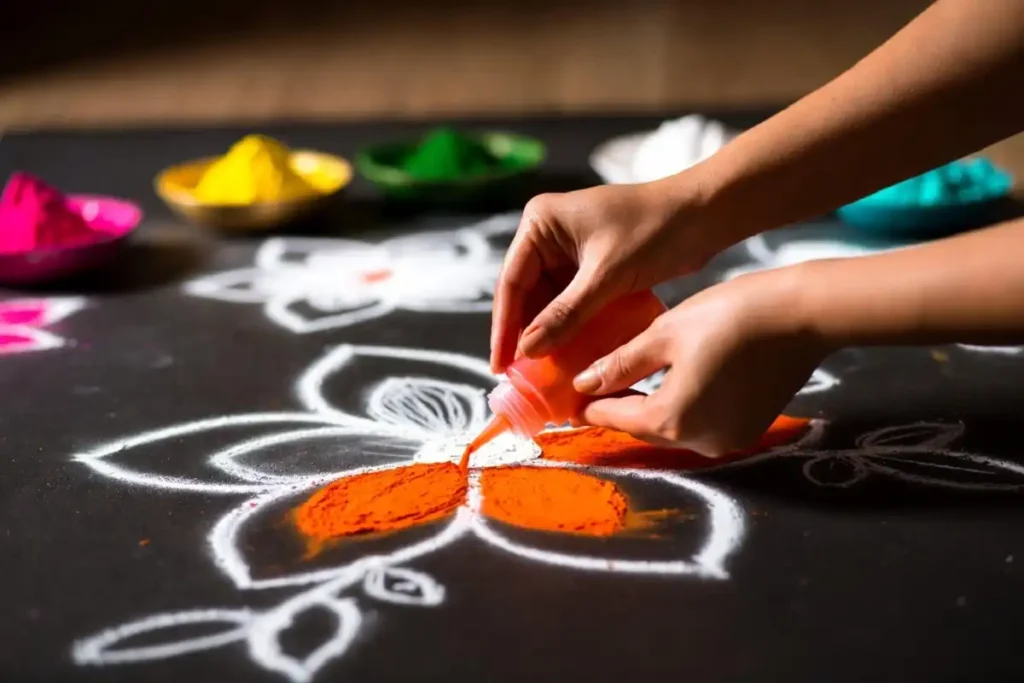
Fill one section at a time. A small cone or squeeze bottle can help you control the powder around detailed areas.
Add Borders and Accents
A thin white or dark outline around petals and shapes can make even a simple rangoli look much more polished.
Decorate With Petals or Diyas
Finish the design with real flowers, small diyas, or both for an extra festive touch.
Easy Rangoli Design for New Year Celebrations
Rangoli is not limited to Diwali. New Year celebrations are another wonderful opportunity to decorate your home with colorful floor art.
Star Burst
Try a bright star-burst arrangement using gold and white.
Year Number
Place the upcoming year number inside a floral frame.
Modern Palette
Silver and blue can create a contemporary New Year appearance.
Tips to Make Your Easy Rangoli Design Look Professional
Even the simplest pattern can look impressive when a few finishing techniques are used carefully.
Use a squeeze bottle for more precise powder application.
Layer colors by applying a base shade before accent colors.
Keep edges clean with a thin white or black outline.
Work in good lighting so the colors are easy to distinguish.
Photograph your rangoli before normal foot traffic disturbs it.
Use stencils if freehand drawing makes you uncomfortable.
Easy Rangoli Designs for Every Occasion
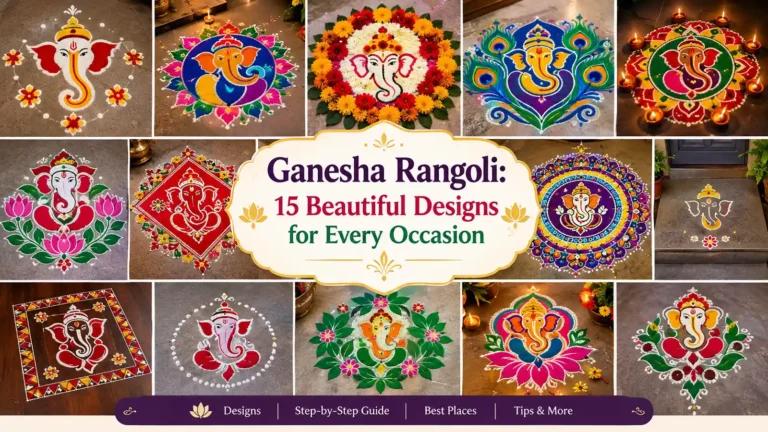
Easy Laxmi Rangoli Design for Prosperity
One of the most auspicious simple rangoli approaches uses Goddess Laxmi’s footprints or the lotus, her sacred symbol. This style is particularly popular during Diwali.
Step One
Draw two small footprints facing inward to symbolize welcoming Laxmi into the home.
Step Two
Surround the footprints with a simple lotus motif.
Step Three
Use red, gold, and white for a traditional festive palette.
Common Mistakes to Avoid in Easy Rangoli Design
Skipping the chalk outline — always sketch your pattern first.
Using too many colors — three to five shades are usually enough for a balanced design.
Starting from the edges — working from the center helps maintain symmetry.
Rushing the fill — take your time with each section.
Ignoring symmetry — use a ruler, grid, or fold-and-trace method when needed.
FAQ: Easy Rangoli Design
What is the easiest rangoli design for absolute beginners?
A dot-based Kolam rangoli is an excellent starting point. A small 5×5 dot grid can be connected with simple curves and completed quickly while still giving the design a traditional appearance.
What materials do I need for an easy rangoli design?
Basic colored rangoli powder, chalk for outlining, and a clean, flat surface are enough to begin. Flower petals, diyas, and a squeeze bottle can be added as optional decorations and tools.
How long does an easy rangoli design take to make?
Most simple designs take around 15 to 45 minutes depending on their size and complexity. Stencil-based patterns can often be completed even faster.
Can I make an easy rangoli design without powder?
Yes. Flower petals, colored rice, sand, and other decorative materials can be used instead of traditional colored powder. Petal rangoli is especially attractive and eco-friendly.
Are there easy rangoli designs for kids?
Yes. Simple stars, flowers, smiley faces, and basic five-dot Kolam patterns are suitable for children. Chunky chalk and stencils can make the process even easier for small hands.
How do I fix mistakes in a rangoli design?
Use a dry paintbrush to gently remove misplaced powder or cover the mistake with the correct color. Chalk outlines can simply be wiped away and redrawn.
Conclusion
Creating an easy rangoli design is one of the most rewarding and joyful festive activities you can enjoy.
Whether you are decorating for Diwali, New Year, another festival, or simply adding color to your home, rangoli brings tradition, creativity, and positive energy into the space.
Start with a simple dot pattern or basic floral design. Practice the techniques above, experiment with color, and gradually try more detailed patterns as your confidence grows.
Your Rangoli Journey Starts Here
Pick one design, gather your colors, prepare your surface, and enjoy the process. Your first rangoli does not have to be perfect — it simply has to be yours.