Small Flower Rangoli: Easy Designs, Colors, and Festive Ideas
A quick, colorful guide to small flower rangoli — perfect blooms for doorsteps, pooja corners, and celebrations, no matter how much time or space you have.
Small flower rangoli has become a favorite way to add color and warmth to homes during festivals and everyday moments. These compact patterns use shapes like lotus, marigold, and rose to fit neatly on doorsteps, tabletops, and quiet corners. They are quick to make, friendly for beginners, and gentle on space. Whether you want a simple welcome at your front door or a soft touch of beauty for a pooja, a small flower rangoli brings a fresh, joyful feel to any room without taking hours of effort to finish.
What Is a Small Flower Rangoli?
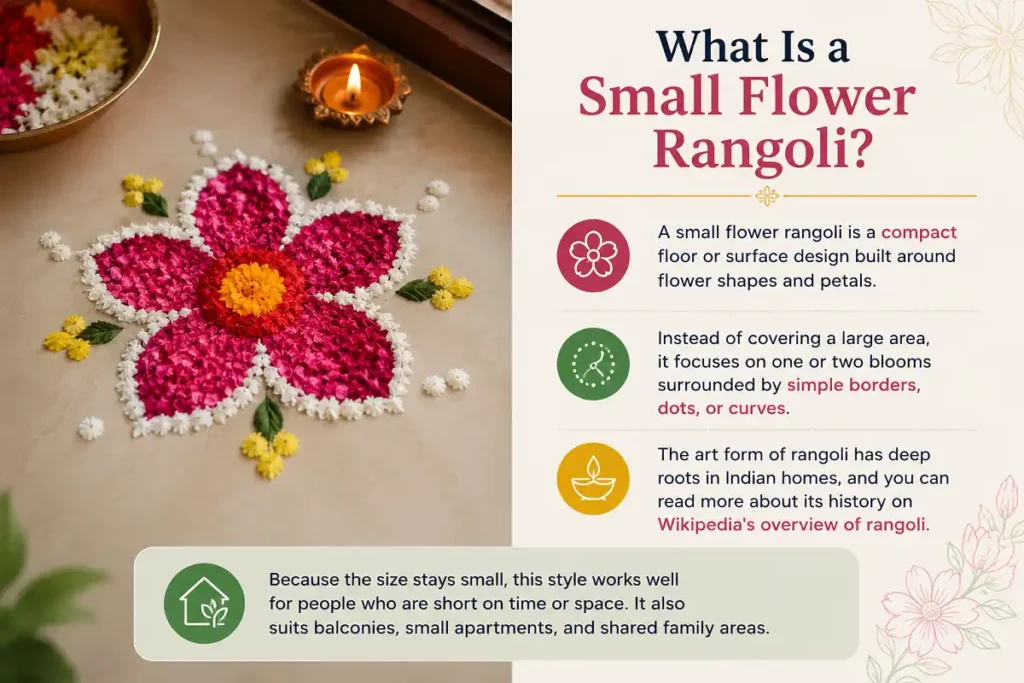
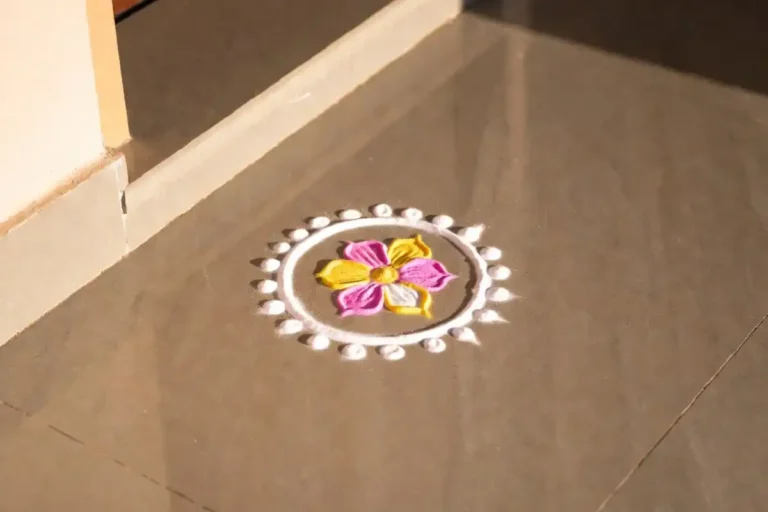
A small flower rangoli is a compact floor or surface design built around flower shapes and petals. Instead of covering a large area, it focuses on one or two blooms surrounded by simple borders, dots, or curves. The art form of rangoli has deep roots in Indian homes, and you can read more about its history on Wikipedia’s overview of rangoli.
Because the size stays small, this style works well for people who are short on time or space. It also suits balconies, small apartments, and shared family areas.
Why Choose Small Flower Rangoli Designs
Small floral patterns offer a lot of charm in a tiny footprint. They are practical for daily use and still look special enough for celebrations.
Here are a few reasons people love them:
This balance of beauty and ease is why small floral patterns stay popular across seasons.
Materials You Need
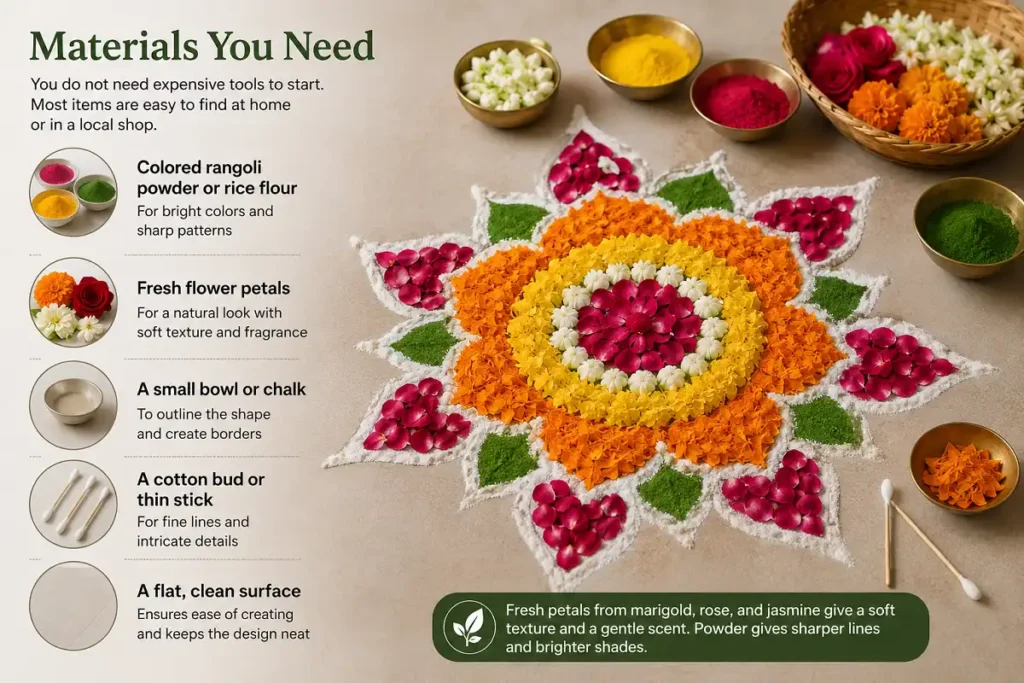
You do not need expensive tools to start. Most items are easy to find at home or in a local shop.
- ✓ Colored rangoli powder or rice flour
- ✓ Fresh flower petals if you prefer a natural look
- ✓ A small bowl or chalk to outline the shape
- ✓ A cotton bud or thin stick for fine lines
- ✓ A flat, clean surface to work on
Fresh petals from marigold, rose, and jasmine give a soft texture and a gentle scent. Powder gives sharper lines and brighter shades.
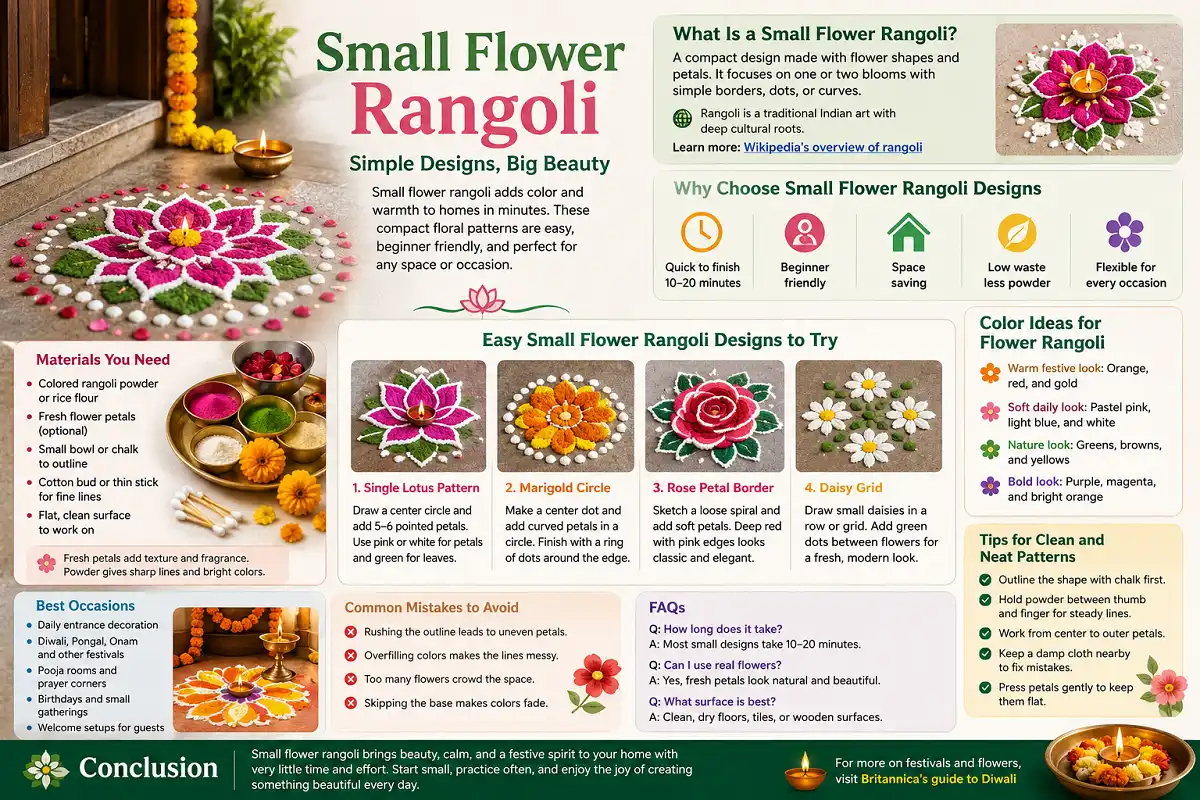
Easy Small Flower Rangoli Designs to Try
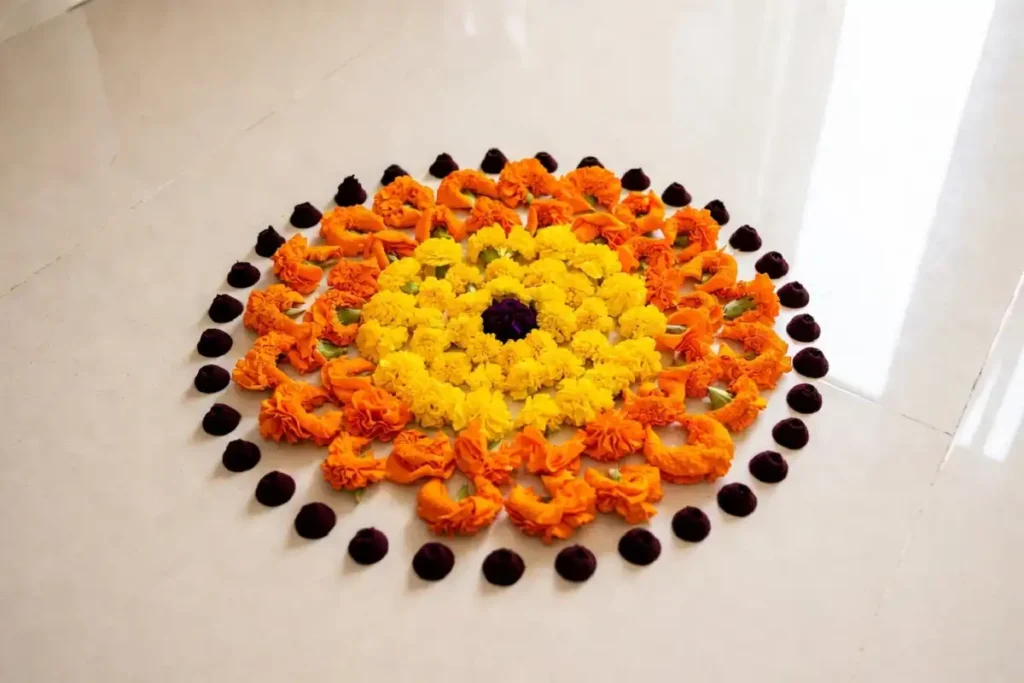
Below are simple patterns that work for both new and experienced makers. Start with one bloom and build outward.
🪷 Single Lotus Pattern
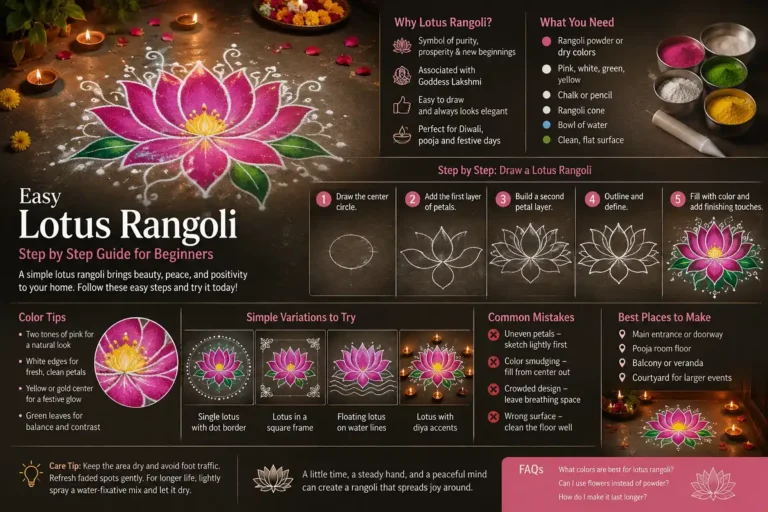
The lotus is a classic choice and carries a calm, spiritual feeling. Draw a small center circle, then add five or six pointed petals around it. Fill the petals with pink or white and use green for the base leaves. This design pairs well with a diya placed in the middle.
🌼 Marigold Circle
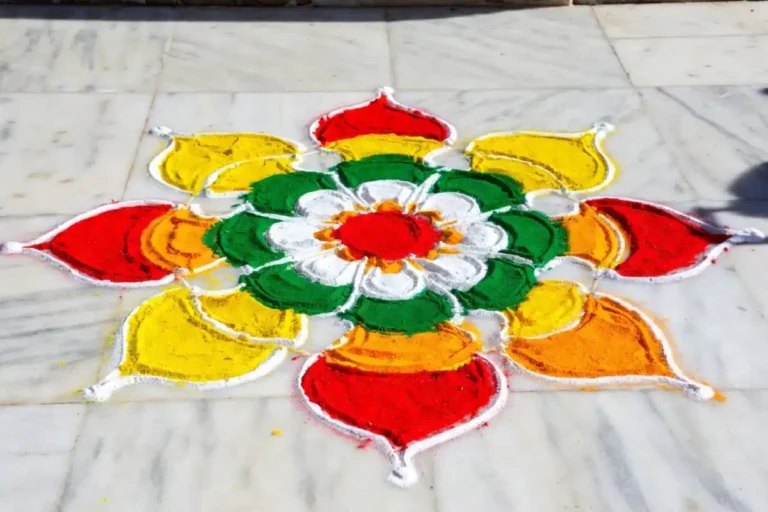
Marigold shapes are round and forgiving, which makes them great for beginners. Draw a small dot in the center and surround it with short, curved petals in orange and yellow. Repeat the petals in a circle until the bloom looks full. A row of dots around the edge gives a clean finish.
🌹 Rose Petal Border
A rose works well as a corner accent. Sketch a loose spiral for the center, then wrap soft, layered petals around it. Use deep red with a touch of pink on the outer edge. This pattern looks lovely as part of a larger small flower rangoli near a doorway.
🌻 Daisy Grid
For a fresh, modern feel, draw three or four small daisies in a row. Each daisy needs a yellow center and white petals. Add tiny green dots between the flowers to tie them together. This style suits study tables and kitchen counters.
Color Ideas for Flower Rangoli
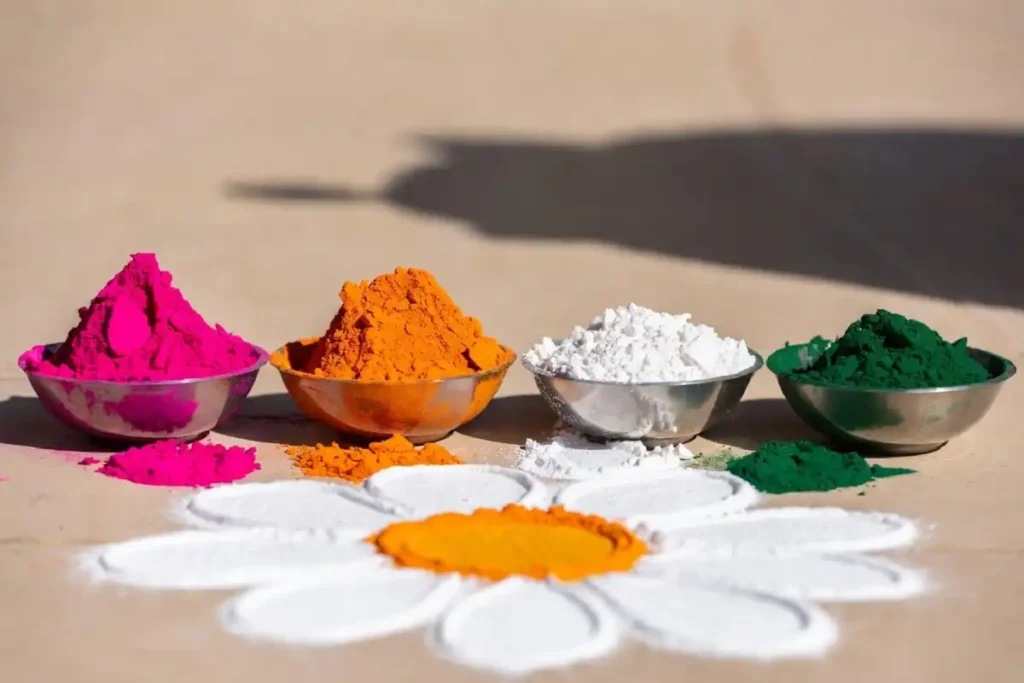
Color choice changes the whole mood of a design. Pick shades that match the season or the festival.
Try to keep three to four colors per design. Too many shades in a small space can look busy. If you enjoy mixing tones, you may also like creating 3D rangoli with colors for a layered effect.
Tips for Clean and Neat Patterns
A few small habits make your work look polished and even.
Practice on paper first if you feel unsure. Repeating the same petal shape builds confidence quickly.
Best Occasions for Small Flower Rangoli
These designs fit almost any moment, from quiet mornings to festival evenings.
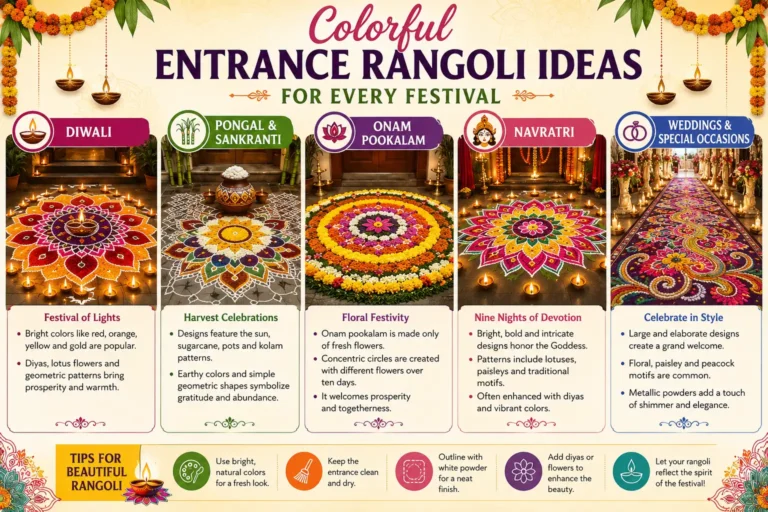
For sacred spaces, you can pair flowers with calm patterns. Beginners often enjoy starting with spiritual rangoli for beginners before moving to detailed floral work. If you want more seasonal options, browse these festive rangoli ideas for every occasion.
Common Mistakes to Avoid
Small errors are easy to fix once you know them.
- ✕ Rushing the outline: A weak outline leads to uneven petals.
- ✕ Overfilling colors: Heavy powder spills past the lines.
- ✕ Too many flowers: A small space looks crowded fast.
- ✕ Skipping the base: A clean floor helps colors stay sharp.
Take your time, and let each layer dry or settle before the next step.
Conclusion
A small flower rangoli is a simple way to bring color, calm, and a festive spirit into any home. With basic shapes like lotus, marigold, and rose, you can create a fresh design in minutes, even as a beginner. The small size keeps the work easy while still feeling special for guests and celebrations. Try one pattern at a time, play with seasonal colors, and add real petals when you want a natural touch. For more ideas on festivals and flowers, you can also explore trusted cultural sources such as Britannica’s guide to Diwali. Start small, enjoy the process, and let each flower brighten your space.
FAQs
How long does a small flower rangoli take to make?
Most small flower rangoli designs take ten to twenty minutes. The exact time depends on the number of petals and colors you use. A single lotus or marigold is the fastest choice for busy days.
Can beginners make flower rangoli easily?
Yes, beginners can make flower rangoli with very little practice. Round shapes like marigold and daisy are simple to repeat. Start with one bloom, then add a border once you feel comfortable.
What flowers are best for rangoli?
Marigold, rose, and jasmine are the most common flowers for rangoli. Marigold petals hold their shape and color well, while rose adds soft layers. Jasmine brings a light scent and a clean white tone.
Do I need special powder for these designs?
No special powder is required for small floral patterns. You can use regular rangoli color, rice flour, or fresh petals. Many people mix powder and petals for added texture.
Where should I place a small flower rangoli at home?
The entrance, pooja corner, and center table are popular spots. These areas are easy to see and welcome guests warmly. A flat, clean surface always gives the best result.