How to Make Beginner Friendly Rangoli Art at Home
Beginner Friendly Rangoli Art: Easy Designs and Tips for First-Time Makers
Rangoli is one of the oldest and most loved art forms in India. It brings color and warmth to any space, especially during festivals and celebrations. With the right guidance and a little practice, beginner friendly rangoli art is within reach for anyone.
This guide covers everything a first-time rangoli maker needs to know, from basic tools to easy patterns and step-by-step tips. Whether you are picking up powder for the very first time or returning after a long break, beginner friendly rangoli art is the perfect place to start.
What Is Rangoli and Why Should Beginners Try It?
Rangoli is a traditional Indian art form made on floors using colored powder, chalk, flower petals, or rice flour. It is created to welcome guests, mark festivals, and invite positive energy into the home. Designs range from simple dots and lines to large, complex patterns.
For those new to the craft, beginner friendly rangoli art offers a wonderful creative outlet with almost no barrier to entry. It does not require any formal training or expensive materials. The process is calming, expressive, and deeply rooted in culture. Even a small, simple design made with care carries meaning and beauty.
Why Rangoli Is a Great Craft for Beginners
Low-Cost
Uses simple materials that are easy to find and inexpensive.
Flexible
Designs can be as small or large as your space allows.
Forgiving
Mistakes can be swept away and corrected without wasting much material.
Good Practice
Regular drawing improves hand-eye coordination and patience.
Instant Results
You can see your creative progress immediately, which makes practice satisfying and motivating.
Tools and Materials You Need to Get Started
You do not need a long list of supplies to begin. A few basic items are all you need to create your first beginner friendly rangoli art piece.
Colored Rangoli Powder
The most common material. It comes in many colors and is easy to handle.
Chalk or Rice Flour
Used to sketch the design and create a clear guide before adding color.
Small Cone
Helps control powder flow and place color more precisely.
Flat Surface
Smooth floor tile or dark paper provides a good practice surface.
Flower Petals
Optional marigold and rose petals add a fresh natural touch.
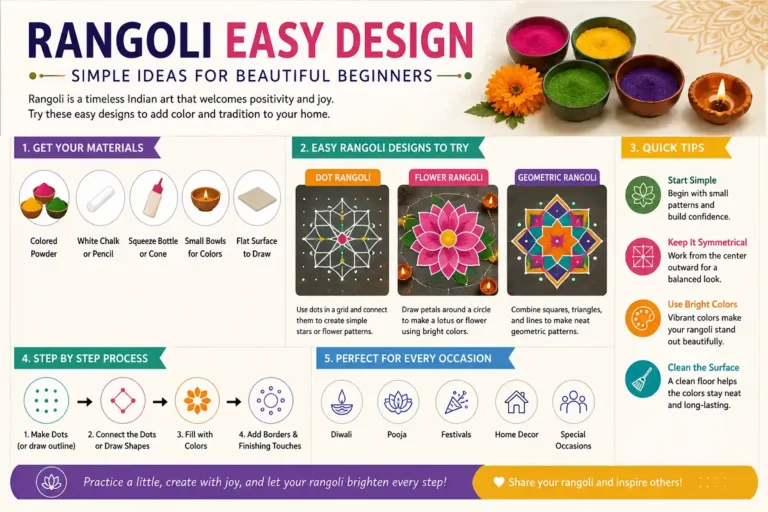
How to Start Your First Rangoli Design
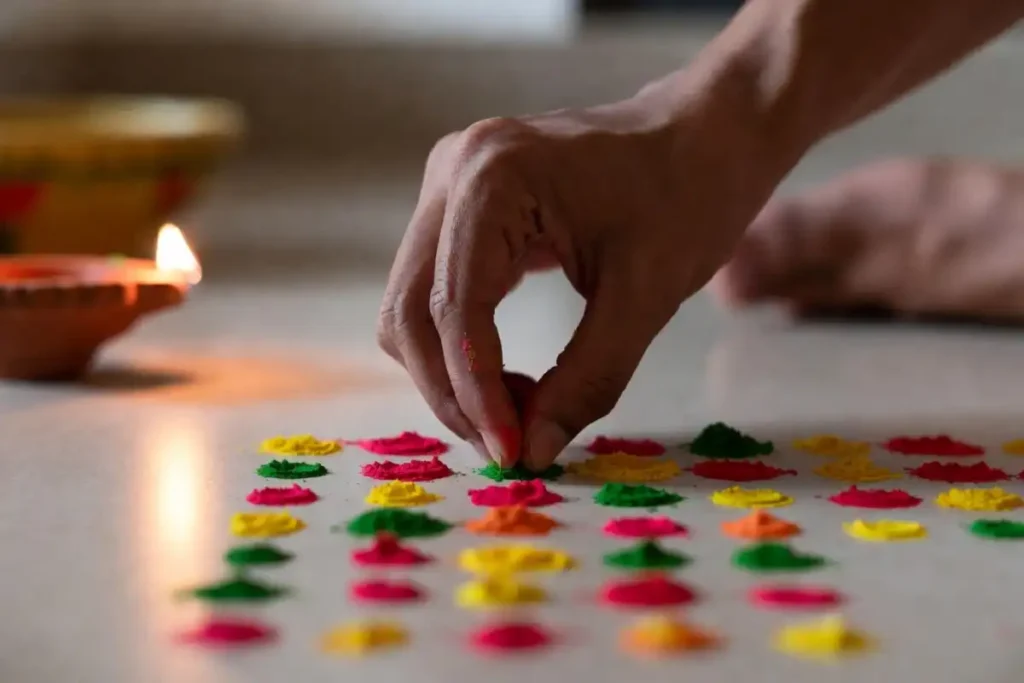
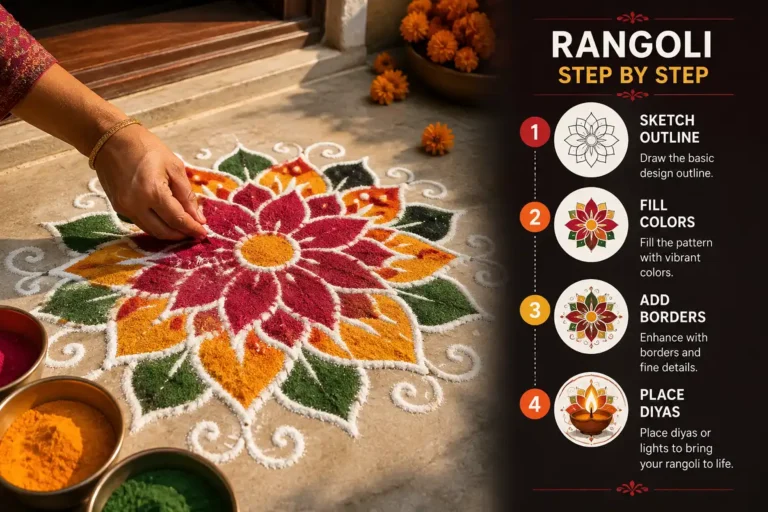
Starting with a dot grid is the easiest method for anyone trying beginner friendly rangoli art for the first time. This traditional technique gives your design structure and symmetry from the very beginning.
Choose Your Area
Choose a small area on the floor or a practice sheet.
Place the Dots
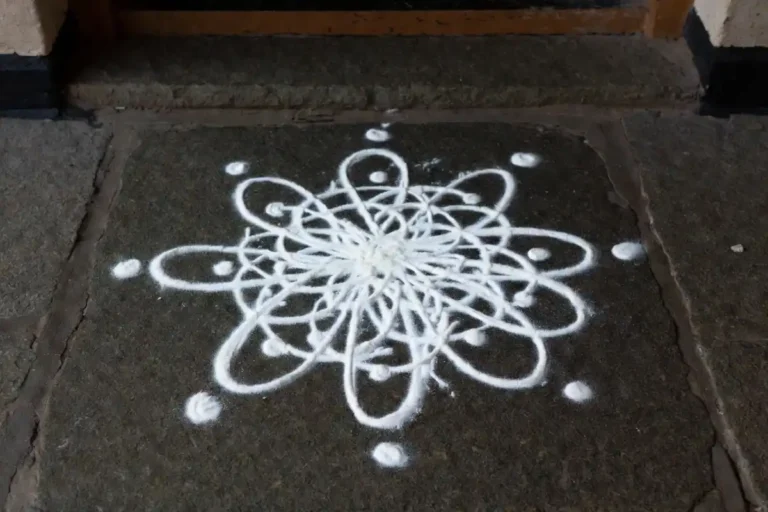
Use white chalk to place evenly spaced dots in a 5×5 or 7×7 grid.
Connect the Dots
Connect the dots using curved lines, petals, or simple zigzag patterns.
Add Color
Fill each section with a different color using powder or a squeeze bottle.
Finish the Border
Add a border around the full design to give it a polished finished look.
This method is used in many small symmetry rangoli patterns and is a reliable starting point for anyone new to the craft.
The dot grid approach teaches you spacing, proportion, and color placement all at once. It is also forgiving. If a line goes off course, you can gently correct it with your finger before the powder sets.
Simple Rangoli Patterns You Can Try Right Away
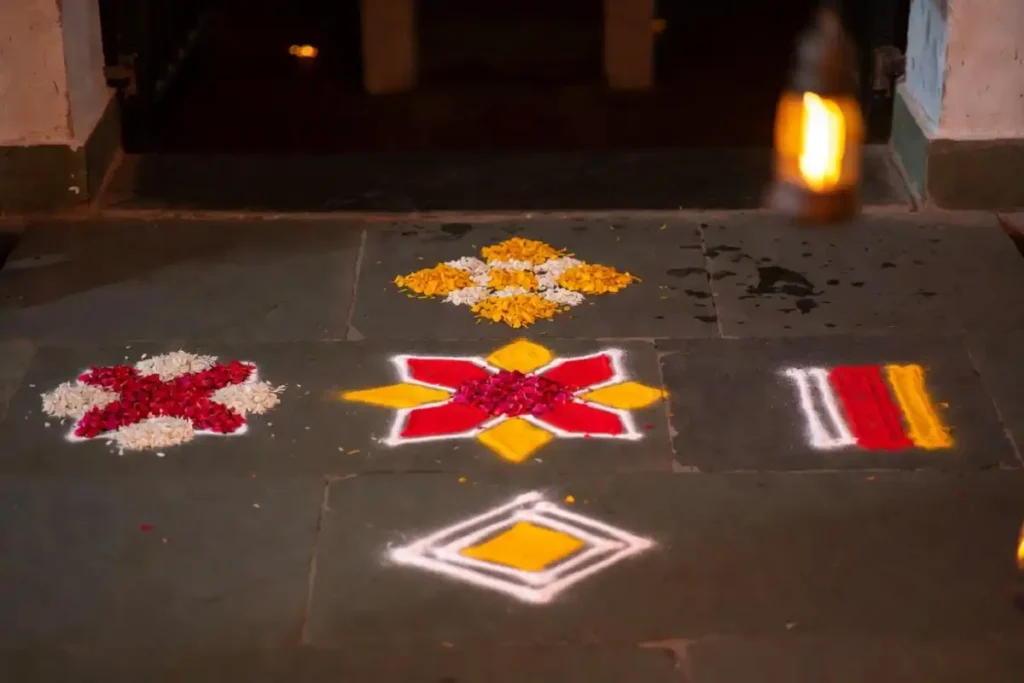
Not every rangoli needs to be elaborate. Some of the most appealing designs are simple and clean. Here are a few patterns that work well for beginner friendly rangoli art practice sessions.
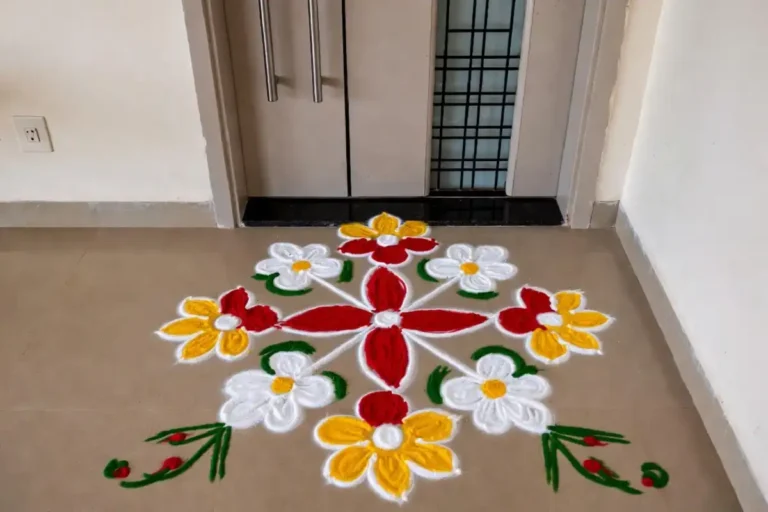
Single Flower Petal Design
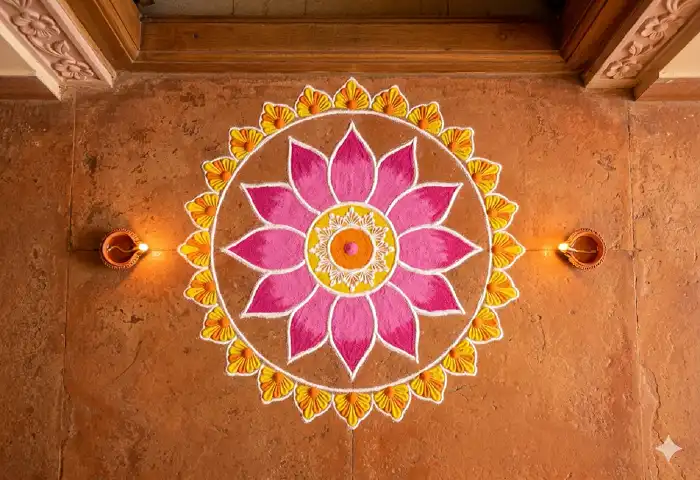
Draw a circle in the center. Add eight evenly spaced petals around it, like a simple daisy. Fill the center with one bright color and the petals with another.
Concentric Circles with Dots
Draw three circles of different sizes, one inside the other. Add dots along each ring using a contrasting color.
Square Border Pattern
Draw a square outline and add a repeating motif along each side, such as small triangles or curved petals.
Peacock Feather Motif
Sketch a peacock feather shape using chalk. Use blue, green, and gold powder to fill the different sections.
Simple Diya Lamp Shape
Draw the outline of a small diya and fill it with warm orange, red, and yellow shades.
You can explore more ideas in beginner mandala rangoli designs for inspiration on how to develop circles and symmetrical patterns further.
Color Tips Every Rangoli Beginner Should Know
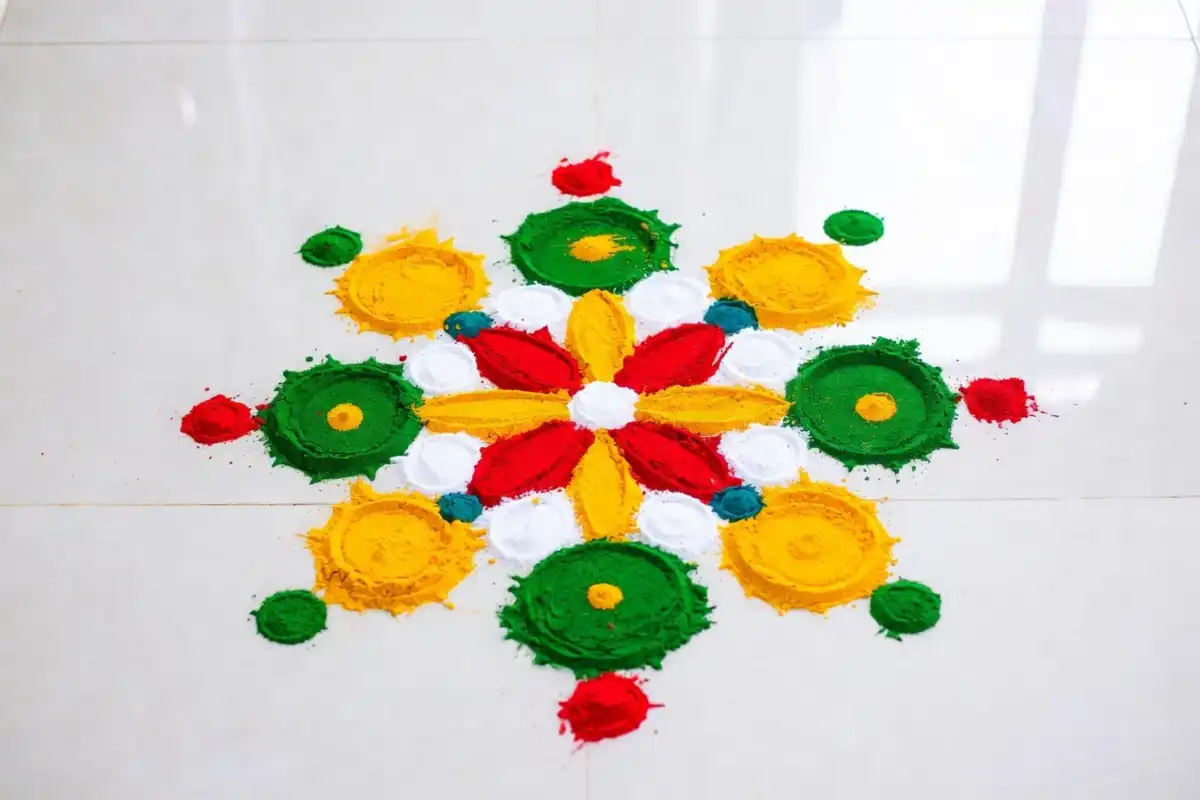
Choosing the right colors is one of the most important parts of beginner friendly rangoli art. A simple color palette can make even a small design look polished.
Start with three colors at most to avoid a cluttered appearance.
Place contrasting colors beside one another so sections stand out.
Red, yellow, and white look especially vibrant on dark floors.
Pastel powder colors create a softer and more modern appearance.
Use a dry cloth to correct accidental smudges between color sections.
Traditional color theory in Indian folk art often pairs red with white, green with yellow, and orange with blue. These combinations have been used for generations and create a balanced appearance.
Common Mistakes Beginners Make and How to Avoid Them
Every beginner makes a few early mistakes. Knowing what to watch for helps you move forward faster with your beginner friendly rangoli art journey.
Always sketch your design lightly in chalk before adding color. Jumping straight to powder can lead to uneven shapes.
Apply color in thin layers because heavy application can spread beyond your intended lines.
Use a dot grid or paper template to check that both halves of the design match.
Practice on plain floors or dark cardboard so your work remains easy to see.
Work slowly and check your progress from a distance every few minutes.
For a detailed look at how to work without templates, the guide on creating rangoli without a stencil covers freehand techniques that build confidence over time.
How to Make Your Rangoli Last Longer
Avoid places where people regularly walk across the design.
Keep nearby windows and doors closed when possible.
A light mist of water can help finished powder stay in position.
Acrylic rangoli boards can be used indoors and stored for future use.
Traditional rangoli is temporary by nature. However, these simple steps can help your beginner friendly rangoli art design stay intact longer.
According to the Crafts Council of India, traditional floor art practices like rangoli and kolam are recognized as important intangible cultural heritage worth preserving. Learning and practicing them at home helps keep these traditions alive.
Rangoli Across Indian Festivals
Diwali
Diyas and lotus flower motifs are especially popular during the festival of lights.
Onam
Kerala homes create Pookalam using fresh flower petals arranged in layers.
Pongal
Rice flour kolam patterns are traditionally drawn at dawn during the harvest celebration.
Navratri
Colorful floor decorations help create a festive atmosphere in homes and community spaces.
Ugadi
Traditional floor designs are used to decorate entrances and welcome the new year.
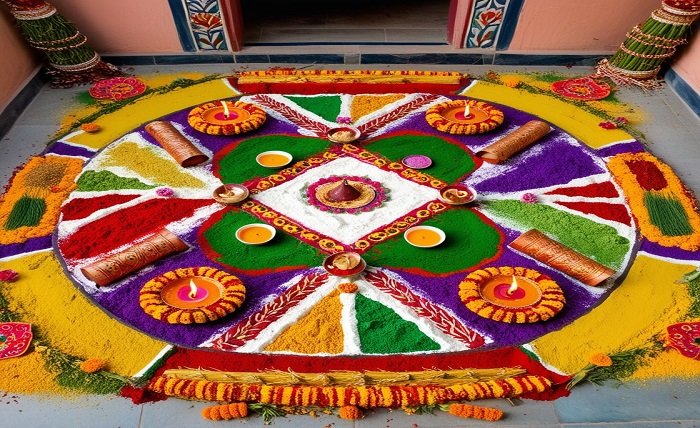
Rangoli is made throughout the year, but certain festivals call for it especially. Diwali, Onam, Navratri, Pongal, and Ugadi are all occasions when homes and community spaces are decorated with beautiful rangoli designs.
Beginner friendly rangoli art fits naturally into each of these celebrations because even simple patterns look joyful and festive in a holiday setting.
Each region of India has its own style and tradition. Exploring these regional variations can give you a deeper appreciation for the art form and new ideas for your own practice. The UNESCO Intangible Cultural Heritage program highlights how such traditions are interconnected with community identity worldwide.
Practicing Regularly Builds Real Skill
Small Practice Creates Big Improvement
Even spending fifteen minutes a week trying a new small design will build your speed, accuracy, and color sense over time.
Keep a simple sketchbook where you draw rangoli patterns in pencil before transferring them to the floor. This planning step saves time and helps you visualize the finished design before committing to powder.
Try exploring small traditional rangoli ideas to find designs that match your current skill level while gently pushing you to try new elements.
Start Small and Keep Practicing
Beginner friendly rangoli art is an accessible, joyful craft that connects you to a rich cultural tradition. Starting with simple dot grids, basic flower shapes, and a limited color palette gives you a solid foundation.
From there, your designs naturally grow more detailed as your confidence builds. The most important thing is to begin, make something, and enjoy the process.
Rangoli does not need to be perfect to be meaningful. Every design you create, no matter how small, is a step forward in exploring this timeless and beautiful tradition.
Beginner Friendly Rangoli Art FAQs
What exactly is beginner friendly rangoli art?
Beginner friendly rangoli art refers to simple, approachable rangoli designs that anyone can create without prior experience. These patterns use basic shapes like dots, petals, and lines and are structured in a way that is easy to follow step by step.
Is rangoli only made during festivals?
No, rangoli can be made any time. Many families create small daily designs near their front door as a welcoming gesture. Festivals simply call for larger and more decorative versions of the same patterns found in beginner friendly rangoli art.
What is the easiest material to use for a first rangoli?
Colored rangoli powder is the easiest starting material because it flows smoothly, comes in ready-made shades, and is simple to apply using a small cone. Rice flour is also gentle on beginners because it can be wiped away cleanly.
How long does a beginner take to finish a small rangoli?
A simple five-dot or seven-dot grid pattern usually takes between fifteen and thirty minutes for a beginner. Speed increases naturally as you practice more often.
Can children make rangoli?
Yes, rangoli is a wonderful activity for children. Younger children can start with flower petal rangoli, which does not involve loose powder. Older children can try dot-based powder designs with adult supervision.
Do I need special floors to make rangoli?
No special floor is required. Smooth tile, stone, or even dark craft paper all work well. Rough or heavily textured surfaces make it harder to apply powder cleanly, so a flat surface is preferred.
What should I do if my design looks uneven?
Gently sweep the uneven area with a dry cloth or brush and redo that section. Rangoli is very forgiving in this way. Most beginners find that their second or third attempt within the same session looks much cleaner than the first.