Traditional Rangoli with Rice Flour: A Complete Guide
Traditional Rangoli with Rice Flour: A Simple Guide to the Timeless Art
Traditional rangoli with rice flour is one of the oldest floor art forms in India. I make it at my doorstep every festival morning. This guide covers the flour, the technique, the meaning, and the steps you need.
Traditional rangoli with rice flour is a doorstep design made by trickling dry or wet rice flour through your fingers. It welcomes guests, feeds small creatures, and marks auspicious days across South Indian homes.
What Is Traditional Rangoli with Rice Flour?
Traditional rangoli with rice flour is floor art drawn using ground rice as the main medium. In the south, people call it kolam. In Maharashtra, similar patterns appear during festivals. The rice flour sits directly on a clean, damp floor.
The practice is old. It ties into daily ritual, not just festivals. Women in Tamil Nadu, Karnataka, and Andhra Pradesh draw it at dawn. The design fades by evening and gets redrawn the next morning.
Rice flour matters here for a reason. It is edible. Ants, birds, and small insects eat it through the day. So the art feeds life while it decorates the ground. That idea sits at the heart of the tradition.
Rice flour creates the traditional white line while keeping the practice natural, simple, and connected to everyday ritual.
Why Rice Flour and Not Chalk or Color?
Rice flour is used because it is natural, edible, and rooted in ritual. Chemical colors came later. The original medium was always ground rice, sometimes mixed with a little water.
Dry Rice Flour
Dry rice flour gives a soft white line and works especially well for traditional daily designs.
Wet Rice Paste
Wet rice paste, called kolam maavu, gives a bright, crisp line that lasts longer.
Dry rice flour gives a soft white line. Wet rice paste, called kolam maavu, gives a bright, crisp line that lasts longer. Both are traditional. Your choice depends on the finish you want.
There is a spiritual layer too. Feeding ants and birds is seen as a small daily good deed. The white color signals purity and welcome. Guests read a fresh design as a sign of a cared-for home. This is why traditional rangoli with rice flour has stayed a morning habit for generations.
Types of Traditional Rangoli with Rice Flour
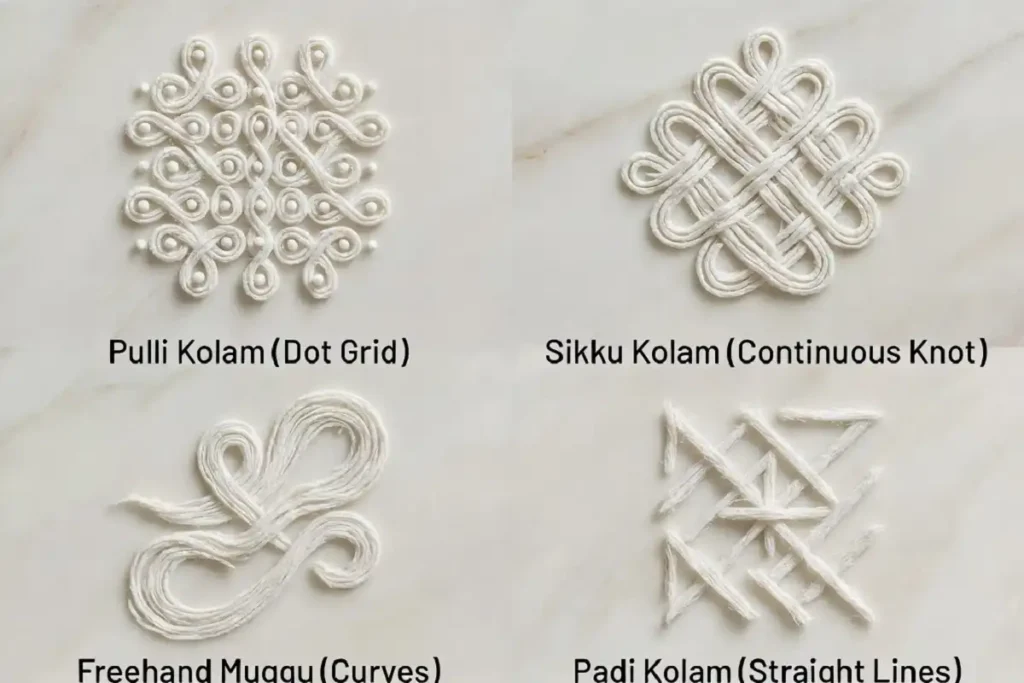
Several distinct styles fall under traditional rangoli with rice flour. Each region shapes it differently.
Pulli Kolam
Pulli kolam starts with a grid of dots. You loop lines around the dots to form the pattern. Tamil Nadu is the home of this style. The dots guide symmetry and keep the design balanced.
Sikku Kolam
Sikku kolam uses one continuous looping line around dots. The line never breaks. It weaves like a knot. This style takes practice but looks stunning when finished.
Freehand Muggu
Muggu is the Andhra and Telangana word for these designs. Freehand muggu skips the strict dot grid. You draw flowing curves straight onto the floor. Festival muggu often adds color inside the white outline.
Padi Kolam
Padi kolam uses straight, angular lines instead of curves. It appears during Margazhi, the sacred Tamil month. The design looks geometric and formal.
What Rice Flour Should You Use?
Use finely ground raw rice flour for the best control. Coarse flour clogs and drops in clumps. Fine flour flows smoothly between your fingers. The quality of your flour decides how clean your traditional rangoli with rice flour will look.
Choose fine raw rice flour. If the flour feels coarse between your fingers, sift it before drawing.
Many practitioners grind raw rice at home. Store-bought rice flour works too, as long as it is fine. For wet designs, mix the flour with water into a thin, smooth paste. The paste should drip slowly off a cloth wick, not run like water.
Rice flour rangoli connects naturally to broader floral and dot-based work, and if you enjoy softer patterns you may like these easy lotus designs for a festive home drawn in the same white base.
How to Make Traditional Rangoli with Rice Flour Step by Step
Making traditional rangoli with rice flour takes five clear steps. Follow them in order.
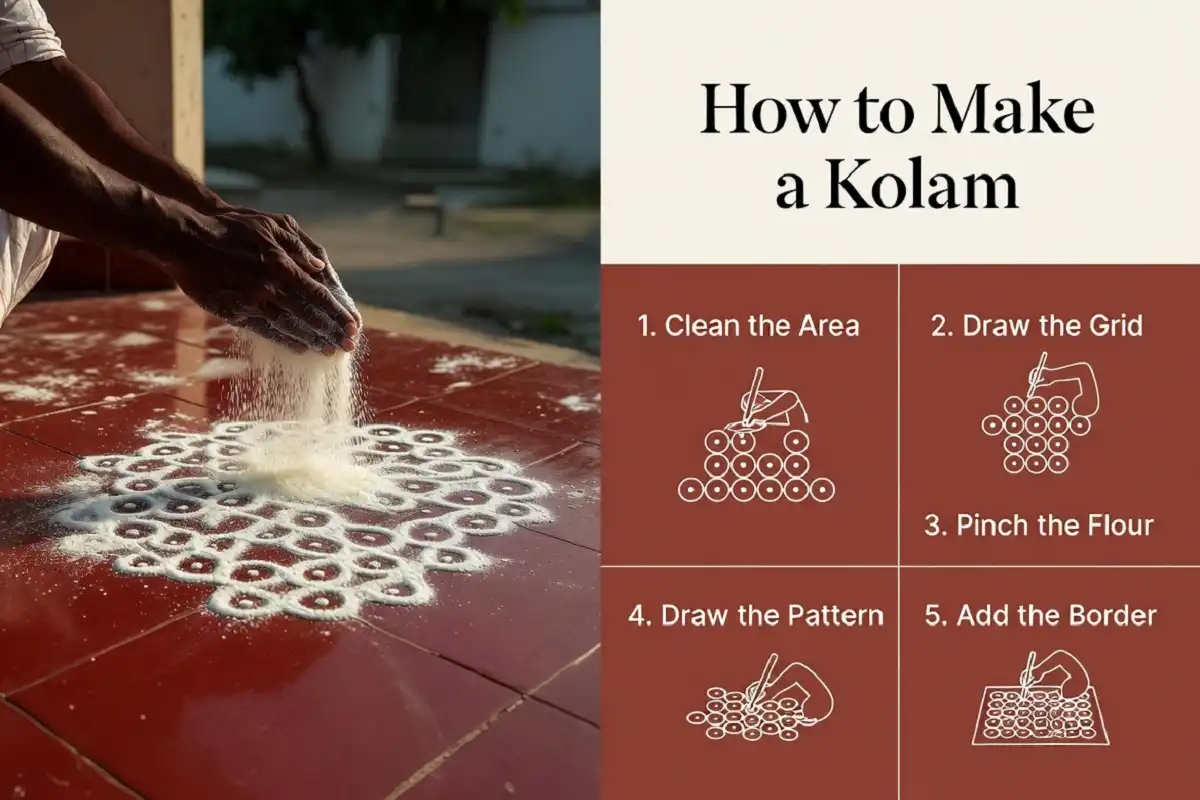
Clean the Floor
Sweep, then wipe the ground with a damp cloth. A slightly damp surface holds the flour.
Mark Your Dots
For dot styles, place dots in even rows. Count them so the grid stays balanced.
Hold the Flour Right
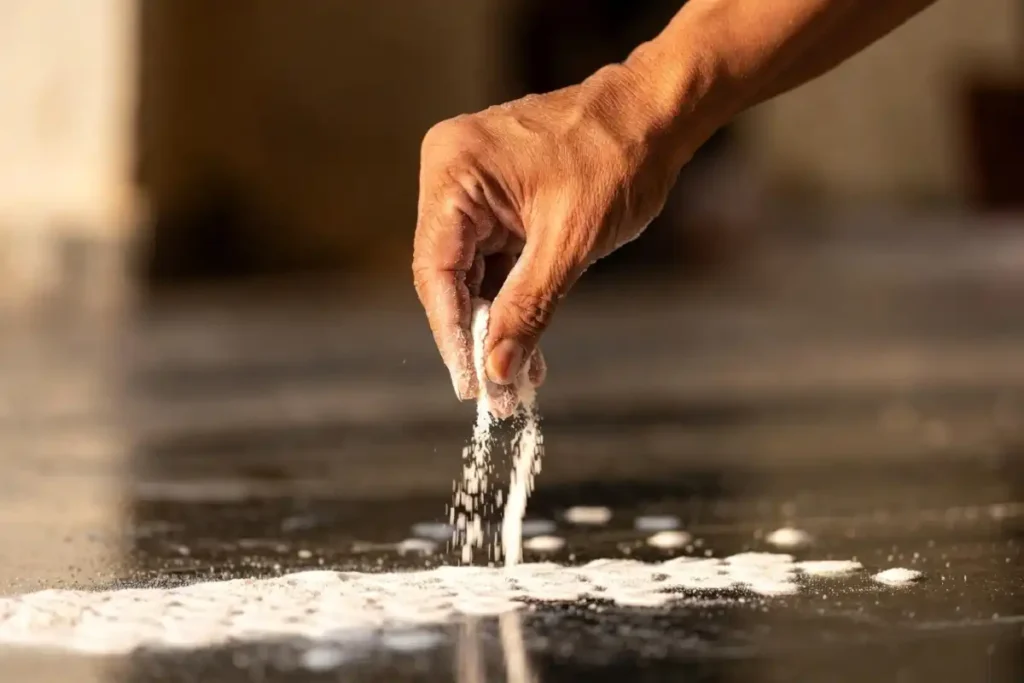
Pinch fine rice flour between your thumb and forefinger. Let it fall in a thin, steady line as you move your hand.
Draw the Pattern
Loop lines around the dots or draw your freehand shape. Work from the center outward.
Finish the Edges
Add a border to frame the design. Fill sections with more flour or leave the white lines clean.
For a smaller daily version, the same hand technique works well, and beginners often start with these simple kolam patterns for the home before trying larger festival designs.
When Do People Make Rice Flour Rangoli?
People make rice flour rangoli daily and on festivals. In many South Indian homes, traditional rangoli with rice flour is a morning routine, drawn before sunrise.
Daily Mornings
Small white designs are drawn at the entrance as part of a morning routine.
Pongal
Larger designs often include sugarcane, pots, and other seasonal motifs.
Diwali
Rice flour patterns can be combined with lamps and colorful festival decorations.
Margazhi
Elaborate traditional kolams become a major part of the sacred Tamil month.
Festivals bring bigger, brighter versions. Pongal, Diwali, and the month of Margazhi are peak times. During Pongal, sugarcane and pot motifs appear. For weddings and housewarmings, the designs grow large and detailed.
Traditional rice flour designs also fit the wider festival calendar, and you can see how the same white-line base carries into beginner-friendly festival designs used across the year.
Traditional Motifs and Their Meaning
Traditional rangoli with rice flour uses motifs that carry meaning. Each shape says something.
Lotus
The lotus stands for purity and prosperity.
Sun and Stars
These motifs mark auspicious mornings.
Fish and Birds
Fish and birds signal abundance.
Diya
The lamp welcomes light into the home.
During Margazhi, women draw the hridaya kamalam, a heart-lotus, as a devotional symbol.
A balanced design reflects order and harmony. That balance is why dot grids matter so much in the traditional form.
Common Mistakes to Avoid
The most common mistake in traditional rangoli with rice flour is using coarse flour that will not flow. Fine flour is essential. Beyond that, watch for a few issues.
Coarse flour does not flow smoothly and can fall in uneven clumps.
Dust and dryness make the flour scatter instead of forming clean lines.
A clean frame gives the entire design a more finished appearance.
A thin, smooth mixture creates cleaner lines than an overly wet paste.
Do not draw on a dry, dusty floor. The flour scatters. Wipe the ground damp first. Do not rush the border. A clean frame makes the whole design look finished. Do not overload wet paste. A thin, smooth mix gives the cleanest line.
Practice your hand control on paper first if you are new. The pinch-and-release motion is the hardest part to learn.
Tips to Keep Your Design Lasting Longer
Choose Wet Paste
Wet rice paste lasts far longer than dry flour and is useful for areas with more foot traffic.
Draw Early
Early morning air is usually calmer, helping prevent dry flour from blowing away.
Use Covered Areas
On a covered porch, dry flour can remain intact much longer through the day.
Wet rice paste lasts far longer than dry flour. For a design that survives foot traffic and wind, use kolam maavu paste.
Draw early, when the air is still. Wind ruins dry flour fast. On a covered porch, dry flour lasts the whole day. Outdoors, a light mist of water over a finished dry design can help it hold. For heavy outdoor use, always choose the wet paste method.
Keep the Tradition Alive
Traditional rangoli with rice flour is simple, meaningful, and open to everyone. Start with a small dot grid and fine flour. Keep your hand steady and your paste thin. The skill grows every single morning you practice.
This is a living tradition, and your doorstep is the perfect place to keep it alive.