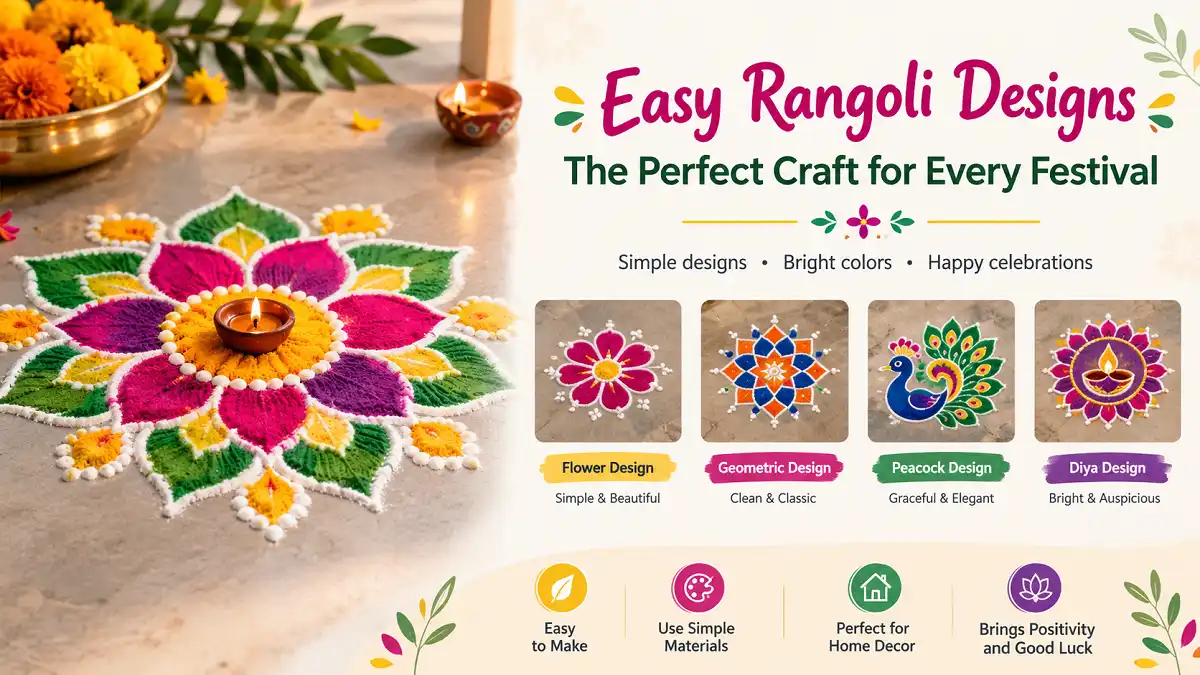
Easy Rangoli Designs: The Perfect Craft for Every Festival
Rangoli has been part of my life for as long as I can remember.
When I was growing up, I often watched family members create fresh rangoli outside the house. What looked simple at first was actually a careful combination of patterns, colors, balance, and patience. I became fascinated by the way a few lines and dots could turn an ordinary patch of ground into something beautiful.
Over time, I started photographing the rangoli patterns I came across and paying closer attention to how they were made. I wanted to understand not only what made a design attractive, but also how someone could recreate it at home.
That curiosity eventually became Rangoli Designs, a place where I share the art I’ve loved since childhood.
Today, I collect and develop practical ideas for people looking for easy rangoli designs, traditional patterns, festival decorations, and creative inspiration. Whether you’re picking up rangoli powder for the first time or preparing for a competition, my goal is to make the process easier to understand and more enjoyable.
Why I Love Rangoli
For me, rangoli has never been just about decorating the floor.
I remember seeing family members create new designs regularly, often starting with nothing more than a few dots or simple lines. There was something special about watching the design slowly take shape.
Sometimes the pattern was made quickly. Other times, it required more patience and attention to detail. But every design had its own character.
A beautiful rangoli doesn’t necessarily have to be complicated. A simple design made with good spacing, balanced colors, and confidence can be just as attractive as a highly detailed pattern.
That’s one of the reasons I enjoy sharing easy rangoli designs for beginners. I want people to discover that they can create rangoli without feeling intimidated.
What Makes an Easy Rangoli Design?
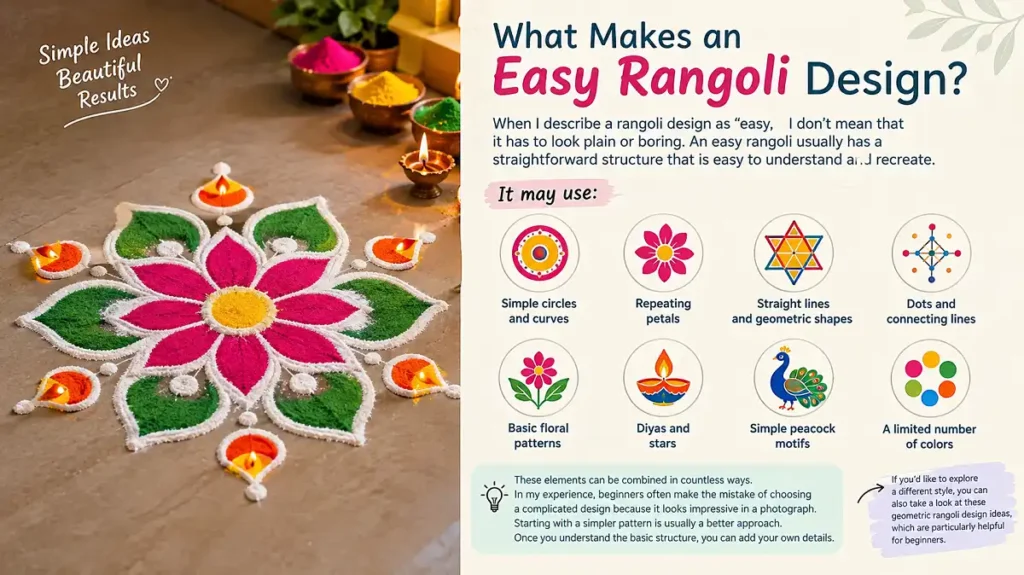
When I describe a rangoli design as “easy,” I don’t mean that it has to look plain or boring.
An easy rangoli usually has a straightforward structure that is easy to understand and recreate. It may use:
Simple Circles & Curves
Basic shapes that are easy to draw and repeat.
Repeating Petals
Simple floral elements that can create attractive patterns.
Dots & Connecting Lines
A structured way to create patterns with better spacing.
Basic Floral Patterns
Flowers and leaves can make a simple rangoli feel complete.
Diyas & Stars
Small festive elements that add character and color.
Simple Peacock Motifs
A recognizable traditional motif without excessive detail.
These elements can be combined in countless ways. In my experience, beginners often make the mistake of choosing a complicated design because it looks impressive in a photograph. Starting with a simpler pattern is usually a better approach.
If you’d like to explore a different style, you can also take a look at these geometric rangoli design ideas , which are particularly useful for learning how shapes and symmetry work together.
My Approach to Finding Rangoli Designs
A large part of my interest in rangoli comes from observing designs closely.
When I photograph a pattern, I don’t just look at its colors. I pay attention to how the design is constructed.
Where does the pattern begin?
How are the dots arranged?
How are the curves connected?
How much space is left between different elements?
How do the colors work together?
These details can make a big difference when you’re trying to recreate a design.
Over the years, this habit of observing and photographing patterns has helped me understand rangoli from a more practical perspective. It has also shaped the way I create content for Rangoli Designs.
I try to focus on designs that people can actually use rather than simply showing patterns that look good in a photograph.
Easy Rangoli Designs for Beginners
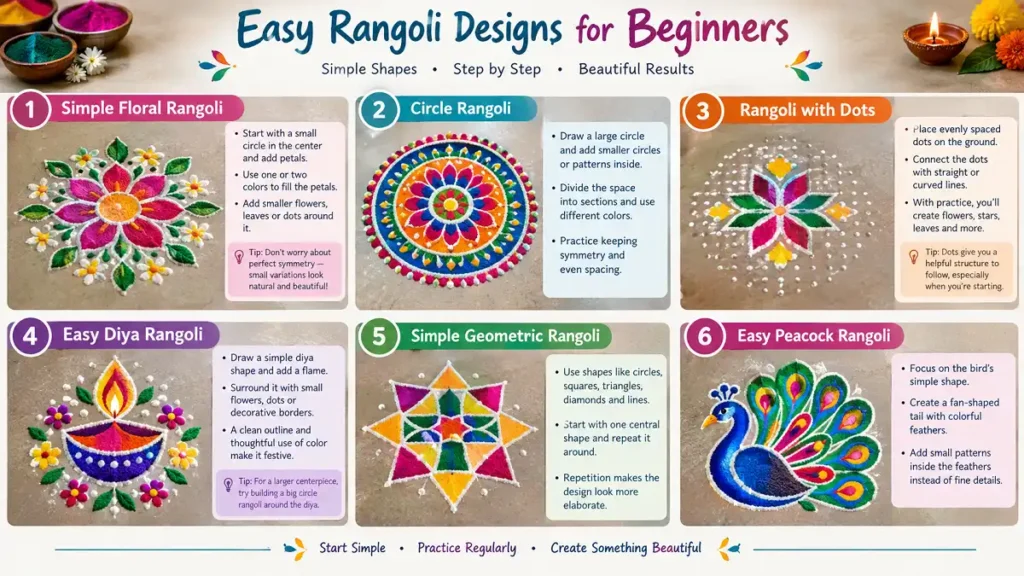
If you’re new to rangoli, I recommend starting with patterns based on familiar shapes. Here are some of my favorite starting points.
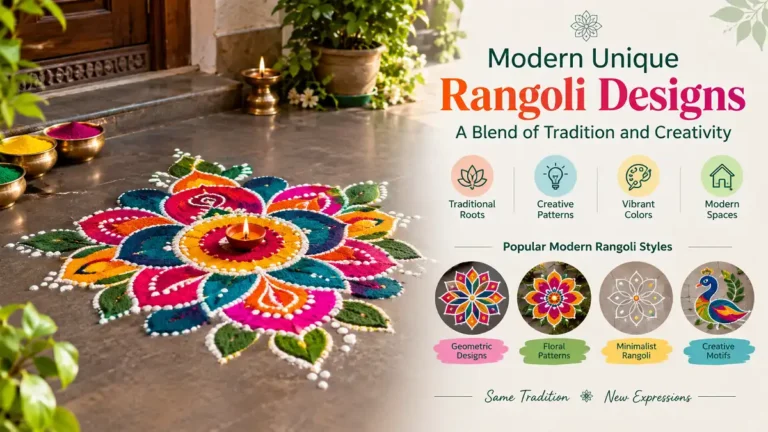
Simple Floral Rangoli
Flowers are one of the easiest subjects to turn into rangoli. Start with a small circle in the center and draw several petals around it. You can keep the petals simple and fill them with one or two colors.
Once you’re comfortable with the basic flower, add smaller flowers, leaves, or dots around it.
The beauty of floral rangoli is that you don’t have to make every petal perfectly identical. A little natural variation can make the design feel handmade.
Explore simple petal rangoli designsCircle Rangoli
Circles are another excellent starting point. Draw a large circle and build smaller circles or patterns inside it. You can divide the space into sections and use different colors in each section.
This type of design is especially useful for learning how to maintain symmetry and spacing.
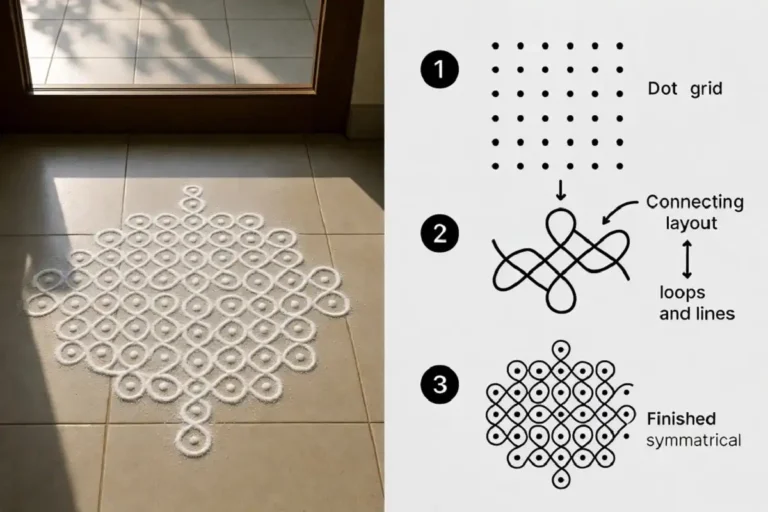
Rangoli with Dots
Dot-based rangoli has always fascinated me because such a simple starting point can lead to surprisingly detailed designs.
Begin by placing evenly spaced dots on the ground. Then connect them using straight or curved lines.
If you’re struggling with freehand drawing, this method can give you a helpful structure to follow.
With practice, you’ll start recognizing how dots can become flowers, stars, leaves, geometric patterns, and other motifs.
Easy Diya Rangoli
A diya is a natural choice for festive rangoli, particularly during Diwali.
Draw a simple diya shape and add a flame above it. You can surround the diya with small flowers, dots, or decorative borders.
You don’t need a complicated pattern to make the design feel festive. A clean outline and thoughtful use of color can do most of the work.
If you’re interested in making a larger centerpiece, these big circle rangoli ideas can also help you build a design around a central motif.
Simple Geometric Rangoli
Geometric rangoli designs use shapes such as circles, squares, triangles, diamonds, and lines.
These designs are useful for beginners because you can build them step by step.
Start with one central shape, then repeat the same pattern around it. Repetition makes the design look more elaborate without requiring you to learn dozens of different shapes.
Easy Peacock Rangoli
Peacocks are a traditional favorite, but a detailed peacock can be difficult for someone just starting out.
A simpler approach is to focus on the bird’s recognizable shape and create a fan-shaped tail with colorful feathers.
You can then add small patterns inside the feathers instead of trying to reproduce every tiny detail.
How I Recommend Practicing Rangoli
One thing I’ve learned from watching and studying rangoli over the years is that practice matters more than perfection.
You don’t need to create a perfect design on your first attempt. Instead, practice individual elements.
Draw Circles
Practice making smooth and balanced circular shapes.
Practice Curves
Work on simple curved lines before combining them into patterns.
Place Even Dots
Learn to create consistent spacing between dots.
Fill Small Areas
Experiment with filling shapes neatly using rangoli powder.
Repeat Flowers
Practice creating the same flower several times.
Once these basic movements become comfortable, larger designs become much easier.
I also recommend taking photographs of your own rangoli. Looking back at older designs can help you see how your technique has improved.
Choosing Colors for Your Rangoli
Color can completely change the appearance of a simple design.
You don’t necessarily need a large collection of colors. In fact, beginners may find it easier to start with two or three shades.
Try combining light and dark colors or choosing shades that create a clear contrast.
For festive designs, brighter colors can create an energetic appearance. For a more traditional or subtle look, you can work with a smaller and more coordinated color palette.
The important thing is to experiment and see what works with your particular design.
Materials I Use for Rangoli
The materials required for rangoli are generally simple.
Depending on the type of design, you can use:
Colored Rangoli Powder
A basic material for adding color to your design.
White Rice Flour or Powder
Useful for outlines, dots, and traditional patterns.
Rice
A simple material that can be incorporated into different designs.
Flower Petals
Add a natural and colorful element to your rangoli.
Chalk
Helpful for making preliminary sketches and outlines.
Small Brushes
Useful for shaping and refining smaller areas.
Your Fingers
A simple and flexible way to apply and shape rangoli powder.
I particularly like the flexibility of using simple materials. Rangoli doesn’t require a complicated setup.
Rangoli for Festivals, Prayer, and Competitions
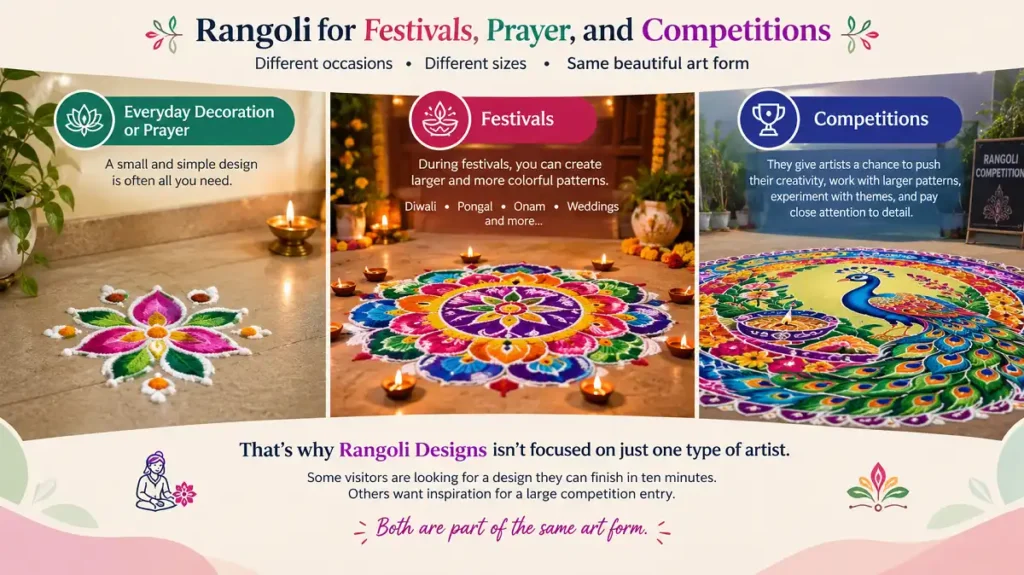
One of the things I enjoy about rangoli is how differently people use it.
Prayer & Everyday Decoration
A small and simple design may be all you need for everyday decoration or prayer.
Festivals
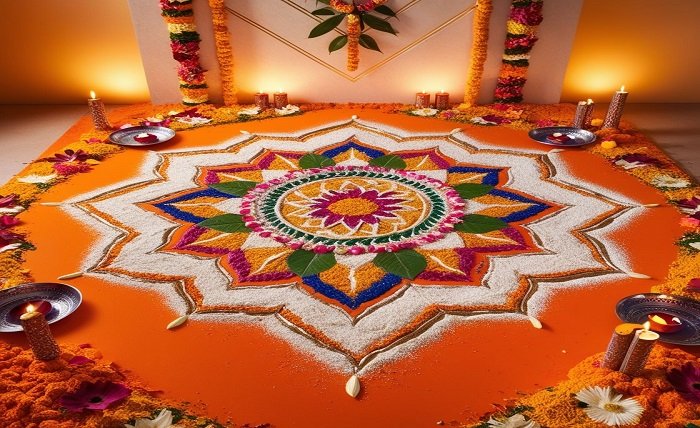
During festivals, you can create larger and more colorful patterns. Diwali, Pongal, Onam, weddings, and other celebrations provide opportunities to experiment with elaborate designs.
Competitions
Competitions give artists a chance to push their creativity, work with larger patterns, experiment with themes, and pay close attention to detail.
Some visitors are looking for a design they can finish in ten minutes. Others want inspiration for a large competition entry. Both are part of the same art form.
Tips I’ve Learned from Studying Rangoli
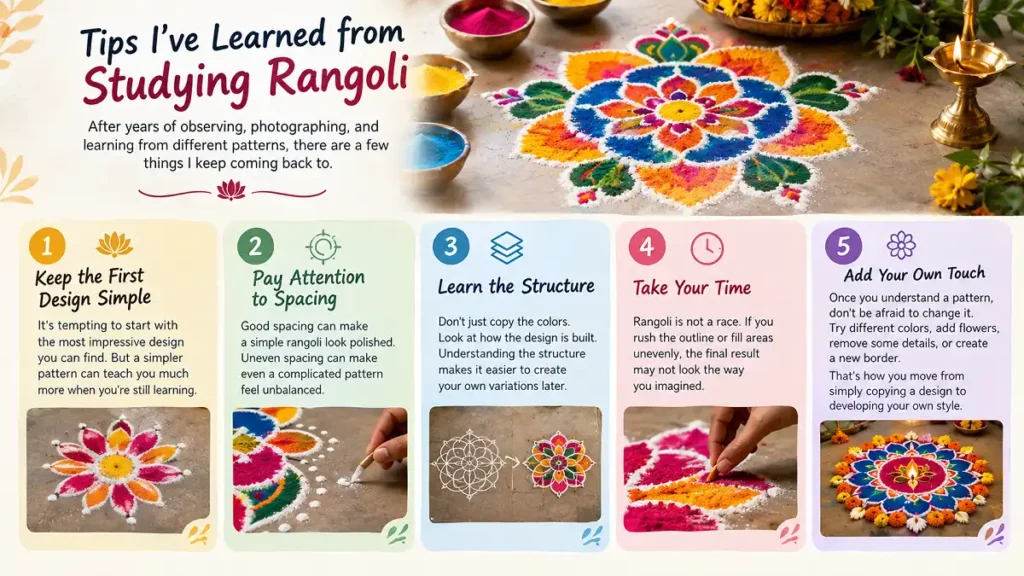
Keep the First Design Simple
It’s tempting to start with the most impressive design you can find. But a simpler pattern can teach you much more when you’re still learning.
Pay Attention to Spacing
Good spacing can make a simple rangoli look polished. Uneven spacing can make even a complicated pattern feel unbalanced.
Learn the Structure
Don’t just copy the colors. Look at how the design is built. Understanding the structure makes it easier to create your own variations later.
Take Your Time
Rangoli is not a race. If you rush the outline or fill areas unevenly, the final result may not look the way you imagined.
Add Your Own Touch
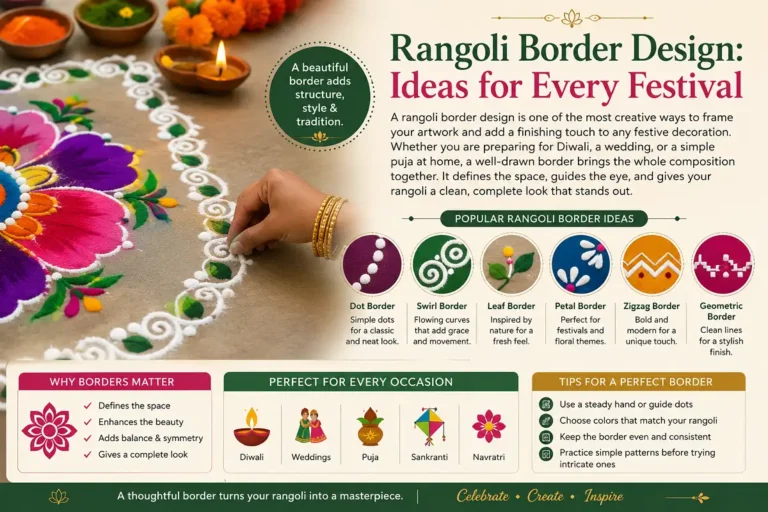
Once you understand a pattern, don’t be afraid to change it. Try different colors, add flowers, remove some details, or create a new border.
Why I Created Rangoli Designs
Rangoli has changed from something I simply watched as a child into something I actively study and share today.
The photographs I took, the patterns I observed, and the techniques I learned gradually gave me a deeper appreciation for this art.
I created Rangoli Designs to bring those experiences together in one place.
Every article is hand-curated with the intention of being useful. I want beginners to find designs they can realistically try, while experienced artists can discover new ideas and inspiration.
Whether you’re searching for easy rangoli designs, traditional patterns, festival ideas, or competition inspiration, I hope the site helps you find something that makes you want to pick up the colors and start creating.
My Rangoli Journey
Rangoli is an art form that rewards patience, creativity, and practice.
You don’t need to start with an elaborate pattern. Sometimes a few dots, a simple flower, or a small geometric design is enough to begin.
My own journey with rangoli started by watching my family create it. It continued through photographing patterns, studying their techniques, and learning what makes a design work. Today, I enjoy sharing that knowledge with others through Rangoli Designs.
If you’re just beginning, start with an easy rangoli design. Don’t worry about making it perfect. Learn the shapes, understand the pattern, experiment with colors, and most importantly, enjoy the process.
With practice, those simple designs can become the foundation for something much more personal—and perhaps, one day, a rangoli style of your own.
Start simple. Practice often. Create your own style.FAQs
Can I make rangoli using ordinary colored powders?
Yes, but be sure they are safe to use both indoors and outdoors and aren’t harmful.
How can I extend the life of my easy rangoli designs?
To improve the adhesion of the colors, think about applying a fixative spray or oil.
Is it acceptable to make rangoli using stencils?
Of course! You may simply make more intricate designs with the aid of stencils.
Is it possible to make easy rangoli designs indoors?
Yes, you may make easy rangoli designs indoors on tabletops or floors; just be careful where you work.
After making rangoli, how do I clean up?
For minor spills, you can use a moist towel, vacuum, or sweep the area. Composting is an option if natural materials are being used.