Simple Petal Rangoli: Easy Floral Design Ideas
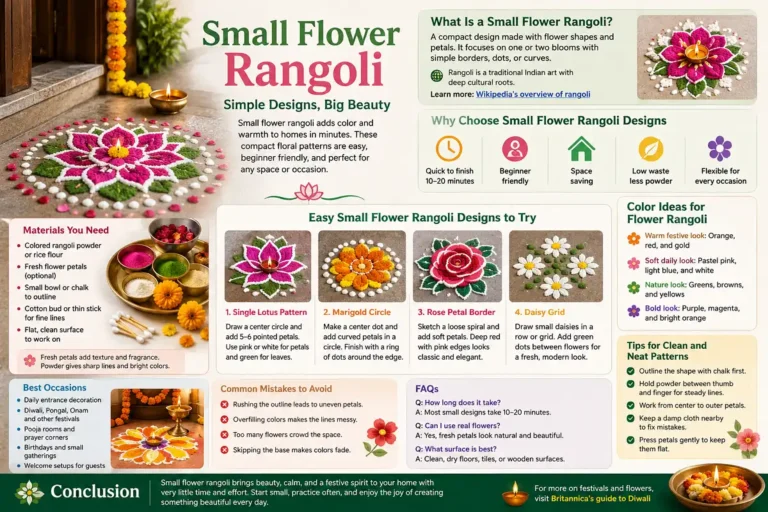
A simple petal rangoli is one of the easiest ways to add color and warmth to your home. The design uses soft, curved petal shapes arranged around a center point. It looks lovely, yet beginners can finish it in minutes.
Petal patterns sit at the heart of Indian floor art. They feel fresh, natural, and welcoming. You can draw them with colored powder or fill them with real flower petals.
This guide walks you through the basics, festival ideas, and helpful tips. If you enjoy flower-based art, you may also like these rose rangoli easy design ideas.
What Is a Simple Petal Rangoli?
A simple petal rangoli is a floral floor pattern built from repeating petal shapes. Each petal curves outward from a central dot or circle. Together, they form a flower-like motif.
The charm lies in its symmetry. A few petals can grow into a full blossom. You control the size, the colors, and the layers.
This style belongs to the floral motifs family of rangoli. It works for daily decoration and big occasions alike.
Types of Simple Petal Rangoli Designs
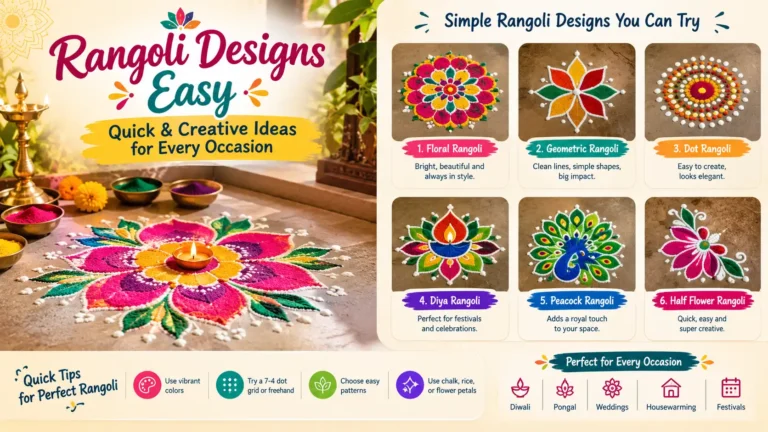
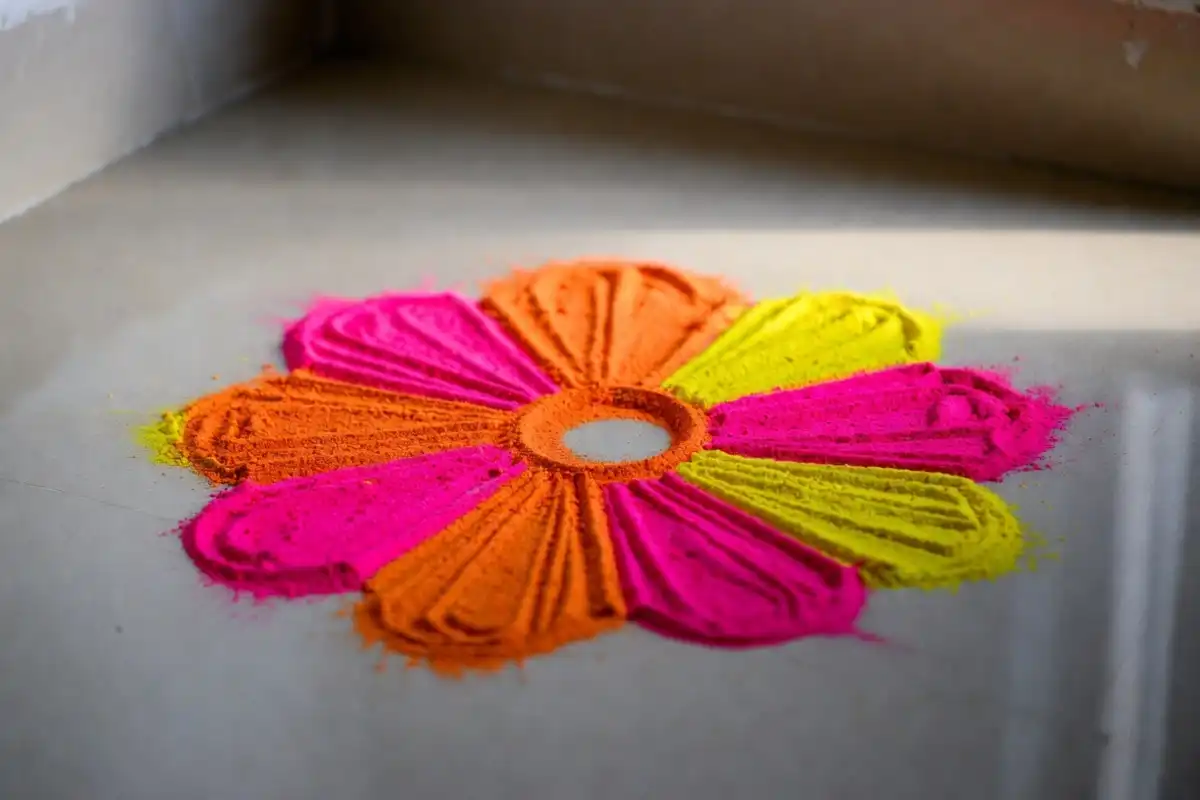
Single-Layer Petal Flower
One ring of petals around a center dot. Quick, clean, and perfect for first-timers.
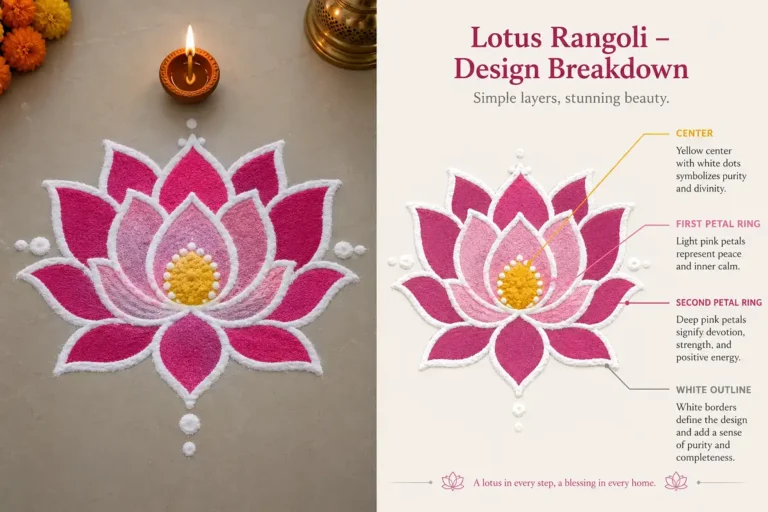
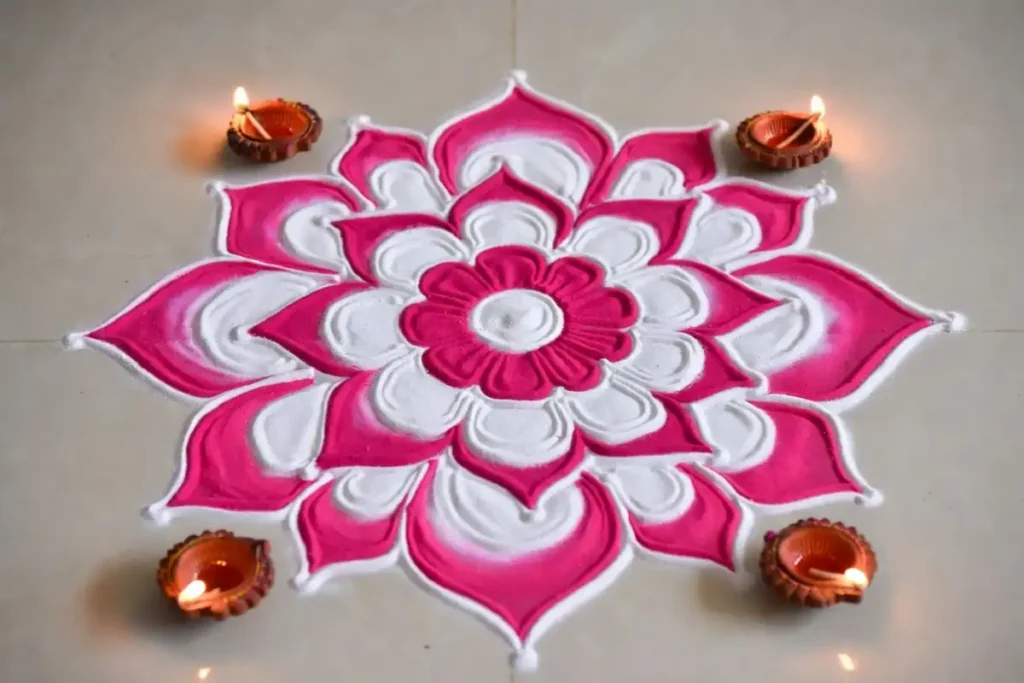
Lotus Petal Design
Layered petals that mimic a blooming lotus. A simple petal rangoli in lotus form feels calm and elegant.
Marigold Petal Rangoli
Rounded petals in bright orange and yellow. A festive favorite.
Fresh Flower Petal Rangoli
Real rose and marigold petals pressed into shape. No powder needed.
Mandala-Style Petal Pattern
Repeating petals in concentric rings for a fuller, richer look.
Step-by-Step Guide to Make a Simple Petal Rangoli
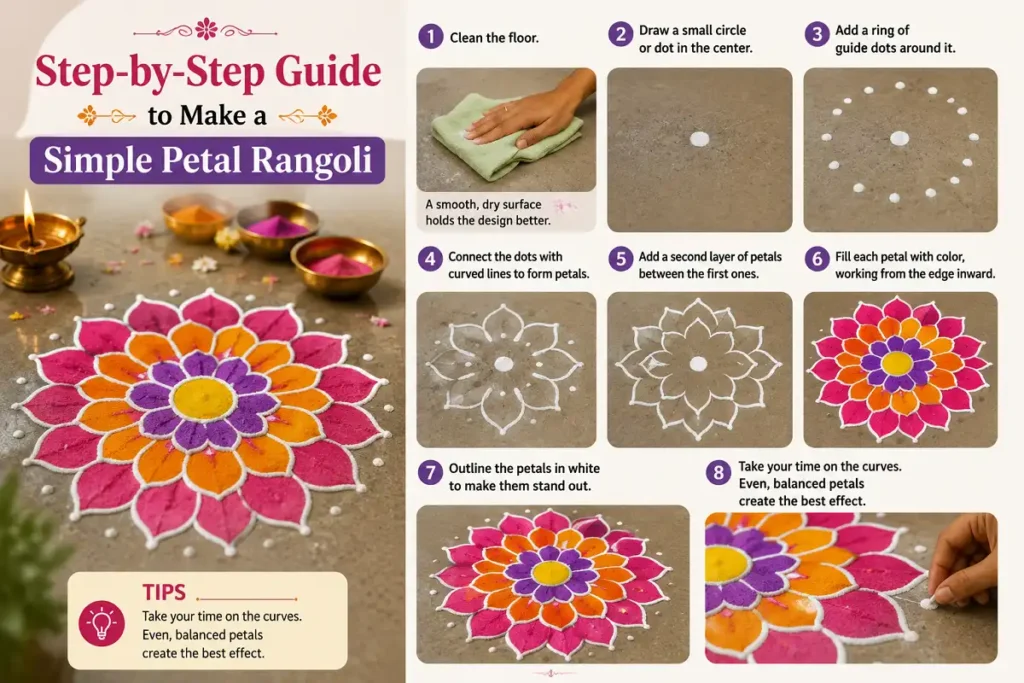
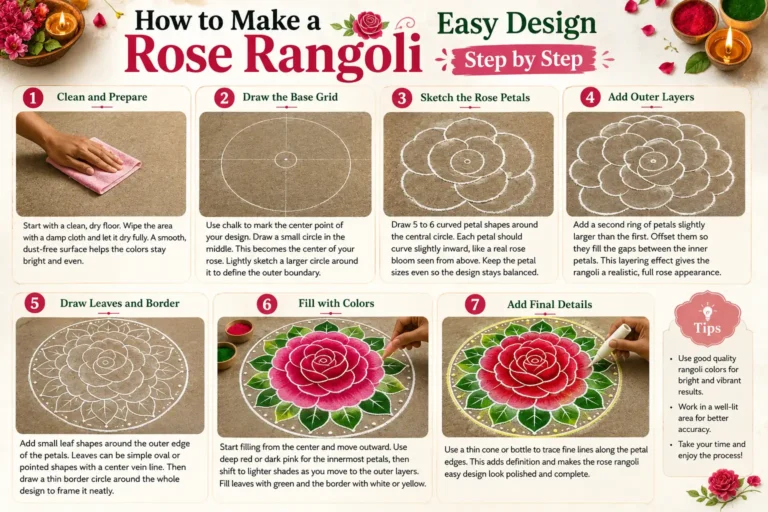
Making a simple petal rangoli takes only a few steps.
Clean the floor. A smooth, dry surface holds the design better.
Draw a small circle or dot in the center.
Add a ring of guide dots around it.
Connect the dots with curved lines to form petals.
Add a second layer of petals between the first ones.
Fill each petal with color, working from the edge inward.
Outline the petals in white to make them stand out.
Take your time on the curves. Even, balanced petals create the best effect.
Design Tips & Best Practices
Festival & Cultural Importance
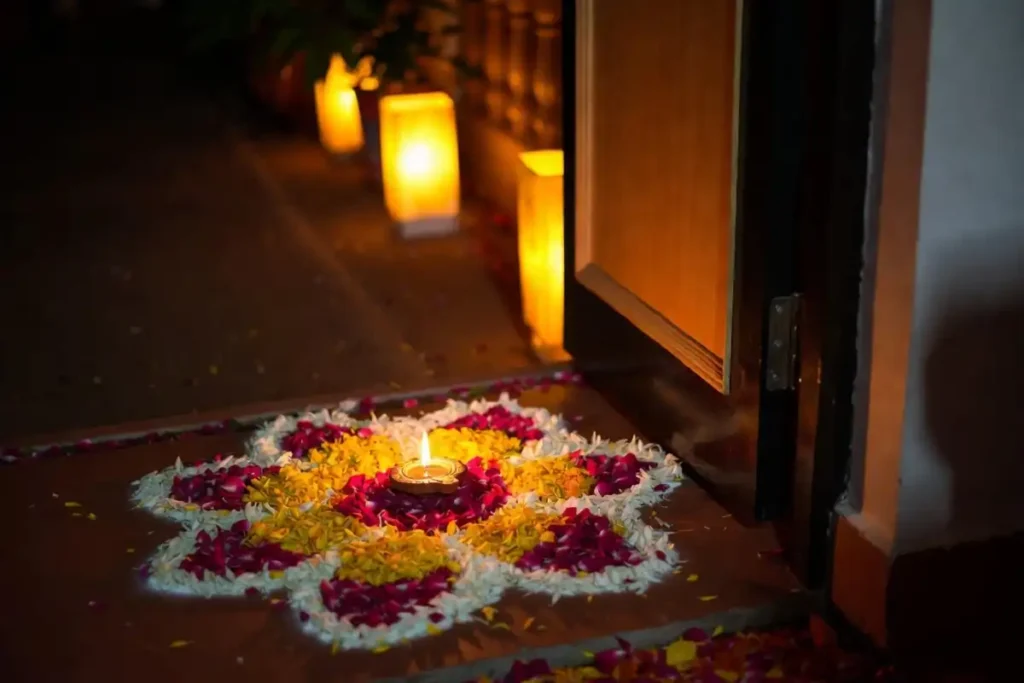
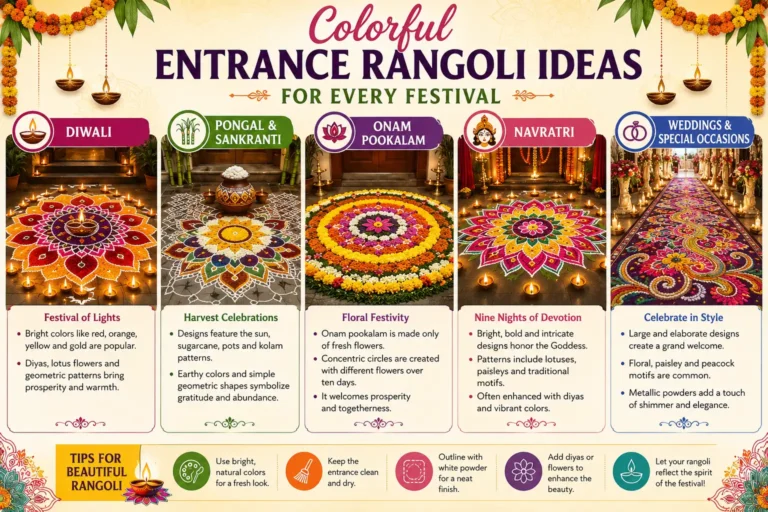
In Indian homes, rangoli welcomes guests and good fortune. Petal designs are common during Diwali, Navratri, and weddings.
A simple petal rangoli at the doorway is believed to invite prosperity. Flowers symbolize purity and joy across many traditions. As Britannica notes, rangoli is a long-standing folk art practiced across India.
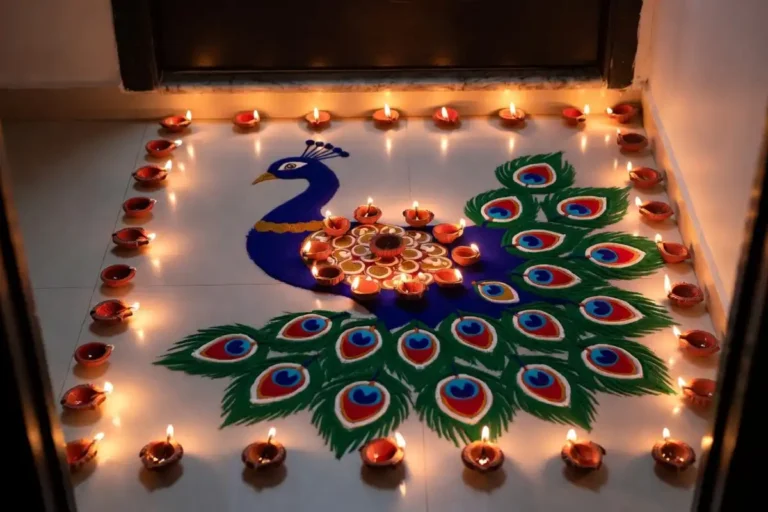
During festivals, families often expand a simple petal rangoli into a larger floral mandala. Pair it with diyas for a warm, glowing effect. For seasonal ideas, see these quick Navratri rangoli looks.
Common Mistakes to Avoid
Skipping the guide dots. Freehand petals often turn out uneven.
Using too much powder. Thin, controlled lines look cleaner.
Choosing clashing colors. Stick to a simple palette.
Rushing the curves. A slow hand makes smoother petals.
Working on a dusty floor. Always clean the surface first.
Latest Trends in Rangoli Design
In 2026, minimal and natural styles are popular. Many people now prefer a simple petal rangoli made with fresh flowers over synthetic powder.
Pastel palettes are trending too. Soft pinks and creams give a modern, gentle look.
Eco-friendly materials like rice flour and dried petals are on the rise. Decor sources such as Architectural Digest regularly feature floral floor art as seasonal decoration.
Glow-in-the-dark outlines and small mirror accents add a fresh twist to classic petal patterns.
Conclusion
A simple petal rangoli blends beauty and ease in one design. With a few petals and the right colors, anyone can create a welcoming floral pattern.
Start with a single layer. Then grow into lotus, marigold, or mandala styles as your confidence builds. A simple petal rangoli suits both everyday decor and festive moments.
Want more floral ideas? Explore our simple Indian symbol rangoli designs for home for fresh inspiration. With a little practice, your next simple petal rangoli will bloom beautifully.
FAQs
How long does a simple petal rangoli take?
A basic design takes about 10 to 15 minutes once you know the steps.
Can beginners make a simple petal rangoli?
Yes. Petal shapes are forgiving and easy to repeat.
What materials do I need?
Colored rangoli powder, chalk, and a steady hand. Fresh petals are optional.
Which flowers work best for petal rangoli?
Marigold, rose, and chrysanthemum hold their color and shape well.
Can I make a petal rangoli without powder?
Yes. Arrange real flower petals into a flower pattern instead.