Quick Navratri Rangoli: Simple 10-Minute Looks
Navratri brings nine nights of music, prayer, and colour, and many homes mark each day with fresh floor art at the door. If your schedule is full, you may want a quick Navratri rangoli that still looks festive. The good news is that simple patterns and a few bright shades can give you a beautiful result in just a few minutes.
Why Rangoli Matters During Navratri
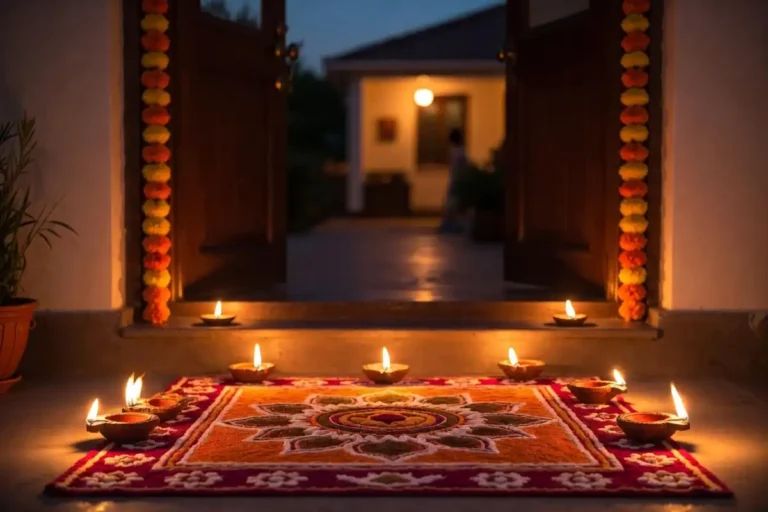
Rangoli is more than decoration during the festival. It is placed at the threshold of a home to welcome positivity and good fortune, and it sets a warm, festive tone for guests and family.
During the nine days, many people draw a fresh design every morning as part of their routine. That daily habit is exactly why a quick Navratri rangoli fits so well. You get the joy of new floor art each day without spending an hour on your knees.
Navratri is a nine-night Hindu festival held in honour of the goddess Durga, and Sharad Navratri usually falls in October. If you want the background, you can read more about this nine-night festival and the long history behind the floor art tradition.
Quick Navratri Rangoli Ideas You Can Finish Fast
These quick Navratri rangoli ideas work well when time is short. Each one can be made smaller or larger to fit your doorway or hall.
Dot-Grid Designs
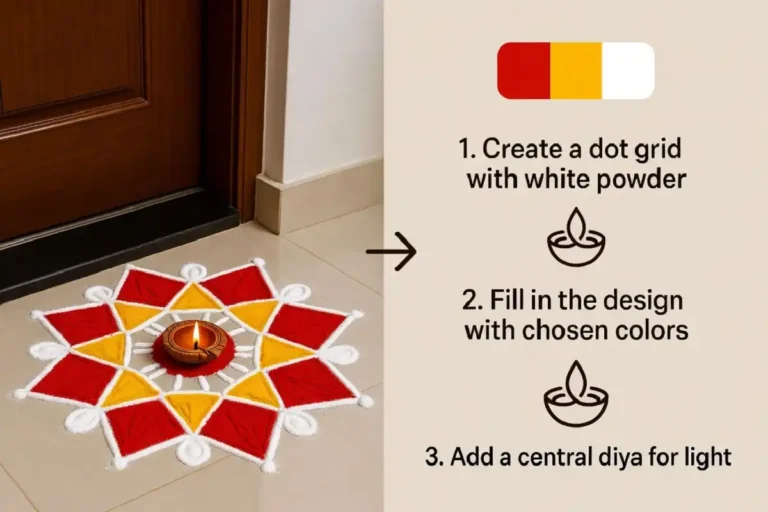
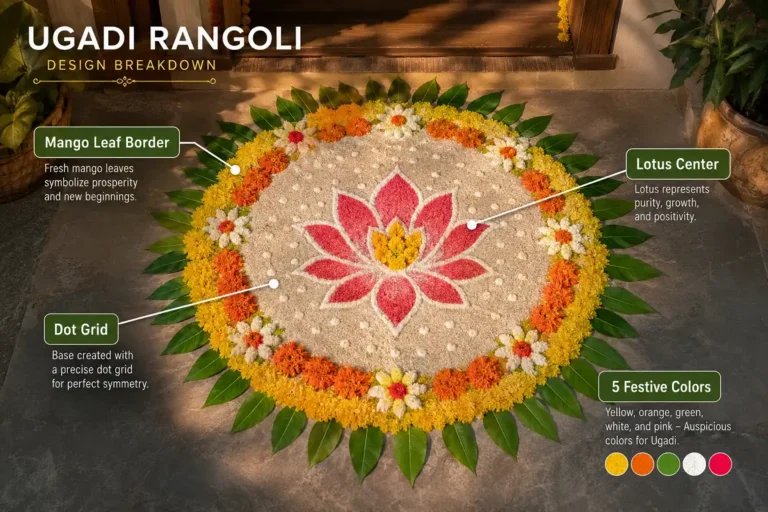
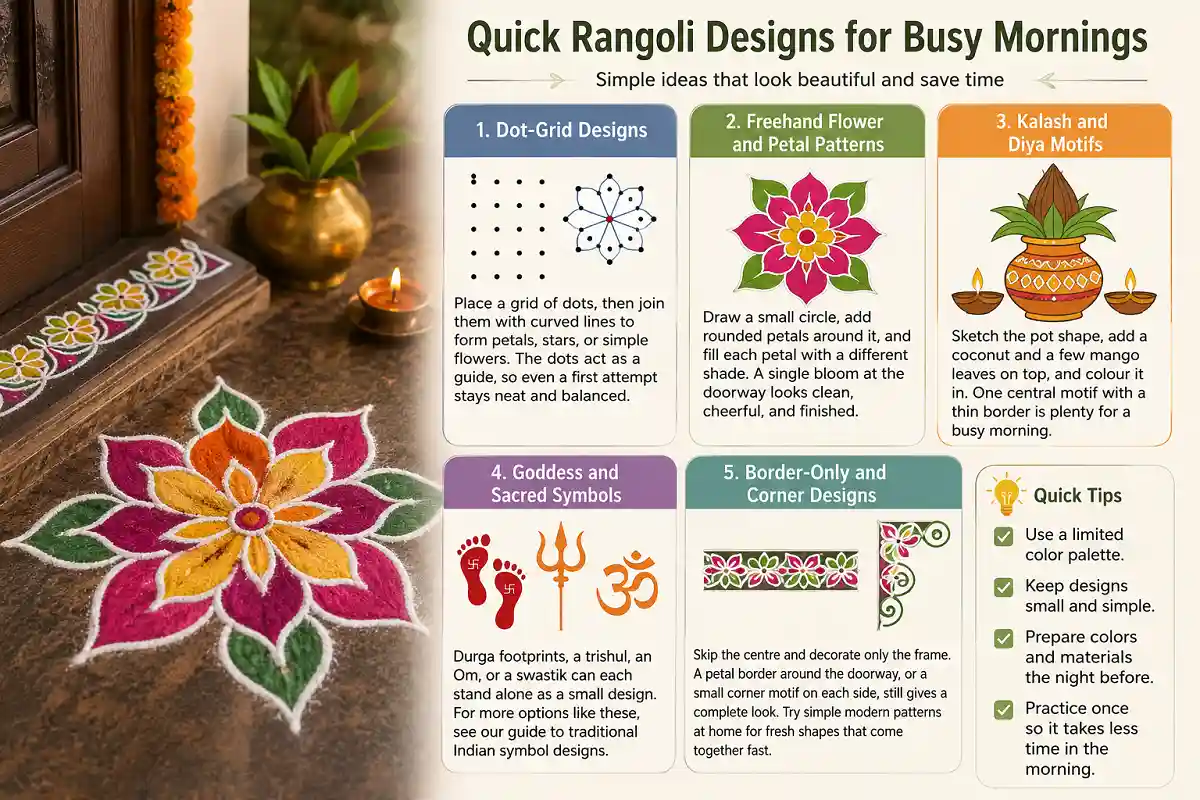
A dot grid is one of the fastest ways to start. Place a small grid of dots, then join them with curved lines to form petals, stars, or simple flowers. The dots act as a guide, so even a first attempt stays neat and balanced.
Freehand Flower and Petal Patterns
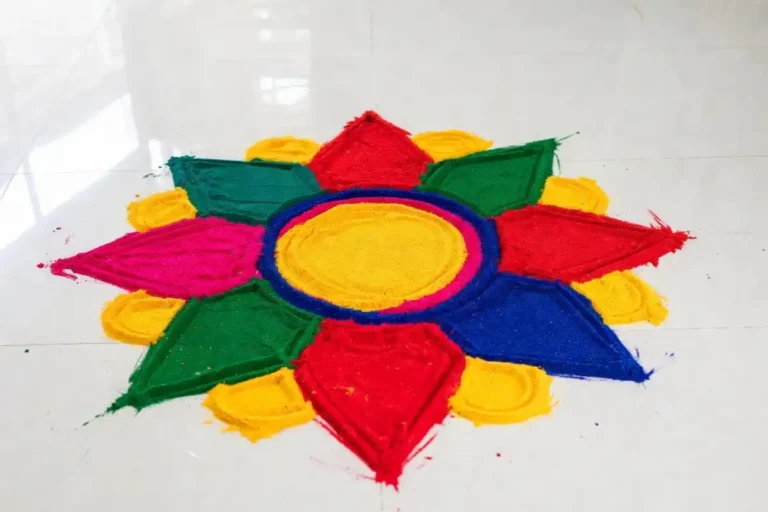
Freehand flowers are quick because they need no measuring at all. Draw a small circle, add rounded petals around it, and fill each petal with a different shade. A single bloom at the doorway looks clean, cheerful, and finished.
Kalash and Diya Motifs
A kalash or a lit diya is a classic festival symbol and very fast to draw. Sketch the pot shape, add a coconut and a few mango leaves on top, and colour it in. One central motif with a thin border is plenty for a busy morning.
Goddess and Sacred Symbols
Simple sacred symbols carry strong meaning during these days. Durga footprints, a trishul, an Om, or a swastik can each stand alone as a small design. For more options like these, see our guide to traditional Indian symbol designs.
Border-Only and Corner Designs
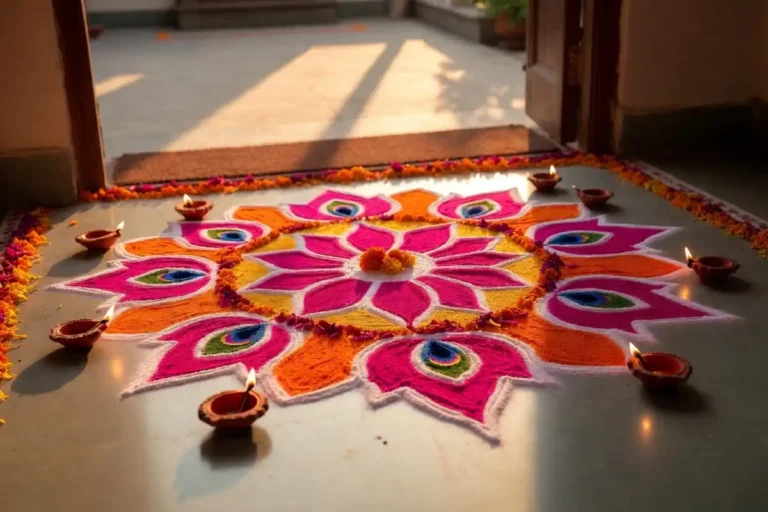
When you have almost no time, skip the centre and decorate only the frame. A petal border around the doorway, or a small corner motif on each side, still gives a complete look. You can also try a few simple modern patterns at home for fresh shapes that come together fast.
Best Colours for a Navratri Rangoli
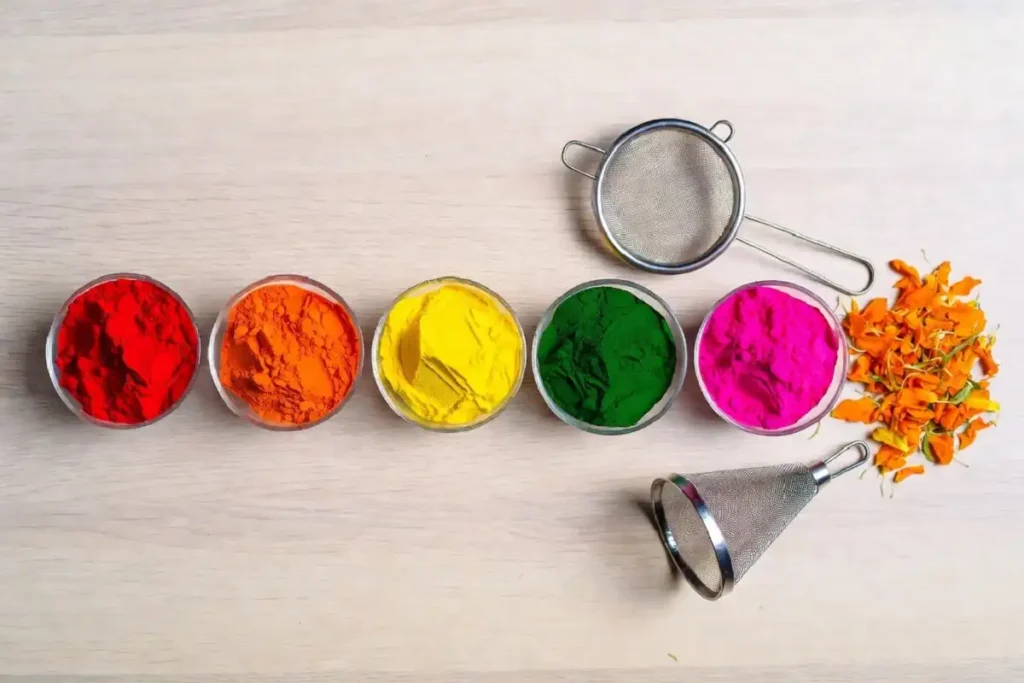
Colour is what brings a quick Navratri rangoli to life. Red, orange, yellow, green, pink, and white are the most common picks, and they stand out clearly against most floors.
Many families also follow the colour of the day. Each day of Navratri is linked with a particular colour, and some people match their design to it for a coordinated look across the nine nights. This is optional, but it adds a thoughtful touch.
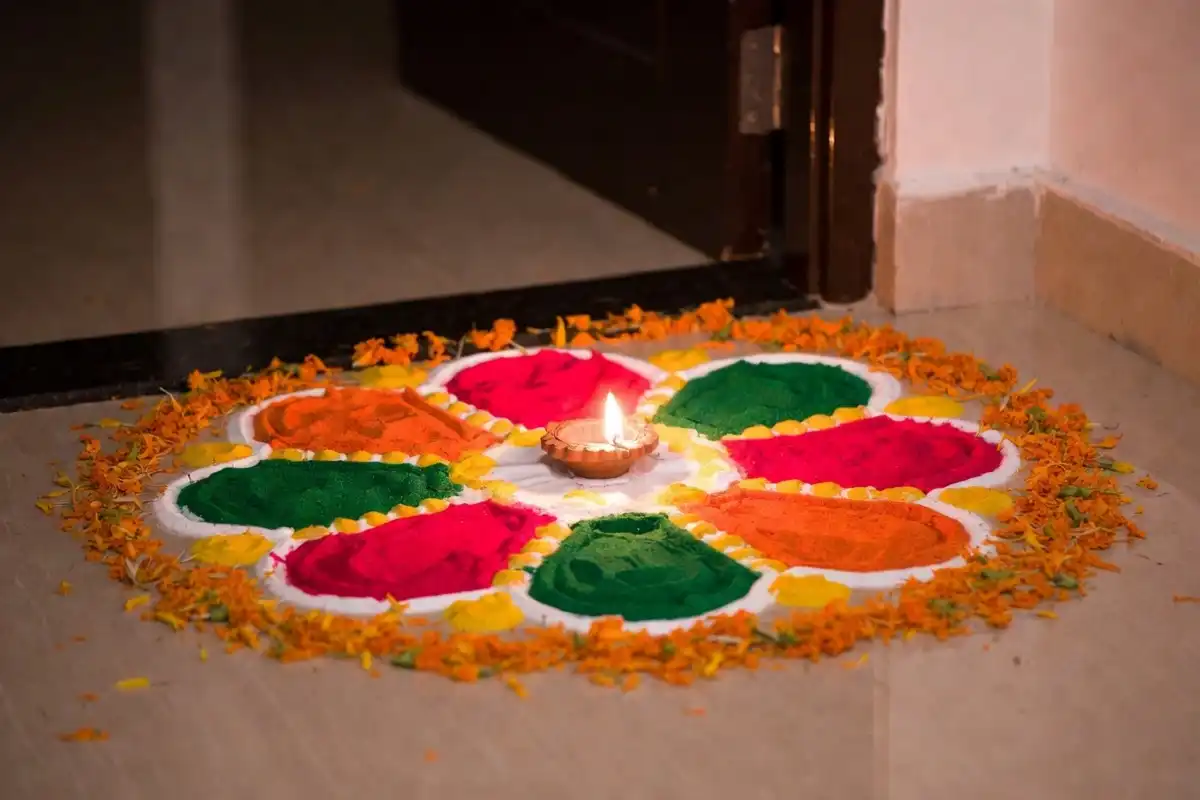
If you are very short on time, fresh marigold petals create a fast flower rangoli with almost no drawing. Petals fill space quickly, hold their colour, and add a natural fragrance at the door.
Easy Steps to Make a Quick Rangoli
These easy steps keep a quick Navratri rangoli smooth and fast.
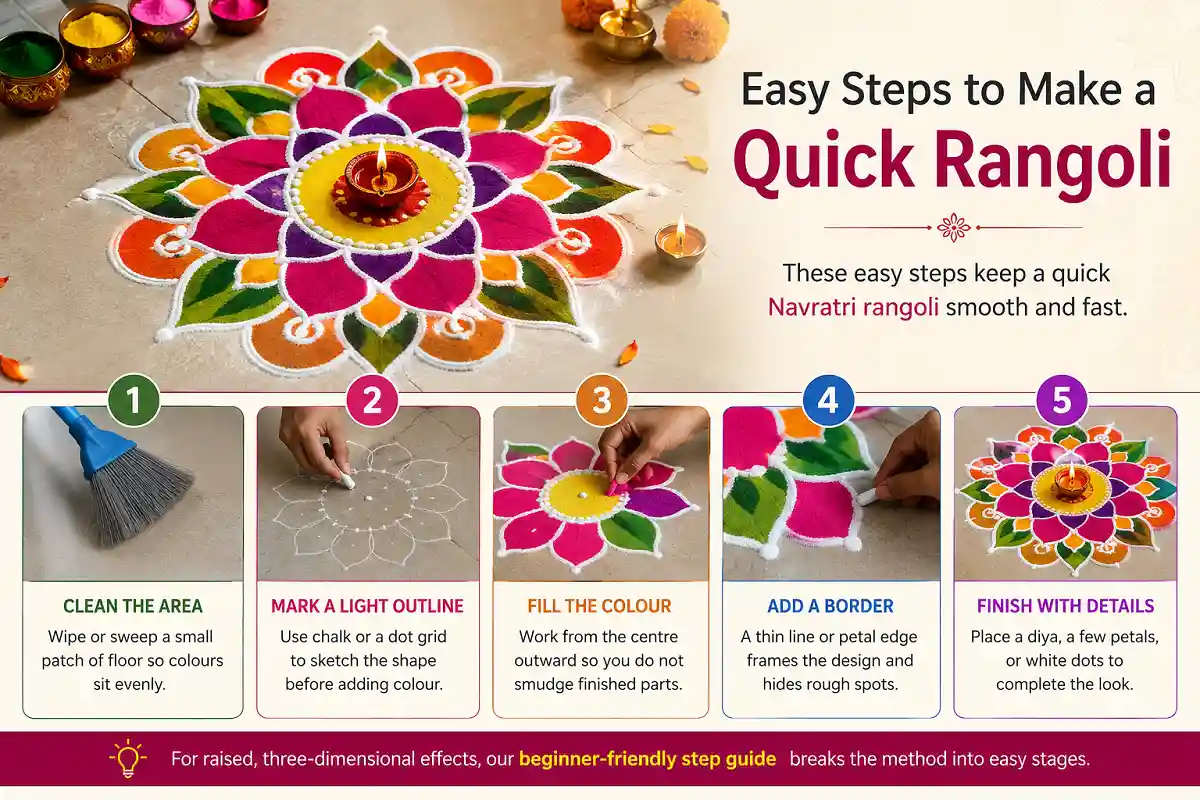
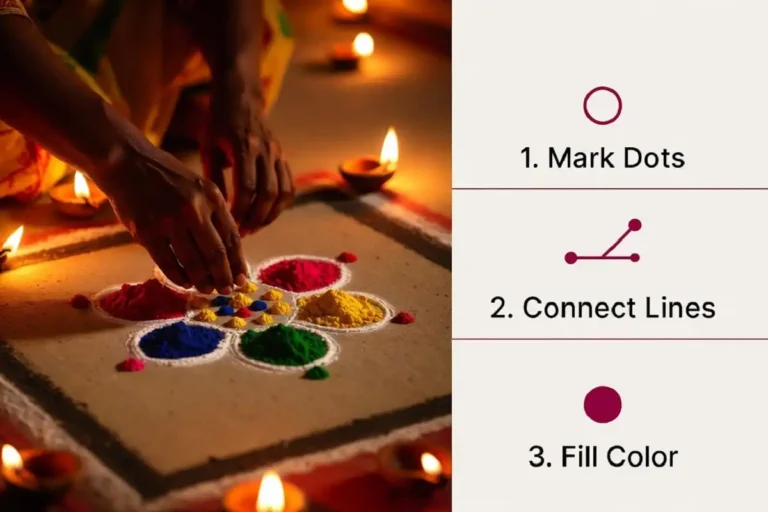
Clean the area. Wipe or sweep a small patch of floor so colours sit evenly.
Mark a light outline. Use chalk or a dot grid to sketch the shape before adding colour.
Fill the colour. Work from the centre outward so you do not smudge finished parts.
Add a border. A thin line or petal edge frames the design and hides rough spots.
Finish with details. Place a diya, a few petals, or white dots to complete the look.
For raised, three-dimensional effects, our beginner-friendly step guide breaks the method into easy stages.
Tools and Materials That Save Time
Good tools make a quick Navratri rangoli even faster. Keep these ready before the festival begins:
- Rangoli powder or coloured sand in a few shades
- A sieve or chalni to spread powder evenly
- A rangoli cone or pen for thin, clean lines
- Stencils for repeat shapes like flowers and borders
- Fresh marigold or rose petals for quick fills
- Chalk for light outlines without mess
Stencils and a sieve are the biggest time-savers. They let you repeat a pattern in seconds and keep every edge sharp.
Time-Saving Tips for Busy Days
Small habits make each design faster:
- Keep the design small so it needs less filling.
- Prepare colours in separate bowls the night before.
- Reuse one stencil through all nine days with new colours.
- Choose one strong centre motif instead of a busy scene.
- Use petals or pulses to fill larger areas at speed.
With these steps, you can decorate even on a packed morning without any stress.
Quick Rangoli Ideas for All Nine Days
You do not need a brand-new pattern every single day. Keep one simple base, such as a circle or a square frame, and change only the centre motif. A diya on the first day, a lotus on the next, and a kalash after that keeps the look fresh with very little effort. A quick Navratri rangoli for each day keeps the routine light and enjoyable.
Rotating small symbols also lets the whole family join in. Children can add dots or scatter petals while you draw the main shape.
Conclusion
A festive doorway does not have to take all morning. With a small dot grid, a single kalash or diya, and a few bright colours, a quick Navratri rangoli comes together in minutes. Keep a stencil and ready powders on hand, change one centre motif each day, and let the family help. The result is fresh floor art for all nine nights, made with less effort and plenty of festive charm. Pick one idea above and start with the simplest shape.
FAQs
How long does a quick Navratri rangoli take?
Most quick designs take ten to twenty minutes once your colours are ready. A border-only or single-motif design can be finished in under ten minutes with a little practice.
What is the easiest Navratri rangoli for beginners?
A dot-grid flower is the easiest design for beginners. The dots guide your lines, so the shape stays even, and you only need two or three colours to complete it.
Which colours work best for a Navratri rangoli?
Bright shades like red, orange, yellow, green, and white work best for the festival. Many people also match the colour of the day for a coordinated look at the entrance.
Can I make a Navratri rangoli without coloured powder?
Yes, you can make one with flower petals, rice flour, or chalk. Marigold and rose petals are popular for fast designs because they fill space quickly and need no drawing.
Where should the rangoli go during Navratri?
The rangoli is usually placed at the main entrance or near the prayer area. The threshold is the traditional spot because it is said to welcome positivity into the home.