Rangoli for Independence Day: Tricolor Designs, Symbols, and Ideas
Rangoli for Independence Day turns your doorstep into a small tribute to the nation. Every August 15, I draw one at my entrance. It sets the mood before the flag hoisting and the sweets. This guide covers designs, colors, symbols, and quick methods you can actually use.
A rangoli for Independence Day uses the tricolor of saffron, white, and green with the Ashoka Chakra at the center. Add the flag, doves, or national symbols. Keep the layout balanced and the colors clean.
What Makes a Rangoli for Independence Day Different?
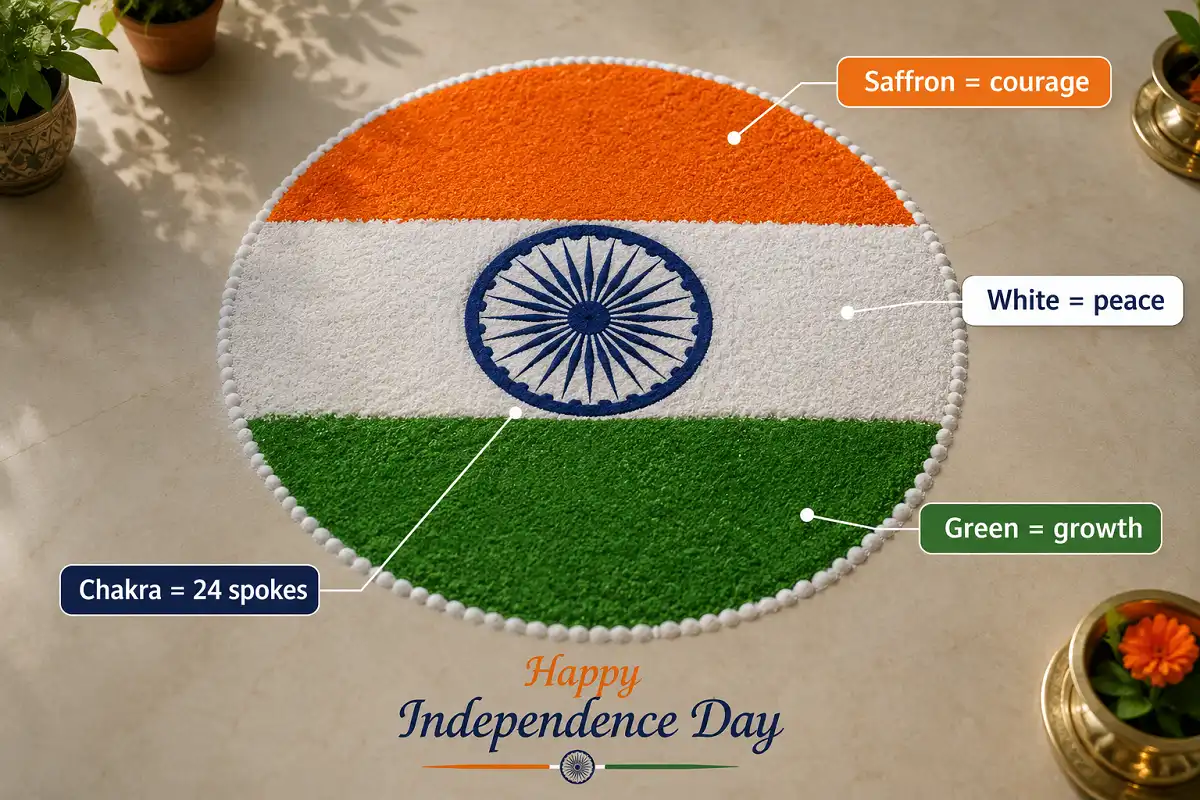
The colors and symbols set it apart. A rangoli for Independence Day follows the national flag: saffron on top, white in the middle, green at the bottom. The Ashoka Chakra, a navy blue 24-spoke wheel, sits in the white band. These are not decorative choices. They carry meaning, and getting them right matters.
Saffron stands for courage and sacrifice. White stands for peace and truth. Green stands for faith and growth. The Chakra represents the wheel of law, or dharma. When you draw these correctly, your design honors the day instead of just looking festive.
I keep the proportions close to the real flag. The three bands are equal in height. The Chakra spokes are evenly spaced. Small accuracy here makes a big visual difference.
A good rangoli for Independence Day also respects flag etiquette. The saffron band always sits on top, never at the bottom. The Chakra stays navy blue, not black or any other shade. Getting these details right shows respect for the symbol. It also makes your design read as intentional rather than casual. People notice when the colors and order are correct.
Which Colors Do You Need for Independence Day Rangoli?
You need three main colors plus one accent. Saffron (a deep orange), pure white, and India green form the base. Navy blue draws the Ashoka Chakra. That is the full palette for a flag-accurate design.
For rangoli powder, buy these shades ready-made or mix them. Saffron comes from blending orange with a touch of yellow. India green sits between grass green and a slightly deeper tone. Keep the white bright, because it separates the two color bands and holds the Chakra.
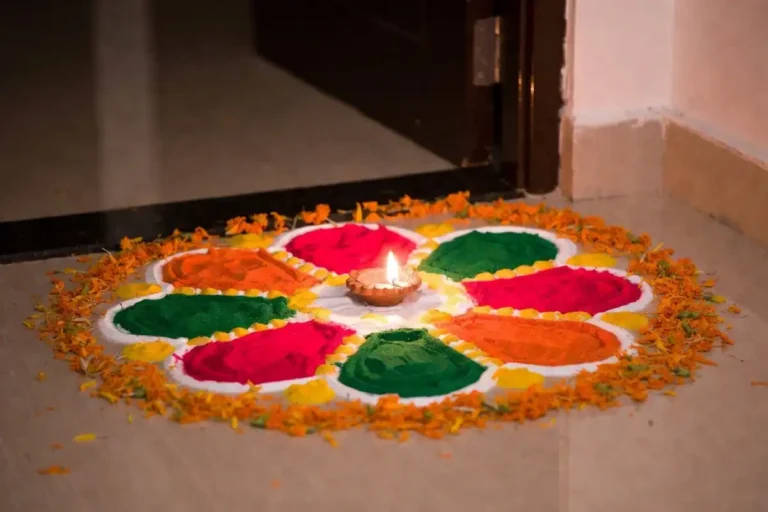
If you want texture, flower petals work beautifully. Marigold gives saffron. White chrysanthemum or jasmine gives white. Green leaves or green-dyed petals fill the bottom. A marigold-based floor decoration suits the saffron band especially well and lasts through a morning event.
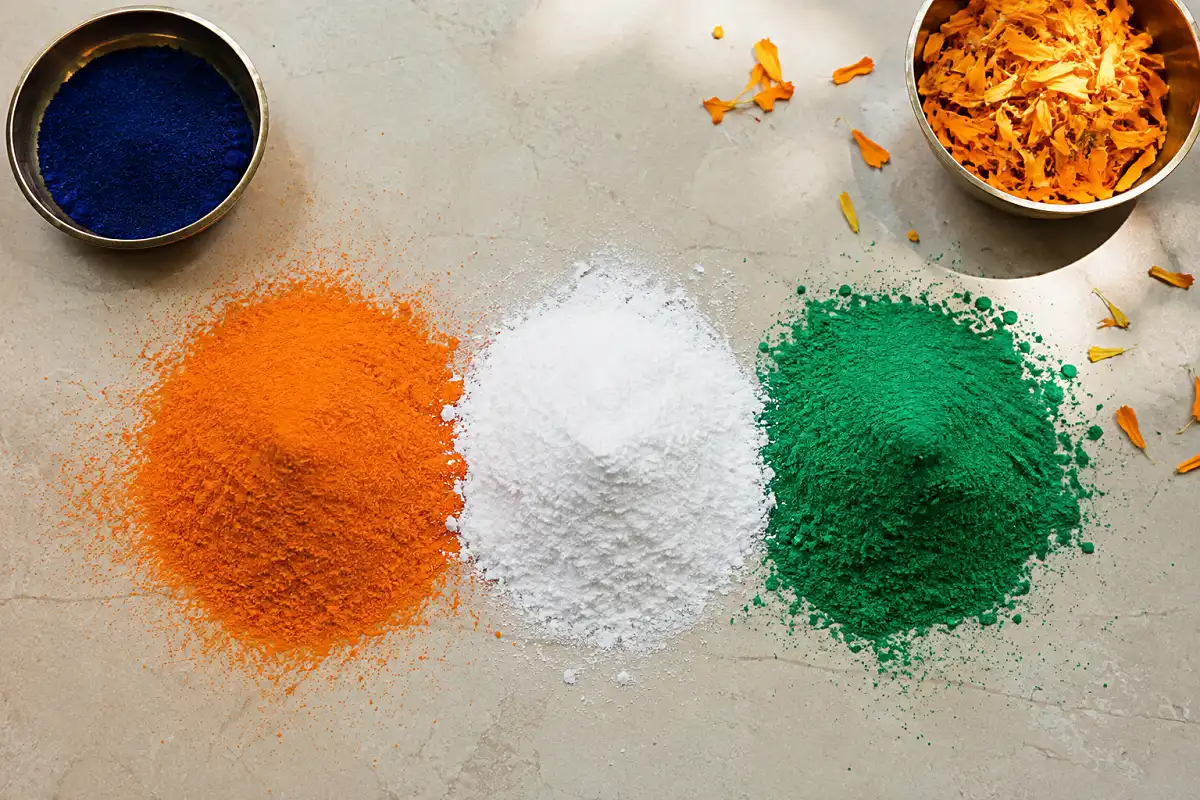
Color quality changes the whole look. Cheap powders can look chalky or fade fast under sun. I test a small patch before committing to a full rangoli for Independence Day. Rub a little between your fingers. Good powder feels fine and leaves strong color. Grainy powder scatters and dulls the finish. Spending a little more on the three flag shades pays off in the final photo.
Store leftover powder in sealed containers. Damp powder clumps and loses its brightness. Kept dry, the same tricolor set serves you for several years of designs.
Popular Rangoli for Independence Day Designs
There are several patterns that work every year. Below are the ones I return to, from simplest to most detailed. Each suits a different skill level and time budget.
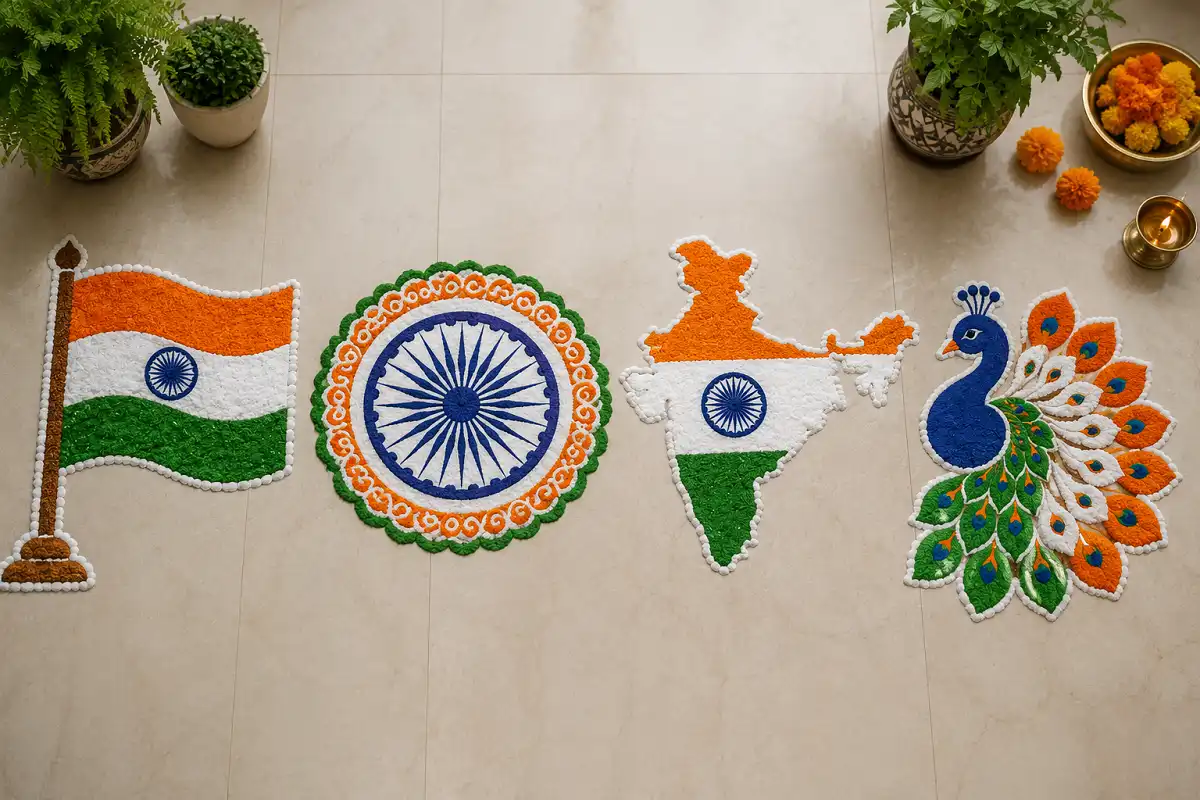
The National Flag Rangoli
The flag is the most direct design. Draw a horizontal rectangle. Split it into three equal bands. Fill saffron, white, and green from top to bottom. Add the navy Chakra in the white band with 24 spokes.
This rangoli for Independence Day reads instantly. Anyone passing your door knows the occasion. Keep the edges straight using a ruler or tape as a guide, then fill the color inside the lines.
The Ashoka Chakra Centerpiece
Make the Chakra the hero. Draw a large navy wheel in the center of a round or square base. Surround it with tricolor petals or bands radiating outward. This works well as a big entrance piece.
The 24 spokes take patience. I mark the center, draw a circle, then divide it into 24 equal parts before drawing each spoke. A protractor helps, but freehand improves with practice.
Map of India Rangoli
Draw the outline of India and fill it with the tricolor. This design carries strong national feeling. Sketch the map lightly first, then add saffron at the top, white in the middle, green at the base.
A map-style rangoli for Independence Day takes more drawing skill. Keep a reference image nearby. Focus on the recognizable shape rather than perfect borders.
Peacock with Tricolor Theme
Blend the national bird with national colors. Draw a peacock and use saffron, white, and green across its feathers. This mixes traditional rangoli art with the Independence Day theme. If you enjoy this motif, a detailed peacock-inspired floor pattern gives you the base shape to adapt.
How Do You Make a Rangoli for Independence Day Step by Step?
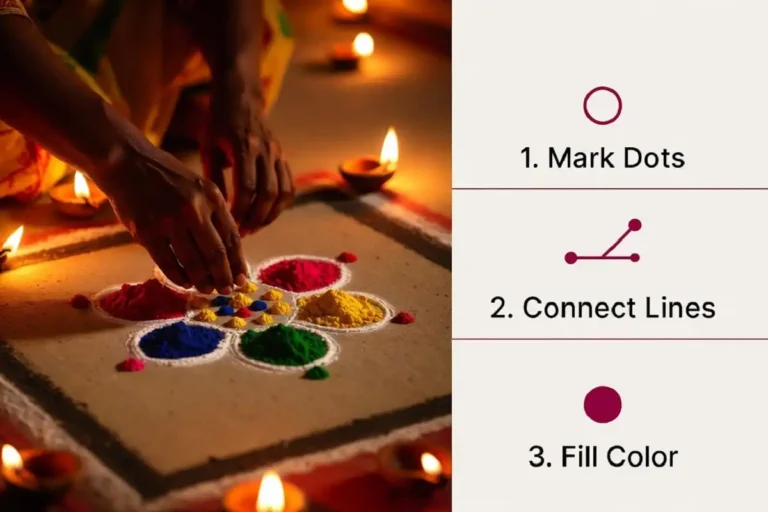
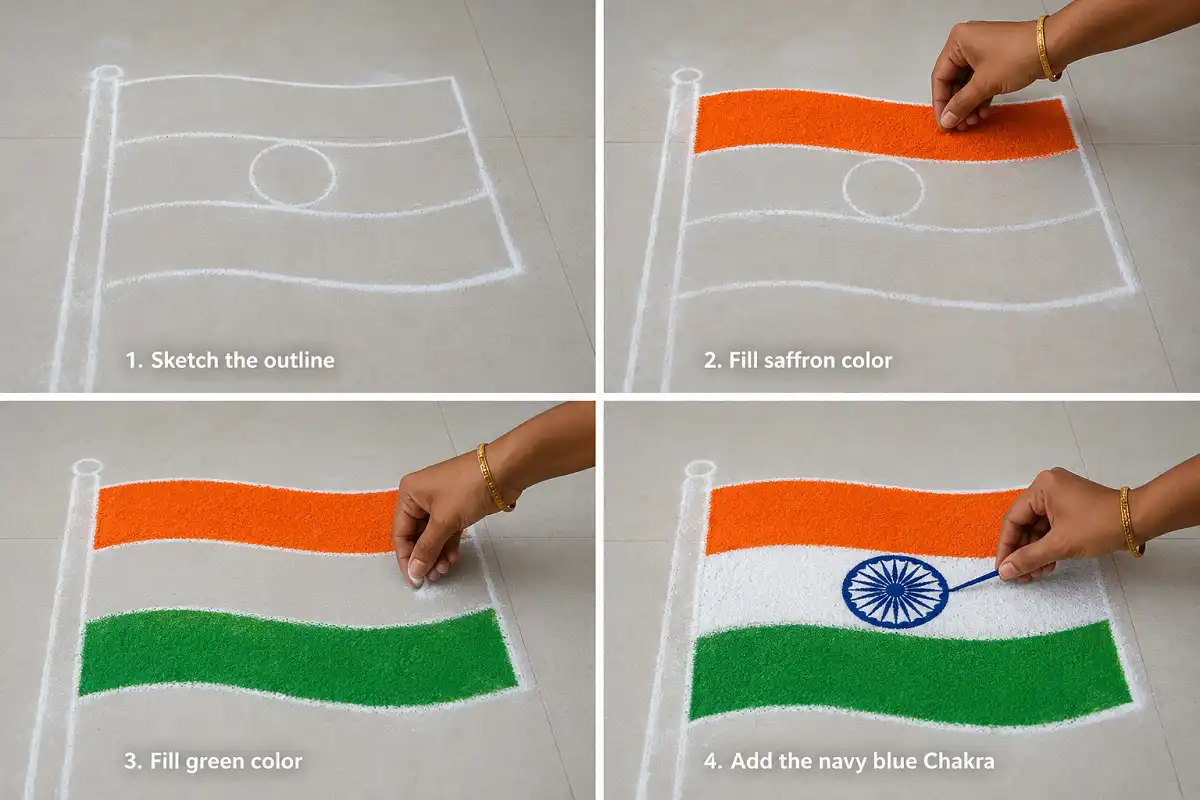
Start with a clean, flat surface and a light sketch. Here is the method I follow every year. It keeps the colors clean and the shape sharp.
First, sweep and wipe the floor. Dust ruins color blending. Second, sketch the outline with white chalk or a light powder line. Third, fill the largest color areas first, then move to detail. Fourth, add the Chakra and fine lines last so they stay crisp.
Work from the center outward for round designs. Work top to bottom for flag designs. This stops your hand from smudging finished sections. Fill color by pinching powder between your thumb and finger, then releasing it in a steady line.
Practice the Chakra separately before drawing it live. It is the hardest part of any rangoli for Independence Day. Sketch a few wheels on paper first. Mark the 24 points around the circle, then join them to the center. Once the spacing feels natural, drawing it in powder gets much easier. Rushing the Chakra is the most common mistake I see, so slow down for this one element.
For a rangoli for Independence Day at a school or office, use tape to mark straight bands. Peel the tape after filling for clean edges. This trick gives beginners a professional finish fast.
Easy Rangoli for Independence Day Ideas for Beginners
Simple designs still look striking. You do not need advanced skill to honor the day. A plain tricolor stripe rangoli with a small Chakra works perfectly for a first attempt.
Try three horizontal bands of color with a dove drawn in white. Or make three concentric circles in saffron, white, and green. Or draw a simple flag with a wavy edge to suggest motion. These take under 15 minutes.
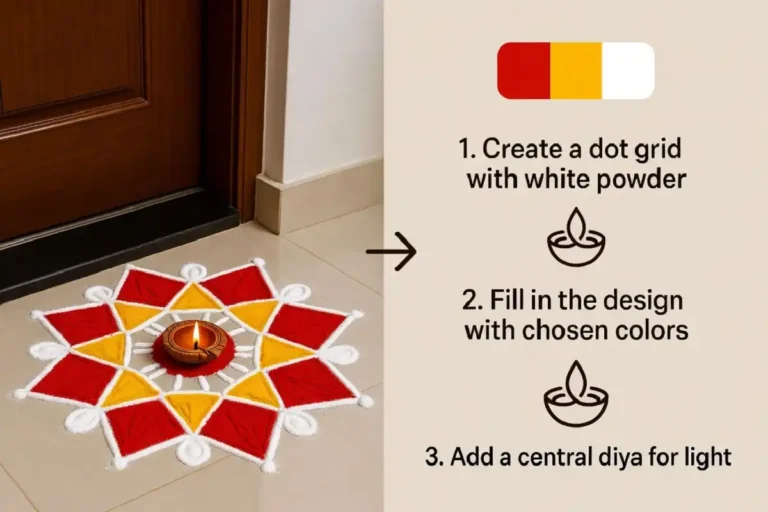
For kids, dot-based patterns help. Place a grid of dots, then connect them into simple tricolor shapes. A beginner-friendly dot pattern gives an easy structure that children can follow and fill with national colors.
Keep beginner designs small. A one-foot square is enough. Small and neat beats large and messy every time.
National Symbols You Can Add
Several symbols deepen the theme. Beyond the flag and Chakra, India has recognizable emblems that fit an Independence Day rangoli. Each adds meaning and visual interest.
The dove represents peace and freedom. The lotus, India’s national flower, adds a floral element. The national emblem, with its four lions, suits formal or competition pieces. You can also write “Happy Independence Day” or the year in clean lettering.
Add only what fits your space. One strong symbol beats a crowded design. A rangoli for Independence Day with a single clear dove often reads better than one packed with every emblem at once.
Tips to Make Your Independence Day Rangoli Stand Out
A few habits lift the final result. These come from years of drawing at my entrance and watching what works. Small choices in color and finish make the difference.
Keep your whites truly white. Dull white weakens the whole flag look. Press colors slightly for a bold, saturated finish. Outline each color band in white or a contrasting shade to make edges pop.
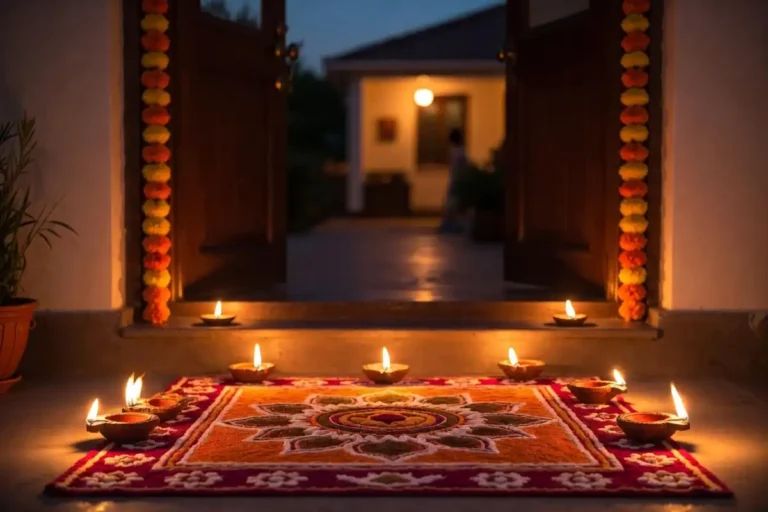
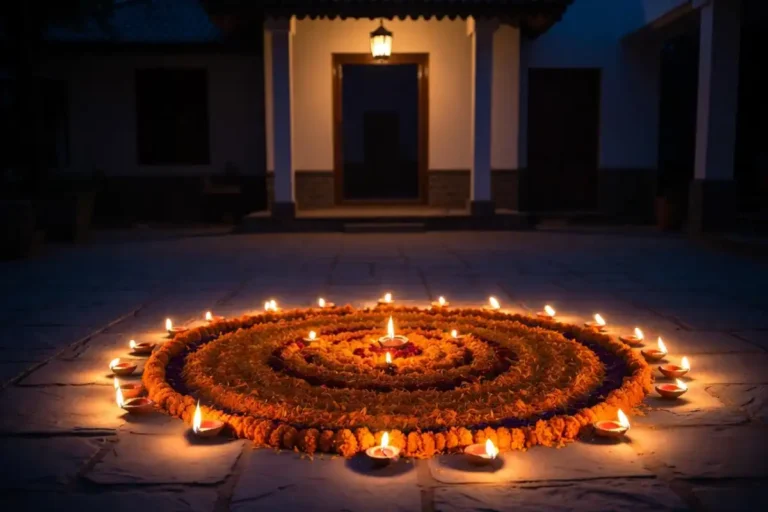
Light matters too. Morning sun makes colors glow, so an early draw suits the flag hoisting time. For evening, place small diyas or LED lights around the border. A crisp rangoli for Independence Day photographs best with even, soft light.
Protect your work from wind. Loose powder scatters outdoors. A light mist of water or a thin fixative helps outdoor designs hold their shape through the ceremony.
Plan your border last. A clean frame pulls the whole rangoli for Independence Day together. Try a simple saffron and green dotted edge, or a chain of small flags. The border also hides slightly uneven outer lines. It gives the eye a neat boundary and makes the center colors look sharper by contrast.
Materials and Where to Use Them
Different materials suit different settings. Choose based on your surface, time, and whether the design stays indoors or out. Here is what I reach for.
Rangoli powder gives the brightest, most controllable color. Flower petals give texture and a fresh look for short events. Colored rice or sand works for large outdoor pieces. Chalk or poster color suits smooth indoor floors and lasts longer.
For a school assembly, powder and stencils speed things up. For a home entrance, flowers feel warm and welcoming. For a competition, powder gives you the control to draw a detailed rangoli for Independence Day with sharp lines and fine shading.
If you buy supplies, a basic tricolor rangoli powder set covers most designs. A fine-tip cone or bottle helps with the Chakra and small details. These few tools handle nearly every pattern in this guide.
Mistakes to Avoid
A few errors spoil an otherwise good design. I have made most of these myself over the years. Knowing them ahead of time saves your morning.
Do not flip the color order. Saffron sits on top, always. A reversed flag reads as a mistake to anyone who knows it. Do not skip the outline sketch either. Drawing color straight onto the floor without a guide leads to crooked bands and wasted powder.
Do not overcrowd the design. Packing in every symbol at once weakens the effect. A clean tricolor with one clear emblem beats a busy, cluttered floor. Also, do not draw on a dusty surface. Dust mixes with color and dulls everything. A quick sweep first fixes it.
Timing trips people up too. Powder designs do not last long outdoors. Draw close to your event, not the night before. Wind, footsteps, and morning dew all fade the colors. A fresh draw always photographs better than an old one.
Where Does the Independence Day Rangoli Tradition Fit?
Rangoli itself is an ancient Indian floor art. Drawing it for Independence Day is a modern extension of a very old practice. Families have decorated thresholds for festivals and auspicious days for centuries. You can read more about the wider art form on the Rangoli Wikipedia page.
August 15 marks India’s independence in 1947. Adding a patriotic rangoli to the day blends national pride with a familiar cultural ritual. It is a small, personal way to mark a shared moment. That blend of old craft and national feeling is what makes the tradition stick.
FAQs

What colors are used in a rangoli for Independence Day?
Can beginners make an Independence Day rangoli?
What size should the rangoli be?
Which symbols work best?
Final Words
A rangoli for Independence Day is a simple, meaningful way to mark August 15. Start with the tricolor, get the Chakra right, and keep your colors clean. Whether you draw a plain flag or a detailed map, the point is the same: a small tribute at your door. Pick a design that fits your time and space, and draw it fresh on the morning of the day.