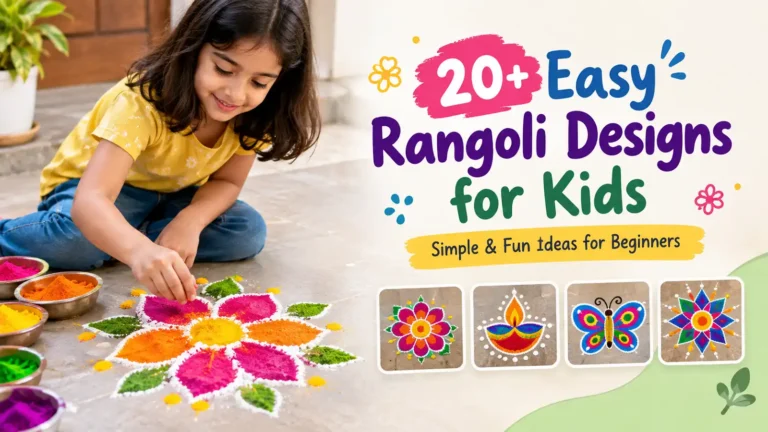
Simple Indian Symbol Rangoli Designs for Home
This easy floor art style brings together art and tradition in one simple design. Each symbol, from the lotus to the swastik, carries a meaning rooted in centuries of culture. These designs welcome guests, mark festivals, and bring a sense of calm to any home.
The best part is that you do not need advanced skills to create one. With a few basic shapes and a little patience, anyone can draw a rangoli that looks beautiful and feels meaningful.
This guide walks through easy symbol-based designs, their significance, and simple steps to recreate them at home.
What Makes a Simple Indian Symbol Rangoli
This style uses recognizable shapes and figures instead of random patterns. These shapes are not chosen randomly. They come from nature, mythology, and daily life, and each one stands for something specific.
For example, a peacock might represent grace, while a lotus often stands for purity. According to Britannica’s overview of the art form, rangoli can be figurative, geometric, or a combination of both, and is created using materials such as flowers, rice flour, colored powders, and chalk. These motifs give the artwork a deeper purpose beyond decoration.
Unlike free-form rangoli, a symbol-based design follows a structure. This makes it easier for beginners, since the shapes are familiar and repeatable.
Why People Choose a Simple Indian Symbol Rangoli
There are a few reasons this style remains popular across Indian households.
- It requires fewer tools and less drawing experience.
- The meaning behind each symbol adds emotional value.
- It fits both daily use and special occasions.
- It can be scaled up or down depending on available space.
If you are new to rangoli art in general, it helps to start with smaller layouts before attempting a simple Indian symbol rangoli. A good place to begin is with an easy 5-minute rangoli design for every occasion, which builds basic hand control and spacing skills.
Popular Symbols Used in a Simple Indian Symbol Rangoli
The Lotus
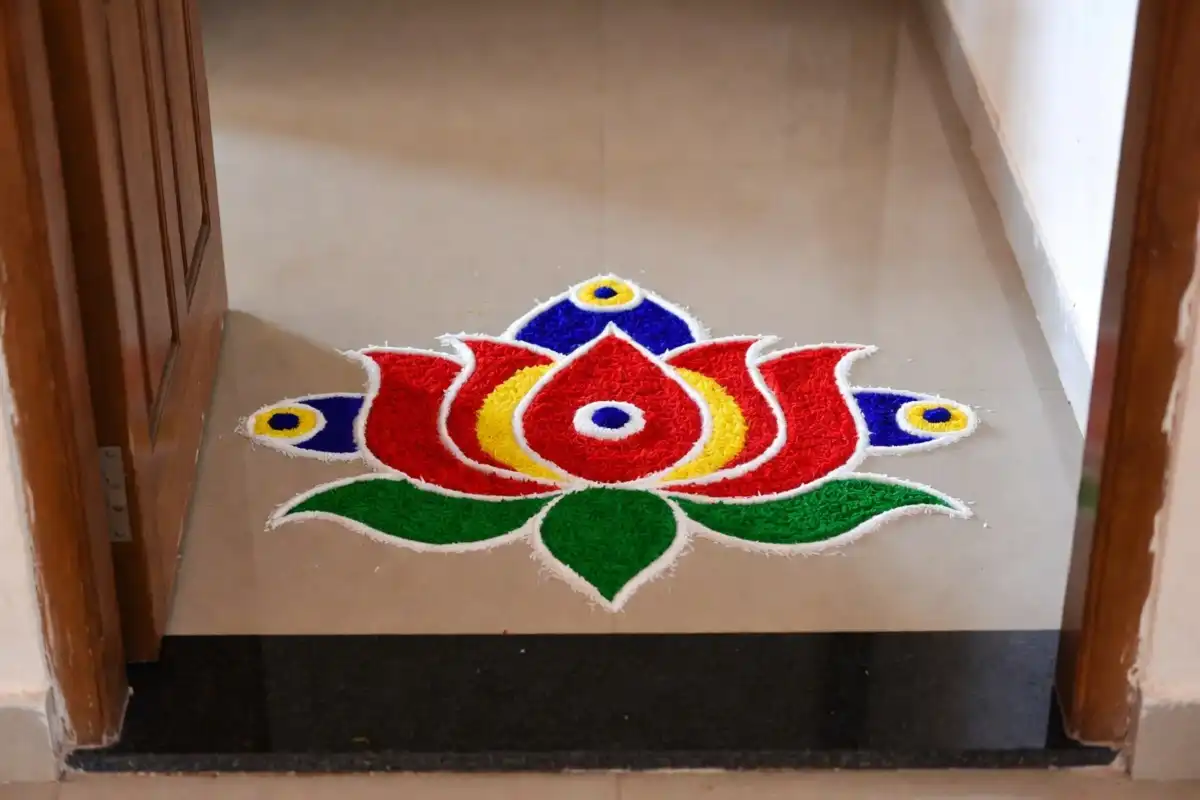
The lotus is one of the most recognized symbols in Indian art. It grows in muddy water yet blooms clean and untouched, which is why it represents purity and new beginnings.
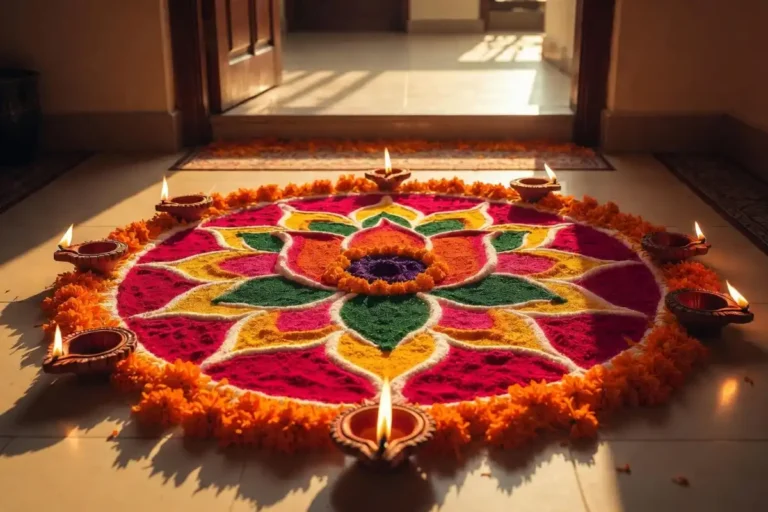
A simple lotus rangoli usually has a central dot surrounded by curved petals. Beginners can start with four to six petals before attempting more layers.
The Swastik
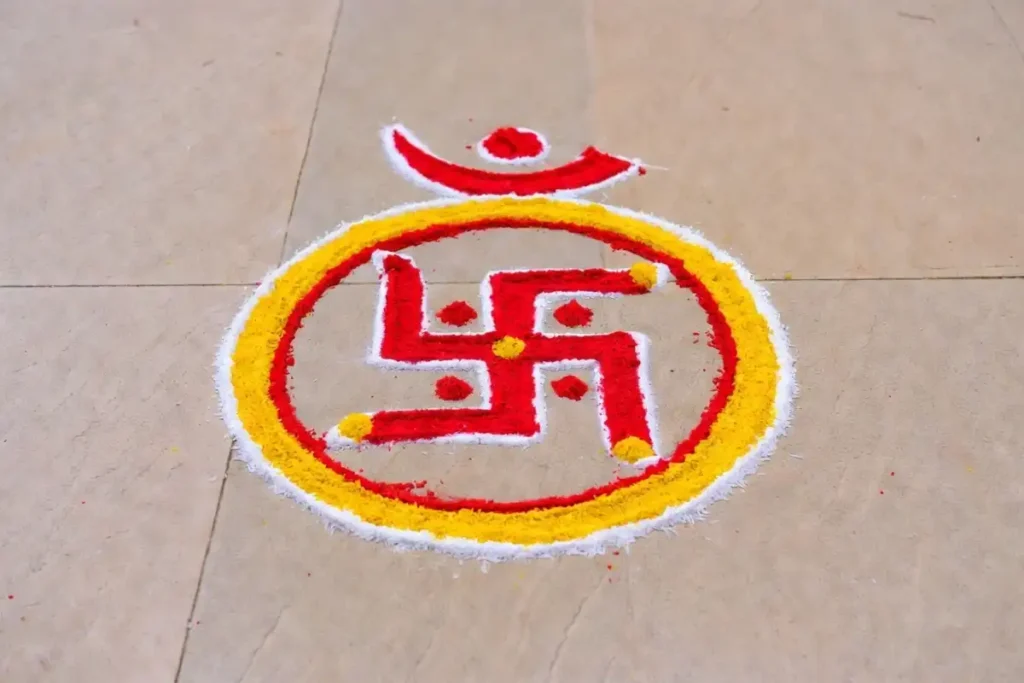
The swastik is an ancient sign of good fortune and is one of the most common choices for a simple Indian symbol rangoli. It is considered a sacred symbol in Hinduism, Buddhism, and Jainism, often associated with the sun, fire, and well-being. It is commonly placed near doorways and during festive decoration.
Drawing a swastik rangoli is straightforward. It is built from a simple cross shape with small right-angle extensions at each arm, often outlined and then filled with color.
Om Symbol
The Om symbol represents the universal sound believed to be the root of all creation. It is often included in rangoli art alongside the swastik as a symbol of auspiciousness.
This symbol works well as a centerpiece design, especially during prayer rituals or festive mornings.
Peacock
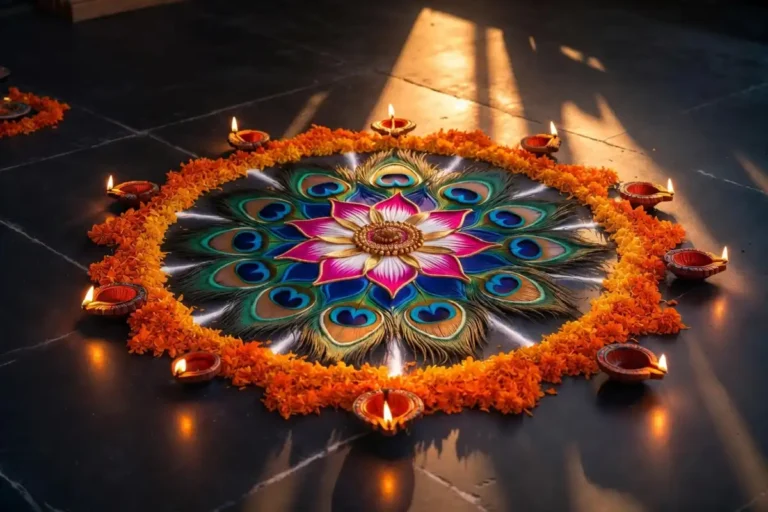
The peacock is admired for its colors and graceful movement. It is one of the most commonly used figures in rangoli art, often drawn with an open tail to add visual richness.
A simplified peacock outline, filled with two or three shades, works well for beginners who still want a striking result.
Diya or Lamp
The diya, or oil lamp, symbolizes light overcoming darkness. It is especially popular during Diwali, when rows of diya-shaped designs are drawn near entrances.
This is one of the easiest symbols to recreate since it only needs a curved base and a small flame shape on top.
Kalash (Sacred Pot)
The kalash represents abundance and is often used during housewarming ceremonies and weddings. It typically includes a rounded pot shape topped with mango leaves and a coconut.
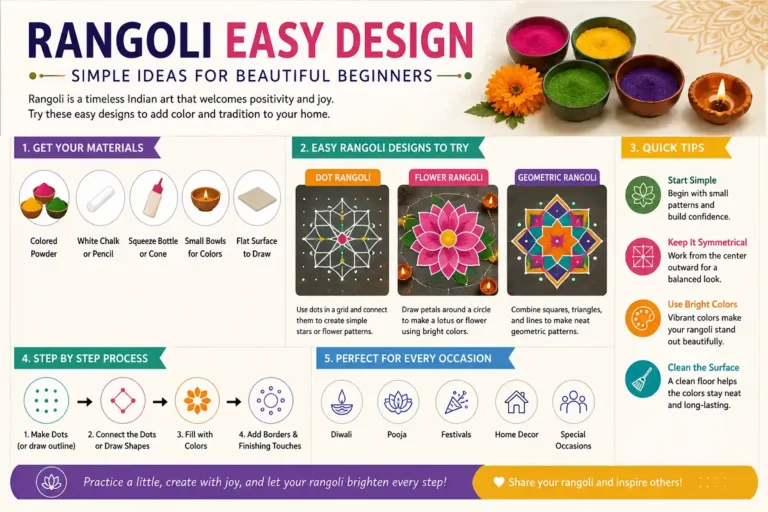
Step-by-Step Guide to Drawing a Simple Indian Symbol Rangoli
Here is a basic process that works for most symbol-based designs.
- Choose your symbol. Pick one that matches the occasion, such as a lotus for festivals or a swastik for daily worship.
- Mark a center point. Most symbols are built around a central dot or shape for balance.
- Sketch with chalk first. This helps correct mistakes before adding color.
- Build the outline. Use steady, slow strokes rather than quick lines.
- Fill in the colors. Work from the center outward to avoid smudging.
- Add a border if needed. A simple circular or square border can frame the symbol neatly.
This method works whether you are creating a small doorstep design or a larger floor piece for a celebration.
Tips for Beginners Trying a Simple Indian Symbol Rangoli
- Start with one symbol instead of combining several at once.
- Use a turntable or stencil if hand precision is still developing.
- Practice on paper before moving to the floor.
- Keep color choices simple at first, two or three shades are enough.
- Clean the surface beforehand so lines stay crisp.
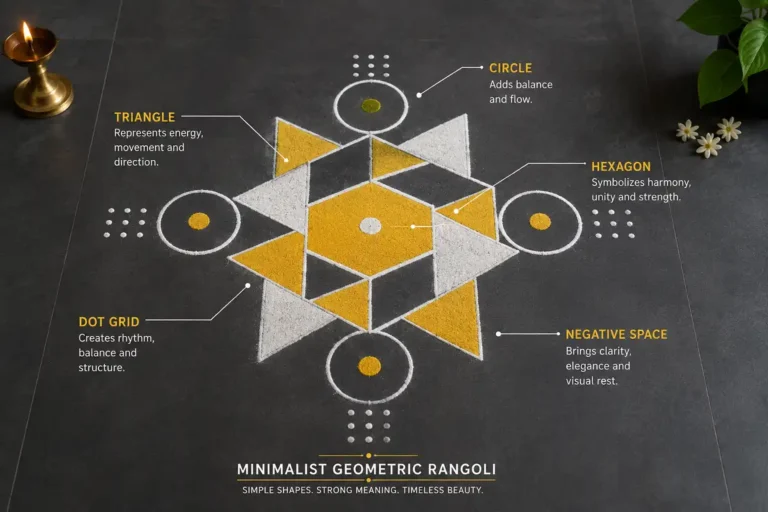
If your hand-drawn symbols look uneven, you can also look at a minimal rangoli design that stays clean, easy, and elegant for inspiration on keeping things simple without losing visual appeal.
Adding Depth with a 3D Symbol Rangoli
Once comfortable with flat designs, some people like to experiment with raised or layered effects. A 3D approach gives symbols like the lotus or kalash a more lifelike appearance using shading and layered powder or petals.
For those curious about this style, a guide on small 3D rangoli ideas that look genuinely impressive shows how shading creates depth even in compact spaces.
Choosing the Right Symbol for the Occasion
Different occasions call for different symbols. Here is a quick reference.
| Occasion | Suitable Symbol |
|---|---|
| Diwali | Diya, lotus |
| Housewarming | Kalash, swastik |
| Weddings | Lotus, peacock |
| Daily worship | Om, swastik |
| Harvest festivals | Mango leaves, paddy motifs |
This kind of planning helps a simple Indian symbol rangoli feel appropriate to the moment rather than random.
Common Mistakes to Avoid
- Overcrowding the design with too many symbols at once.
- Using uneven proportions, which can distort the symbol’s meaning.
- Rushing the outline before the base shape is steady.
- Choosing colors that clash instead of complementing the symbol’s tone.
Avoiding these issues keeps the final design clean and recognizable.
Materials Commonly Used
Most designs use easily available materials.
- Rice flour or coloured rice powder
- Flower petals
- Chalk for outlines
- Natural or synthetic rangoli colors
- Small diyas for festive setups
As noted in the Asia InCH encyclopedia of intangible cultural heritage, traditional floor art is typically made using dry rice flour or a rice flour paste, with natural pigments such as turmeric and red ochre added during festivals. This variety allows people to choose based on what is available at home.
How a Simple Indian Symbol Rangoli Connects to Culture
A simple Indian symbol rangoli is more than decoration. It carries religious and cultural meaning across different regions of India, known by various names depending on the state. Britannica notes that this floor art tradition is predominantly practiced by women and has become a pan-Indian term for both daily and festive designs, even as regional names and styles vary widely.
This cultural depth is part of why symbol-based rangoli remains popular, even as design styles evolve. If you want to explore more modern takes on these traditional ideas, this collection of modern simple rangoli designs to try at home shows how classic symbols are being reimagined with contemporary layouts.
When to Practice Before a Big Occasion
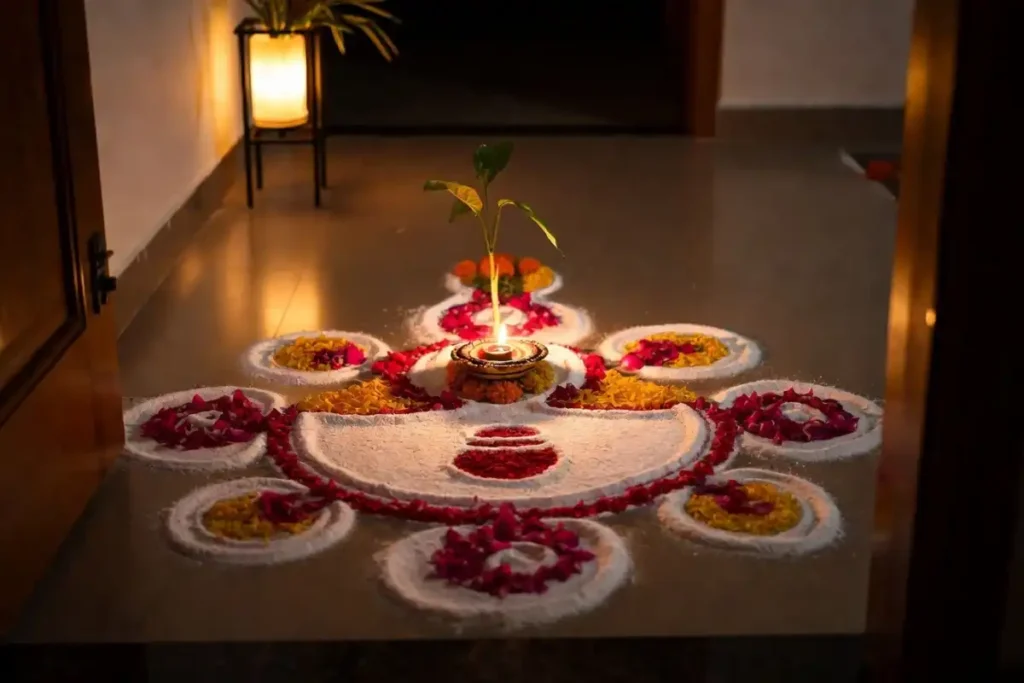
If a festival or family event is approaching, it helps to practice early rather than attempting a new symbol for the first time on the actual day. Beginners short on experience can review a beginner 3D rangoli guide with easy steps to start a few days in advance to build confidence with shaping and shading.
Easy Indian Symbol Rangoli Designs for Beginners
A simple Indian symbol rangoli combines easy techniques with deep cultural meaning. Whether you choose a lotus for purity, a diya for light, or a swastik for good fortune, each design adds personality to your space without demanding advanced skill.
With basic tools, a steady hand, and a little practice, anyone can create one that feels both beautiful and meaningful. Start small, choose symbols that suit the occasion, and build confidence over time.
As your skills grow, you can experiment with layering, shading, and more intricate patterns while staying true to the traditions these symbols represent.
FAQs
What is the easiest Indian symbol to draw for rangoli?
The swastik and the diya are usually the easiest symbols for beginners. Both use simple geometric shapes that do not require advanced shading or freehand curves, making them ideal starting points for a simple Indian symbol rangoli.
Can a simple Indian symbol rangoli be made without using color?
Yes, it can be outlined using only chalk, rice flour, or white powder. Many traditional kolam designs in South India are created this way, focusing on pattern rather than color.
How long does a simple symbol rangoli take to complete?
A basic single-symbol design usually takes between fifteen and thirty minutes. The time depends on size, detailing, and whether color filling is included.
Is it necessary to know the meaning of a symbol before using it?
It is not strictly necessary, but understanding the meaning adds cultural value to the design. It also helps in choosing the right symbol for the right occasion.
Can children learn to draw a simple Indian symbol rangoli?
Yes, simple symbols like the lotus, diya, and Om are well suited for children. Starting with basic shapes helps them build confidence before moving to detailed patterns.