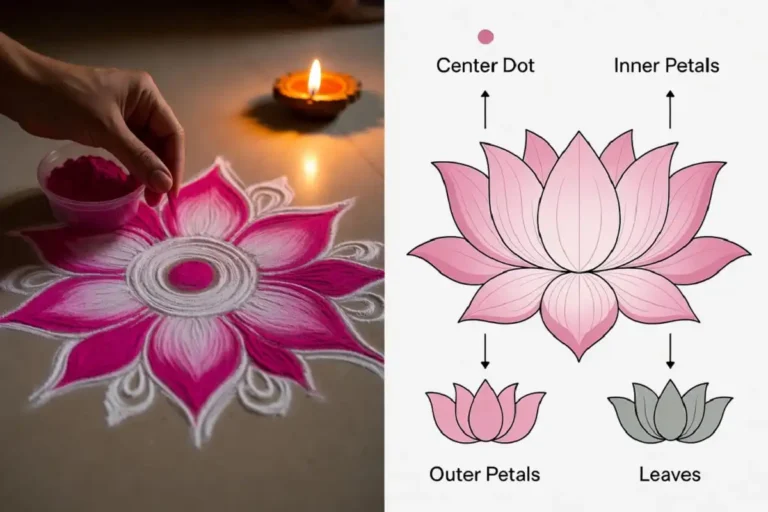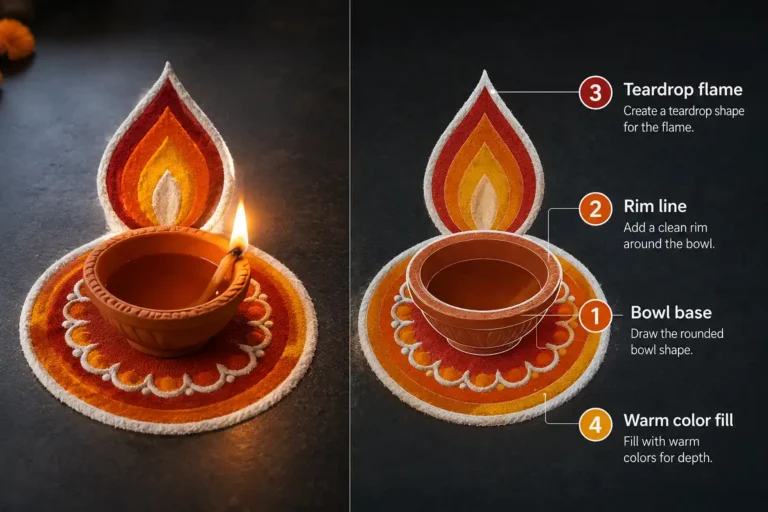
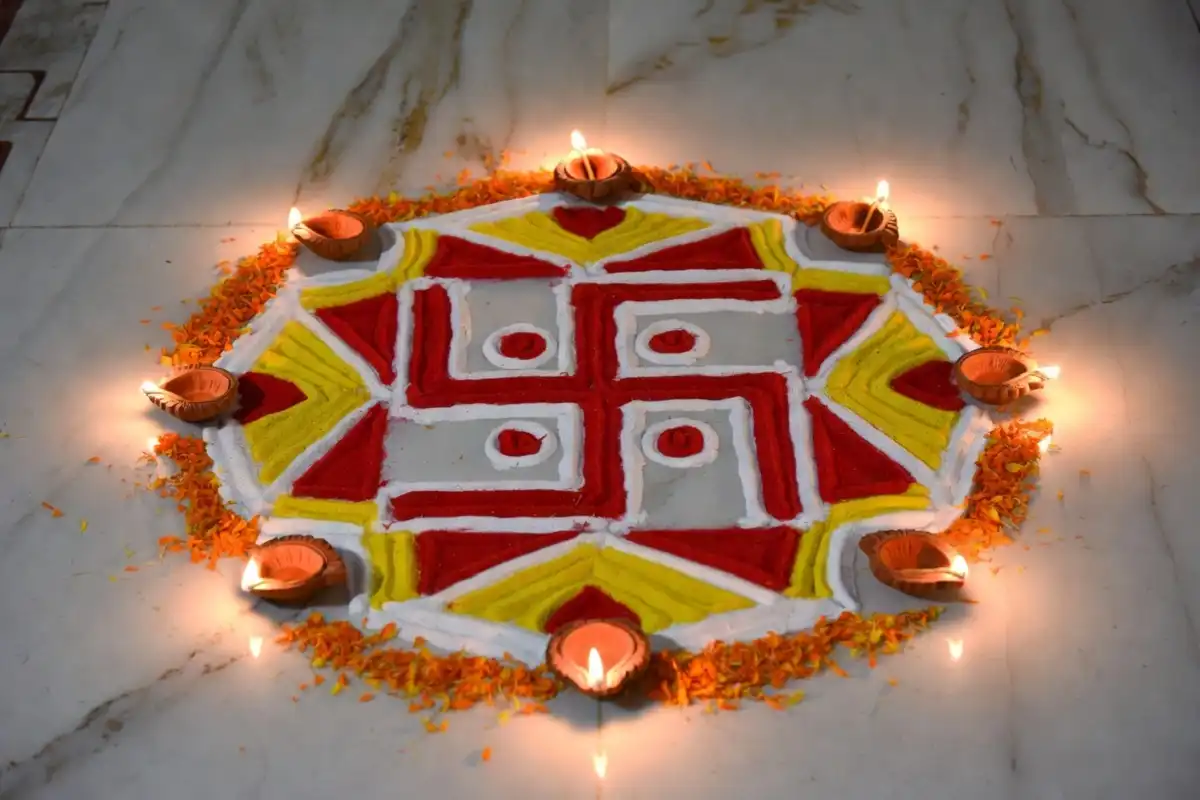
Small Swastik Rangoli Ideas for Festivals and Pooja
A small swastik rangoli is a lovely way to add a traditional and welcoming touch to your home. The Swastik is considered an auspicious Hindu symbol and is often associated with good luck, prosperity, happiness, and positive energy. You will commonly see it drawn near the main entrance, in front of a pooja room, or around a special place prepared for a festival.
What I like most about a small swastik rangoli is that you don’t need a lot of space to make it look beautiful. Even a simple Swastik made with red, yellow, or white rangoli powder can make a doorway or pooja area feel much more festive. If you have a little extra time, you can surround the symbol with tiny dots, flower petals, diyas, or a simple decorative border.
This type of rangoli is especially useful during Diwali, Dhanteras, pujas, housewarming ceremonies, and other special occasions. Instead of spending hours creating a large and complicated pattern, you can make a neat design in a small area and still get that traditional festive look. It also works well when your entrance, balcony, or pooja space is limited.
You don’t have to be an experienced rangoli artist either. Start by drawing the Swastik lightly so you can adjust the shape if needed. Try to keep all four arms similar in size and spacing. Once the basic shape looks even, fill it with your chosen colors and add a few simple details around it. A clean white outline can also make the design stand out beautifully.
If you’re looking for something quick, meaningful, and easy to recreate at home, these Small Swastik Rangoli Ideas for Festivals and Pooja are a great place to start. Choose a design that matches the space you have, keep the pattern simple, and add your own little decorative touch. Sometimes, a small and neatly made rangoli can make the home feel just as festive as a much larger design.
The Cultural Meaning of the Swastik Symbol
The Swastik is one of the oldest sacred symbols in human history. In Hindu tradition, it represents Shubh (auspiciousness) and Labh (prosperity), which is why it is drawn at the start of religious ceremonies, on account books during Diwali, and at the entrances of homes year-round.
Choosing a small swastik rangoli as your decorative motif carries this cultural weight while remaining visually clean and elegant. According to Wikipedia’s article on the swastika, the symbol has been used across South Asian, East Asian, and ancient European cultures for thousands of years as a mark of good fortune.
Its four arms, each turning at a right angle, create a naturally geometric and balanced design that pairs well with borders, floral frames, and dot patterns.
Materials You Need
🎨 Before You Begin
Gathering your materials before starting keeps the process smooth and uninterrupted.
- Rangoli powder in red, yellow, white, and orange
- White chalk or a rangoli pencil for the base sketch
- Paper cones or small funnels for controlled application
- A clean, flat surface such as a floor, doorstep, or wooden board
- Flower petals or diyas for optional border decoration
Even a basic set of two or three colors is enough to produce a striking small swastik rangoli that looks polished and intentional.
How to Make a Small Swastik Rangoli Step by Step
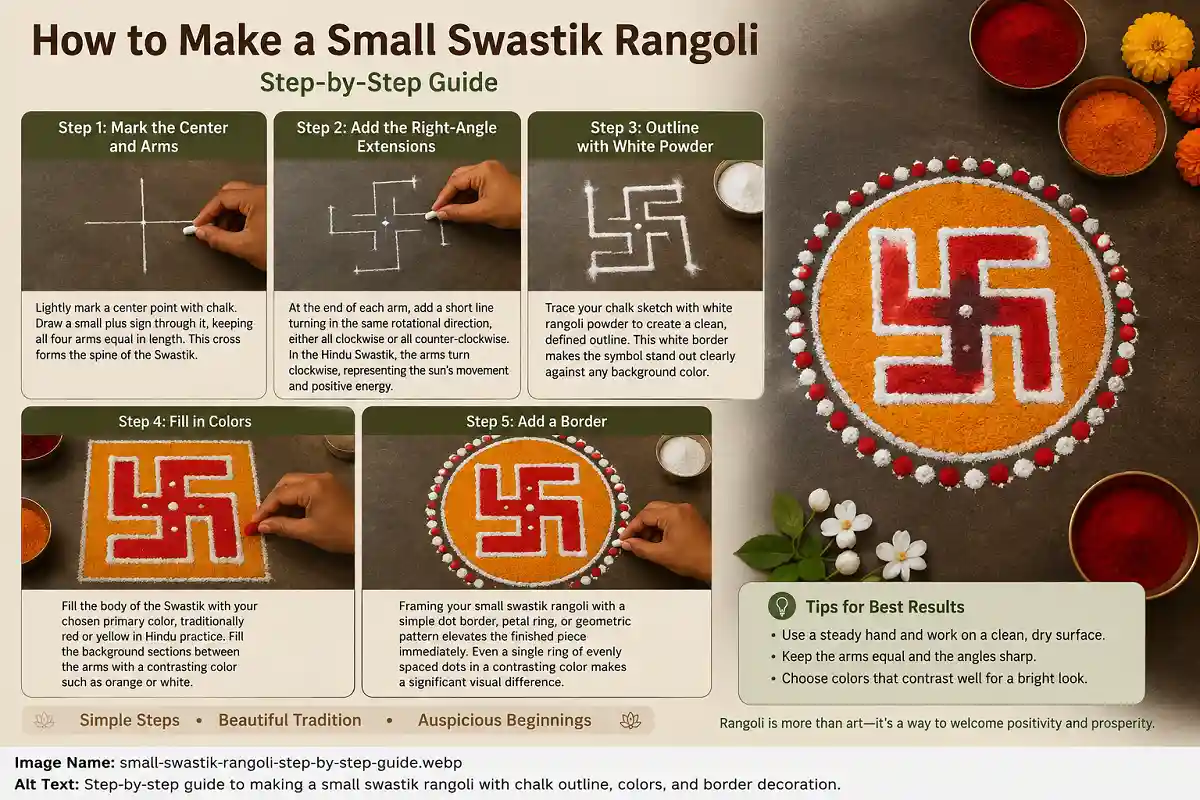
The geometric structure of a small swastik rangoli makes it easier to draw than most floral or paisley rangoli styles. The key is building it symmetrically from a central point.
Mark the Center and Arms
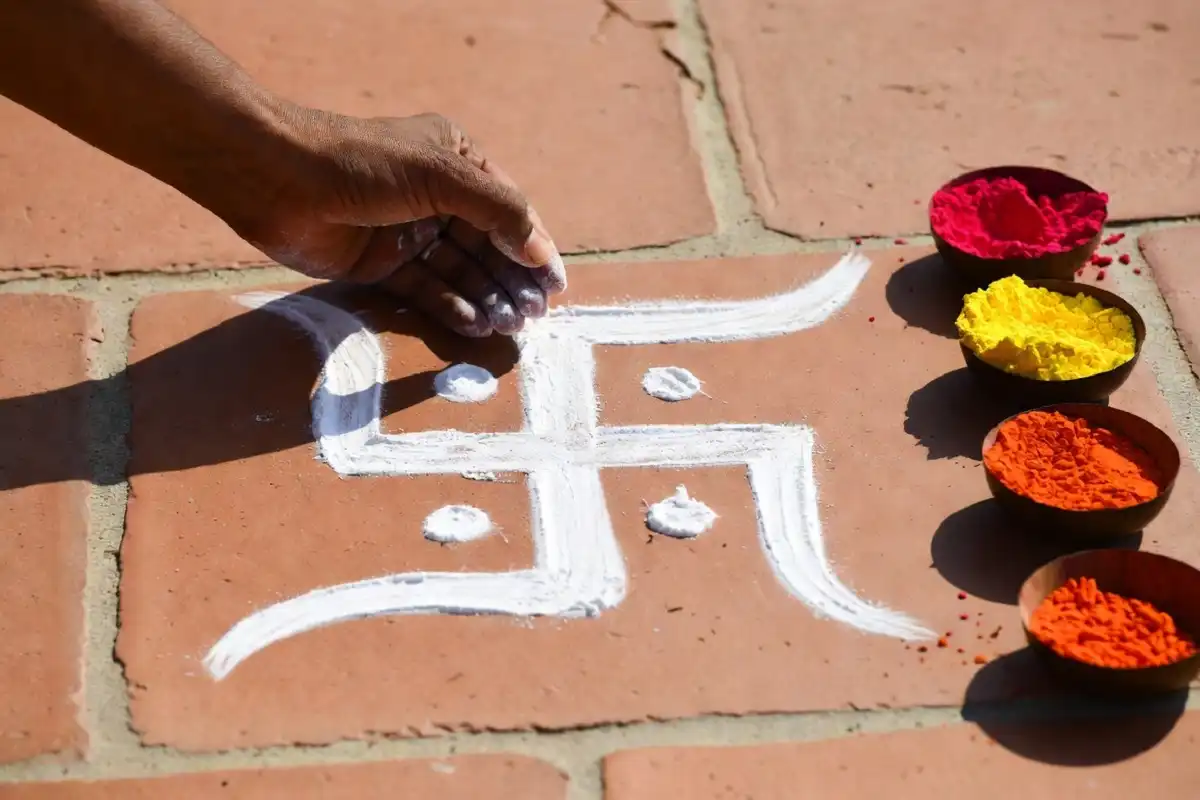
Lightly mark a center point on your surface with chalk. Draw a small plus sign through it, keeping all four arms equal in length. This cross forms the spine of the Swastik.
Add the Right-Angle Extensions
At the end of each arm, add a short line turning in the same rotational direction, either all clockwise or all counter-clockwise. In the Hindu Swastik, the arms traditionally turn clockwise, representing the sun’s movement and positive energy. This step gives the symbol its distinctive hooked shape.
Outline with White Powder
Trace your chalk sketch with white rangoli powder to create a clean, defined outline. This white border makes the symbol stand out clearly against any background color you choose.
Fill in Colors
Fill the body of the Swastik with your chosen primary color, traditionally red or yellow in Hindu practice. Fill the background sections between the arms with a contrasting color such as orange or white.
Add a Border
Framing your small swastik rangoli with a simple dot border, petal ring, or geometric pattern elevates the finished piece immediately. Even a single ring of evenly spaced dots in a contrasting color makes a significant visual difference.
Place Diyas or Petals
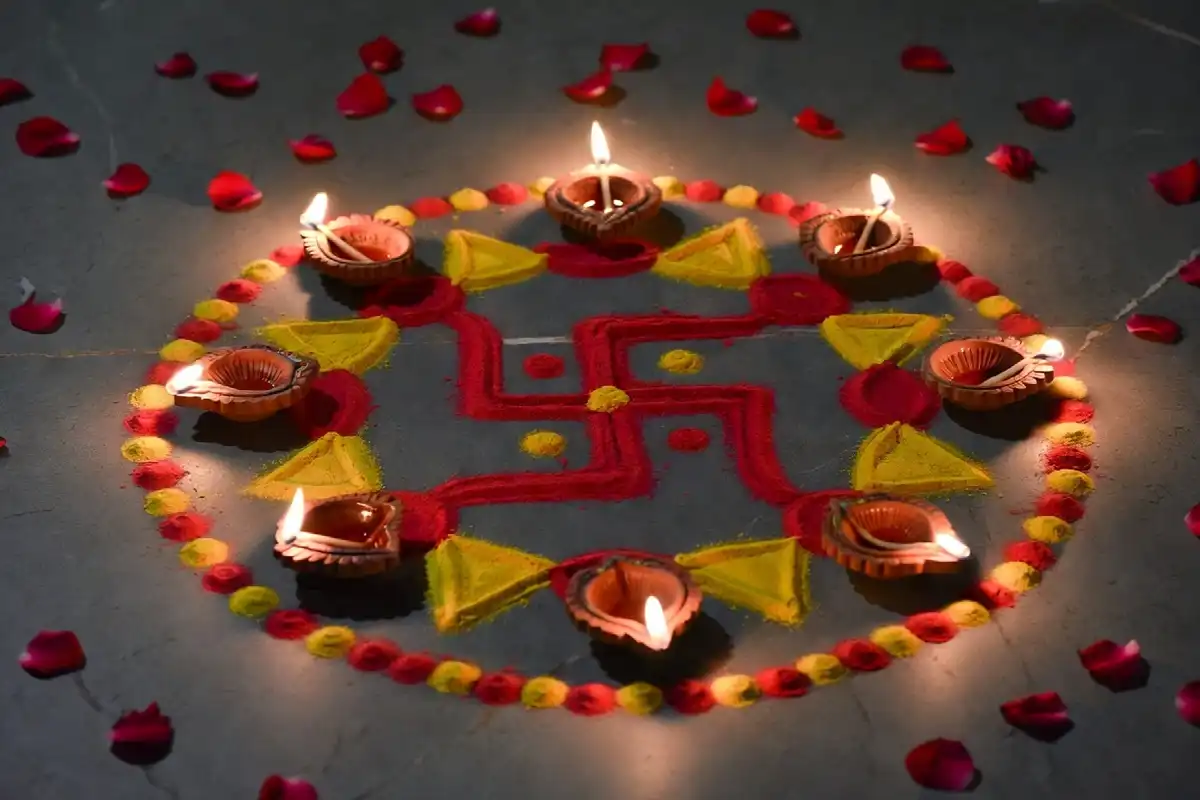
Set small oil lamps or flower petals at the four corners of the design. This finishing touch completes the festive, ceremonial look.
Best Color Combinations for Swastik Rangoli
Color choices shape the energy and visual appeal of the design. These combinations consistently work well:
Red Swastik on a white background with a gold dot border
Yellow Swastik on a red background with orange petal accents
White Swastik on a plain floor with a ring of marigold petals
Each arm filled in a different color with a white outline and green leaf border
For a daily morning pooja refresh, a simple two-color small swastik rangoli in red and white takes only a few minutes and stays true to the traditional look.
Creative Variations to Explore
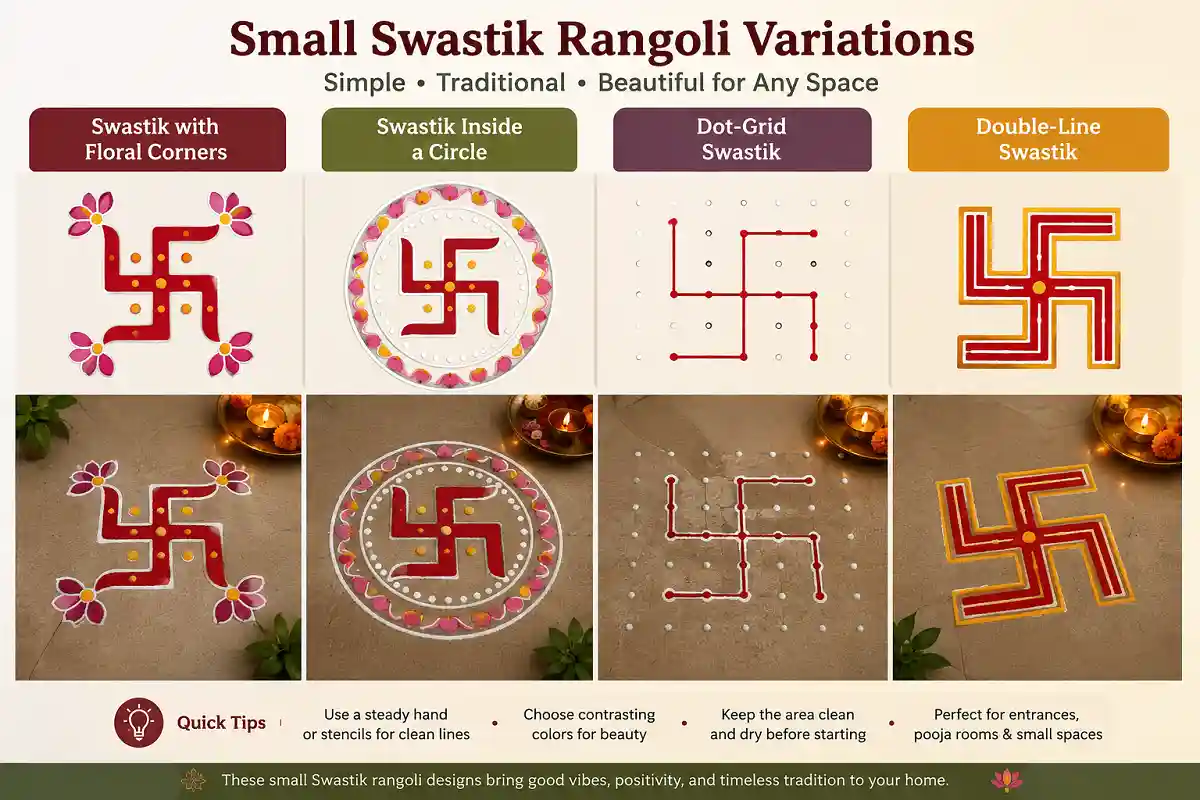
Once you are comfortable with the basic shape, these variations add interest without requiring advanced skill.
Swastik with Floral Corners
Place a small four-petal flower or lotus motif at each corner of the outer border. This softens the geometric lines of the symbol and blends traditional and floral styles beautifully.
Swastik Inside a Circle
Draw the Swastik centered inside a circular rangoli border. Fill the space between the symbol and the circle with small dots or curved petal shapes. This rounded version of a small swastik rangoli works especially well for apartment entrances and compact pooja room floors. For more entrance-friendly ideas, the guide to simple rangoli for apartment entrance ideas offers practical inspiration.
Dot-Grid Swastik
Use the traditional pulli kolam method to construct the Swastik from a grid of evenly spaced dots. Connecting the dots produces naturally consistent proportions and clean lines, making it ideal for beginners who find freehand drawing tricky.
Double-Line Swastik
Draw the symbol twice, offset slightly, to create a double-outline effect. Fill the gap between the two outlines with a contrasting color. This technique adds visual depth with minimal extra effort.
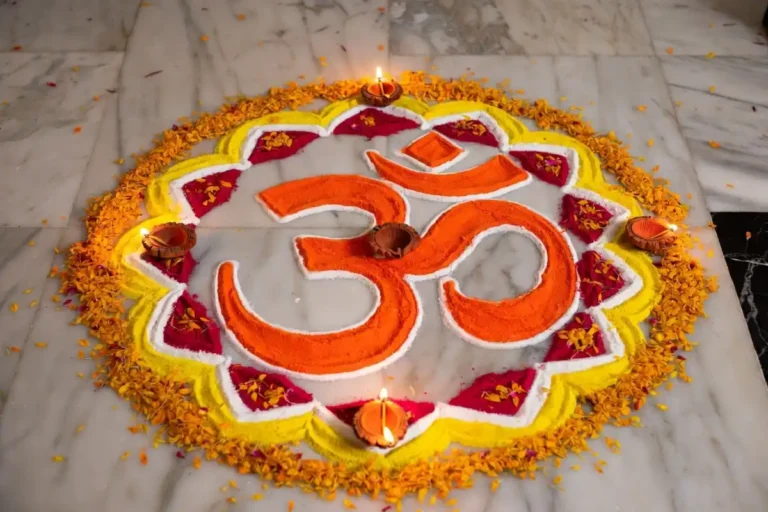
Om and Swastik Combined
Place the Om symbol and the Swastik side by side within a shared border, a pairing commonly seen at Diwali and Griha Pravesh ceremonies. For guidance on creating the Om motif, the article on easy om rangoli design simple for beginners is a helpful companion resource.
Practical Tips for Better Results
💡 Quick Tips
A few straightforward habits improve the outcome of every small swastik rangoli you make, whether it is your first attempt or your fiftieth.
- Sketch lightly in chalk first and confirm the symmetry before applying powder.
- Use a ruler or straight edge to keep the four arms equal during sketching.
- Apply powder from the center outward to avoid smudging completed sections.
- Keep a dry cloth or cotton swab nearby for small corrections before powder sets.
- Work in good lighting so fine details and border lines stay visible throughout.
For more general beginner guidance that applies across rangoli styles, easy rangoli designs for small space to try now covers foundational techniques worth reading alongside this article.
When to Use a Swastik Rangoli
A small swastik rangoli is appropriate across a wide range of occasions and is not limited to major festivals alone.
The symbol’s universal auspiciousness in Hindu tradition means it suits any occasion centered on inviting positivity and blessings. According to Britannica’s overview of Hinduism, symbols like the Swastik remain active parts of living religious practice across millions of households globally.
Create a Beautiful Small Swastik Rangoli With Your Own Style
A small swastik rangoli is a simple way to bring together tradition, beauty, and a sense of auspiciousness in your home. You don’t need a huge space, expensive materials, or advanced rangoli skills to create one. A neatly drawn Swastik with a few bright colors can look beautiful at an entrance, beside a diya, or in front of your pooja space.
If you’re making this design for the first time, don’t worry too much about getting every line perfect. Start with the basic Swastik shape and focus on keeping the four arms as even and balanced as possible. Once the main pattern is ready, you can add your own touch with dots, flowers, small diyas, petals, or a simple border. Even a few thoughtful details can make a basic design feel personal and festive.
For beginners, I recommend starting with a two-color small swastik rangoli. Red and white or red and yellow are classic combinations that make the symbol stand out clearly. As you become more comfortable, you can experiment with different colors, decorative patterns, and slightly larger designs.
The best part of making rangoli is that there is no need to copy a design perfectly. Use these ideas as inspiration and make the pattern your own. With a little practice, you’ll find it easier to create a clean and attractive Swastik rangoli whenever a festival, puja, or special occasion comes around.
So, gather your rangoli colors, choose a small spot, and give it a try. A simple small swastik rangoli made with care can add a warm, traditional, and welcoming feeling to your home.
FAQs
Is a swastik rangoli difficult to make for beginners?
No, the Swastik’s geometric structure is actually one of the more beginner-friendly rangoli shapes. It is built from straight lines and right-angle turns, which are easier to control than curved floral or paisley forms.
What is the correct direction for the Swastik arms in Hindu rangoli?
In a traditional Hindu small swastik rangoli, the arms turn clockwise, which is associated with the sun’s path and positive, auspicious energy. Counter-clockwise versions carry different cultural associations in other traditions.
What colors are traditionally used for a Swastik rangoli?
Red and yellow are the most traditional choices in Hindu practice, both associated with auspiciousness, energy, and celebration. White outlines and orange accents are also commonly used to add definition and vibrancy.
How small can a swastik rangoli be?
A small swastik rangoli can be made as compact as 15 to 20 centimeters across, making it suitable for narrow doorsteps, small pooja trays, or decorative wooden boards used indoors.
Can I use flower petals instead of powder for a swastik rangoli?
Yes, marigold, rose, and jasmine petals all work well. A petal-based small swastik rangoli is a popular choice for religious ceremonies and adds a natural fragrance alongside the visual decoration.
How do I fix mistakes in a powder rangoli?
Use a dry cloth or a cotton swab to gently lift stray powder before it spreads. For larger corrections, sweep the area lightly and reapply from scratch. Working slowly and in sections reduces the chance of mistakes needing correction.
Can I make a swastik rangoli on a wooden board for repeated use?
Yes, creating a small swastik rangoli on a portable wooden or MDF board is a practical solution for apartments, rental homes, or spaces where floor art is not suitable. The board can be refreshed daily or stored between uses.