Rangoli Designs With Hindu Deities: Sacred Patterns for Every Festival
Rangoli designs with Hindu deities turn a bare doorstep into a welcome mat for the gods. Drawn for every major festival, these patterns never fail to set the right mood before the prayers even begin.
Rangoli designs with Hindu deities are floor patterns that depict gods like Ganesha, Lakshmi, and Saraswati using colored powder, flowers, or rice paste. They mark festivals, invite blessings, and sit at the main entrance or puja space.
Why Rangoli Designs With Hindu Deities Matter During Festivals
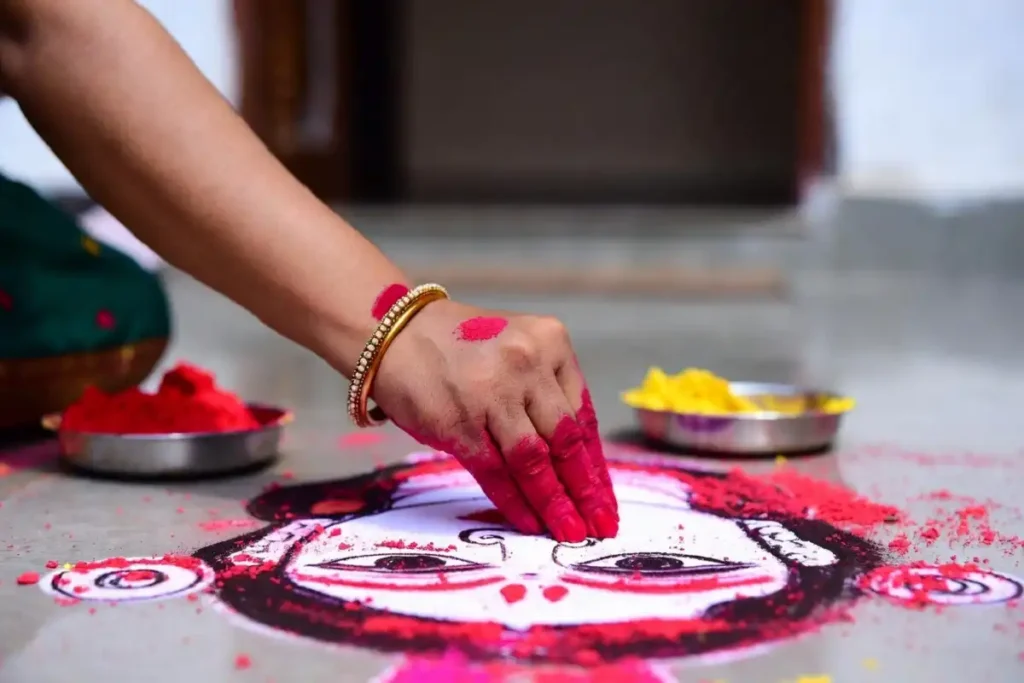
A deity rangoli is not just decoration. It works as a visual prayer. On Diwali morning, the first thing many families do is clear the entrance and start sketching the outline before sunrise, because that outline sets the tone for the whole day.
Each god carries a specific meaning on the floor:
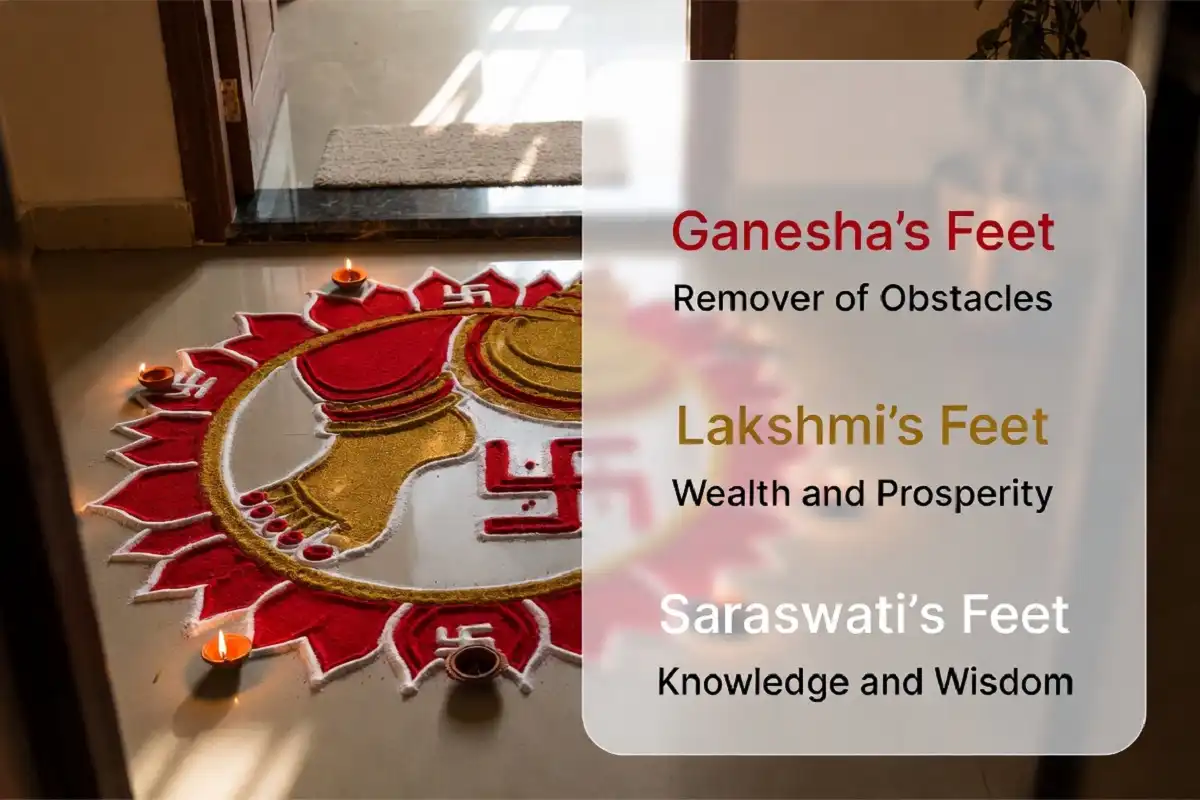
- Ganesha removes obstacles, so his rangoli goes at the main door.
- Lakshmi brings wealth, so her feet or full figure appear near the puja room during Diwali.
- Saraswati governs knowledge, so students draw her during Vasant Panchami.
- Durga represents strength, so her form shows up during Navratri.
Placing the right deity at the right spot matters as much as the drawing itself. A Ganesha at the threshold and a Lakshmi near the altar cover both protection and prosperity in one layout.
This is exactly why rangoli designs with Hindu deities remain a fixture in Indian homes long after simpler geometric patterns fade from fashion.
Ganesha Rangoli Designs for New Beginnings
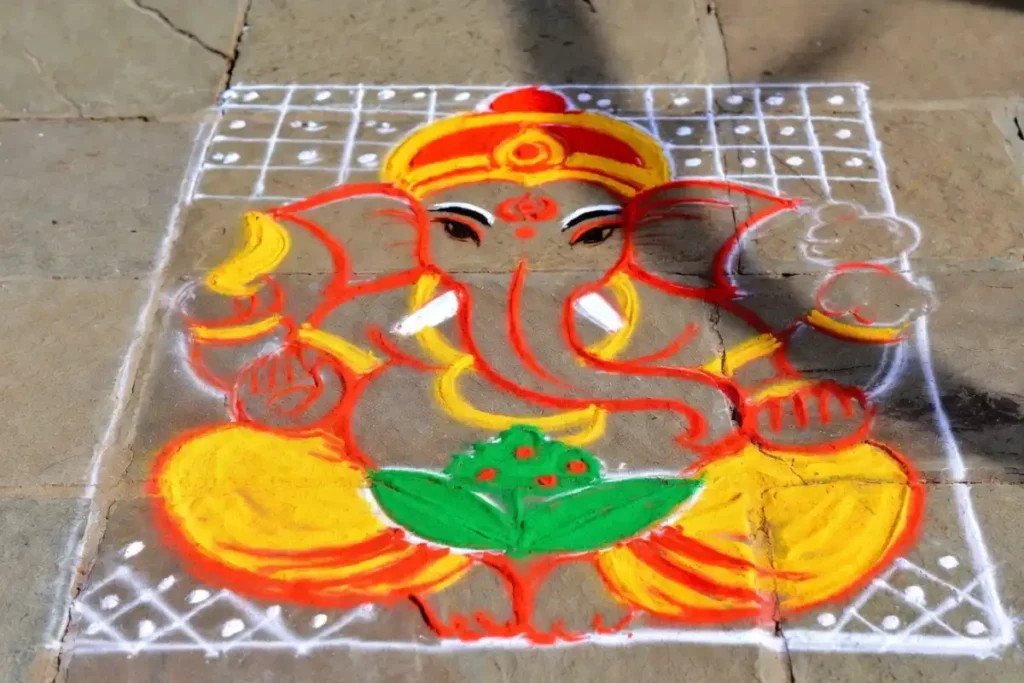
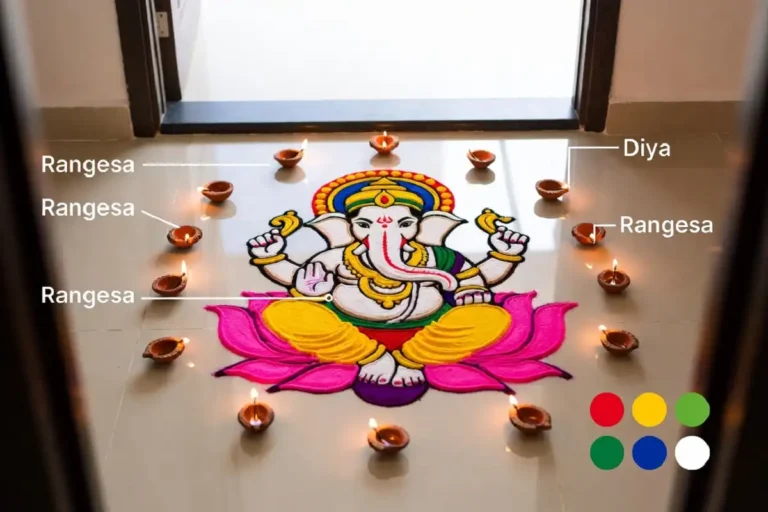
How do you draw a Ganesha rangoli design? Start with a large central circle for the head, add the trunk curving to one side, then build the ears and crown around it using dot grids for symmetry.
Beginning with dots (pulli in Tamil, or sikku in Kolam tradition) keeps the proportions honest. Nine dots across and nine down give enough room for the trunk, ears, and a simple modak in his hand. Beginners often rush the trunk curve and end up with a stiff line — slow down, draw it in one smooth stroke, and let the tip taper naturally.
Colors that work well for Ganesha: vermillion red for the body outline, yellow for the crown, and green for the modak leaf. Keep the background white or light cream so the deity stands out. Among all rangoli designs with Hindu deities, Ganesha remains the easiest starting point for anyone new to figurative floor art.
Full Ganesha layouts, including a simpler beginner version, are covered in this guide on simple Ganesha rangoli art for festivals, which walks through the dot grid step by step.
Lakshmi Rangoli Designs for Diwali
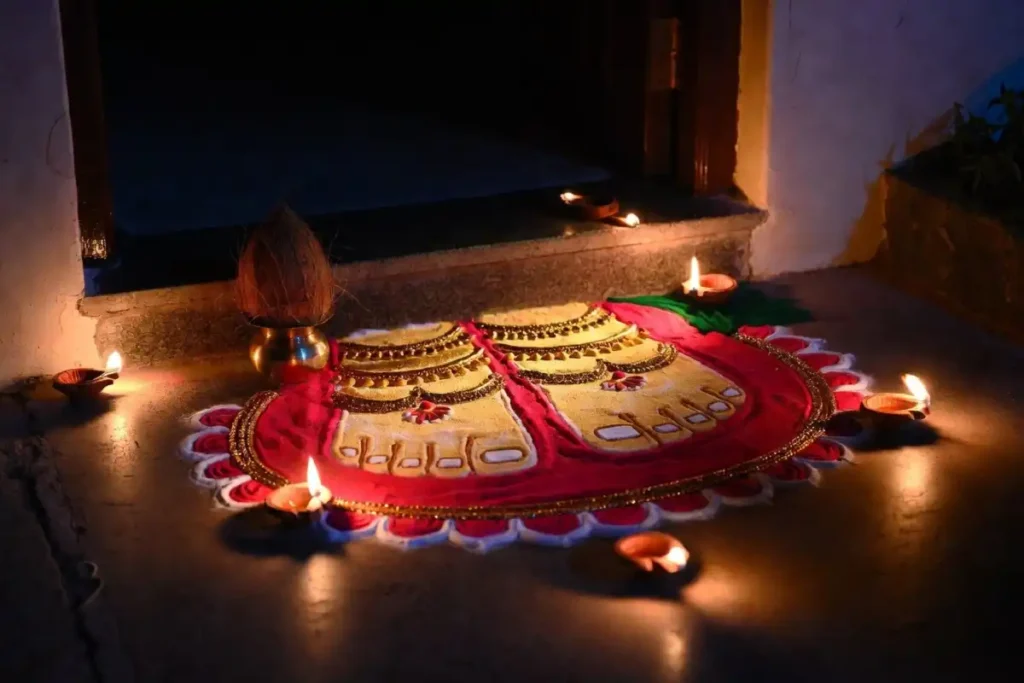
Lakshmi rangoli designs almost always use her feet (paavai in Tamil homes) rather than a full figure, because the footprints symbolize her walking into the house. Draw a pair of small feet at the doorstep, facing inward, with each toe marked as a small dot or petal.
For a fuller composition, add a lotus under each foot and a small kalash (pot) with a coconut on top, since the kalash represents abundance. Gold and red powders dominate this design; a touch of green for the lotus leaves finishes it off. Lakshmi feet are, by far, the single most requested pattern among rangoli designs with Hindu deities during Diwali week.
For the exact toe placement and spacing that keeps the feet looking proportional, this dedicated walkthrough on simple Lakshmi feet rangoli steps for beginners covers it in detail.
Saraswati and Durga Rangoli Patterns
Saraswati rangoli designs center on her veena (string instrument) and a swan, since both represent knowledge and grace. Draw the swan first, in profile, then add the veena resting against it. White and light blue dominate here, reflecting her association with purity.
Durga rangoli designs lean geometric rather than figurative in most homes, since her full form is harder to render on a floor. A trishul (trident) flanked by a lion motif works as a simpler stand-in during Navratri. Deep red and orange suit her energy better than pastel shades.
Saraswati and Durga together show how varied rangoli designs with Hindu deities can get once you move past the two most common figures.
Materials and Colors for Rangoli Designs With Hindu Deities
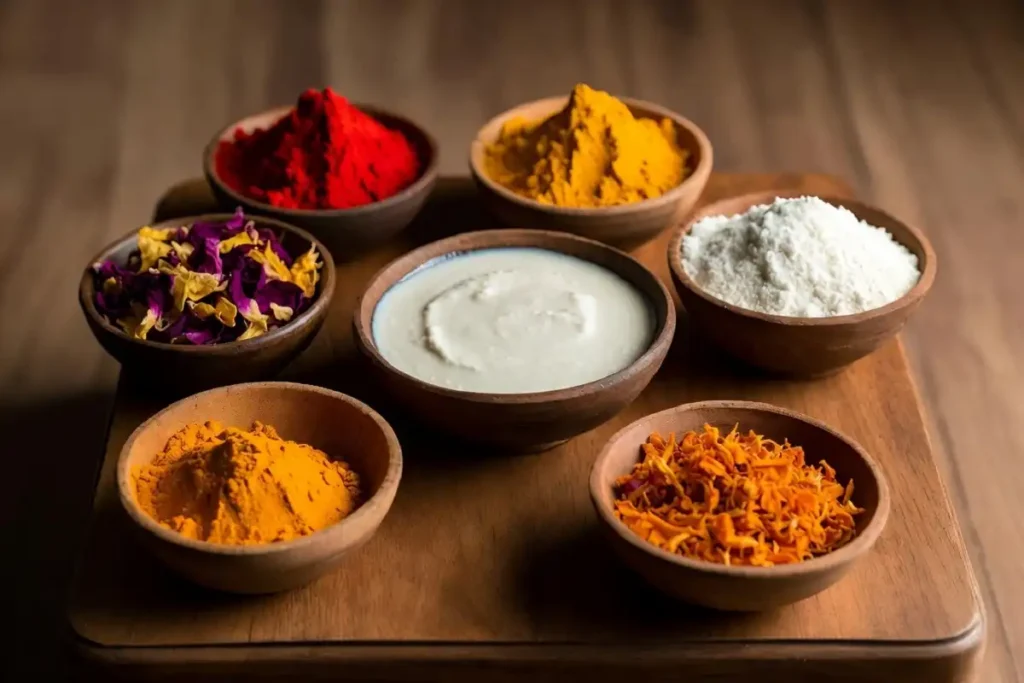
Rangoli designs with Hindu deities use the same base materials as any other rangoli, but color choice carries extra weight because each shade ties back to the deity.
| Deity | Primary Colors | Common Materials |
|---|---|---|
| Ganesha | Red, yellow, green | Rice flour, turmeric, kumkum |
| Lakshmi | Gold, red, pink | Flower petals, colored sand |
| Saraswati | White, light blue | Rice paste, white marble powder |
| Durga | Red, orange, maroon | Colored powder, dried flowers |
Rice flour paste (kolam maavu) gives the cleanest white outline and also feeds ants and small insects, which is the original intent behind kolam traditions in South India.
How to Draw Rangoli Designs With Hindu Deities Step by Step
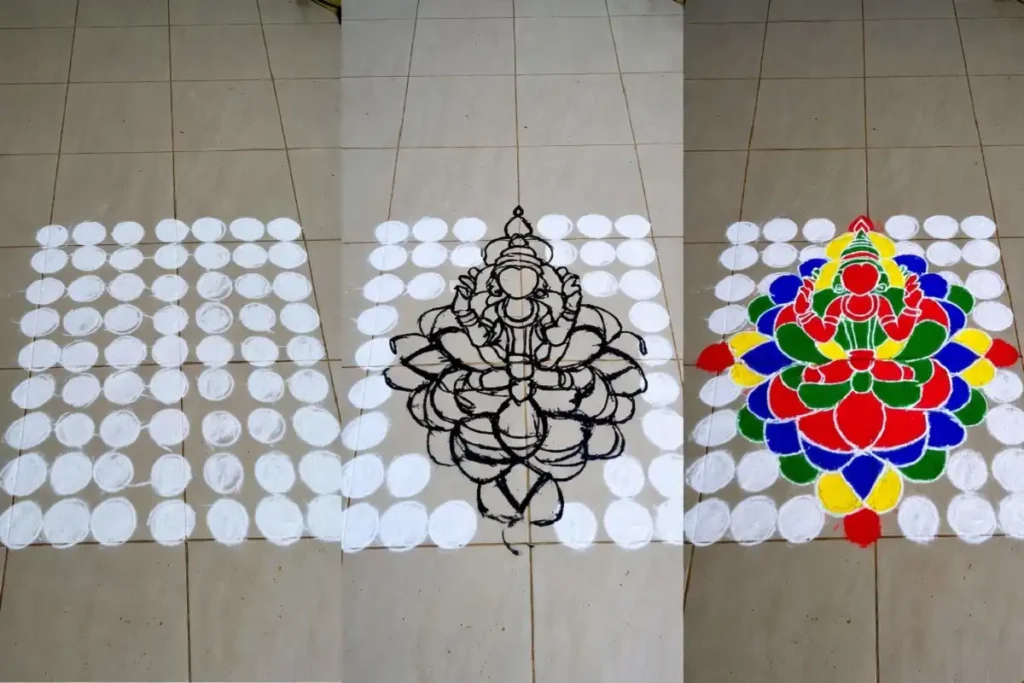
Start with a dot grid, then connect the dots into the deity’s outline before adding color from the center outward. This keeps proportions accurate and prevents smudging as you work — skipping the grid is where most mistakes start.
Sweep and dry the floor completely. Any moisture ruins powder-based designs within minutes.
Mark your dot grid with a chalk pencil, sized to the deity you are drawing (9×9 works for most single-figure designs).
Connect the dots into the main outline using rice flour or a rangoli pen.
Fill the outline with base colors first, largest areas before small details.
Add facial features, jewelry lines, and shading last, since these need a steady hand on a filled surface.
Finish with a border, floral or geometric, to frame the deity and close the design.
Work top to bottom or center to edge so your hand never drags across wet or freshly placed powder.
Common Mistakes to Avoid
Skipping the dot grid is the most common error in beginner deity rangoli. Without it, faces end up asymmetrical, and that is the first thing anyone notices in a deity design. Watch for these mistakes closely, since they show up in almost every beginner’s rangoli designs with Hindu deities:
- Overcrowding the design. One clear deity with a simple border reads better than a cluttered scene with three gods and ten motifs.
- Wrong color for the deity. Blue for Lakshmi or green for Durga looks off to anyone familiar with the tradition. Stick to the associated palette.
- Placing the deity wrong. Ganesha belongs at entrances, not inside the puja room; Lakshmi’s feet should face into the house, not out.
- Rushing the outline. A shaky trunk or veena line is hard to fix once color goes down. Trace it twice in the air before committing to the floor.
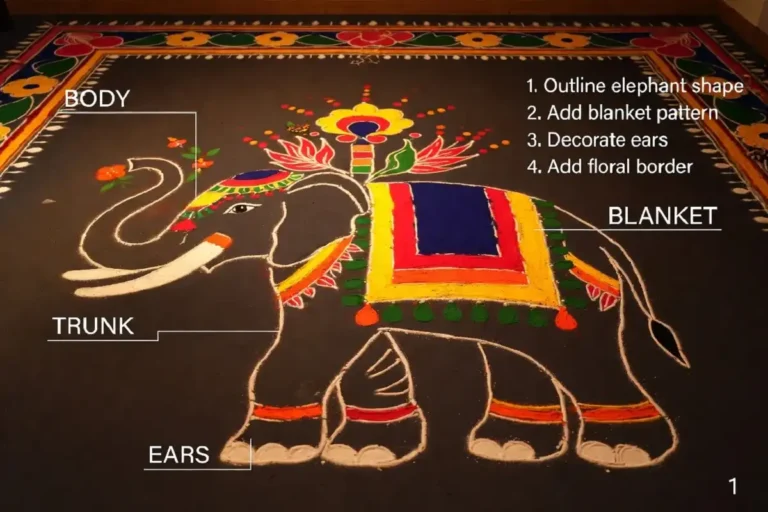
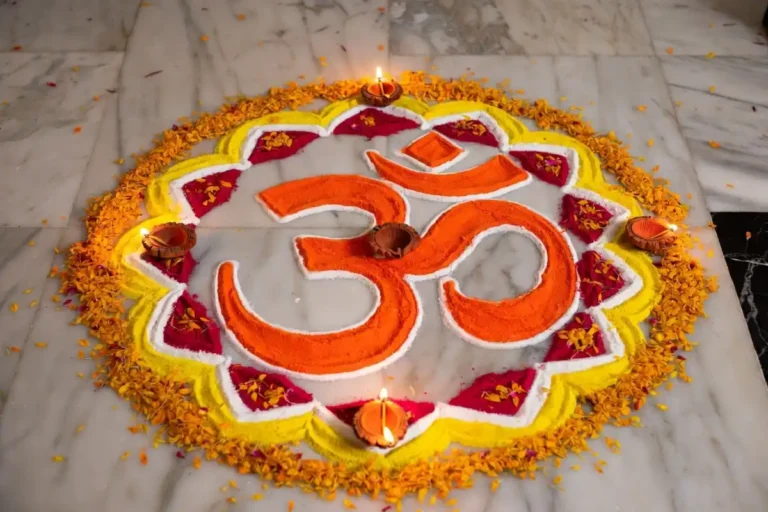
If you want a broader set of symbols beyond deities, like the om sign or diya, this piece on cultural symbols of India covers those separately, as used in rangoli art.
Rangoli Designs With Hindu Deities: Tips for Beginners
Rangoli designs with Hindu deities can bring a beautiful spiritual touch to festivals, puja spaces, and home entrances when the design is created with care and respect.
The placement, colors, proportions, and overall balance should match the deity you choose. If you are a beginner, start with a simple Ganesha rangoli or a pair of Lakshmi feet, as these designs are easier to outline and decorate.
Begin by creating an accurate dot grid or light guideline before adding colors and details. As your skills improve, you can try more detailed designs featuring Saraswati, Durga, or other Hindu deities.
Choose traditional colors, keep the facial features clear, and avoid overcrowding the pattern. With regular practice, even detailed deity rangoli designs become easier to create.
FAQs
Which deity rangoli suits Diwali specifically?
Lakshmi feet at the entrance and a Ganesha near the puja space cover both the wealth and obstacle-removal aspects Diwali focuses on.
Can I mix two deities in one rangoli?
Yes, Ganesha and Lakshmi appear together often, since Diwali prayers invoke both. Keep one as the focal point and the other smaller, off to the side.
Do deity rangoli designs need to be complex?
No. A simple Ganesha outline with two colors works fine for daily use. Save the detailed, multi-color versions for major festivals or competitions.