Rangoli Design Simple: 30 Easy Patterns Anyone Can Try Today
You don’t need years of practice or expensive tools to create a gorgeous rangoli. A rangoli design simple can transform any doorstep, living room, or festival setting into a visual celebration in under 20 minutes.
In this guide, you’ll discover the easiest rangoli design simple enough for beginners, kids, and busy adults alike. Whether you’re preparing for Diwali, a wedding, or just want to add color to your space, these patterns are approachable, beautiful, and endlessly customizable. From dot-based flower designs to clean geometric patterns, we’ve got something for every skill level.
What Is Rangoli and Why Does It Matter?
Rangoli is one of India’s oldest and most beloved folk art traditions. Made from colored powder, rice flour, flower petals, or chalk, it is drawn on floors or courtyards to welcome guests and bring good luck.
According to Wikipedia’s overview of Rangoli, the word derives from Sanskrit rangavalli, meaning “row of colors.” It has been practiced across India for thousands of years, each region adding its own style kolam in Tamil Nadu, muggu in Andhra Pradesh, aipan in Uttarakhand.
Today, rangoli has gone global. People worldwide use it for home décor, festivals, and creative expression making a simple rangoli design the perfect creative hobby.
Why Choose a Rangoli Design Simple?
Not every design needs to be complex. Here’s why starting simple is the smartest move:
Simple patterns take 10–30 minutes, not hours.
No special skills or artistic training needed.
Add colors, dots, or petals to make it unique.
Uses minimal powder or material.
Enjoy the creative process without pressure.
If you’re just getting started, explore these 25 easy simple rangoli ideas that are perfect for first-timers.
Essential Tools and Materials You’ll Need
Before diving into any rangoli design simple enough to make today, gather these basics:
- Colored rangoli powder (available at Indian grocery stores)
- Rice flour or chalk powder for white outlines
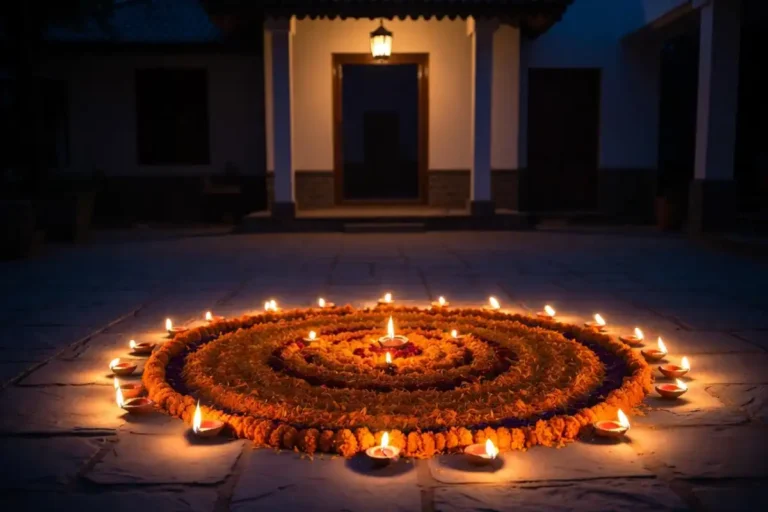
- Flower petals (marigold, rose) for a natural look
- Colored sand for durability outdoors
- A funnel cone or squeeze bottle for precision lines
- A compass or coin for perfect circles
- Chalk or pencil to sketch the outline first
- A ruler for geometric designs
- Your fingers — the oldest and most personal tool!
10 Simple Rangoli Design Ideas for Beginners
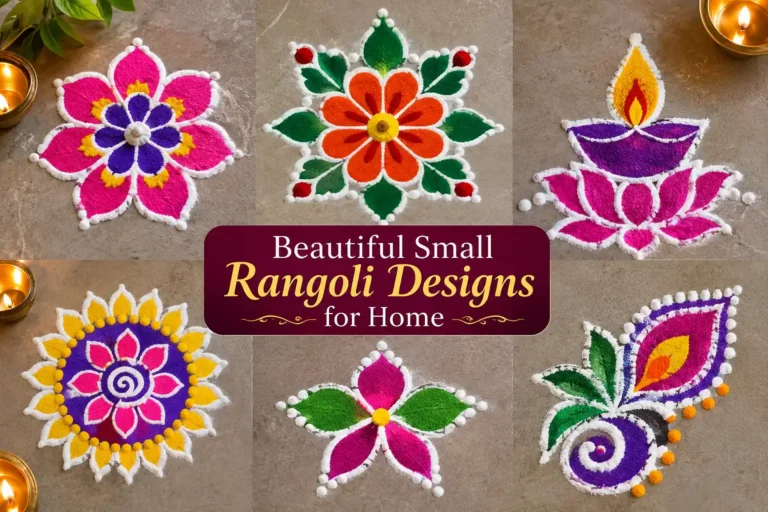
Here are ten starter-friendly rangoli design simple patterns you can recreate right now:
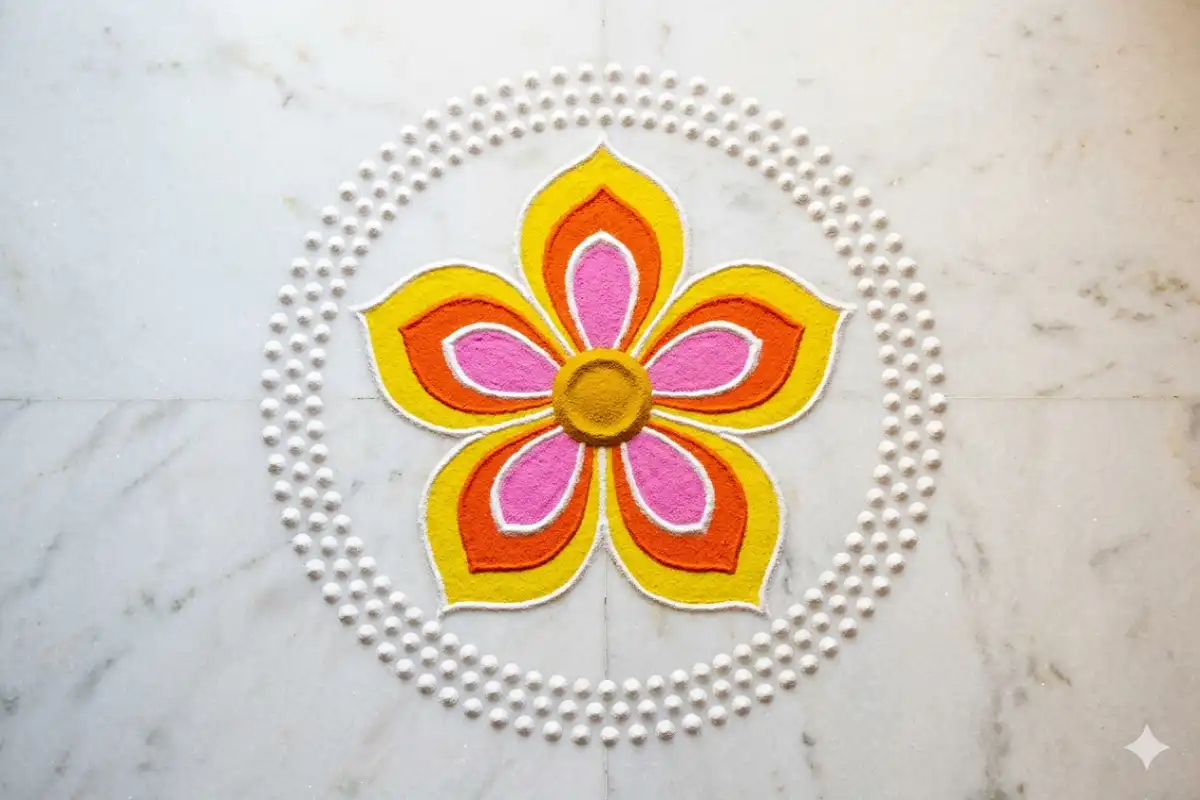
Five-Dot Flower Rangoli
Place five dots in a cross pattern, then connect them with curved petals. Add a center dot and fill with two colors. Done in under 10 minutes.
Concentric Circles Design
Draw three circles of increasing size. Fill alternate rings with contrasting colors like orange and white. Add small dots around the outer edge for detail.
Simple Lotus Pattern
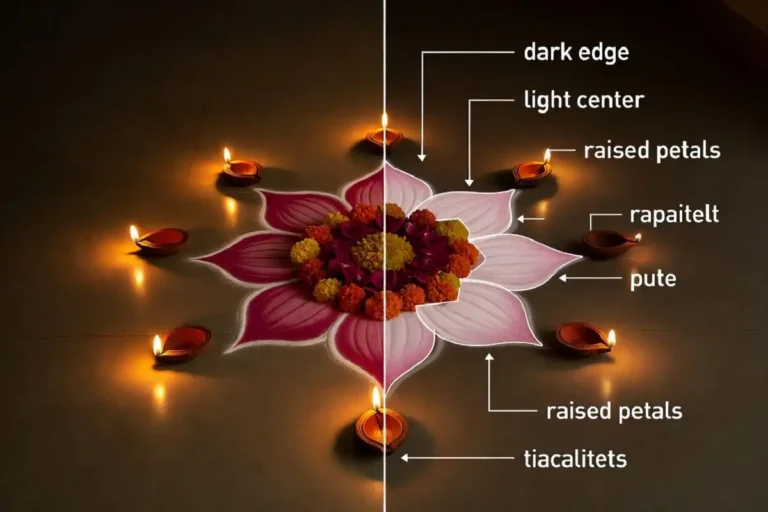
Sketch an oval center. Add 8 rounded petals around it. Use pink, yellow, and white for a classic festive feel. This is one of the most beloved floral motif rangoli patterns for any occasion.
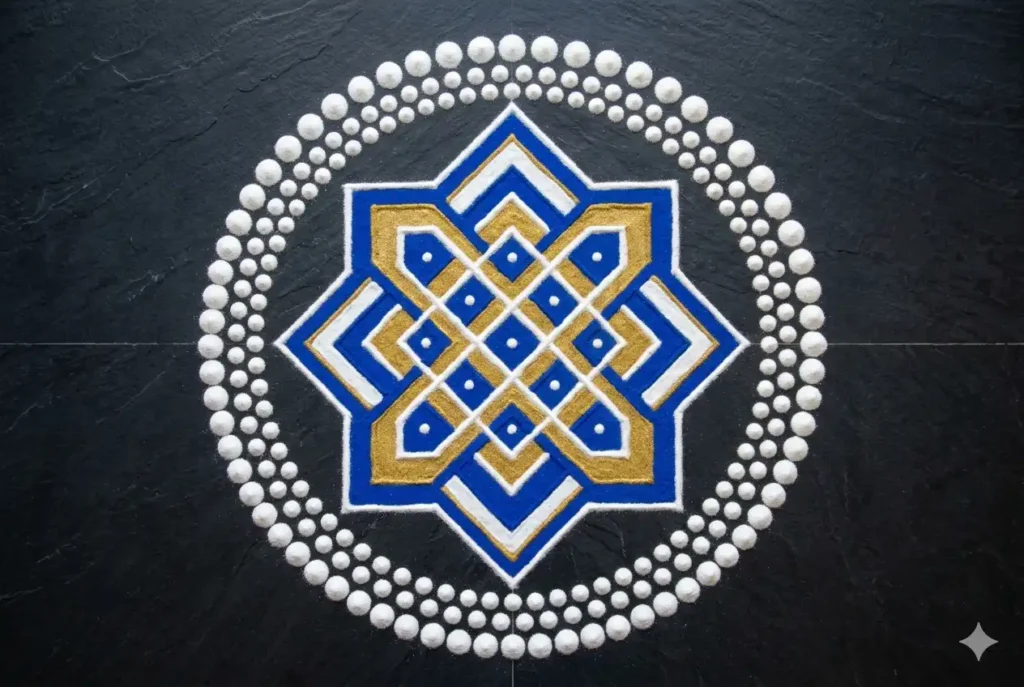
Square Grid Geometric
Draw a 4×4 grid using dots. Connect them diagonally to form diamond shapes. Fill alternating sections with two bold colors for a striking geometric rangoli.
Peacock Feather Rangoli
Sketch a teardrop shape. Add horizontal lines inside to mimic feather detail. Use teal, green, and gold. This works beautifully as a stand-alone motif.
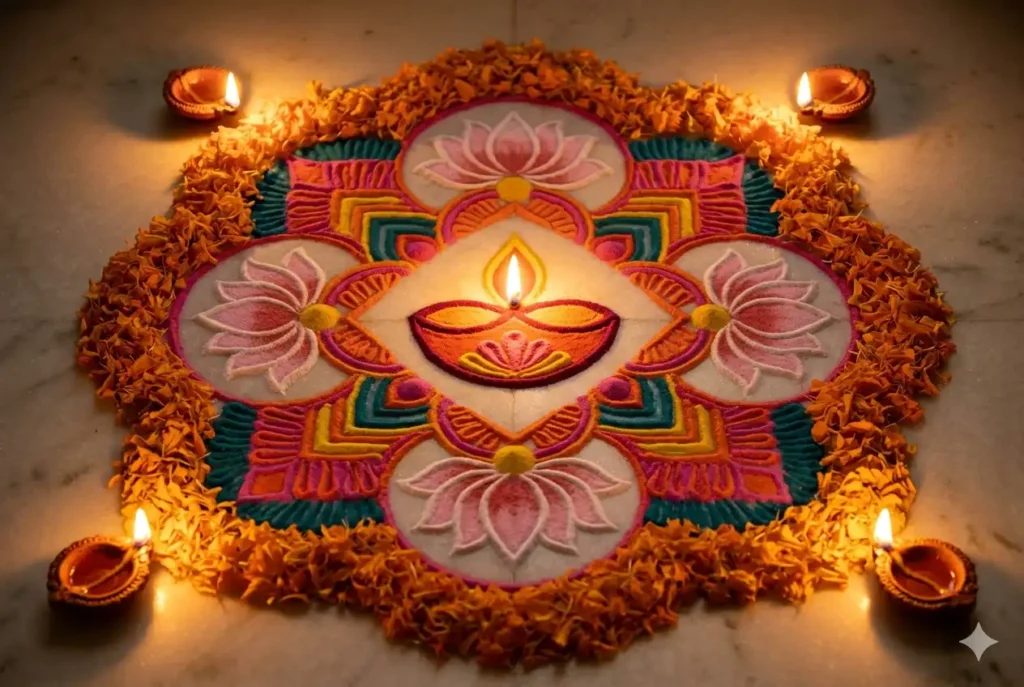
Diya (Lamp) Rangoli
Draw a simple oil lamp shape a teardrop with a flat bottom and a pointed flame. Surround with small dots. A must-try for Diwali rangoli designs.
Swastika or Om Symbol
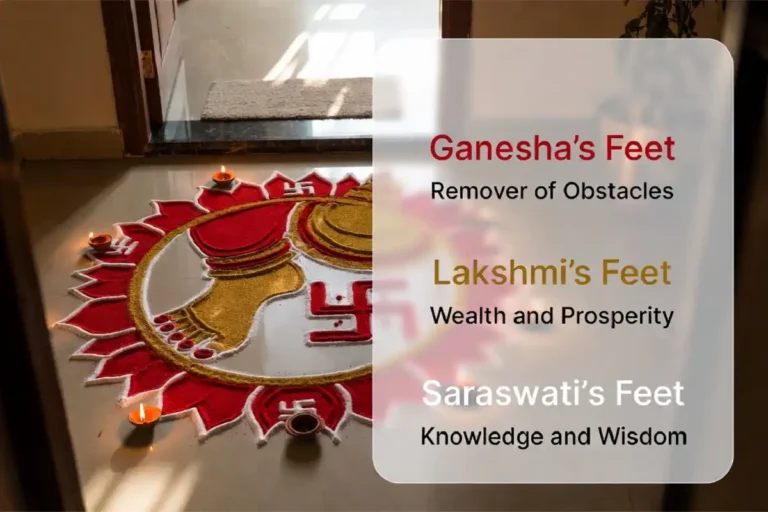
Sacred and auspicious, these traditional cultural symbols are made from straight lines and curves. Perfect for pooja rooms and religious occasions. Check out simple Laxmi rangoli designs for more sacred symbol inspiration.
Butterfly Rangoli
Two rounded wings on each side with a small body in the center. Add antennas with dots at the tips. Kids love this one!
Star Rangoli
Overlap two triangles to form a six-pointed star. Fill each triangle’s sections with alternating colors. Fast, bold, and festive.
Border / Side Rangoli
A simple running pattern along walls or walkways repeating flowers, chevrons, or waves. Perfect for doorways and corridors. Get inspired by easy border rangoli side designs for quick but elegant effects.
Rangoli Design Simple for Festivals
Different festivals call for different moods. Here’s a quick festival-wise guide:
Diwali Rangoli
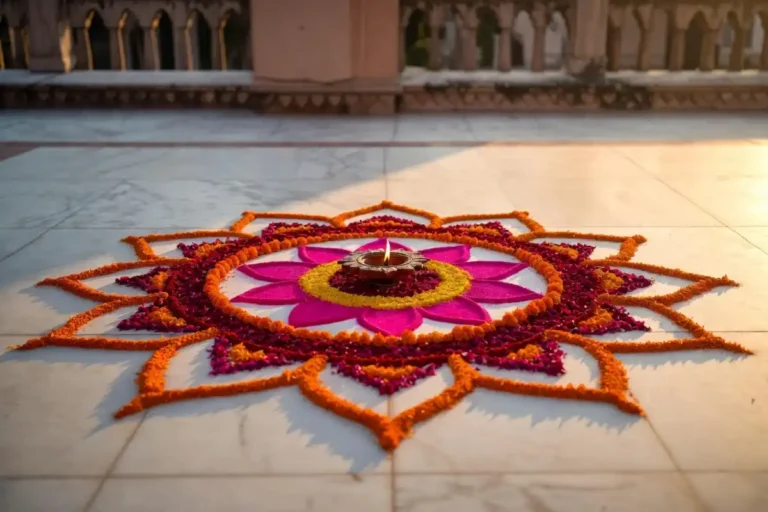
Diwali demands bright, vibrant designs with diyas, flowers, and lamps. Bold colors orange, red, gold — work best. Symmetrical lotus and mandala shapes are traditional favorites.
New Year Rangoli
Ring in the New Year with fresh, modern patterns. Abstract geometric shapes and bold color gradients are trending. For inspiration, check out New Year rangoli designs for beginners as well as unique New Year 2023 rangoli patterns.
Wedding and Puja Rangoli
For weddings, larger elaborate designs with floral patterns and peacock motifs are ideal. For daily puja, a small 5-minute lotus or Om design sets the perfect devotional mood.
How to Make a Simple Dot Rangoli
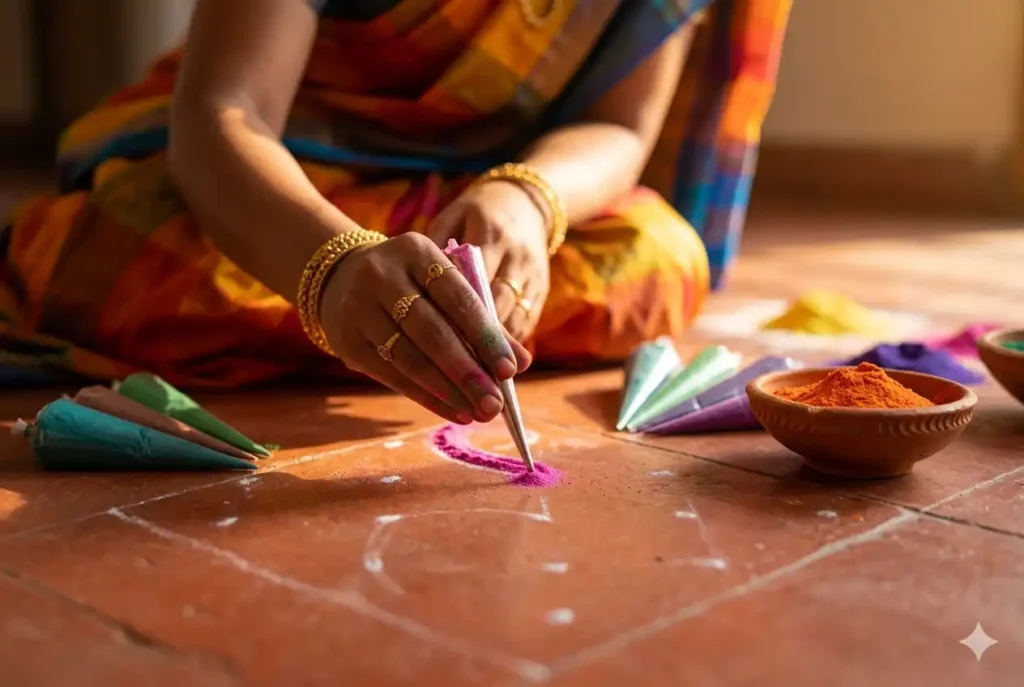
This is the most beginner-friendly technique. Follow these steps:
Prepare your surface — sweep the area clean and lightly dampen if using powder.
Draw your dot grid — place dots in a regular pattern (e.g., 5×5 or 7×7 grid) with chalk or rice flour.
Sketch the outline — lightly connect dots to form your base shape.
Add the primary design — fill in petals, lines, or curves over your sketch.
Fill with color — work from the center outward, one color at a time.
Add details — small dots, borders, or petal accents along edges.
Clean the edges — use a dry brush or fingertip to sharpen lines.
Always use a reference image or grid. Even expert rangoli artists sketch before they fill! See unique and attractive rangoli designs for every occasion for reference images to use as your visual guide.
Tips to Make Your Rangoli Design Simple Look Professional
Even the most rangoli design simple can look polished with these tricks:
Use a stencil
Use a stencil for first attempts cut shapes from cardboard.
Contrast your colors
Avoid placing similar shades next to each other.
Keep proportions balanced
Sketch guidelines with chalk before adding color.
Work from center to edges
This prevents smudging.
Add white outlines
A thin border of white between colors makes each section pop.
Finish with diyas or flowers
Add a traditional, festive touch.
For more creative ideas, browse these simple unique rangoli designs to brighten your space.
Eco-Friendly and Modern Takes on Simple Rangoli
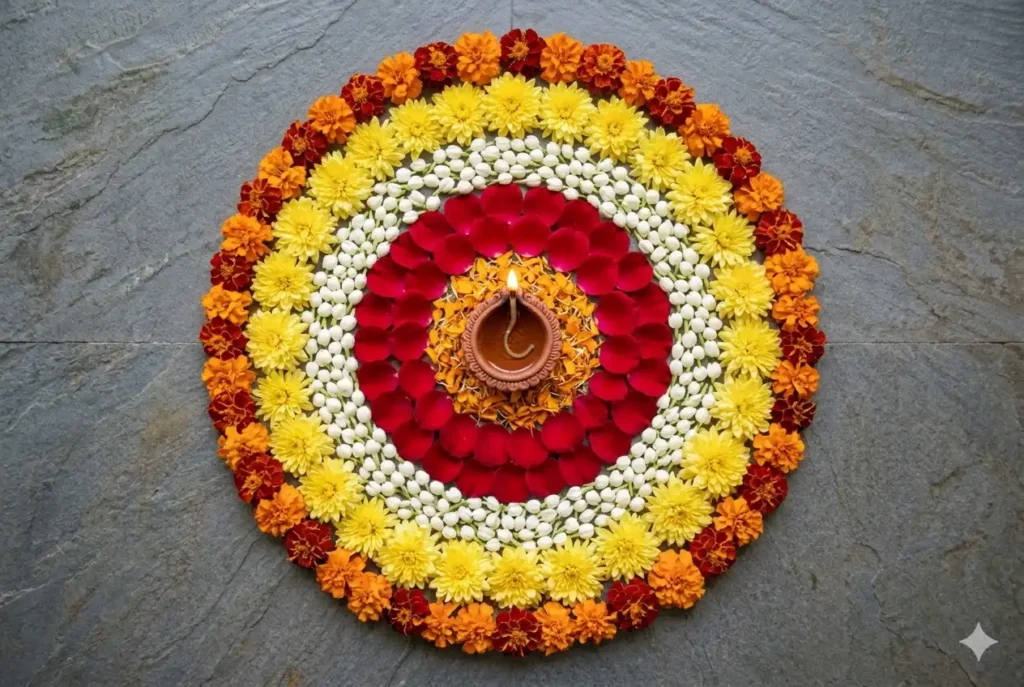
Today’s rangoli artists are thinking beyond powder. Here are some fresh approaches:
Flower Petal Rangoli
Entirely biodegradable and absolutely stunning.
Turmeric and Vermillion
Natural, food-safe pigments.
Sand Art Rangoli
Colored sand gives depth and texture.
Chalk Rangoli
Easy to wash off, great for temporary décor.
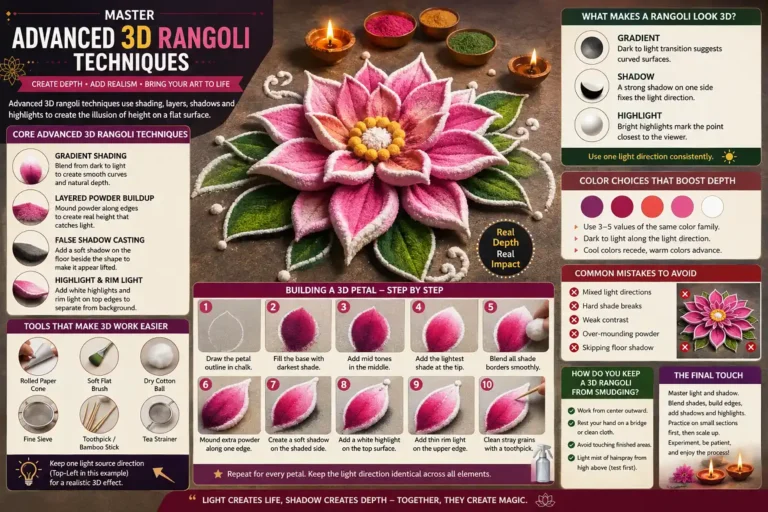
3D Rangoli
Using materials like clay or foam for a sculptural effect. See examples in the 3D Rangoli category for modern dimensional designs.
According to Architectural Digest’s guide to Indian festival décor, eco-conscious rangoli using natural materials is one of the fastest growing décor trends during Indian festivals.
Common Mistakes to Avoid
Even simple designs go wrong when these pitfalls aren’t avoided:
Always outline with chalk first.
Stick to 3–4 maximum for a clean look.
Use a center dot as your anchor point.
Smooth, clean floors give the best results.
Take your time filling each section fully.
FAQ Section
What is the easiest rangoli design for absolute beginners?
The five-dot flower and concentric circles are the easiest rangoli design simple enough for anyone. Both require no special tools and can be completed in under 10 minutes using basic colors.
Which materials are used for a rangoli design simple?
Common materials include colored rangoli powder, rice flour, chalk, flower petals, and colored sand. For beginners, chalk powder on a dark floor is the most forgiving option.
How long does it take to make a rangoli design simple?
Most rangoli design simple take between 10 and 30 minutes. Complex festival designs may take 1–2 hours, but a basic dot-flower pattern can be done in under 15 minutes.
Can children make rangoli design simple?
Absolutely! Butterfly, star, and circle patterns are perfect for kids. Use chalk or flower petals instead of loose powder to keep it mess-free and fun.
What is the best occasion to make a rangoli design simple?
Rangoli suits any occasion — Diwali, New Year, weddings, house warmings, and even daily puja. A rangoli design simple is appropriate every day, not just festivals.
Are there digital tools to practice rangoli design?
Yes! Several apps allow you to practice rangoli on your phone before drawing on the floor. Search “rangoli design app” on your app store. Google Arts & Culture also features rangoli art collections for inspiration.
Start Simple, Create Something Beautiful
Creating a beautiful rangoli design simple enough for anyone is fully within your reach. Whether it’s a five-dot flower for a quiet Tuesday morning or a vibrant lotus mandala for Diwali night, rangoli connects you to a centuries-old tradition of beauty, welcome, and joy.
Start with the easiest patterns in this guide, practice once or twice, and you’ll be amazed how quickly your skill grows. The most important ingredient isn’t artistic talent it’s the joy you bring to the process.
Ready to start your rangoli journey? Explore our full collection of 25 simple rangoli ideas for beginners and pick your first design today. Share your creation with family, light a diya alongside it, and let your floor tell a colorful story.