Stunning Rangoli Design for Diwali: 30 Beautiful Ideas to Light Up Your Home
Diwali without a rangoli is like a lamp without its flame. The moment you lay down those first vibrant colors on your doorstep, you’re not just decorating — you’re inviting prosperity, joy, and divine blessings into your home.
Whether you’re a first-timer holding a cone for the very first time or a seasoned artist ready to create a masterpiece, rangoli design for Diwali is a tradition worth mastering and celebrating with full heart.
In this guide, you’ll discover 30+ stunning rangoli designs for Diwali — from beginner-friendly patterns to intricate floral and geometric styles — complete with pro tips, material guides, and step-by-step advice to make your festival celebration truly shine.
Why Rangoli Is the Heart of Diwali Celebrations
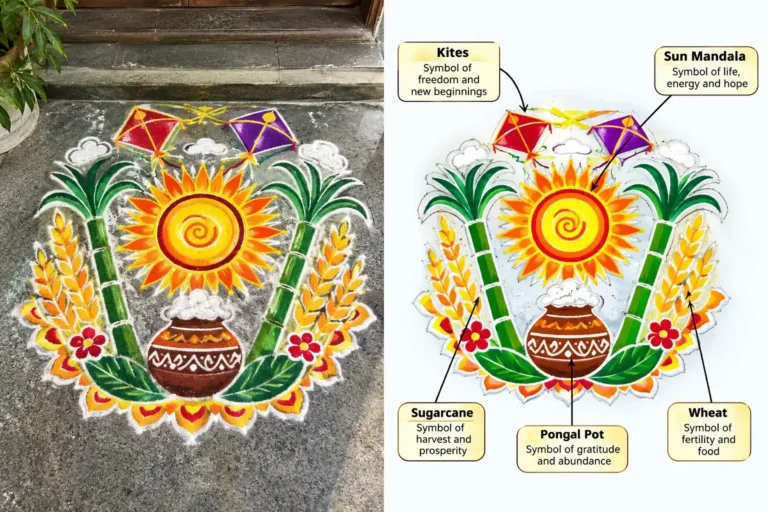
Rangoli is more than decoration. It’s a sacred art form that dates back thousands of years in Indian culture. During Diwali — the Festival of Lights — rangoli design for Diwali holds deep spiritual significance.
It is believed to welcome Goddess Lakshmi into the home, bringing wealth, happiness, and good fortune.
According to Wikipedia’s entry on Rangoli, this traditional art form is practiced across India under different regional names — Kolam in South India, Alpana in Bengal, and Aripana in Bihar — but the spirit remains beautifully universal.
The Cultural Significance of Diwali Rangoli
Welcoming deities
Rangoli at the entrance guides Goddess Lakshmi inside.
Symbol of prosperity
Bright, unbroken patterns signal abundance and good luck.
Community bonding
Families gather to create rangoli together, strengthening bonds.
Artistic expression
Every rangoli design for Diwali tells a unique visual story.
Types of Rangoli Design for Diwali
There’s no one-size-fits-all approach to Diwali rangoli. Here’s a breakdown of the most popular types:
Floral Rangoli Designs
Floral patterns are timeless. Lotus flowers, marigolds, and roses are especially popular for rangoli design for Diwali because they represent purity and divine beauty. You can draw petals freehand or use stencils for clean, uniform designs.
Geometric Rangoli Designs
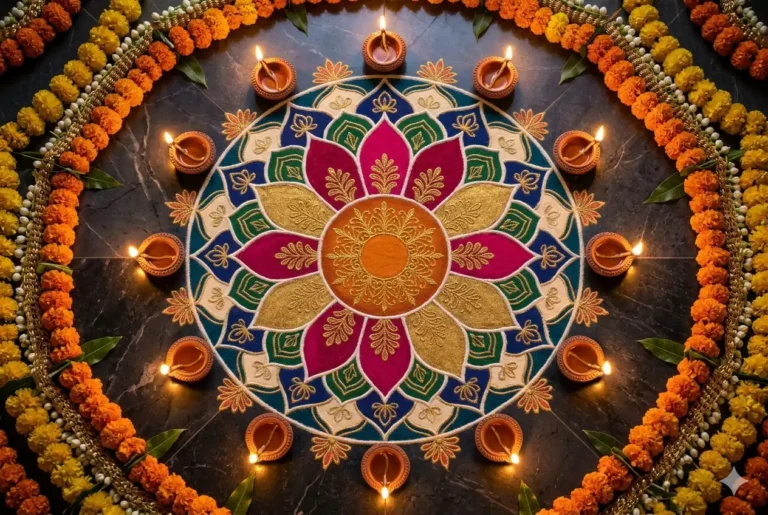
Geometric styles feature triangles, hexagons, stars, and mandala-like circular patterns. These are visually striking and work beautifully when executed with precision using chalk or dry colors.
Diya (Lamp) Rangoli Designs
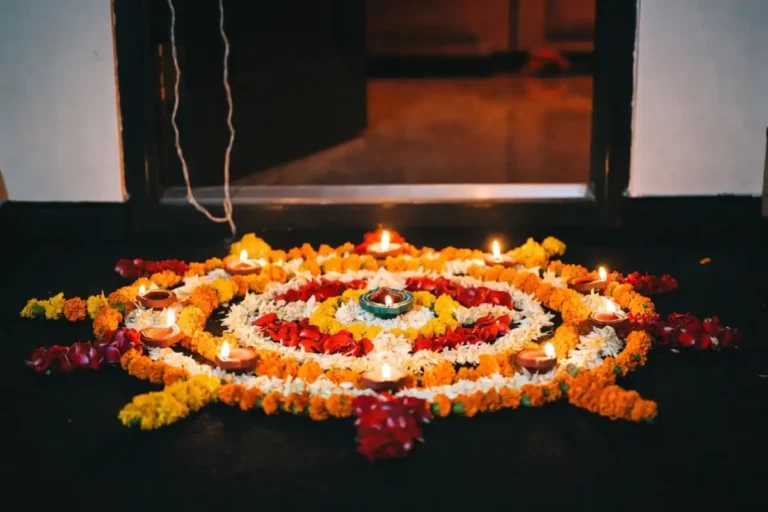
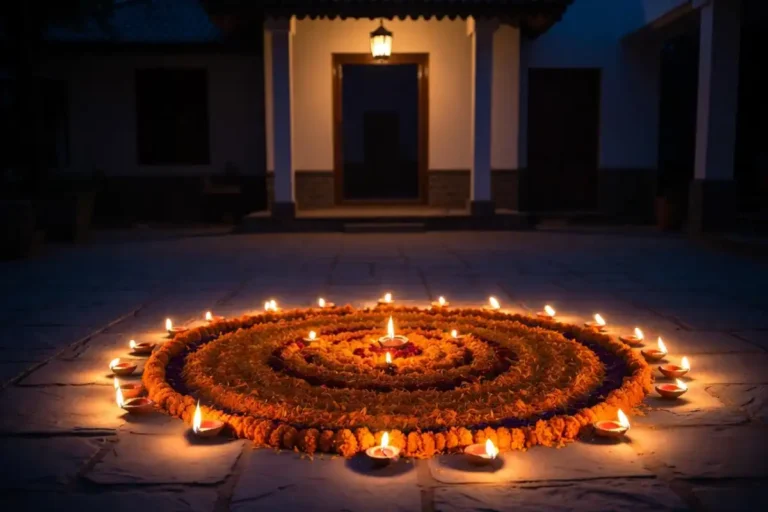
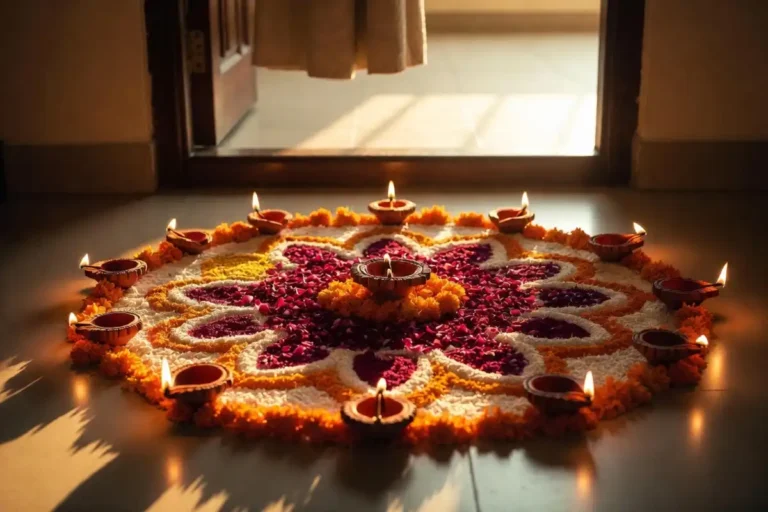
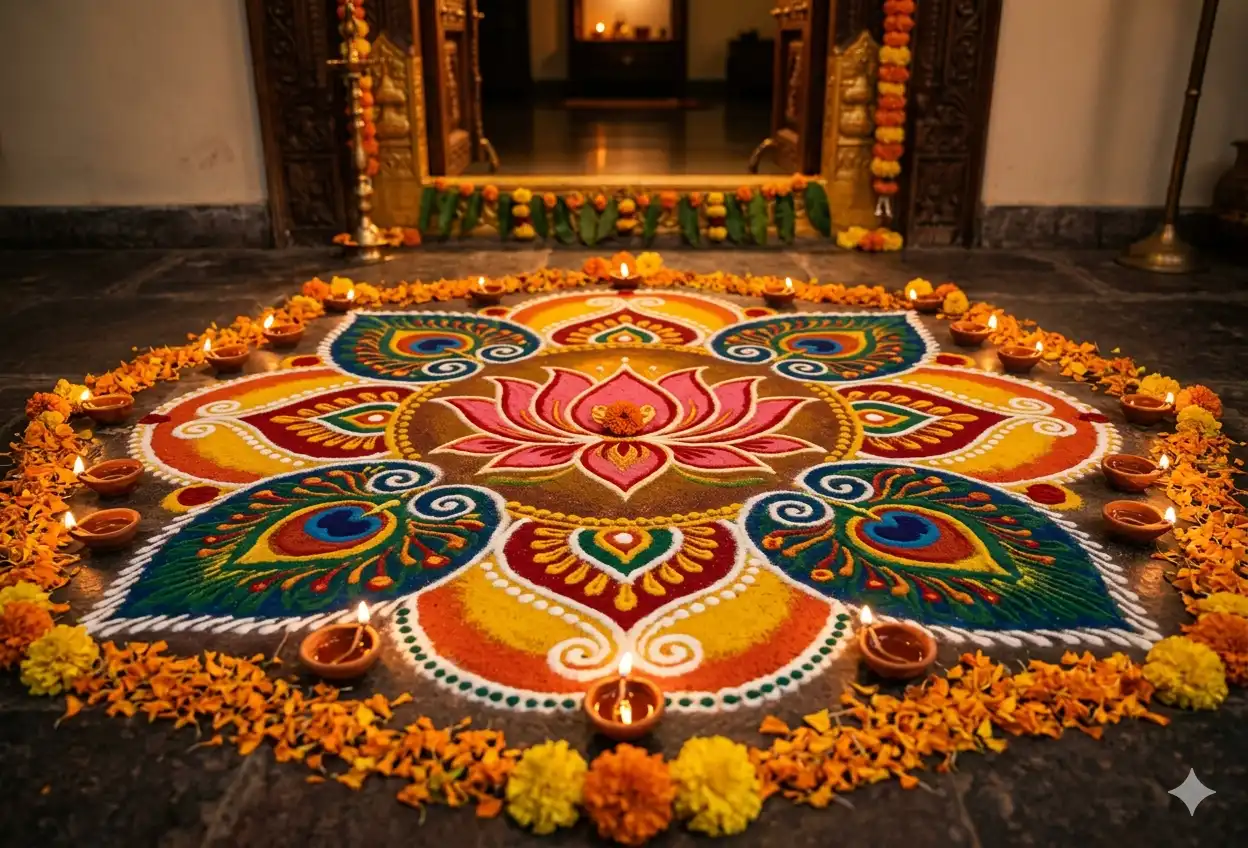
Incorporate actual clay diyas within your rangoli design for Diwali to add a dramatic three-dimensional effect. The dancing flame transforms any simple pattern into a breathtaking centerpiece.
Peacock Rangoli Designs
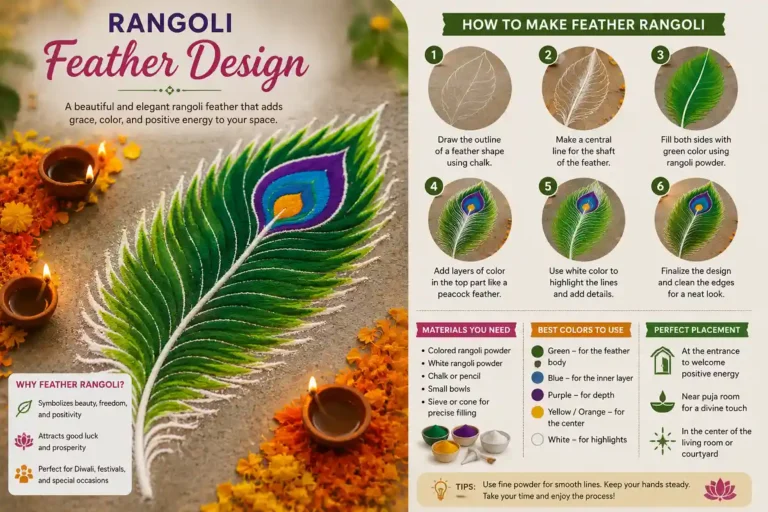
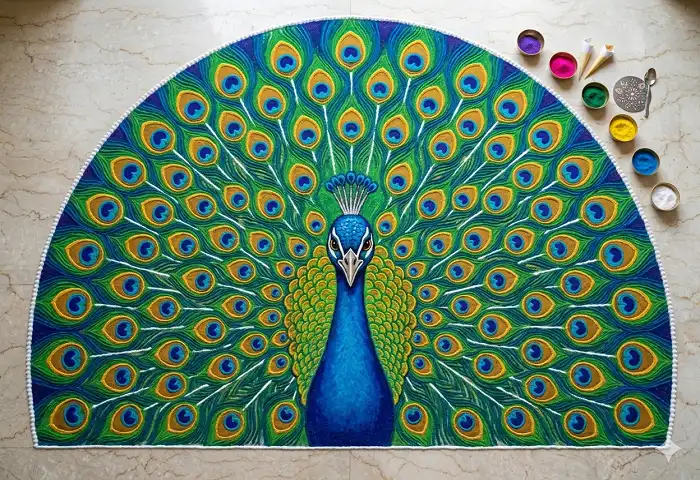
The peacock — India’s national bird — is an iconic motif in festival art. Peacock rangoli design for Diwali features flowing feathers rendered in vibrant blues, greens, and golds.
Goddess Lakshmi Rangoli Designs
Dedicated entirely to Diwali’s presiding deity, these designs often feature Lakshmi’s feet (called Lakshmi Padam) at the entrance, symbolically guiding her steps indoors.
Easy Rangoli Design for Diwali: Perfect for Beginners
Not everyone is a rangoli artist — and that’s perfectly okay. Beginners can create stunning rangoli design for Diwali with a little preparation and the right approach.
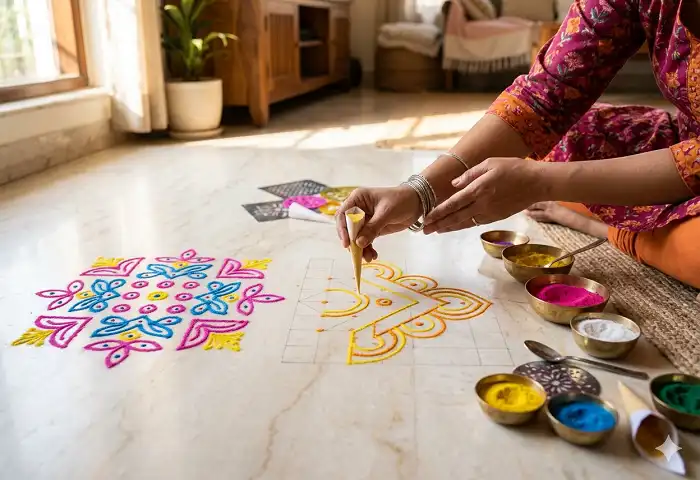
Step-by-Step: Simple Dot Grid Rangoli
One of the easiest techniques is the dot grid method (also called pulli kolam in South India):
Draw a dot grid
Start with a 7×7 or 9×9 grid of evenly spaced dots.
Connect the dots
Use chalk or rangoli powder to connect dots in curved or straight lines.
Fill in the shapes
Add vibrant colors inside each formed shape.
Add a border
Frame the design with a contrasting color border.
Place a diya
Set a lit diya at the center for a magical finishing touch.
Tips for First-Timers
Use chalk first to sketch the outline before adding color.
Invest in a rangoli cone for finer line control.
Choose 3–4 colors max to keep it clean and vibrant.
Work indoors if weather is unpredictable.
Practice on paper before committing to the floor.
Materials Needed for a Perfect Diwali Rangoli
Getting your supplies right makes all the difference. Here’s what you’ll need:
Main coloring material, vibrant and easy to blend
Outlining and sketching the design
Organic, aromatic designs with natural texture
Traditional base, especially for Lakshmi Padam
Decorative lighting element within the rangoli
Precise powder application for fine details
Perfect uniform shapes for beginners
For indoor, long-lasting rangoli designs
30 Stunning Rangoli Design for Diwali Ideas
Here’s a curated list of the most popular and beautiful rangoli design for Diwali ideas to inspire your creation this festival season:
Simple & Quick
UNDER 30 MINUTES- Single lotus with 8 petals — Quick, symbolic, and gorgeous.
- Star mandala — Use a compass or stencil to get perfect circles.
- Swastik with floral border — Traditional auspicious symbol.
- 5-dot kolam — Perfect dot-grid pattern for total beginners.
- Heart-shaped diya holder — Romantic and festival-ready.
Medium Complexity
30–60 MINUTES- Peacock feather fan — A sweeping, semi-circular design with bold blues.
- Floral mandala — Layered concentric rings of petals.
- Lakshmi Padam with lotus center — Traditional and deeply auspicious.
- Hexagonal geometric star — Striking symmetry with contrasting fills.
- Diya cluster with petal border — Diyas arranged in a circle surrounded by petals.
Advanced Designs
60+ MINUTES- Full peacock with spread feathers — The undisputed showstopper.
- Radha-Krishna silhouette — Intricate freehand work.
- Ganesha face rangoli — Ideal for pooja rooms and entrances.
- Multi-layered mandala — Inspired by temple architecture.
- 3D optical illusion rangoli — Mind-bending geometric depth effects.
Color Combinations That Make Your Diwali Rangoli Pop
Color choice can make or break a rangoli design for Diwali. Here are the most effective combinations:
Orange + Yellow + Red
Traditional Diwali palette, warm and festive.
Pink + Purple + White
Floral elegance with modern flair.
Green + Yellow + Blue
Perfect for peacock motifs.
Gold + Red + White
Luxurious and deeply traditional.
Turquoise + Orange + Pink
Contemporary and eye-catching.
Always use white or off-white as your base outline. It makes every color pop dramatically against any floor surface.
Rangoli Design for Diwali Using Flowers
Flower rangoli is a beautiful, aromatic alternative to dry powder. Fresh marigold petals are especially popular during Diwali because of their rich saffron-gold color.
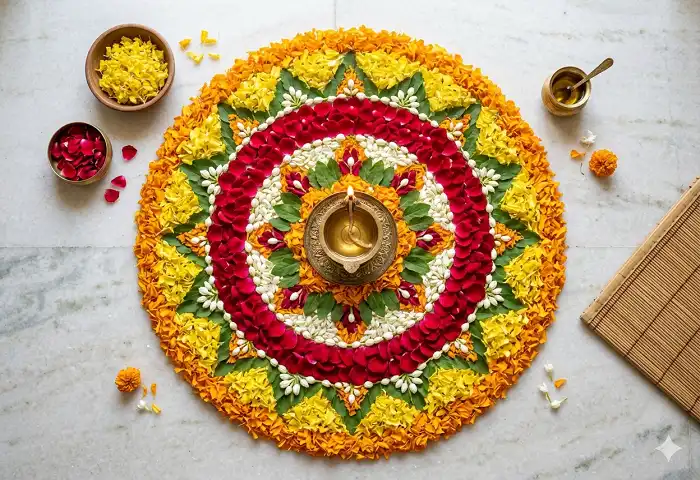
Separate petals from stems.
Sketch your design outline on the floor first.
Fill shapes section by section using different petal colors.
Add rose petals for red/pink areas and marigold for yellow/orange zones.
Use tulsi (basil) leaves for natural green accents.
Flower rangoli is eco-friendly, fragrant, and biodegradable — making it an excellent choice for environmentally conscious celebrations.
Rangoli Borders and Side Designs for Diwali
A well-crafted border elevates even the simplest rangoli design for Diwali into something extraordinary. Border designs frame your creation and add visual polish.
Popular Border Styles
Dotted wave border
Simple, classic, endlessly elegant.
Leaf and vine border
Natural and flowing.
Geometric chain border
Modern and structured.
Petal loop border
Soft, feminine, and festive.
Zigzag color-block border
Bold and graphic.
Digital and Stencil Rangoli: Modern Approaches
Technology has transformed how we approach rangoli design for Diwali. Today, you can:
Use rangoli stencils
Reusable plastic or cardboard cutouts for perfect shapes every time.
Print rangoli guides
Download free PDF templates from design communities.
Try digital rangoli apps
Plan your design on screen before committing to the floor.
Use LED lights
Outline your rangoli with fairy lights for a stunning night effect.
According to Google Arts & Culture, traditional art forms like rangoli are now being preserved and celebrated digitally, bridging heritage with the modern world.
FAQ: Rangoli Design for Diwali
What is the best rangoli design for Diwali for beginners? +
The best rangoli design for Diwali for beginners is the simple dot grid or kolam pattern. Starting with a 5×5 or 7×7 grid, beginners can connect dots to form flowers, stars, and geometric shapes without needing any freehand skills. Stencils are also an excellent beginner tool.
Which materials are best for Diwali rangoli? +
Dry rangoli powder is the most popular material for rangoli design for Diwali because it’s vibrant, affordable, and available in dozens of colors. Flower petals are a beautiful eco-friendly alternative. For longer-lasting designs, use acrylic colors or fabric paint on a canvas base.
How long does it take to make a Diwali rangoli? +
Depending on complexity, a rangoli design for Diwali can take anywhere from 20 minutes (simple dot patterns) to several hours (intricate peacock or deity designs). Beginners should budget 45–60 minutes for their first attempt.
Can rangoli be made indoors for Diwali? +
Absolutely. Rangoli design for Diwali can be made indoors on clean floors, cardboard sheets, or even canvas boards. Indoor rangoli lasts longer since it’s protected from wind and foot traffic.
What colors are traditionally used in Diwali rangoli? +
Traditional rangoli design for Diwali uses warm, auspicious colors: saffron orange, turmeric yellow, kumkum red, white (rice flour), and green (mango leaves or grass). Modern designs freely incorporate pink, purple, blue, and gold for added vibrancy.
How do I make my rangoli last longer? +
To preserve your rangoli design for Diwali, lightly spray hairspray or a fixative over the finished design. Place it in a low-traffic area, and avoid making it near doorways where it might be disturbed. Indoor rangoli on cardboard can last for weeks.
Celebrate Diwali With Color, Light & Art
Rangoli design for Diwali is one of the most beautiful ways to honor tradition, express creativity, and invite prosperity into your home during the Festival of Lights.
Whether you choose a simple five-dot kolam, a marigold petal mandala, or an elaborate peacock masterpiece — every rangoli you create carries the warmth of celebration and the spirit of Diwali.
This Diwali, don’t just decorate your doorstep — tell a story with color, light, and art.
✨ Ready to start creating? Browse our full library of Best Rangoli Designs to Brighten Your Celebrations and find the perfect pattern that speaks to your style and skill level. Pin your favorites, gather your materials, and make this Diwali your most radiant one yet !
A personal blog dedicated to Indian rangoli art. Tutorials, design ideas, and inspiration for every festival and every floor.