Sankranti Rangoli Patterns: Traditional Designs, Meaning, and How to Draw Them
Sankranti rangoli patterns turn a plain doorstep into a bright welcome for the harvest festival. I draw these every January, and the designs carry real meaning. This guide covers the motifs, colors, layouts, and steps you need to make one at home.
What Are Sankranti Rangoli Patterns?
Sankranti rangoli patterns are decorative floor drawings created during Makar Sankranti, the Hindu harvest festival held every mid-January. They mark the sun’s movement into Capricorn, called Makara in Sanskrit. Families draw them at the entrance to invite prosperity and good fortune.
The festival falls on January 14 or 15 each year. In 2026, Makar Sankranti is on January 14. The date stays fixed to the solar calendar, which is why it rarely shifts. This solar link shapes the whole design language. The sun sits at the center of most patterns.
These floor drawings go by different names across India. In Tamil Nadu the harvest festival is Pongal, and the designs are called kolam. In Andhra Pradesh and Karnataka, people say muggu or rangoli. In Maharashtra and Gujarat, the word rangoli is common. The motifs differ by region, but the harvest spirit stays the same.
What Symbols Appear in Sankranti Rangoli Patterns?
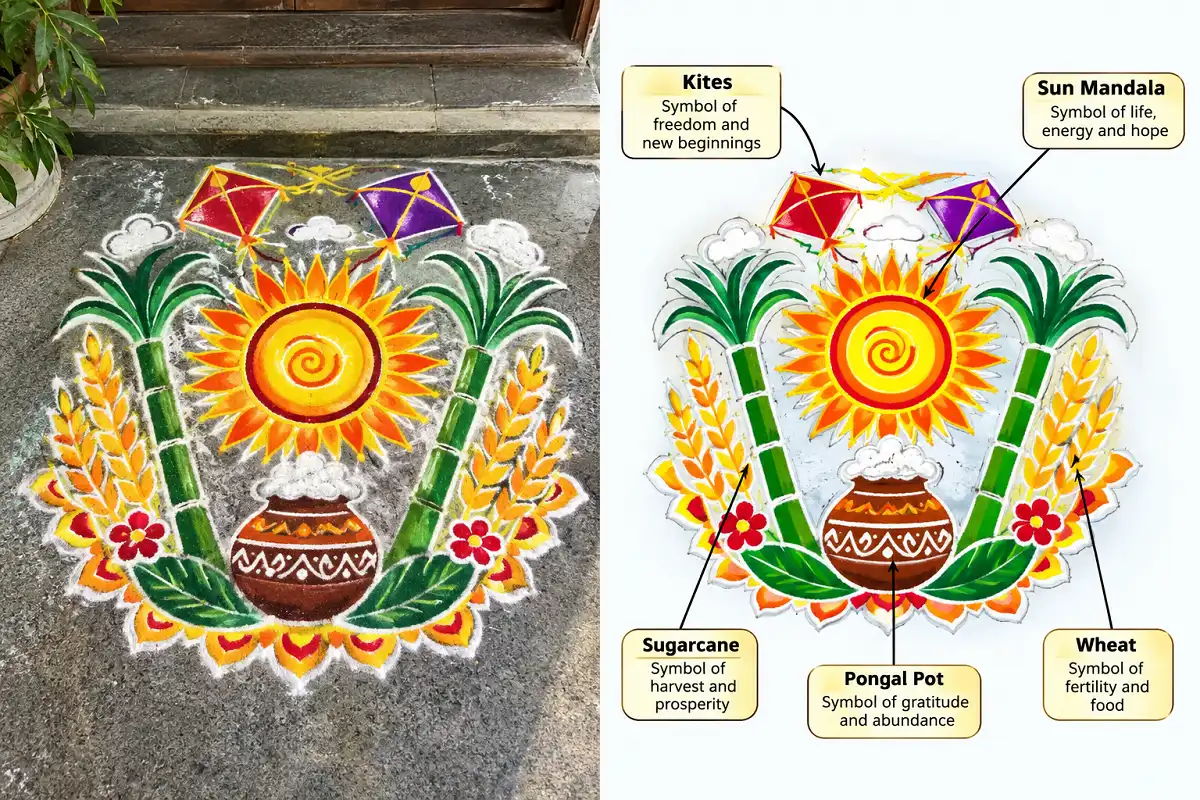
The main symbols are the sun, sugarcane, earthen pots, kites, and harvest grains. Each one ties directly to the festival’s meaning. The sun represents the season’s turn toward longer days. Sugarcane stands for a sweet, plentiful crop.
The Sun
Marks the season’s turn toward longer, warmer days.
Sugarcane
Stands for a sweet and plentiful harvest.
Pongal Pot
Boiling rice and milk spilling over signals abundance.
Kites
Celebrate the big kite-flying day in Gujarat and Maharashtra.
Harvest Grains
Rice sheaves and wheat stalks give thanks for the crop.
The earthen pot, or pongal pot, holds boiling rice and milk that spills over as a sign of abundance. Kites appear because Sankranti is a major kite-flying day in Gujarat and Maharashtra. Bullocks and cattle also feature, since farmers honor their animals during this time.
Geometric shapes anchor the layout. Circles, lotus petals, and dotted grids form the base structure. You will see the swastika and diya lamps woven in for auspicious energy. These traditional symbols carry forward the same devotional roots seen in other Indian symbols used in rangoli across festivals. The result reads as both art and prayer.
Grain motifs deserve attention too. Rice sheaves and wheat stalks border many designs. They speak to gratitude for the harvest that Sankranti celebrates. Placing them along the edges frames the central sun beautifully. In farming homes, this grain border is often the first shape drawn, out of respect for the crop.
Which Colors Suit Sankranti Rangoli Patterns?
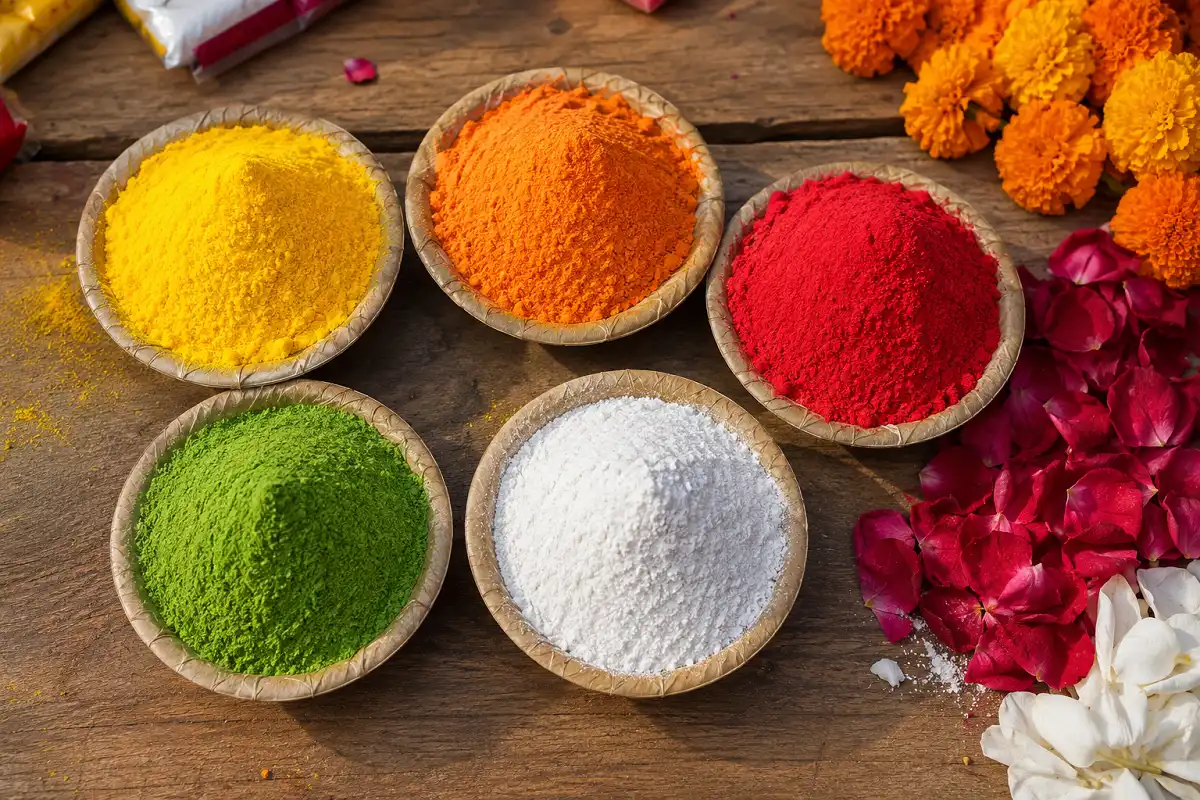
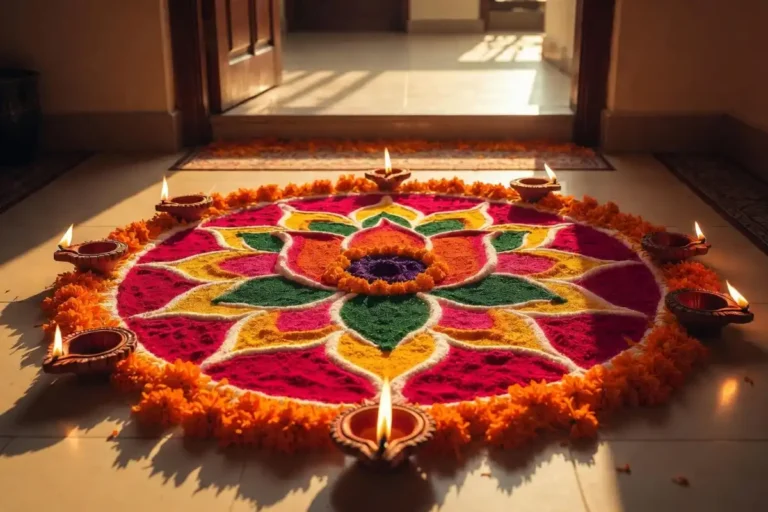
Warm harvest colors suit Sankranti rangoli patterns best. Think yellow, orange, red, green, and white. These shades mirror ripe crops, marigold flowers, and the winter sun. They also photograph well against stone and tile floors.
Yellow and orange dominate because they echo turmeric and the sun. Green brings in the freshness of new sugarcane and paddy fields. Red adds festive energy and marks auspicious borders. White rice flour outlines every shape and keeps the design crisp.
Natural colors matter for tradition. Turmeric gives yellow, and vermilion gives red. Crushed dry leaves supply green, and rice flour stays white. Many families still prefer these over synthetic powders. If you want brighter tones, food-grade colored powders work well and last through the day.
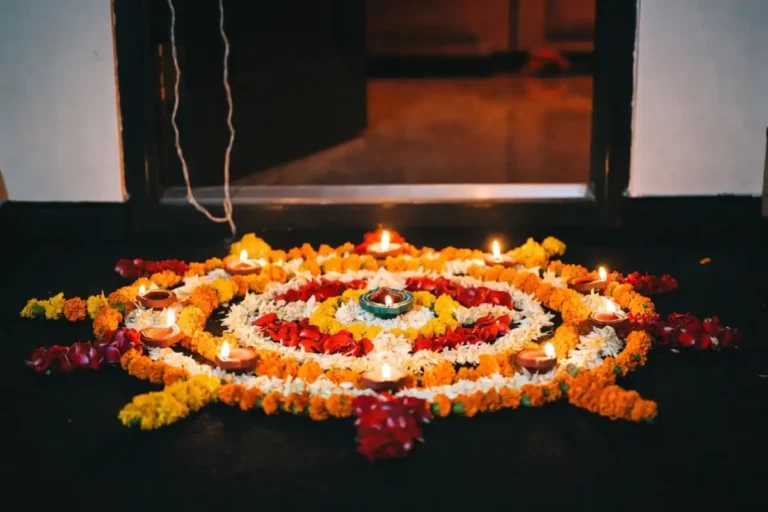
Flower petals add a third dimension. Marigold, rose, and chrysanthemum petals cover large areas fast. A petal-based border around a powder center gives your Sankranti rangoli patterns a rich, layered look. This mixed approach is popular for entrance designs.
What Are Popular Sankranti Rangoli Patterns to Try?
Popular Sankranti rangoli patterns include the sun mandala, the pongal pot design, the kite border, and the sugarcane frame. Each fits a different skill level and space. Beginners can start simple, and experts can layer motifs into a large centerpiece.
Sun Mandala
A central circle with radiating rays filled in yellow and orange. Captures the festival’s solar meaning in one clean shape, suited to doorsteps and courtyards alike.
Pongal Pot Design
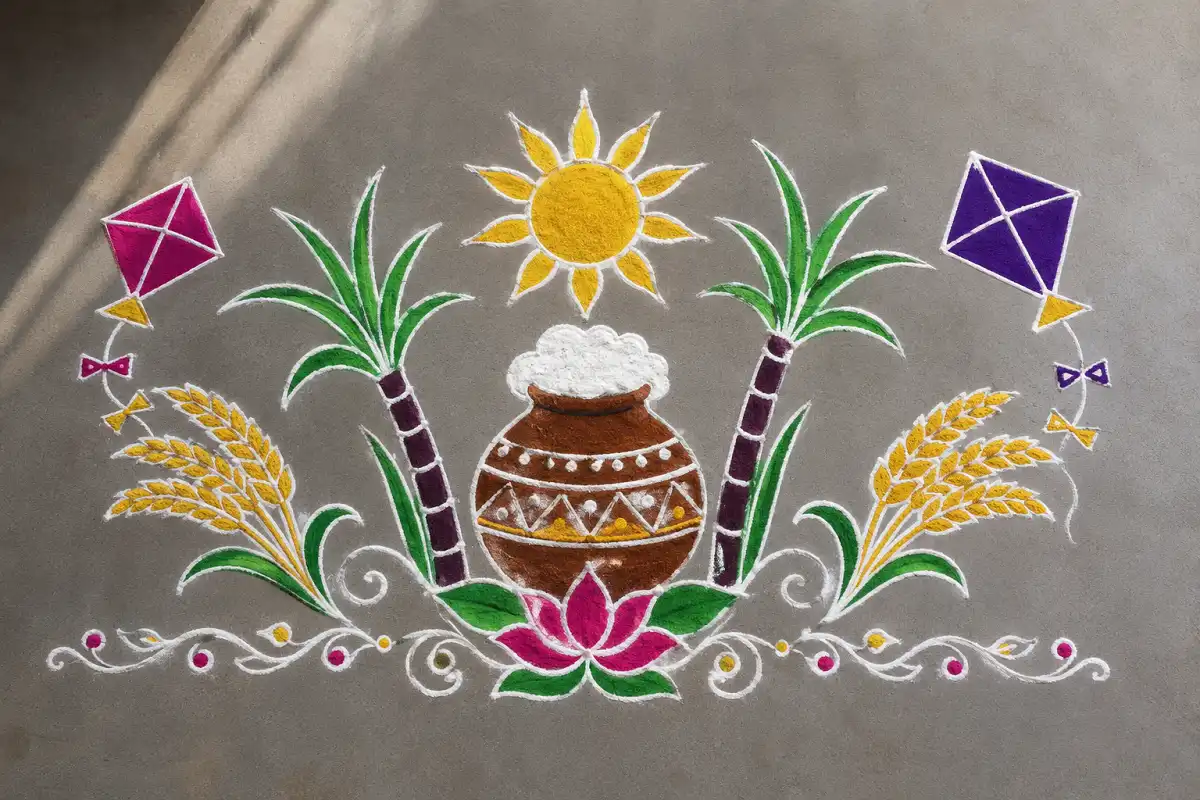
An earthen pot with rice boiling over, flanked by sugarcane stalks. Common in South Indian homes, it tells the whole Pongal story in a single drawing.
Kite Pattern
Colorful diamond kites with flowing tails scattered across the floor. Playful and modern, and a favorite for kids to help draw.
Peacock & Lotus
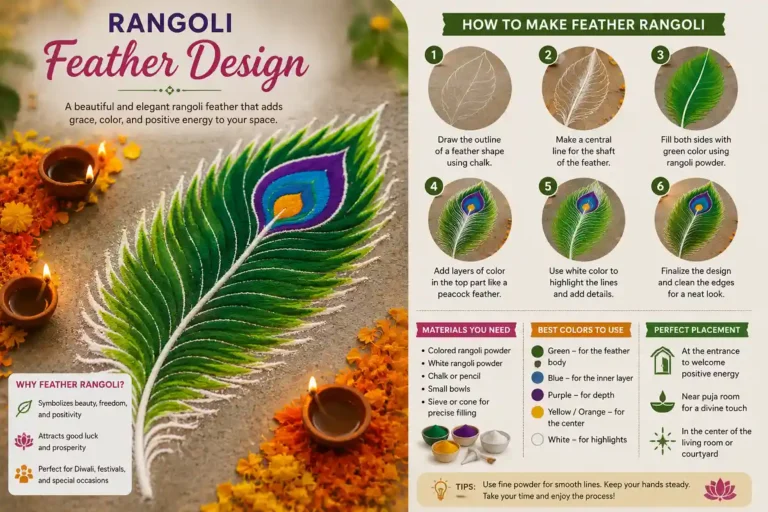
A peacock with an open tail pairs beautifully with harvest borders. Explore more lotus rangoli design ideas for a purer, festive mood.
How Do You Draw Sankranti Rangoli Patterns Step by Step?
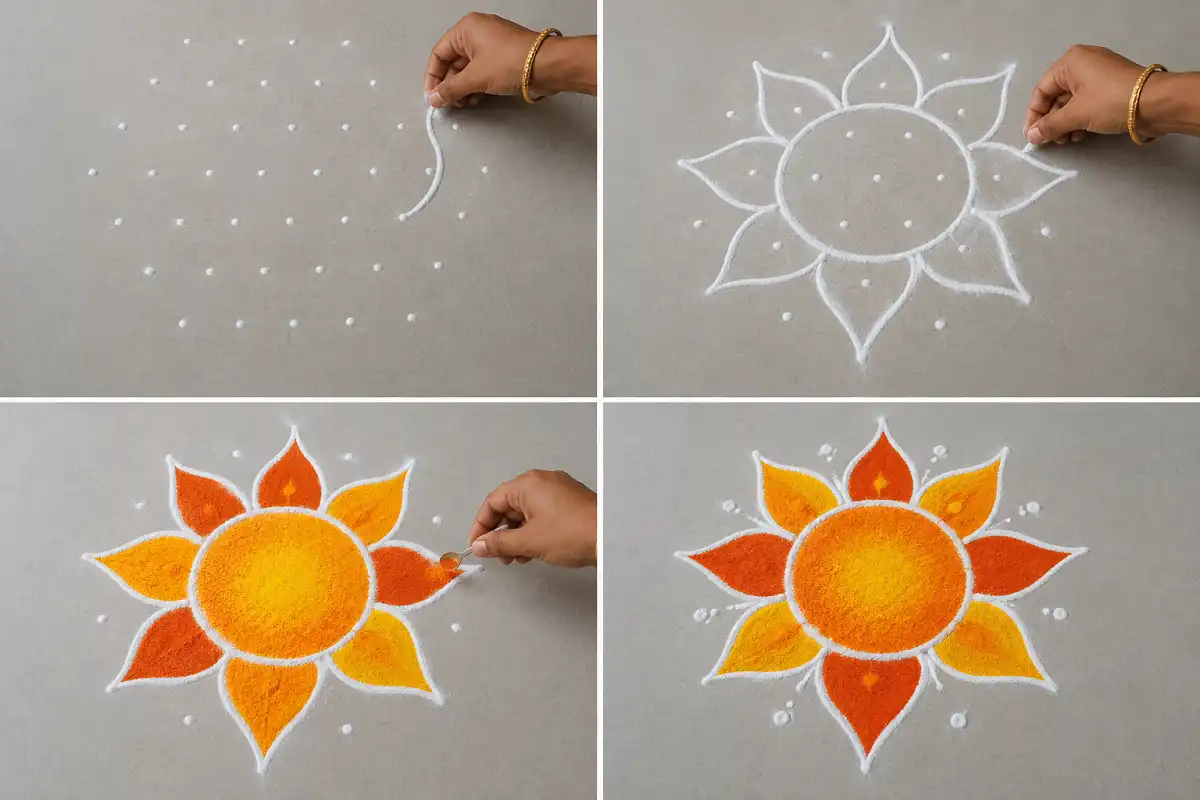
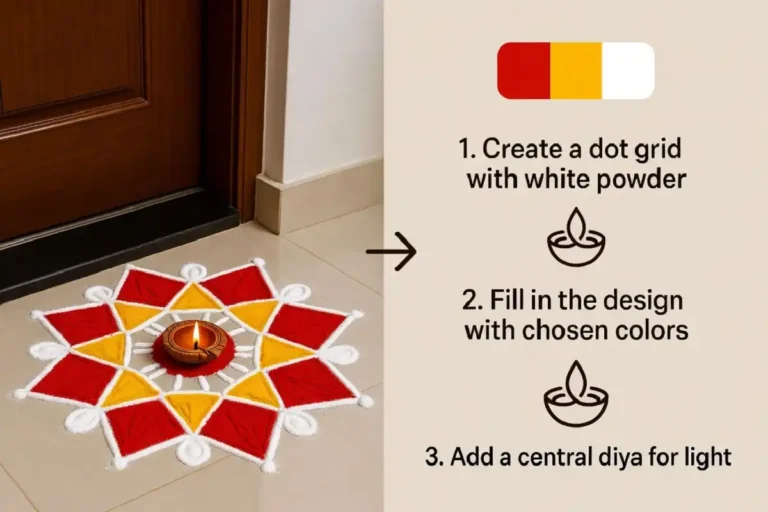
Start with a clean, dry floor and a dot grid, then connect the dots into your chosen motif. Working from the center outward keeps the design balanced. Here is the process I follow every year.
Prepare the Floor
Sweep and wipe the area. A smooth surface holds powder better. Sprinkle a light water mist if the floor is very dusty, and let it dry fully before you begin.
Plan Your Dot Grid
Use a pinch of rice flour to place evenly spaced dots. A grid gives structure and stops the design from drifting. For a sun mandala, mark a center point and space dots in a circle around it.
Draw the Main Outline
Connect dots to form the central shape, whether a sun, pot, or lotus. Keep lines steady by moving your whole arm, not just your fingers, for an easier fill later.
Add the Motifs
Place sugarcane, kites, or grain borders around the center. Balance each side so the pattern feels symmetrical — symmetry is the heart of a good festive floor design.
Fill the Colors
Work from inside to outside so you never smudge finished areas. Pour powder between thumb and finger for thin, controlled lines. Layer darker shades first, then highlights.
Add Finishing Touches
Outline shapes in white rice flour for contrast. Press in flower petals or place small diyas at the corners — these details lift the whole design.
What Materials Do You Need for Sankranti Rangoli Patterns?
You need rice flour, colored rangoli powder, flower petals, and a few simple tools. Most items are cheap and easy to find before the festival. A basic kit lasts several seasons if stored dry.
Rice Flour
The traditional base for outlines — it also feeds ants and small creatures, part of the ritual meaning.
Colored Powder
Sold in packets at any festival market. Choose warm harvest shades for authentic results.
Rangoli Pen or Cone
Gives fine, controlled lines. A small funnel or squeeze bottle also helps control powder flow.
Stencils
Speed up repeated shapes like kites or petals, though freehand work looks more personal.
Fresh Petals
Marigold, rose, and chrysanthemum — pluck them the morning of the festival and keep shaded until use.
Storage Jars
Sealed jars or zip bags, labeled by color, keep your kit dry and ready year after year.
Tools help with precision. I keep a set of graded funnels for thick and thin lines. Storage keeps your kit ready year after year — label each color so you find the right shade fast on festival morning, and keep rice flour dry since damp flour clumps and clogs your cone.
For petal designs, gather fresh marigold and rose the morning of the festival. Marigold holds its color longest, so use it for the outer frame. Rose and chrysanthemum fill the softer inner rings.
If you plan a large courtyard piece, a good stencil set and a few packets of quality powder are worth buying. These are the only affiliate-type purchases I recommend, and only when your design truly needs them. For everyday practice, homemade rice flour and garden petals work perfectly. Save the store-bought kit for your biggest festival design.
How Do Sankranti Rangoli Patterns Vary by Region?
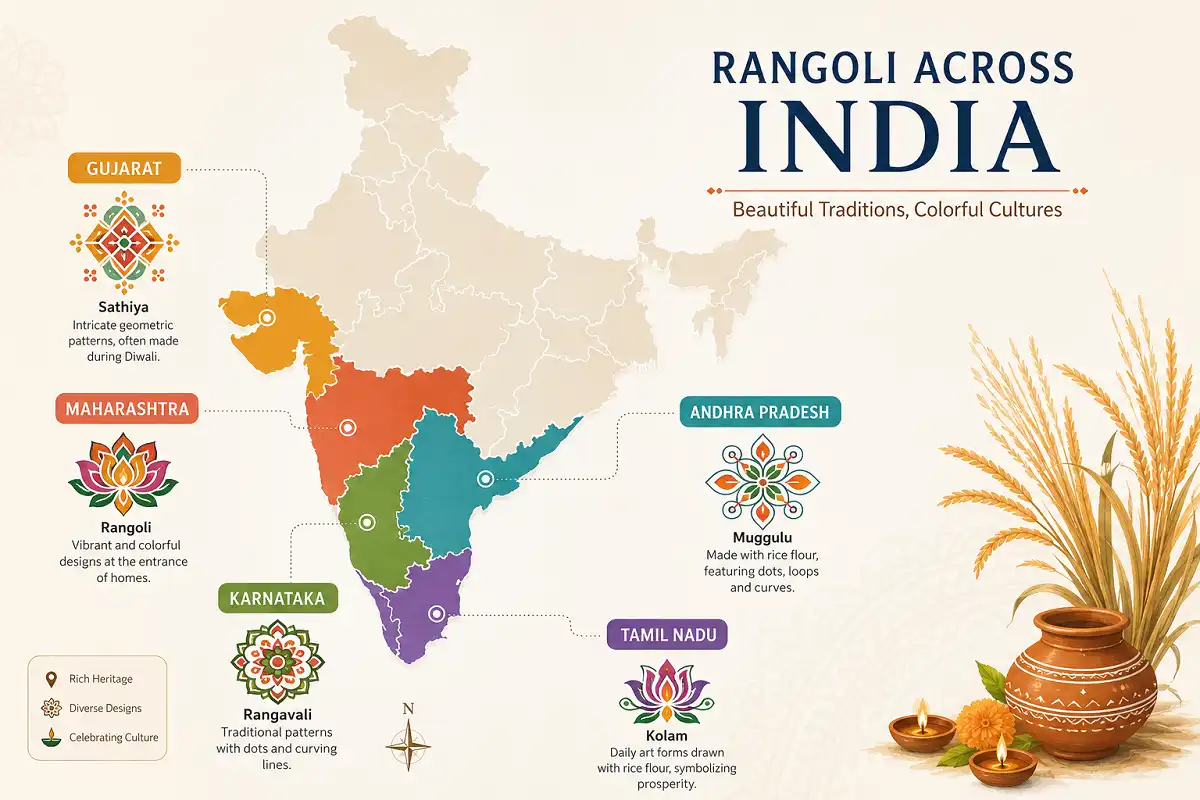
Regional Sankranti rangoli patterns differ in name, style, and motif across India. The core harvest theme unites them, but local custom shapes each look. Knowing these styles helps you pick an authentic design.
🌴 Tamil Nadu
Pongal kolam uses white rice flour lines in geometric loops, with sugarcane and pongal pots featured heavily.
🔴 Andhra Pradesh
Muggu often uses dot grids called chukkala muggu, filled with bold, precise, mathematical color patterns.
🐄 Karnataka
Large courtyard muggu designs feature cow and sun motifs, celebrating both harvest and cattle.
🎉 Maharashtra
Bright color rangoli with kite and sugarcane themes mark Makar Sankranti in vivid style.
🪁 Gujarat
Designs center on kites, matching the state’s world-famous International Kite Festival.
🔥 Punjab
Marked as Lohri and Maghi, with floor art leaning toward simple auspicious symbols and bonfire themes.
🍛 Assam
Magh Bihu pairs floor art with feasting, keeping the harvest spirit alive through food and design.
Dot-based grids link many of these styles together. The chukkala muggu of Andhra and the pulli kolam of Tamil Nadu both start from careful dot placement. If you enjoy that structured approach, these dot rangoli patterns for festivals give you a strong foundation for any regional design. Mastering the grid unlocks every motif that follows. This shared method is why the designs stay so rich across the map.
How Can You Make Sankranti Rangoli Patterns Last Longer?
Seal the floor, work indoors when possible, and mist lightly to keep Sankranti rangoli patterns fresh through the day. Powder designs are fragile by nature. A few small steps protect your effort.
- Choose a low-traffic spot near the entrance but out of the direct walking path — this alone prevents most smudging.
- If wind is a problem, a sheltered veranda holds the design better than an open porch.
- A light spray of water sets the powder gently — do not soak it, or the colors will run.
- Some artists mix a drop of glue into water for outdoor pieces that need to survive the day.
- Flower petal designs naturally last longer than loose powder.
- For a reusable option, draw on a removable board or dark cloth you can lift and store between festivals.
- Draw after the morning dew dries, usually about an hour past sunrise.
- If rain threatens, keep your design under a covered entrance — and always take a quick photo to protect the memory.
Sankranti Rangoli Patterns to Welcome the Harvest Festival
Sankranti rangoli patterns carry the whole spirit of the harvest festival in color and line. The sun, the pot, the sugarcane, and the kite each tell part of the story. Start simple, respect the symbols, and let your doorstep welcome the season.
With a dot grid, a few warm colors, and steady hands, anyone can make a design worth celebrating. To learn more about the festival’s origins, the Makar Sankranti overview on Wikipedia is a solid reference.
FAQs
Are Sankranti rangoli patterns the same as Pongal kolam?
They share the same harvest roots but differ by region. Pongal kolam is the Tamil Nadu version, drawn mainly in white rice flour with geometric loops. Sankranti designs across other states use more color and motifs like kites. The festival and meaning are the same.
Can beginners make Sankranti rangoli patterns easily?
Yes. Start with a simple sun mandala or a single kite motif. Use a dot grid for structure and stick to three colors. Small designs at the doorstep build your confidence fast. You can move to larger courtyard pieces next season.
What is the best time to draw Sankranti rangoli?
Early morning on the festival day is ideal. The floor is clean, the light is soft, and the design greets visitors all day. Many families draw before sunrise as part of the ritual. This timing also lets petals stay fresh.