Dhanteras Rangoli Designs for a Prosperous Diwali
Dhanteras rangoli designs mark the start of Diwali with symbols of wealth, health, and prosperity.
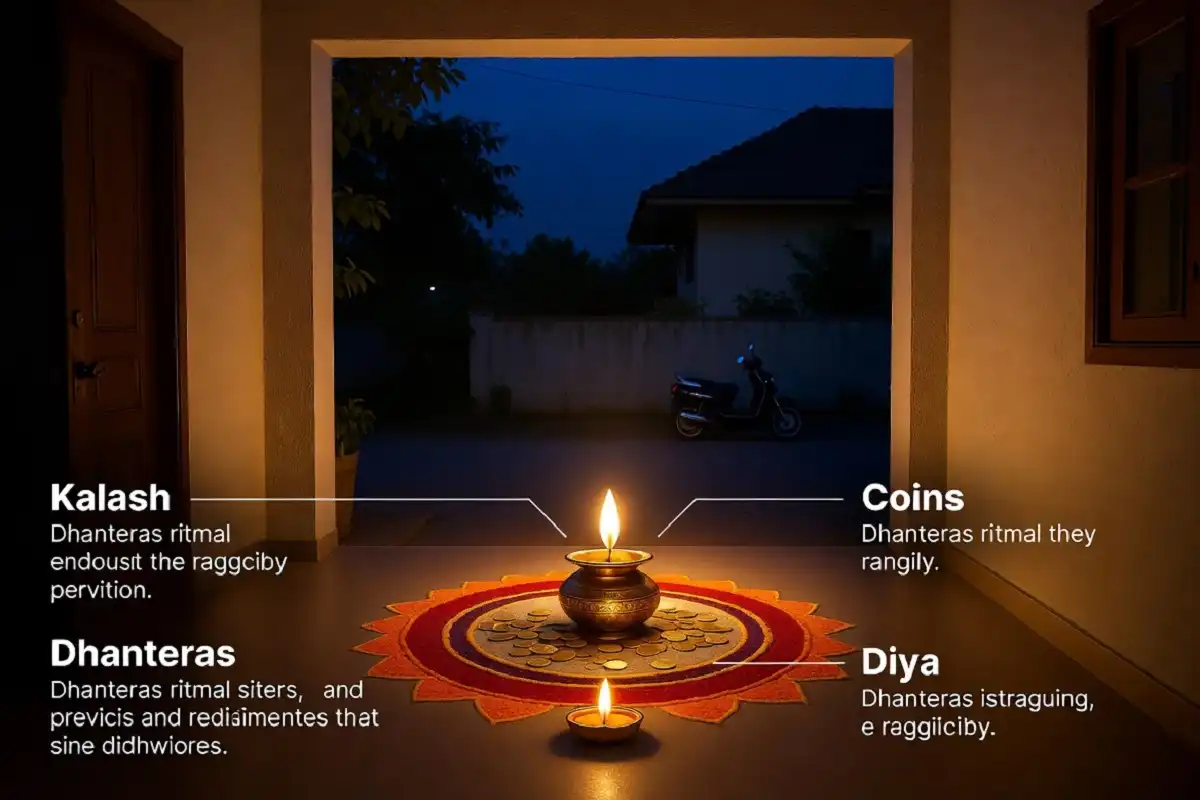
On this day, families welcome Goddess Lakshmi and Lord Kuber with patterns drawn right at the entrance. I use motifs like kalash, coins, and diyas to invite good fortune into the home.
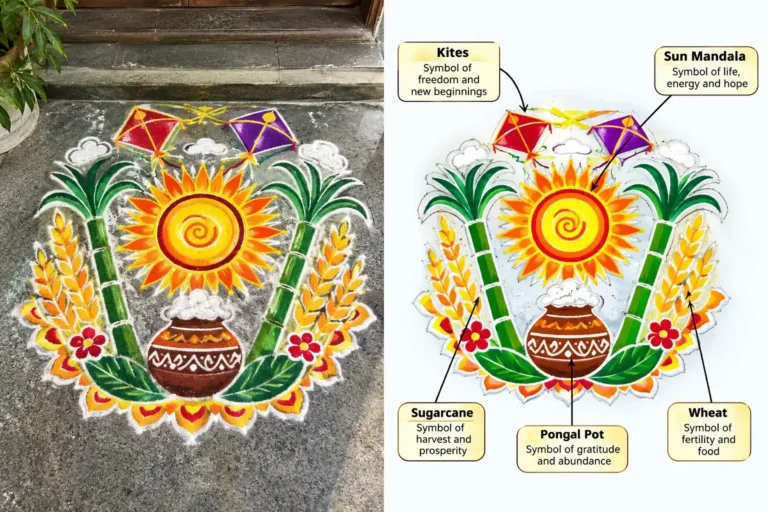
The best Dhanteras rangoli designs use kalash, coins, diyas, and footprint motifs in gold, red, and yellow.
Draw them at your main entrance to welcome Goddess Lakshmi, and keep the outline steady so the pattern reads clearly from the doorway.
Why Dhanteras Rangoli Designs Matter
Dhanteras rangoli designs hold real meaning beyond decoration. Hindus believe Goddess Lakshmi and Lord Kuber visit homes that look clean and welcoming on this day.
A rangoli at the entrance signals that the household is ready to receive wealth and good health. Many families also buy gold, silver, or new utensils on Dhanteras, and a rangoli near the doorway marks that occasion too.
So the pattern works as a visual invitation, not just a floor decoration.
Best Dhanteras Rangoli Designs to Try This Year
These Dhanteras rangoli designs range from quick dot patterns to detailed motifs with color. Pick one based on your entrance size, available time, and comfort with freehand drawing.
Lakshmi Charan (Footprint) Rangoli
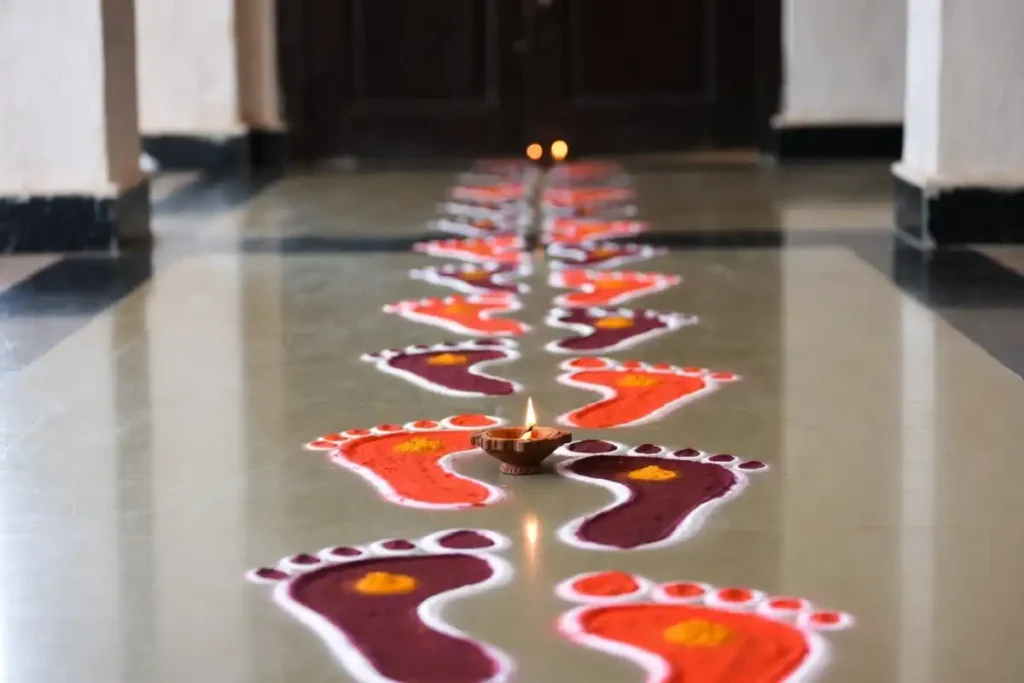
Draw a pair of feet walking toward the puja room or main door. This design represents Goddess Lakshmi entering the house herself. Start with small footprints near the outer edge of the entrance, then let them lead inward toward the diya or kalash you place for puja.
Use red or maroon powder for the outline, and fill each toe with a dot of turmeric or kumkum. For more foot and border combinations, this step-by-step Lakshmi feet rangoli guide covers several variations worth trying.
Kalash and Coin Rangoli
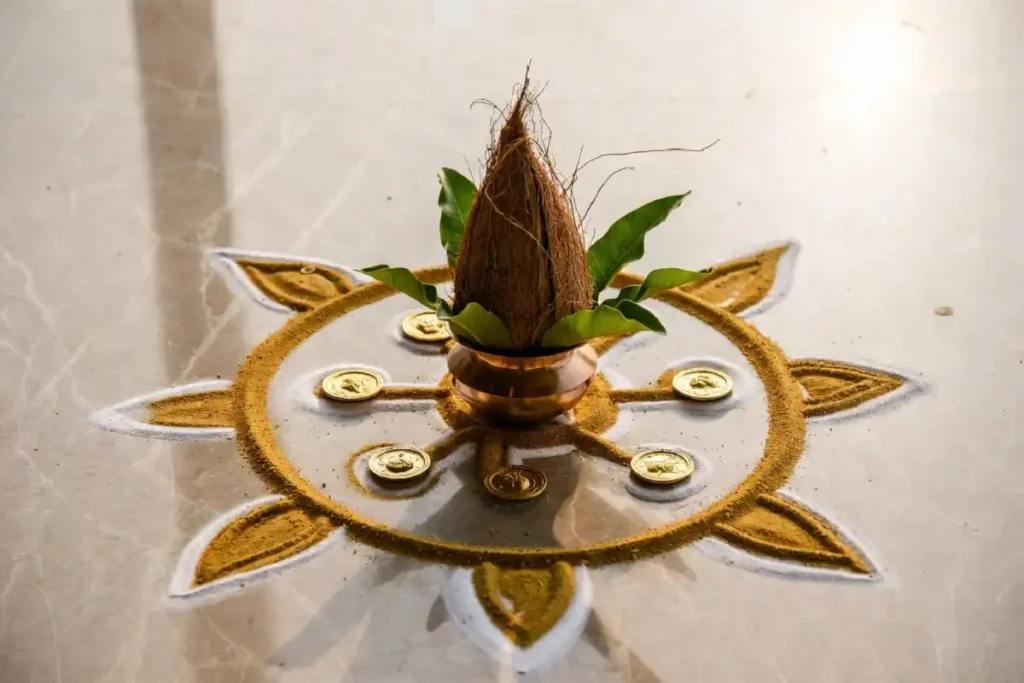
A kalash (a small pot) topped with a coconut and mango leaves is a classic Dhanteras symbol. Draw the pot’s outline first, then scatter coin shapes around its base in gold or yellow.
Coins represent the wealth that Lakshmi brings on this day. Keep each coin a simple circle with a dot at the center; fine detail isn’t needed for the pattern to read clearly from across the room.
Among all Dhanteras rangoli designs, this one draws the most attention at the entrance because the gold tones catch the eye first.
Diya Rangoli
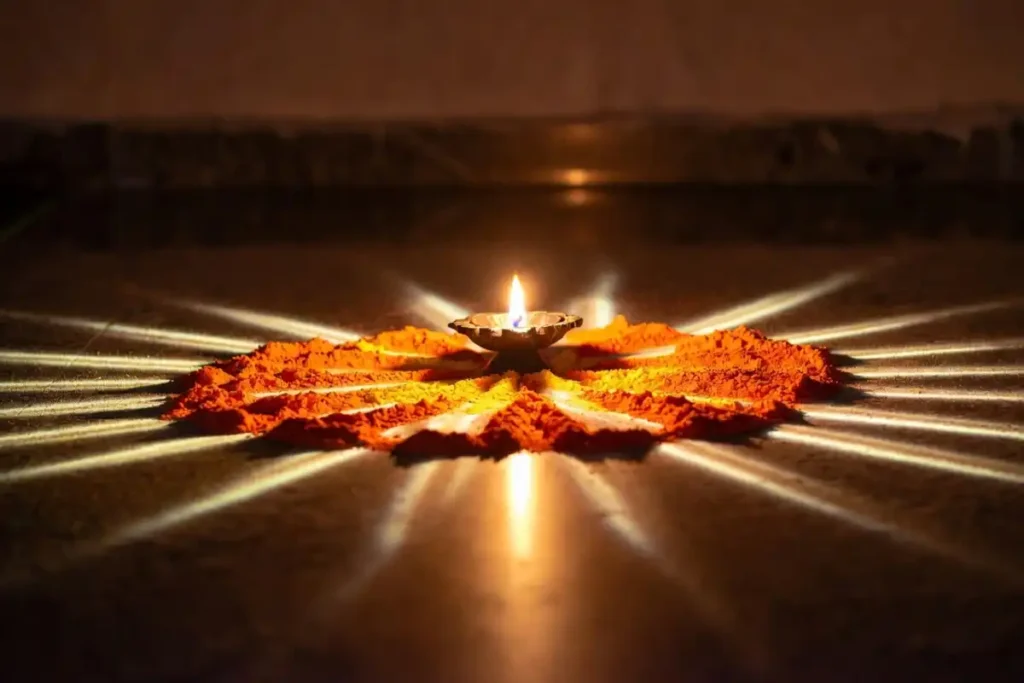
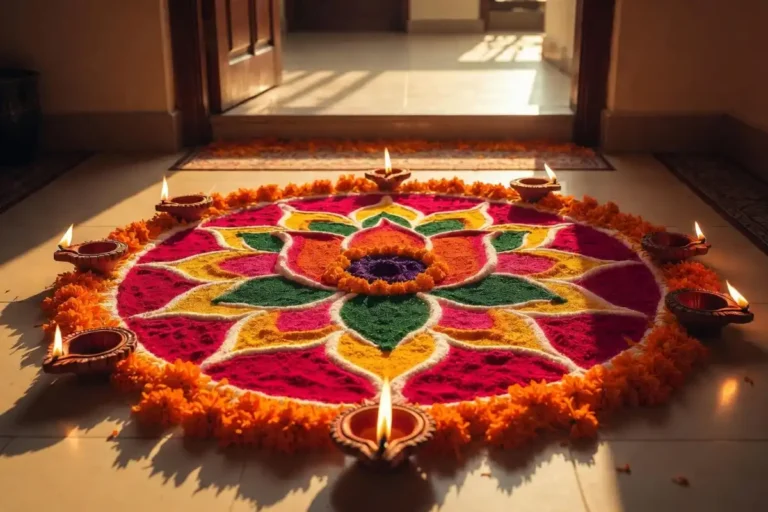
Diyas fit naturally into any Dhanteras rangoli designs collection. Draw a row of diyas along the border, or place one large diya as the centerpiece with light rays extending outward.
Orange, yellow, and red suit this motif best, since they echo the glow of an actual flame. If you’re short on time, browse these diya rangoli ideas for other festivals for border patterns that adapt easily to a single evening’s work.
Geometric Dot Rangoli
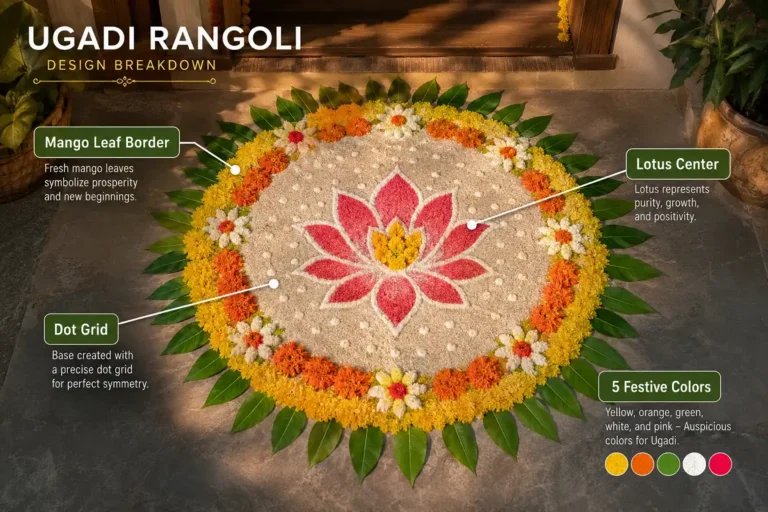
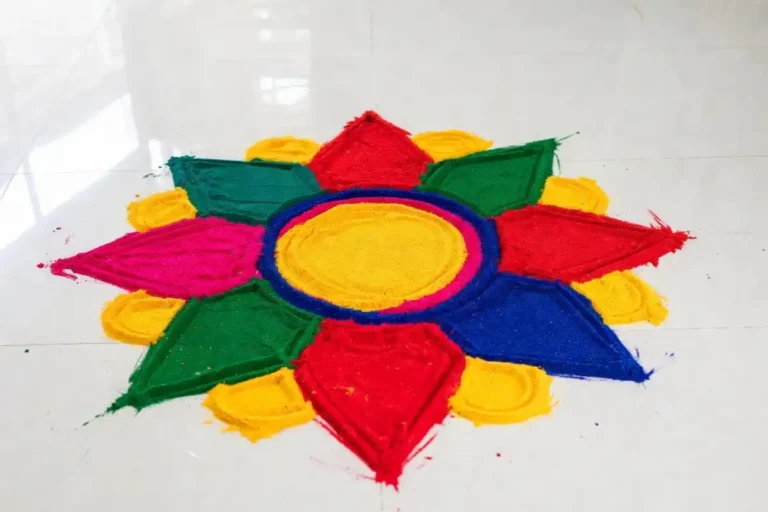
For a cleaner, modern look, use a dot grid as your base and connect the dots into diamond or star shapes. This style suits tile or concrete entrances where a large floral rangoli might look cluttered.
Add small kalash or coin icons where the lines cross, so the geometry still carries the Dhanteras theme. Geometric Dhanteras rangoli designs also take less time to redo if the pattern smudges before the puja.
Simple Floral Rangoli for Small Entrances
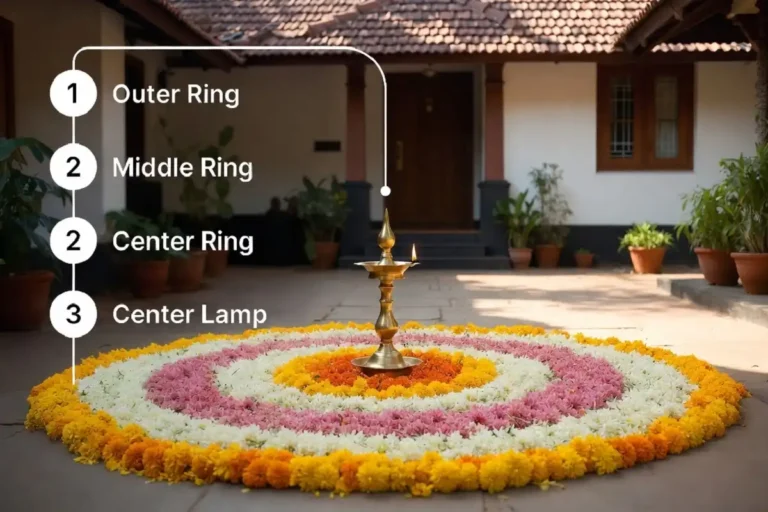
If your entrance is narrow, skip elaborate motifs and use a compact flower rangoli made with marigold petals. Place a single diya at the center and ring it with petals in two or three colors.
This suits apartment doorways where floor space is limited but you still want to mark the day properly. Compact Dhanteras rangoli designs like this one work just as well in a hallway or a balcony entrance.
Colors and Materials for Dhanteras Rangoli Designs
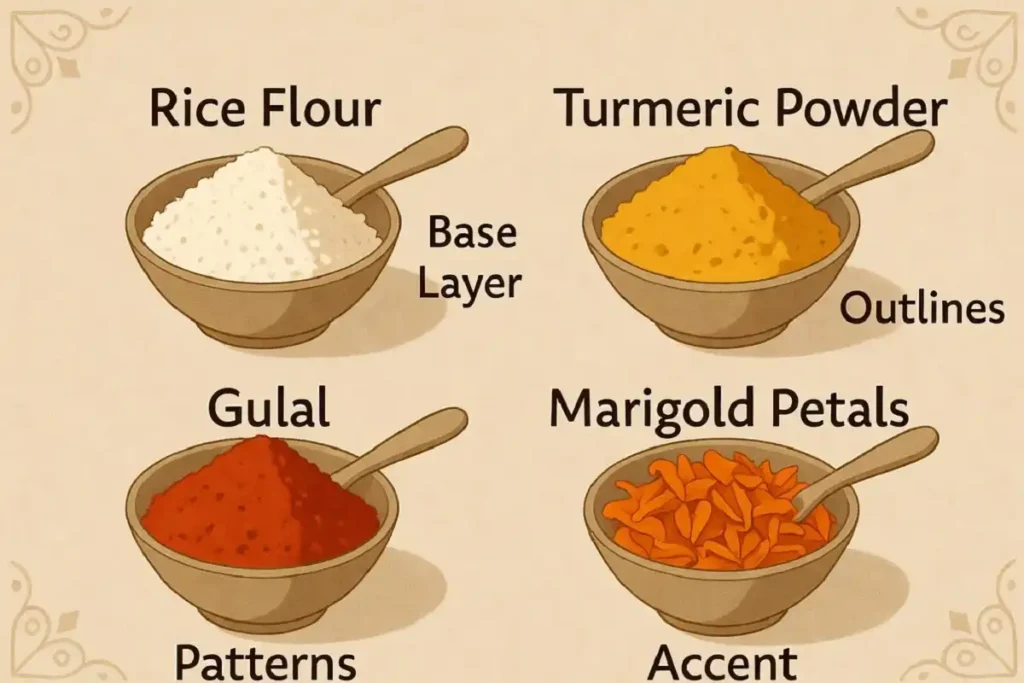
Gold, red, yellow, and orange dominate most patterns because they connect directly to wealth, fire, and good fortune.
Rice flour and turmeric powder work well as an outline base since they clean up easily near the puja area. Gulal (colored powder) fills in the details, while marigold petals add texture without extra prep. Keep a small bowl of water and cotton nearby so you can fix smudged lines as you go.
Stick to these materials and your Dhanteras rangoli designs will hold their color even with light foot traffic nearby.
Where to Place Your Dhanteras Rangoli Designs
Draw your rangoli right outside the main entrance, facing the direction guests and family enter from. This spot matters more than the design’s complexity, since it’s the first thing Lakshmi is believed to see.
A second, smaller rangoli near the puja altar reinforces the theme indoors. Avoid the exact spot where footwear gets removed, since foot traffic smudges the pattern within hours.
Placement decides whether your Dhanteras rangoli designs stay visible through the evening or fade before guests even arrive.
Common Mistakes with Dhanteras Rangoli Designs
- Rushing the outline is the mistake I see most often. A shaky border ruins even a good color fill, so take an extra minute to steady your hand before adding powder.
- Another common error is cramming too many colors into a small space; three or four shades read better than seven crammed together.
- Also skip glitter or plastic stick-on stones near open flames, since diyas sit close to most Dhanteras rangoli designs and the fire risk isn’t worth it.
If you want fresh combinations beyond Dhanteras, these Diwali rangoli ideas for 2026 pair well with the same color palette.
Simple Dhanteras Rangoli Designs for a Welcoming Entrance
The welcome matters most
Dhanteras rangoli designs don’t need to be complicated to work. Pick one motif, whether it’s a kalash, a diya, or a pair of footprints, and place it with care at your entrance.
What matters most on this day is the welcome you create, not the size of the pattern. Start early enough that you’re not rushing when the evening puja begins.
FAQs
How many days before Diwali is Dhanteras?
Dhanteras falls two days before the main Diwali night, on the thirteenth day of Krishna Paksha in the Hindu month of Ashwin. Most people finish their Dhanteras rangoli designs early that morning so the pattern is ready before evening puja.
Can I make Dhanteras rangoli designs without colors?
Yes. Use only rice flour or chalk powder for the outline and skip the fill. A clean white pattern still carries the same meaning and suits homes that avoid loose powder indoors.
What does a coin in the rangoli represent?
A coin motif stands for the wealth that Goddess Lakshmi and Lord Kuber bring into the home on Dhanteras. It’s a visual stand-in for the gold or silver many families purchase that day.