Navratri Rangoli Ideas: Designs, Colors, and Daily Themes for Nine Nights
Navratri rangoli ideas are a beautiful way to make your doorway feel fresh and festive throughout all nine nights of the celebration. I love the idea of creating a new rangoli each day because it gives you a chance to try different patterns, colors, and little decorative details instead of making the same design throughout the festival. Even a simple rangoli can make the entrance feel more welcoming when it is made with the right colors and a little creativity.
The easiest way to plan your Navratri rangoli ideas is to follow the traditional color theme for each day of Navratri. You can choose that day’s color as the main shade of your rangoli and then add white, yellow, or other complementary colors to make the pattern stand out. This simple approach keeps your designs coordinated while giving each day its own look.
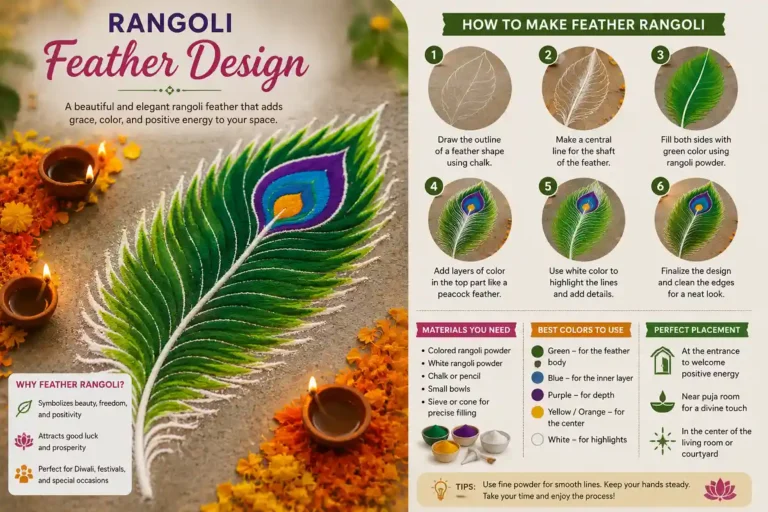
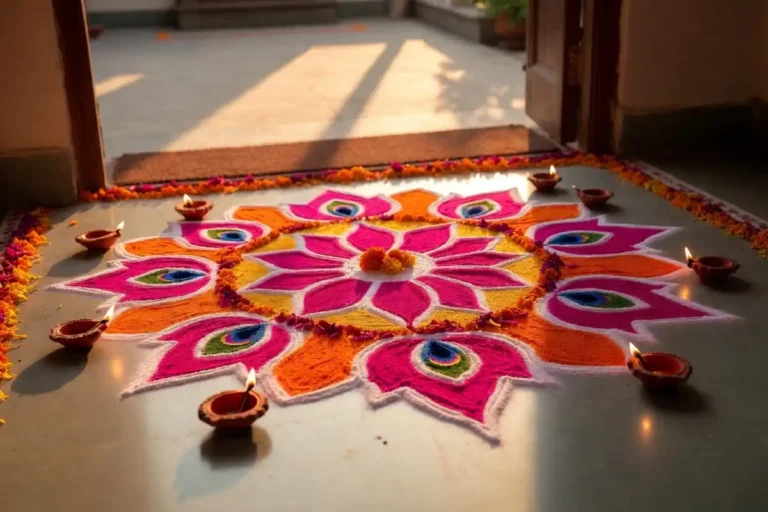
You can also bring the spirit of Navratri into your rangoli by adding familiar festive elements. Dandiya sticks, Garba dancers, diyas, lotus flowers, Goddess Durga-inspired motifs, and traditional patterns can all work beautifully in a rangoli design. You don’t need to include everything in one pattern—choosing just one or two elements can be enough to give your design a clear Navratri feel.
Whether you have a large entrance or just a small space near your door, there are plenty of Navratri rangoli ideas you can try at home. Simple dot patterns and floral borders are great when you’re short on time, while larger geometric or Goddess-inspired designs are perfect when you want to spend a little more time decorating.
In this guide, you’ll find easy design ideas, the nine Navratri colors, useful materials, and quick methods that are practical for creating rangoli at home. So gather your rangoli powder, flowers, diyas, and favorite colors, choose a design for today, and enjoy making something new for each of the nine festive nights.
What Makes a Rangoli Right for Navratri?
A Navratri rangoli works when it reflects the festival’s core symbols and daily colors. This is not any floor design. It carries meaning tied to Goddess Durga and her nine forms.
Three things separate a Navratri pattern from an everyday one. First, the daily color theme. Second, festival motifs like dandiya, garba figures, and the trishul. Third, brightness, because Navratri is loud and joyful, not quiet.
I keep a simple rule. If the design honors the day’s color and shows at least one festival symbol, it belongs. If it looks like a generic flower pattern, I add dandiya sticks or a Durga face to anchor it. That single anchor is what separates strong Navratri rangoli ideas from plain decoration.
The Nine Colors and Their Daily Navratri Rangoli Ideas
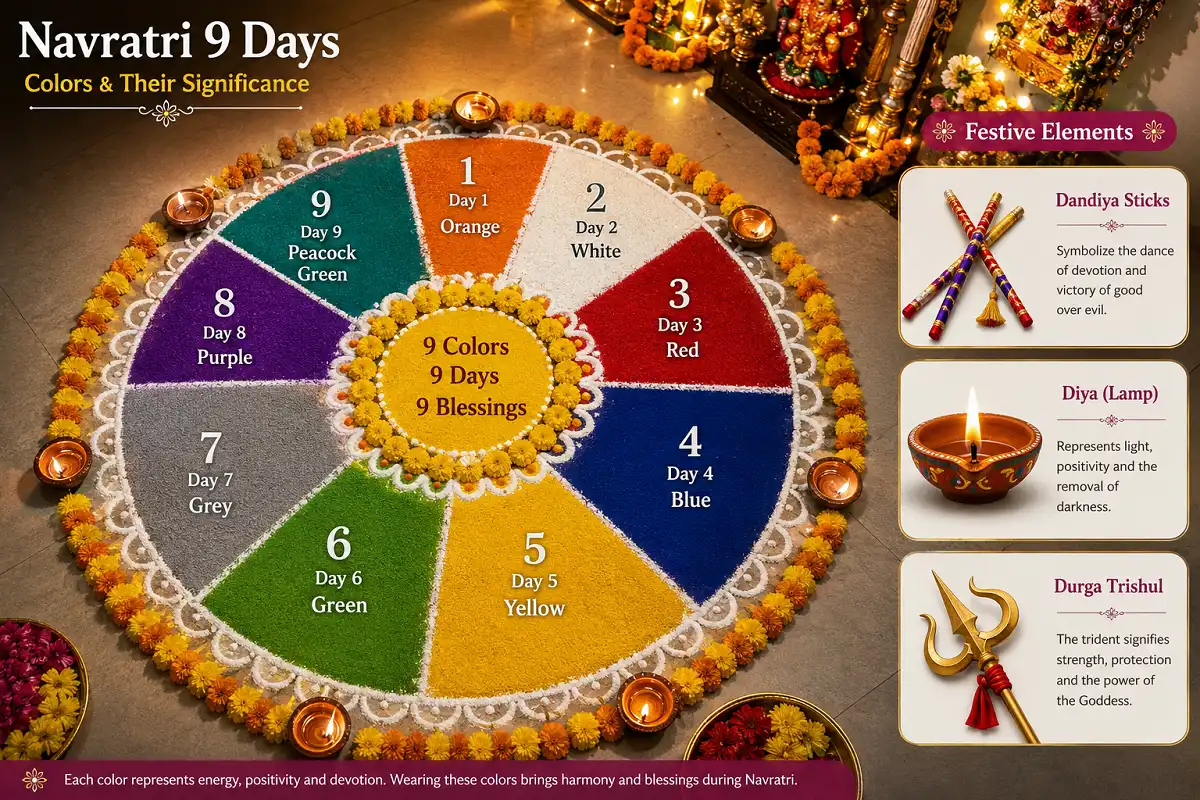
Each Navratri day has an assigned color linked to a form of Durga. Planning your Navratri rangoli ideas around these colors gives your entrance a themed progression across the festival.
Here is the standard color order many households follow:
- Day 1Orange / GreyShailaputri
- Day 2WhiteBrahmacharini
- Day 3RedChandraghanta
- Day 4Royal BlueKushmanda
- Day 5YellowSkandamata
- Day 6GreenKatyayani
- Day 7GreyKalaratri
- Day 8PurpleMahagauri
- Day 9Peacock Green / PinkSiddhidatri
Note that color orders shift by year and region. Confirm your local sequence before you start. For 2026, the colors follow the standard weekday pattern, so check the exact dates against your regional calendar. Most newspapers and temple notices publish the day-wise list a week before the festival.
Single-Color Rangoli for Each Day
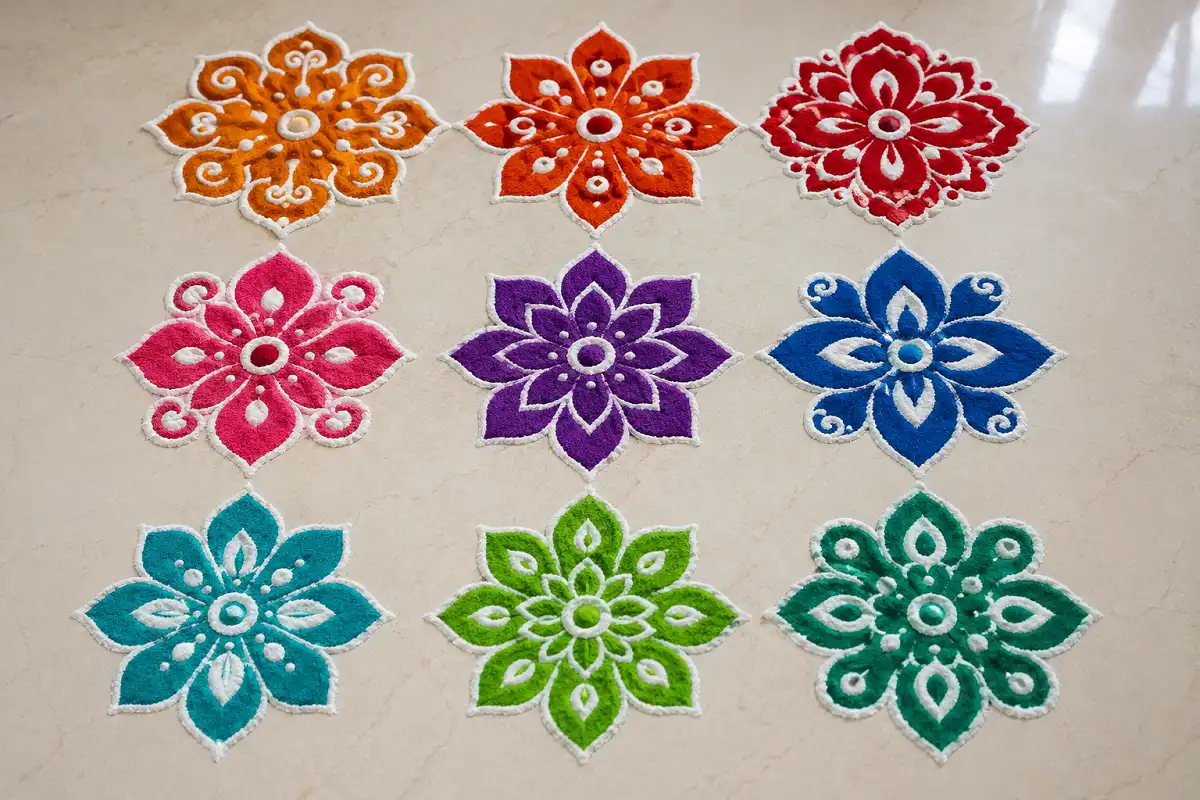
For a single-color day, build the whole design in shades of that one color. Use light, medium, and dark tones of the same hue. This keeps the theme strict while adding depth.
On white day, I use plain white rangoli powder, rice flour, and a touch of silver. On red day, I layer kumkum red, crimson, and a darker maroon for the border. Monochrome designs read as elegant and are quick to fill. They also photograph well against a plain floor.
Dual-Tone Designs with Daily Accents
Prefer more color? Keep the day’s color as the dominant base and add one or two accent shades. On green day, fill most of the pattern in green, then add gold outlines and small white dots.
This approach suits people who find single-color designs flat. You still honor the theme. The accents just lift the whole piece. Dual-tone designs give you flexibility without breaking the color rule, which is why they stay popular in mixed-age households.
Festival Motif Navratri Rangoli Ideas
Festival motifs make a rangoli unmistakably Navratri. These symbols connect your floor art directly to the celebration and its stories.
The strongest motifs to use are dandiya sticks, garba dancers, Goddess Durga, the trishul, and the lotus. Each carries clear meaning. Dandiya and garba figures show the dance. The trishul and Durga face show devotion. The lotus signals purity and welcomes the goddess.
Dandiya and Garba Themed Designs
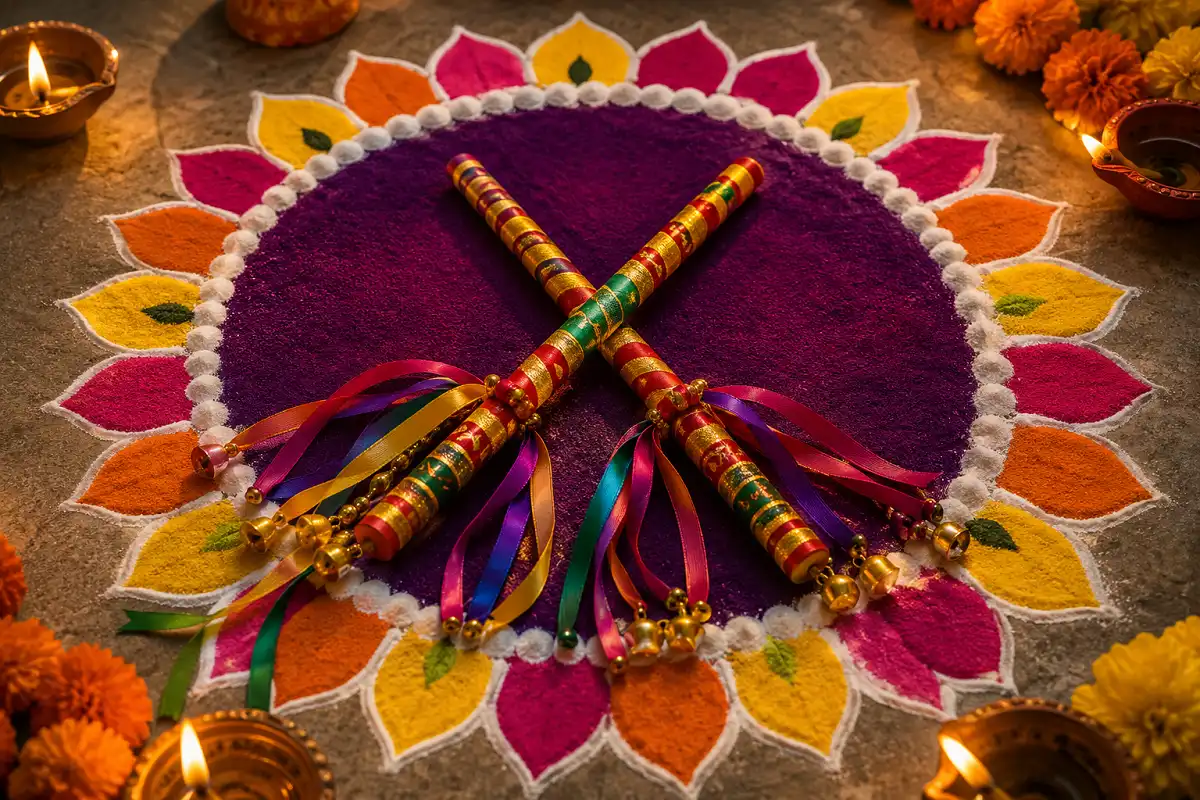
Draw two crossed dandiya sticks at the center as your focal point. Add colorful ribbons and small bells around them. Circle the sticks with dots to frame the design.
For a garba theme, sketch simple dancer silhouettes in a ring. Keep the figures basic, just curved bodies with raised arms. Fill their clothing in bright festival colors. This design suits wide entrances and community spaces. Dandiya-based Navratri rangoli ideas work especially well outside society halls where garba nights happen.
Goddess Durga and Trishul Patterns
Place a stylized Durga face or her trishul at the center for a devotional look. Surround it with a lotus border and diya motifs. This is my choice for the main puja area.
Keep the Durga face simple if you are new. A crown, two eyes, and a bindi read clearly without fine detail. The trishul is easier and just as powerful as a symbol. Devotional designs like these fit best near the prayer room rather than the outer gate, where the family gathers for aarti.
Easy Navratri Rangoli Ideas for Beginners
Beginners should start with dot-grid patterns and simple symmetry. A dot grid gives you fixed points to connect, so your lines stay even and your shape stays balanced.
Start with a 5-dot to 5-dot square grid. Connect the dots into petals or a star. Fill with two colors. This takes under fifteen minutes and still looks festive. These are the Navratri rangoli ideas I hand to anyone drawing their first design.
If dots feel hard, try a freehand circle design. My guide on simple circle rangoli patterns you can finish fast breaks this down step by step. Circles forgive small mistakes and expand easily.
Another easy route is a border-only design. Skip the complex center. Draw a bright, repeating border along your doorway using the day’s color. Borders are forgiving and finish quickly. On busy festival evenings, a strong border alone still reads as a full design.
Small-Space Navratri Rangoli Ideas
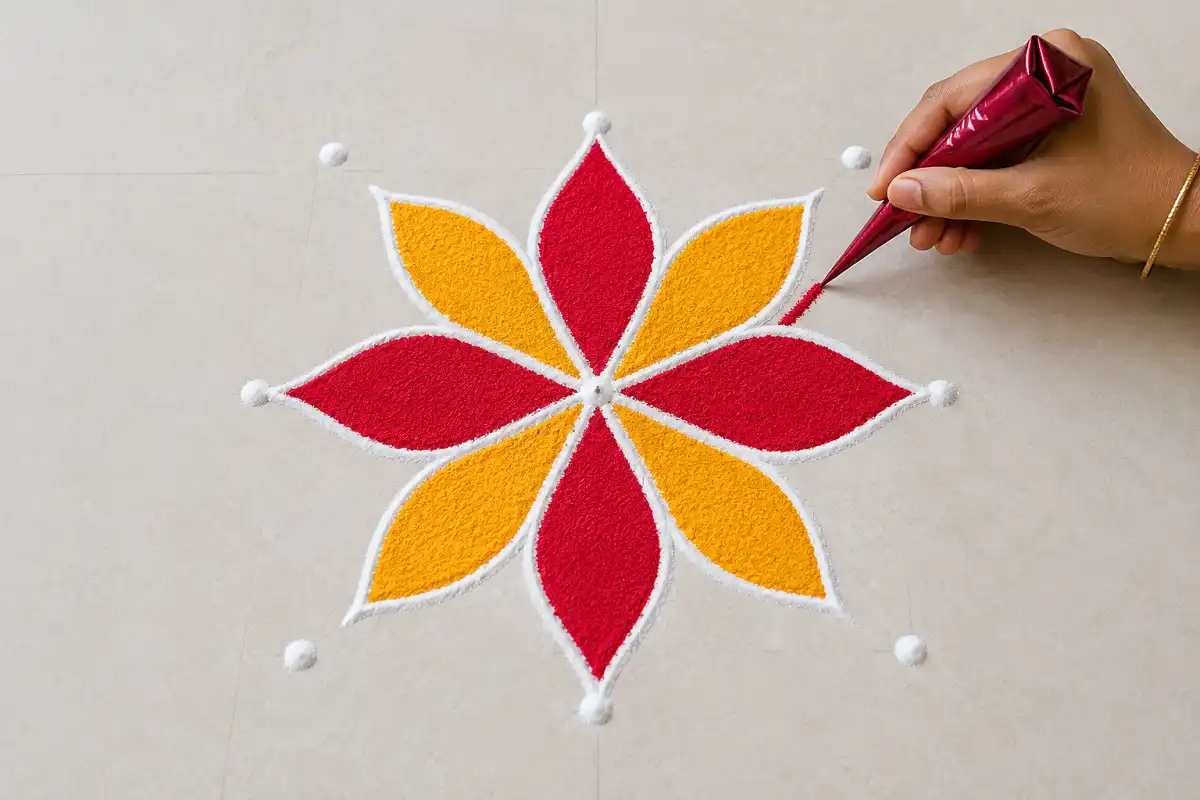
For apartments and small entrances, a compact circular or square design works best. You do not need floor space for a large pattern to feel festive.
Keep it to one focused motif. A single diya, one dandiya pair, or a small lotus fills a corner well. My tips for rangoli designs that fit a small space help you scale down without losing impact. A compact design proves that size never decides how festive a doorway feels. Place it just inside the threshold so it stays safe from foot traffic.
Materials and Colors for Navratri Rangoli
The best materials are rangoli powder, rice flour, flower petals, and diyas. Each gives a different finish, so mix them based on the look you want.
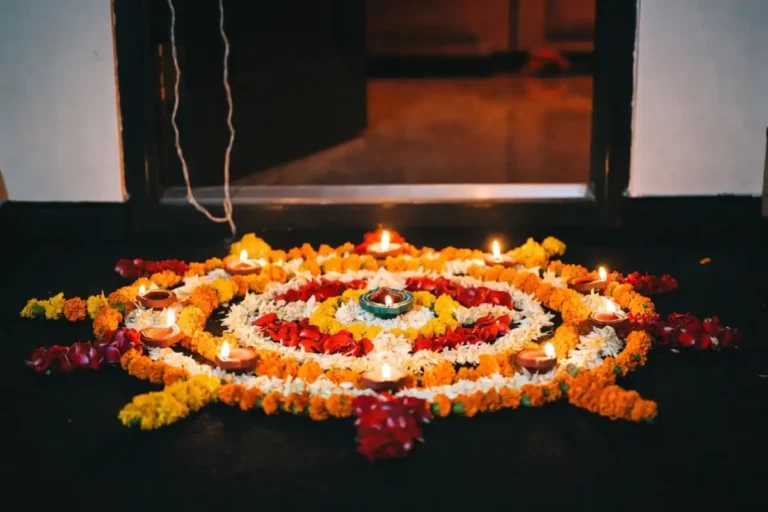
Rangoli powder gives bright, saturated color and is easy to control. Rice flour gives a soft matte white and is traditional. Flower petals, marigold, rose, and jasmine, add texture and a real festive scent. Diyas turn any flat design into a glowing one after dark.
I keep the nine festival colors stocked before Navratri starts. Buying small packs of each shade saves you scrambling mid-festival. Store them in labeled containers so you can grab the right day’s color fast. This one habit makes daily Navratri rangoli ideas realistic even on a work night.
Using Flowers for Navratri Rangoli Ideas
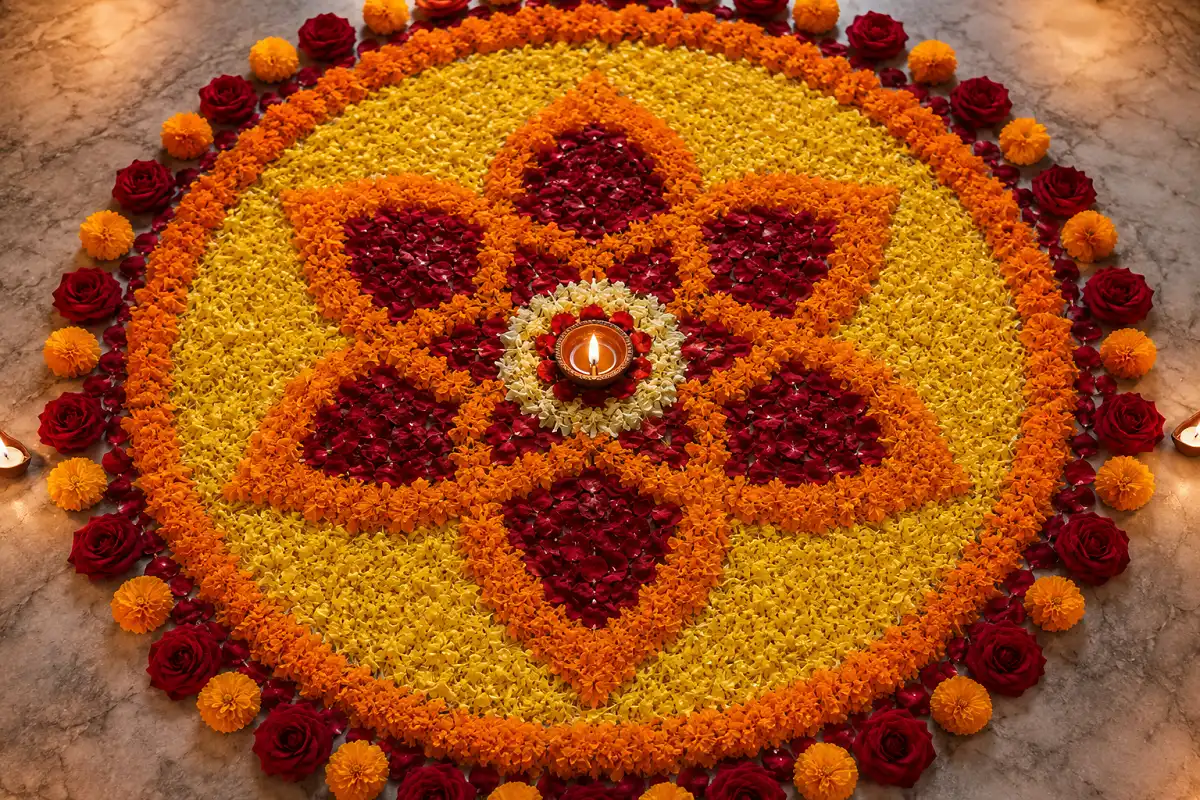
Flower rangoli suits Navratri because the festival already uses marigold and rose in decoration. Petals give instant color and need no drawing skill.
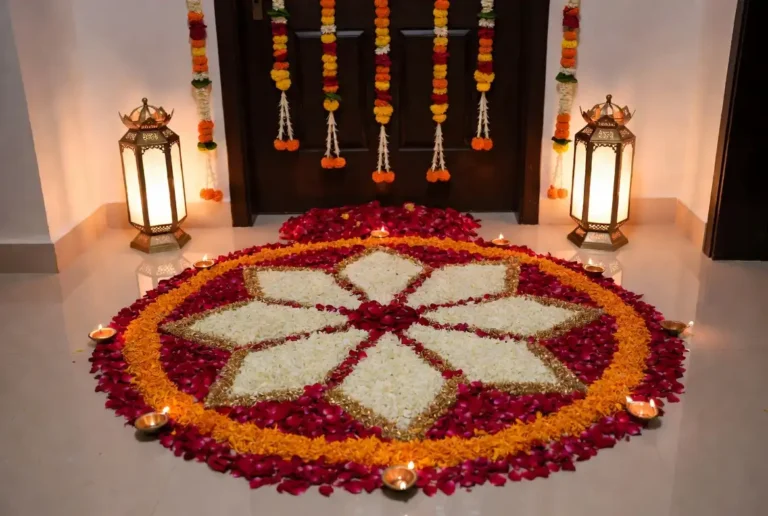
Lay marigold petals for yellow and orange days. Use rose petals for red and pink. Outline shapes with whole flowers, then fill with loose petals. Flower designs stay fresh for a day and photograph beautifully. Petal-based Navratri rangoli ideas are my top pick when guests are coming and time is short.
Rangoli Powder Versus Rice Flour
Rangoli powder gives brighter color, while rice flour gives softer, traditional white and doubles as a food offering to insects. Both belong in a Navratri kit, and the choice depends on the effect you want.
Use powder when you want punchy, camera-ready color for garba and dandiya themes. Use rice flour for calm, devotional designs near the puja space. Many strong designs combine both, a rice-flour base with powder accents on top, which balances tradition and brightness in one piece.
How to Make Your Navratri Rangoli Last All Nine Days
To protect a rangoli across the festival, work on a clean, dry surface and mist it lightly to set the powder. A quick spray of water helps the powder bind and resist wind.
For a design you want to keep for several days, use rangoli stickers or a stencil outline you can refresh. Touch up the edges each morning. Sweep away loose grains and re-dust the faded spots.
Navratri Rangoli Ideas by Style
Different homes suit different styles. Pick the one that fits your space, skill, and time. Below are the main directions your design can take across the festival.
For a traditional look, use kolam-style dot patterns and classic motifs. For a modern look, go geometric with clean lines and bold color blocks. For a floral look, build entirely from petals. Each style carries the same festival meaning, so none is more correct than another.
Traditional
Kolam-style dot patterns and classic motifs.
Modern
Geometric, clean lines, bold color blocks.
Floral
Built entirely from fresh petals.
Mixing styles works too. A geometric base with a floral center gives you structure and softness together. Match the finish to your festival mood and the day’s color. Over nine nights, you can rotate through all three styles and never repeat a look.
Modern Geometric Navratri Rangoli Ideas
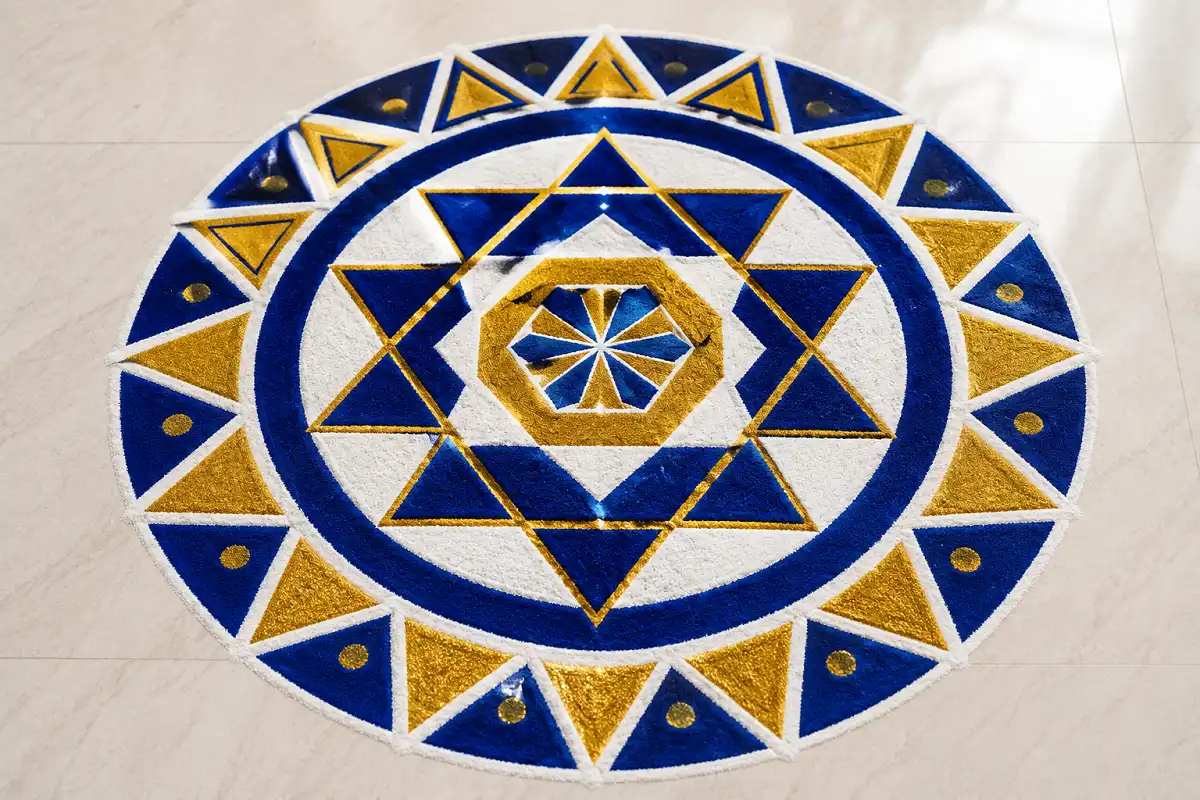
Geometric designs use repeating shapes, triangles, hexagons, and circles, in the day’s color palette. They look sharp, modern, and are easier to keep symmetrical than freehand art.
Draw a central shape, then repeat it outward in rings. Alternate two colors for contrast. My walkthrough on easy geometric rangoli patterns anyone can draw shows the method clearly. Geometric styles suit offices and modern homes.
Traditional Kolam-Style Navratri Rangoli Ideas
Traditional kolam-style designs use a symmetrical dot grid connected by looping lines, which suits households that want a classic South Indian feel. These patterns are quiet, precise, and deeply tied to daily worship.
Set your dot grid first, then loop continuous lines around the dots without lifting your hand. Add color inside the loops on festival days. Kolam-inspired Navratri rangoli ideas pair beautifully with a simple diya row along the threshold.
Final Words: Make Every Navratri Night Special With Beautiful Rangoli
Good Navratri rangoli ideas don’t have to be complicated to look beautiful. Sometimes, a simple design with the right colors and a few traditional details can make your doorway feel more festive and welcoming. One easy way to make your rangoli special is to follow the color associated with each Navratri day and include a symbol that reflects the spirit of the festival.
If you’re new to rangoli, start with something simple. A pattern made with dots, flowers, a small border, or basic geometric shapes can look lovely without taking hours to complete. As you become more comfortable, you can add diyas, lotus petals, Goddess-inspired motifs, marigold flowers, or other decorative elements to make each day’s design a little different.
It also helps to keep your nine Navratri colors ready before the festival begins. That way, you won’t have to search for colors every morning when you’re ready to create your rangoli. Fresh marigold and rose petals can add a natural touch, while a few small diyas can make the design look especially beautiful in the evening.
The fun part is that you don’t have to repeat the same pattern every day. Try changing the shape, colors, flowers, or small details as the nine nights go by. Even a simple rangoli can feel fresh when you give it a new look each morning.