Simple Circle Rangoli Designs for Any Occasion
Rangoli is one of the most cherished art forms in Indian culture. It welcomes guests, marks celebrations, and fills everyday spaces with color and meaning. Among all patterns, simple circle rangoli holds a special place. It is clean, balanced, and accessible to anyone. Whether you are picking up rangoli powder for the first time or looking for a quick design before a festival, circle-based patterns are a reliable and beautiful choice for every home.
Why Simple Circle Rangoli Is So Widely Loved
The circle is the most natural shape to work with in rangoli. It has no sharp corners to measure and no angles to calculate. The eye follows it effortlessly, giving any design an instant sense of harmony and completeness.
Simple circle rangoli works on almost any surface, including floors, courtyards, and doorsteps. It scales up or down depending on available space. A small single-ring version fits a narrow entrance, while a larger multi-ring design suits an open hall during a celebration.
Another reason people return to circle designs is their layered structure. Because the shape repeats outward, you can build a simple circle rangoli ring by ring. Each new layer adds detail without making the overall design harder to control.
The Balance Between Simplicity and Beauty
Many people assume a simple design will look plain. With simple circle rangoli, that concern disappears quickly. Even a two-ring pattern with well-chosen colors looks polished and intentional. The symmetry does most of the work for you.
Beginners find that starting with circles builds confidence to tackle more complex patterns later. Once you understand how to keep rings even and fill spaces cleanly, those skills apply to nearly any rangoli style.
Tools and Materials You Need
You do not need expensive supplies to create a good simple circle rangoli. A few basic items are enough.
- Rangoli powder or colored chalk powder in three to five colors
- A compass or circular template such as a bowl, plate, or coin depending on the size needed
- A small funnel or squeeze bottle for precise powder lines
- A flat brush or cotton swab for smoothing edges and correcting mistakes
- Chalk or a white pencil to sketch the outline before applying color
If you want to practice first, try the design on paper before working on the floor. This helps you plan color placement without wasting powder.
How to Draw a Simple Circle Rangoli Step by Step
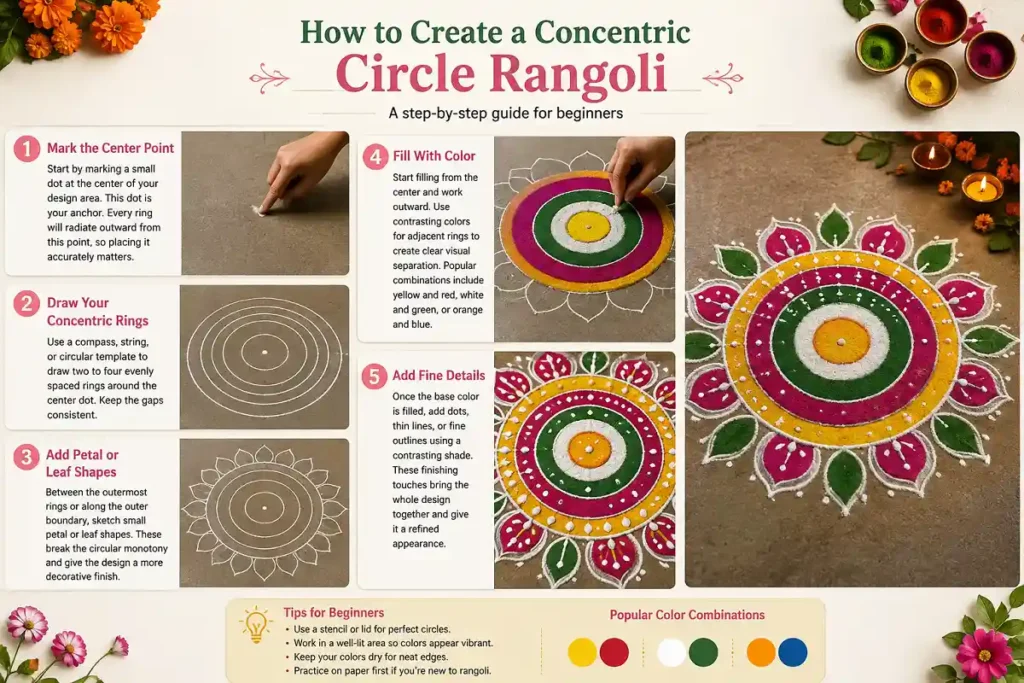
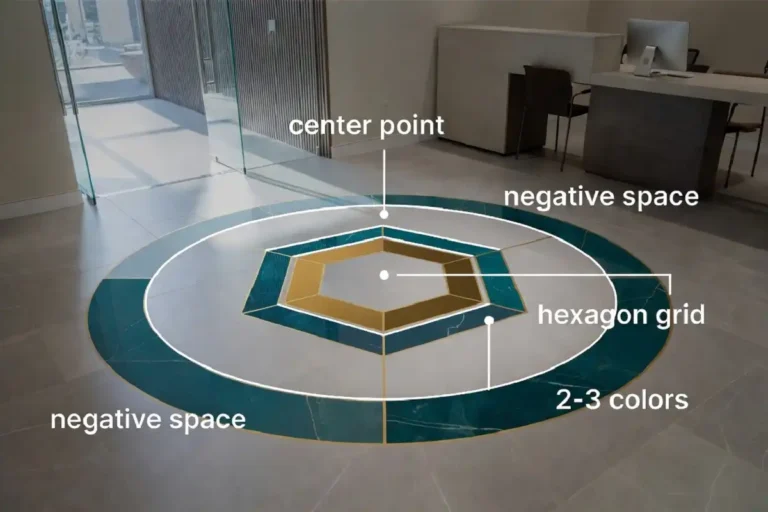
The 5-Step Visual Guide
A quick-reference snapshot of the full process below — from marking the center dot to adding the finishing details. Save or screenshot this image for a handy guide next to your rangoli tray.
Step 1: Mark the Center Point
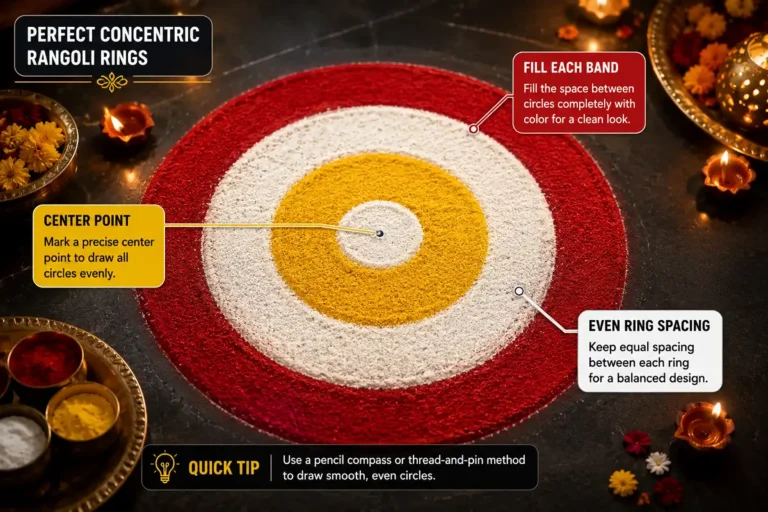
Start by marking a small dot at the center of your design area. This dot is your anchor. Every ring will radiate outward from this point, so placing it accurately matters.
Step 2: Draw Your Concentric Rings
Use a compass, string, or circular template to draw two to four evenly spaced rings around the center dot. Keep the gaps consistent. For a beginner simple circle rangoli, spacing rings two to three centimeters apart works well.
Step 3: Add Petal or Leaf Shapes
Between the outermost rings or along the outer boundary, sketch small petal or leaf shapes. These break the circular monotony and give the design a more decorative finish. You can draw them freehand or use a cardstock template.
Step 4: Fill With Color
Start filling from the center and work outward. Use contrasting colors for adjacent rings to create clear visual separation. Popular combinations include yellow and red, white and green, or orange and blue.
Step 5: Add Fine Details
Once the base color is filled, add dots, thin lines, or fine outlines using a contrasting shade. These finishing touches bring the whole design together and give it a refined appearance.
Color Combination Ideas for Circle Rangoli
Color is what brings a simple circle rangoli to life. These combinations work beautifully with round patterns:
- Yellow center with orange and red outer rings for a warm, festive feel
- White and green with a pink center for a clean, floral look
- Blue and white for a calming, minimal design suitable for daily use
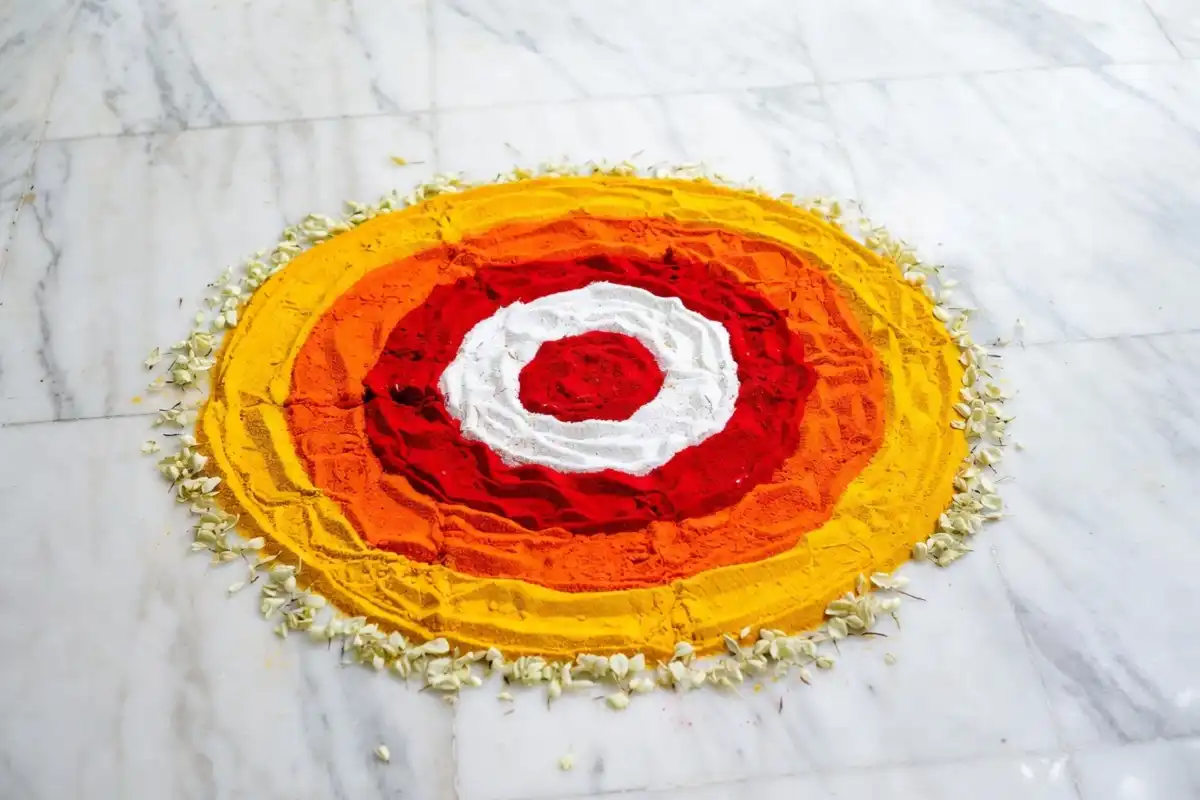
- Multi-color rings with each band in a different hue for vibrant celebrations
- Monochrome shades such as light pink, medium pink, and deep pink for an elegant effect
For Diwali, warm colors like saffron, red, and gold match the mood perfectly. For daily home decor, softer pastels keep the entrance fresh without being overwhelming. You can find more color and styling inspiration in this guide on easy Diwali rangoli at home for beginners.
Simple Circle Rangoli for Different Occasions
Match the Design to the Moment
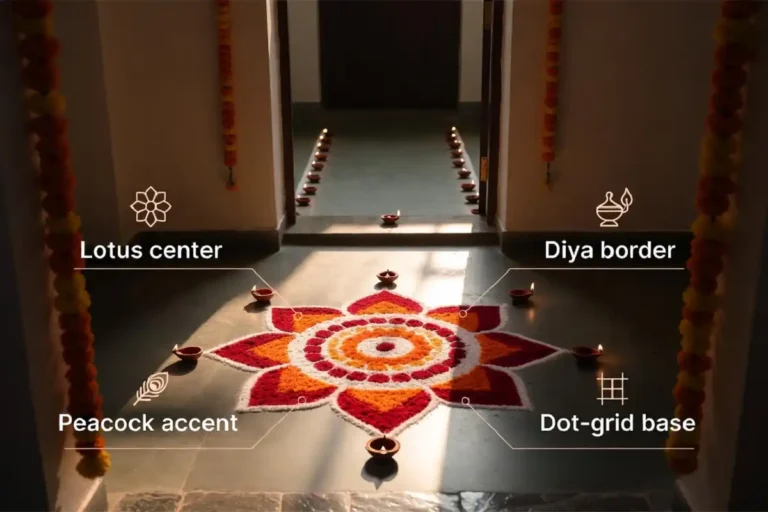
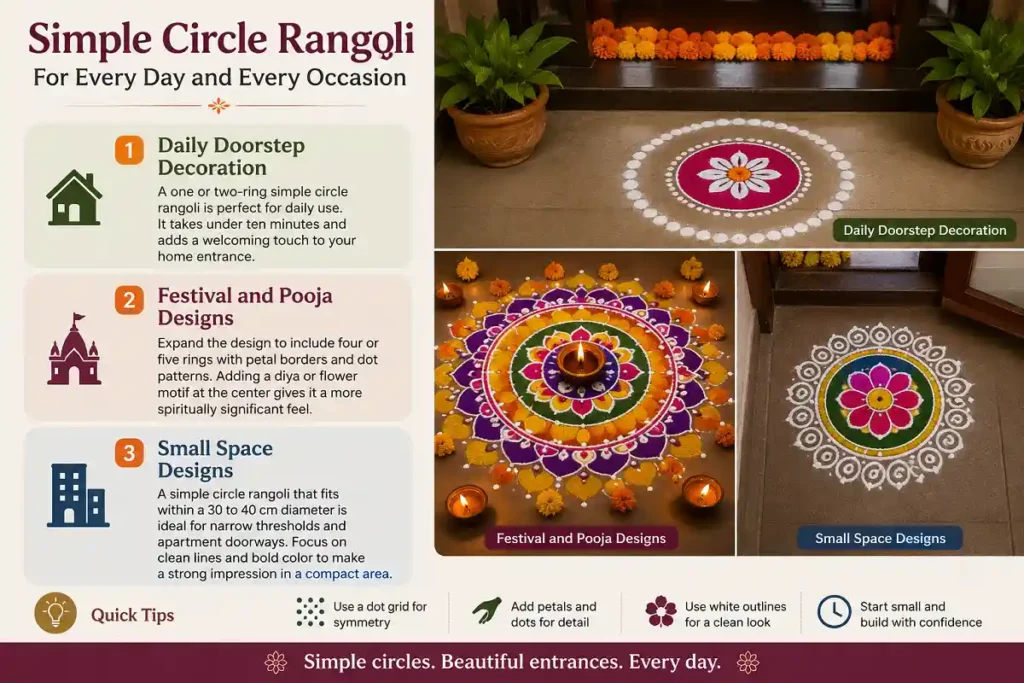
Three everyday scenarios, three ring counts. Use this as a cheat sheet when you’re deciding how elaborate today’s rangoli should be.
Daily Doorstep Decoration
A one or two-ring simple circle rangoli is perfect for daily use. It takes under ten minutes and adds a welcoming touch to your home entrance. Use white and one accent color to keep the process manageable and repeatable.
Festival and Pooja Designs
For festivals and pooja ceremonies, expand the design to include four or five rings with petal borders and dot patterns. Adding a diya or flower motif at the center gives it a more spiritually significant feel. This article on simple and easy spiritual rangoli for beginners offers ideas that combine spiritual meaning with clean circular form.
Small Space Designs
Not every home has a wide entrance. A simple circle rangoli that fits within a 30 to 40 cm diameter is ideal for narrow thresholds and apartment doorways. Focus on clean lines and bold color to make a strong impression in a compact area. For additional ideas suited to smaller spaces, browse through these small festive rangoli ideas for every occasion.
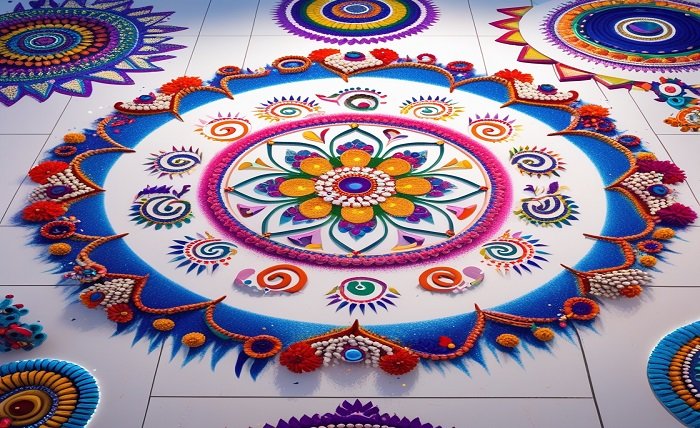
Variations of Simple Circle Rangoli to Explore
4 Styles, 1 Shape
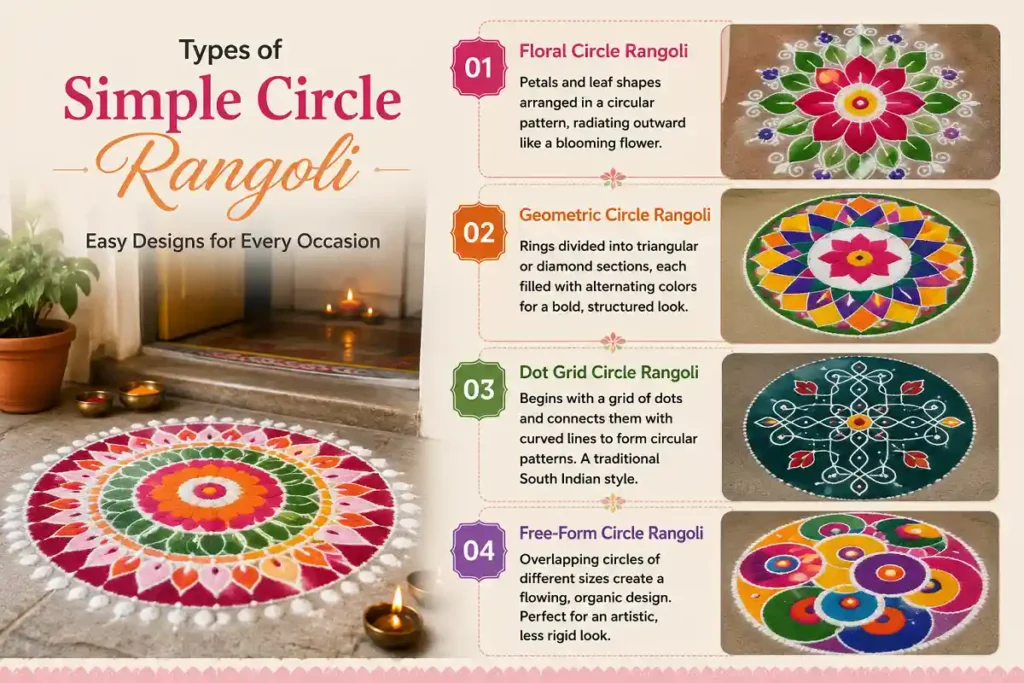
Floral, geometric, dot grid, and free-form — all built on the same circular foundation. Pick the one that matches your patience level and the tools you have on hand.
Floral Circle Rangoli
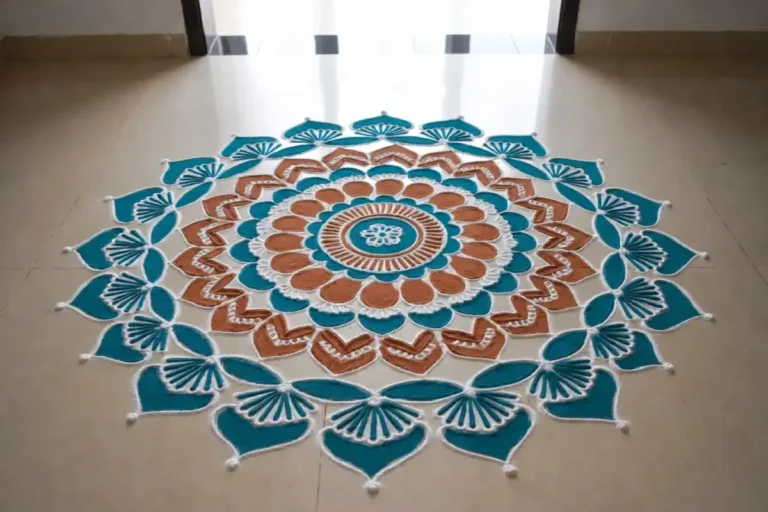
This version uses petals and leaf shapes arranged in a circular pattern, radiating outward from the center like a blooming flower. It is one of the most popular takes on simple circle rangoli and suits nearly every occasion.
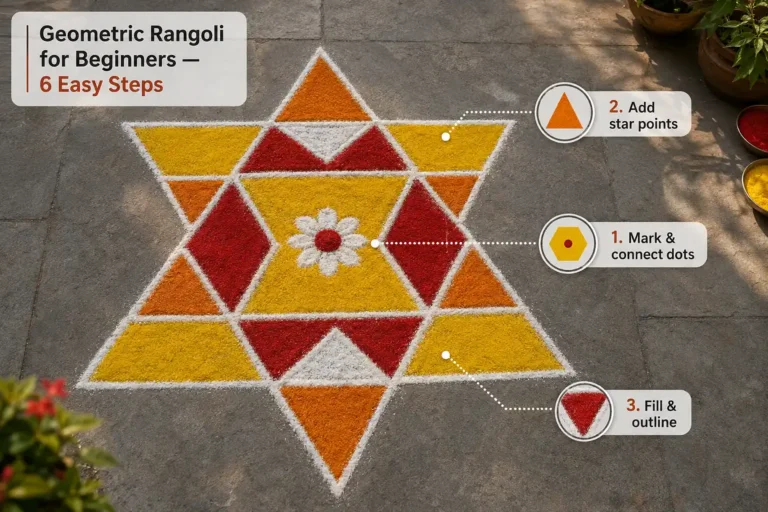
Geometric Circle Rangoli
In this style, the rings are divided into triangular or diamond sections, each filled with alternating colors. The result looks structured and bold. This design suits those who enjoy precision and clean repetition. For more ideas in this direction, explore easy geometric rangoli simple patterns anyone can make.
Dot Grid Circle Rangoli
This traditional South Indian style begins with a grid of dots and connects them with curved lines to form circular patterns. It is structured yet creative and has deep roots in Tamil and Andhra kolam traditions.
Free-Form Circle Rangoli
This loose variation does not follow strict concentric rings. Instead, overlapping circles of different sizes create a flowing, organic composition. It is a good choice for those who prefer an artistic, less rigid approach to simple circle rangoli.
Using Flowers and Natural Elements
Fresh flowers add texture and fragrance to a simple circle rangoli. Marigold petals, rose petals, and jasmine buds are commonly used alongside powder to create a mixed-media effect. Place a ring of petals along the outer boundary or use them to fill one or two rings entirely.
This approach works especially well for festivals, weddings, and home rituals.
According to the Crafts Council of India, rangoli as an art form often incorporates natural materials as a reflection of regional tradition and seasonal practice.
Tips for a Cleaner and Neater Result
These practical tips help you get sharper lines and smoother fills every time you make a simple circle rangoli:
- Sketch every ring with chalk before applying any powder
- Work slowly and steadily when drawing outlines
- Fill large color areas by pouring a thin stream and spreading gently with one finger
- Avoid working outdoors on windy days as powder scatters easily
- Keep a dry cloth nearby to clean smudges along the edges
- Use a thin straw or needle to scratch fine line details into filled powder sections
Common Mistakes to Avoid
Even experienced rangoli makers run into problems. Here are the most frequent issues and how to prevent them:
- Uneven rings: Use a measuring guide or string tied to the center point to keep every ring at a consistent distance.
- Colors bleeding into each other: Let one color settle before filling the adjacent ring. Work from one direction to avoid smudges from your hand.
- Cluttered design: Resist adding too many elements. A clean, spacious simple circle rangoli often looks more impressive than a busy one.
- Faded colors outdoors: Choose high-pigment powder and avoid direct midday sunlight for the best color retention.
For further inspiration on keeping designs clean and festive, this collection of easy geometric rangoli simple patterns anyone can try offers useful visual references.
According to India’s Ministry of Culture, traditional Indian floor art forms including rangoli are recognized as living heritage practices, maintained through daily repetition in homes across the country.
Conclusion
Simple circle rangoli is one of the most accessible and rewarding art forms you can practice at home. Its symmetrical structure guides you through the process naturally, and the results look polished even for beginners. Whether you are decorating for Diwali, a pooja ceremony, a wedding, or simply adding color to your daily entrance, a circle-based design fits every occasion and every skill level. Start with a basic two-ring pattern and build from there. With consistent practice and thoughtful color choices, your simple circle rangoli will become a regular highlight of your home.
FAQs
What is the easiest version of simple circle rangoli for complete beginners?
A two-ring concentric design with a dot center is the easiest starting point. Use just two contrasting colors and keep the space between rings wide enough to fill comfortably. This version takes around five minutes and looks neat even without prior artistic experience.
Can I use chalk instead of rangoli powder for circle designs?
Yes, chalk works well for practice and for temporary designs on concrete. Colored chalk dust or chalk pastel powder can closely mimic the look of traditional rangoli powder and is easier to control for beginners.
How do I keep my simple circle rangoli symmetrical?
Use a compass, bowl, or round template to draw each ring before filling it with color. Pre-sketching with chalk ensures your circles stay centered and evenly spaced around the anchor point.
What size works best for a home entrance?
For most doorsteps, a diameter between 30 and 60 centimeters works well. Narrow apartment entrances can use a compact 25 cm design, while wide courtyards can accommodate 80 cm or larger patterns with multiple rings and border details.
How long does a simple circle rangoli last?
A dry powder rangoli indoors can last one to two days without disturbance. Outdoors, wind and foot traffic will shorten its life. A light water mist from a distance can help the powder set on smooth surfaces.
Do I need to use many colors?
No. A single-color or two-color simple circle rangoli can look just as striking as a multi-colored one. Monochrome and minimalist designs are increasingly popular for modern home decor and everyday use.