Easy Rangoli Designs for Small Space: Simple Ideas That Work
Not every home has a wide entrance or a large open floor for a traditional rangoli. Sometimes, all you have is a small corner near the doorway, a narrow apartment entrance, or a little space beside your puja room. The good news is that you do not need a big floor to create something beautiful.
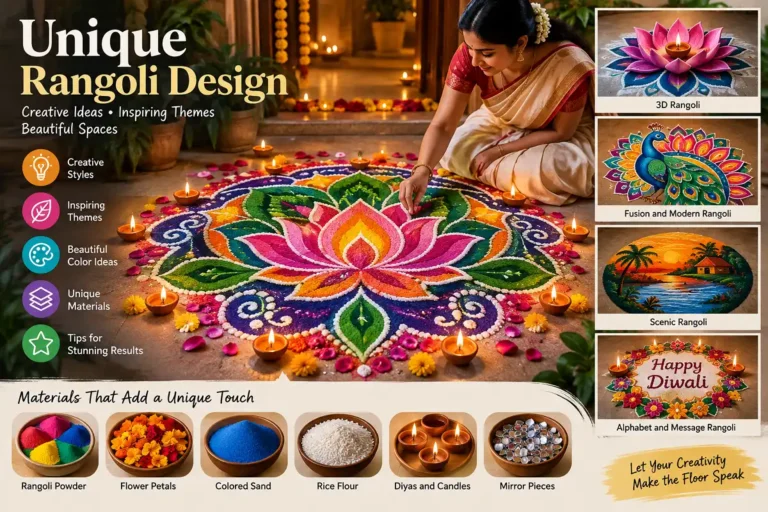
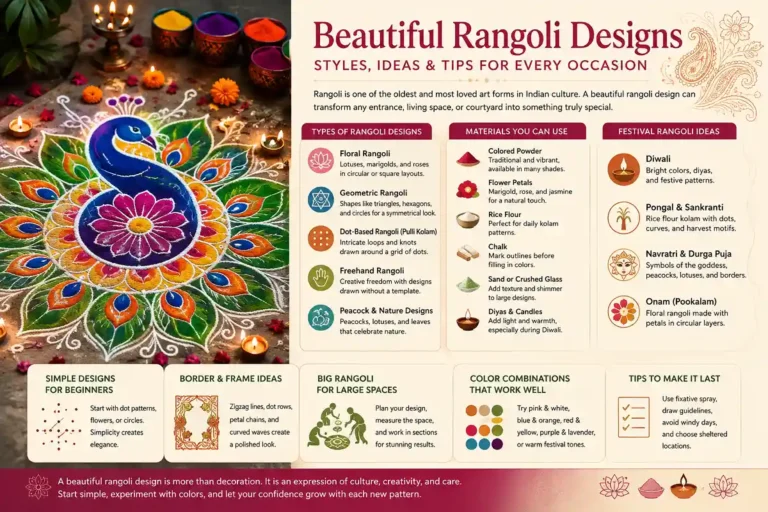
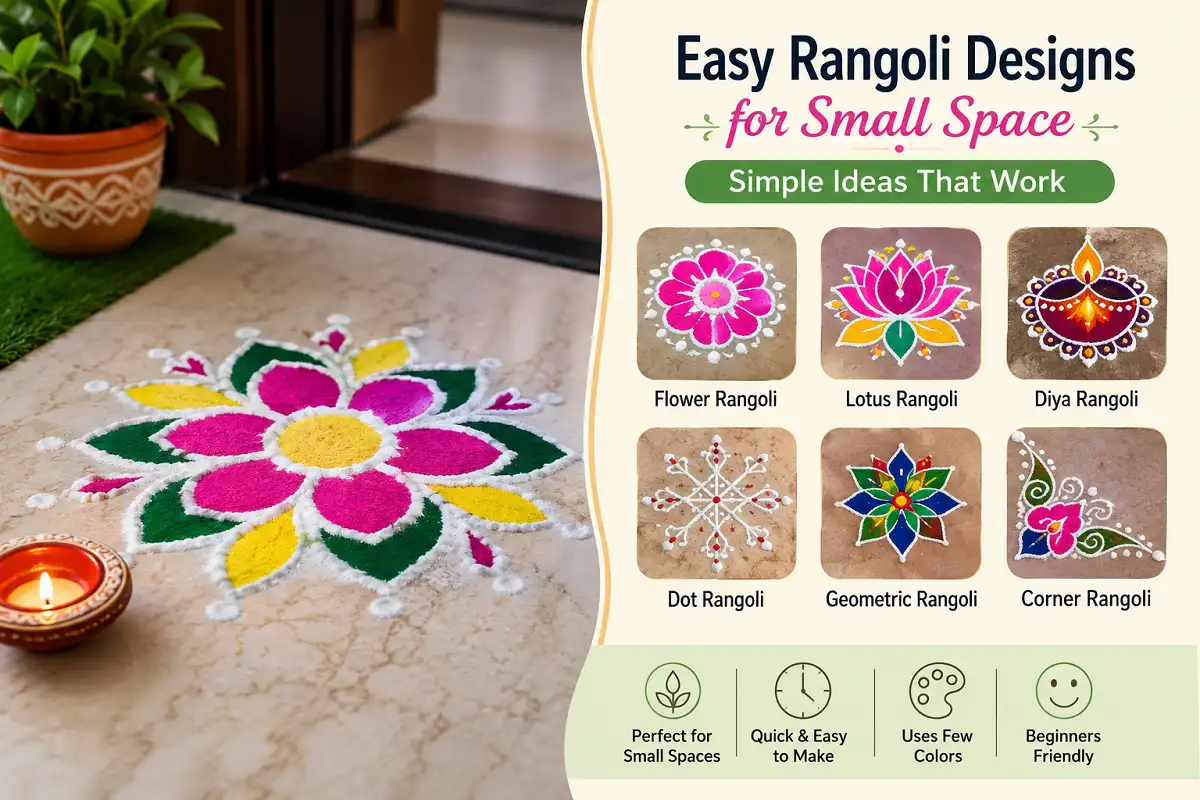
The best easy rangoli designs for small space focus on simple shapes, balanced patterns, and a few carefully chosen colors. A small flower, lotus, diya, or geometric design can make a doorway feel festive without making the area look crowded.
In fact, a compact rangoli can sometimes look more elegant than a large design squeezed into a limited area. The key is to choose a pattern that works with the space instead of fighting against it.
Why Easy Rangoli Designs for Small Space Work So Well
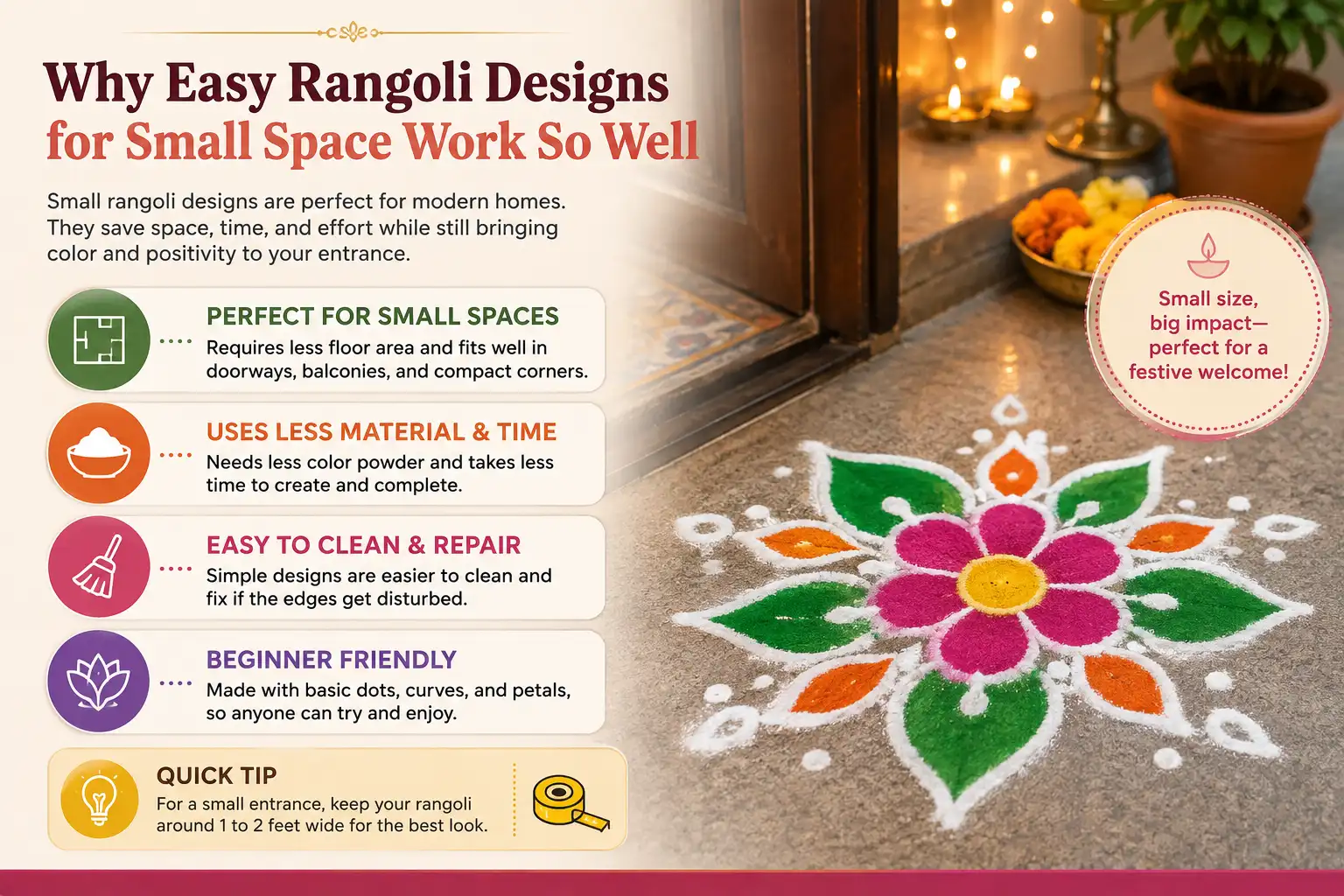
Small rangoli designs are practical for modern homes because they require less floor area, less color powder, and less time. They are also easier to clean and repair if someone accidentally steps near the edge.
For a small entrance, keeping the design around one to two feet wide is often enough to create a noticeable festive effect. Simple symmetry also helps the pattern look complete even when there are only a few details.
Another advantage is that small rangoli designs are beginner-friendly. You can start with a few dots, curves, or petals instead of trying to recreate a complicated large mandala.
10 Easy Rangoli Designs for Small Space
If you have a small doorway, apartment entrance, balcony corner, or limited floor space, you do not need to skip rangoli. The right pattern can make even a tiny area look colorful and welcoming. These easy rangoli designs for small space are simple to draw, beginner-friendly, and can usually be completed with just two or three colors.
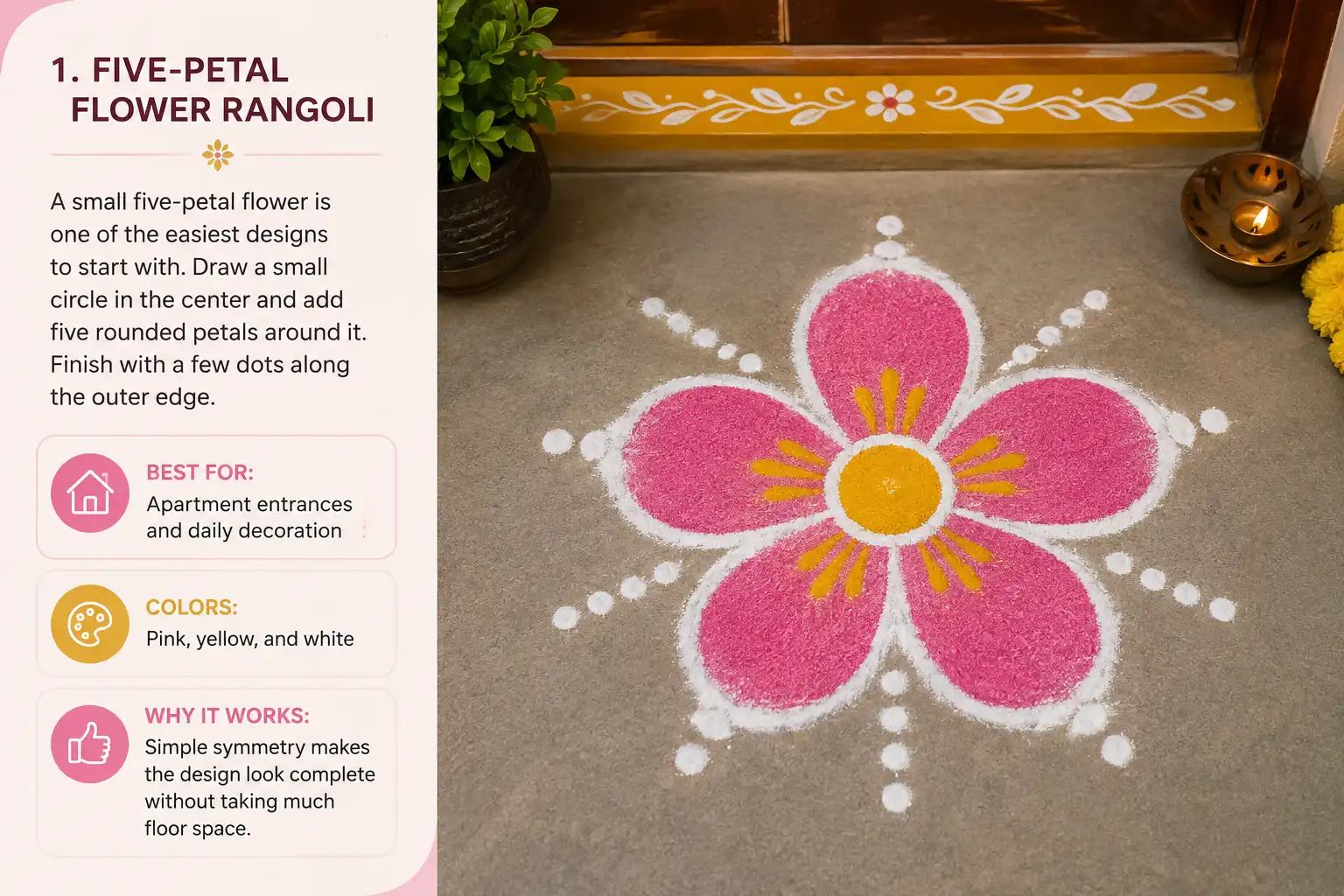
Five-Petal Flower Rangoli
A small five-petal flower is one of the easiest designs to start with. Draw a small circle in the center and add five rounded petals around it. Finish with a few dots along the outer edge.
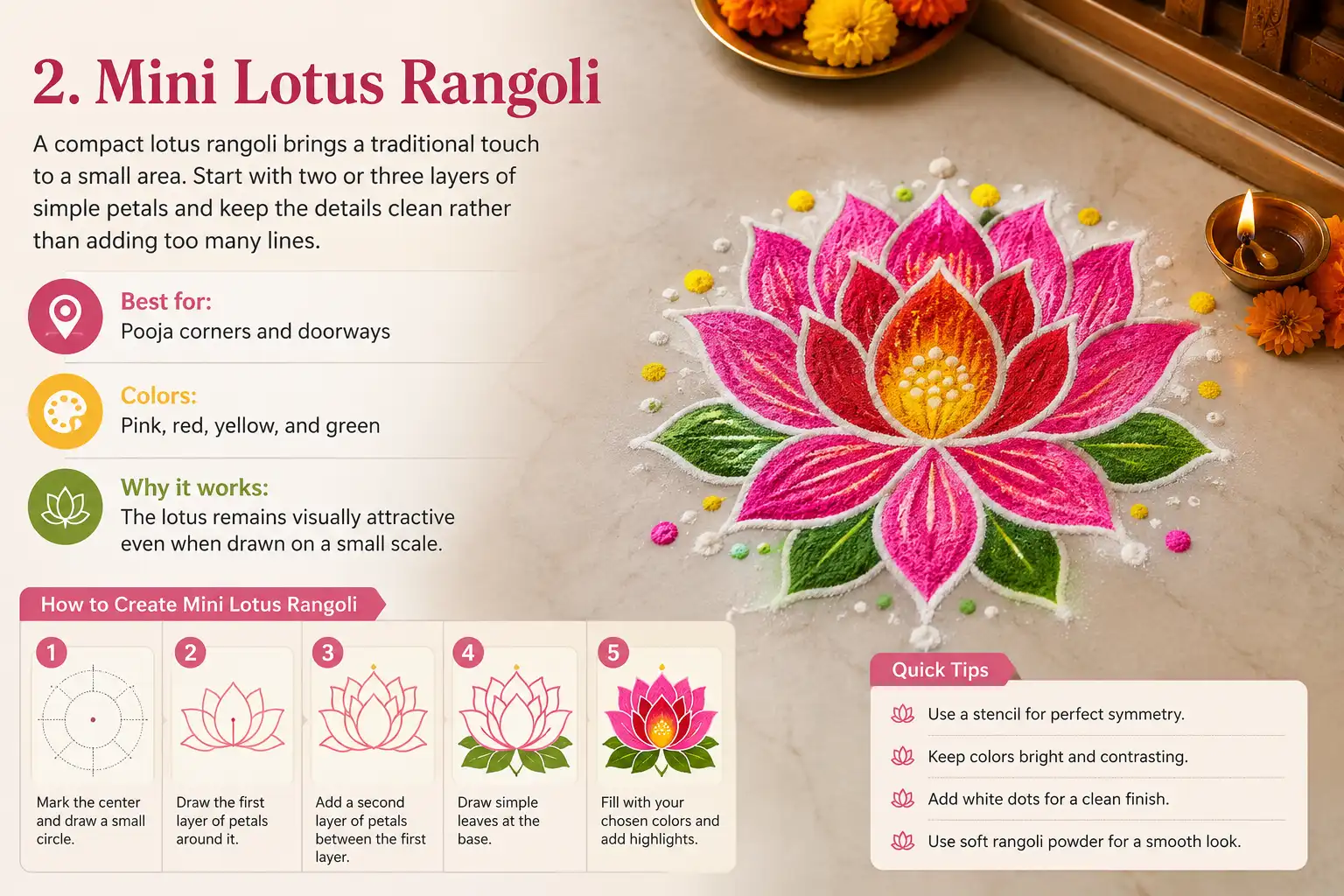
Mini Lotus Rangoli
A compact lotus rangoli brings a traditional touch to a small area. Start with two or three layers of simple petals and keep the details clean rather than adding too many lines.
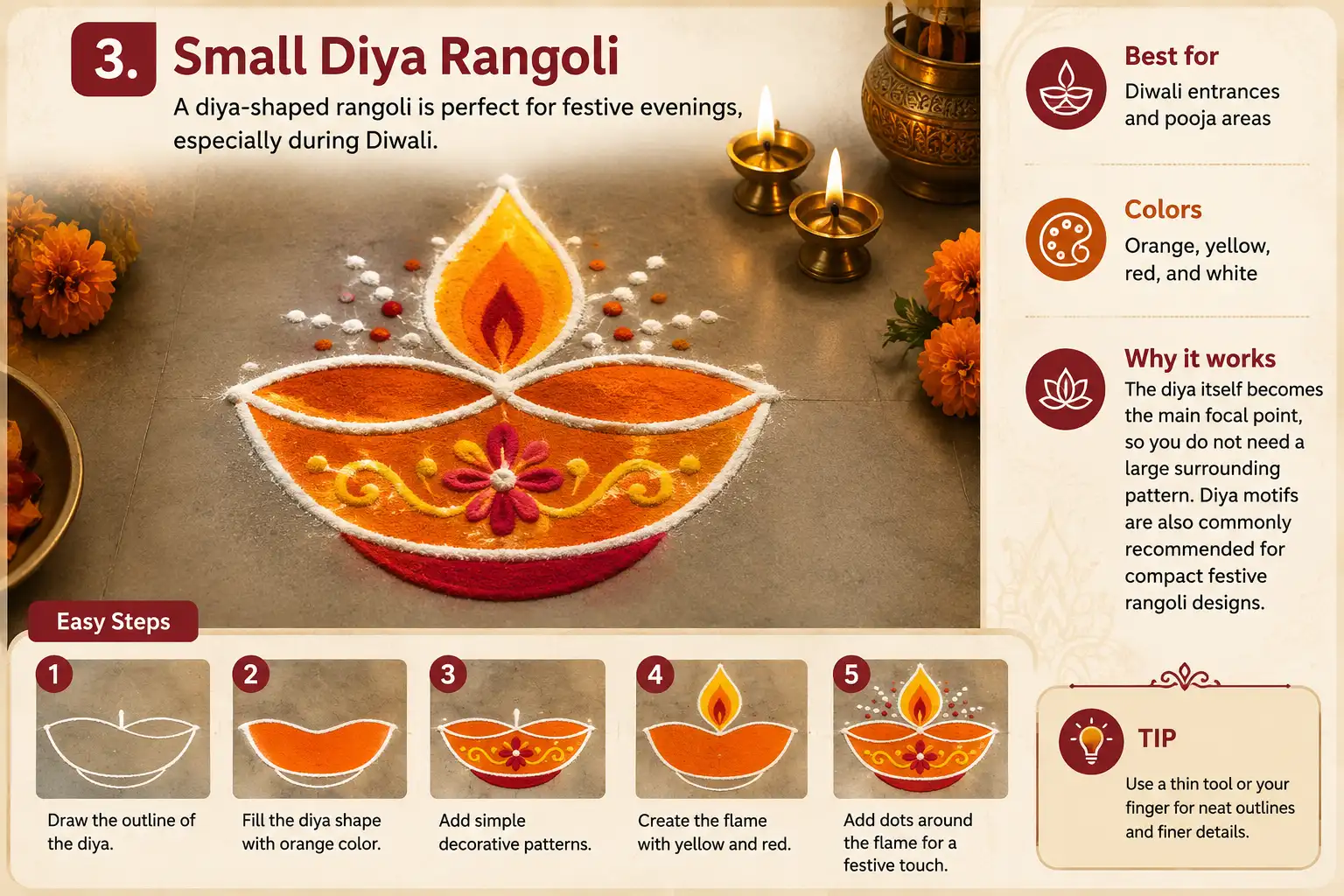
Small Diya Rangoli
A diya-shaped rangoli is perfect for festive evenings, especially during Diwali. Draw a small oil lamp in the center and add a simple flame with a few decorative dots around it.
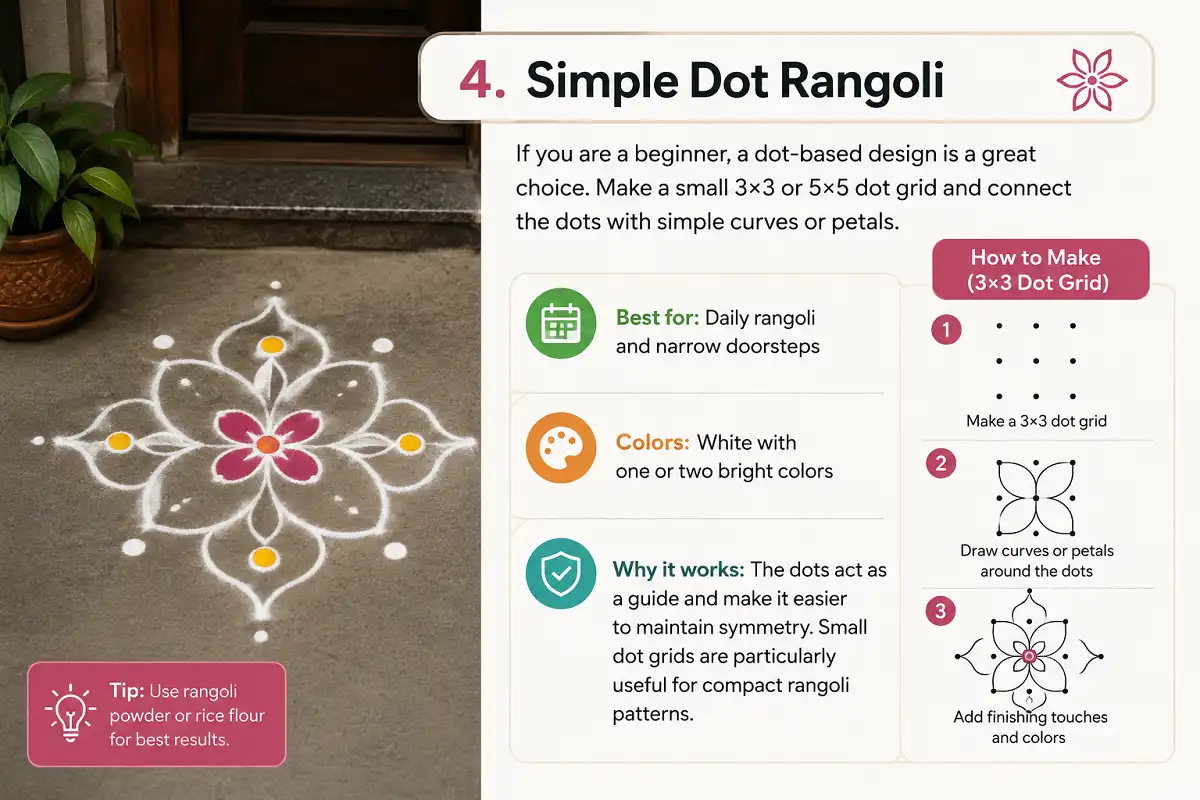
Simple Dot Rangoli
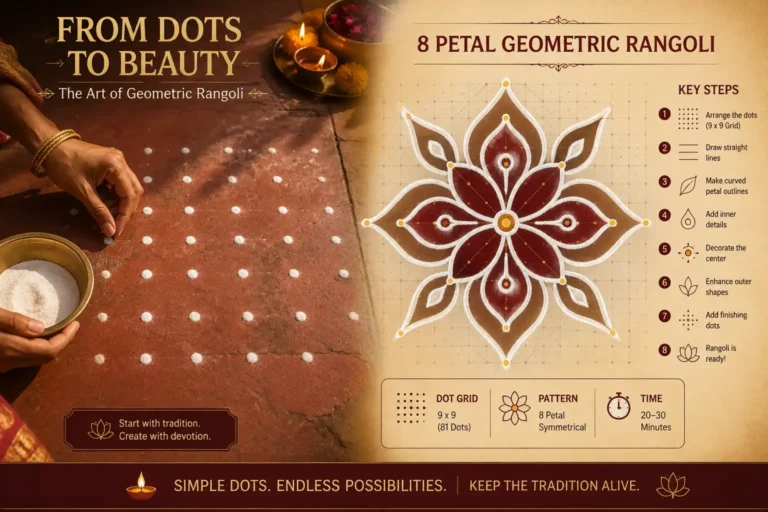
If you are a beginner, a dot-based design is a great choice. Make a small 3×3 or 5×5 dot grid and connect the dots with simple curves or petals.
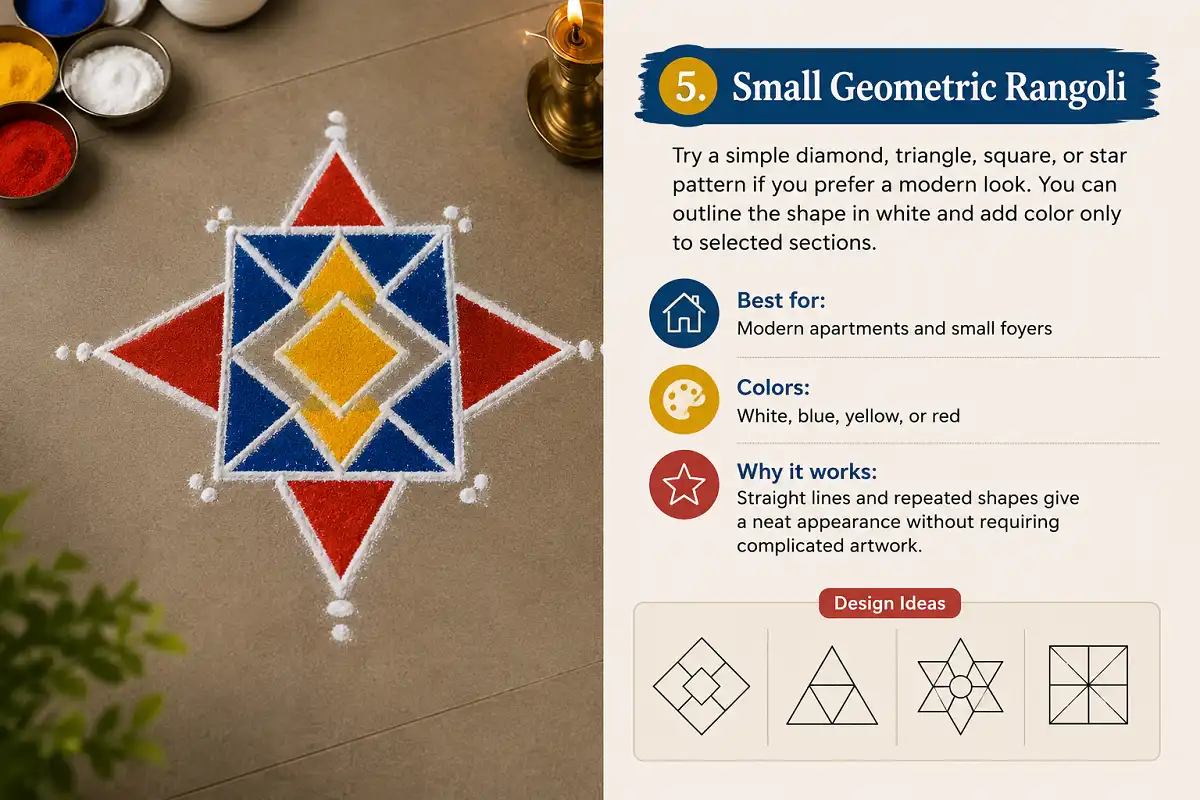
Small Geometric Rangoli
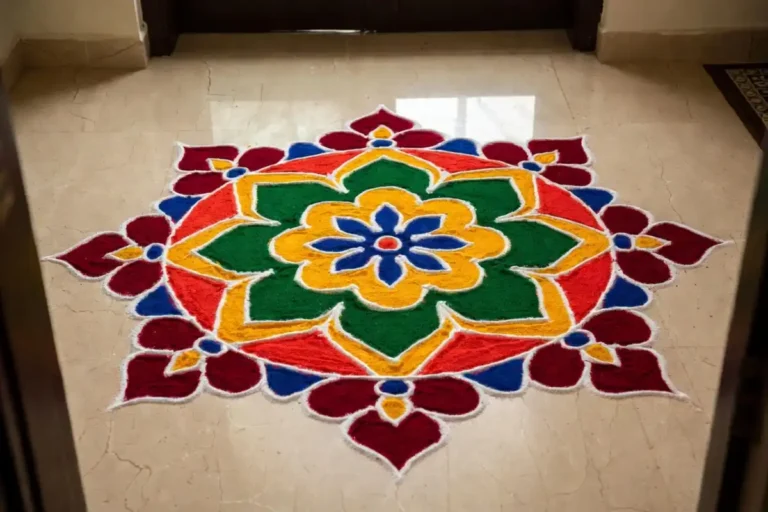
Try a simple diamond, triangle, square, or star pattern if you prefer a modern look. You can outline the shape in white and add color only to selected sections.
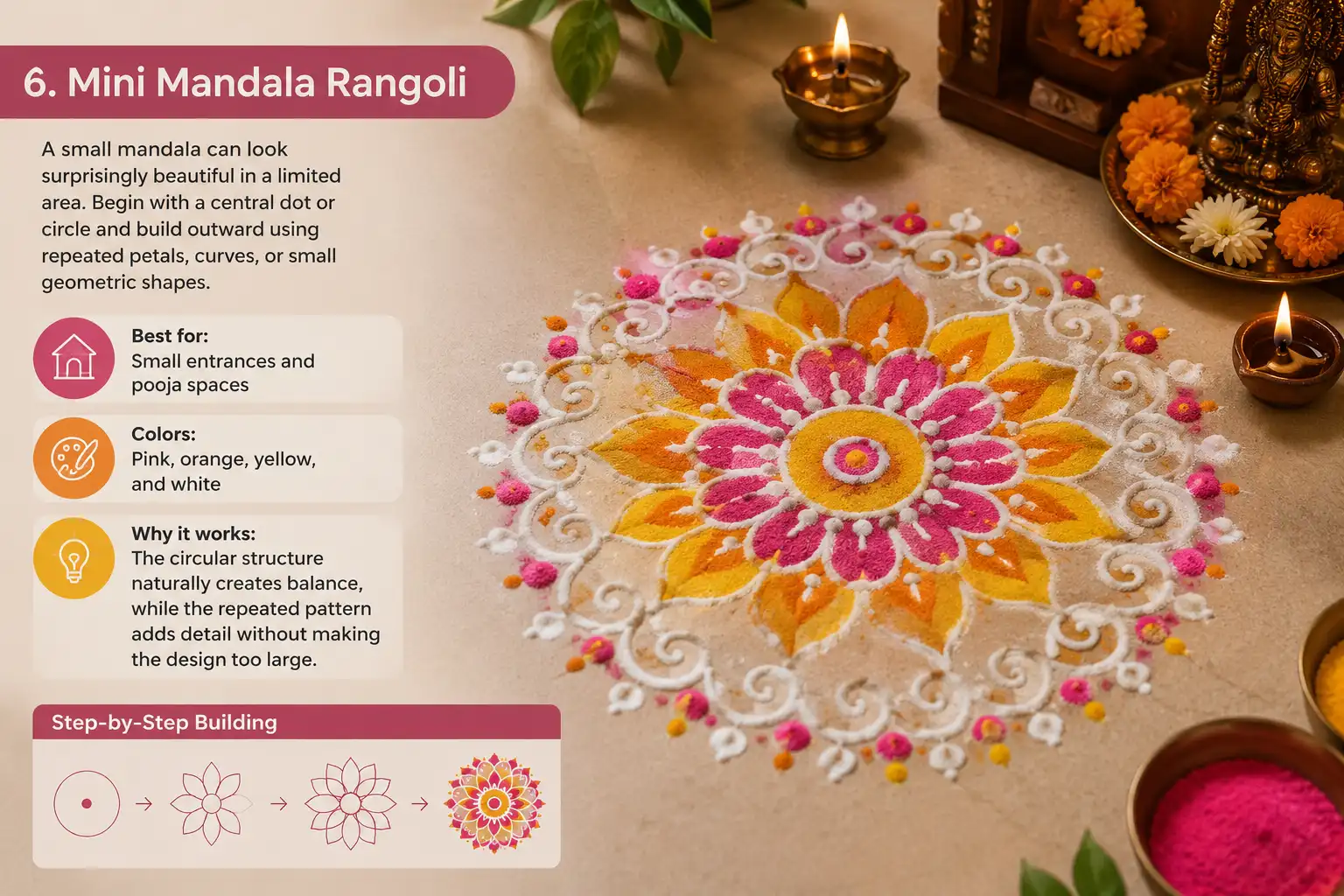
Mini Mandala Rangoli
A small mandala can look surprisingly beautiful in a limited area. Begin with a central dot or circle and build outward using repeated petals, curves, or small geometric shapes.
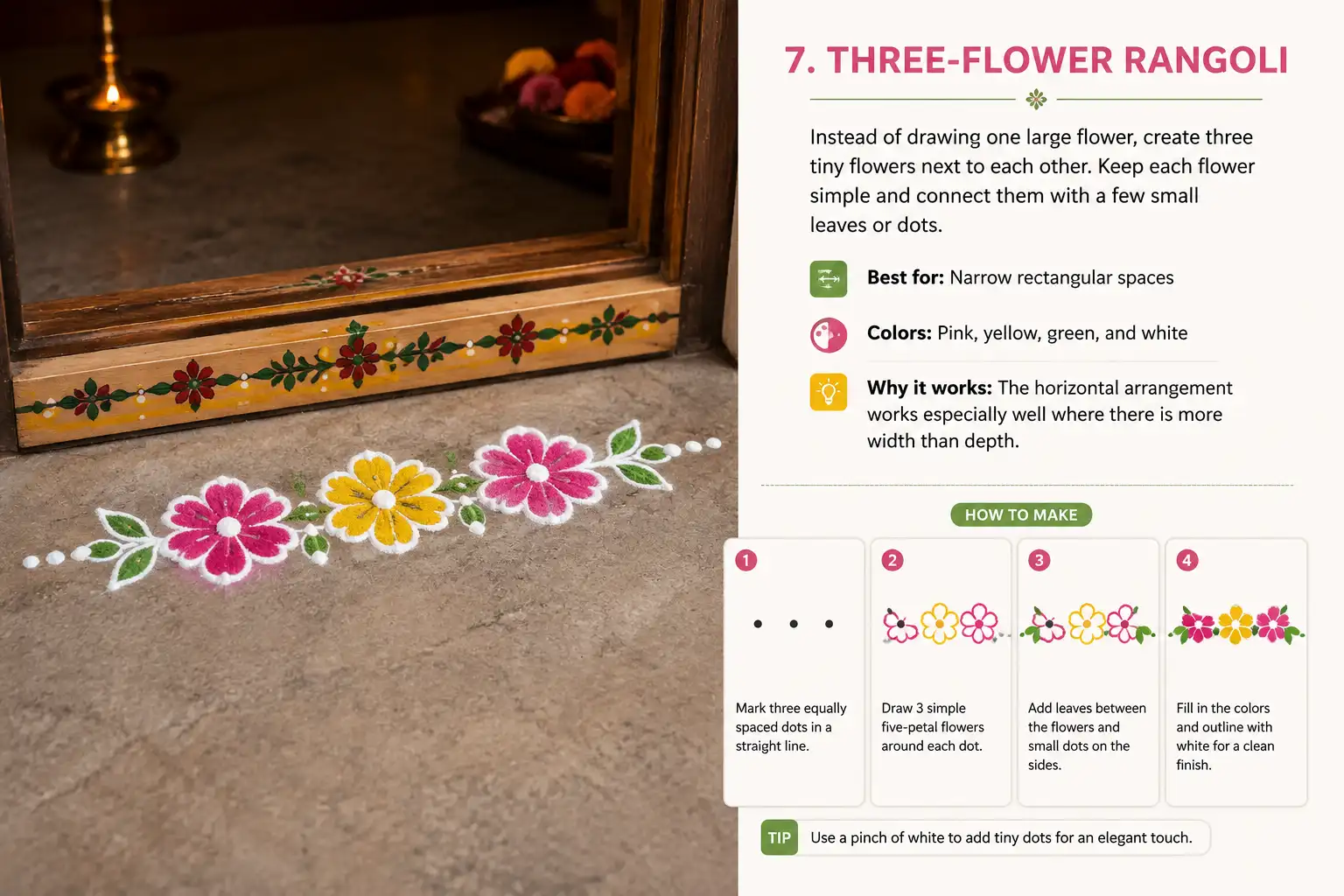
Three-Flower Rangoli
Instead of drawing one large flower, create three tiny flowers next to each other. Keep each flower simple and connect them with a few small leaves or dots.
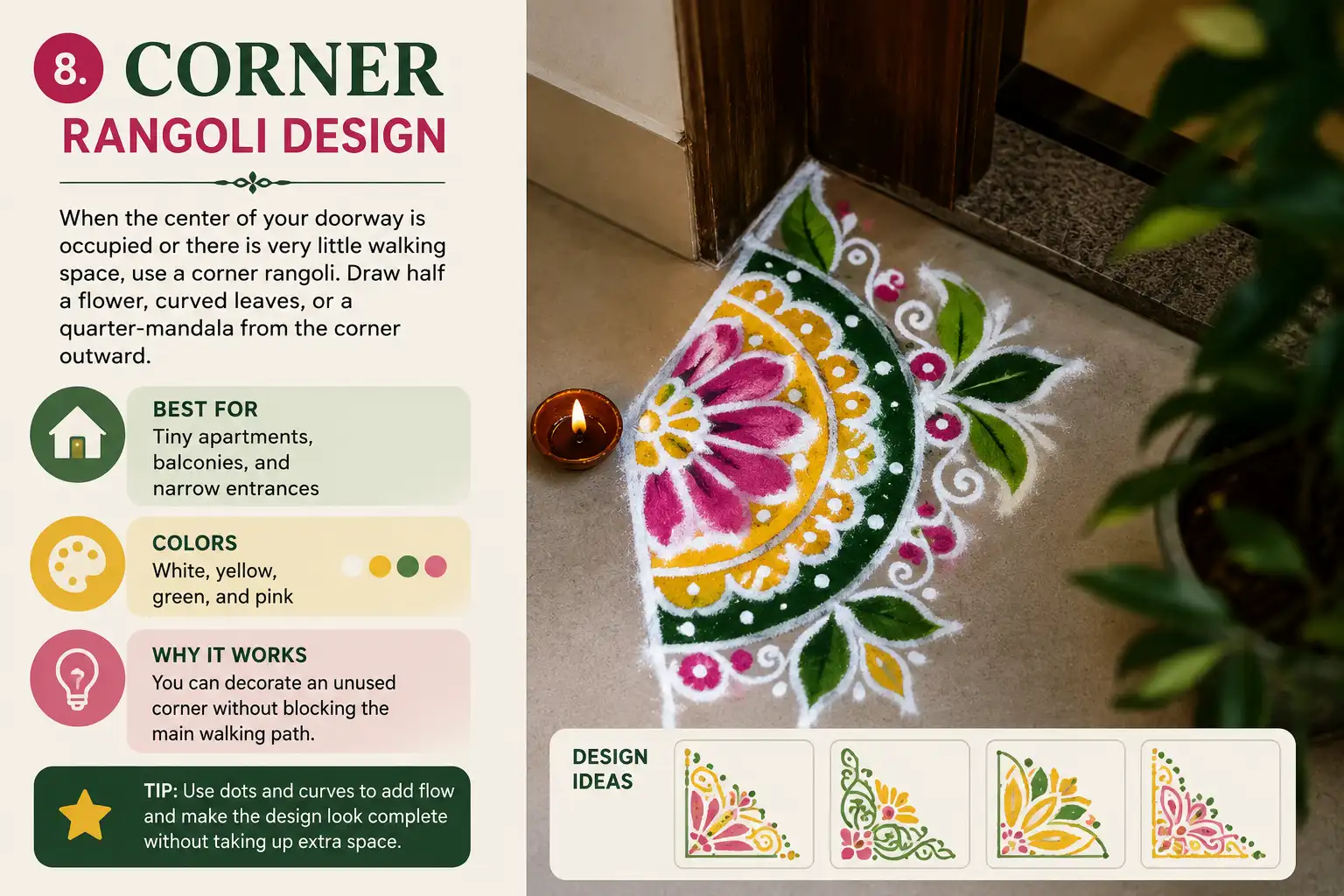
Corner Rangoli Design
When the center of your doorway is occupied or there is very little walking space, use a corner rangoli. Draw half a flower, curved leaves, or a quarter-mandala from the corner outward.
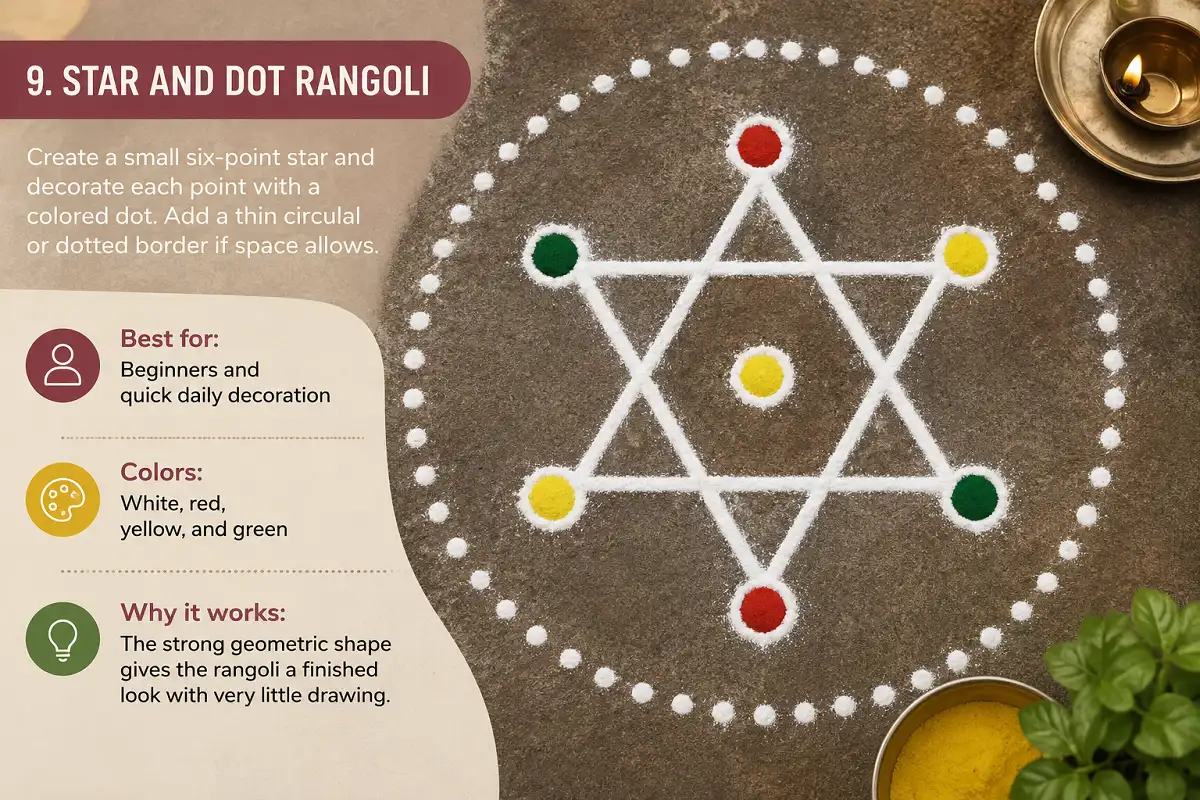
Star and Dot Rangoli
Create a small six-point star and decorate each point with a colored dot. Add a thin circular or dotted border if space allows.
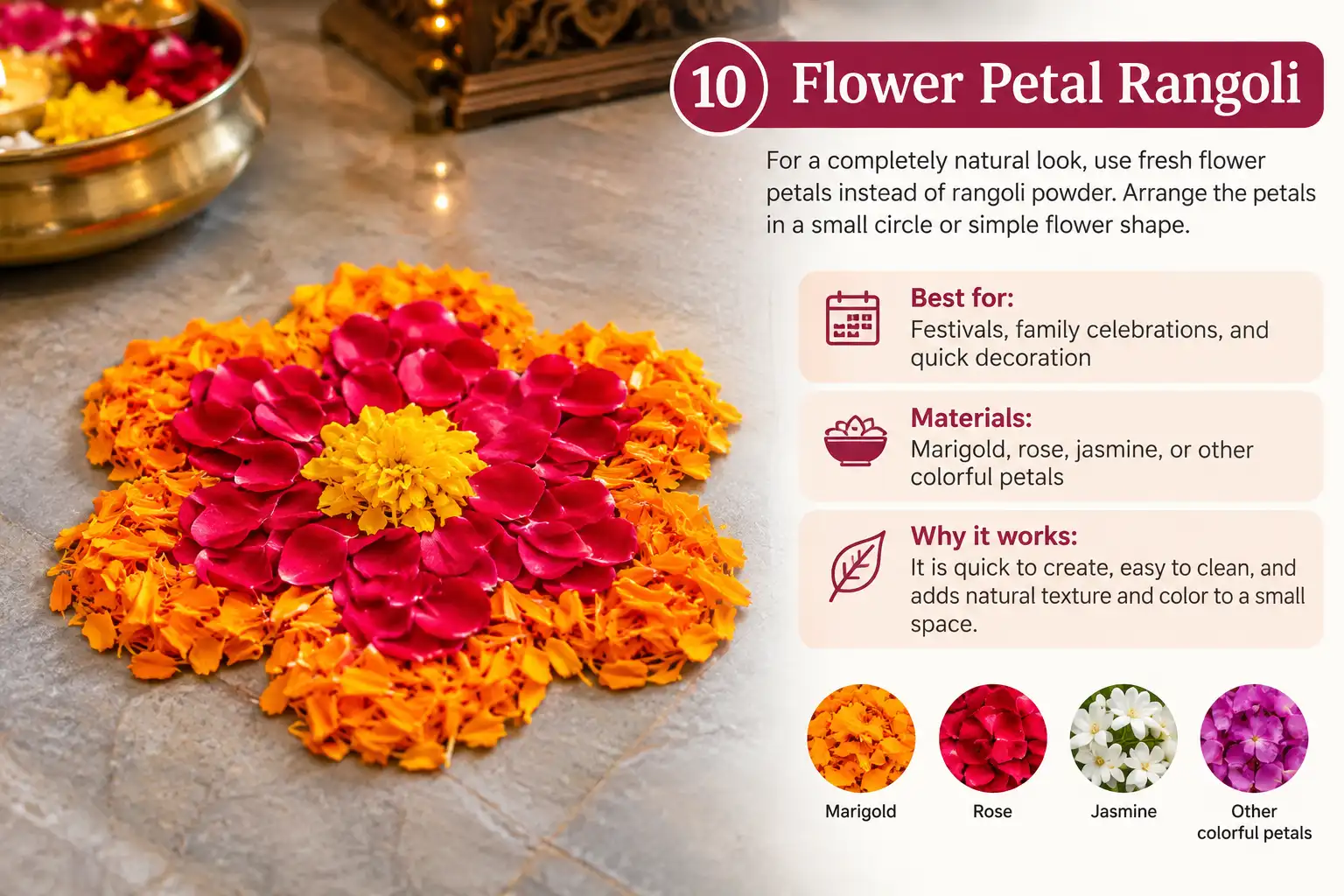
Flower Petal Rangoli
For a completely natural look, use fresh flower petals instead of rangoli powder. Arrange the petals in a small circle or simple flower shape.
How to Choose the Right Rangoli for a Small Space
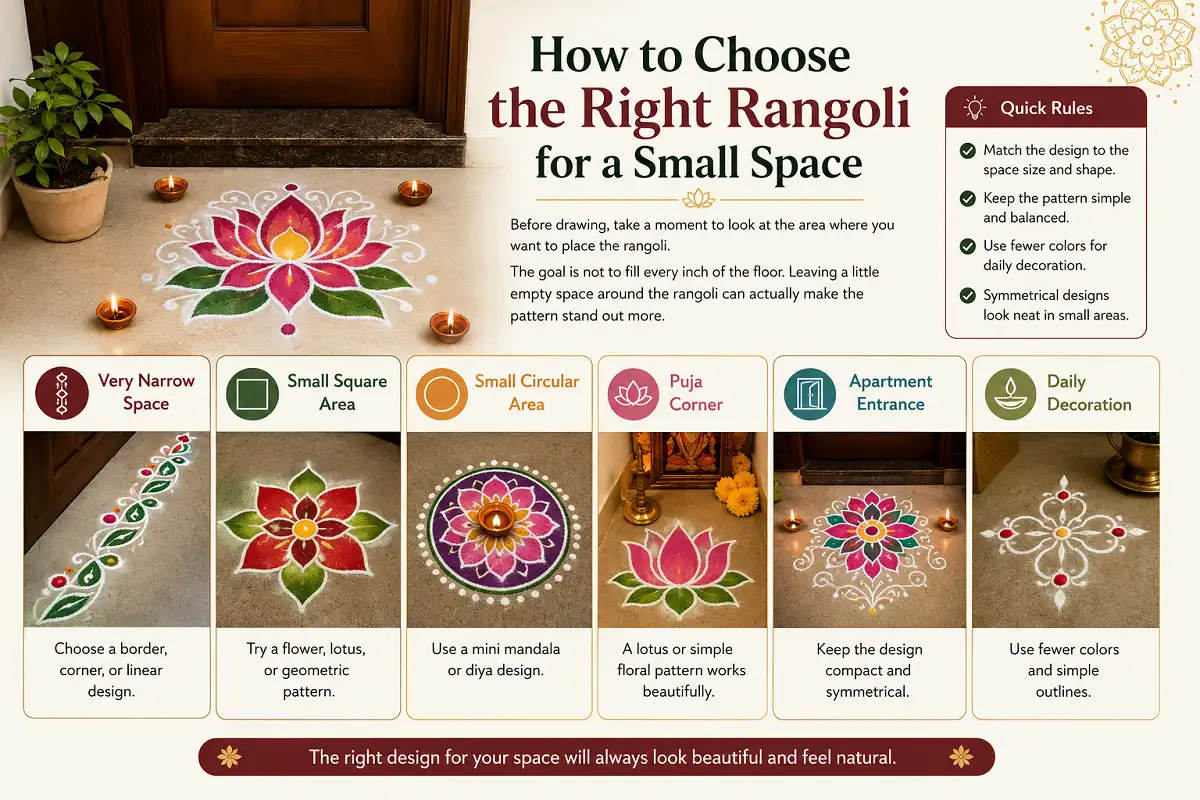
Before drawing, take a moment to look at the area where you want to place the rangoli. If the space is narrow, a vertical or corner design may work better than a wide circular pattern. If you have a little more room, a small flower or mandala can sit comfortably in the center. Here are a few simple rules that help:
- Very narrow space: Choose a border, corner, or linear design.
- Small square area: Try a flower, lotus, or geometric pattern.
- Small circular area: Use a mini mandala or diya design.
- Puja corner: A lotus or simple floral pattern works beautifully.
- Apartment entrance: Keep the design compact and symmetrical.
- Daily decoration: Use fewer colors and simple outlines.
The goal is not to fill every inch of the floor. Leaving a little empty space around the rangoli can actually make the pattern stand out more.
Simple Tips to Make a Small Rangoli Look Beautiful
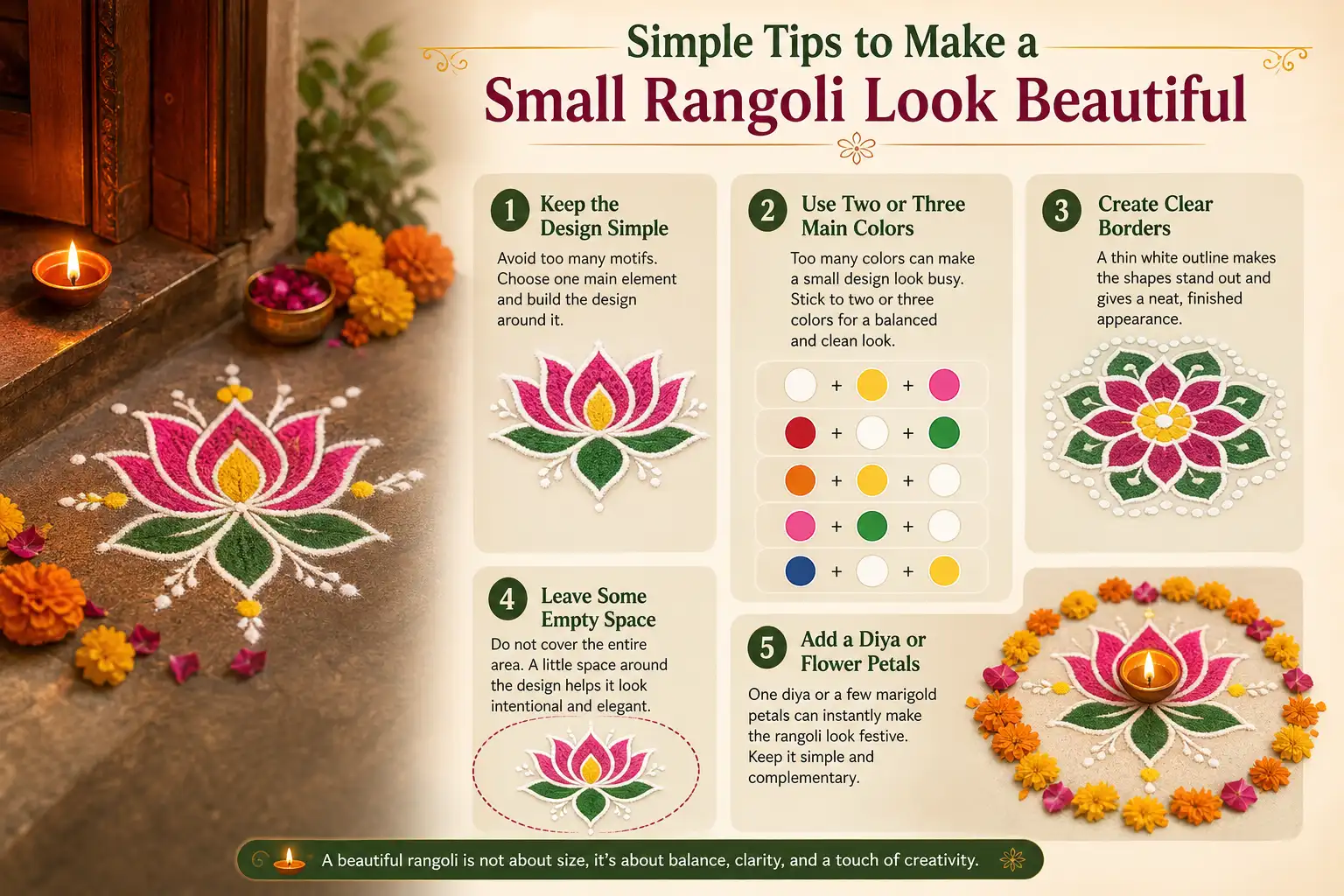
A small rangoli does not need complicated detailing to look impressive. A few thoughtful choices can make a big difference.
Keep the Design Simple
Avoid squeezing too many motifs into a tiny area. Choose one main element and build the design around it — if you choose a lotus, let it remain the visual focus.
Use Two or Three Main Colors
Too many colors can make a small design look busy. You can always add a small amount of another shade for highlights.
Create Clear Borders
A thin white outline makes shapes easier to see and gives the rangoli a cleaner, more finished appearance. A dotted or petal border is usually enough.
Leave Some Empty Space
Do not try to cover the entire available floor. Breathing room around the pattern helps it look intentional and prevents clutter.
Add a Diya or Flower Petals
One small diya can instantly make a simple rangoli feel more festive. The decoration should complement the rangoli rather than hide it.
Try combinations such as:
Easy Rangoli Designs for Small Space for Beginners
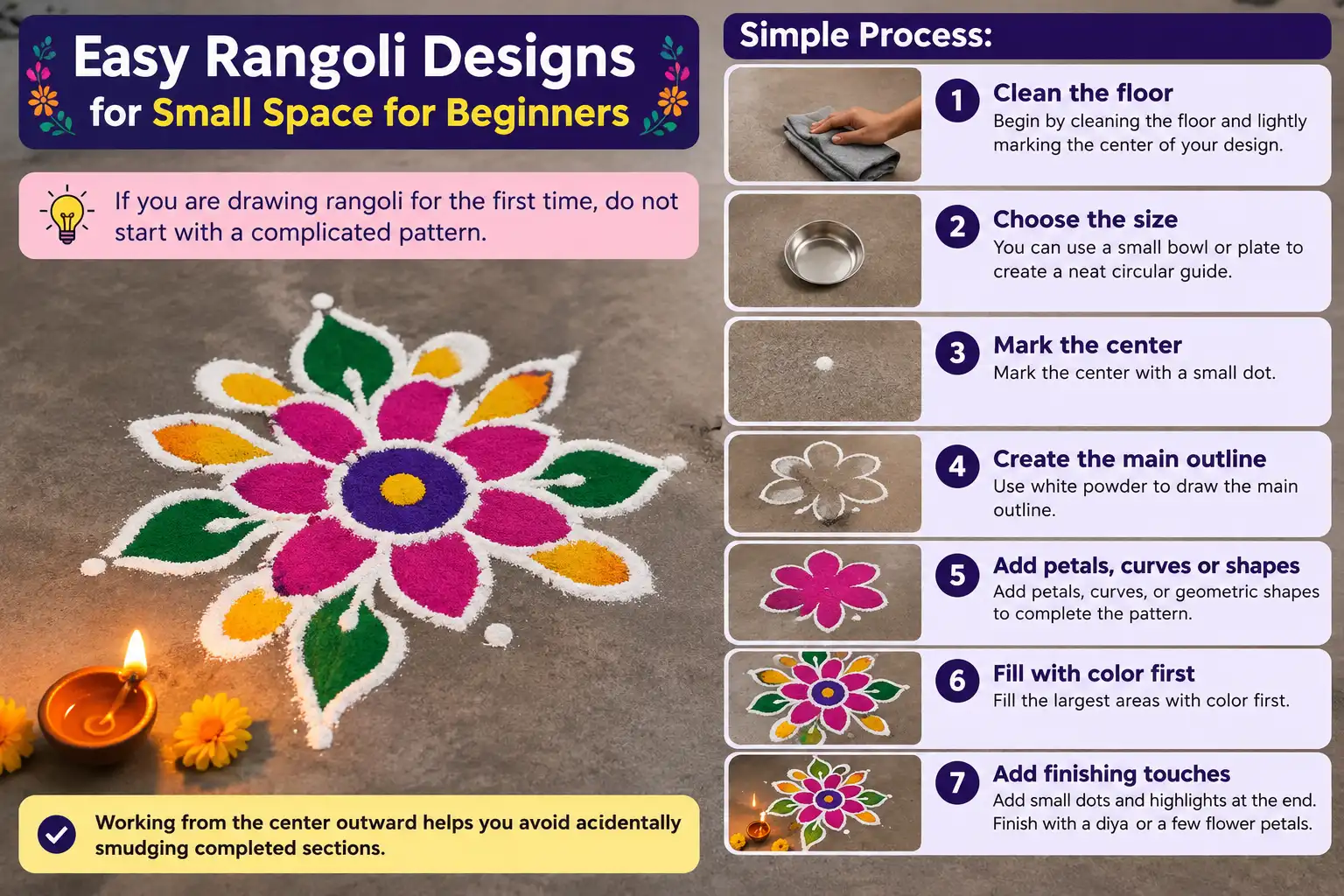
If you are drawing rangoli for the first time, do not start with a complicated pattern. Begin by cleaning the floor and lightly marking the center of your design. You can use a small bowl or plate to create a neat circular guide. Then follow this simple process:
Choose the size before you start drawing.
Mark the center with a small dot.
Create the main outline using white powder.
Add petals, curves, or geometric shapes.
Fill the largest areas with color first.
Add small dots and highlights at the end.
Finish with a diya or a few flower petals.
Working from the center outward helps you avoid accidentally smudging completed sections.
Small Rangoli Ideas for Different Occasions
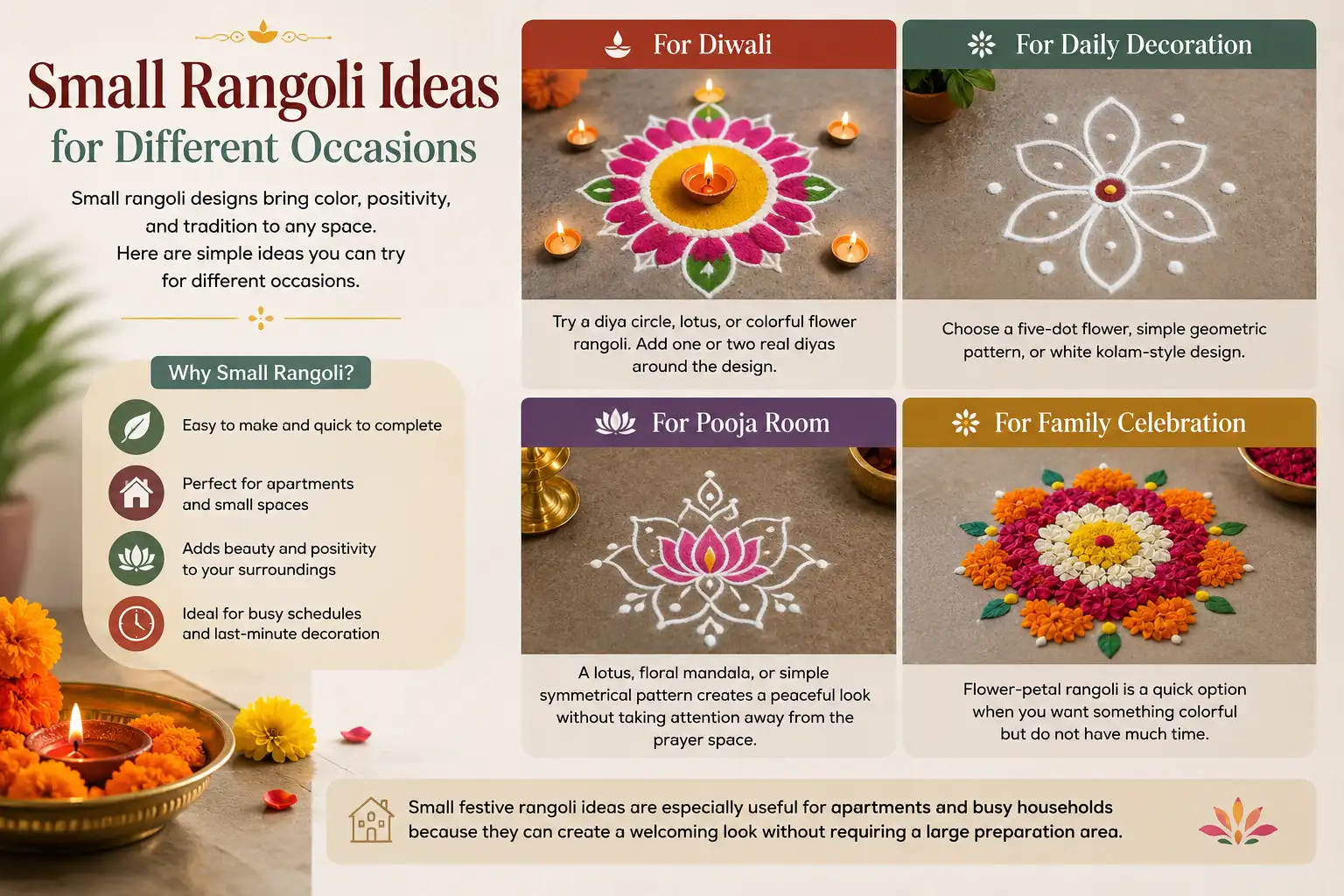
The same compact design can be adapted for many occasions.
🪔Diwali
Try a diya circle, lotus, or colorful flower rangoli. Add one or two real diyas around the design.
☀️Daily Decoration
Choose a five-dot flower, simple geometric pattern, or white kolam-style design.
🙏Puja Room
A lotus, floral mandala, or simple symmetrical pattern creates a peaceful look without taking attention from the prayer space.
🎉Family Celebration
Flower-petal rangoli is a quick option when you want something colorful but do not have much time.
Small festive rangoli ideas are especially useful for apartments and busy households because they can create a welcoming look without requiring a large preparation area.
Common Mistakes to Avoid in a Small Rangoli
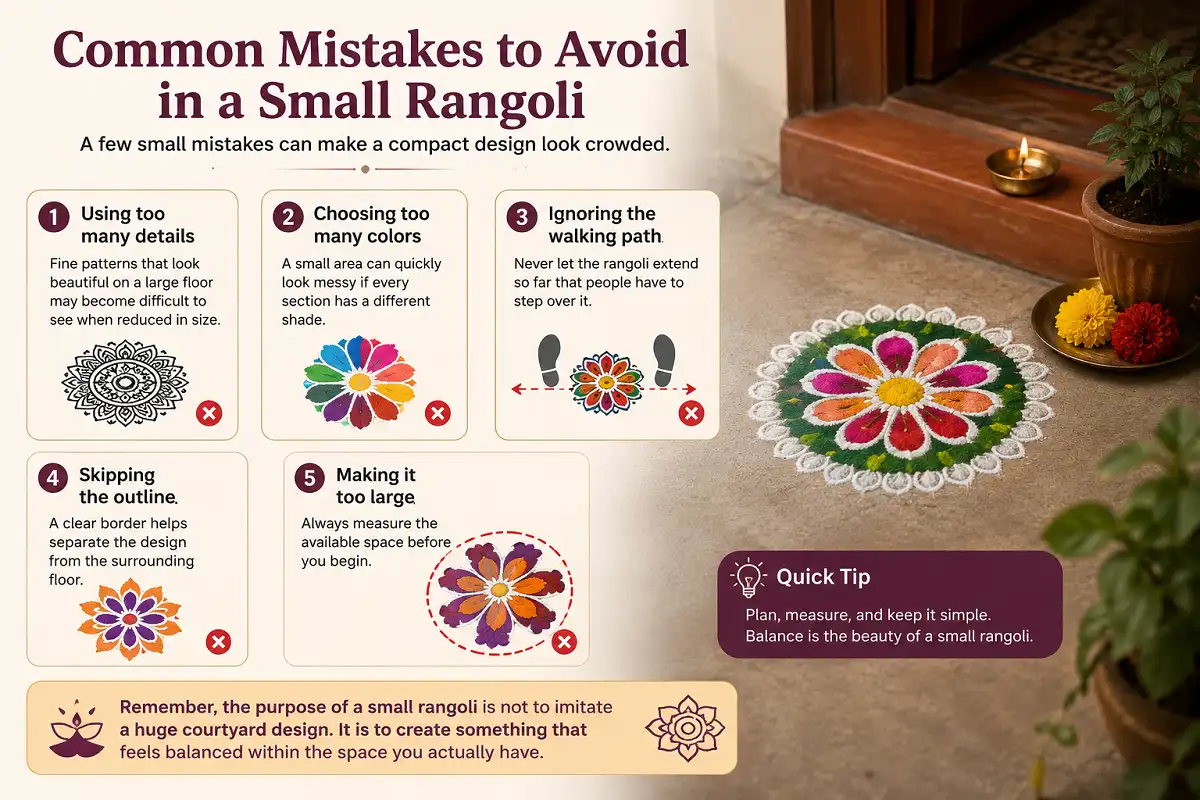
A few small mistakes can make a compact design look crowded.
- Using too many details: Fine patterns that look beautiful on a large floor may become difficult to see when reduced in size.
- Choosing too many colors: A small area can quickly look messy if every section has a different shade.
- Ignoring the walking path: Never let the rangoli extend so far that people have to step over it.
- Skipping the outline: A clear border helps separate the design from the surrounding floor.
- Making it too large: Always measure the available space before you begin.
Remember, the purpose of a small rangoli is not to imitate a huge courtyard design. It is to create something that feels balanced within the space you actually have.
Easy Rangoli Designs for Small Spaces
Creating beautiful easy rangoli designs for small space is really about making smart choices rather than making a large pattern smaller. A simple flower, lotus, diya, geometric shape, or dot design can transform even a tiny entrance into a warm and welcoming spot. If you are looking for more inspiration, explore these small flower rangoli designs and simple daily flower rangoli designs for more compact ideas.
Start with one simple motif, use two or three colors, and give the design enough breathing room. As your confidence grows, you can experiment with more patterns and combinations. You can also explore these easy rangoli design ideas for beginners to find patterns that are easy to practice and adapt to your available space.
Whether you live in an apartment, have a narrow doorway, or simply prefer quick everyday decoration, a small rangoli can still bring plenty of color, creativity, and festive charm to your home.
For even more visual inspiration, browse Pinterest for different rangoli patterns, color combinations, and small-space decoration ideas.
FAQs
What are the best easy rangoli designs for small space?
Simple flower, lotus, diya, dot, geometric, and mini mandala designs work especially well in small spaces. A compact circular or corner pattern can look beautiful without making the entrance feel crowded.
What size should a rangoli be for a small space?
For most small entrances, a rangoli between 12 and 24 inches wide works well. If the available space is very narrow, you can make an even smaller design that fits comfortably without blocking the walking area.
Which rangoli design is easiest for beginners?
A simple dot-based flower rangoli is one of the easiest options for beginners. A 3×3 or 5×5 dot grid gives you a guide for creating symmetrical petals, curves, and geometric shapes.
How many colors should I use for a small rangoli?
Two or three main colors are usually enough for a small rangoli. Using fewer colors helps the pattern look clean and balanced, especially when the design has limited floor space.
Can I make a beautiful rangoli without using colored powder?
Yes. You can create a small rangoli using flower petals, rice flour, chalk, or other decorative materials. Flower-petal rangoli is a particularly simple option when you want a colorful design without detailed drawing.