Modern Geometric Rangoli for Office: A Complete Design Guide
Modern geometric rangoli for office spaces brings clean lines and quiet color to a workplace without the mess of powder or the fuss of freehand art. I design these for reception desks, entrance floors, and desk corners. Here is how I do it.
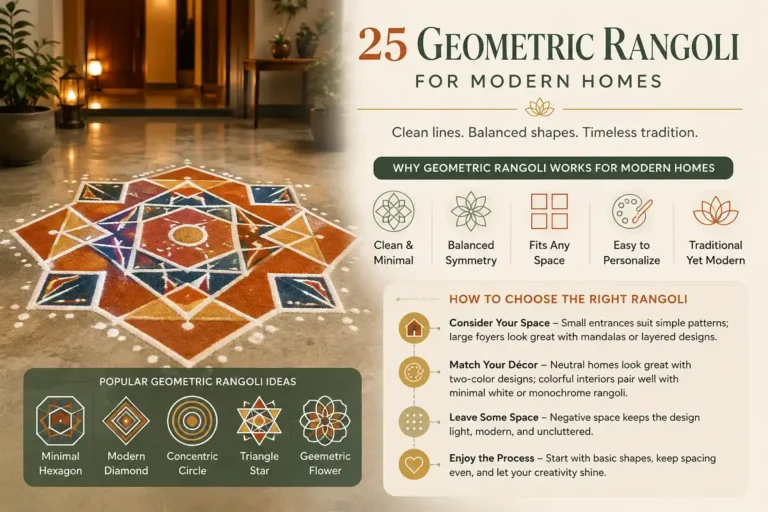
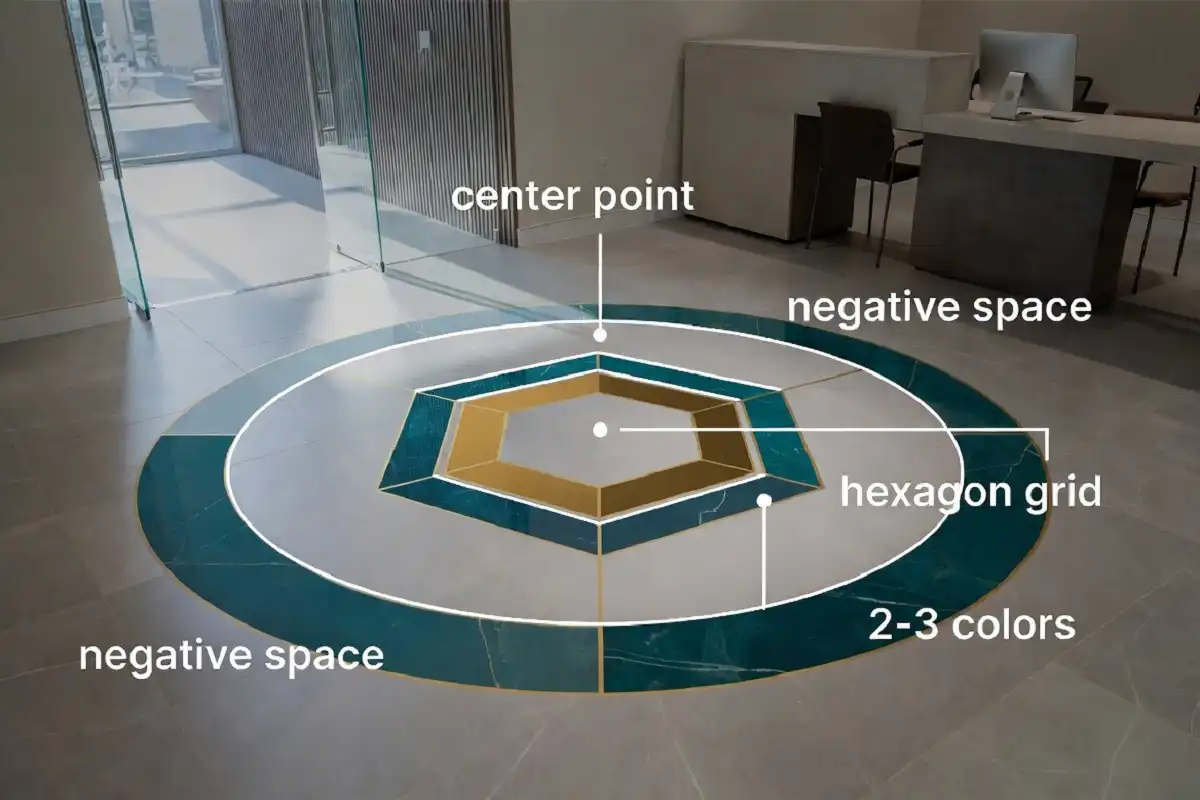
A modern geometric rangoli for office uses simple shapes like triangles, hexagons, and concentric circles in a tidy, symmetrical layout. Keep colors to two or three, use sticker or acrylic versions for zero mess, and place it at the entrance.
Why Geometric Designs Suit an Office
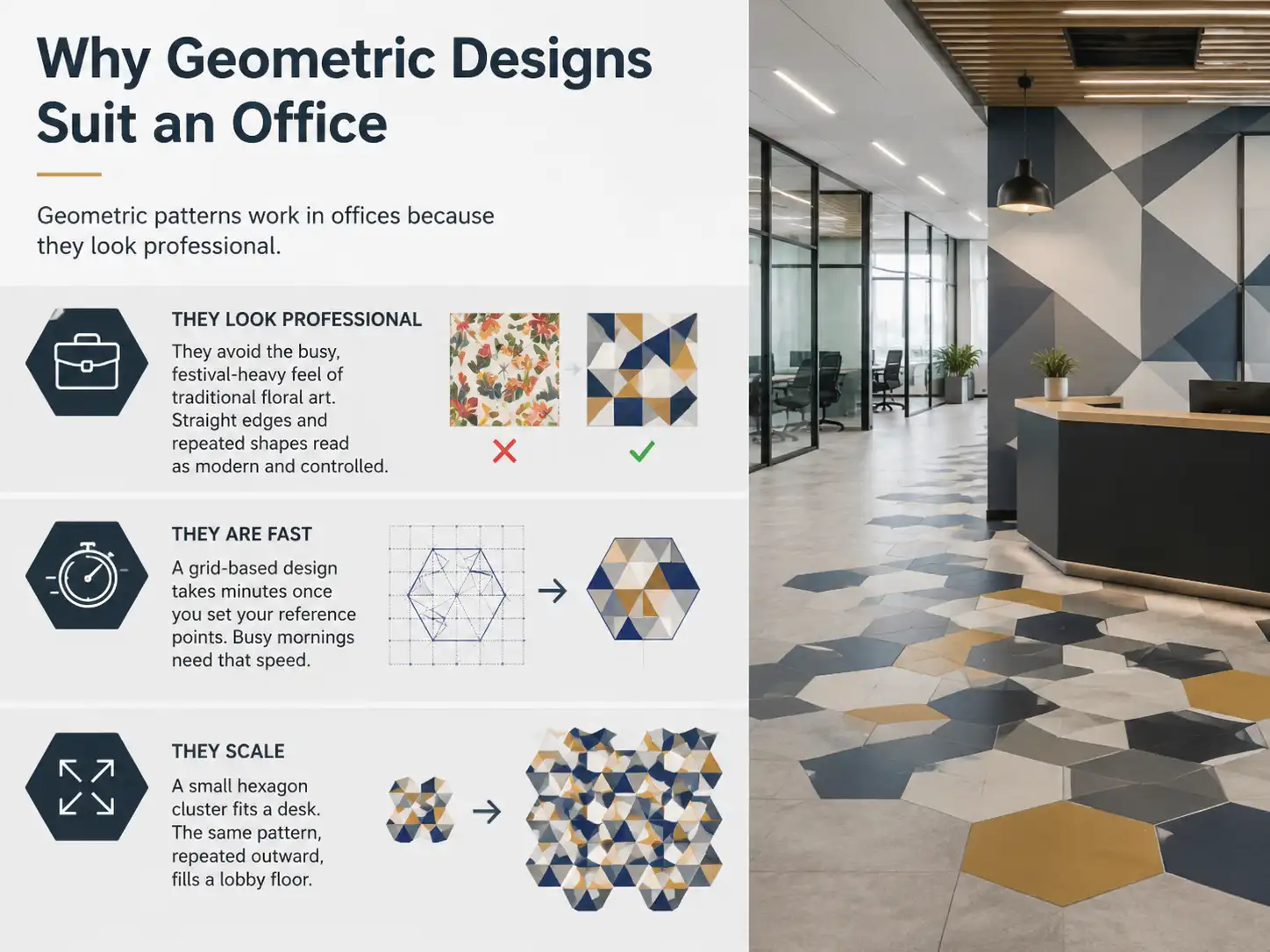
Geometric patterns work in offices because they look professional. They avoid the busy, festival-heavy feel of traditional floral art. Straight edges and repeated shapes read as modern and controlled. That matches most workplace interiors.
They are also fast. A grid-based design takes minutes once you set your reference points. Busy mornings need that speed.
And they scale. A small hexagon cluster fits a desk. The same pattern, repeated outward, fills a lobby floor.
Materials You Need
Pick your method first, then gather supplies.
Permanent & Reusable
For a permanent, reusable design, use acrylic rangoli mats or vinyl floor stickers. These peel up cleanly and store flat. Offices with foot traffic need this.
Fresh Daily Design
For a fresh daily design, keep it simple: fine rangoli powder in two or three shades, a chalk stick for guidelines, a ruler or set square, and a small stencil for repeated shapes. A soft brush cleans stray grains.
Raised & Tactile
For a raised, tactile look, use colored sand or fine table salt tinted with chalk. This holds shape longer than loose powder.
Core Geometric Patterns That Work
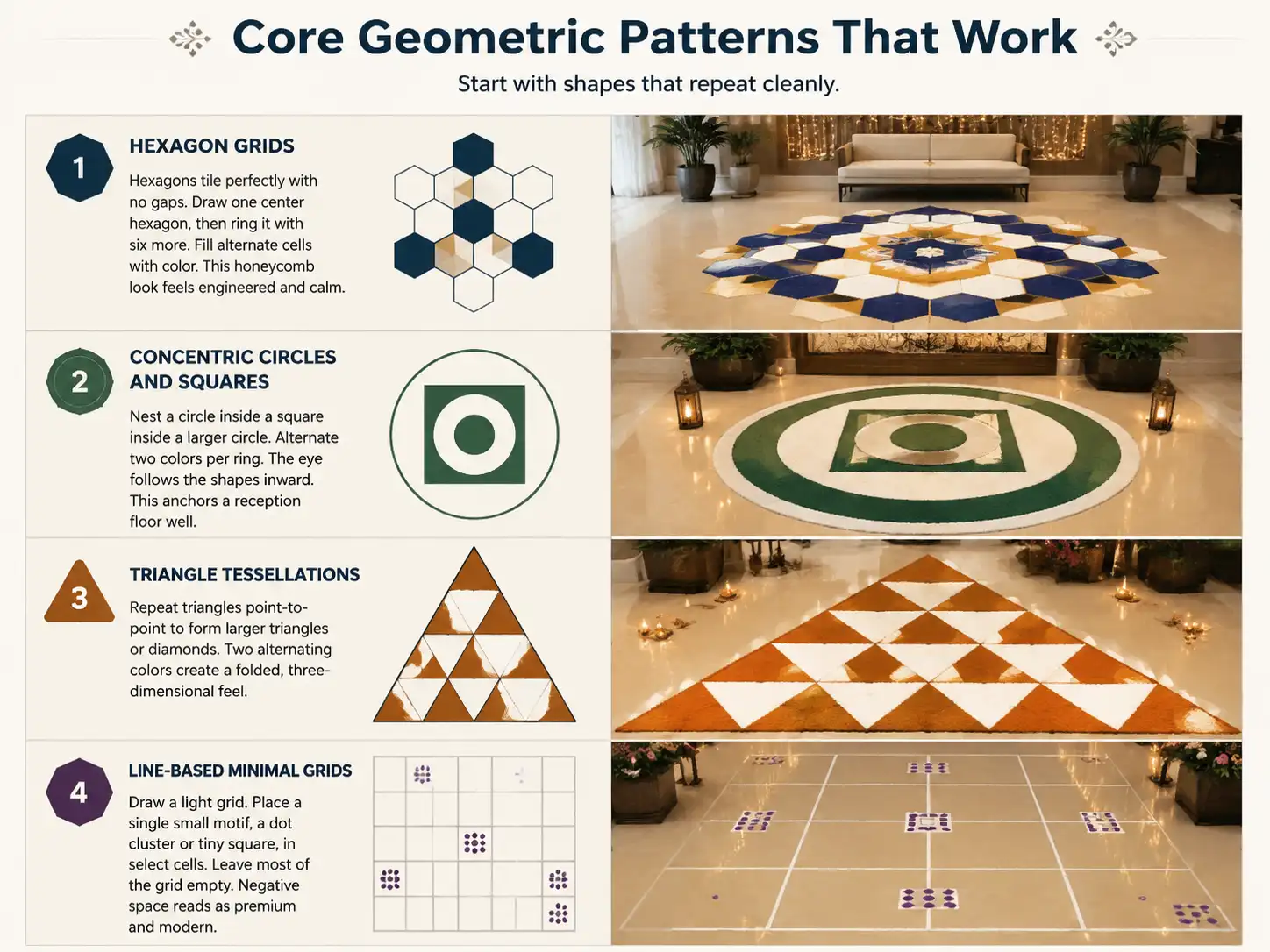
Start with shapes that repeat cleanly.
Hexagon Grids
Hexagons tile perfectly with no gaps. Draw one center hexagon, then ring it with six more. Fill alternate cells with color. This honeycomb look feels engineered and calm. If you want to go deeper on this shape, my guide to easy hexagon-based rangoli patterns walks through the full grid method.
Concentric Circles & Squares
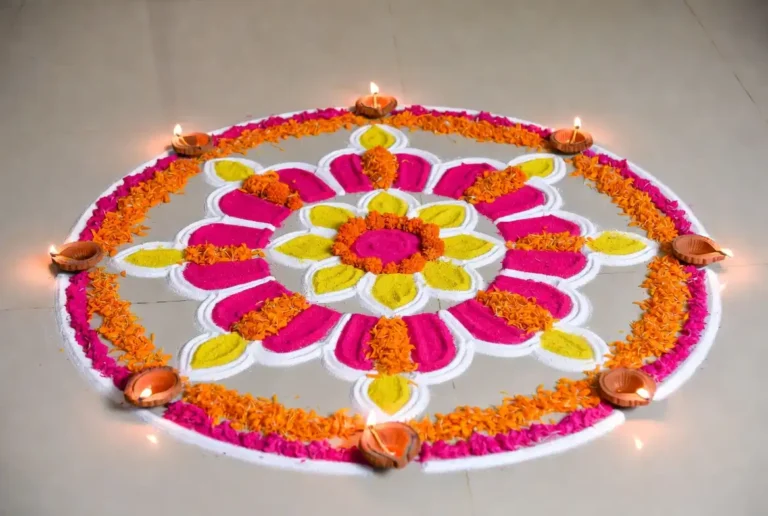
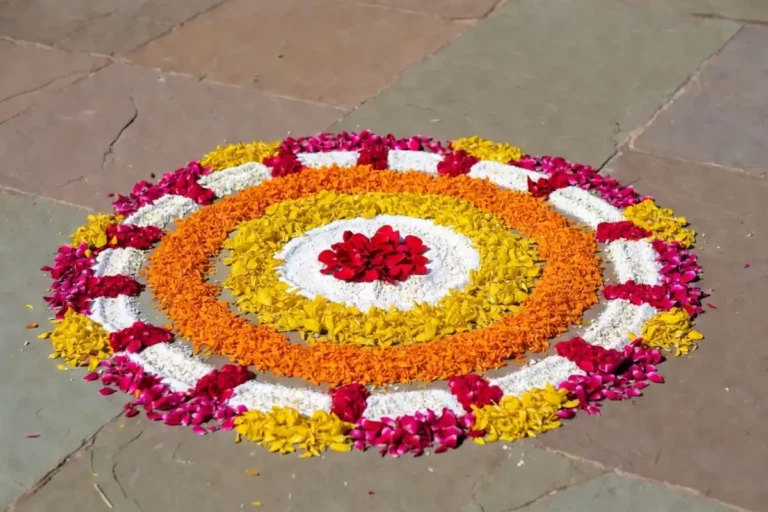
Nest a circle inside a square inside a larger circle. Alternate two colors per ring. The eye follows the shapes inward. This anchors a reception floor well.
Triangle Tessellations
Repeat triangles point-to-point to form larger triangles or diamonds. Two alternating colors create a folded, three-dimensional feel. For layouts built on triangles and circles together, this approach to combining triangles and circles in rangoli gives you a clean starting frame.
Line-Based Minimal Grids
Draw a light grid. Place a single small motif, a dot cluster or tiny square, in select cells. Leave most of the grid empty. Negative space reads as premium and modern.
Step-by-Step: A Reception Floor Design
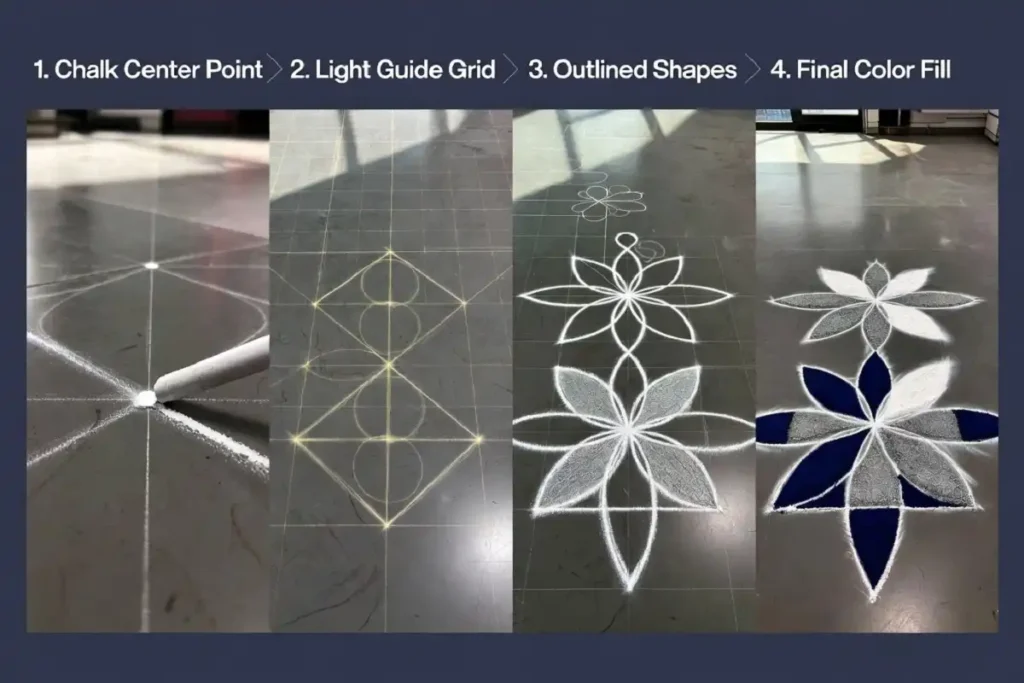
Follow this order and the design stays crisp.
- 1
Clean and dry the floor. Any dust ruins fine powder lines.
- 2
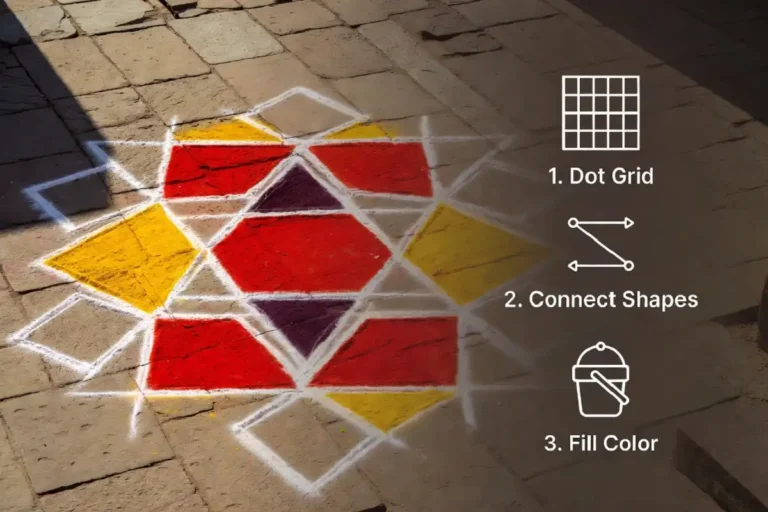
Find the center. Mark it with chalk. Every geometric layout builds outward from one point.
- 3
Draw your guide grid lightly in chalk. Use a ruler for straight lines and a compass or a string for circles.
- 4
Outline the main shapes over your grid. Work from the center out.
- 5
Fill color. Do the outline color first, then the inner fills. Pinch powder between finger and thumb, or use a squeeze bottle for control.
- 6
Wipe away any visible chalk edges with a dry brush.
Keep the whole thing to a small, tight footprint near the door. A modern geometric rangoli for office use should never block walkways.
Color Guidance for a Workplace
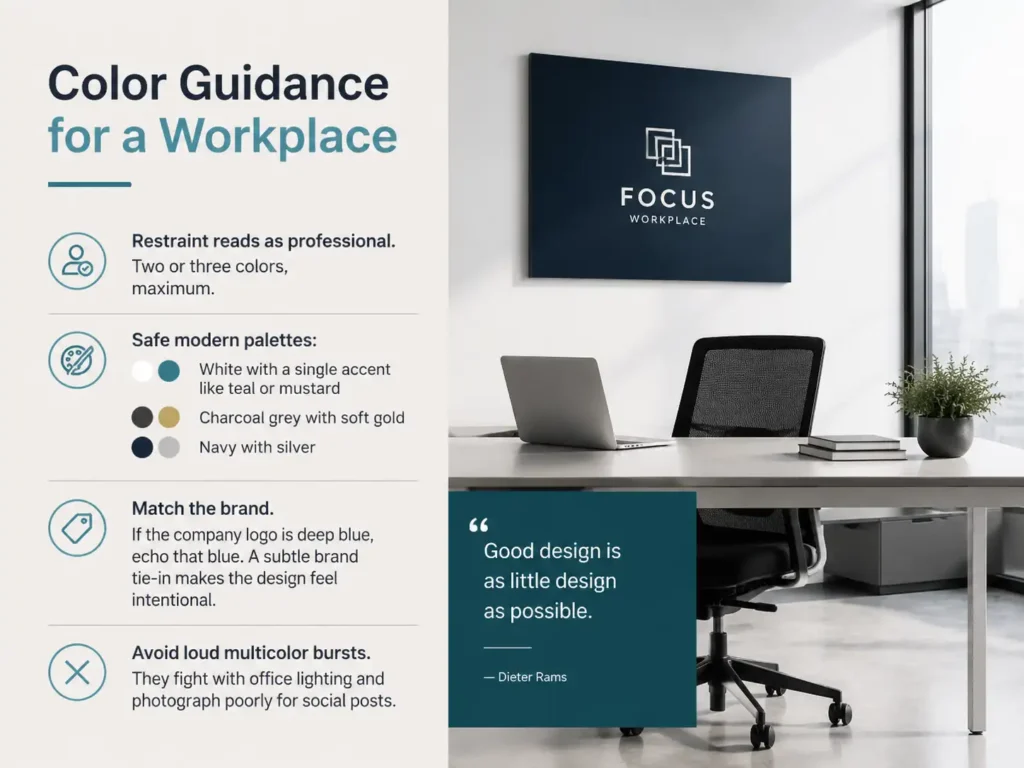
Restraint reads as professional. Two or three colors, maximum.
Safe modern palettes:
Clean base, single cool accent
Grey grounded by soft gold
Deep blue with a metallic edge
These feel corporate, not festive.
Match the brand. If the company logo is deep blue, echo that blue. A subtle brand tie-in makes the design feel intentional.
Avoid loud multicolor bursts. They fight with office lighting and photograph poorly for social posts.
Practical Tips I Follow
- ✓Keep a reusable stencil for the core shape. Consistency across days looks deliberate.
- ✓Photograph the finished design in the morning light before foot traffic disturbs it. Offices often want these for their social media.
- ✓For a mess-free option, pre-make the design on a thin acrylic sheet at your desk, then lay the sheet at the entrance. Lift it at day’s end.
- ✓Size the design to the space. A cramped lobby needs a compact cluster, not a sprawling mandala.
Common Mistakes to Avoid
- ✕Do not overcrowd. The most common error is filling every cell with color. Empty space is what makes it modern.
- ✕Do not skip the guide grid. Freehand geometry looks wobbly. The grid is the whole secret to crisp lines.
- ✕Do not use too many colors. Four or more shades turn a clean design busy and traditional.
- ✕Do not place it where people walk. A smudged design looks worse than none.
Where to Place It in an Office
Placement decides impact. The entrance floor is the classic spot, greeting visitors as they arrive. Reception desks suit a small framed acrylic version. Meeting room tables can hold a tiny geometric piece for special client visits.
For festival weeks, scale up at the main entrance. For daily use, a compact desk-corner design keeps the workspace warm without clutter. A well-planned modern geometric rangoli for office settings works in all these spots because the shapes stay simple and the color count stays low.
FAQs
Can I make a geometric rangoli without any powder?
Yes. Use vinyl floor stickers, acrylic rangoli mats, or a design printed on a laminated sheet. These give the geometric look with zero mess and full reusability.
How long does a modern geometric rangoli for office take?
A small desk design takes ten to fifteen minutes. A reception floor layout takes thirty to forty-five, mostly in drawing the guide grid.
What is the easiest geometric shape for beginners?
The hexagon grid. It tiles with no gaps and hides small mistakes inside its repeating pattern.
Last Words
A modern geometric rangoli for office works because it respects the space: clean shapes, few colors, tidy footprint. Set your center point, draw a light grid, and let negative space do the work. Whether you choose loose powder or a reusable acrylic mat, keep it simple and the result looks professional every time.