Minimal Rangoli Design: Clean, Easy, and Elegant
A minimal rangoli design brings peace and beauty to your home without feeling overwhelming. You do not need to be an artist or spend hours on the floor to create something lovely. These designs use fewer lines, fewer colors, and simpler shapes but still carry the spirit of traditional rangoli. Whether it is a festival morning or a regular day, a clean and simple pattern at your doorstep sets a warm, welcoming tone for everyone who walks in.
Why Minimal Rangoli Designs Are So Popular
People today are drawn to clean and simple things. Minimal rangoli design fits right into that feeling. It skips the complexity of large festival patterns but keeps all the charm. You spend less time, use fewer materials, and still get a result that looks polished and intentional.
These designs also suit modern homes better. Apartments, small entryways, and tiled floors look great with a neat, compact pattern rather than an oversized one that might feel out of place. Minimalism in rangoli is not about doing less. It is about doing just enough.
Another reason people love it is how forgiving it is. If a line is slightly off or a dot is uneven, the overall design still works because the focus is on shape and balance rather than detail. This makes it perfect for anyone just starting out.
Tools and Materials You Need
You do not need a big collection of supplies. A minimal rangoli design can be created with just a few basic things.
- White rice flour or chalk powder for the base outline
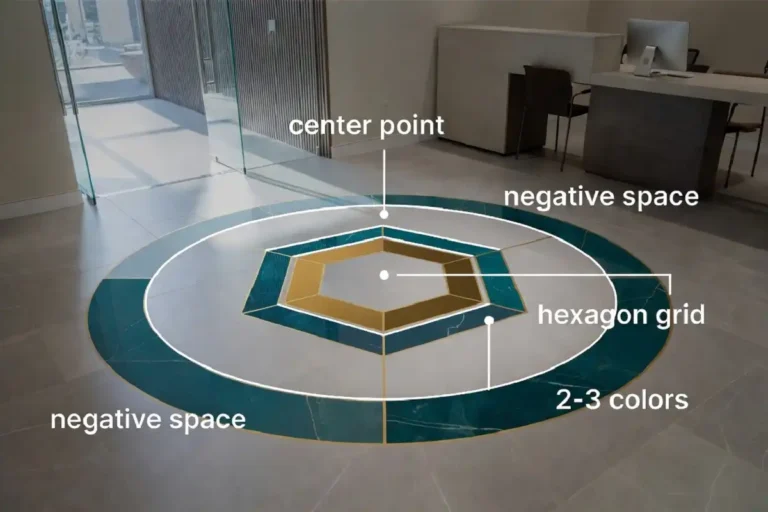
- Rangoli colors in one to three shades
- A small cone or squeeze bottle for better control
- Chalk or a pencil to lightly sketch before filling
- A flat brush or dry finger to smooth edges
Less truly is more here. Sticking to one or two colors gives your design a clean, modern look. If you are decorating for a festival, you can add one accent color to make it feel festive without going overboard.
Getting the Base Right Before You Begin
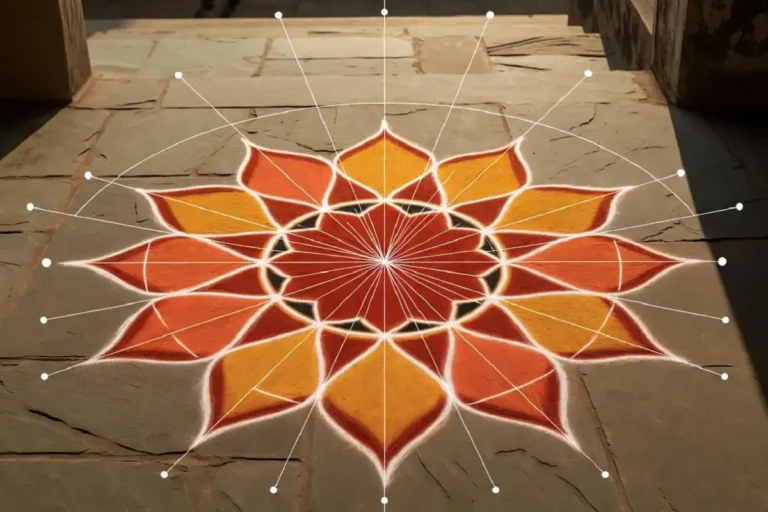
The best minimal rangoli designs start with a light, rough sketch. You do not need to draw every detail. Just mark the center point and the outer boundary of your design. This helps you stay within a neat space and keeps the pattern symmetrical.
Use a ruler or a circular object like a bowl or lid to trace a circle if your design calls for one. For dot-based designs, count your dots before you start filling them in. A steady hand and a calm approach go a long way.
If you are working on a rough surface, dampen it slightly before you start. This helps the powder sit better and reduces smearing.
Minimal Rangoli Design Ideas to Try at Home
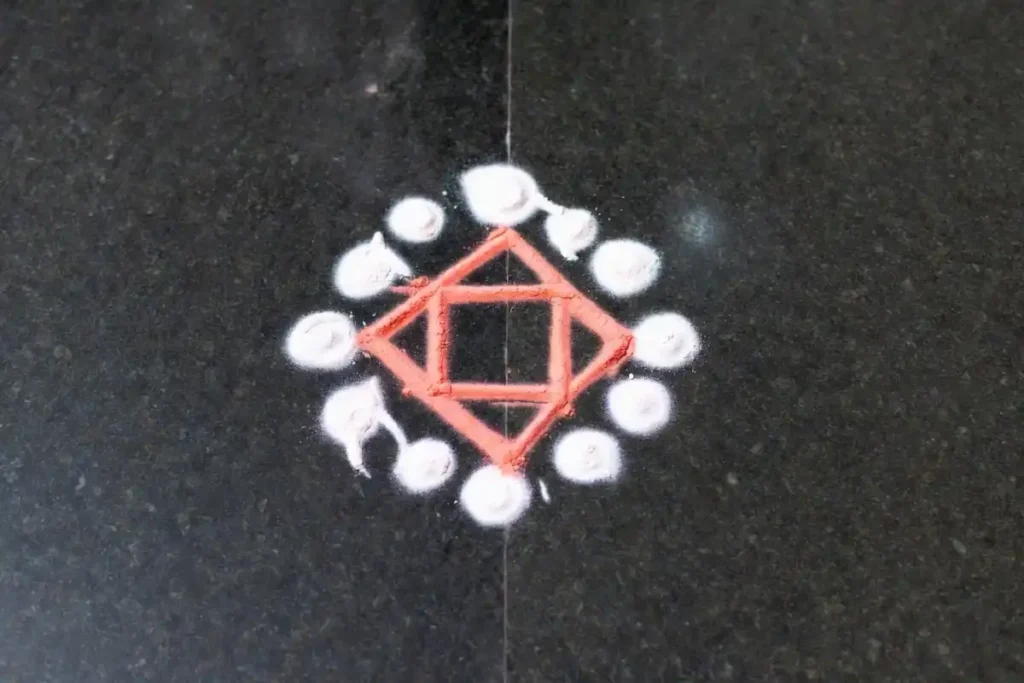
Here are some tried-and-tested ideas that anyone can make with a little patience.
Simple Petal Loop
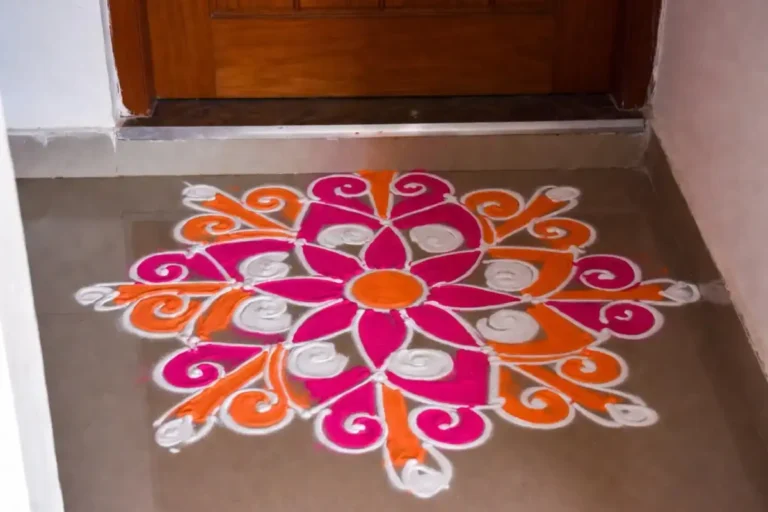
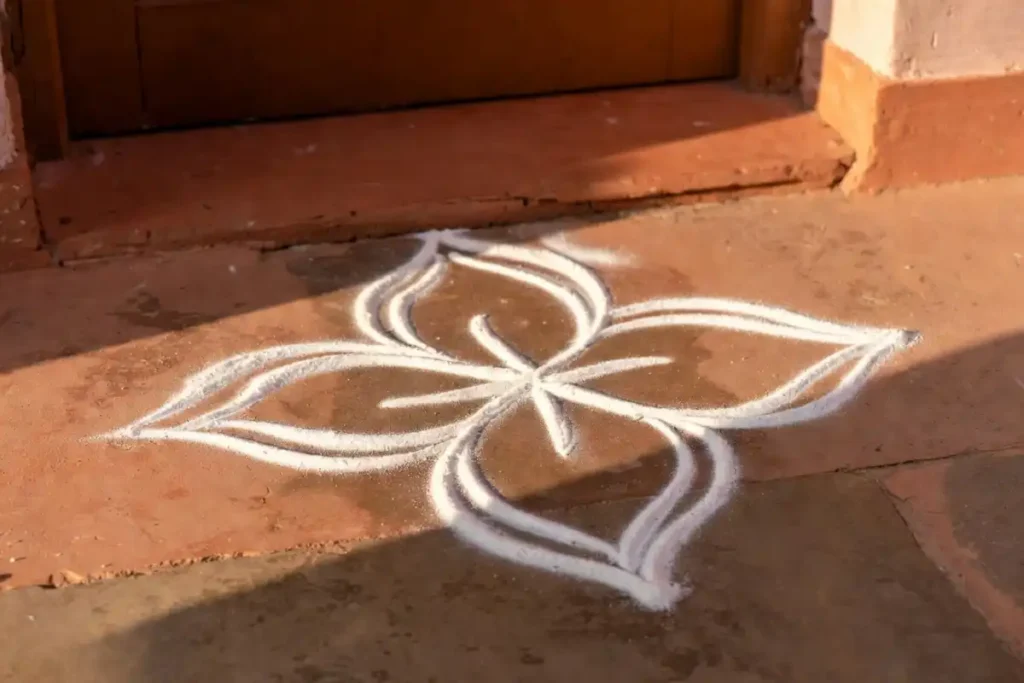
Draw a small circle in the center. Around it, place six equal petals using curved lines. Fill the petals in a single color, leave the center empty or fill it with a contrasting dot. This is one of the most classic minimal patterns and looks great in white and yellow.
Dot and Line Grid
Place a set of evenly spaced dots in a grid, say five rows of five dots each. Then connect them using diagonal and straight lines to form a geometric pattern. This style is rooted in traditional kolam art from South India. If you enjoy this approach, you might also want to explore beautiful easy daily kolam designs that follow the same dot-grid principle.
Single Star Shape
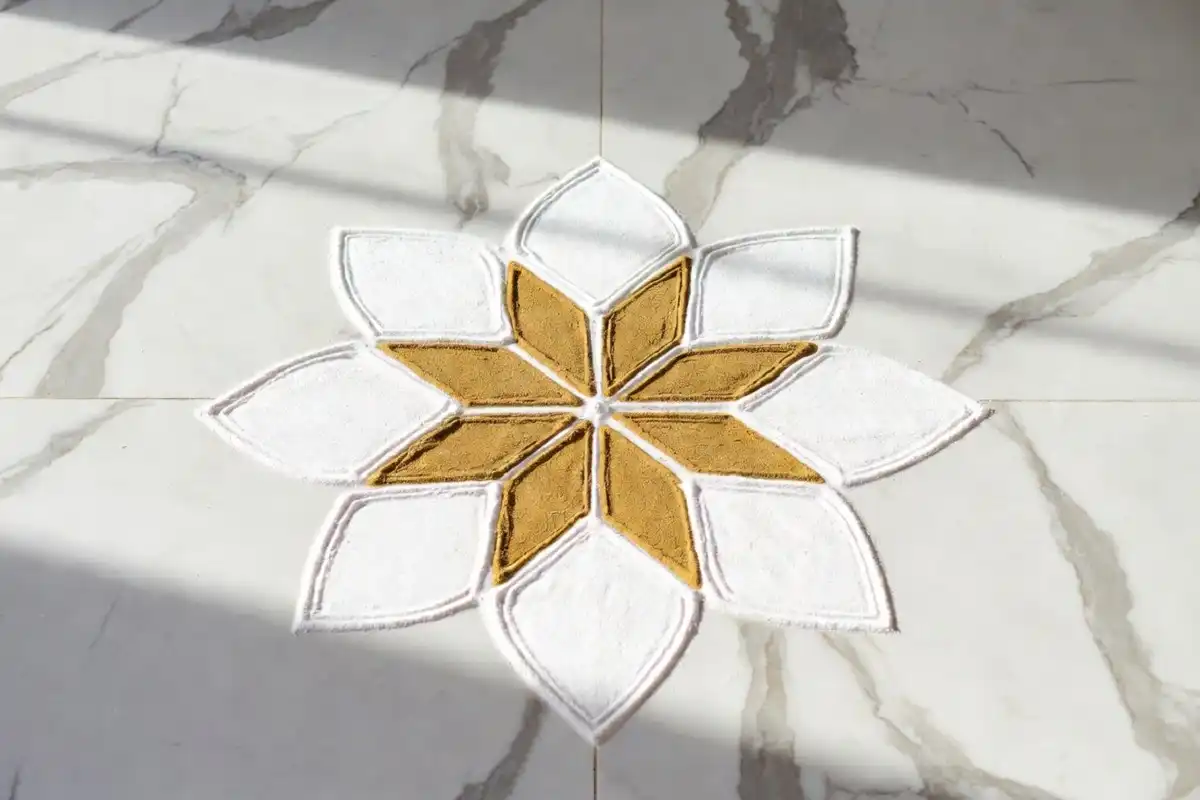
A six-pointed or eight-pointed star drawn with straight lines creates a very strong visual. Fill alternating triangles in one color and leave the rest white. The contrast does all the work. It looks sharp, modern, and completely intentional.
Concentric Circles with Dots
Draw two or three circles, one inside the other. Add small dots between the rings. Fill the inner circle with a soft color and leave the outer rings plain. This pattern is meditative to make and very pleasing to look at.
Spiral Petal Drop
Start with a central dot and draw four curved petals spiraling outward. Add small dots around the outer edges for a finishing touch. This takes about five to ten minutes once you get the feel for it.
For more ideas you can start with right now, check out these quick rangoli ideas for beginners that use a similar minimal approach.
Choosing Colors for a Minimal Look
Color choice makes or breaks a minimal rangoli design. The goal is harmony, not variety. Here are some combinations that work well.
- White and gold for a festive, elegant feel
- White and pink for a soft, traditional look
- Terracotta and white for a warm, earthy tone
- Black and white for a bold, graphic effect
- Pale blue and white for a calm, modern vibe
You do not need to fill every section with color. Leaving some parts white or using the floor color itself as part of the design adds breathing room and keeps the overall pattern from feeling crowded.
Tips to Keep It Looking Clean
Neatness is the heart of a minimal rangoli design. A few small habits make a big difference.
- Always work from the center outward
- Do not rush the filling step
- Use a pointed tool or toothpick to fix small errors
- Keep a dry cloth nearby to wipe up powder that goes out of line
- Step back often to check that the pattern looks balanced
If you are trying this for the first time, practice on paper first. Drawing out your design on plain paper before you get on the floor saves a lot of guesswork.
Minimal Rangoli for Festivals and Special Days
Minimal rangoli designs work beautifully during Diwali, Pongal, Onam, Navratri, and even during daily morning rituals. You do not need a big, elaborate pattern to mark a special occasion. A neat, well-placed small design can feel more intentional and heartfelt than a sprawling one that looks rushed.
For Diwali, a simple star or lotus outline with a few diyas placed around it looks stunning. For everyday use, a five-minute dot kolam or a small spiral pattern near the entrance is more than enough.
You can also adapt these patterns to fit your space. A narrow hallway calls for a long, thin design. A wide entrance allows for a circular or square pattern. Adjust the size and shape to suit your floor, not the other way around.
According to cultural historians, the tradition of drawing patterns at entrances dates back thousands of years across South and Southeast Asia, serving both artistic and symbolic purposes tied to welcoming guests and marking sacred space. You can learn more about the cultural depth of these traditions through resources like the Victoria and Albert Museum’s collection on South Asian folk art, which gives context to how these patterns have evolved across generations.
Rangoli and Mindfulness: Why the Process Matters
Making a minimal rangoli design is not just a decorative act. It is a small ritual. The focus required to keep lines clean, dots even, and shapes balanced draws your attention fully into the present moment. Many people find it calming, similar to how some feel when they draw or do simple craftwork.
This is one reason minimal designs suit daily practice. They do not take long but still require enough attention to pull you away from distractions. Five to ten minutes of focused, quiet work can start your morning in a much more grounded way.
For those interested in the broader science of mindfulness and creative focus, the Greater Good Science Center at UC Berkeley has covered research on how creative rituals reduce stress and improve mood.
Common Mistakes to Avoid
Even with a simple design, a few things can go wrong. Being aware of them helps you fix them early.
- Starting without a center mark leads to uneven patterns. Always mark your center first.
- Using too many colors makes a minimal design look cluttered. Stick to two at most.
- Rushing the filling causes smearing. Go slowly, especially near the edges.
- Ignoring symmetry makes the design look accidental rather than intentional. Check balance as you go.
- Skipping the sketch step on a new design leads to wasted effort. Sketch it lightly first.
How to Make Minimal Rangoli Last Longer
If you want your design to stay intact longer, there are a few things you can do. For indoor designs on clean floors, rangoli powder stays fairly well for several hours. For outdoor designs, wind and foot traffic are the main challenges.
Lightly spraying water around the design after completing it helps settle the powder. Avoid walking directly on it. For a more permanent version, acrylic paint on a wooden board or tile lets you create a reusable minimal rangoli that you can simply place at your entrance each morningIf you enjoy circle-based patterns, you might find it helpful to look at simple circle rangoli designs that share similar techniques and can be made quickly for any occasion.
FAQs

What is a minimal rangoli design?
How long does it take to make a minimal rangoli design?
Which colors work best for a minimal rangoli design?
Can beginners make a minimal rangoli design?
What materials do I need for a minimal rangoli design?
Can I make a minimal rangoli design without powder?
Conclusion
A minimal rangoli design is one of the most accessible and rewarding art forms you can bring into your daily life. It does not ask for perfection. It asks for presence. Whether you are decorating for a festival or simply starting your morning with a small ritual, a clean, simple pattern at your entrance carries meaning that goes beyond decoration. Start with one shape, two colors, and a calm mind. The rest follows naturally.