Beautiful Easy Daily Kolam Design for Your Front Door
Drawing a kolam every morning is a quiet, meaningful tradition that millions of South Indian households follow. It takes only a few minutes, but it makes the front of a home look welcoming and fresh.
If you are just starting out or want patterns that do not take long to finish, an easy daily kolam design is the best place to begin. This guide will walk you through the basics, help you choose the right patterns, and support you in building a steady practice that feels natural every single morning.
What Is a Kolam and Why Do People Draw It Daily
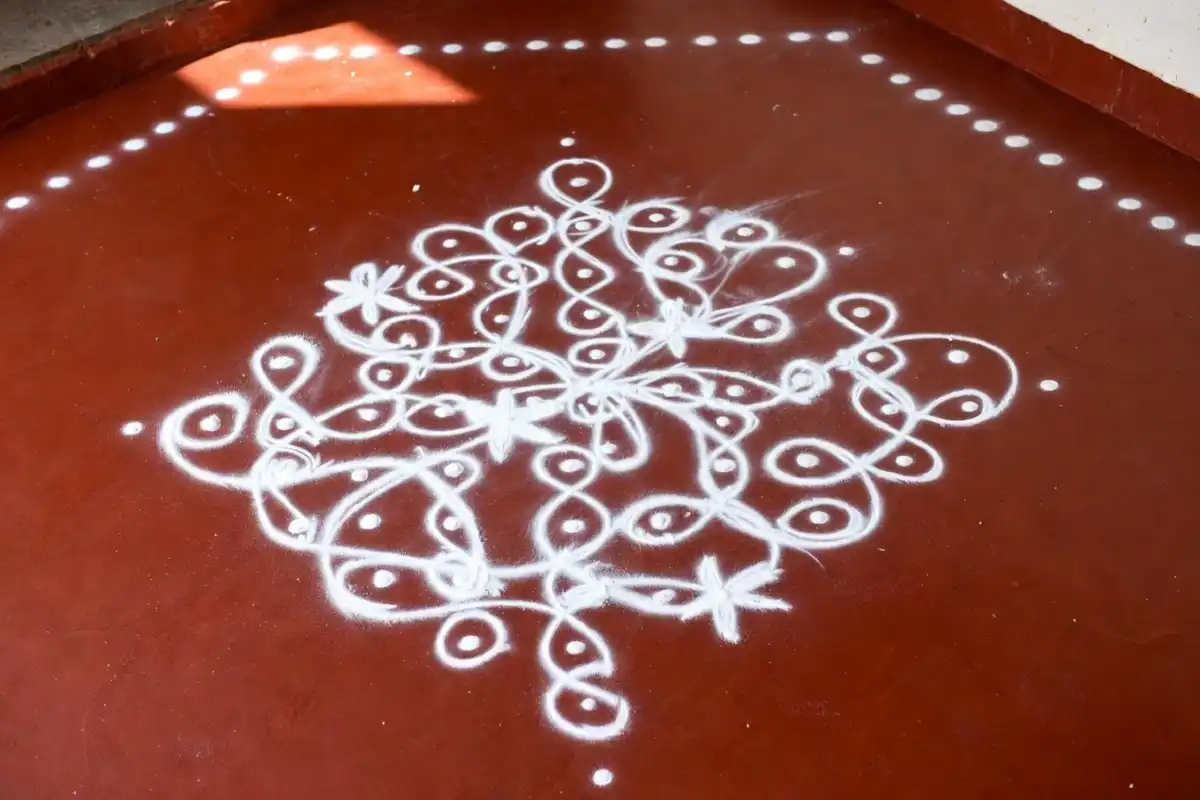
A kolam is a form of floor art drawn at the entrance of a home, usually early in the morning before the day begins. It is made using white rice powder, chalk powder, or readymade kolam powder. In Tamil Nadu and across many South Indian states, drawing a kolam is a core part of the daily routine, often done before sunrise.
The tradition has deep cultural roots. It is considered auspicious, and many people believe it invites good energy into the household. Beyond its meaning, drawing a kolam is also a calming, meditative act. It asks for focus and a steady hand, making it a peaceful way to begin the morning.
For people who want to keep this tradition alive without spending too much time, an easy daily kolam design makes it entirely possible to stay consistent on even the busiest mornings.
Tools and Materials You Need to Get Started
You do not need expensive supplies to begin. The basics are simple and widely available.
- Kolam powder or rice flour — the most traditional material; white is standard, but colored powders work well for special occasions
- A small bowl or cone — helps control the flow of powder while you draw
- A clean, flat surface at your entrance — always sweep the area before starting so the lines come out neat
- Chalk powder — a good alternative if you prefer something that does not scatter easily in the wind
Some people also use a slightly wet finger or a thin stick to guide their lines, especially when trying a new pattern for the first time. With regular practice, your hand becomes steadier and the whole process gets faster.
How to Draw a Basic Daily Kolam Step by Step
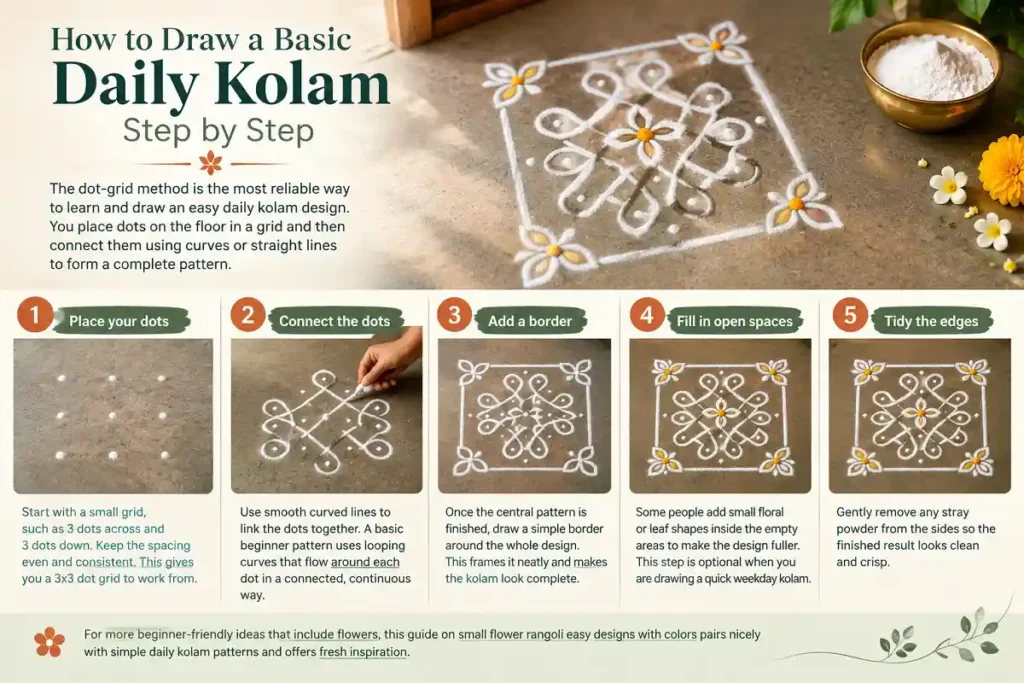
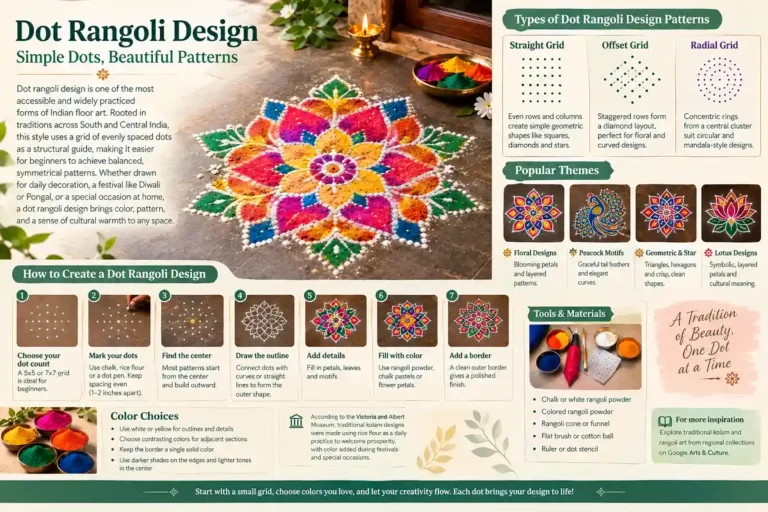
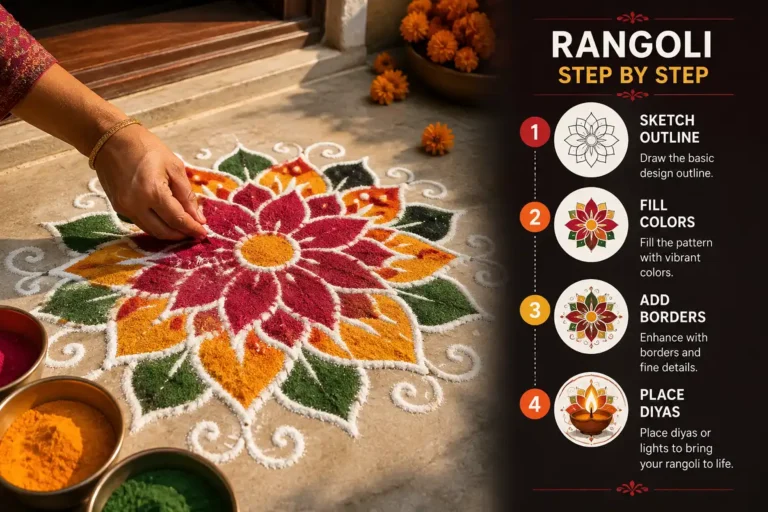
The dot-grid method is the most reliable way to learn and draw an easy daily kolam design. You place dots on the floor in a grid and then connect them using curves or straight lines to form a complete pattern.
Place Your Dots
Start with a small grid, such as 3 dots across and 3 dots down. Keep the spacing even and consistent. This gives you a 3×3 dot grid to work from.
Connect the Dots
Use smooth curved lines to link the dots together. A basic beginner pattern uses looping curves that flow around each dot in a connected, continuous way.
Add a Border
Once the central pattern is finished, draw a simple border around the whole design. This frames it neatly and makes the kolam look complete.
Fill in Open Spaces
Some people add small floral or leaf shapes inside the empty areas to make the design look fuller. This step is optional when you are drawing a quick weekday kolam.
Tidy the Edges
Gently remove any stray powder from the sides so the finished result looks clean and crisp.
For more beginner-friendly ideas that include flowers, this guide on small flower rangoli easy designs with colors pairs nicely with simple daily kolam patterns and offers fresh inspiration.
Popular Easy Daily Kolam Patterns to Try
Once you feel comfortable with the dot-grid method, you can explore a range of patterns that are still quick to draw but look more interesting on your doorstep.
Small Lotus Kolam
A simplified version uses a center dot surrounded by petal-shaped curves. It fits comfortably into a 5×5 dot grid and takes only a few minutes to finish. See these easy lotus rangoli designs for similar shapes that adapt well for daily use.
Line-Based Straight Kolam
This style relies on straight lines rather than curves. You draw one set of parallel lines and then cross them with another set at an angle — one of the fastest versions for mornings when you’re short on time.
Circular Daily Kolam
Built outward from a center point with small loops or petals expanding in a ring. It looks clean and polished and usually takes under five minutes once practiced. Browse these simple circle rangoli designs for more inspiration.
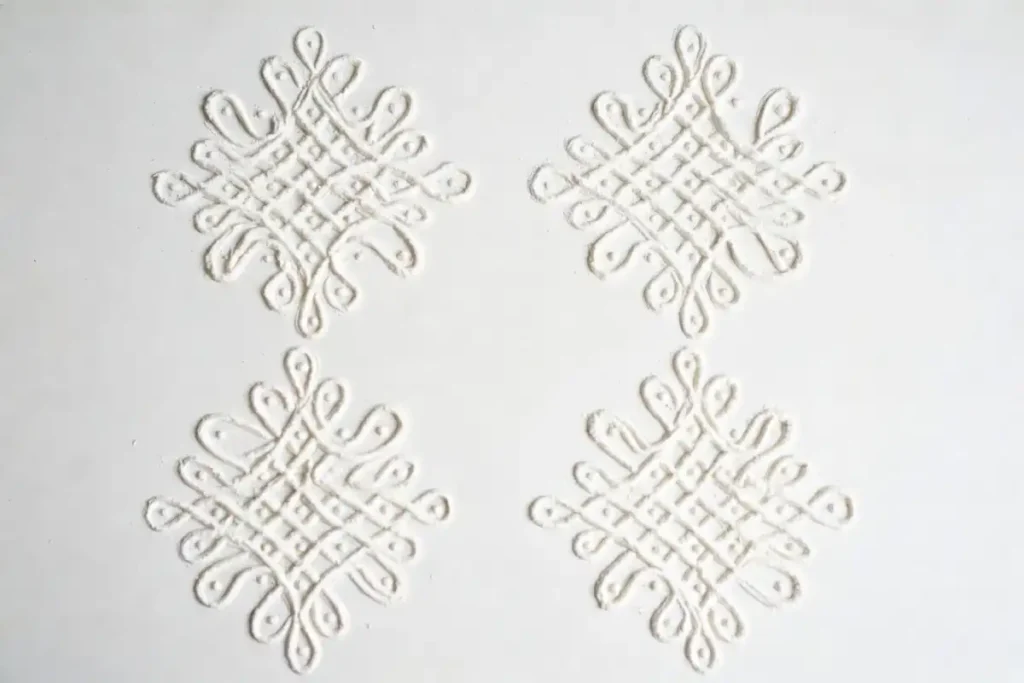
Diamond Grid Kolam
Uses a 4×4 or 5×5 dot grid arranged in a diamond shape rather than a square. The connecting lines run diagonally, producing a crisp, angular look that’s neat, fast, and well suited to weekday mornings.
Tips to Keep Your Daily Kolam Practice Consistent
Starting a new habit is one thing; keeping it going takes a little planning. These tips help make your easy daily kolam design practice stick over time.
- Store your kolam powder in a small container right next to your front door so it is always within reach each morning
- Choose a pattern you can complete in under five minutes on most days; save larger, detailed designs for weekends or holidays
- Before drawing on the floor, practice a new pattern on paper to understand the layout without wasting powder
- Draw at the same time each morning so it becomes a natural part of your routine
- If you miss a day, simply start again the next morning — consistency over time matters far more than perfection
Seasonal and Festival Variations of Daily Kolam
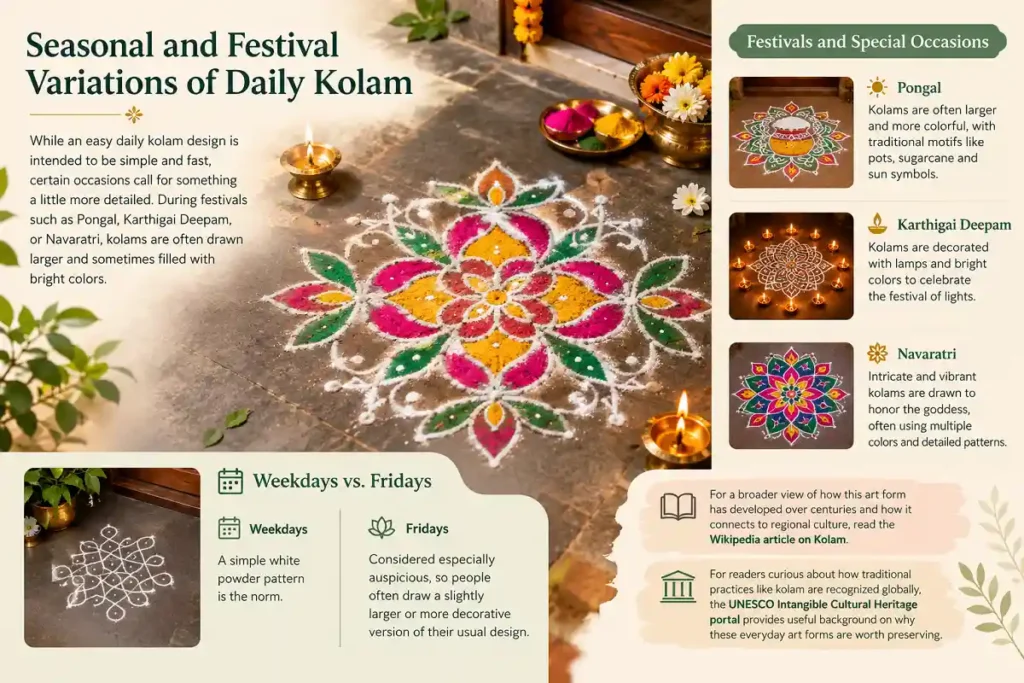
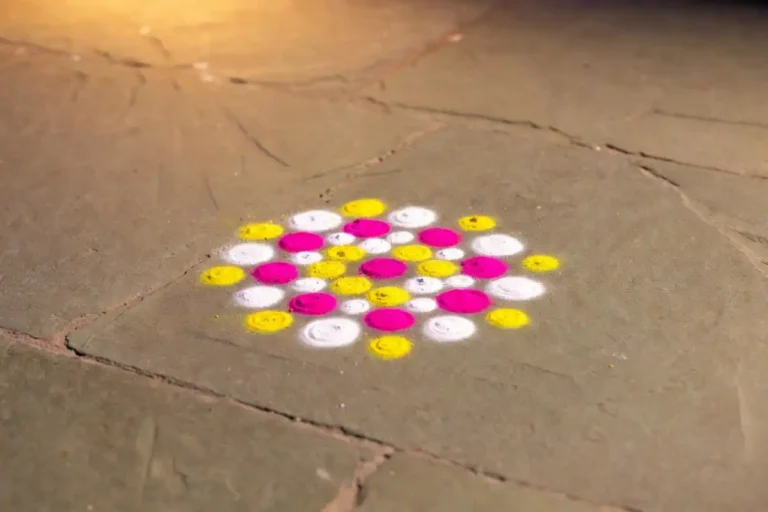
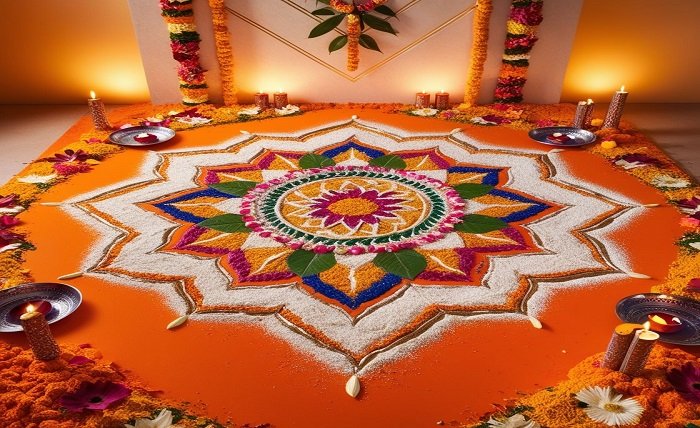
While an easy daily kolam design is intended to be simple and fast, certain occasions call for something a little more detailed. During festivals such as Pongal, Karthigai Deepam, or Navaratri, kolams are often drawn larger and sometimes filled with bright colors.
- Regular weekdays — a simple white powder pattern is the norm
- Fridays — considered especially auspicious in many Tamil households; a slightly larger or more decorative version is common
- Pongal, Karthigai Deepam & Navaratri — larger designs, often filled with bright colors
For a broader view of how this art form has developed over centuries, the Wikipedia article on Kolam offers helpful historical context, and the UNESCO Intangible Cultural Heritage portal provides useful background on why everyday art forms like this are worth preserving.
Common Mistakes Beginners Make and How to Avoid Them
Learning any new skill comes with small stumbles, and kolam is no different. Knowing what to watch out for makes the learning curve much shorter.
- Spacing dots too close together — crowded dots cause the connecting lines to overlap and the pattern to look cluttered
- Using too much powder at once — thick, uneven lines are harder to control; build the design gradually with small amounts
- Skipping the surface sweep before drawing — dust and grit cause smudging, and a quick sweep makes a visible difference
- Copying a complex pattern too soon — spend the first few weeks on simple designs before moving to detailed ones
How Traditional Kolam Connects to the Wider World of Rangoli
Kolam is the South Indian expression of what is known more broadly across India as rangoli. While rangoli tends to use color and is most closely associated with festivals, kolam is drawn every day and almost always in white. Both traditions share the same core spirit: creating beauty at the threshold of a home as an act of welcome, care, and gratitude.
If you enjoy drawing a daily kolam, exploring other floor art styles can widen your creative range. Geometric patterns in particular work well across both traditions — you might enjoy this article on easy geometric rangoli patterns anyone can try, where many ideas adapt directly into an easy daily kolam design practice.
An easy daily kolam design is one of the simplest and most rewarding habits you can bring into your morning routine. You do not need artistic talent, expensive materials, or a great deal of time.
All it takes is a clean surface, a little powder, and a few quiet minutes before the day begins. Start with a small dot grid, try it a few times, and you will notice your lines growing steadier with each attempt.
Whether you follow it as a cultural tradition or simply enjoy how it makes your entrance look, a daily kolam adds warmth and intention to the very first step anyone takes into your home.
FAQ: Easy Daily Kolam Design
Is an easy daily kolam design suitable for complete beginners?
Yes, an easy daily kolam design is ideal for beginners. Starting with a simple 3×3 dot grid and curved connecting lines requires no drawing experience and can be completed in under three minutes after a few tries.
How much time does an easy daily kolam design take each morning?
Most easy daily kolam design patterns take between three and seven minutes once you know the pattern well. Beginners may take a little longer at first, but speed builds quickly with regular practice.
Can I use chalk instead of rice powder for my daily kolam?
Yes, chalk powder or a white chalk stick works well for drawing a daily kolam on stone or tile floors. The lines stay cleaner and are less likely to scatter in the wind compared to loose rice flour.
Do I need any artistic skills to draw a kolam?
No special artistic training is required. Drawing an easy daily kolam design is a learned skill, and even simple dot-based patterns look beautiful when drawn with care. Most people feel comfortable with beginner designs within a week of regular practice.
Is kolam the same as rangoli?
Kolam and rangoli are related but distinct traditions. Kolam is a South Indian practice, drawn daily and typically in white. Rangoli is practiced more widely across India, often uses color, and is most common during festivals. Both are forms of floor art created at the home entrance.
Can children participate in drawing a daily kolam?
Yes, children can easily take part in a daily kolam routine. A small 3×3 or 4×4 dot grid is a gentle starting point for kids and also helps develop hand-eye coordination and patience over time.