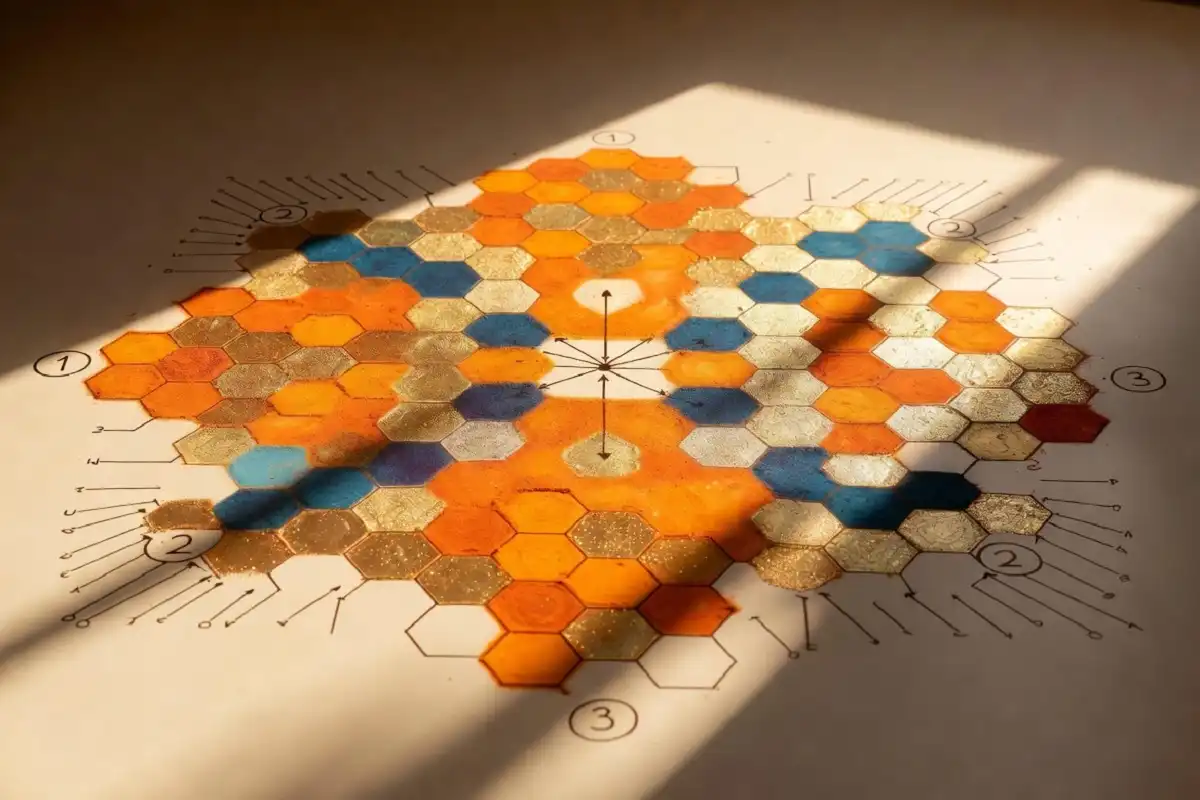
Hexagon Rangoli Patterns
Hexagon rangoli patterns give your floor art clean symmetry and a modern geometric feel. The six-sided shape repeats naturally, so beginners and experts both find it easy to build. Here is everything you need to design one well.
Hexagon rangoli patterns are floor designs built on a six-sided base grid. You draw connected hexagons, then fill each cell with color, dots, or petals. The repeating structure keeps the design balanced and simple to expand.
What Makes a Hexagon Rangoli Different
A hexagon rangoli uses six equal sides as its core shape. Unlike circle or square designs, the hexagon tiles perfectly with no gaps. This is why honeycomb layouts look so tight and even.
The shape carries meaning too. Six points suggest balance and harmony in many Indian design traditions. That makes hexagon rangoli patterns a strong pick for festivals like Diwali and Navratri.
You can keep it as a single hexagon or repeat it into a honeycomb. Both work. The choice depends on your space and time.
Materials You Need
Keep your supplies simple. Here is what I use for most hexagon designs:
Rangoli powder in three to five colors. Fine white powder or chalk for the outline. A ruler or a hexagon stencil for clean edges. A small cone or squeeze bottle for tight lines. Flower petals if you want a fresh, natural version.
For beginners, a stencil saves time. Freehand comes with practice.
How to Draw a Basic Hexagon Rangoli
Start with one center dot. From that dot, mark six points at equal distance around it. Connect the points to form your first hexagon. That is your base.
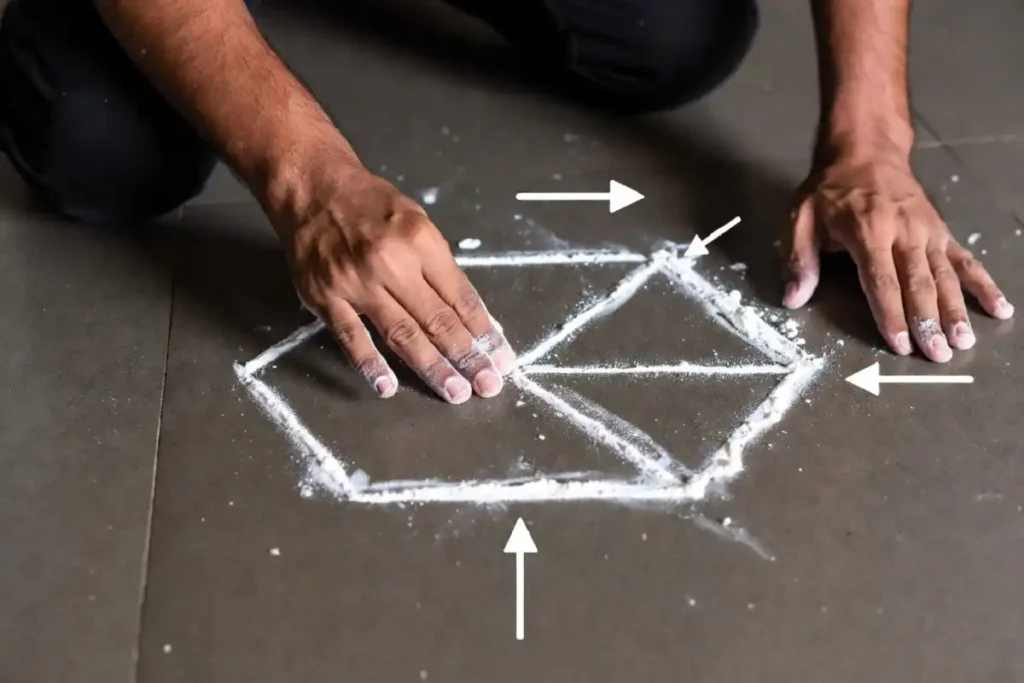
Next, extend a hexagon off each of the six sides. This creates the honeycomb effect. Keep the sides equal so the pattern stays even. Work slowly on the outline before adding any color.
Once the grid is set, fill each cell. Alternate colors for contrast. A common choice is one warm color and one cool color in a repeating order. Finish with a white border to sharpen every edge.
If you want a cleaner geometric base, my guide on simple geometric shapes for floor art breaks the grid work down further.
Popular Hexagon Rangoli Design Styles
Different styles suit different occasions. Here are the ones that work best.
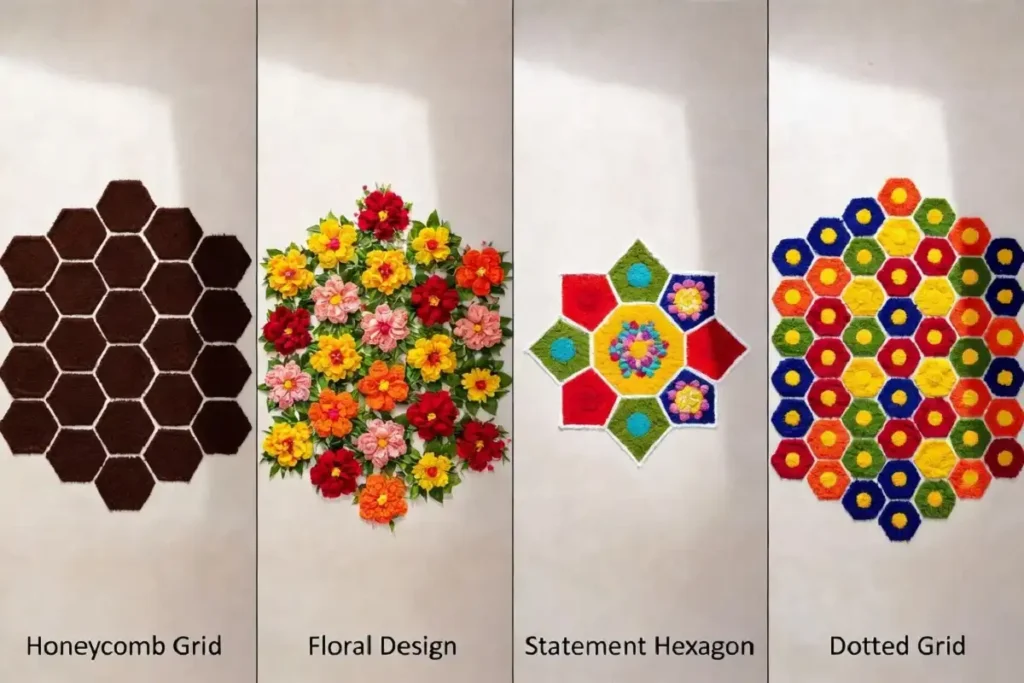
Honeycomb Hexagon Rangoli
This is the classic layout. Repeated hexagons form a bee-comb grid. Fill alternate cells with gold and orange for a festive Diwali look. Leave some cells white for breathing space.
Floral Hexagon Rangoli
Place a small flower or lotus inside each hexagon cell. The straight edges frame the soft petals nicely. This mix of sharp and soft reads as elegant and calm.
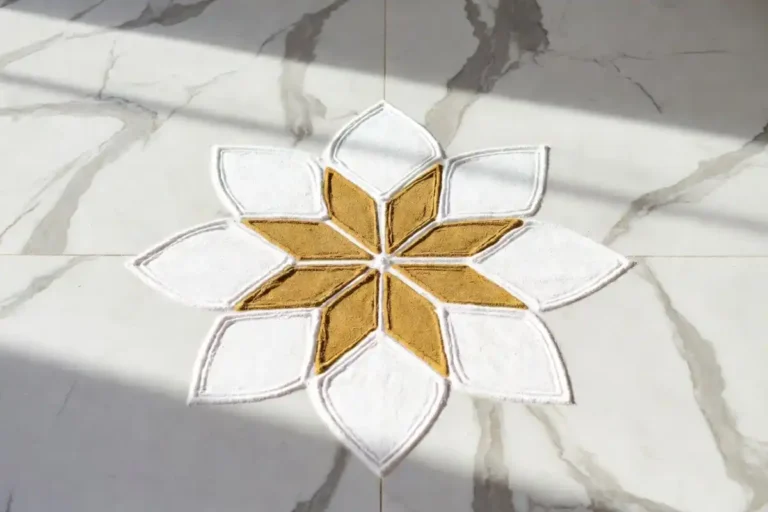
Single Statement Hexagon
One large hexagon holds a detailed center design. Think a mandala, a diya, or a peacock motif inside the frame. This suits small entrances where a full grid will not fit. For tight spaces, my small rangoli ideas for compact areas pair well with this style.
Dotted Hexagon Rangoli
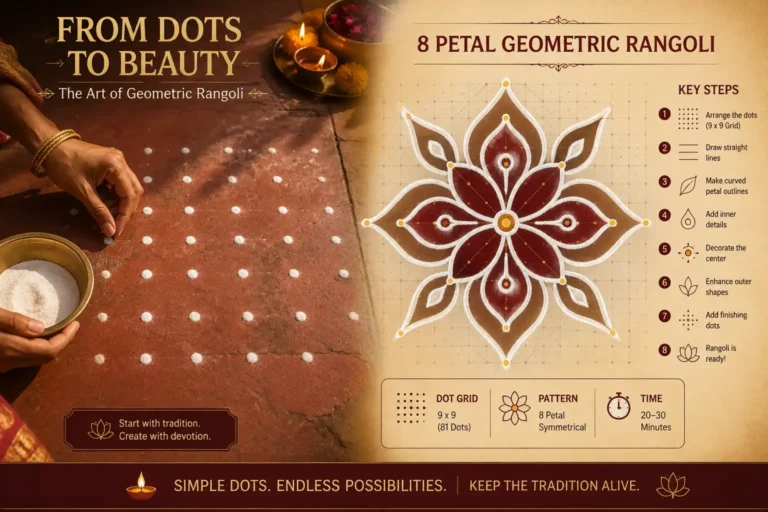
Use a dot grid as your starting guide. Connect dots into hexagon shapes. This method keeps proportions accurate for anyone still learning freehand lines.
Color Combinations That Work
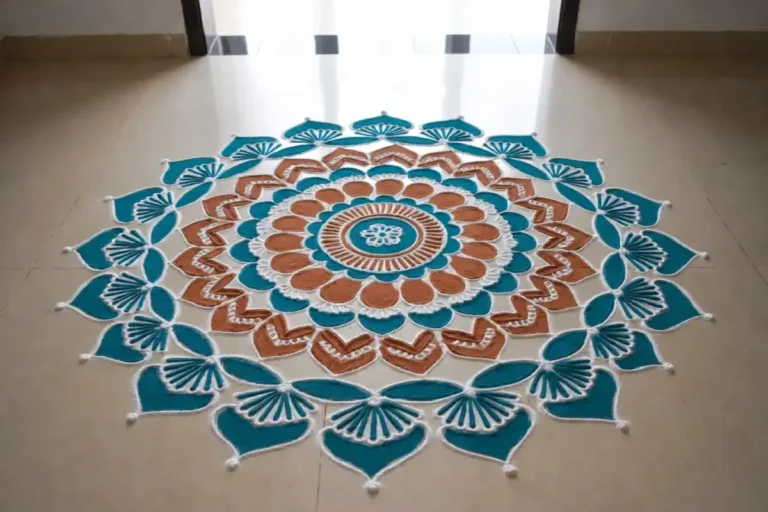
Color choice decides the whole mood. For festivals, use bright contrast: orange, pink, yellow, and green. For a modern minimal look, stick to two shades plus white.
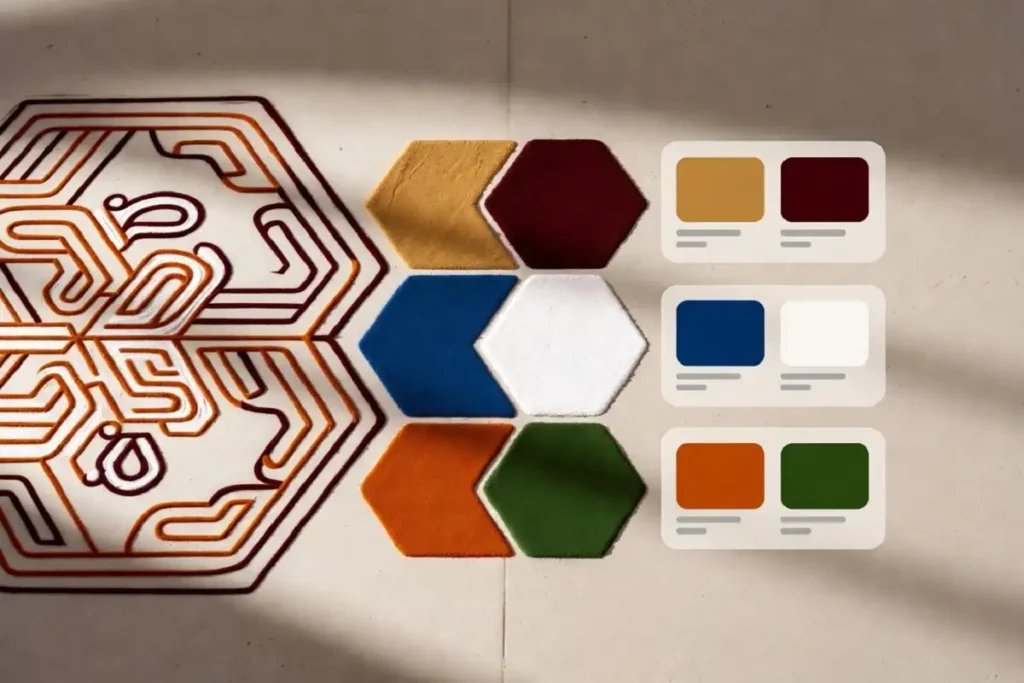
Gold and maroon feel rich and traditional. Blue and white feel fresh and clean. Test your pairing on a small corner first. Then commit to the full grid.
Tips for Clean Hexagon Rangoli Patterns
Precise angles matter most. A hexagon needs equal sides, or the whole grid drifts. Measure your first shape carefully. Every later hexagon copies from it.
Keep your powder flow steady. Practice the cone pressure on paper first. Fill from the outer edge inward so you never smudge finished cells. A thin white outline hides small mistakes and lifts the colors.
Work in good light. Shadows hide gaps and uneven fills.
Where Hexagon Rangoli Fits Best
These patterns shine at entrances, pooja rooms, and festival corners. The geometric grid also suits competition entries, where judges look for precision. If you enjoy structured designs, you will like how these connect with other geometric pattern ideas for decor.
Smaller versions work as daily doorstep art. Larger honeycomb grids make a bold statement for Diwali.
FAQs

Are hexagon rangoli patterns hard for beginners?
How long does a hexagon rangoli take?
Can I use flower petals instead of powder?
Last Words
Hexagon rangoli patterns reward patience and precision. Get your first shape even, and the rest of the grid falls into place. Start small, keep your angles equal, and build up to a full honeycomb once you feel confident. The clean symmetry makes every festival floor look sharp.