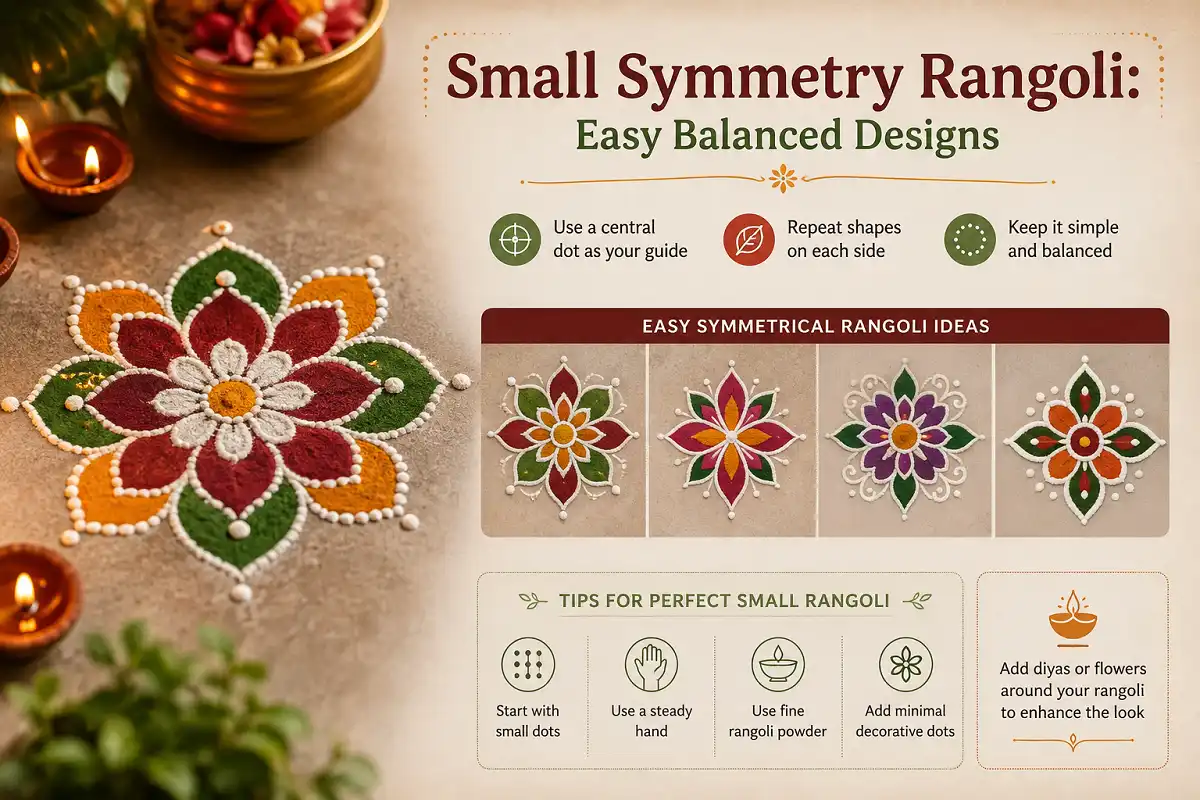
Small Symmetry Rangoli: Easy Balanced Designs
Small Symmetry Rangoli: Easy Balanced Designs for Any Space
A small symmetry rangoli is a simple way to bring traditional floor art into a limited space. You do not need a large entrance, complicated materials, or hours of free time. A compact pattern with balanced shapes can look polished even when it covers only a small area.
The secret is repetition. Start with one central point or a simple dividing line, create one clean motif, and repeat it evenly. This makes small rangoli designs especially useful for doorways, apartments, pooja corners, balconies, and everyday decoration.
Start small → establish the center → repeat one shape → keep spacing equal → add color last.
What Is a Small Symmetry Rangoli?
A small symmetry rangoli is a compact floor design arranged so that its elements feel evenly balanced. The design may repeat around a center point or mirror itself from one side to another.
The word “small” refers to the amount of floor space used, while “symmetry” describes the balanced arrangement of the shapes. Together, they create a style that is practical, neat, and easy to learn.
Symmetry also simplifies the drawing process. Instead of inventing every part of the pattern separately, you can concentrate on one section and reproduce it around the design.
Popular Types of Small Symmetry Rangoli
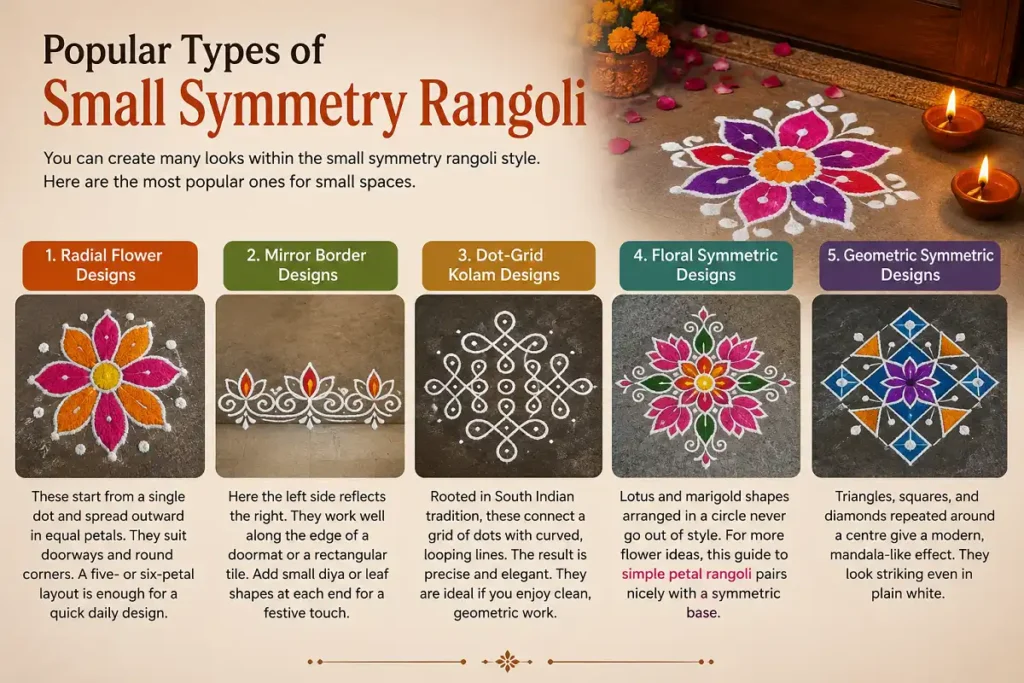
Small symmetrical rangoli can look traditional, geometric, floral, or completely modern. The easiest choice depends on the shape of your space and how much detail you want to add.
Radial Flower Designs
Begin with a central dot and arrange five, six, or eight petals around it. The repeated petals naturally create balance and work especially well near a doorway.
Mirror Border Designs
Create one side of the border and reproduce it on the opposite side. Small leaves, dots, diyas, or curved details can make the border more festive.
Dot-Grid Kolam Designs
A carefully spaced dot grid provides a reliable framework for curved lines and looping patterns. It is particularly useful when accuracy matters.
Floral Symmetric Designs
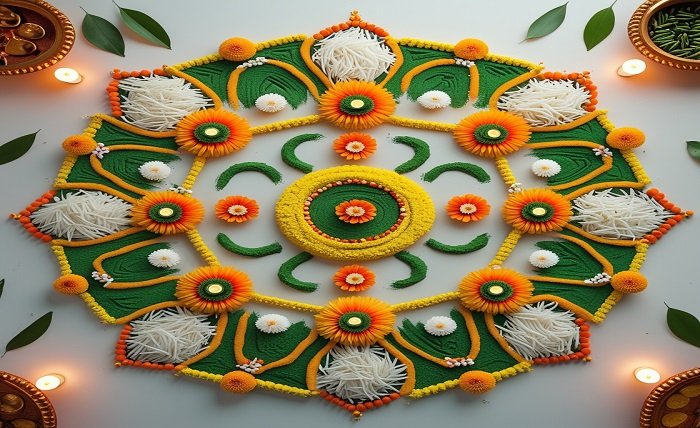
Lotus, marigold, and simple petal arrangements can be repeated around a central circle for a soft and welcoming appearance.
Geometric Symmetric Designs
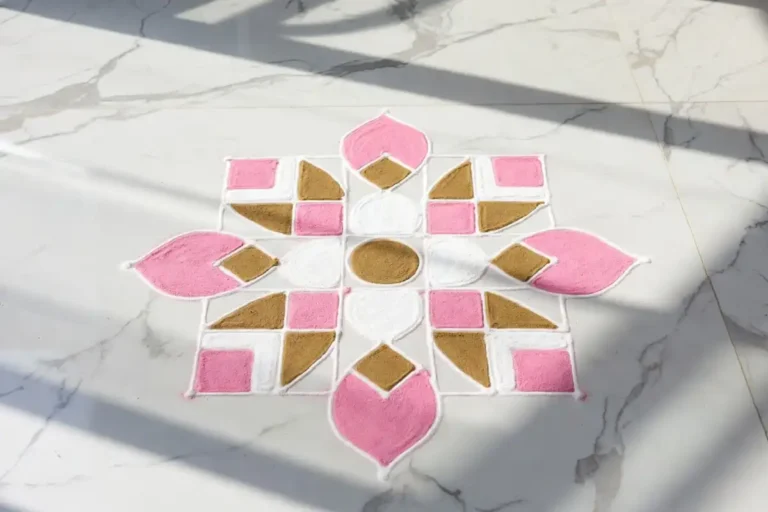
Triangles, squares, diamonds, and other repeated shapes create a sharper modern look. These designs can remain attractive even with only one or two colors.
Mini Mandala Designs
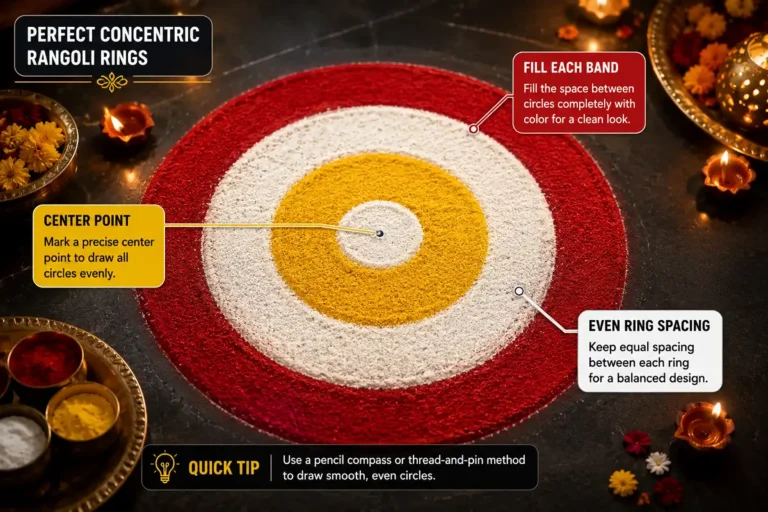
Build several small rings around a center point using repeated petals, dots, curves, or geometric shapes. This approach works beautifully when you want a compact but detailed design.
Small Radial Floral Rangoli for Doorways
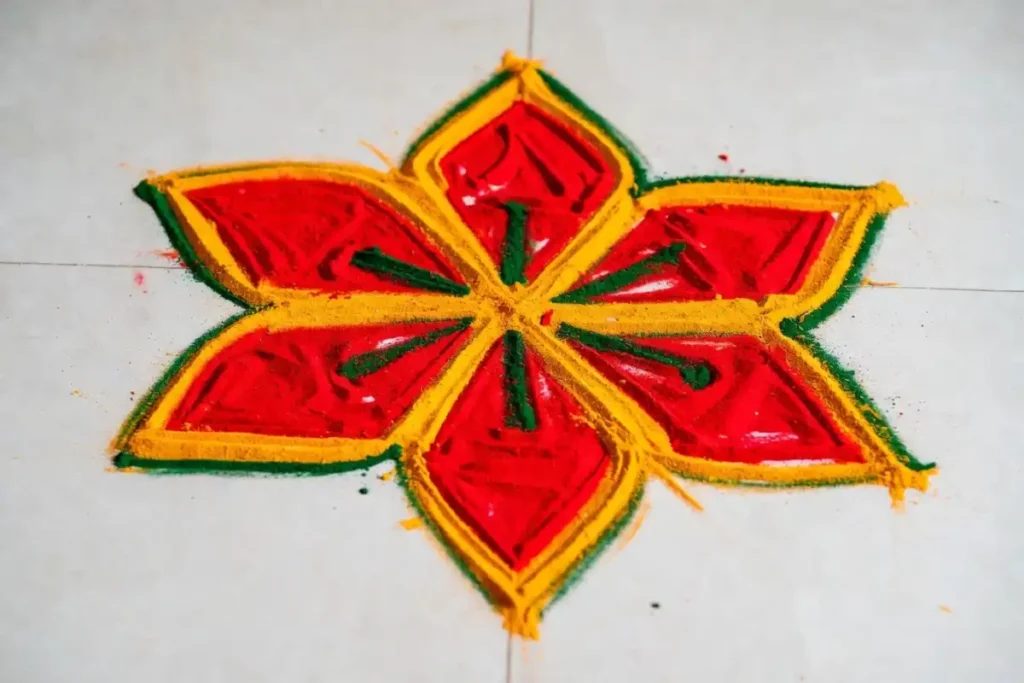
Radial floral patterns are among the easiest symmetrical designs to practice. Start with a small central circle or dot, then divide the surrounding space into equal sections.
Draw one petal carefully before repeating it. Five or six petals are enough for a quick daily rangoli, while additional rings can make the design more decorative for festivals.
How to Make a Small Symmetry Rangoli
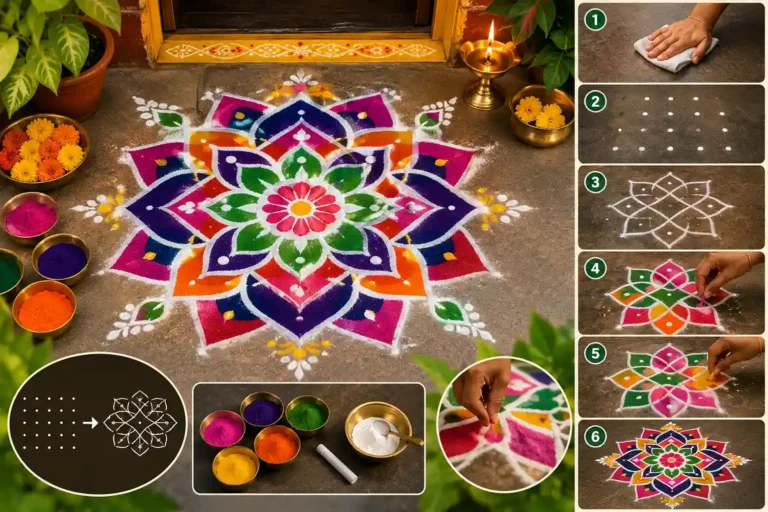
You can create a small balanced rangoli without complicated equipment. The important part is to establish your space and center before adding color.
Choose a Clean Surface
Sweep the area and make sure the floor is reasonably dry and free from loose dust.
Mark the Center
Place a small dot in the middle of the space. This becomes the reference point for your symmetrical pattern.
Create a Dot Grid
Use a simple 3×3 or 5×5 arrangement when you need help keeping distances and shapes consistent.
Draw the Center Motif
Start with a circle, flower, star, diamond, or another simple shape that matches your available space.
Repeat the Motif
Copy the same shape around the center or mirror it from one side to the other.
Add a White Outline
A thin white border can sharpen the edges and separate the rangoli from the floor.
Fill From the Center Outward
Add colors gradually so you can maintain the spacing and avoid disturbing completed areas.
Add Final Dots
Finish with small dots, dashes, leaves, or other accents that reinforce the repeated pattern.
Do not try to make the design quickly. First focus on equal spacing and clean repetition. Speed usually comes naturally after several attempts.
Design Tips for Better Symmetry
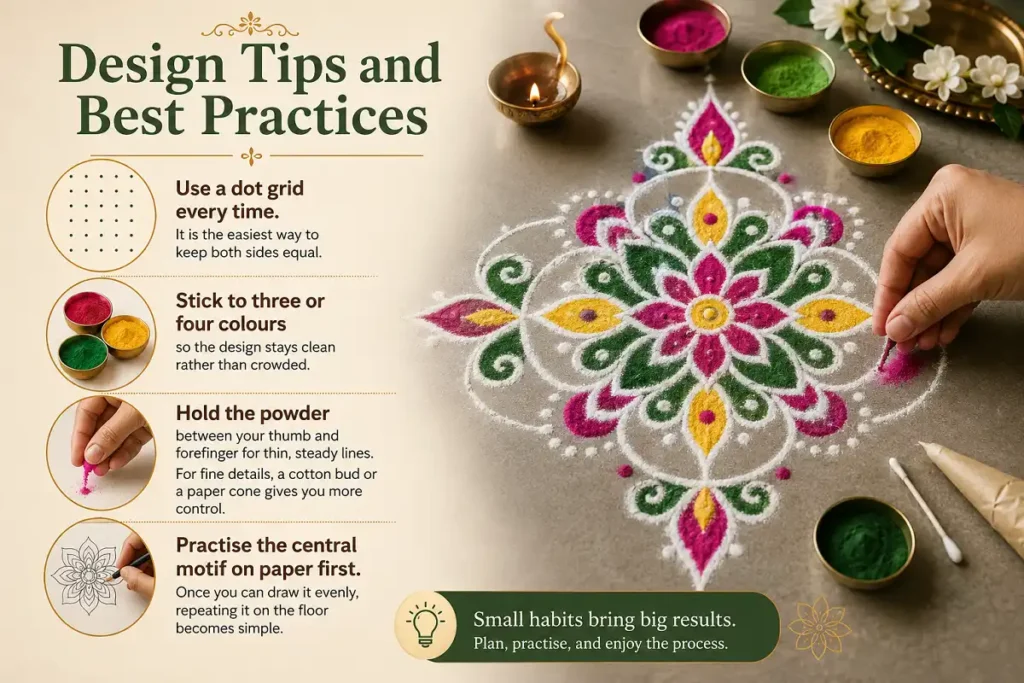
Small rangoli gives you less room to hide mistakes, so clean planning is especially important. A few simple habits can make a major difference.
Use a Dot Grid
Evenly spaced dots provide a visual guide and make repeated shapes easier to reproduce.
Limit Your Colors
Three or four well-chosen colors can look cleaner than a crowded palette in a small design.
Practice on Paper
Draw the center motif several times on paper before transferring it to the floor.
Control the Powder
Hold a small amount of powder between your fingers for thin lines and use a cone or cotton bud for tiny details.
Work From the Center
Building outward keeps the main structure balanced and makes it easier to correct the pattern as you go.
Leave Enough Empty Space
A small rangoli can look more elegant when the motifs are not packed too closely together.
Cultural Importance of Symmetry in Rangoli
Rangoli is more than a decorative pattern. It has long been associated with welcoming guests, marking auspicious occasions, and bringing beauty to the entrance of a home.
Symmetry adds another layer to the visual language. Repeated lines, balanced shapes, and orderly spacing can create a feeling of harmony and completeness.
Different parts of India have their own floor-art traditions. Kolam in southern India is known for carefully arranged dots and looping lines, while alpana in Bengal and other regional rangoli traditions use their own materials, motifs, and visual styles.
Common Mistakes to Avoid
A small symmetrical pattern can lose its neat appearance when spacing, scale, or color choices are inconsistent. These are some of the easiest problems to prevent.
Skipping the Guide
Drawing everything freehand before establishing the center can make opposite sides noticeably uneven.
Making the Design Too Large
Always consider the actual floor area before starting. A compact pattern should comfortably fit its surroundings.
Using Too Many Colors
A limited palette usually gives a small design a cleaner and more intentional appearance.
Coloring Too Early
Finish the outline and check the symmetry before filling sections with powder.
Rushing Repetition
Take time to compare each repeated motif with the previous one. Small differences become easier to see in compact designs.
Ignoring the Floor
Dust, moisture, and an uneven surface can affect the shape and make powder difficult to control.
Small Symmetry Rangoli Trends in 2026
Compact rangoli designs are adapting well to modern homes. Smaller patterns are practical for apartments, rental homes, busy households, and entrances where a large floor design is not possible.
Minimal Single-Color Designs
Simple white or single-tone patterns can create an elegant look without overwhelming a small space.
Natural Materials
Rice flour and fresh flower petals offer traditional alternatives to synthetic powders.
Soft Modern Palettes
Gentle pastel combinations can give a traditional symmetrical pattern a contemporary appearance.
Mandala + Geometry
Combining a circular center with geometric outer edges creates a modern fusion style.
Browse additional rangoli patterns and visual ideas on Rangoli Designs on Pinterest .
Small Symmetry Rangoli for Diwali and Celebrations
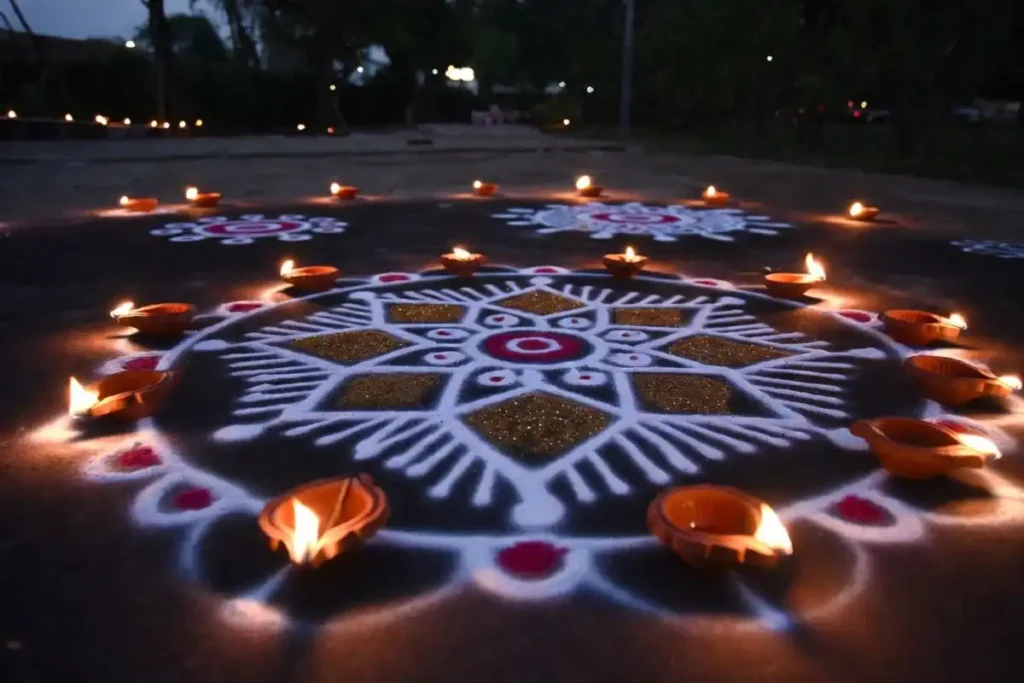
Small symmetrical rangoli is particularly useful during Diwali because the design can fit beside a doorway, near a diya arrangement, or in a small entrance area without taking over the entire floor.
Start with a simple circular or floral structure and add small diya shapes around the outside. Warm colors such as red, yellow, orange, and gold can create a festive appearance, while a white outline keeps the overall design crisp.
Simple Materials for a Small Rangoli
Rangoli Powder
Choose a few colors that provide enough contrast between neighboring sections.
Rice Flour
Useful for white outlines, dot patterns, and traditional-style designs.
Chalk
A light temporary sketch can help you establish the center and proportions.
Cotton Bud or Cone
Handy for cleaning edges or creating small details and controlled lines.
Small Does Not Mean Simple-Looking
A carefully planned compact rangoli can look just as impressive as a larger floor design. The key is to make every repeated element deliberate and give the pattern enough breathing room.
Frequently Asked Questions
01 What is a small symmetry rangoli?
02 Is small symmetry rangoli good for beginners?
03 What materials do I need?
04 How long does a small symmetry rangoli take?
05 Which colors are best for small rangoli?
06 Can I make a small symmetrical rangoli without dots?
07 Can small symmetry rangoli be used for festivals?
Start Small, Repeat Carefully, and Let the Symmetry Work
A small symmetry rangoli is an approachable way to practice traditional floor art without needing a large space. Begin with a simple dot grid or center point, master one motif, and repeat it patiently.
Once your basic pattern feels comfortable, experiment with flowers, geometric shapes, mandala rings, and festive diya details. A little practice can turn a tiny entrance space into a beautiful and welcoming rangoli.