Traditional Indian Symbols in Rangoli: Meaning and Design Guide
Traditional Indian symbols in rangoli carry meaning far beyond decoration. Every motif drawn at a doorway holds a purpose rooted in faith, season, or welcome. This guide explains the most common symbols, what each one means, and how to use them in your own designs.
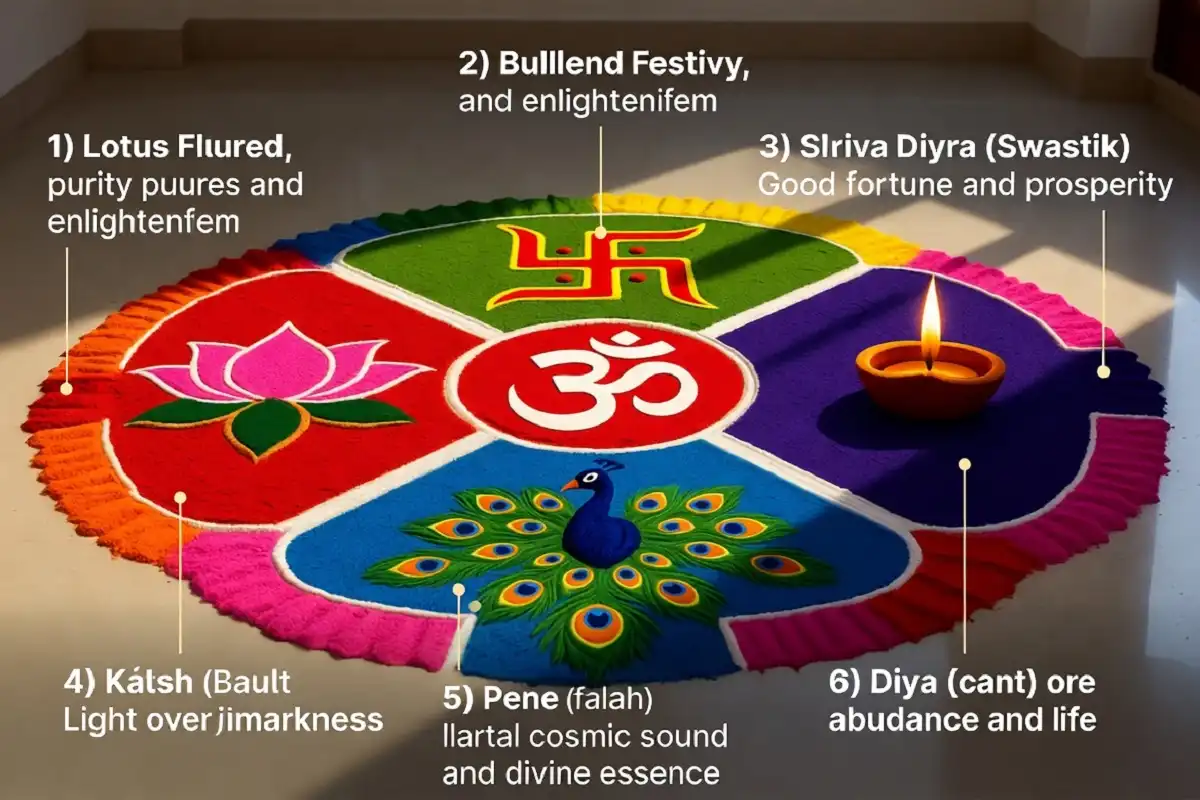
Traditional Indian symbols in rangoli are motifs like the lotus, swastik, diya, om, peacock, and kalash. Each carries spiritual or cultural meaning. People draw them to invite prosperity, protect the home, and honor festivals such as Diwali.
What Are the Symbols Used in Rangoli?
The symbols used in rangoli are ancient motifs tied to Hindu belief, nature, and daily ritual. The traditional Indian symbols in rangoli fall into four families:
Spiritual Signs
The swastik and om. These protect and bless the space.
Nature Motifs
The lotus, peacock, and mango leaf. These celebrate growth and beauty.
Ritual Objects
The diya, kalash, and Lakshmi’s feet. These mark a specific ceremony.
Geometric Forms
Dots, circles, and the eight-pointed star. These create balance and structure.
Each family serves a different intent. Spiritual signs protect and bless. Nature motifs celebrate growth and beauty. Ritual objects mark a specific ceremony. Geometric forms create balance and structure.
The Lotus in Rangoli
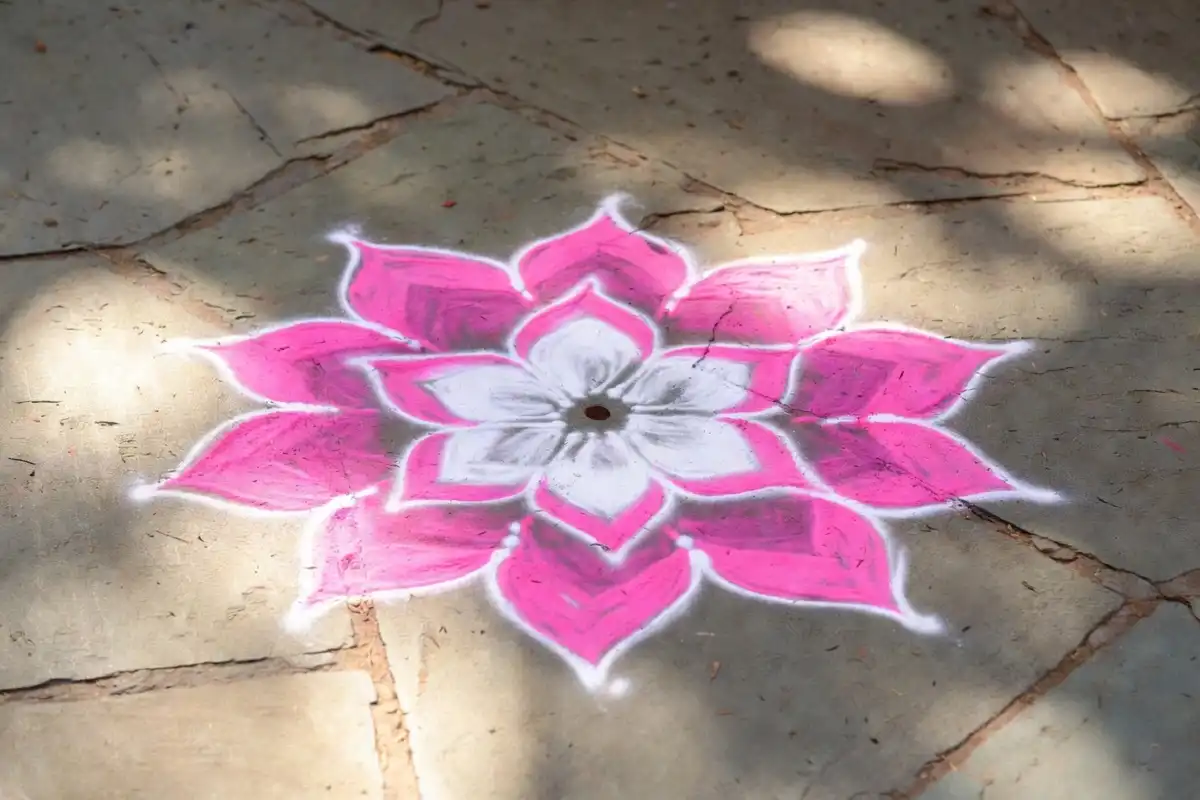
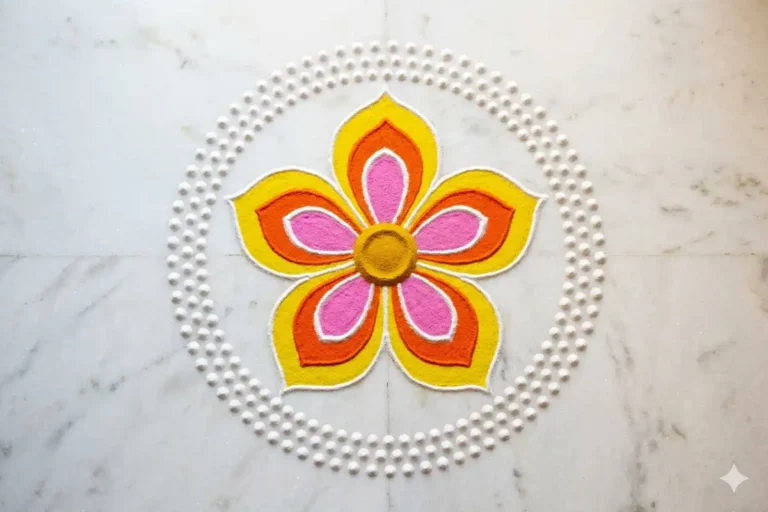
The lotus stands for purity, wealth, and spiritual awakening. It is the seat of Goddess Lakshmi, so it is drawn often during Diwali. The flower rises clean from muddy water, which is why it symbolizes rising above hardship.
Start with a central dot. Then add eight or sixteen petals around it. More petals mean a richer, fuller bloom. Pink and white are the classic colors.
If you want to practice this motif, this walkthrough on easy lotus rangoli for a festive home breaks the petals down step by step.
The Swastik Symbol and Its Meaning
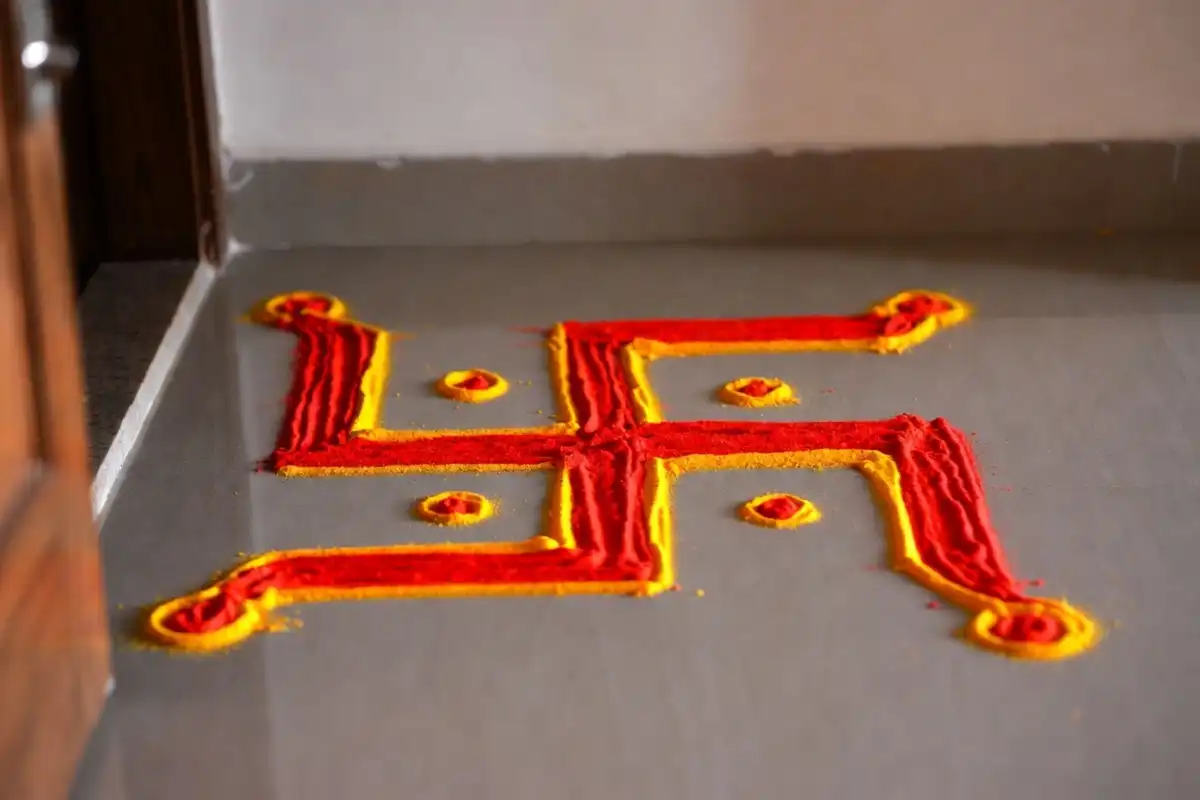
The swastik represents good fortune, well-being, and the sun. It is one of the oldest sacred marks in Indian culture and predates written history. In India it points to auspicious energy and the four directions.
Draw it as a simple cross with each arm bent at a right angle. Add four dots in the open corners for balance. Red, yellow, and orange suit it best.
For a compact version at your entrance, see these ideas for small swastik designs during festivals.
The Diya and Lamp Motifs
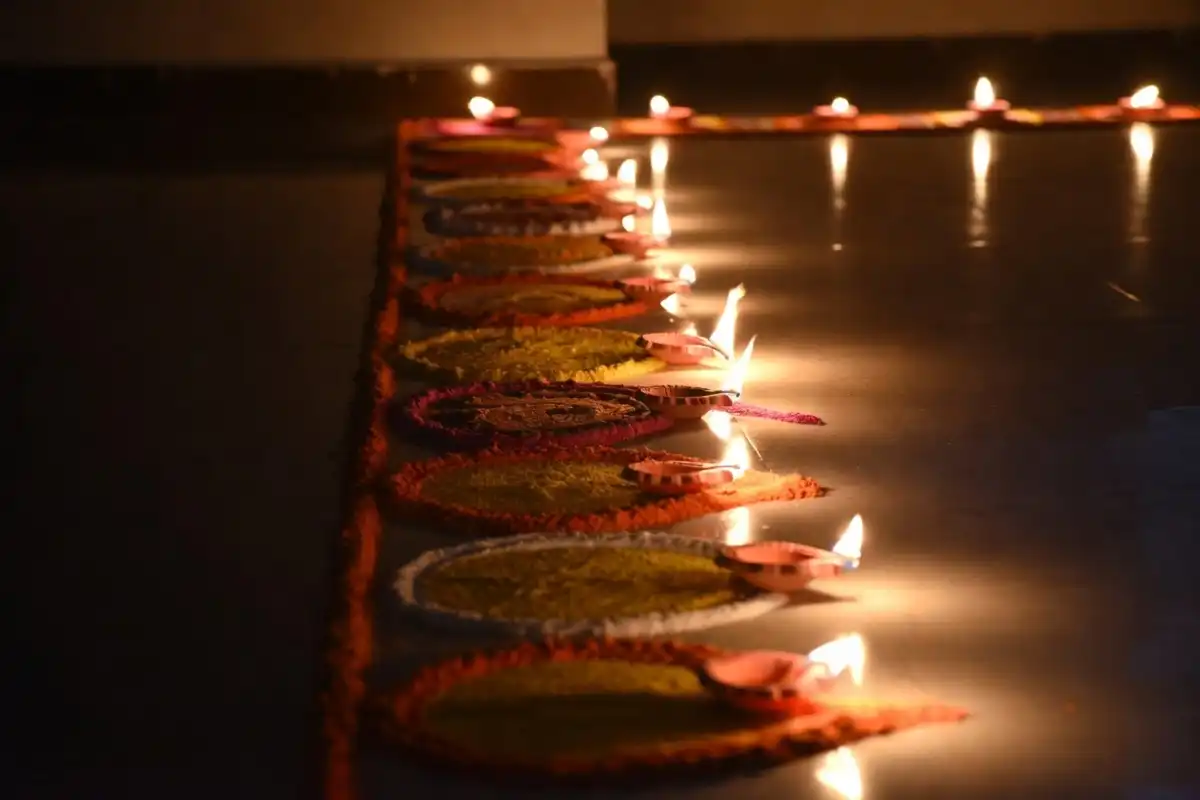
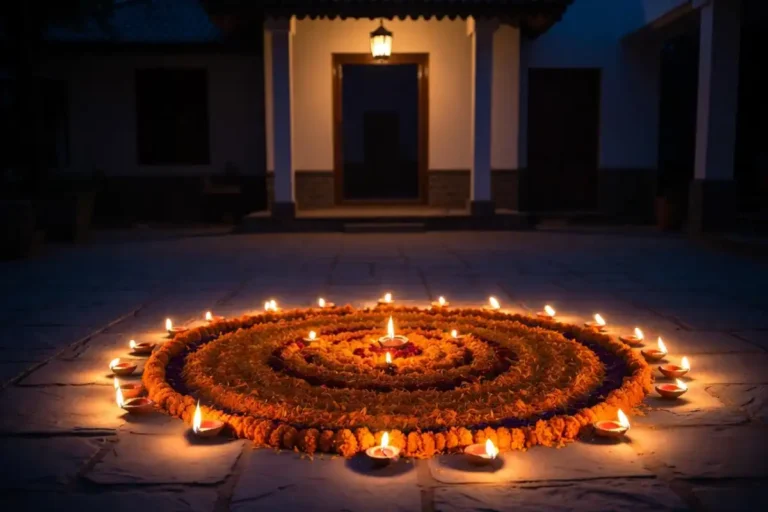
The diya symbolizes light defeating darkness and knowledge defeating ignorance. It is the heart of Diwali. Diya motifs are placed at the edges of a rangoli so the pattern looks lit even before real lamps go down.
A diya is easy to draw. Sketch a teardrop for the clay bowl. Add a small flame on top. Repeat the shape in a ring or a border line. Warm yellow and orange give the glow.
The Om Symbol in Rangoli
Om is the primordial sound of the universe and the most sacred syllable in Hinduism. It is often centered in spiritual rangoli, especially for prayer rooms and puja spaces, bringing a calm, devotional tone to the whole design.
Keep the curves smooth and the proportions steady, since a shaky om looks wrong at once. Outline it first in white, then fill with saffron or deep orange.
The Peacock Motif
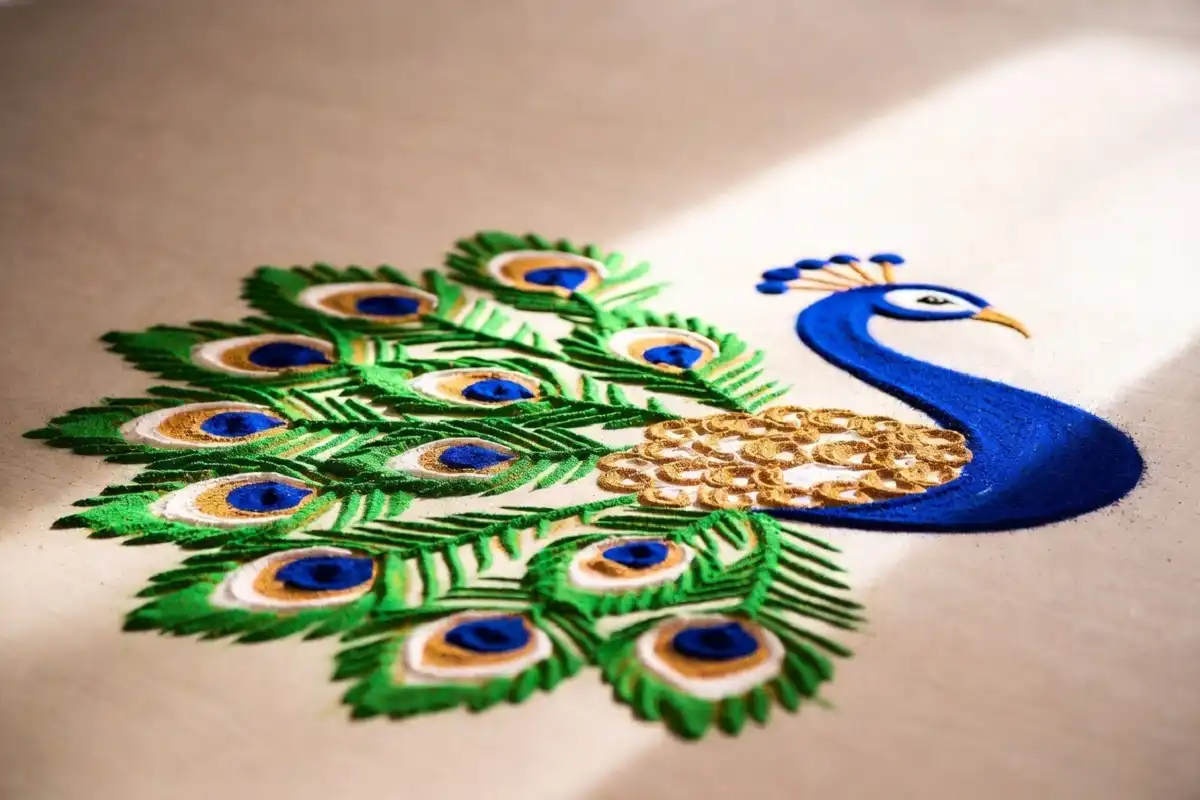
The peacock stands for beauty, grace, and love. It is India’s national bird and appears across temple art and textiles. In rangoli, a peacock adds movement and a burst of color that few other motifs match.
Draw the body as a curved teardrop. Fan the tail into layered feathers, each ending in an eye shape. Blue, green, and gold bring it alive. This is an advanced motif, so practice the tail curve before a big design.
The Kalash and Sacred Pot
The kalash symbolizes abundance, fertility, and the source of life. It is a pot topped with mango leaves and a coconut, drawn for weddings, housewarmings, and Lakshmi puja.
Sketch a rounded pot with a narrow neck. Add five mango leaves fanning out at the rim. Place a coconut on top. Decorate the pot body with dots and small florals.
Lakshmi’s Feet at the Entrance
Lakshmi’s feet, called Lakshmi Charan, mark the goddess of wealth entering your home. A pair of small footprints pointing inward from the door is drawn during Diwali. Pointing inward is the key detail — it shows fortune walking in, not out.
Each foot is a simple sole shape with five toe dots. Add a swastik or a small dot pattern inside each print. Among traditional Indian symbols in rangoli, this one is the smallest, so it fits even a tight doorway.
How Do You Combine Traditional Symbols in One Rangoli?
You combine traditional symbols by choosing one central motif and supporting it with a themed border. Pick a focus first, such as a large lotus or an om. Then ring it with smaller repeating symbols like diyas or dots that share the same festival meaning.
Colors Behind Traditional Indian Symbols in Rangoli
Color choice reinforces the symbol’s message. Reading the colors alongside the traditional Indian symbols in rangoli makes the full message clear at a glance.
Traditional Indian Symbols and Their Meanings in Rangoli
Traditional Indian symbols in rangoli turn a simple floor drawing into a meaningful expression of culture, celebration, and personal intention.
Each motif carries its own symbolism, so understanding these designs can help you create a rangoli that feels more purposeful rather than simply decorative. The lotus is often associated with purity, beauty, and spiritual growth, while the diya represents light, hope, and the victory of good over darkness.
The swastik is another traditional symbol connected with prosperity, good fortune, and positive energy. You can also explore motifs such as peacocks, conch shells, kalash, flowers, and geometric patterns, depending on the festival or occasion.
Start by learning the lotus, diya, and swastik, then gradually add other traditional elements to make your rangoli more expressive and culturally meaningful.
FAQs
What is the most sacred symbol in rangoli?
The om is considered the most sacred, as it represents the sound of the universe. The swastik follows closely as a mark of auspicious energy. Both appear most often in spiritual and puja rangoli.
Which symbol is best for Diwali rangoli?
The diya and the lotus are the best symbols for Diwali. The diya honors the festival of lights directly. The lotus invites Goddess Lakshmi, whom people worship on Diwali night.
Can I draw these symbols without a religious reason?
Yes. Many people draw traditional Indian symbols in rangoli for their beauty and heritage value alone. The designs are part of Indian art and welcome all who appreciate them.
Where did rangoli symbols originate?
Most motifs trace back thousands of years to ancient Hindu tradition and folk art across India. You can read more about the broader art form and its history on the rangoli page on Wikipedia.