South Indian Kolam Rangoli Designs: A Complete Guide
South Indian Kolam Rangoli Designs: A Complete Guide to Pulli, Sikku and Muggu
South Indian kolam rangoli designs use dot grids called pulli to build symmetrical patterns at the doorstep. Tamil Nadu, Andhra Pradesh, and Karnataka households draw them daily using rice flour.
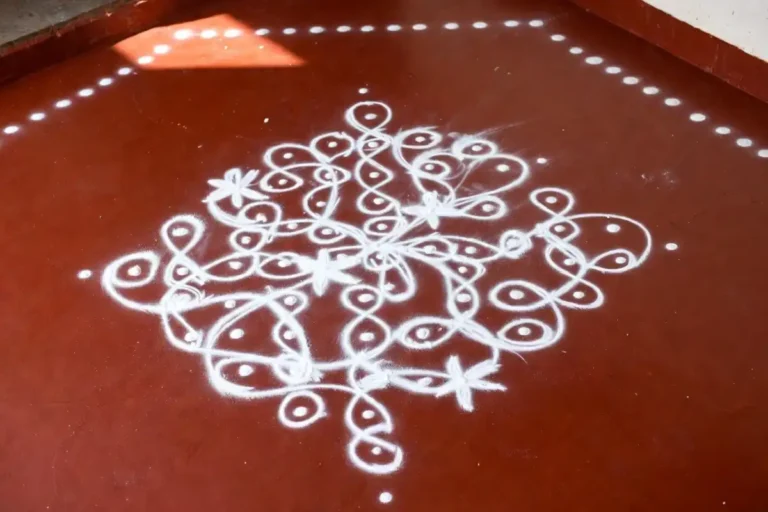
South Indian kolam rangoli designs are dot-grid floor patterns drawn with rice flour or chalk powder outside South Indian homes. Dots called pulli guide the lines. Designers connect them into loops, creating symmetrical geometric or floral shapes without lifting the hand.
What Makes Kolam Different From North Indian Rangoli?
Kolam relies on a dot grid. North Indian rangoli often works freehand with colored powders and no fixed grid. South Indian kolam rangoli designs follow strict symmetry rules tied to the pulli system, while rangoli in states like Rajasthan or Gujarat favors bold color fills over line precision.
Kolam
Uses carefully arranged dots and continuous lines to create balanced, symmetrical patterns.
North Indian Rangoli
Often emphasizes freehand shapes, colorful powder fills, and decorative motifs without a fixed dot grid.
Tamil kolam, Andhra muggu, and Karnataka rangoli all share the dot-grid method but differ in line style. Tamil kolam favors continuous unbroken loops. Andhra muggu often uses thicker, bolder lines. Karnataka rangoli blends dots with painted color sections.
The Dot Grid System (Pulli Kolam) Explained
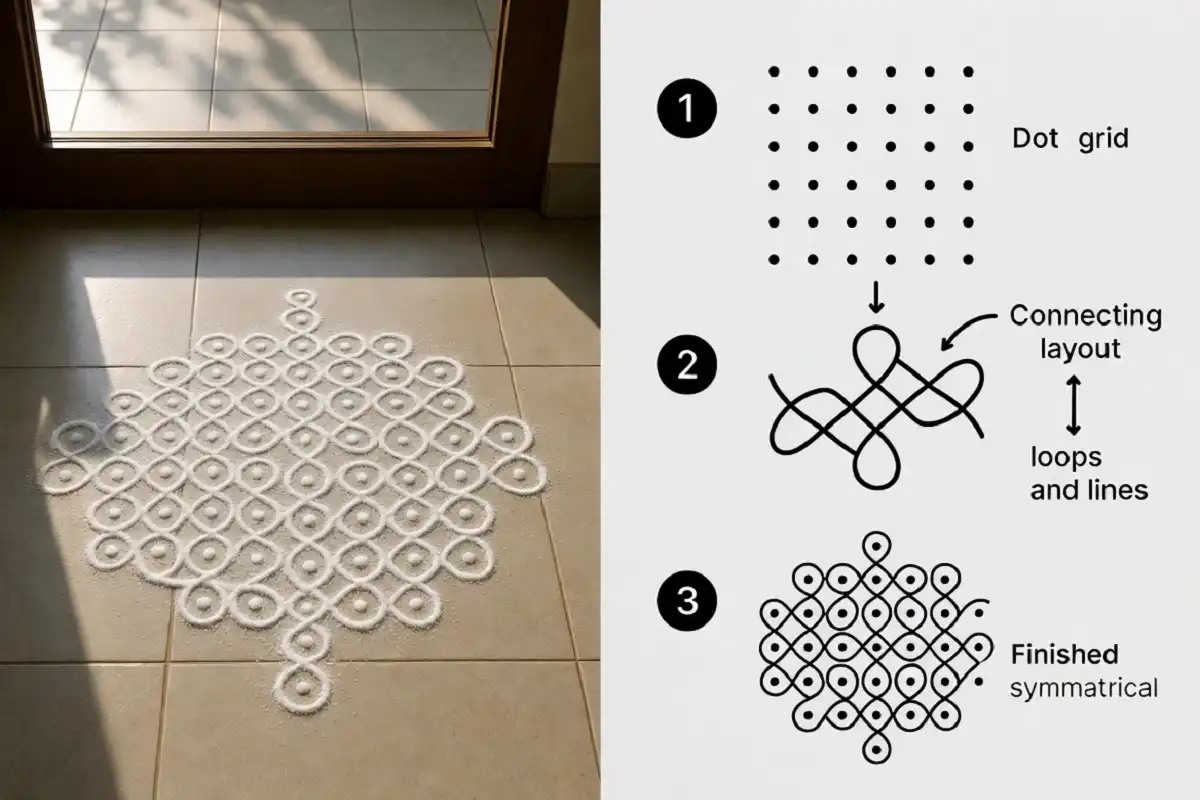
Pulli kolam starts with rows of dots arranged in a square, diamond, or diagonal grid. The designer places dots first, then draws curved lines around them without breaking the stroke.
Beginner
A small grid that is easy to control and ideal for first-time practice.
Balanced
A popular size for learning symmetry and developing hand control.
Intermediate
Gives enough space for more detailed loops and decorative centers.
Competition
Larger grids allow intricate patterns but require greater accuracy.
Standard grids range from 3×3 dots for beginners to 15×15 or larger for competition pieces. Odd-numbered grids like 5×5 or 7×7 create balanced symmetry on all four sides.
How Do You Draw a Basic Kolam Pattern?
You draw a basic kolam by placing an odd-numbered dot grid, then looping a single continuous line around the dots without lifting your hand. Start from one corner, curve around each dot, and close the loop back at the starting point.
Mark the Dot Grid
Mark 5 rows of 5 dots each, evenly spaced.
Choose Your Starting Point
Begin at the top-left dot and prepare to move across the first row.
Curve Around the Dots
Curve the line around the first dot, moving right.
Continue the Loops
Continue looping around each dot in the row, then move down to the next row and repeat the curve pattern.
Close the Pattern
Complete the final loop and close it back at your starting point.
Popular South Indian Kolam Rangoli Design Types
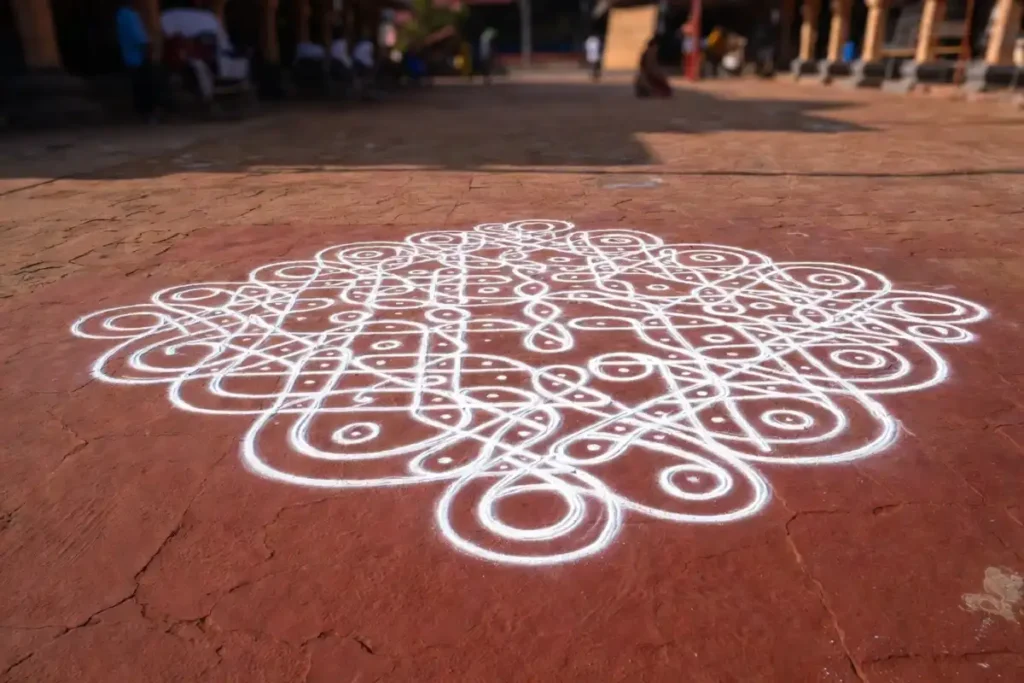
Sikku Kolam
Sikku kolam uses interlocking loops that weave over and under each other, similar to a knot pattern. This style demands more practice since one wrong loop breaks the whole design. Sikku kolam appears often during Pongal and Tamil New Year.
Padi Kolam
Padi kolam skips the dot grid entirely and uses straight or curved lines drawn directly. This style suits daily doorstep kolam since it takes less time than dot-based patterns.
Rangavalli and Muggu
Andhra Pradesh calls its version muggu, drawn with similar dot logic but often filled with color powder for festivals like Sankranti. Karnataka’s rangavalli blends Tamil kolam structure with painted borders, common during Ugadi celebrations.
Flower and Peacock Motifs
Beyond geometric loops, many South Indian kolam rangoli designs include floral centers or peacock shapes at the middle of the grid, especially for temple courtyards and wedding entrances.
If you want floral ideas beyond kolam, my guide on flower rangoli design ideas covers petal layering techniques that also work inside a kolam border.
Materials Used for South Indian Kolam Rangoli Designs
Rice flour remains the traditional material because ants and small insects can eat it, a practice tied to daily hospitality in Tamil households. Chalk powder, colored kolam powder, and even flower petals work for festival versions.
Rice Flour
Traditional white material for daily kolam and fine continuous lines.
Chalk Powder
Useful when you want a quick, clearly visible outline.
Kolam Podi
Colored powder used to fill sections for festivals and special occasions.
Flower Petals
A decorative option for festival versions and colorful variations.
For daily kolam, dry rice flour gives the cleanest white lines. For competition or festival kolam, colored kolam podi (powder) fills in sections after the outline is complete.
Why Do South Indian Households Draw Kolam Every Morning?
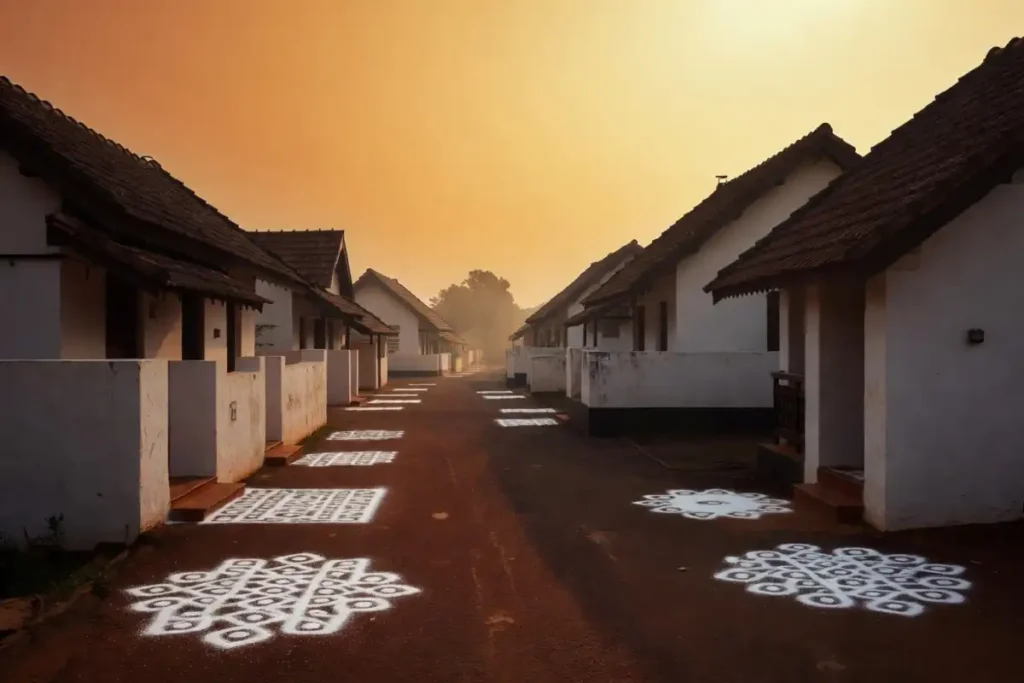
South Indian households draw kolam every morning as a welcome symbol and a mark of a well-kept home. The pattern also marks the day’s first act of discipline, done before sunrise, often by the eldest woman in the house.
Large Morning Kolams
Kolam drawn during Margazhi (mid-December to mid-January) grows larger and more elaborate, with entire neighborhoods competing informally for the best doorstep pattern.
Rangoli made for Pongal, similarly, carries agricultural symbolism tied to harvest gratitude. If you’re planning ahead for that season, check my breakdown of Pongal-specific rangoli patterns for grid sizes suited to festival mornings.
Common Mistakes Beginners Make With Kolam
Spacing dots unevenly breaks symmetry once the loops connect.
Lifting the hand mid-loop leaves visible breaks in sikku kolam.
Wet rice flour can clump and will not flow through the fingers evenly.
Choosing a large grid before mastering a smaller one makes the pattern harder to control.
Start with a 3×3 or 5×5 grid. Move to interlaced sikku kolam only after the basic loop feels automatic. My guide on simple dot-based rangoli patterns has smaller grid examples if you want more practice before scaling up.
Tools That Make Kolam Easier for Beginners
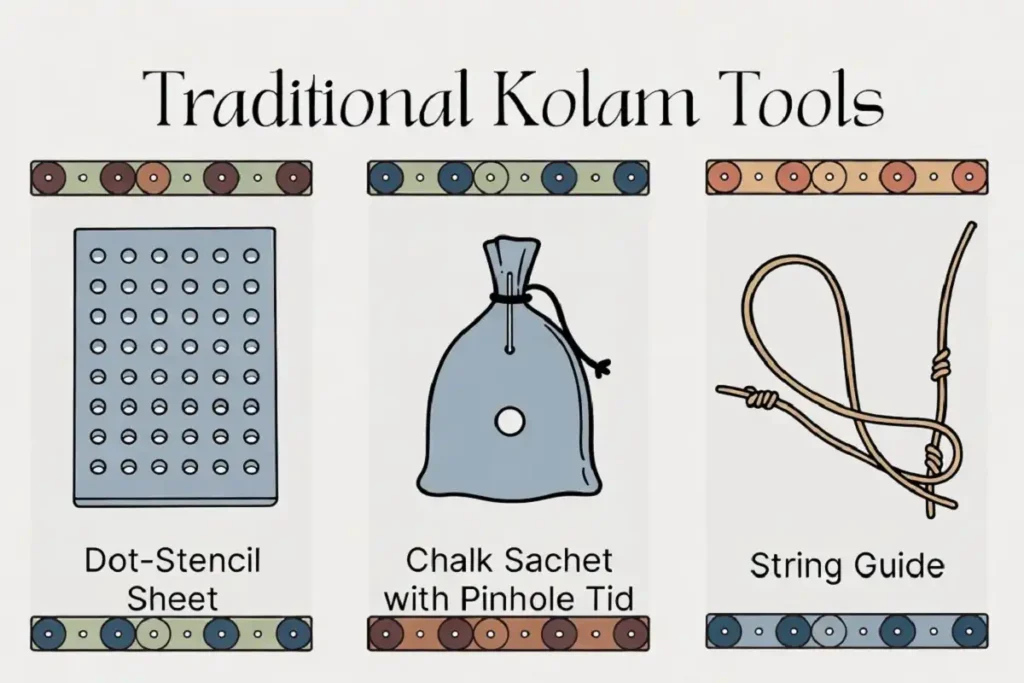
Kolam Stencil
Helps speed up the dot-grid stage while keeping the spacing accurate.
Dot-Marking Tool
Makes it easier to create evenly spaced rows before drawing the loops.
Chalk Sachet
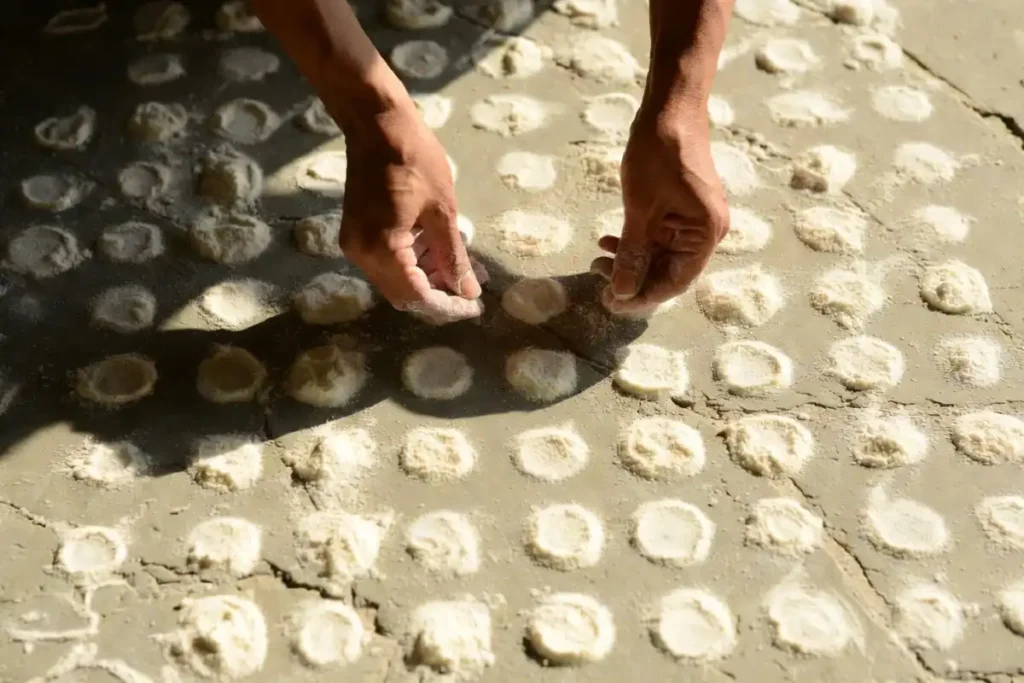
Small holes can help you tap out even rows of dots quickly.
Ruler or String
Useful for keeping proportions consistent when learning straight-line padi kolam.
A kolam stencil or dot-marking tool speeds up the grid stage without sacrificing accuracy. Chalk-filled sachets with small holes let you tap out even dot rows quickly. For straight-line padi kolam, a ruler or string guide keeps proportions consistent until your hand memorizes the spacing.
Start With the Dot Grid
South Indian kolam rangoli designs come down to one skill: mastering the dot grid. Once the pulli spacing feels natural, sikku kolam, padi kolam, and festival muggu all become variations of the same base technique.
Start small, keep the grid even, and the intricate patterns will follow with practice.