Rangoli Designs for Pongal: Celebrating Tradition and Beauty
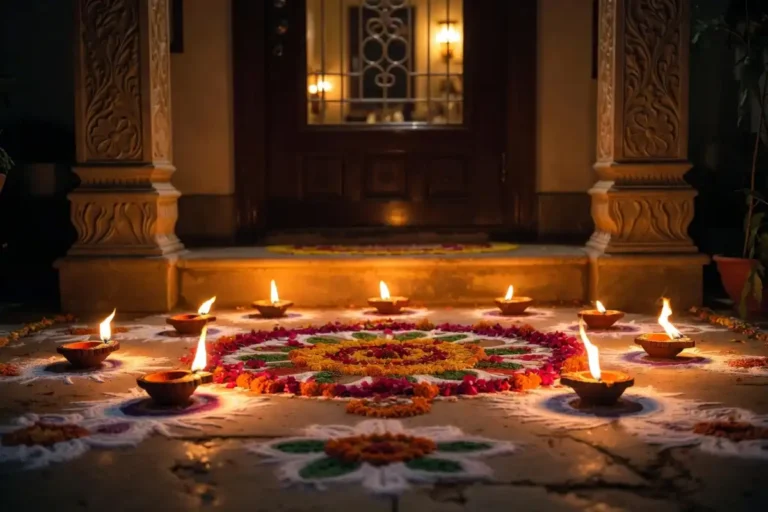
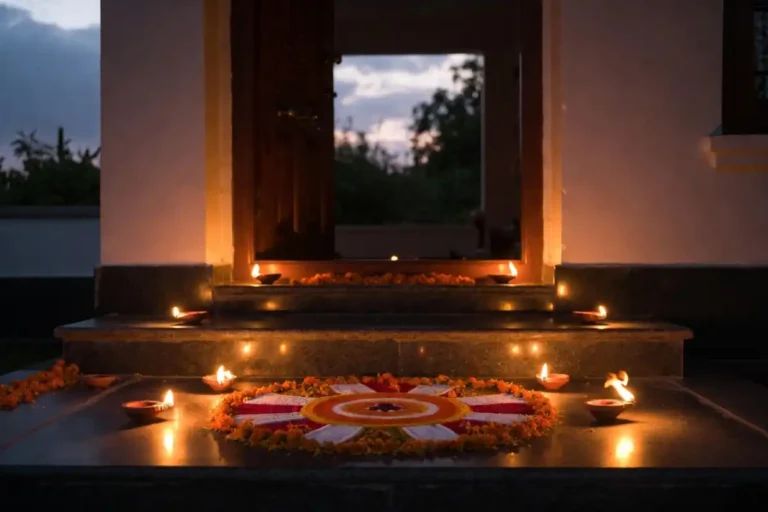
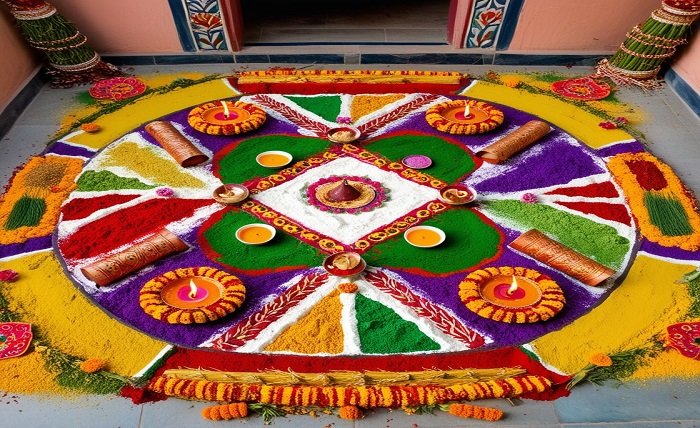
A time of joy, gratitude, and lively celebrations, Pongal is a beloved harvest festival in South India. Rangoli designs for Pongal creations are one of the festival’s most striking visual features. Using vibrant powders, flowers, or grains, these elaborate designs adorn homes’ doorsteps, beckoning wealth and joy.
This blog discusses the rangoli designs for Pongal tradition, provides advice on how to make your own designs, and showcases a number of eye-catching patterns.
The Significance of Rangoli in Pongal Celebrations
Cultural HeritageRecognising the Value of Culture
Rangoli is more than just an artistic medium; in Tamil Nadu, it is also referred to as Kolam. It is a sacrifice to the gods and a traditional way of showing happiness. These patterns represent the warmth and optimism of Pongal, which falls at the conclusion of the winter solstice and the start of the sun’s voyage north.
Making rangoli is thought to protect households from bad energy and bring good fortune.
Historical RootsOrigins in History
Rangoli has been practiced for thousands of years. The practice’s profound origins in Indian culture are highlighted by its reference in ancient texts and folklore. Using ingredients like rice flour, rangoli designs for Pongal were initially straightforward and monochromatic. They developed into increasingly complex designs with a riot of colour over time, showcasing both creative inventiveness and geographical variances.
Crucial Ingredients for Making Rangoli
MaterialsConventional and Contemporary Materials
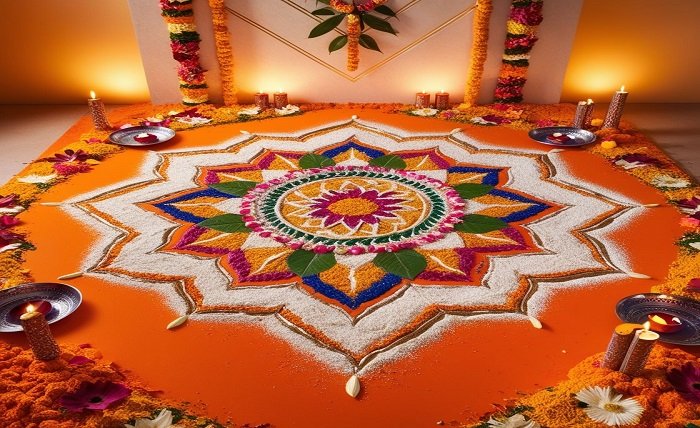
You need the proper supplies to make beautiful rangoli creations. In the past, flower petals, pulverised lime stone, and rice flour were utilised. These materials are biodegradable and environmentally benign.
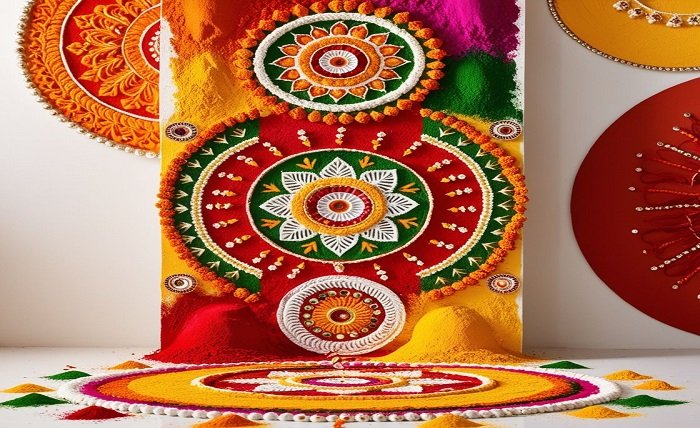
These days, a lot of people also use rangoli colours, which are readily available in stores, which are coloured powders. These powders are simple to work with and available in a range of vivid colours.
Popular Materials
- Rice flour for traditional outlines and patterns
- Flower petals for natural decoration
- Pulverised lime stone for traditional designs
- Commercial rangoli powders for brighter colours
- Biodegradable materials for an environmentally friendly approach
Equipment and Add-ons
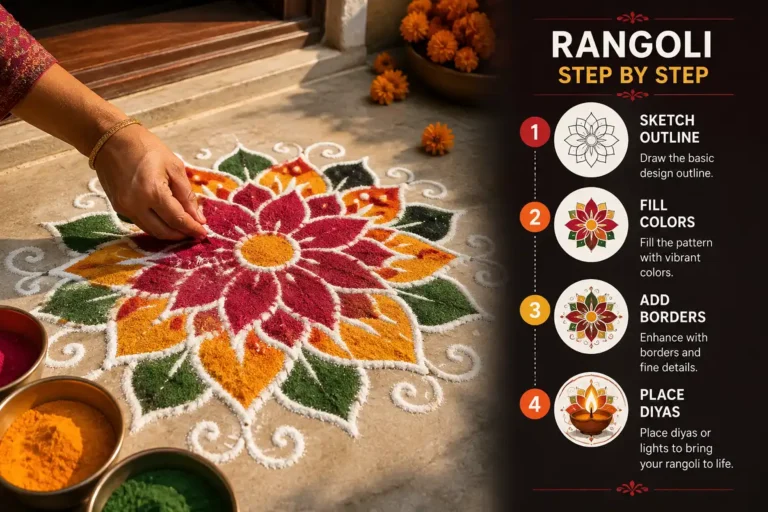
Having the appropriate tools can facilitate the process in addition to the necessary supplies. Typical tools consist of:
Sieve or Stencil
Used to create complex designs with greater consistency.
Chalk
Useful for drawing the initial design on the ground.
Cone or Piping Bag
Helps apply colours precisely and create clean lines.
Flowers and Foliage
Add natural texture and an organic feel to the design.
Easy and Stylish Rangoli Patterns
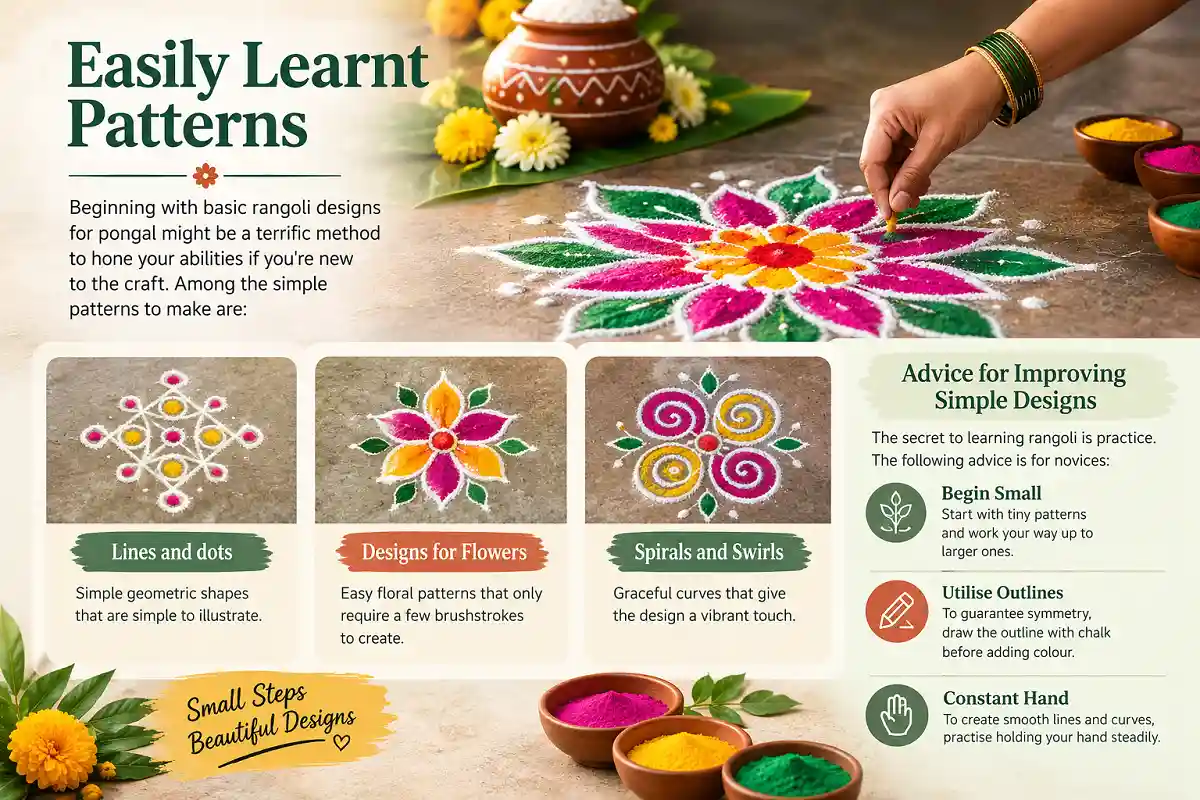
Easily Learnt Patterns
Beginning with basic rangoli designs for Pongal might be a terrific method to hone your abilities if you’re new to the craft. Among the simple patterns to make are:
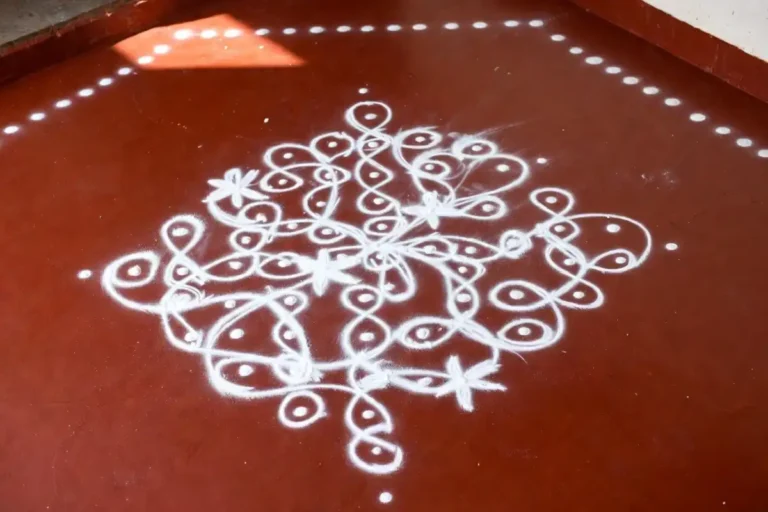
Lines and Dots
Simple geometric shapes that are simple to illustrate.
Flower Designs
Easy floral patterns that only require a few brushstrokes to create.
Spirals and Swirls
Graceful curves that give the design a vibrant touch.
Advice for Improving Simple Designs
The secret to learning rangoli is practice. The following advice is for novices:
Start with tiny patterns and work your way up to larger ones.
To guarantee symmetry, draw the outline with chalk before adding colour.
To create smooth lines and curves, practise holding your hand steadily.
Traditional Themes for Pongal Rangoli
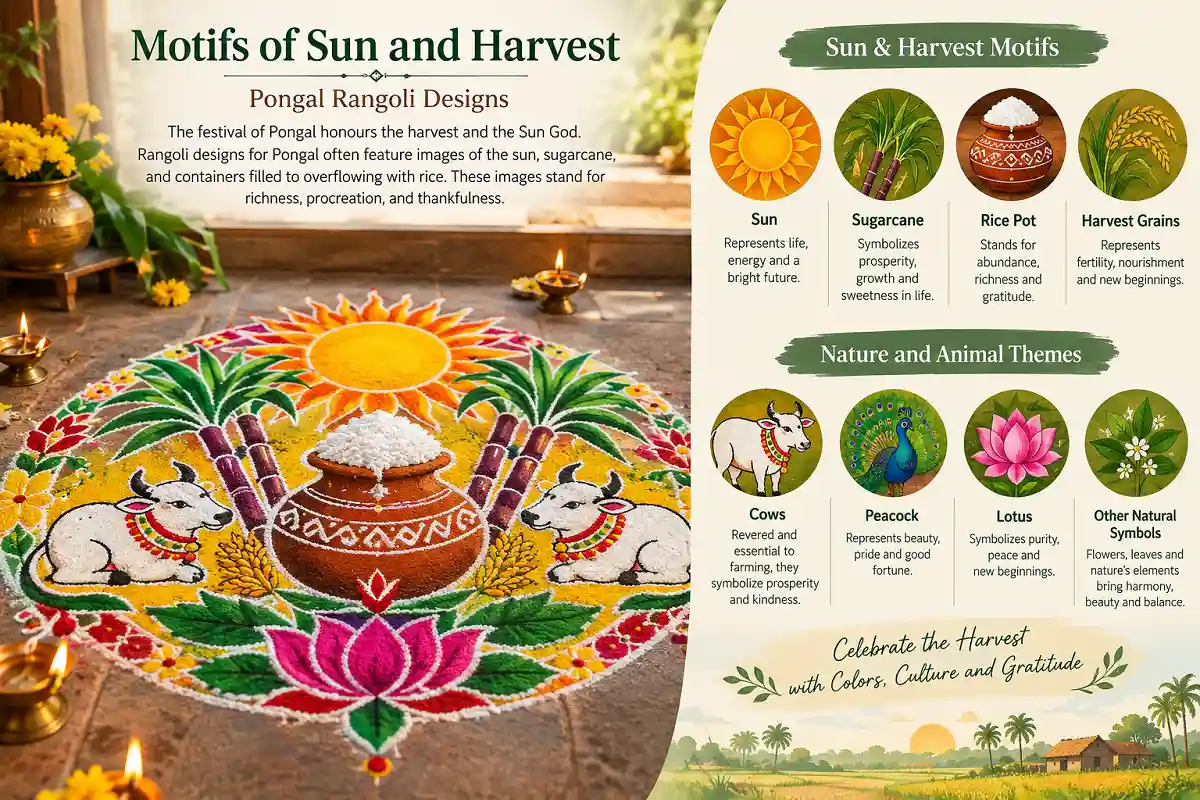
Motifs of Sun and Harvest
The festival of Pongal honours the harvest and the Sun God. In keeping with this, rangoli designs for Pongal frequently feature images of the sun, sugarcane, and containers filled to overflowing with rice. These images stand for richness, procreation, and thankfulness.
Nature and Animal Themes
A common element in Pongal rangoli are cows, which are revered and essential to farming. Peacocks, lotus blossoms, and other natural symbols that represent purity and beauty are also well-liked.
Sun
Honours the Sun God and the light associated with the harvest.
Harvest
Represents abundance, gratitude, and the rewards of farming.
Cows
Reflects the importance of cattle in traditional farming life.
Lotus
Adds a natural symbol of purity and beauty to Pongal designs.
Contemporary and Creative Rangoli Patterns
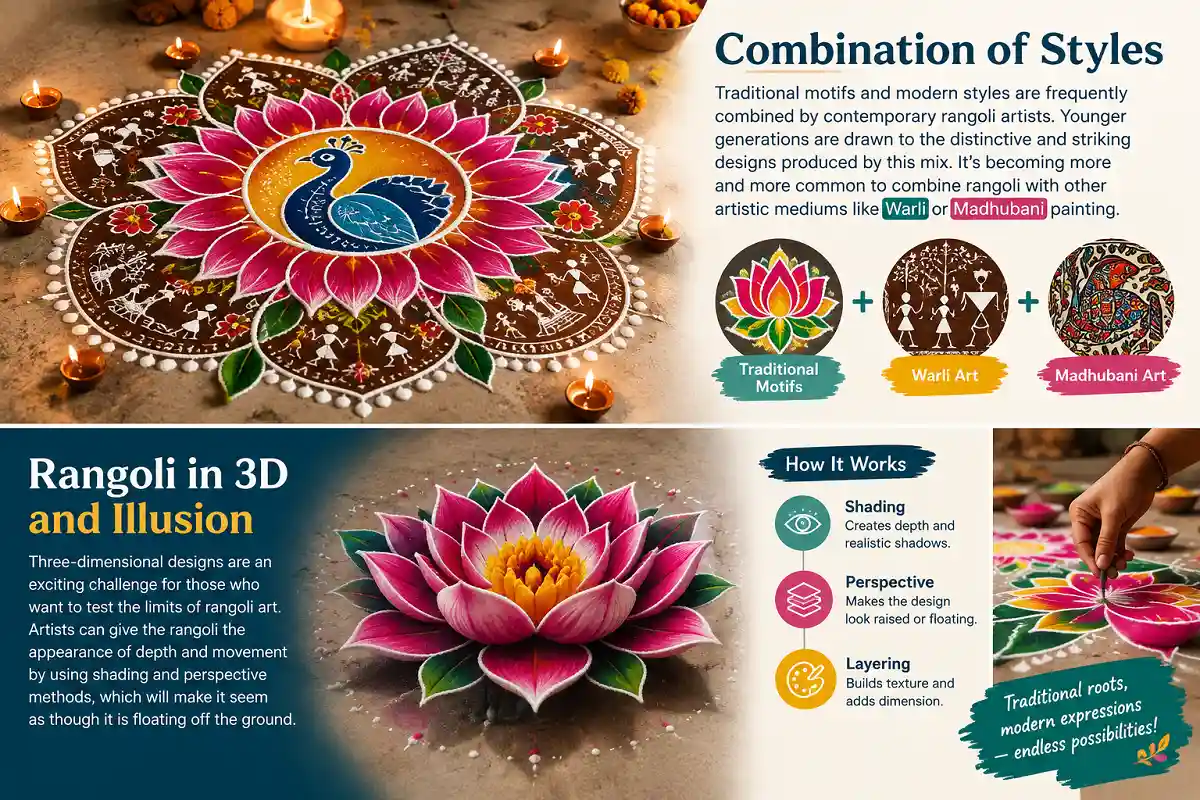
Combination of Styles
Traditional motifs and modern styles are frequently combined by contemporary rangoli artists. Younger generations are drawn to the distinctive and striking designs produced by this mix.
It’s becoming more and more common to combine rangoli with other artistic mediums like Warli or Madhubani painting.
Rangoli in 3D and Illusion
Three-dimensional designs are an exciting challenge for those who want to test the limits of rangoli art . Artists can give the rangoli the appearance of depth and movement by using shading and perspective methods, which will make it seem as though it is floating off the ground.
Experiment with shading, perspective, and layered colours to give traditional Pongal motifs a contemporary visual effect.
Pongal can be celebrated with enthusiasm by making rangoli designs for Pongal that include both creativity and tradition.
Seeing your artwork turn into a lively, inviting display gives you a great sense of accomplishment, regardless of your level of experience as an artist.
By experimenting with various patterns and techniques, you will improve your artistic abilities and strengthen your bond with this lovely cultural custom.
FAQs
What kind of material works best for rangoli?
Conventional materials are safe and environmentally beneficial, such as rice flour and flower petals. However, commercially manufactured rangoli powders are a popular option for their easier use and brighter colours.
Are rangoli designs for Pongal stencils suitable for novices?
Indeed, stencils are an excellent way for novices to quickly and easily make complex designs. They aid in attaining consistency and accuracy.
How can I extend the lifespan of my rangoli design?
Select a protected location away from wind and rain to extend the life of your rangoli. To set the colours, you can gently lightly sprinkle the artwork with water.
Are there any particular rangoli patterns intended for Pongal?
Indeed, the sun, sugarcane, rice pots, and cows are common motifs in traditional Pongal rangoli designs. These emblems honour the bounties of the Sun God and the crop.
Can kids take part in making rangoli designs for Pongal?
Of course! Rangoli is an enjoyable and imaginative pastime for kids. Allow children to develop their imagination by starting with basic designs.
What does the use of rice flour in rangoli mean culturally?
Making rangoli with rice flour is not just customary but also environmentally beneficial. It represents wealth and is said to draw ants and birds, which feeds tiny animals and fosters peace with the natural world.