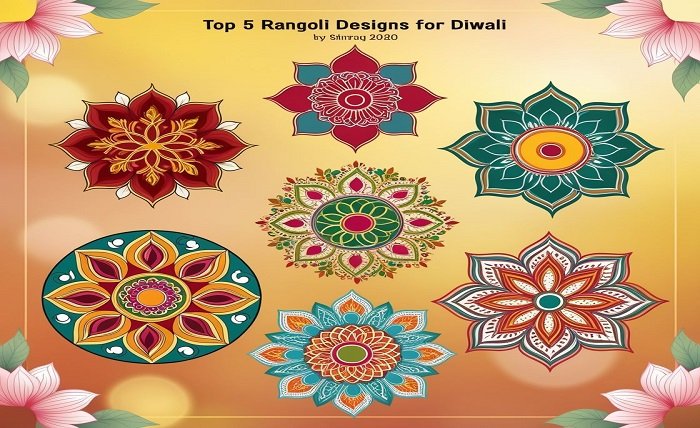
Top 5 Rangoli Designs for Diwali: Brighten Up Your Home with Festive Patterns
One of the most beloved holidays in India and the world is Diwali, often known as the festival of lights. Homes are decked out with candles, lamps, and colourful Rangoli designs during this season of celebration, joy, and devotion.
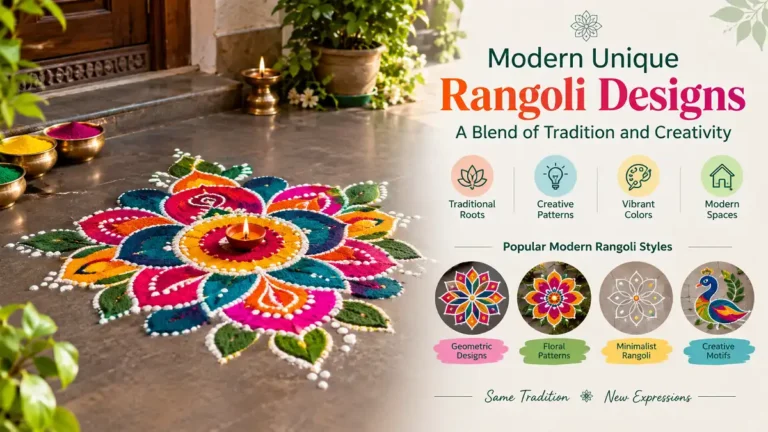
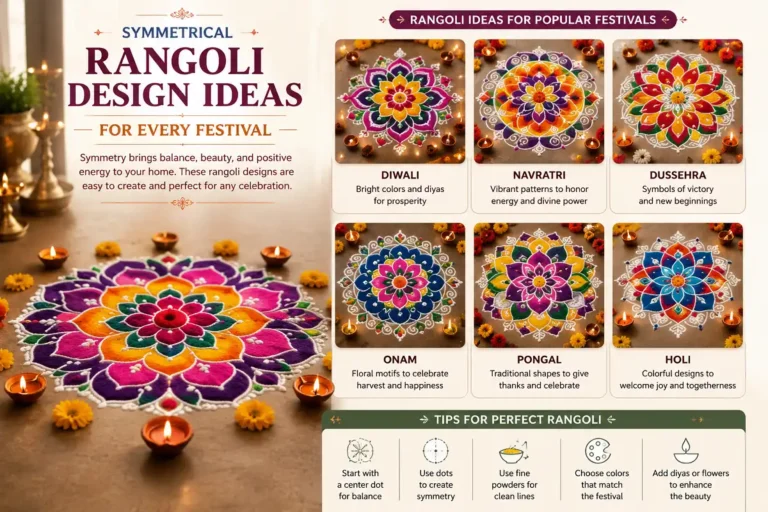
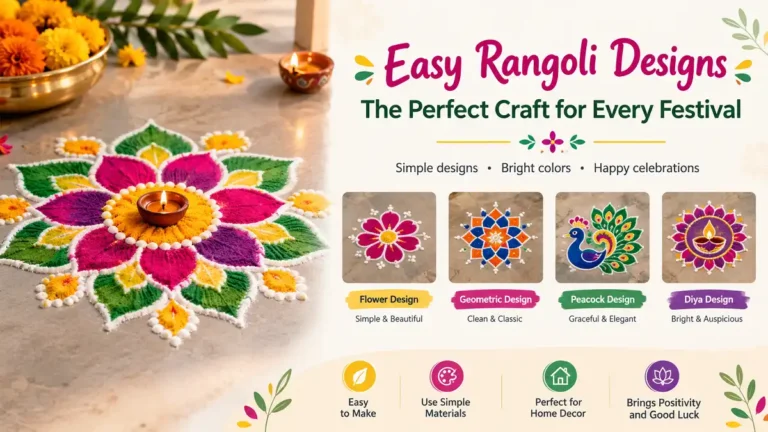
During Diwali, the floors of homes and public areas are decorated with Rangoli, a traditional art form made with coloured powders, flower petals, rice, or other materials. In addition to being ornamental, the designs represent wealth, good fortune, and the dispelling of bad energy.
Over time, top 5 Rangoli designs for Diwali have changed as modern artists have experimented with new hues and patterns. Nonetheless, the fundamentals of Diwali Rangoli are still based in tradition, with patterns drawn from geometry, nature, and religion.
The Natural Beauty of Floral Rangoli
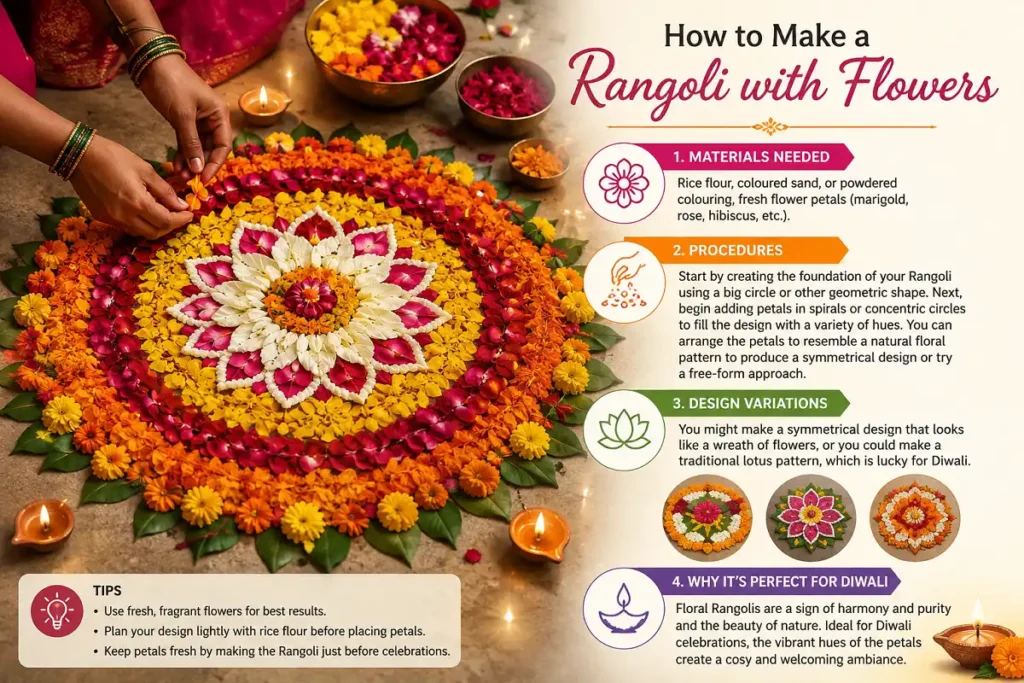
The floral Rangoli is among the most well-liked and classic top 5 Rangoli designs for Diwali. It is ideal for the celebration since it features a range of flowers and petals in vivid hues. Depending on the materials you use and your level of talent, floral Rangolis can have simple or complex designs.
Materials Needed
Rice flour, coloured sand, or powdered colouring, along with fresh flower petals such as marigold, rose, and hibiscus.
How to Make It
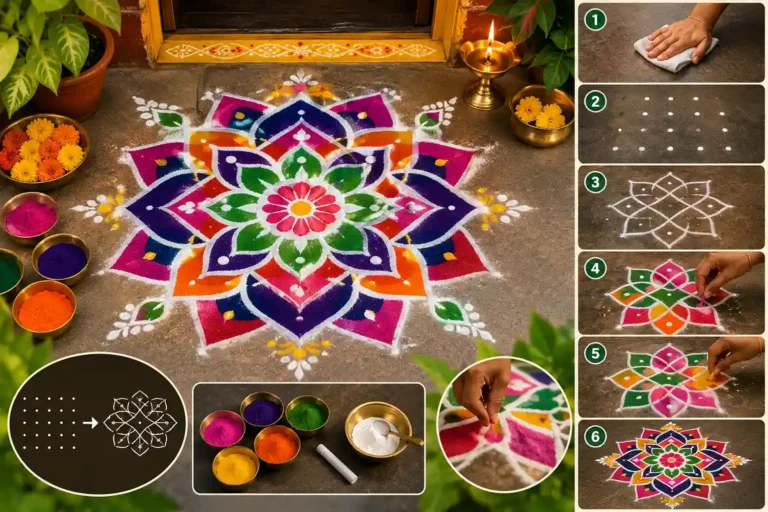
Start by creating the foundation using a big circle or another geometric shape. Add petals in spirals or concentric circles to create a colourful pattern.
Design Variations
Create a symmetrical flower wreath or try a traditional lotus pattern, which is considered auspicious for Diwali.
Floral Rangolis are a sign of harmony, purity, and the beauty of nature. The vibrant colours of the petals create a cosy and welcoming festive atmosphere.
Peacock Rangoli: An Icon of Beauty and Grace
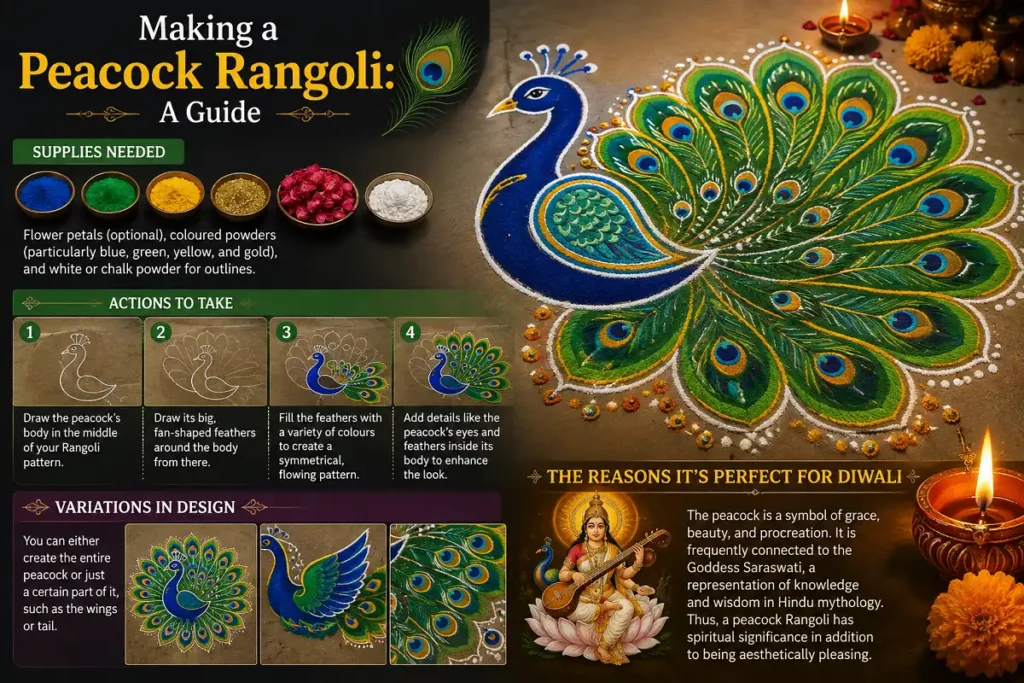
In Indian culture, the peacock represents elegance, beauty and wealth. Including a peacock design in your Rangoli gives your Diwali décor a royal and joyous feel. When used in top 5 Rangoli designs for Diwali, the vivid greens, blues, and golds of peacock feathers produce a breathtaking visual impact.
Making a Peacock Rangoli: A Guide
Supplies Needed
Flower petals, coloured powders, particularly blue, green, yellow, and gold, plus white or chalk powder for outlines.
Actions to Take
Draw the peacock’s body in the middle of the Rangoli. Then create its large fan-shaped feathers around the body and fill them with different colours.
Design Variations
You can create the entire peacock or focus on a specific part, such as its wings or magnificent tail.
The peacock is a symbol of grace, beauty, and procreation. It is also frequently connected to Goddess Saraswati, making a peacock Rangoli both aesthetically pleasing and spiritually meaningful.
Geometric Rangoli: Symmetry and Straight Lines
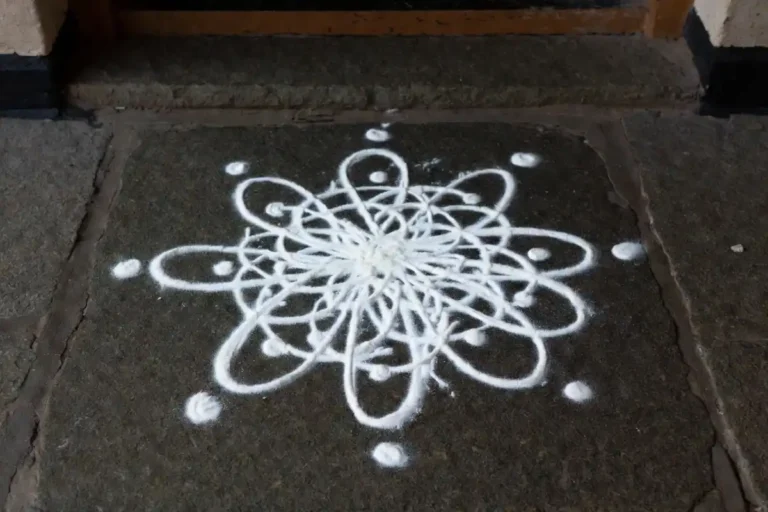
Geometric Rangoli designs are ideal for people who like symmetry, clean lines, and a more modern style. Repeated forms and patterns, which can be as simple or complex as you like, are common in these designs.
How a Geometric Rangoli Is Made
Chalk powder, rice flour, or coloured powders.
Begin by drawing the fundamental shape, such as a circle, square, or hexagon.
Break the design into smaller sections and use contrasting colours to fill them.
Use triangles, straight lines, circles, and other geometric elements to complete the design.
Geometric patterns stand for balance and harmony. Their symmetry mirrors the universe’s orderliness, making them a fortunate and spiritually uplifting choice for Diwali.
Lakshmi’s Footprints: Greetings to the Goddess of Wealth
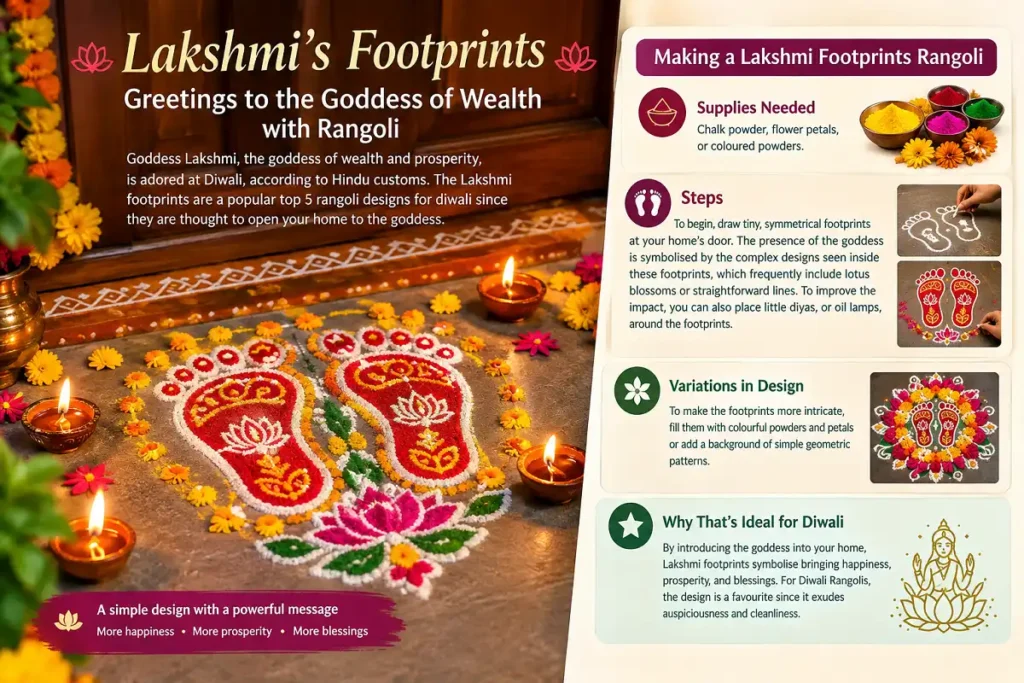
Goddess Lakshmi, the goddess of wealth and prosperity, is adored at Diwali according to Hindu customs. According to popular belief, she brings blessings and good fortune into her believers’ houses.
Lakshmi footprints are thought to symbolise the arrival of Goddess Lakshmi and welcome prosperity into the home.
Making a Lakshmi Footprints Rangoli
Supplies Needed
Chalk powder, flower petals, or coloured powders.
Steps
Draw tiny, symmetrical footprints near your home’s door. Add lotus blossoms or simple lines inside them.
Variations
Fill the footprints with colourful powders and petals or add a simple geometric background.
Lakshmi footprints symbolise bringing happiness, prosperity, and blessings into the home. This design is a favourite because it represents auspiciousness and cleanliness.
Traditional Folk Art on the Floor: Madhubani Rangoli
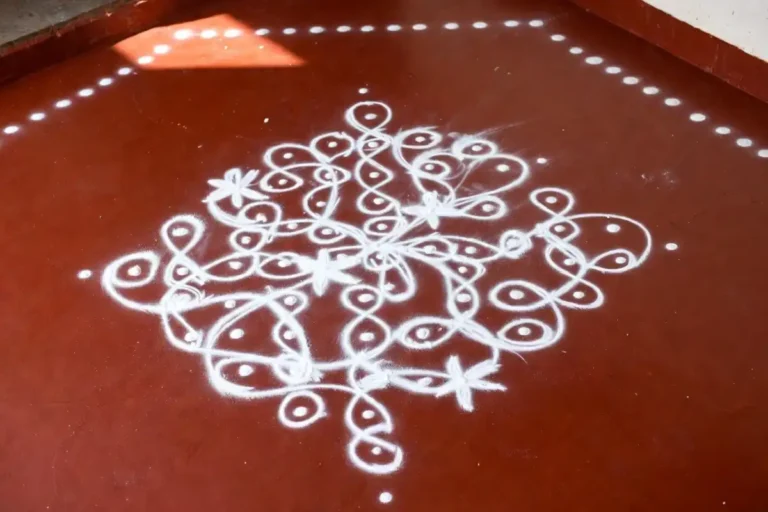
Mithila painting, another name for Madhubani art, is a traditional folk art form from Bihar that employs vivid colours and complicated patterns. Animals, birds, flowers, geometric forms, and intricate details are all included in a Madhubani Rangoli creation.
Making a Madhubani Rangoli: A Guide
Chalk powder, rice flour, coloured powders, and fine brushes for adding optional details.
Start by drawing the main theme that will serve as the focal point, such as an elephant, peacock, or floral pattern.
Work outward, incorporating geometric designs, flowers, and animals to bring vivid colour to the design.
Add intricate details such as lines and dot work to make the design stand out.
Madhubani Rangolis are known for their bright colours and intricate features. They are perfect for anyone looking to add traditional Indian folk art and cultural significance to Diwali celebrations.
Celebrate Diwali With Creativity, Culture & Colour
Rangoli is a stunning manifestation of creativity, spirituality, and culture that goes beyond just ornamental art. The top 5 Rangoli designs for Diwali provide a range of possibilities to add seasonal brightness to your home, regardless of your preference for floral, geometric, or detailed traditional artwork.
Every design has a meaning of its own, from peacock motifs to footprints welcoming Goddess Lakshmi and symbolising prosperity.