Unique Rangoli Design: Creative Ideas, Styles, and Tips for Every Occasion
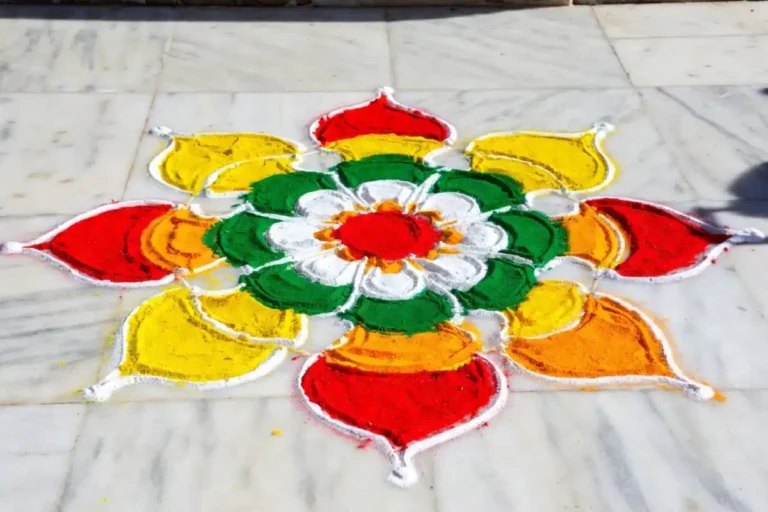
Rangoli has been part of Indian festive and daily life for centuries, but the art form continues to grow in new directions. A unique rangoli design goes beyond familiar patterns and brings something personal, unexpected, or visually distinct to the floor. Whether you draw inspiration from nature, geometry, culture, or modern art, a design that stands out makes the space feel truly special. This guide explores the most interesting styles, creative approaches, and practical tips to help you move beyond the ordinary and create rangoli that genuinely impresses.
What Makes a Rangoli Design Truly Unique
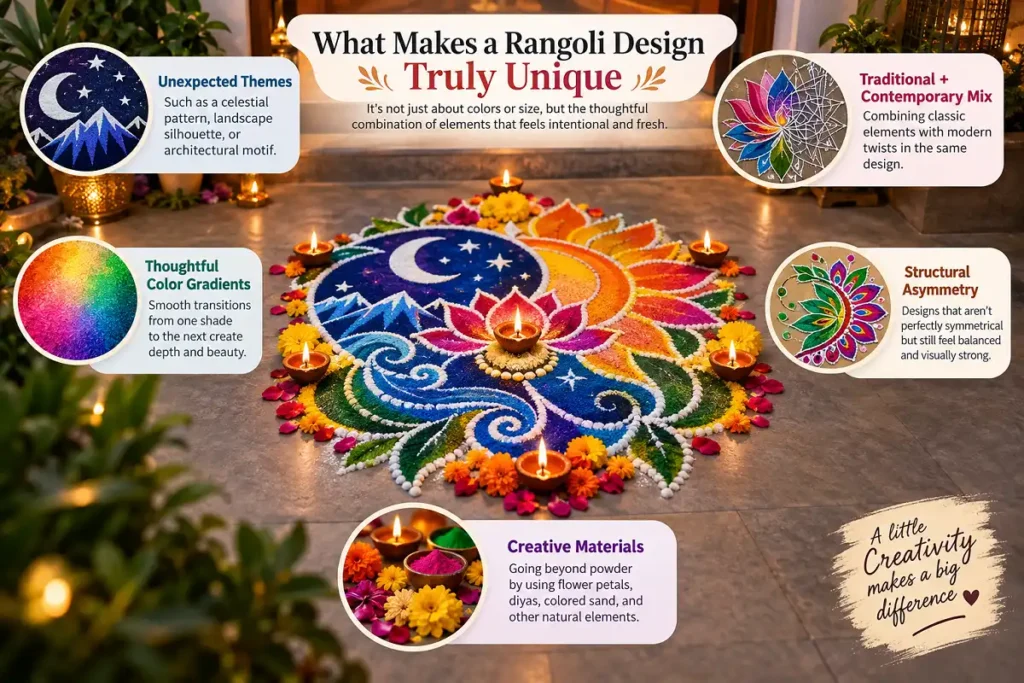
A unique rangoli design is not just about using unusual colors or a larger size. It comes from combining elements in a way that feels intentional and fresh.
Some of the qualities that set standout designs apart:
- An unexpected theme, such as a celestial pattern, landscape silhouette, or architectural motif
- A mix of traditional and contemporary elements within the same composition
- Thoughtful color gradients that move smoothly from one shade to the next
- Structural asymmetry balanced by visual weight rather than mirror symmetry
- Incorporation of materials beyond powder, such as flower petals, diyas, or colored sand
When these elements come together with care, the result is a design that people stop to look at rather than simply walk past.
Unique Rangoli Design Styles Worth Exploring
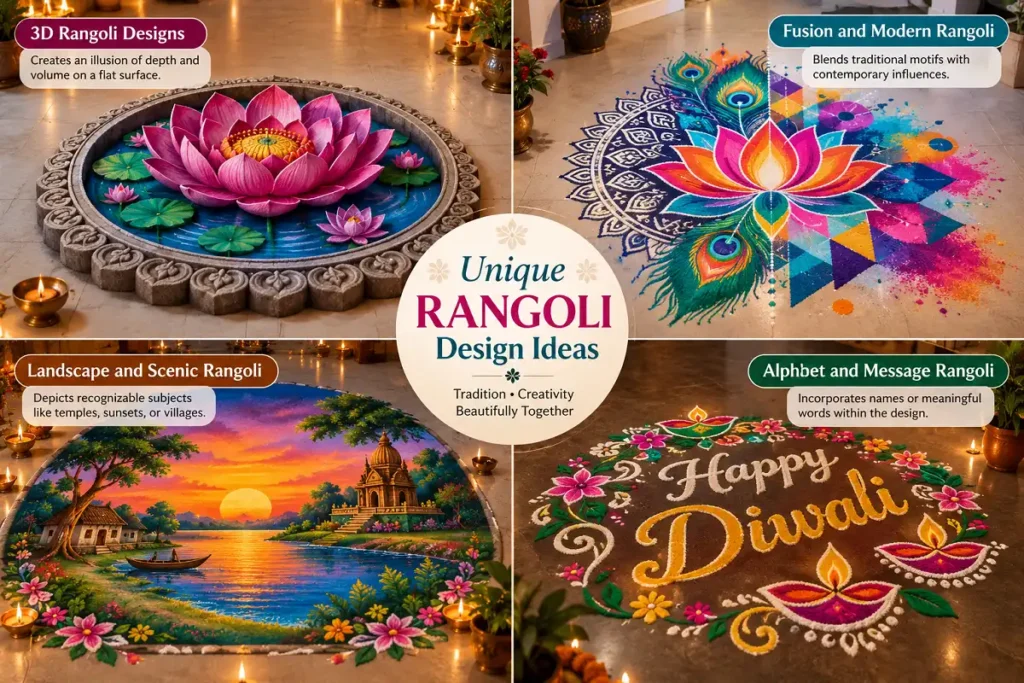
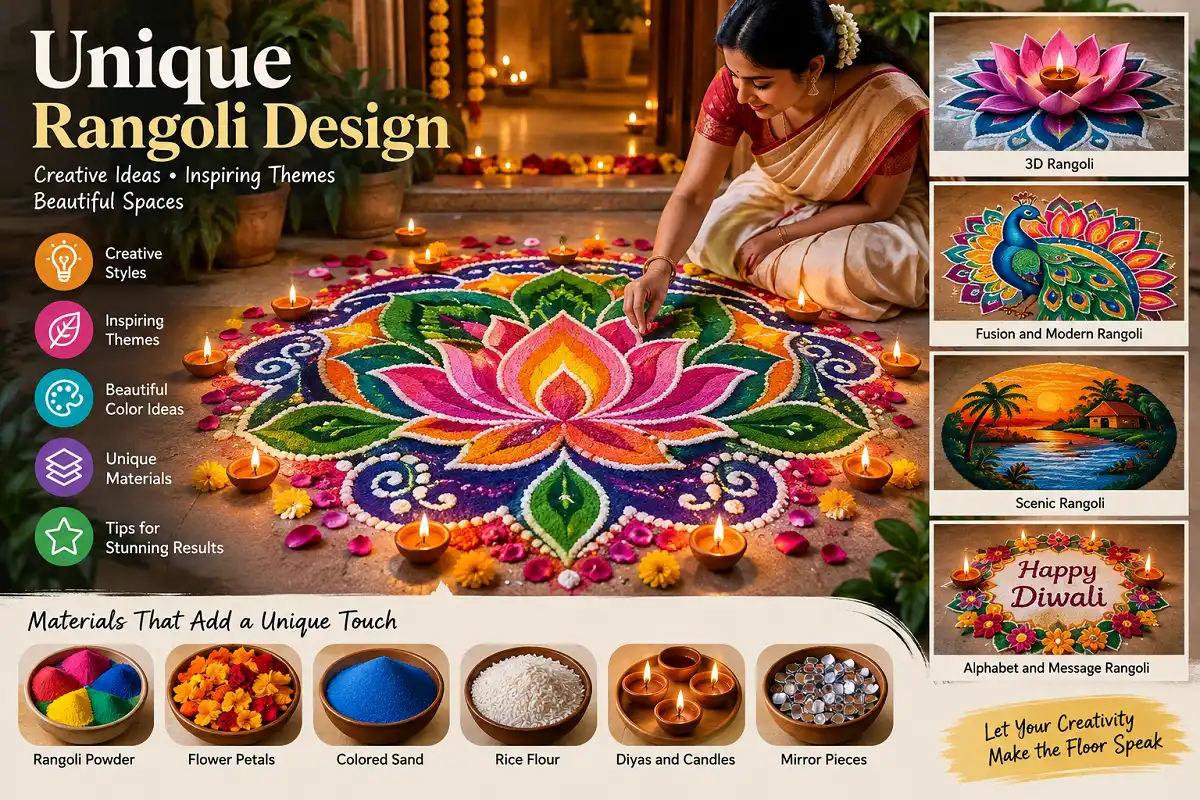
3D Rangoli Designs
Three-dimensional rangoli creates an illusion of depth and volume on a flat floor surface. This is achieved through careful shading, shadow placement, and layered color application. The result can look like a bowl of flowers rising from the floor or a carved stone mandala lifting off the surface.
3D designs require more planning than flat patterns, but even a modest attempt with basic shading adds a level of visual interest that standard flat rangoli cannot match.
Fusion and Modern Rangoli
Modern fusion designs blend traditional Indian motifs with contemporary influences like abstract shapes, watercolor-style gradients, or even pop culture references. This approach appeals strongly to younger artists and is particularly suited to interior spaces, social events, and themed celebrations.
A fusion unique rangoli design might pair a traditional lotus center with geometric border elements drawn from Islamic tile art, or combine peacock motifs with a pastel color palette inspired by contemporary illustration.
Landscape and Scenic Rangoli
Rather than abstract patterns, scenic rangoli depicts recognizable subjects such as temples, sunsets, village scenes, or night skies filled with stars. These designs require more artistic skill but produce results that feel more like paintings than traditional floor decoration.
Scenic designs work particularly well as focal points in large entrance halls or courtyards where the full composition can be seen from a distance.
Alphabet and Message Rangoli
Rangoli that incorporates text, names, or meaningful words within its pattern structure has grown popular for birthdays, weddings, and religious celebrations. The lettering is integrated into the design rather than simply placed on top, making the message part of the visual composition itself.
Themes That Inspire a Unique Rangoli Design
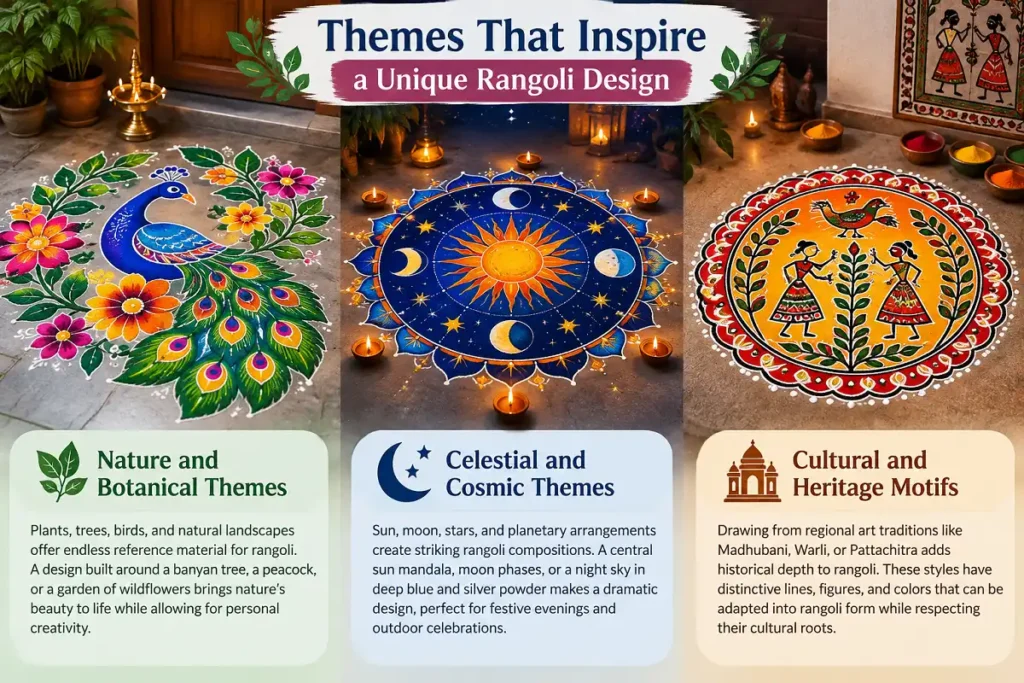
Nature and Botanical Themes
Plants, trees, birds, and natural landscapes offer endless reference material for rangoli. A design built around a banyan tree with spreading roots, a peacock surrounded by monsoon clouds, or a garden of wildflowers all draw from recognizable natural imagery while leaving room for individual artistic interpretation.
The decorative floral designs for every home style guide covers botanical motifs that translate well into rangoli compositions.
Celestial and Cosmic Themes
Sun, moon, stars, and planetary arrangements make for striking rangoli compositions. A central sun mandala surrounded by moon phases, or a night sky rendered in deep blue and silver powder, creates a visually dramatic design that works well for festive evenings and outdoor celebrations.
Celestial themes pair naturally with the radial symmetry that rangoli artists already use, making them structurally intuitive even when the visual content feels unusual.
Cultural and Heritage Motifs
Drawing from specific regional art traditions, such as Madhubani painting, Warli folk art, or Pattachitra imagery, produces a unique rangoli design that carries historical depth alongside visual interest. These traditions have their own characteristic line styles, figures, and color associations that can be adapted into rangoli form while respecting their cultural roots.
For inspiration drawn from a wide range of traditional pattern styles, the top rangoli patterns you will love collection is a useful starting point.
Color Strategies for a Unique Rangoli Design
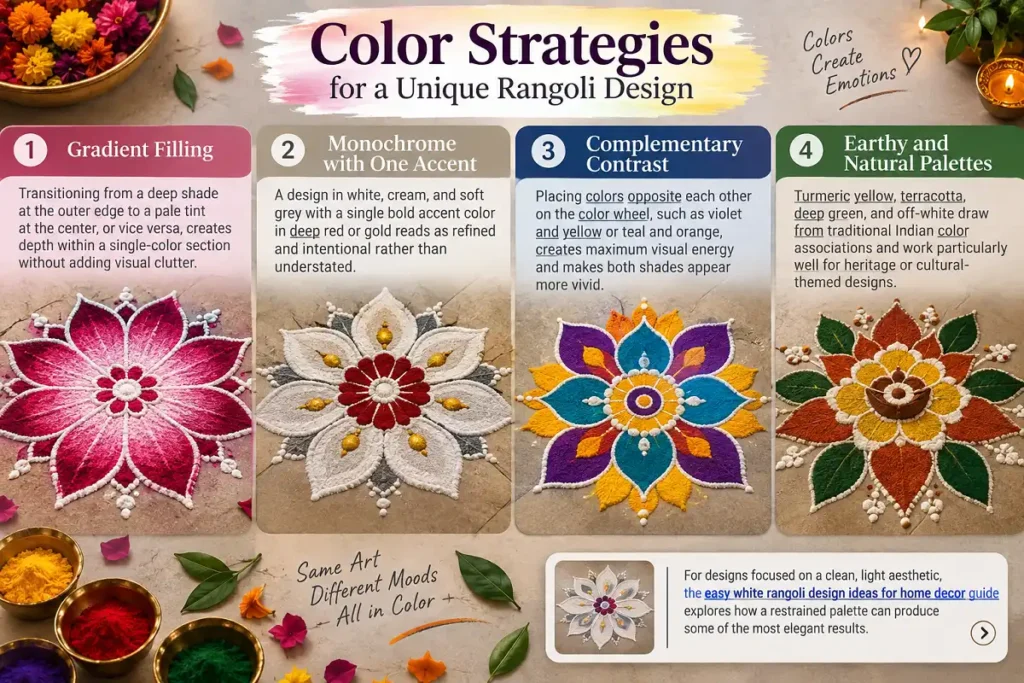
Color choice has as much impact as the pattern itself. The most visually distinctive designs tend to use color in deliberate, structured ways rather than filling sections with whatever is brightest.
Gradient filling
Transitioning from a deep shade at the outer edge to a pale tint at the center, or vice versa, creates depth within a single-color section without adding visual clutter.
Monochrome with one accent
A design in white, cream, and soft grey with a single bold accent color in deep red or gold reads as refined and intentional rather than understated.
Complementary contrast
Placing colors opposite each other on the color wheel, such as violet and yellow or teal and orange, creates maximum visual energy and makes both shades appear more vivid.
Earthy and natural palettes
Turmeric yellow, terracotta, deep green, and off-white draw from traditional Indian color associations and work particularly well for heritage or cultural-themed designs.
For designs focused on a clean, light aesthetic, the easy white rangoli design ideas for home decor guide explores how a restrained palette can produce some of the most elegant results.
Materials That Add a Unique Touch
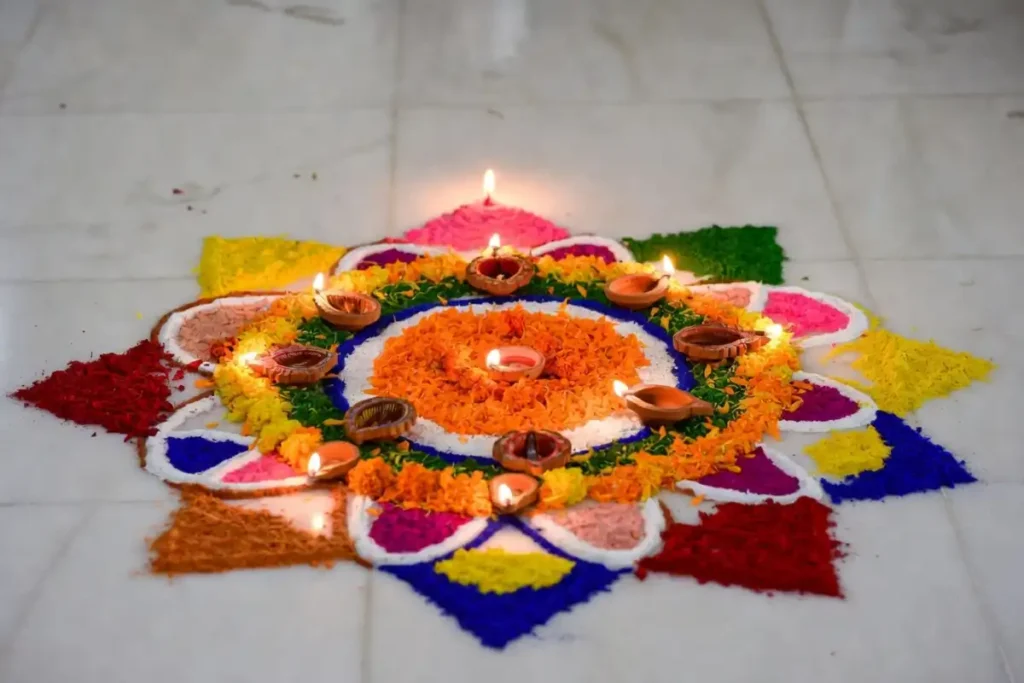
The choice of material is one of the most immediate ways to make a rangoli stand out. While colored powder remains the most common medium, several alternatives produce distinct visual effects.
-
Fresh flower petals
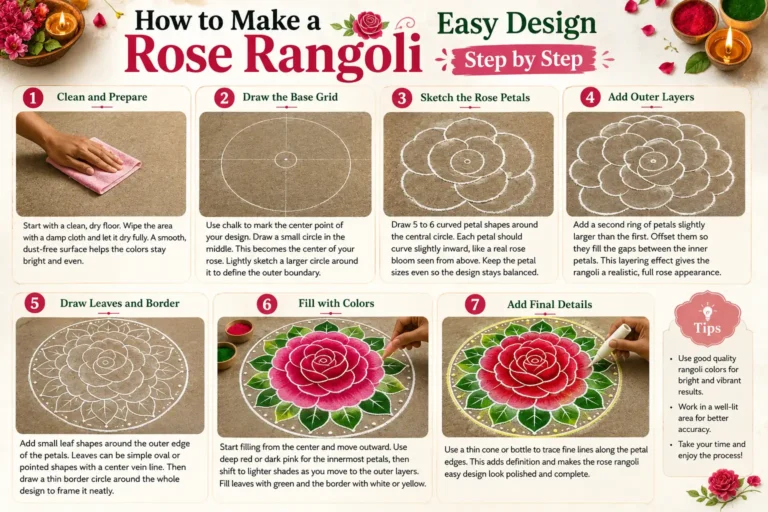
Marigold, rose, and jasmine petals create natural texture and fragrance. Petal rangoli is popular at weddings and indoor events because it is softer, more dimensional, and biodegradable.
-
Colored sand or salt
Fine-grained sand holds detail well and gives a slightly matte, textured finish different from smooth powder. Colored salt produces a similar effect.
-
Rice flour and natural dyes
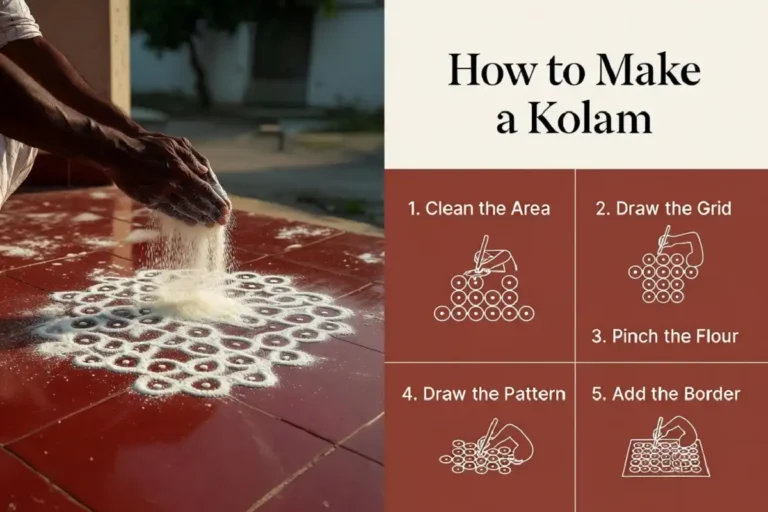
The traditional approach using rice flour and plant-derived pigments creates an organic, slightly uneven quality that reads as handcrafted and authentic.
-
Diyas and candles
Placing small oil lamps or tea lights within the rangoli composition adds light and movement to the design, particularly striking in the evening.
-
Mirror pieces or foil
Small reflective elements embedded in the pattern catch light and give the design a jeweled appearance.
According to the Smithsonian’s Asian Pacific American Center, traditional Indian floor art practices like rangoli and kolam hold both decorative and symbolic significance, functioning as daily expressions of care for the threshold between the home and the outside world.
For deeper exploration of creative material choices, the creative rangoli ideas guide covers a range of innovative approaches.
The Google Arts and Culture platform also features regional Indian folk art collections that include historical rangoli and kolam examples useful for visual research and inspiration.
Conclusion
Creating a unique rangoli design is about bringing your own perspective into a tradition that already has centuries of visual richness behind it. Whether you experiment with 3D shading, incorporate natural materials, draw from regional folk art, or simply choose a color palette that no one expects, the goal is the same: a design that reflects care, creativity, and individual expression. Start with a style or theme that genuinely interests you, keep your color choices deliberate, and do not be afraid to move away from familiar patterns. The most memorable rangoli always has a point of view behind it.
FAQs
What makes a rangoli design unique?
A design stands out when it combines an unexpected theme, deliberate color strategy, or unusual material with technical care and visual balance. Personal touches, regional influences, or a mix of traditional and contemporary elements all contribute to making a design feel original rather than copied.
Which style is best for creating a unique rangoli design at home?
3D rangoli and fusion styles tend to generate the most visual interest in a home setting. Both are scalable to smaller spaces and do not require large quantities of powder or extensive time. A modest 3D floral design in the right corner of an entrance can be more striking than a large flat pattern in a generic style.
Can beginners create a unique rangoli design?
Yes, beginners can absolutely create something distinctive by focusing on one standout element rather than trying to make the entire design complex. A simple floral pattern with an unexpected color palette or a familiar shape made entirely from flower petals already qualifies as unique without requiring advanced technique.
How long does a unique rangoli design last?
Indoor powder rangoli typically lasts one to three days before color fades or the design is disturbed. Petal-based designs last one to two days. Rangoli made with colored sand or salt tends to hold its shape longer in low-traffic areas. Liquid chalk or acrylic-based designs on tiles can last several weeks.
What occasions suit a unique rangoli design best?
Diwali, Onam, Pongal, weddings, and housewarmings are the most common occasions, but unique designs also work beautifully for birthdays, naming ceremonies, and cultural events. The design theme can be adapted to match the occasion, making rangoli one of the most versatile forms of celebratory decoration available.